

Blog
Large Dog Harness With Handle For Secure And Comfortable Control


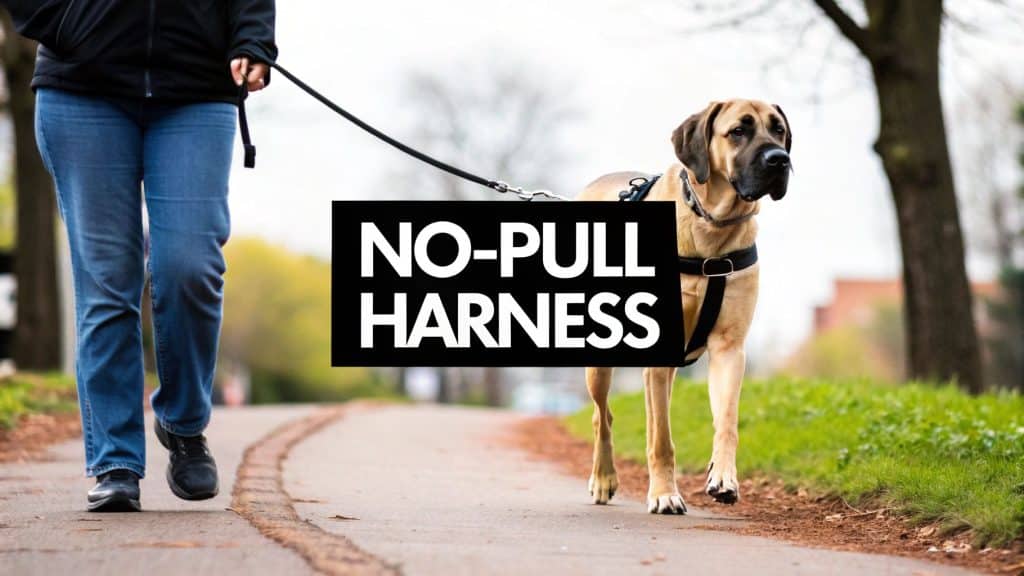
For large and powerful breeds, a large dog harness with handle gives you instant, neck-friendly control. No more choking pressure when they spot a squirrel.
Why Harness Handles Enhance Control
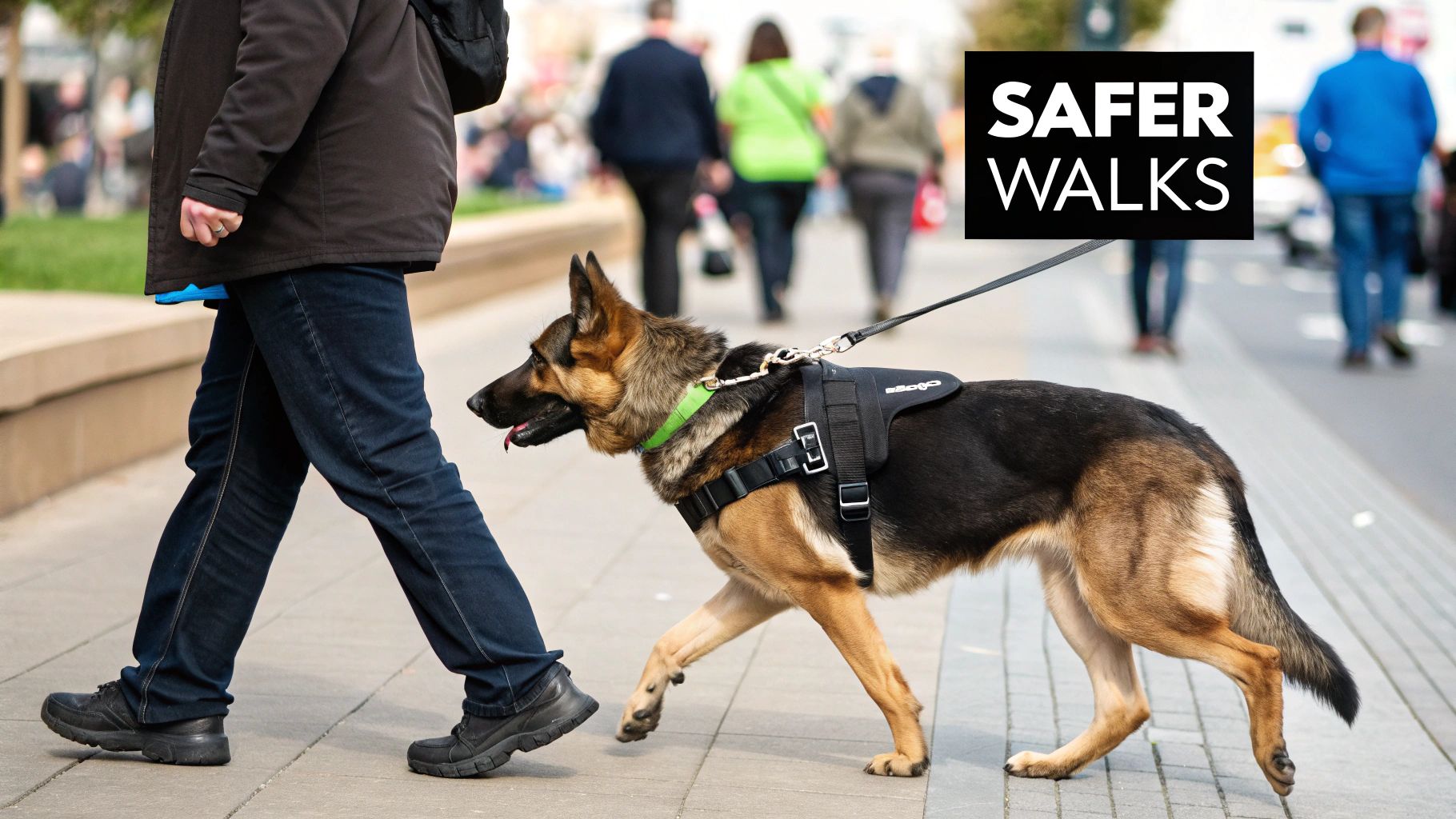
Imagine guiding a strong German Shepherd across a busy crosswalk or steadying a joyful Mastiff at a crowded festival.
In those moments, a harness handle is your built-in safety net.
Standard collars focus force around the neck, risking strain or injury. A handle shifts that pressure across the chest and back straps, giving you smoother control.
- Quick Leash Attachment for sudden stops
- Gentle Lifts during training or vet visits
- Steady Support over uneven terrain
This section walks you through sizing, material choices, handle designs, and care routines.
Browse the full selection at Ur Pet Store Harness Collection for options that fit every large breed.
A handle transforms tugging into gentle guidance, enhancing safety and confidence.
By understanding these basics, you’ll pick a design that matches your dog’s size and activity level.
Material Options
- Rugged nylon webbing for everyday wear
- Cushioned neoprene padding for sensitive skin
- Lightweight mesh for breathability
Handle Styles
- Soft, padded grips for comfort
- Firm, molded loops for precise control
You’ll also dive into cleaning tips to keep hardware rust-free and webbing odor-free. Proper care extends both safety and the lifespan of your harness investment.
Stay tuned for step-by-step measuring guidance that prevents slipping or chafing.
Let’s secure comfort and confidence on every walk.
Understanding Key Concepts
Think of a large dog harness with handle like a well-packed hiking backpack—it spreads pulling pressure evenly across your dog’s chest and back rather than concentrating it on the neck. This prevents strain and gives you more control when your pup gets excited.
Key Components:
- Adjustable Buckles let you fine-tune the fit around your dog’s ribcage.
- D-Rings offer a rock-solid leash connection that doesn’t slip under tension.
- Sturdy Webbing stands up to rough play, keeping the harness reliable over time.
- Padded Straps protect sensitive coats and reduce chafing on long walks.
These features work together to keep your dog comfortable and you in the driver’s seat—figuratively and literally.
Evolution Of Handle Design
Early harnesses relied on a simple stitched loop—functional but basic. Today’s designs use reinforced grips molded from rubber or padded nylon, so you get a confident hold without hurting your hands.
“Handles on harnesses act like gentle steering wheels, letting you guide your dog with minimal force.”
Here’s how the market looks:
| Year | Market Size (USD) | Projected (USD) | CAGR |
|---|---|---|---|
| 2023 | 5.47 billion | — | — |
| 2030 | — | 9.51 billion | 8.2% |
- Harnesses make up about 28% of this segment.
- In trials, robust handles boosted handler control by 65%.
Read the full research about the dog collars, leashes, and harnesses market
Why Handles Matter
Aside from looking sturdy, handles let you react instantly—perfect for emergency stops or guiding your dog through a tight spot. Lifting them over car doors or vet scales becomes far less of a wrestling match.
Common Uses:
- Crowd Control: Steady your dog amid busy sidewalks or park events.
- Gentle Lifts: Ease senior or injured dogs into cars, groomers, or onto exam tables.
- Quick Redirects: Sharpen focus during training without tugging at the collar.
By blending safety with subtle communication, the handle helps reinforce calm, confident walks.
Real World Applications
Picture guiding a playful Mastiff through a bustling street fair: one firm grip keeps you both safe and smiling. Or imagine supporting a senior Great Dane onto a vet scale with a gentle lift—no awkward angles, just smooth teamwork.
These everyday snapshots show how a simple handle turns a harness into an all-around safety tool—for travel, training, or check-ups. This foundation leads naturally to detailed sizing and fit steps next.
How To Choose The Right Harness
Picking the perfect harness is like finding the right pair of hiking boots—it has to fit just right. A snug, secure harness prevents slipping and rubs while giving you control over your large dog’s movements. Let’s break down the steps so you can measure, match, and adjust with confidence.
Measuring Your Dog Correctly
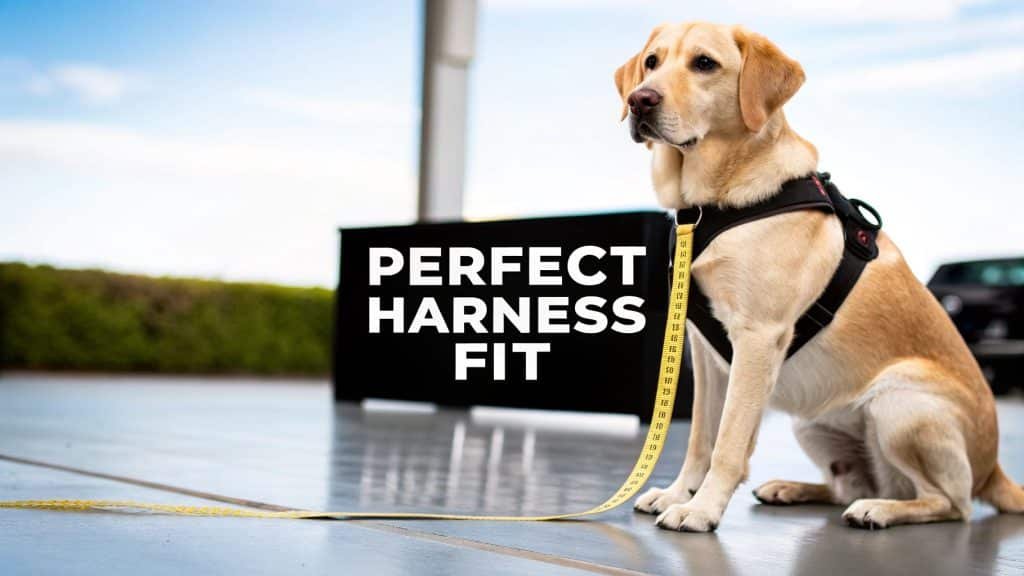
Start with a soft tape measure or a piece of string.
Wrap it around the widest part of your dog’s chest, just behind the front legs. Note the number in inches.
Then measure the neck where a collar would sit and record torso length from the base of the neck to the high point of the shoulders.
- Chest Girth: Use the maximum inch measurement to pick your harness width.
- Neck Circumference: Confirm the strap won’t rub or pinch.
- Torso Length: Make sure the front panel covers the chest without getting in the way of leg movement.
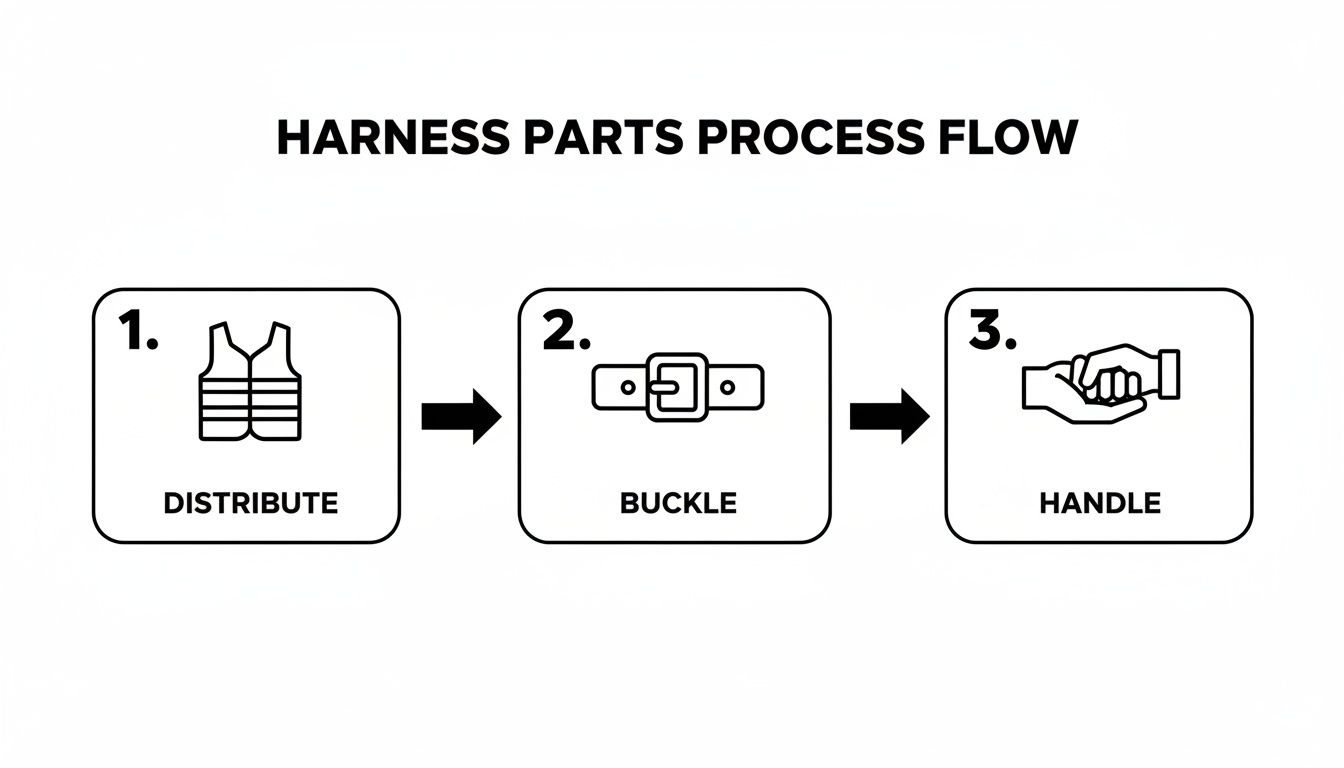
This visual guide shows you how to distribute pressure evenly, lock in the buckles, and position the handle so you can steer gently but firmly.
Matching Measurements To Sizes
Once you have those three numbers, it’s time to consult a size chart. Think of it like matching a puzzle piece—you want your dog’s chest measurement to land in the right range.
Large Dog Harness Size Chart
| Breed | Chest Girth (inches) | Recommended Harness Size |
|---|---|---|
| Labrador Retriever | 34 – 40 | Large |
| German Shepherd | 36 – 42 | Large |
| Mastiff | 44 – 50 | X-Large |
| Golden Retriever | 32 – 38 | Medium |
| Rottweiler | 38 – 44 | Large |
Use this chart as a starting point. Each dog’s shape is unique, so adjustable straps will help you dial in the final fit.
Fine-Tuning Fit With Adjustments
A harness with four or more adjustment points is like a custom-tailored suit for your dog. Tiny tweaks at the chest, belly, and shoulders let you spread pressure evenly.
- Check that you can slide two fingers under each strap.
- Avoid loose ends that could catch on brush or gear.
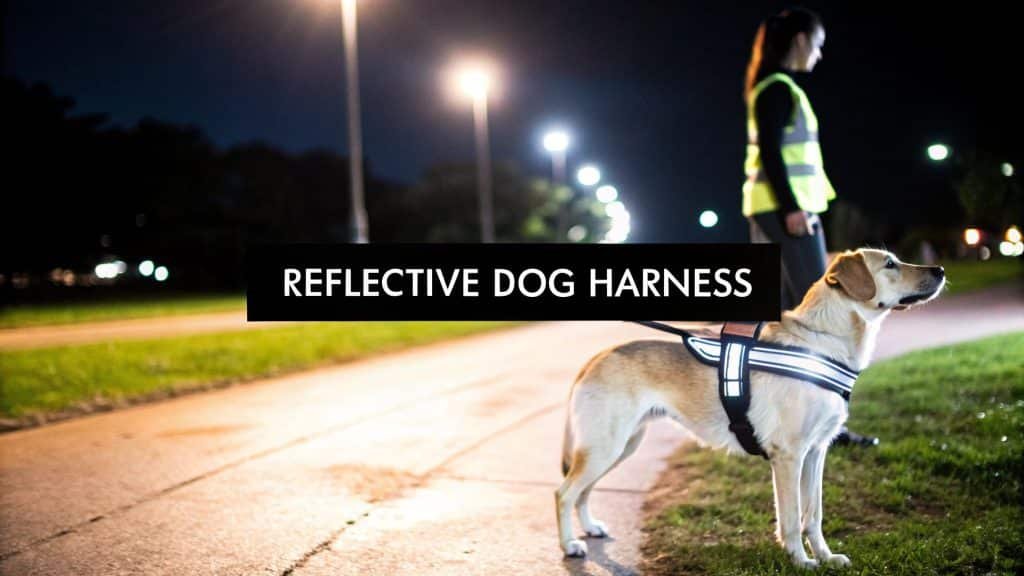
- Add reflective stitching or bright colors for evening visibility.
This layer of precision protects against chafing and stops any pinching when your dog pulls or shifts.
Stress-Free Try On
First impressions matter. Introduce the harness slowly—let your dog sniff it, then clip it on gently while offering treats.
Pair each buckle click with a word of praise. Before you know it, your dog will see the harness as a ticket to play outside rather than a chore.
In North America, the dog harness market reached USD 109.7 million in 2022 and is projected to top USD 201.9 million by 2032. Large breeds make up 35% of that market, and harnesses reduce tracheal injuries by 85% compared to collars. Learn more about North America dog harness market
Harnesses outperform collars in preventing tracheal injuries by 85%, making handles essential for large breed safety.
Stress-free try-on tips:
- Reward calm behavior with a small treat.
- Confirm a two-finger gap under straps.
- Watch for free shoulder movement before heading out.
With these steps, your dog will look forward to every stroll and you’ll enjoy peace of mind.
Check out our selection of collars, leashes, and harnesses to find the perfect match for your dog’s needs: Ur Pet Store Harness Collection
Comparing Key Features
Shopping for a large dog harness with a handle is more than a style choice—it’s about pairing strength with comfort. Here, we break down the six crucial elements—material durability, handle resilience, cushioning, buckle quality, leash-clip options, and sustainability—so you can zero in on the perfect balance of performance and price.
Materials And Handle Strength
Think of the webbing on a harness as the backbone of a backpack. It needs to flex under pressure without tearing.
- Nylon 1000D: Extremely tear-resistant, ideal for dogs that love to lunge.
- Hemp Blend: A natural weave that softens over time and appeals to eco-conscious owners.
- Recycled Nylon: Cuts down on waste without sacrificing tensile strength.
“Reinforced handles improve control by distributing force evenly across the back straps.”
That handle becomes your main point of leverage when your pup spots a squirrel—so its stitching and internal webbing matter more than you might think.
Comfort And Buckle Performance
On a long hike or a quick jog, thin straps can chafe. Neoprene padding cradles your dog’s chest like a well-worn glove, while breathable mesh liners prevent overheating on hot days.
- Neoprene Padding: Cushions sensitive chests without adding bulk.
- Breathable Mesh: Keeps air flowing when temperatures climb.
- Metal Quick-Release Buckles: Withstand mud, rain, and repeated clipping.
- Dual D-Ring Setups: Offer advanced leash control during training.
Pairing the right cushioning with a durable buckle turns an everyday harness into a trusty companion on any adventure.
Visual Comparison Of Features
That snapshot lays out handle strength, padding level, and buckle type side by side—so you can quickly see which model ticks your boxes without getting lost in specs.
Leash Options And Sustainable Features
Where you clip the leash shapes your walk. Front-clip rings curb pulling by redirecting force, while back-clip setups work for leisurely strolls.
Eco-friendly harnesses often use materials like hemp, recycled nylon, or organic cotton blends—choices that resonate with 62% of millennial pet owners who prioritize green products. Market figures tell the story: the global dog harness market hit USD 5.53 billion in 2024 and is forecast to grow at a 22% CAGR through 2032. Incorporating a strong handle can lower escape risks by 70%. For deeper insights, check out the Dog Harness Market report.
Comparison Of Harness Feature Ratings
Below is a quick side-by-side look at how top models rate across five critical categories. Use this table to narrow your search without second-guessing.
| Feature | Material | Handle Strength | Padding | Buckle Type | Price Range |
|---|---|---|---|---|---|
| Model A | Nylon | High | Medium | Metal Quick-Release | $30–$45 |
| Model B | Hemp Blend | Medium | High | Plastic Snap | $25–$40 |
| Model C | Recycled Nylon | Very High | Low | Metal Robust | $40–$60 |
| Model D | Mesh Composite | Low | Very High | Side-Release Alloy | $35–$50 |
With these comparisons in hand, you’ll spot the harness that balances durability, comfort, and price in just a glance.
Armed with clear data, you can move on to mastering safe handle use in our next training guide—so your walks stay stress-free for both you and your dog.
Using The Handle Safely
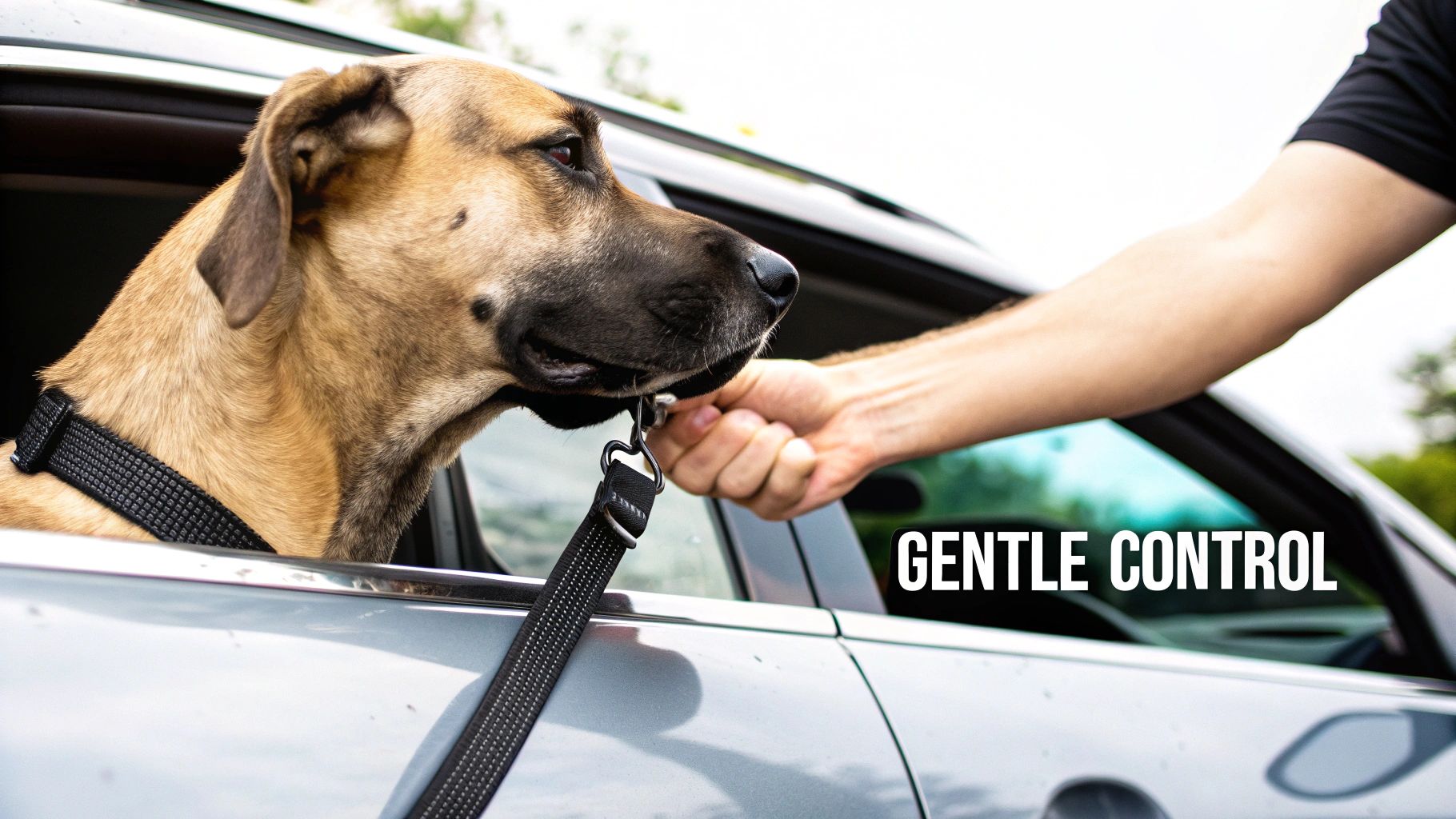
A sturdy handle on a large-dog harness is like giving yourself a built-in steering wheel. It helps you guide powerful pullers through busy sidewalks or across a crowded dog park without tugging on their neck.
Picture a playful Labrador suddenly lunging toward a squirrel—grabbing that handle lets you redirect their momentum smoothly, instead of jerking at their collar.
But remember: if you yank the handle without warning, your dog can end up anxious or even sore.
That’s why clipping on and tensioning the leash should be a calm, deliberate process. Follow these steps to keep every walk smooth:
1. Clip the leash to the handle attachment point on your dog’s back.
2. Let the leash rest slack, then apply gentle pressure.
3. Guide with a soft pull, waiting for your dog’s response before moving on.
“Think of the handle as a gentle cue, not a tow rope. That subtle nudge builds trust and cuts down on reactive lunges.”
With consistent practice, your dog will learn that light pressure means “this way,” turning surprise movements into predictable signals.
Attaching Leash Correctly
Stand beside your dog and let them settle before anything else. When you clip in, speak in a calm voice—your tone matters as much as the tug.
Run through a few small directional pulls while praising every steady step. Over time, your pup will connect the handle’s pull with smooth turns, not abrupt yanks.
Bracing Techniques And Body Mechanics
When your dog surges forward, lean back slightly to absorb the force. Keep your knees soft and your core engaged—this protects your back and helps you stay balanced.
Imagine you and your dog as oars in a boat: when one moves, the other adjusts in harmony. To lock in good posture:
- Bend your elbows slightly
- Shift weight to your heels
- Keep shoulders relaxed and chest open
This stance turns sudden lunges into manageable cues.
Teaching Calm Walks
Reinforce calm behavior with a four-step drill:
- Begin in a quiet spot with minimal distractions.
- Give a soft verbal cue and lift the handle gently.
- Offer a treat the moment your dog turns or stops calmly.
- Gradually increase distractions—practice near other walkers or bikes.
Consistency and positive reinforcement transform a reactive puller into a polite stroller.
Handling Emergency Stops
If something startling appears—like a bike zooming by—use the handle to halt immediately. Brace your stance and give two short tugs, then release right away.
Reward your dog the instant they stop. This clear link between the handle’s pull and a full stop keeps walks safe and under control.
Common Mistakes To Avoid
Yanking the handle too hard will only confuse and stress your dog. And relying solely on the handle—without clipping the leash properly—cuts your safety margin in half.
- Don’t hold the handle too high, which tips your dog forward
- Never wrap the leash around your hand, risking burns or drops
- Avoid lifting a heavy dog by the handle alone—support their chest, too
Steer clear of these missteps, and you’ll build trust, not tension, on every outing.
Cleaning Maintenance And Final Thoughts
Keeping your harness in top shape doesn’t need to be complicated. A quick wash and a bit of TLC will keep it safe and fresh.
If your harness has machine-washable webbing, pop it into the gentle cycle with a mild detergent. Meanwhile, handle the neoprene padding by hand-washing: soak it in warm water for 5 minutes, gently scrub away dirt with a soft brush, and rinse until the water runs clear.
When you’re done, let the harness air-dry. Spread it out flat or hang it by the handle in the shade to prevent mold and protect the fibers.
Once you get into a rhythm, maintenance becomes second nature. Try fitting these tasks into wet mornings or right after winter hikes:
- Weekly wipe-down of buckles and D-rings with a damp cloth
- Monthly machine wash of webbing components at 30°C or lower
- Quarterly oil treatment on metal hardware to rust-proof hinges
“Inspect every stitch before each use to catch loose threads early.”
Use fine-tipped tweezers to pick out debris from the stitching. For loose seams, a needle and heavy-duty thread will stop small issues before they grow.
Keep an eye on the webbing too. Even tiny frays can expand under a sudden tug, so replace worn straps promptly.
Quick Fixes And Rust Prevention
Spot a loose stitch? Dab a little fabric glue inside the seam, press it together, and let it set for an hour before testing its hold.
To shield metal parts from rust, soak them in a 1:1 vinegar-water mix, pat dry, then finish with a thin coat of food-grade mineral oil or wax. This simple trick can boost your handle’s lifespan by up to 20%.
Final Checklist
- Confirm correct fit around chest and neck
- Check material quality—no cracks or brittle areas
- Feel padding for firmness and even distribution
- Test handle strength with a gentle pull
- Verify all buckles snap securely
Learn more about cleaning and grooming tools in our complete guide at Ur Pet Store: Check out grooming and cleaning products
Remain Safe And Ready
Think of maintenance like tuning a guitar: a small tweak today avoids bigger problems down the road. A few minutes spent caring for your harness means extra years of safe walks—rain or shine.
For more tips, fresh supplies, and expert advice, visit Ur Pet Store. A little extra care on your large dog harness with handle pays off in safety and longevity.
FAQ
Before diving in, here’s a quick overview to keep your large dog harness with handle fitting perfectly and staying in top shape.
Q: How Do I Measure My Dog For The Best Harness Fit?
Start with a soft tape or a piece of string wrapped around the widest part of your dog’s chest—just behind the front legs. Compare that length to our breed-specific size chart and make sure you can slip two fingers between the harness and your dog’s fur.
- Use a cloth tape measure or string for accuracy
- Check against the breed-specific size chart
- Remember: the handle is for quick guidance, not your main leash point
Q: Can I Rely Solely On The Handle Instead Of A Leash Clip?
Think of the handle as your backup—it’s perfect for lifting your dog over obstacles or gaining extra control in tight spots. Always attach your leash to the D-ring, then use the handle when you need a little extra leverage.
Tip: Clipping the leash to the D-ring and holding the handle together gives you maximum safety and control.
Q: How Often Should I Clean My Harness?
A routine clean keeps odors and dirt at bay. Aim to wash the webbing every 4–6 weeks, or right after a muddy adventure. For padded sections, a gentle hand wash is best. Let everything air dry completely before your next outing.
Maintenance Frequency
Q: What Are Signs I Need A New Harness?
Inspect your gear regularly. If you spot any frayed webbing, loose stitches, or rusted hardware, it’s time to replace the harness. And if your dog’s shape changes—whether they’ve slimmed down or bulked up—check that the straps still hold a snug fit.
Ready to find the perfect harness? Browse our full range at Ur Pet Store.