

Blog
Essential Cat Grooming Supplies for a Happy Feline


Grooming your cat isn't just about keeping them looking sharp; it's a huge part of their overall health. Having the right cat grooming supplies on hand transforms a simple brushing session into a wellness check-up you can do right at home, preventing problems before they even start.
Why Grooming Is So Much More Than Just Brushing
It's easy to assume cats have their grooming handled. After all, they spend a huge chunk of their day meticulously cleaning themselves. But while they’re pros at the daily upkeep, they can't do it all on their own.
Think of it as a team effort. Your cat takes care of the day-to-day tidying, and you step in with the specialized tools to tackle the bigger jobs. This partnership not only prevents painful issues like mats and hairballs but also builds a stronger, more trusting bond between you.
Getting Ahead of Problems with a Grooming Routine
A regular grooming schedule does way more than just keep shedding under control. It's one of the best ways to keep a close eye on your cat's physical health, letting you catch small issues before they snowball into big, expensive ones. Every time you pick up a brush or a nail clipper, it's a chance to do a quick health inspection.
Here’s what you’re really doing with each grooming session:
- Stopping Painful Matting: Consistent brushing gets rid of loose fur and works out tiny tangles before they can clump together into tight, painful mats that pull on the skin and can even cause infections.
- Cutting Down on Hairballs: When you brush your cat, you’re removing all that extra fur that they would otherwise swallow. Less ingested fur means fewer gross hairballs coughed up on your carpet.
- Spotting Health Issues Early: Grooming gives you an up-close-and-personal look at your cat's skin and coat. This makes it so much easier to find any unusual lumps, bumps, fleas, ticks, or irritated patches of skin that might have otherwise gone unnoticed.
This infographic really ties together how all these benefits are connected.
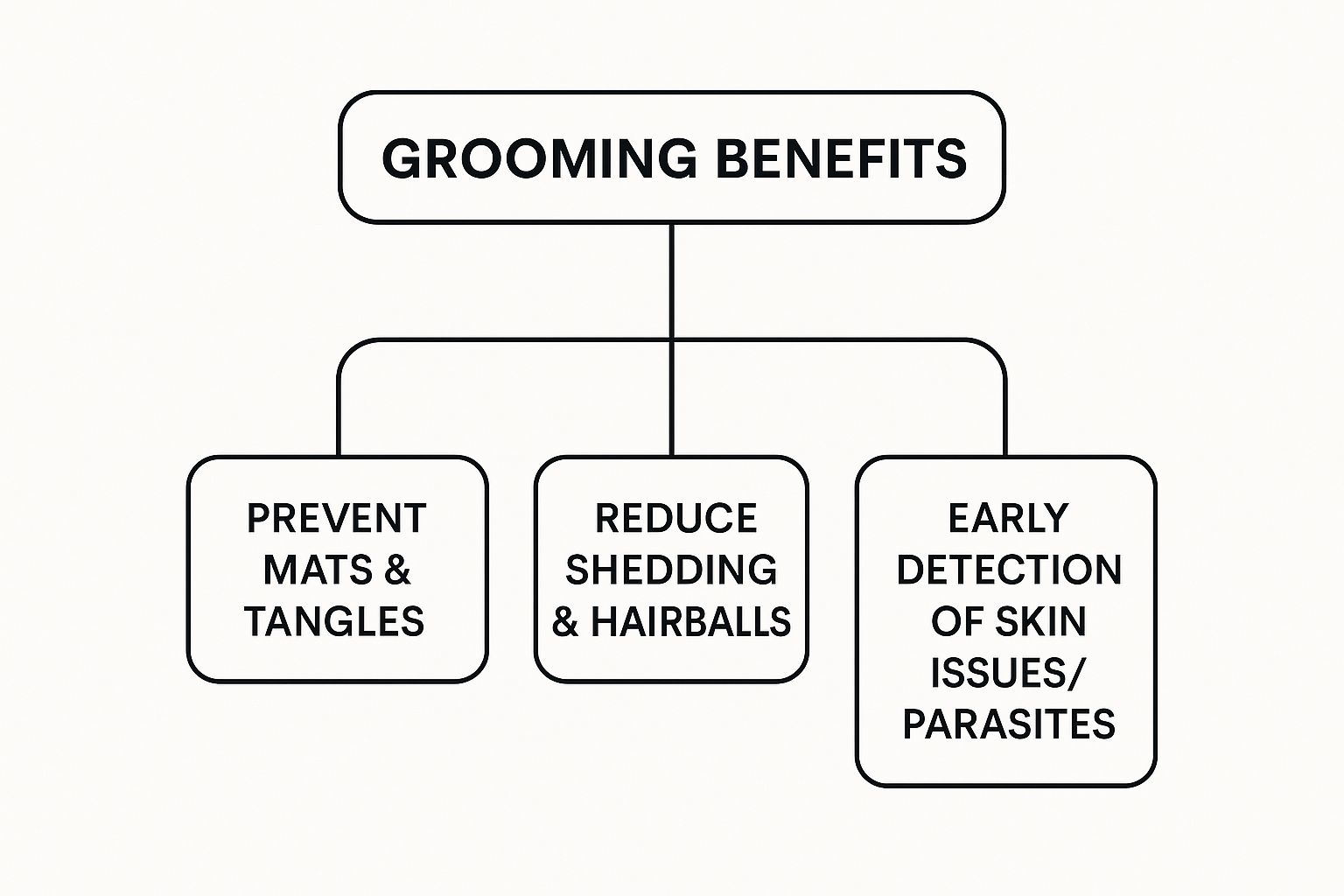
As you can see, being proactive with grooming creates a positive feedback loop for your cat's health. By preventing mats and cutting down on shedding, you’re also making it easier to spot underlying issues early on.
Choosing the Right Brushes and Combs for Your Cat
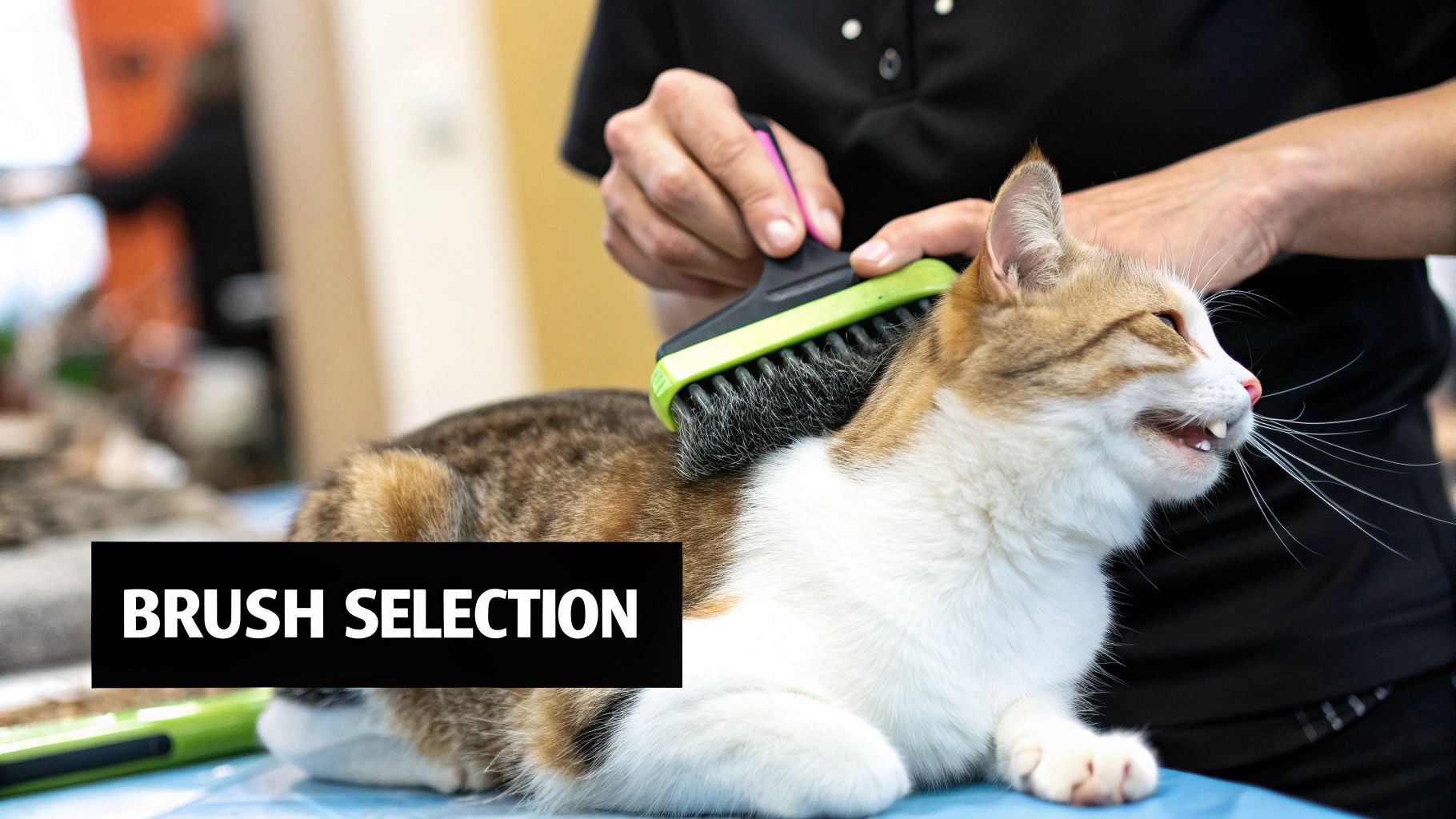
Walking into the pet grooming aisle can feel a bit overwhelming. With so many brushes and combs, where do you even start? It's kind of like standing in a kitchen gadget store—you wouldn't use a whisk to chop vegetables, and you shouldn't use just any old brush on your cat. The right tool makes the job easier, more effective, and a whole lot more pleasant for your feline friend.
The absolute first step is matching the tool to your cat's specific coat. A sleek, short-haired Siamese has entirely different grooming needs than a fluffy, long-haired Maine Coon. Using the wrong brush isn't just ineffective; it can be downright painful, quickly turning what should be a bonding experience into a frustrating struggle.
This focus on specialized tools isn't just a niche concern. The global market for cat grooming supplies is now worth an estimated $2.5 billion, with brushes and combs leading the charge. This number tells a story: more and more cat owners are realizing that proper at-home care starts with the right equipment.
Decoding the Cat Brush Toolkit
Think of your grooming tools like a mechanic's toolbox. Each instrument has a specific job, and knowing which one to grab is the key to success. Understanding what each brush does will help you build the perfect grooming kit for your cat's needs.
Here’s a breakdown of the most common brushes and what they're for:
- Slicker Brushes: These are the workhorses for cats with medium to long, dense fur. The fine, bent-wire bristles are brilliant at getting through tangles and clearing out loose undercoat fur before it can turn into stubborn mats.
- Bristle Brushes: Think of this as your finishing tool. It’s perfect for short-haired cats, as it gently removes dust and dander from the surface while spreading natural skin oils. The result is a healthy, glossy shine.
- De-shedding Tools: When shedding season hits, this is your best friend. These tools are engineered to reach deep into the undercoat to remove a massive amount of loose fur, which means less shedding on your furniture and clothes.
- Grooming Combs: A sturdy metal comb, especially one with both wide and fine teeth, is an essential for every cat owner. Use the wide-toothed side to find hidden knots, and the fine-toothed side for delicate areas like the face and paws.
The real goal of grooming isn't just about appearances. It's about supporting your cat's health. The right brush prevents painful skin irritation, cuts down on hairballs, and ensures their coat remains a source of comfort, not distress.
Matching the Brush to Your Cat's Coat
Choosing the right cat grooming supplies comes down to knowing your cat. A long, flowing Persian coat needs a completely different approach than a short, dense British Shorthair coat. While the basics of grooming are similar across pets, the tools are highly specialized. For example, our guide to the best brushes for Labrador Retrievers shows just how much a dog's coat type dictates the best tool for the job.
The same principle applies to cats. Here's a quick guide to get you started:
- For Long-Haired Cats (like Persians or Ragdolls): You absolutely need a slicker brush and a metal comb. Start by gently working through the coat with the comb to locate and tease apart any knots. Once the tangles are gone, use the slicker brush to remove all the loose undercoat fluff.
- For Short-Haired Cats (like Siamese or Abyssinians): A soft bristle brush or a rubber curry comb is typically all you need. These tools are gentle on their skin but do an excellent job of whisking away loose fur and stimulating blood flow for a healthier coat.
Picking the right brush can feel like a puzzle, but it becomes much clearer when you match the tool's function to your cat's coat type. To make it even simpler, here’s a table that breaks down the options.
Matching the Brush to Your Cat's Coat
| Brush Type | Best For | Primary Use | Ideal Cat Coat |
|---|---|---|---|
| Slicker Brush | Detangling & de-shedding | Removes undercoat, prevents mats | Medium-to-long, dense coats (e.g., Maine Coon, Persian) |
| Bristle Brush | Finishing & shining | Distributes oils, smooths fur | Short, sleek coats (e.g., Siamese, Burmese) |
| De-shedding Tool | Heavy shedding | Removes large volumes of loose undercoat | All coat types during shedding season, especially dense ones |
| Metal Comb | Finding tangles & detail work | Gently works through knots, grooms face/paws | All coat types, essential for long-haired cats |
| Rubber Brush | Gentle massage & loose fur removal | Stimulates circulation, collects loose hair | Short-haired cats, sensitive cats |
This table should help you pinpoint exactly what you need. By investing in the right brush from the start, you're setting both you and your cat up for many happy, stress-free grooming sessions.
Mastering Nail Trims with Clippers and Grinders
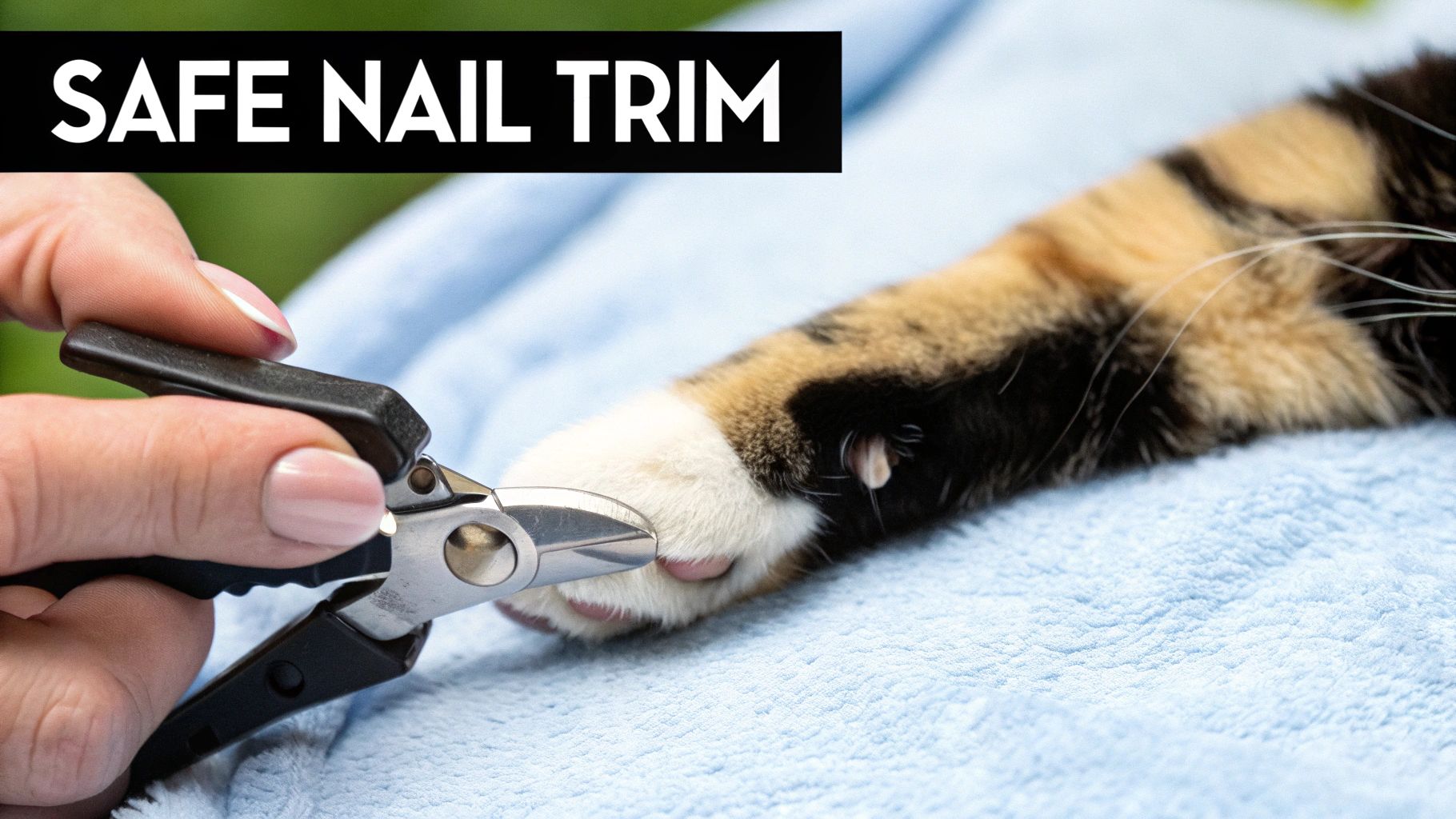
Let's be honest: the thought of trimming your cat’s claws can be a little scary. But it’s a skill every cat owner should have in their back pocket. Think of it as a crucial part of their health routine, right up there with feeding them a good diet.
Keeping their nails in check prevents them from getting painfully overgrown and curling into their paw pads. It also saves your skin and furniture from those needle-sharp tips during a spirited play session. The good news is, you have a few great tools to choose from. Finding the one you and your cat are both comfortable with is the secret to a stress-free trim.
Choosing Your Nail Care Tool
Just like picking the right brush, the best nail tool for your cat grooming supplies kit really comes down to your cat’s personality and your own comfort level. There are three main options on the table, and each has its own set of pros.
- Scissor-Style Clippers: These look like a tiny pair of scissors with a small, curved notch for the nail to rest in. They're incredibly easy to handle and give you a clear view of what you're doing, which is why so many people start with them.
- Guillotine-Style Clippers: This design has a ring that you slide the nail through. When you squeeze the handles, a single blade comes down and snips the tip. They're quick and effective, but sometimes it's a bit harder to see exactly where the blade will land.
- Nail Grinders: For a totally different approach, a grinder is an electric tool that files the nail down instead of cutting it. You get a super smooth finish and there's no risk of accidentally cracking the nail. However, the noise and vibration can be a deal-breaker for some cats.
The golden rule of cat nail trimming is to always avoid the quick. This is the pink part inside the nail where the nerves and blood vessels are. Cutting it hurts and will cause bleeding, which can make your cat fearful of future nail trims.
The Safe Way to Trim Your Cat's Nails
Once you have your tool, it's all about setting the scene. The best time to attempt a trim is when your cat is already relaxed and sleepy—maybe after a good nap. Hold them securely but gently in your lap, and have some high-value treats and praise ready. This isn't a battle; it's a cooperative effort.
Here’s a simple breakdown of the process:
- Expose the Claw: Take a paw and gently press on the top and bottom of a toe bean. This will push the claw out so you can see it clearly.
- Identify the Quick: On light-colored nails, you'll see the pink quick pretty easily. If your cat has dark claws, it can be impossible to see. In that case, just play it safe and only trim the very end of the sharp tip.
- Trim the Tip: Snip just the white part of the nail, staying a safe distance from the quick. I find that cutting at a 45-degree angle works best.
- Reward and Repeat: After each nail, give your cat a treat and some praise. You don’t have to get all ten in one go! If you only manage one or two paws—or even just a few claws—that’s a win.
Remember, the goal here is progress, not perfection. Consistent, positive sessions will build trust. Pairing regular trims with a fantastic scratching outlet, like a sturdy cat scratching ball, helps them maintain their own nails between clippings.
A Guide to Bathing Shampoos and Waterless Options
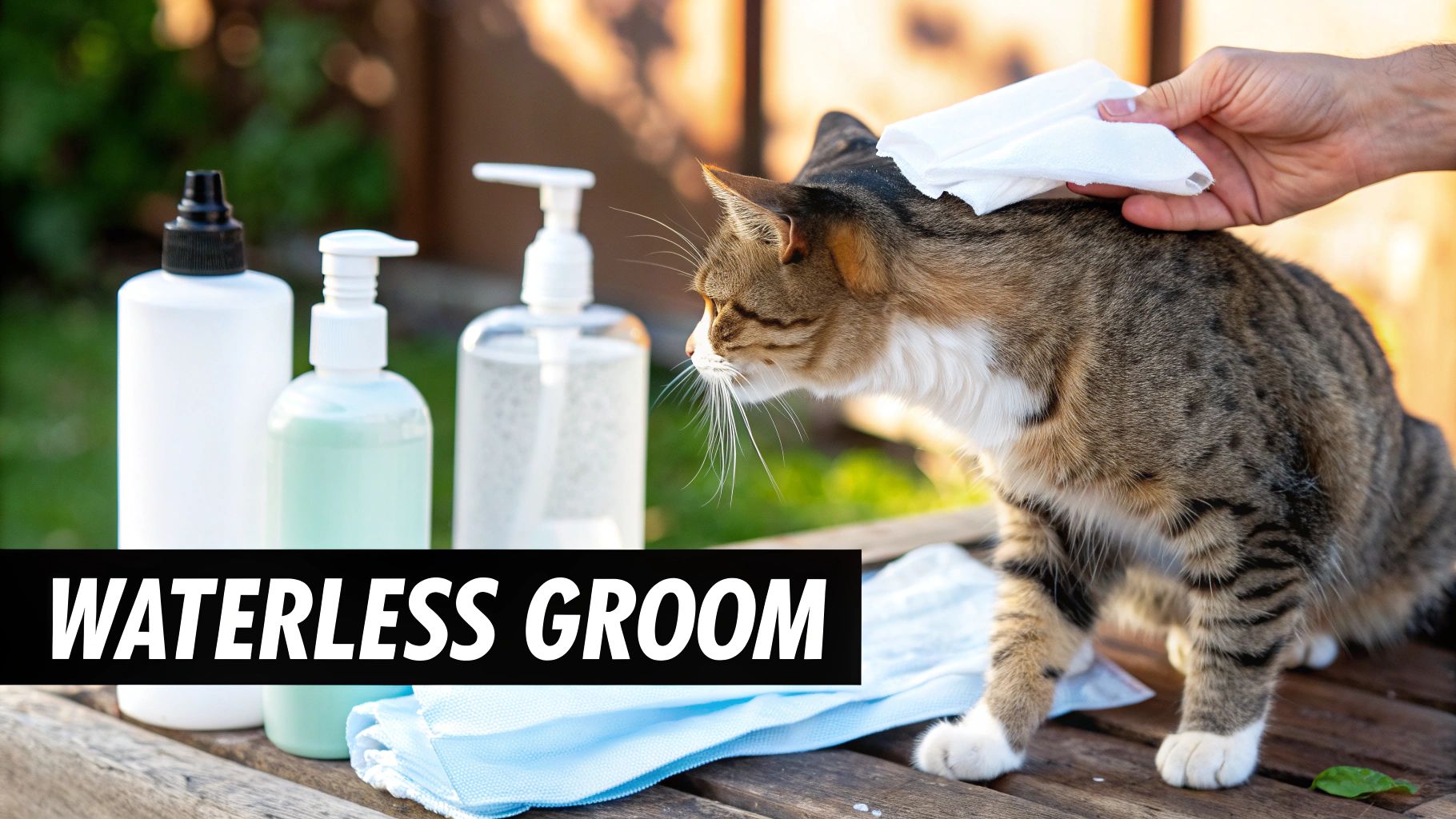
While most cats are meticulous self-groomers, every now and then they get into something that their tongue just can't handle. Whether it's a greasy misadventure or a skin issue that needs attention, sometimes a real bath is the only answer. But before you reach for your own shampoo, stop. That's one of the biggest mistakes a cat owner can make.
A cat’s skin has a completely different pH balance than ours. Using a human shampoo is like washing a delicate wool sweater with harsh laundry detergent—it strips away all the natural, protective oils. This can lead to severe dryness, irritation, and even open the door for nasty skin infections. That's why cat-specific shampoos are an absolute must-have.
This growing awareness of specialized pet care has fueled a massive industry. The global pet grooming market was valued at nearly $3.87 billion and is projected to hit $5.49 billion soon. This boom is happening because more of us see our pets as family and are seeking out higher-quality cat grooming supplies that meet their unique health needs. You can dig deeper into these pet care market trends to see where the industry is heading.
Choosing the Right Cat Shampoo
Just like with our own hair care, there's no single shampoo that works for every cat. The key is to pick a formula that matches your cat's specific needs, ensuring you're ready for whatever life—or your cat—throws at you.
Here are a few of the most common types you'll find:
- Flea and Tick Shampoos: If you're dealing with an active infestation, these medicated formulas are your first line of attack. They're designed to kill parasites on contact but be sure to follow the label's directions to the letter.
- Hypoallergenic or Sensitive Skin Formulas: Perfect for cats with allergies or easily irritated skin. These are typically made with gentle, soothing ingredients like aloe vera or oatmeal to clean the coat without causing a flare-up.
- Dander-Reducing Shampoos: A lifesaver for family members with allergies. These shampoos work by moisturizing your cat’s skin and coat, which helps cut down on the amount of dander (dead skin flakes) they shed.
Remember, a bath should be a rare event for a cat. Over-bathing can disrupt their natural oil production and cause more skin problems than it solves. Only bathe your cat when it's truly necessary.
When Water Is Not an Option
Let's be honest: most cats react to a running faucet like it's a mortal enemy. Forcing a bath on a terrified cat isn't just stressful, it can be downright dangerous for both of you. Thankfully, there are some fantastic waterless alternatives for spot-cleaning and general touch-ups.
Waterless shampoos are brilliant. They usually come as a foam or spray that you massage into your cat's fur and then simply towel off—no rinsing needed. They're perfect for a quick refresh or for cats who are absolutely phobic about water.
Another great tool to have on hand is a pack of grooming wipes. They are incredibly convenient for cleaning muddy paws after an outdoor adventure, wiping down a dusty coat, or cleaning up small messes. These waterless options are essential cat grooming supplies for keeping your cat clean without the drama.
Specialized Cat Grooming Supplies for Total Care
Brushes and nail clippers are the absolute basics, the bread and butter of your cat grooming kit. But to really cover all your bases, you need to think beyond just the coat. Think of it like this: brushing your cat is like washing your car, but the specialized tools are for detailing the interior—the teeth, ears, and eyes. These are the spots where a little proactive care goes a long, long way.
If you skip these areas, you're opening the door to discomfort and even serious health issues down the line. Take dental disease, for instance. It's shockingly common in cats and does a lot more than just cause stinky breath. Bacteria from a dirty mouth can actually get into the bloodstream and affect major organs. That's why adding a few specialized cat grooming supplies to your routine is non-negotiable for their overall health.
Essential Tools for Feline Health and Hygiene
To take your grooming from a quick touch-up to a full wellness check, you’ll want a few extra items in your toolkit. These are for the places your cat’s tongue just can’t reach, keeping them comfortable and healthy from the inside out.
Here are the key specialized supplies I always recommend:
- Dental Care Kit: This needs to have a cat-specific toothbrush (the bristles are softer and the head is smaller) and a good enzymatic toothpaste made for cats. Never use human toothpaste; it's toxic to them.
- Ear Cleaning Solution: A gentle, vet-approved cleaner is perfect for dissolving wax and gunk. Keeping their ears clean is the best way to head off painful ear infections before they start.
- Eye Wipes or Saline Solution: You can grab pre-moistened wipes or just use a simple sterile saline solution on a cotton ball. They're great for gently wiping away tear stains and eye goop, which is especially important for breeds with flatter faces.
A complete grooming session is a health check-in. By regularly cleaning your cat's ears, eyes, and teeth, you're not just cleaning; you're actively monitoring for early signs of infection, inflammation, or other issues that need a vet's attention.
Tackling Tough Tangles and Mats
If you have a long-haired cat, like a Persian or a Maine Coon, you know that sometimes a standard brush just won't cut it. When a small tangle snowballs into a dense, tight mat, it does more than just look messy—it pulls painfully on the skin and can even trap moisture and bacteria, leading to nasty skin infections.
This is where a mat splitter becomes your best friend. A mat splitter isn't a brush. It's a specialized tool with a sharp, recessed blade that lets you safely slice through the thickest mats without nicking the skin. You use it to break a big mat into smaller, more manageable pieces that you can then gently brush out. Knowing how to use one of these can save you—and your cat—a stressful and expensive trip to the groomer. You can explore a full range of grooming and cleaning supplies to find the perfect tools for whatever your cat’s coat throws at you.
Creating a Calm and Positive Grooming Routine
Having the best cat grooming supplies is one thing, but knowing how to use them without a wrestling match is another. The real secret to successful grooming isn't just about the tools; it's about building a routine your cat doesn't dread.
Think of it this way: you’re not just brushing fur, you’re building trust. When done right, grooming can actually become a special bonding activity instead of a source of stress for you both. The key is to create positive associations with every brush, comb, and clipper in your kit.
This shift towards thoughtful pet care is part of a much bigger trend. The global pet grooming supplies market is now valued at around $2.95 billion because more and more of us see our pets as true family members. We’re investing in better tools and, just as importantly, better techniques for our cats' well-being. You can learn more about the growth of the pet supplies market and see how this trend is evolving.
Setting the Stage for Success
Your environment and timing are everything. Don't try to groom a cat that's already worked up. Instead, pick a quiet, familiar room where your cat feels secure, far from the chaos of household traffic or other pets. The best time to start is when they are already mellow, like after a good nap or a satisfying meal.
Follow these simple steps to build a solid foundation of trust:
- Start Short and Sweet: Your first sessions should be incredibly brief—we're talking a minute or two, max. A couple of gentle strokes with a brush followed immediately by a delicious treat is a huge win.
- Pile on the Praise: Use positive reinforcement every step of the way. Shower your cat with praise, gentle pets, and their absolute favorite treats during and right after the session. This helps them connect the grooming tools with good things.
- End on a High Note: This is critical. Always stop the session before your cat shows signs of getting annoyed or stressed. Ending on a positive note makes them much more likely to cooperate next time.
The most important tool you have is patience. Building trust doesn’t happen overnight. A few minutes of positive, happy interaction every day will always be more effective than one long, stressful session that just creates fear.
If your cat is particularly anxious, you might want to look into calming aids. Pheromone diffusers or sprays can work wonders to create a sense of security in the grooming area, signaling to your cat that it's a safe place.
With this patient approach, your cat grooming supplies will eventually become symbols of connection, not conflict.
Your Top Cat Grooming Questions Answered
When you're new to grooming your cat, it's natural to have questions. Getting the right answers not only helps you do a better job but also makes the whole experience less stressful for your cat. Let's dive into some of the most common things cat parents wonder about.
How Often Should I Actually Groom My Cat?
This really comes down to your cat's hairstyle. If you have a long-haired beauty like a Persian or Ragdoll, daily brushing is pretty much non-negotiable. Their luxurious fur can quickly turn into painful tangles and mats without consistent care.
For short-haired cats, like a sleek Siamese, you can relax a bit. A thorough brushing once or twice a week is usually perfect. This quick session is enough to whisk away loose hair, cut down on shedding, and spread those natural skin oils for a healthy shine.
Is It Okay To Use Dog Grooming Supplies On My Cat?
I'd give that a hard no. It might seem harmless, but cats and dogs are different right down to their skin. A cat's skin has a unique pH, and dog shampoos are often way too harsh, which can lead to dry, irritated skin.
Even more serious, some flea and tick treatments for dogs are extremely toxic to cats. While you might get away with using a simple brush in a pinch, it’s always smartest—and safest—to stick with products made specifically for cats.
The golden rule of pet care is simple: "do no harm." Using supplies meant for a different animal can cause anything from minor irritation to a serious medical emergency. Always choose cat-specific products.
What Can I Do If My Cat Absolutely Hates Being Brushed?
Patience is your best friend here. Start slow. Just let your cat check out the brush first—let them sniff it and rub against it. Then, try just a single, gentle stroke down their back, and immediately reward them with a favorite treat and some praise.
The key is to keep these first sessions super short and positive. You're trying to show them that the brush means good things are coming. As they get more comfortable, you can gradually add more brush strokes. Never, ever force it; that just builds fear and makes things harder next time.
When Should I Call In A Professional Groomer?
It's time to call for backup if you find severe mats in your cat's fur that you can't work out safely on your own. Trying to cut them out can easily injure their delicate skin.
A professional groomer also has the right equipment for tricky jobs like sanitary trims, or for handling a cat that gets too anxious or aggressive for you to groom safely. Their expertise can make a world of difference, turning a stressful situation into a manageable one.
Ready to put together the ultimate grooming kit for your cat? Ur Pet Store has a handpicked selection of top-notch cat grooming supplies to keep your feline looking and feeling their best. Check out our collection today at https://urpetstore.com and get free shipping on every order.