

Blog
Sturdy Cat Hammock for Large Cats


If you’ve ever seen a big Maine Coon or a fluffy Ragdoll try to squeeze into a standard cat bed, you know it’s a comical but slightly sad sight. That’s why a specialized cat hammock for large cats isn’t just a fun accessory; it’s a necessity for giving them a safe and genuinely comfortable spot to call their own.
Why Your Big Cat Needs a Better Hammock
It’s easy to underestimate the difference a few pounds and inches make. But for a large cat, most pet furniture is like asking a 6’5″ person to sleep comfortably in a twin bed—it just doesn’t work. They end up spilling over the sides, unable to stretch out, and the whole thing can feel wobbly and unsafe.
A hammock designed specifically for a heavier cat is built on a foundation of three crucial elements that you just can’t compromise on.
The Core Pillars of a Sturdy Hammock
- Weight Capacity: This is the absolute number one priority. The hammock needs to handle your cat’s weight, plus the extra force when they launch themselves into it for a nap. A flimsy hammock is a recipe for disaster.
- Material Durability: Bigger cats mean more wear and tear. You need tough, tear-resistant fabrics like heavy-duty canvas or fleece, paired with a solid frame made of real wood or steel that won’t give up under pressure.
- Secure Anchoring: How the hammock attaches is everything. Whether it’s a window perch with industrial-strength suction cups, a wall-mounted bed drilled into studs, or a free-standing unit with a wide, heavy base, it has to be completely stable. No wobbling allowed.
Giving your cat a secure spot high off the ground does more than just make them happy. It’s great for their joints, taps into their natural instinct to be a high-up lookout, and gives them the deep, restorative rest they need. The right hammock is a throne, not just a bed.
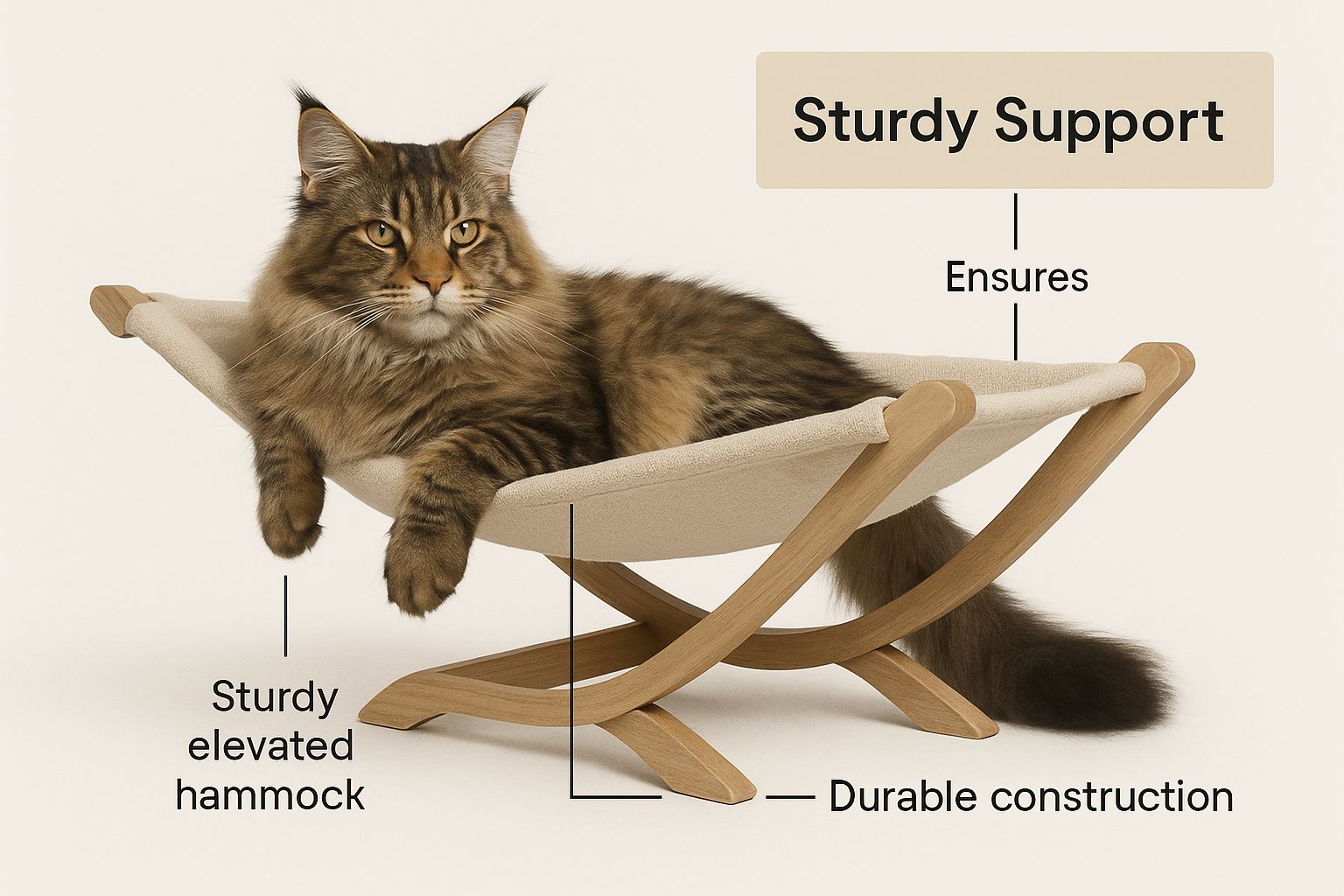
As the infographic highlights, that sense of security from a sturdy perch is vital for a big cat’s happiness. This isn’t just an observation from cat owners; it’s driving a huge shift in the market. The entire pet furniture industry was valued at USD 4.23 billion and is growing fast, largely because owners are demanding better-quality products.
In fact, the cat hammock niche alone is projected to hit USD 710 million by 2033, with a big chunk of that growth coming from premium, spacious models built for larger cats. If you’re curious, you can discover more about the growing pet furniture market trends at dataintelo.com.
To see the difference in black and white, here’s a quick comparison of what you get with a standard hammock versus one truly built for a larger cat.
Standard vs. Large Cat Hammock Comparison
| Feature | Standard Hammock | Large Cat Hammock |
|---|---|---|
| Weight Limit | Often under 15 lbs; risky for bigger cats. | 40 lbs+; built to handle weight and jumping force. |
| Size | Small, cramped surface; cat spills over. | Generous size; allows for full stretching and curling. |
| Frame Material | Flimsy plastic or thin particleboard. | Solid wood, heavy-duty metal, or thick PVC. |
| Fabric | Thin, single-layer material that can stretch or tear. | Double-layered canvas, reinforced fleece, or corduroy. |
| Anchoring | Weak suction cups or unstable bases. | Strong suction cups, direct wall mounts, or wide, weighted bases. |
The takeaway is clear: for a big cat, “standard” just won’t cut it. Investing in a hammock designed for their size and weight is essential for their safety, comfort, and well-being.
What to Look for in a Heavy Duty Cat Hammock
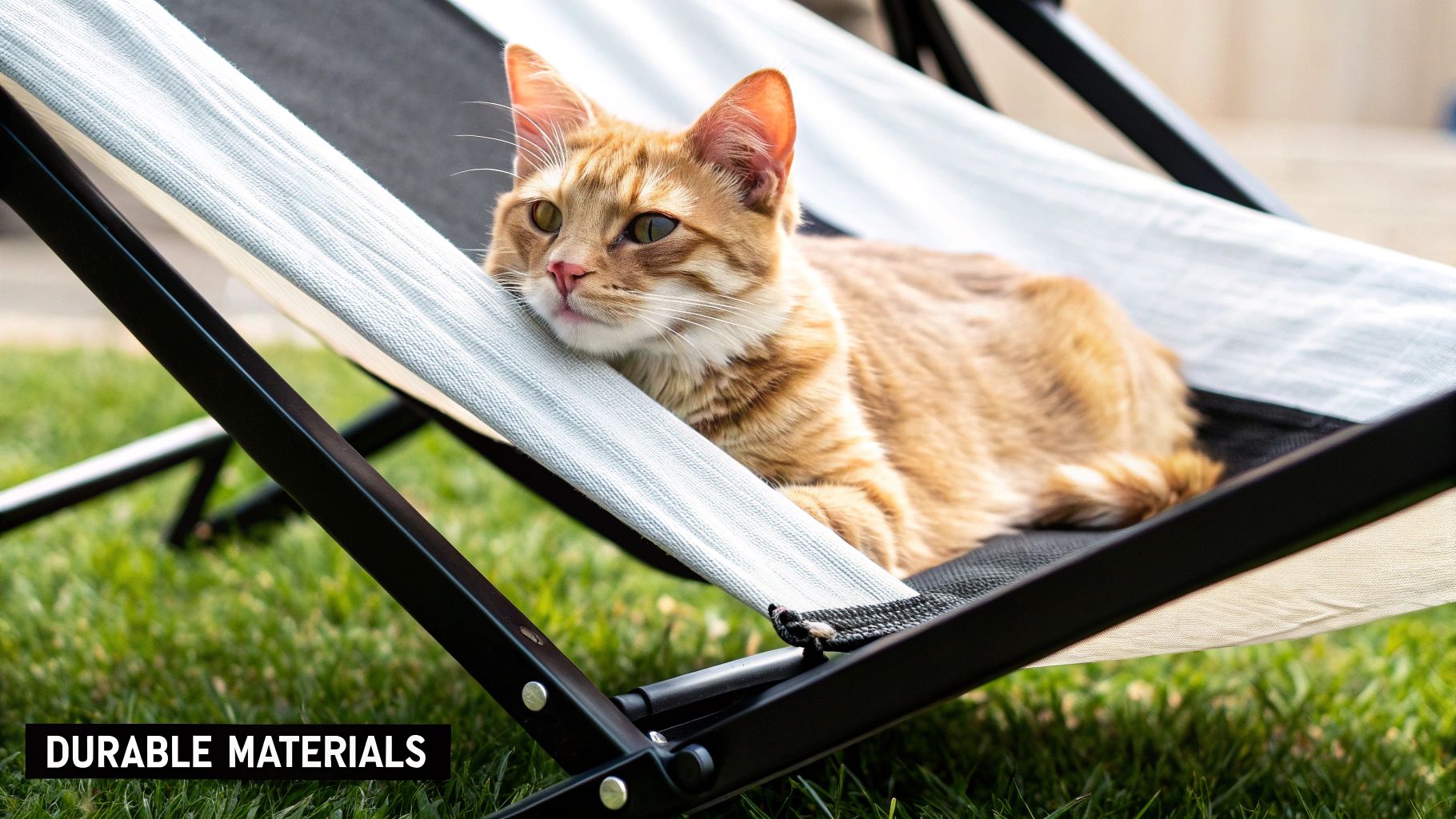
When you’re shopping for a cat hammock for large cats, you’re not just buying a bed. You’re buying a piece of tiny, cat-sized engineering that has to safely hold a wiggling, napping, and sometimes bouncing bundle of fluff. Not all hammocks can handle that job, and clever marketing can sometimes hide a flimsy product.
The best way to see through the hype is to focus on the three things that actually matter: the frame, the fabric, and the way it attaches to your wall or window. Get these right, and you’ll have a safe, comfortable perch your cat will love for years.
Frame Materials That Hold Up
Think of the frame as the skeleton of the whole operation. For a big cat, a flimsy frame is a recipe for disaster. Flimsy plastic or cheap particleboard just won’t cut it—they can easily buckle the first time your 20-pound Maine Coon takes a running leap into it.
You need to look for materials that are genuinely strong.
- Solid Wood: This is the gold standard for a reason. Woods like birch, pine, or oak create a sturdy, durable base that won’t bend or crack under pressure. They’re built to last.
- Heavy-Gauge Steel: Metal frames not only look sleek and modern, but they also offer incredible strength. Just make sure the steel is thick and the welds are clean—that’s where weak spots can hide.
- Thick PVC Pipe: It might sound a bit strange, but furniture-grade PVC can be surprisingly tough when it’s designed with a wide, stable base. It’s a great lightweight but durable alternative.
Of course, a strong frame is only half the battle. The fabric sling itself needs to be tough enough to withstand sharp claws and the constant pressure of a heavy lounger. A single, thin layer of fleece might feel soft, but it will stretch, sag, and eventually rip. Double-layered and reinforced is the only way to go.
A hammock’s fabric is its first line of defense against wear and tear. A material like dual-layer canvas or thick corduroy provides the resilience needed to support a heavy cat day after day, preventing the sagging that makes a hammock feel unstable.
This push for better, more durable materials is something we’re seeing across the entire pet industry. As owners look for higher-quality solutions, the demand for specialized gear like a heavy duty cat hammock for large cats has exploded. This trend has thankfully led to better products with superior construction, reflecting an overall growth in the pet furniture space. You can explore more on these pet furniture market insights at Fortune Business Insights.
Anchoring Systems: The Final Piece
Finally, we have the anchoring system. This is what connects the hammock securely to your home, and frankly, it’s where most standard hammocks fail when faced with a larger cat.
- For Window Perches: Don’t settle for anything less than industrial-strength suction cups. Look for models with at least four big cups, and ideally, ones that screw into the frame to create a vacuum seal. The standard press-on cups are just not safe enough for a hefty cat.
- For Wall-Mounted Designs: This is non-negotiable—the hammock must be anchored directly into wall studs with long, sturdy screws. Drywall anchors alone simply can’t handle the weight and will eventually pull right out of the wall.
- For Freestanding Models: The key here is a wide, heavy base that prevents tipping. The center of gravity needs to be low to the ground, keeping the whole structure stable even when your cat makes an ungraceful leap on or off.
By checking these three key elements—frame, fabric, and anchors—you can confidently pick a hammock that will be a safe and long-lasting sanctuary for your big friend. After all, a secure perch is just one way to create a cozy home, and you might find more inspiration in our full selection of cozy cat beds and mats.
Finding the Right Hammock Style for Your Home
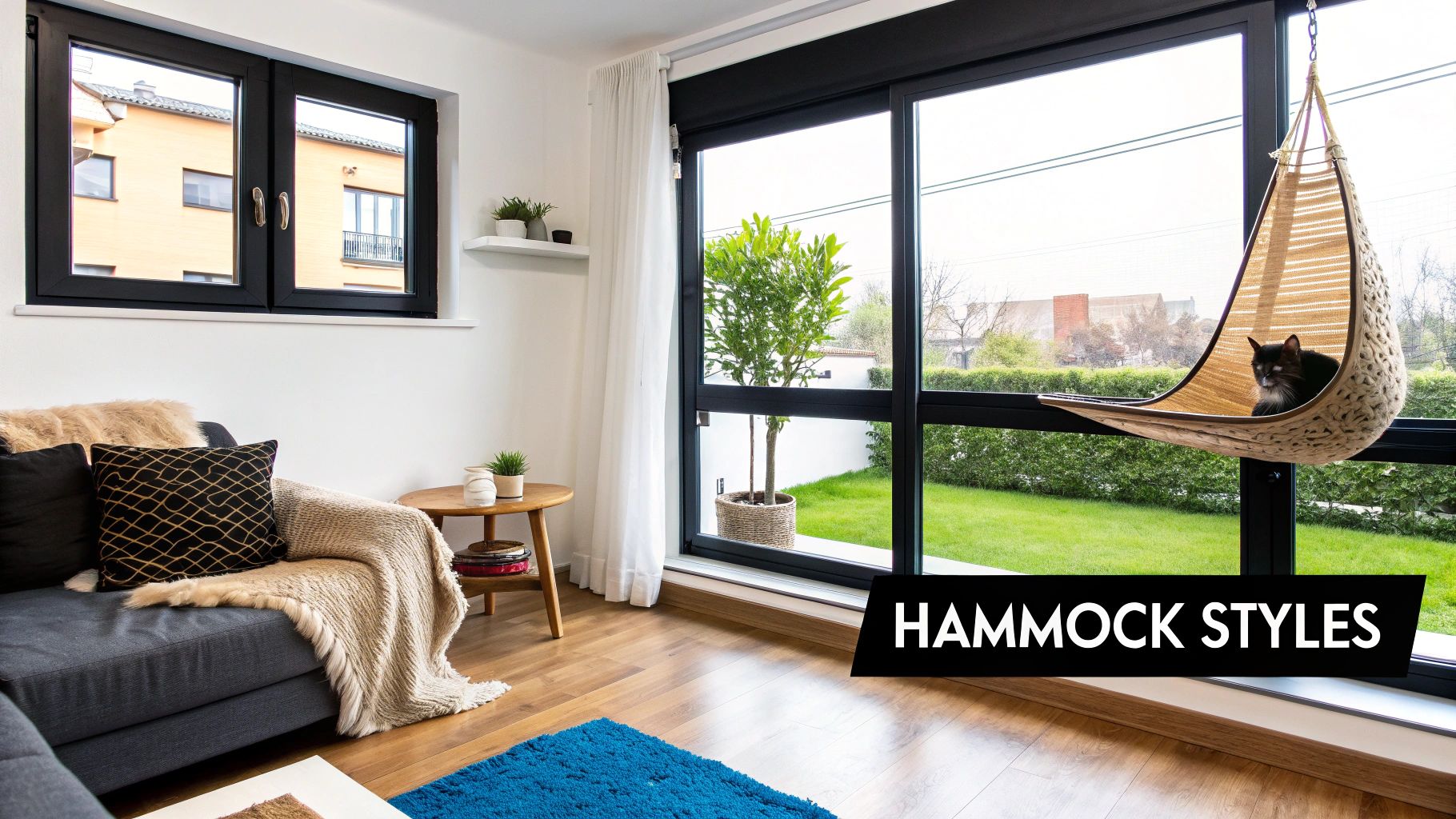
The perfect cat hammock for large cats has to do two things really well: hold up your hefty feline and actually look good in your home. Think of it like buying a new armchair. It needs to be comfy for the one using it, but it also has to fit the room.
Let’s break down the most popular designs out there so you can find the perfect match for your heavyweight champion.
Window Mounted Hammocks: The Sunbather’s Choice
Does your cat spend hours chattering at birds or chasing sunbeams across the floor? A window-mounted hammock is their version of paradise. These perches stick right onto the glass with heavy-duty suction cups, giving your cat an elevated, front-row seat to all the action outside.
Of course, with a big cat, stability is non-negotiable. You’ll want to look for models with at least four industrial-grade suction cups and a solid, unbending frame. A wider bed also helps a larger cat feel more secure, preventing any unnerving wobbles while they’re trying to nap.
Wall Mounted Hammocks: The Climber’s Perch
If you have a furry little daredevil who thinks every piece of furniture is a launchpad, a wall-mounted hammock is a fantastic option. These are drilled directly into your wall studs, creating a rock-solid platform that can easily support even the biggest Maine Coon or Ragdoll. They offer the ultimate peace of mind when it comes to safety.
These perches are a great way to expand your cat room decor ideas and turn your walls into a functional and stylish space. You can arrange multiple shelves and hammocks to build a “cat highway,” giving your feline a stimulating vertical world to conquer.
A well-placed wall hammock taps directly into a cat’s instinct to survey their territory from a high vantage point. For a large cat, this secure, elevated space provides an unmatched sense of security and ownership over their environment.
Freestanding Hammocks: The Versatile Solution
Freestanding models are the ultimate no-fuss solution. They’re perfect if you’re renting or just don’t want to break out the power tools. These hammocks come with their own sturdy frames, so you can pop them down anywhere your cat fancies.
The most important feature for a large cat is a wide, low-profile base that won’t tip over, even if your cat takes a running leap into it. This style is definitely on the rise, mirroring a wider trend. In fact, the global hammock market is expected to grow at about 5.5% annually through 2032, largely because people want convenient and portable options. This means we’re seeing more innovative and robust designs hit the market all the time.
One of the best parts is that you can easily move it around to follow the sun or place it next to their favorite scratching post. To keep them entertained, you could even pair it with an interactive toy like a tough cat scratching ball that can handle some serious playtime.
Hammocks in Cat Trees: The All-in-One Hub
For the cat who wants it all, you can’t beat a cat tree with a built-in hammock. These multi-level activity centers combine everything a cat loves—lounging, climbing, and scratching—all in one place.
When you’re shopping for a larger cat, pay close attention to the entire structure. The tree needs a wide, heavy base to stay put, and the hammock itself should be generously sized and well-supported, not just a flimsy basket tacked on as an afterthought.
How to Safely Install Your Cat Hammock
You’ve found the perfect hammock for your big kitty—that’s a great first step. But even the best-built perch is only as safe as its installation. For a heavier cat that likes to launch itself onto its favorite spots, a secure setup isn’t just a nice-to-have, it’s absolutely critical.
A wobbly hammock can spook a cat for good, making them steer clear of their new bed forever. Worse, a total collapse could lead to a serious injury. Let’s walk through how to get this right from the start, so your cat’s new hangout is rock-solid and completely safe.
Mastering the Wall Mount Installation
Wall-mounted perches are fantastic for stability, but their strength comes from one simple secret: you have to anchor them to the wooden studs inside your walls. Trying to attach a heavy-duty hammock to drywall alone is just asking for trouble. Think of the studs as the skeleton of your wall—that’s what you need to screw into.
Step-by-Step Installation Guide:
- Find Those Studs: The most important step. Grab a stud finder and slide it along the wall to locate the wooden beams. When it beeps, you’ve found your anchor point. Mark the edges lightly with a pencil. Seriously, don’t skip this. Drywall anchors are not strong enough to hold a large, jumping cat.
- Position and Level: Hold the hammock’s bracket against the wall, lining it up with your stud marks. Use a level to make sure it’s perfectly straight—an eyeball guess isn’t good enough here. Once it’s level, mark where you’ll drill your holes.
- Drill Pilot Holes: Before you drive in the big screws, drill small pilot holes on your marks. This small step makes a huge difference, guiding the screws in straight and preventing the wood stud from splitting under pressure.
- Secure the Bracket: Now, drive the provided screws through the bracket and into the pilot holes. You’re looking for solid resistance as the screw bites into the wood. If it feels too easy, you might have missed the stud.
- Do a Weight Test: Before you call your cat over, give the hammock a good, firm push downwards. Use more force than your cat’s weight. It shouldn’t budge, wiggle, or creak at all. It needs to feel like part of the wall.
A common mistake I see is people using screws that are too short or thinking drywall anchors will do the trick. For a large cat, you need screws that go at least one inch deep into a solid wood stud. Anything less just won’t have the holding power.
Perfecting the Window Perch Setup
Window hammocks offer a front-row seat to the world, but their entire stability hinges on one thing: the suction cups. A strong, lasting hold that can support a hefty cat comes down to preparing the glass surface properly.
A Fail-Proof Checklist for Suction Cups
- Clean the Glass (Really Well): Don’t just give it a quick wipe. Use rubbing alcohol or a good glass cleaner to remove every trace of dust, grease, or film from the window. Any little bit of grime will break the seal. Dry it completely with a lint-free cloth.
- Warm Up the Suction Cups: This is a great pro tip. Soak the suction cups in a bowl of warm water for a few minutes. This makes the plastic more pliable and helps it form a much tighter seal against the glass. Just be sure to dry them thoroughly before sticking them on.
- Press Firmly and Evenly: When you apply the cup, press down hard from the center and work your way out to the edges. Your goal is to push out every single air bubble.
- Tighten Them Down: Many of the best window perches have suction cups that you tighten with a knob or screw. This creates a powerful vacuum that you just can’t get from a simple press-on cup. Tighten them until they feel snug and secure.
- The All-Important Weight Test: Just like the wall-mounted version, give it a firm press to test the hold. It’s also a good idea to wait at least an hour before letting your cat on it. This gives the suction cups time to fully set and create the strongest possible bond.
By taking your time and following these steps, you can install your cat hammock for large cats with total confidence. A secure perch means a happy, safe cat who can enjoy their new favorite spot for years to come.
Keeping Your Cat Hammock Clean and Secure
A cat hammock is so much more than just a piece of furniture—it’s your cat’s personal sanctuary. To keep that special spot safe, clean, and inviting for your big kitty, a little routine care goes a surprisingly long way. This isn’t about scrubbing it down every weekend, but more about building a few simple habits to maintain both its cleanliness and its structural safety.
The good news? Most fabrics used in a cat hammock for large cats are made for easy cleaning. Canvas, faux fur, or fleece slings can usually be unzipped or unstrapped from the frame and tossed right into the washing machine. For the wooden or metal parts, a quick wipe with a damp cloth is typically all you need to handle dust and stray fur.
When the inevitable accident happens, knowing the best remedies for pet stains can be a real lifesaver for keeping that fabric sling fresh. After all, a clean hammock is a happy hammock.
Your Weekly Safety Check
While keeping it clean is great, making sure it’s structurally sound is non-negotiable. A wobbly or unstable hammock won’t just scare your cat away from using it; it could lead to a dangerous fall. Just set aside two minutes each week for a quick safety inspection. It’s a tiny habit that ensures their favorite perch remains a reliable retreat.
Think of it like a quick pre-flight check for your cat’s launchpad. This small, proactive step can stop a minor issue from turning into a major problem.
A consistent safety check is the most effective way to ensure your cat’s hammock remains a secure and trusted space. It transforms the hammock from a simple piece of furniture into a long-term investment in your cat’s well-being and happiness.
Your two-minute inspection is simple. Just run through these points, depending on the type of hammock you have.
Essential Inspection Checklist:
- For Wall-Mounted Models: Give the hammock a firm but gentle push. It should feel completely solid against the wall, with no wobble or give. Double-check that the mounting screws are still snug.
- For Window Perches: Take a close look at each suction cup. Are they all still sealed tight against the glass? Make sure there are no peeling edges. Give the support cables a gentle tug to be sure they’re still taut.
- For Freestanding Hammocks: Check all the bolts and screws. It’s normal for them to loosen a bit over time with your cat jumping on and off, so tighten any that feel loose. Give the frame a little wiggle to ensure the base is still stable.
- Check the Fabric: Look over the sling itself. Pay special attention to the seams and where it connects to the frame, looking for any signs of fraying, small tears, or fabric that looks overly stretched.
This quick routine gives you peace of mind and ensures your heavyweight champion can leap, lounge, and nap with total confidence. For more tips on keeping your pet’s whole world sparkling, check out our guides on grooming and cleaning supplies.
Got Questions About Hammocks for Big Cats?
Even after weighing all the options—materials, style, installation—you might still have a few questions rolling around in your head. That’s perfectly normal. Choosing the right cat hammock for large cats is a big deal, and you want to feel confident you’re making the right call.
To help you get there, I’ve rounded up some of the most common questions I hear from fellow big cat owners. Getting these final details sorted out means you’re not just buying another piece of pet furniture, but a safe, cozy new favorite spot for your cat. Let’s clear up any lingering doubts.
What Weight Capacity Is Actually Safe?
This is, without a doubt, the most important question. When you have a Maine Coon, Ragdoll, or Savannah cat tipping the scales at 15 to 25 pounds, the hammock’s weight limit isn’t just a suggestion—it’s a critical safety feature. Please don’t just find one that matches your cat’s current weight. That’s cutting it way too close for comfort.
Think about it: a cat doesn’t just gently lie down. They leap, pounce, and launch themselves into their favorite spots. That explosive movement creates a dynamic force that’s much higher than their body weight.
As a rule of thumb, always choose a hammock rated for at least 40-50 pounds. This isn’t overkill; it’s a necessary safety buffer. It ensures the frame and anchors can easily absorb the impact of a jumping cat without a single wobble.
A generous weight limit gives you peace of mind, knowing the hammock can handle your cat’s most energetic moments without any risk of collapsing.
How Do I Convince My Cat to Actually Use It?
Ah, the classic feline standoff. You’ve found and installed the perfect, super-sturdy hammock, and your cat is giving it the cold shoulder. It’s a common story. Cats are creatures of habit and are naturally suspicious of new things. The trick is to make the hammock seem like their own brilliant idea.
Here are a few tried-and-true methods to gently nudge them in the right direction:
- Location, Location, Location: Put the hammock somewhere they already love to hang out. Is there a sunny spot by the window they always nap in? Or a quiet corner of the living room where they can watch the family? Start there.
- Make It Smell Like Home: Drape one of their favorite blankets over it. Even an old t-shirt that smells like you can make a strange new object feel familiar and safe.
- Sweeten the Deal: Turn the hammock into a place where good things happen. Casually toss a few of their favorite treats onto it when they’re nearby. A little sprinkle of catnip on the fabric can also work wonders.
- Patience Is Your Best Friend: Whatever you do, never force your cat onto the hammock. That’s a surefire way to make them avoid it forever. Let their curiosity win them over in their own time.
Are Those Suction Cup Hammocks Really Reliable?
I get this one a lot. The short answer is: the high-quality ones can be surprisingly sturdy, but you absolutely cannot cheap out here. Those flimsy, press-on suction cup models are an accident waiting to happen, especially with a hefty cat.
If you’re considering a window perch for a large cat, you have to be picky and look for very specific features that create a powerful, lasting grip.
What to Look for in a Secure Suction Cup Hammock:
- Industrial-Strength Cups: Don’t settle for less than four large, heavy-duty suction cups.
- A Screw-In Mechanism: The best ones have cups that are tightened by a screw or knob. This creates a much stronger vacuum seal than you can get by just pressing them against the glass.
- Meticulous Prep: The window surface has to be perfectly clean. Use rubbing alcohol to wipe it down first to remove any dust or film that could weaken the seal.
Honestly, while a top-tier window hammock can work, if your cat is over 20 pounds, a wall-mounted or freestanding cat hammock for large cats will always provide the most security and worry-free relaxation.
At Ur Pet Store, we know how important it is to find safe, durable, and comfortable gear for your pets. We’ve hand-picked a collection of high-quality pet supplies to meet the needs of every cat, from the dainty to the downright huge. Visit Ur Pet Store today and find the perfect perch for your heavyweight champion.