

Blog
Choosing the Perfect Cat Hammock Bed


A cat hammock bed might look like just another piece of stylish pet furniture, but it’s actually designed with your cat’s deepest instincts in mind. It gives them an elevated, cozy, and secure spot that does wonders for both their physical and mental health.
Why Your Cat Craves a Hammock Bed
Have you ever caught your cat lounging on the back of the couch or the very top of a bookshelf, watching over their domain like a tiny king? That’s not just a cute quirk. It’s a hardwired behavior passed down from their wild ancestors, who needed high vantage points to stay safe and spot prey.
A cat hammock bed speaks directly to this primal need. It’s like giving your cat their own personal tree branch right in your living room. From up there, they feel secure and in control, letting them truly relax while still keeping a casual eye on everything going on below. This sense of safety can go a long way in easing stress and anxiety.
The Ultimate Blend of Comfort and Security
It’s not just about the view, though. The physical design of a hammock offers a level of comfort that a flat bed just can’t match. The fabric gently cradles your cat’s body, molding perfectly to their shape and distributing their weight evenly.
This unique, ergonomic support has some real perks:
- Reduces Pressure on Joints: The soft contouring takes the stress off sensitive spots like hips and shoulders. This makes it a fantastic choice for older cats or those dealing with arthritis.
- Promotes Restful Sleep: That snug, cocoon-like feeling makes them feel safe, which encourages deeper and more restorative naps.
- Improves Air Circulation: Being off the ground lets air flow freely underneath, which helps keep your cat cool when it’s warm and away from chilly floors in the winter.
Adding a cat hammock to your home is just one of many useful pet care tips that can boost your cat’s health and happiness. This infographic really drives home the appeal of that elevated perch.
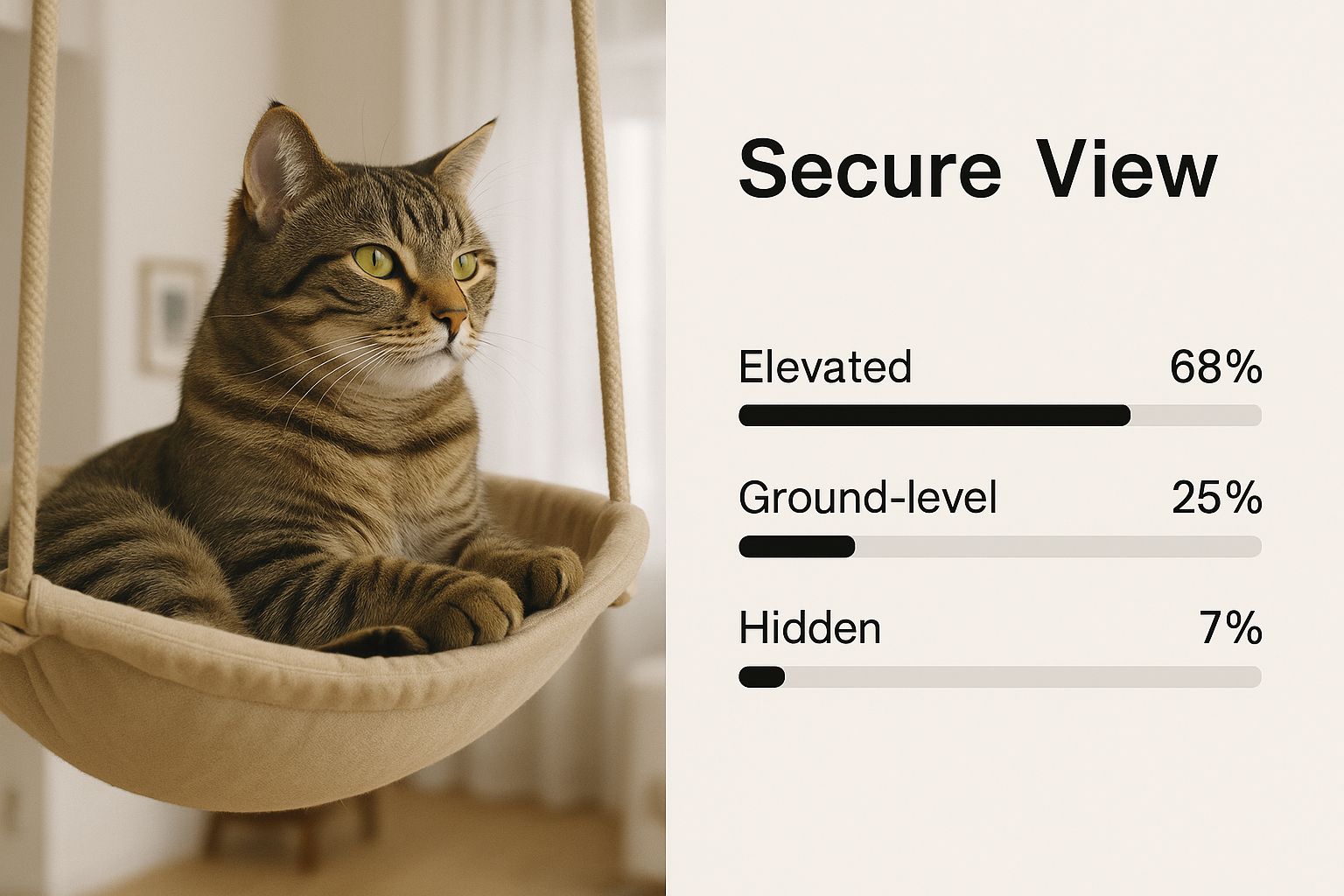
As you can see, it’s all about giving them that perfect combination of a commanding view and a secure space, satisfying a core feline instinct.
When you provide a dedicated spot up high, you’re doing more than just giving them a bed. You’re enriching their entire world in a way that truly resonates with their natural behavior, which often leads to a happier and more confident cat.
To create the ultimate enrichment zone, you could place their new favorite nap spot near engaging toys, like an interactive cat scratching ball. At the end of the day, a cat hammock bed is a simple but incredibly effective way to support your pet’s overall well-being.
Comparing the Different Types of Cat Hammocks
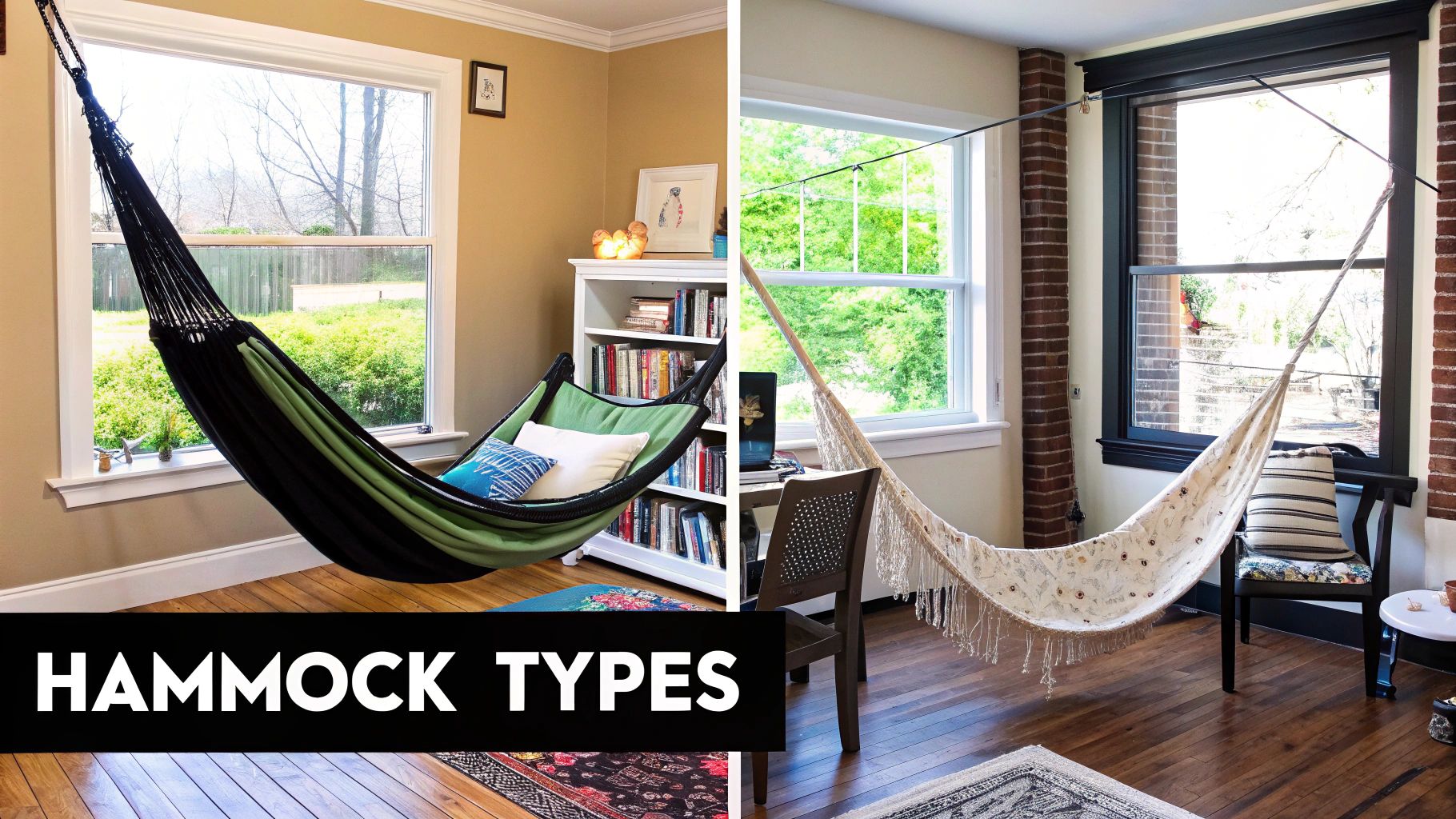
Picking out a cat hammock is a lot like choosing a new armchair. The perfect one depends entirely on who’s using it—and in this case, that’s your cat. Their personality, your available space, and your home’s layout all play a huge role.
Let’s walk through the main styles you’ll find, so you can pick the one that’ll become your cat’s new favorite spot.
The Sun-Worshipping Window Hammock
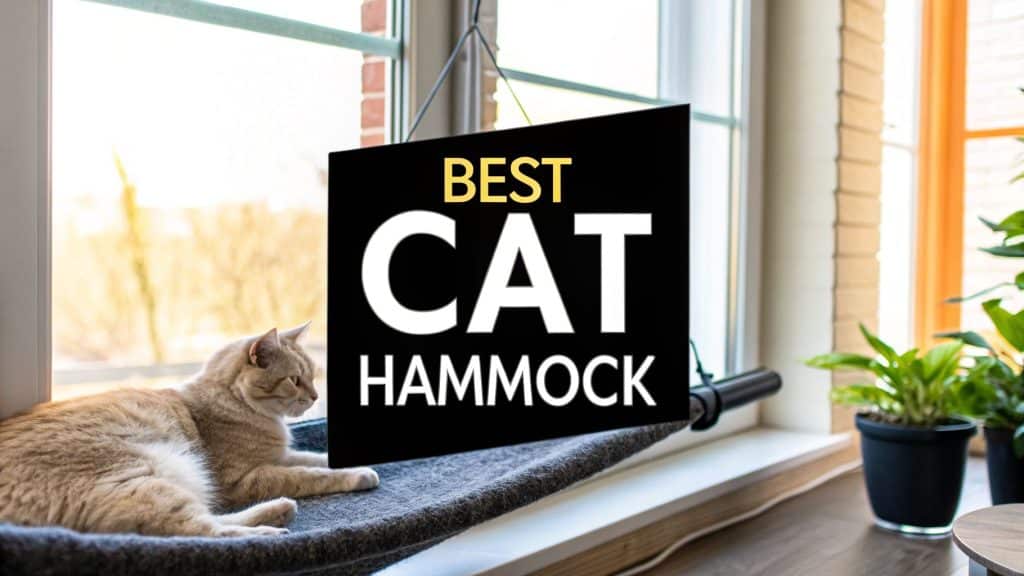
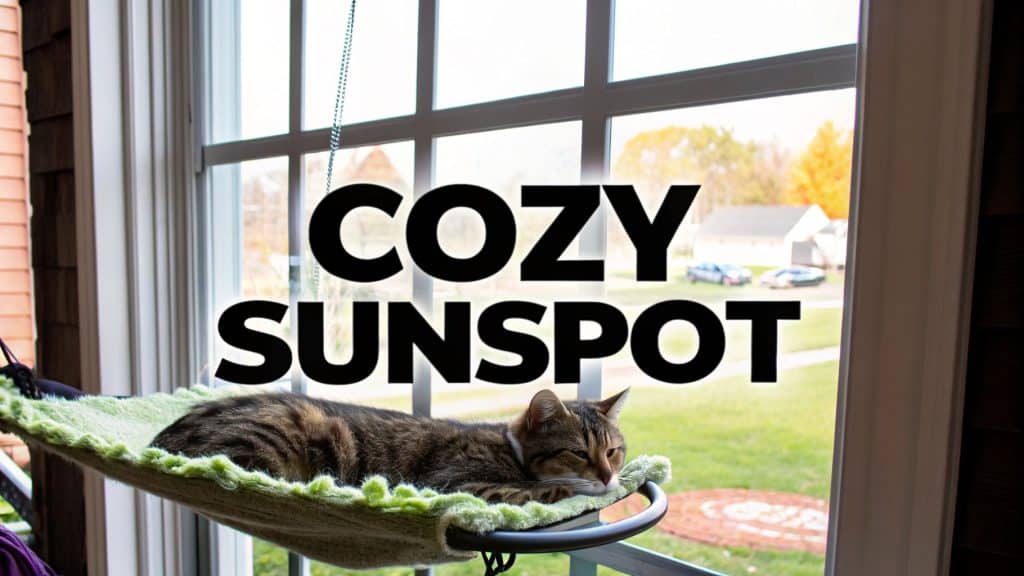
If your cat’s daily routine involves chasing sunbeams and keeping a close eye on the neighborhood squirrels, the window-mounted hammock is their dream come true. These clever beds use heavy-duty suction cups to stick right onto the glass, giving your cat a front-row seat to the world outside.
They’re brilliant space-savers since they don’t take up an inch of floor space. Plus, they offer a double-whammy of direct sunlight and endless entertainment. The only catch? Their stability is all in the suction cups. You’ll need a clean, smooth window and should give them a good press every now and then just to be safe.
This is the go-to choice for apartment dwellers or anyone tight on space. It turns a simple window into a private theater and tanning lounge for your cat. The popularity of these smart designs is no surprise.
In fact, the entire cat furniture market, which includes items like a cat hammock bed, is set to grow from about USD 5.79 billion in 2024 to USD 9.26 billion by 2033. This boom is fueled by people in cities looking for compact, clever furniture that makes life better for their pets in smaller homes. You can explore more about the cat furniture market trends on Business Research Insights.
The Versatile Freestanding Hammock
Think of the freestanding hammock as the reliable, classic option. It’s essentially a sturdy frame, usually wood or metal, holding a cozy fabric sling. The beauty is you can put it anywhere—the corner of the living room, next to your desk, or at the foot of your bed.
They are rock-solid and don’t need a wall or window for support, making them a fantastic, worry-free choice for bigger cats or homes with multiple feline friends. The only real downside is that they do take up floor space, so you’ll need to account for that.
A freestanding cat hammock bed offers total flexibility. You can easily move it to follow the sunspots throughout the day or place it near a heater in the winter, ensuring your cat always has the best seat in the house.
The Sturdy Wall-Mounted Perch
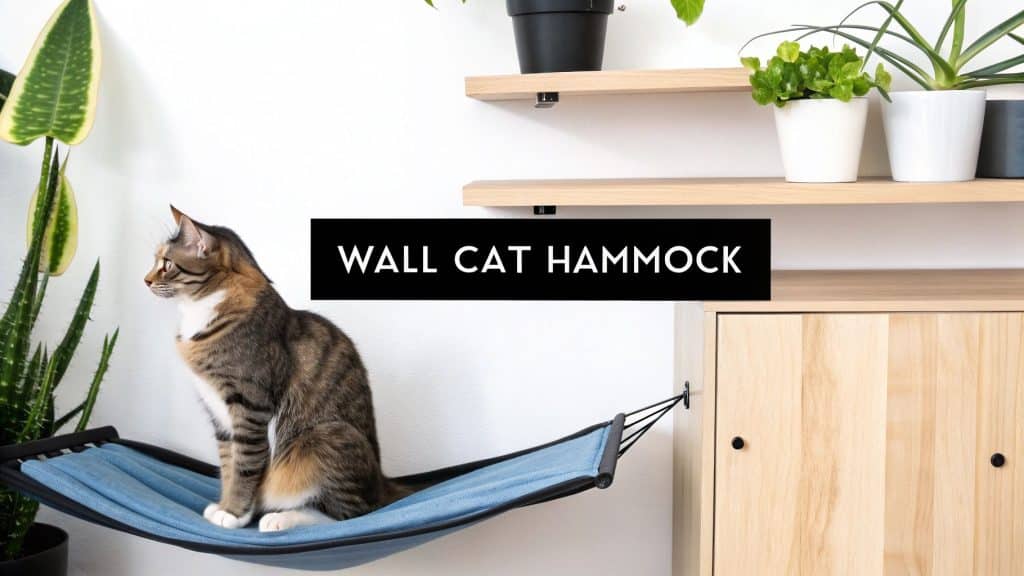
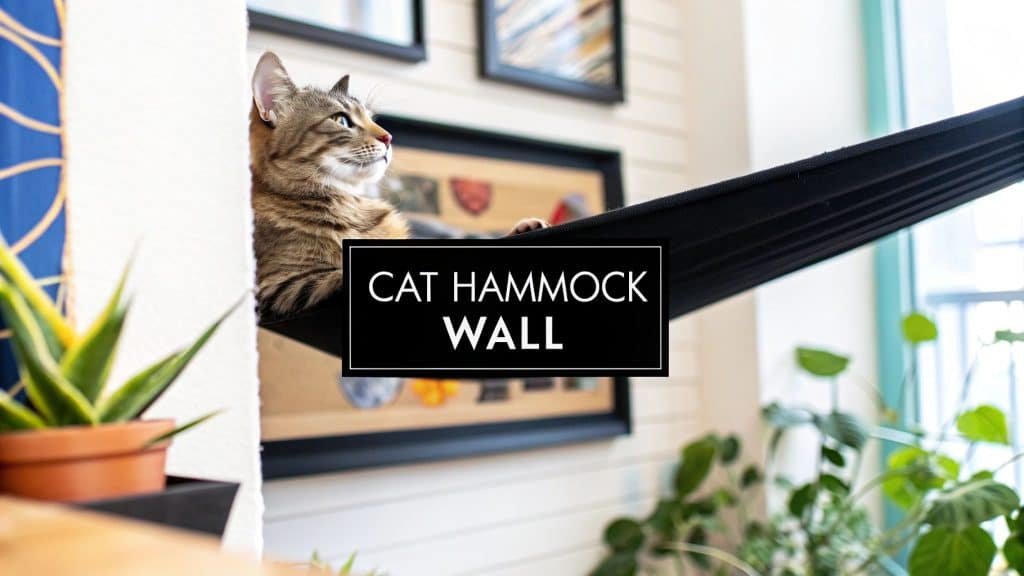
For the feline adventurer who sees your home as a personal climbing gym, a wall-mounted cat hammock is the ultimate prize. These are screwed directly into your walls, often as part of a larger “cat highway” with shelves and steps leading up to it.
On the plus side, they create a super-stable, permanent perch that satisfies a cat’s natural urge to be up high. They also keep your floors completely clear. The trade-off is the installation. You’ll need to break out the stud finder and drill, and once it’s up, it’s up.
This style is perfect for building a dedicated vertical world for your cat, giving them a safe spot to survey their kingdom from above. It’s a bit of a project, but your bold, active cat will absolutely love you for it.
The Clever Under-Chair Hammock
Last but not least, we have the under-chair or radiator hammock—the master of disguise. These ingenious designs clip onto the legs of a chair or table, or hang from a radiator, turning completely unused space into a snug hideaway.
These are absolutely perfect for shy or timid cats who feel safer in a sheltered, den-like space. They can snooze away, hidden from view but still close to the action (and the warmth!).
Cat Hammock Bed Type Comparison
To make the choice even easier, here’s a quick breakdown of how these different hammock styles stack up against each other.
| Hammock Type | Best For | Installation | Space Requirement |
|---|---|---|---|
| Window-Mounted | Sunbathers & bird watchers in smaller homes | Simple suction cup attachment | None (uses window space) |
| Freestanding | Larger cats, multi-cat homes, or for flexibility | No installation needed | Requires floor space |
| Wall-Mounted | Active climbers & creating vertical territory | Requires tools & stud-finding | None (uses wall space) |
| Under-Chair | Shy cats who love cozy, hidden spots | Simple straps or clips | None (uses existing furniture) |
Ultimately, the best cat hammock bed is the one that fits seamlessly into both your cat’s life and your home. By considering your cat’s habits—are they a sun-seeker, a climber, or a hider?—you’re sure to find a perch they’ll refuse to leave.
Choosing the Right Size and Materials for Your Cat’s Hammock
Think about how a bad mattress can ruin your sleep. The same goes for your cat’s hammock—the wrong size or material can turn their potential new favorite spot into a total flop. The real secret to picking a perch your cat will actually use comes down to the details: a sturdy frame, comfy fabric, and a size that feels just right.
Getting these three things right means you’re creating a space that’s not just safe, but truly irresistible.
First Things First: The Frame
The frame is the skeleton of the whole operation. Its one job is to provide unwavering stability, no matter what. You’ll usually see frames made from wood, metal, or PVC, and each has its own vibe and benefits.
A solid wood frame often gives you the best stability, especially for freestanding models, and it adds a warm, natural look that blends into your home decor. Metal frames, on the other hand, offer a sleeker, more modern aesthetic and are incredibly durable. PVC is the lightweight, budget-friendly option.
Regardless of which material you lean toward, the most important thing is that it won’t wobble or tip, especially if you have a cat who likes to launch themselves into bed with gusto.
It’s All About the Fabric
Now for the part your cat really cares about: the sling. This is where all the kneading, curling up, and serious snoozing happens, so the texture and durability are a big deal.
You’ll generally find two popular fabric choices:
- Soft Fleece: This stuff is the undisputed champion of coziness. Its plush texture is perfect for trapping warmth, making it a dream for cats who love to snuggle in or for homes in cooler climates.
- Breathable Canvas: A tougher, more rugged option. Canvas holds up well against claws and is less likely to snag. It’s also breathable, which helps keep your cat cool, and it’s usually a breeze to wipe clean.
The focus on better materials is a big reason the pet furniture world is growing. The cat furniture market, which includes all these cool beds and hammocks, is expected to jump from USD 1.04 billion in 2024 to about USD 1.58 billion by 2031. People want stylish, well-made products that look good in their homes, and manufacturers are listening. You can read more about the cat furniture market on Verified Market Research if you’re curious.
Finding That “Purrfect” Fit
When it comes to size, one size definitely does not fit all. A hammock that’s too small will feel cramped, but one that’s too big won’t give them that secure, hugged feeling they crave.
The first, and most important, step is to check the manufacturer’s weight limit. Seriously, don’t just guess on this one. Safety always comes first.
Next, get a rough measurement of your cat from their nose to the base of their tail. This gives you a good baseline for the length they’ll need to stretch out. The best hammock will be big enough for a full-body stretch but snug enough to feel like a cozy cradle.
A good rule of thumb is to add a few extra inches to your cat’s measurement just to be safe. If you have a larger cat like a Maine Coon or Ragdoll, you absolutely need to look for models specifically marked as “large” or “extra-sturdy.”
By taking a little time to think about the materials and the measurements, you’re not just buying another piece of pet furniture—you’re creating a little sanctuary for your best friend. Feel free to explore our complete collection of premium beds and mats to find the perfect one.
How to Install Your Cat Hammock Safely
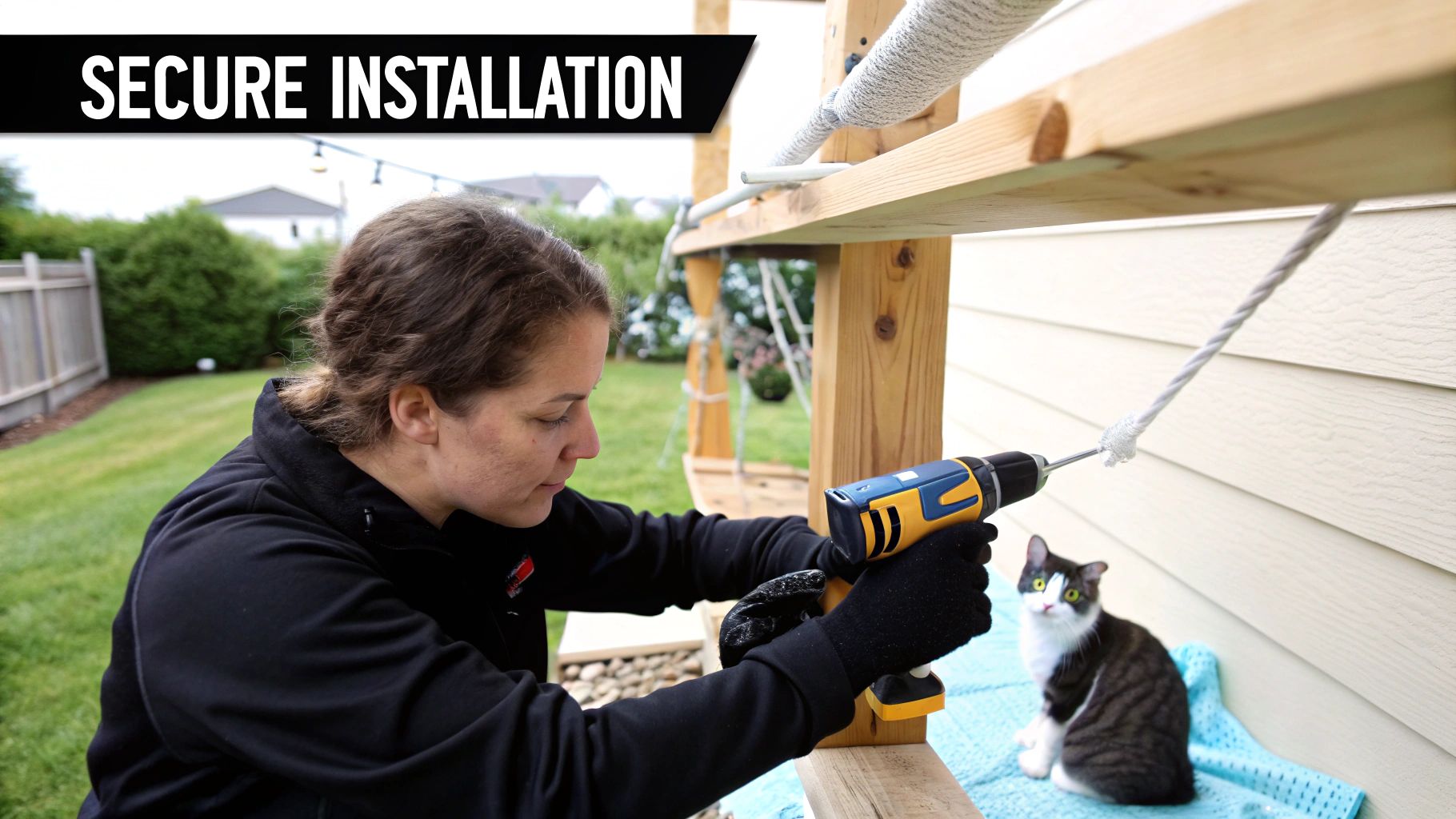
You’ve picked out the perfect cat hammock, and your kitty is probably already circling it with a mix of suspicion and excitement. But before they can take that inaugural leap, there’s one non-negotiable step: making sure it’s installed securely. A wobbly perch isn’t just uncomfortable; it’s a safety hazard waiting to happen.
Let’s walk through how to set up each type of hammock so it’s sturdy and safe from day one. Your cat is counting on you to make sure their new throne is ready for royalty.
Mastering the Window-Mounted Hammock
For any hammock that sticks to a window, success or failure comes down to one thing: the suction cups. Think of them like a gecko’s feet—they need a perfectly clean, smooth surface to create a super-strong bond. I’ve seen countless hammocks fail simply because this first step was rushed.
Here’s how to get it right the first time:
- Clean the Surface: Start by giving the window a thorough wipe-down. I recommend using rubbing alcohol or a simple 50/50 mix of white vinegar and water. This cuts through any grime or oily film that you can’t even see.
- Prep the Suction Cups: Don’t forget the cups themselves! Give them a quick wipe with rubbing alcohol, too. Pro tip: soaking them in warm, soapy water for a few minutes makes them softer and more pliable, which helps create an even better seal. Just be sure to dry them completely.
- Press and Hold: Now, press each cup firmly against the glass. Push from the center out to squeeze out any trapped air bubbles. Hold each one down for a good 15-20 seconds to let the vacuum seal really take hold.
Securing a Wall-Mounted Perch
A wall-mounted cat hammock bed asks for a little more elbow grease, but the payoff is a rock-solid platform. The absolute golden rule here is to always anchor it into a wall stud. Trust me, drywall alone won’t hold up to a cat launching itself onto the perch.
Attaching a hammock to just drywall is like pitching a tent in soft sand—it might seem stable for a minute, but it’s going to collapse under pressure. The studs are the strong wooden bones of your wall, and that’s what you need to anchor into.
Grab a stud finder to locate the framework in your wall. Once you’ve marked your spot, use the hardware that came with the hammock to drill the frame directly into that stud. This creates a foundation that can handle even the most enthusiastic pounces.
Assembling a Freestanding Unit
Freestanding hammocks are by far the easiest to put together, but you still need to “wobble-proof” them. As you assemble it, tighten every screw and bolt so they’re snug. Be careful not to overdo it, though, as that can strip the threads.
Once it’s built, place it on a flat, level floor. If it still has a slight wobble, double-check that all the legs are even. Sometimes, a small felt furniture pad under one corner is all you need to fix a minor imbalance.
Installation Safety Checklist
Before you give your cat the green light, run through this quick final check:
- Weight Test: Press down on the hammock firmly with your hands. Use more pressure than your cat’s actual weight to simulate a jump.
- Wiggle Check: Grab the frame and try to move it side-to-side and up-and-down. It should feel solid with very little movement.
- Hardware Inspection: Do one last check to make sure every screw is tight and all suction cups are fully sealed against the glass.
- Wait a Bit: For window models, it’s smart to let the suction cups set for at least an hour before introducing your cat. This gives the seal time to fully strengthen.
Keeping Your Cat Hammock Clean and Secure
So, you’ve found the perfect hammock for your cat. To make sure their new favorite spot stays safe and inviting for the long haul, a little upkeep is all it takes. Think of it less as a chore and more as a simple routine to keep their perch pristine.
A clean hammock is a happy hammock. Cats, just like us, appreciate a fresh bed. Regular cleaning keeps odors at bay and gets rid of the fur and dander that inevitably builds up.
Creating a Simple Cleaning Routine
How you clean the hammock really boils down to the material it’s made from. Luckily, most manufacturers know this, and the fabric slings are usually designed to pop right off for easy washing.
- Machine-Washable Fabrics (Fleece/Cotton): This is the easiest. Just detach the sling, throw it in the wash on a gentle cycle with cold water, and use a mild, pet-safe detergent.
- Durable Fabrics (Canvas/Burlap): These tougher materials often just need a quick spot-clean. A damp cloth with a little soap will handle most spills. For a more thorough wash, you can hand-wash the sling in cool water and hang it up to air dry.
- The Frame: Don’t forget the bones of the operation! Whether it’s wood, metal, or PVC, give the frame a quick wipe-down with a damp cloth to get rid of dust and stray hairs.
Keeping your pet’s space clean is a huge part of responsible pet care. If you’re looking for more tips, take a look at our full line of grooming and cleaning supplies to help keep both your pet and your home feeling fresh.
Performing Regular Safety Checks
Beyond just cleaning, it’s a smart idea to do quick safety checks to catch any potential problems before they happen. A little preventative maintenance goes a long way. Once a week, just give the whole thing a once-over for any signs of wear.
A quick visual inspection can catch small issues before they become big problems. This simple habit ensures your cat’s perch remains a secure sanctuary, not a potential hazard.
Here’s what to keep an eye on:
- Fabric Integrity: Check for any frayed seams, rips, or spots where the fabric is getting thin. A small hole can get much bigger with a little help from your cat’s claws.
- Structural Soundness: For a freestanding model, give it a little jiggle to make sure the legs aren’t wobbly and all the screws are tight. For wall-mounted hammocks, double-check that the anchors are still holding strong.
- Suction Cup Security: If you have a window perch, make it a habit to press down firmly on each suction cup. Fluctuating temperatures can sometimes cause them to lose their grip, and a quick press will reseal them to the glass.
By making these quick cleaning and safety checks part of your routine, you’ll ensure your cat’s hammock bed remains their beloved, secure escape for years to come.
Have a Few Lingering Questions?
So, you’ve got your eye on the perfect cat hammock, but a few “what ifs” are still bouncing around in your head. That’s perfectly normal. Anytime you introduce something new into your cat’s kingdom, there are bound to be questions.
Let’s tackle some of the most common concerns I hear from cat owners. This way, you can feel completely prepared to give your furry friend their new favorite spot.
“My Cat Is Completely Ignoring the New Hammock. What Did I Do Wrong?”
This is, without a doubt, the number one worry. The good news is, you probably didn’t do anything wrong! Cats are creatures of habit and are naturally suspicious of new things in their environment. Your first instinct might be to plop them onto it, but that’s a surefire way to make them avoid it forever.
Instead, you need to outsmart your cat with a little patience and strategy:
- Location, Location, Location: Put the hammock somewhere your cat already loves to hang out. Is there a specific sunbeam they follow around the house? Or a quiet corner where they watch the household action? Start there.
- Scent is Key: A cat’s sense of smell is its “is this safe?” detector. Make the hammock smell like home by tossing their favorite blanket on it, or even a t-shirt you’ve worn. The familiar scent tells them it’s part of the family.
- Sweeten the Deal: A few treats or a little sprinkle of catnip on the hammock can be incredibly persuasive. When they finally hop up—or even just sniff it—shower them with praise and maybe another treat.
It might take a few days or even a couple of weeks, but don’t give up. Let them discover it on their own terms, and they’ll claim it as their throne soon enough.
“Are Those Window Hammocks with Suction Cups Actually Safe?”
Yes, they absolutely can be—but their safety relies 100% on proper installation. Modern suction cups are engineering marvels; they’re designed to create an incredibly powerful vacuum seal. When you have four of them working together, they can hold a surprising amount of weight.
The real secret is in the prep work. You need a flawless seal, which means getting rid of any grime or oil that could get in the way. Wipe down both the window and the suction cups with a little rubbing alcohol, let them dry, and then press each cup firmly against the glass until all the air is out.
A crucial pro-tip: Always follow the manufacturer’s weight limit to the letter. It’s also a great idea to give the suction cups a quick press every week or so, just to make sure the seal is still rock-solid.
“How Do I Choose a Hammock Big Enough for My Large Cat?”
If you’re lucky enough to share your home with a gentle giant like a Maine Coon or a Ragdoll, standard-sized hammocks just won’t cut it. You need to think about both space and sturdiness.
First, look at the weight capacity. Find a model rated for significantly more than your cat’s actual weight. This isn’t just about holding them while they sleep; it’s about handling the force of them leaping into it.
Second, check the dimensions. Your cat should be able to do more than just curl up; they need room to stretch out. A great rule of thumb is to measure your cat from their nose to the base of their tail and find a hammock that’s a good few inches longer than that. Many companies make “large” or “XL” versions with beefier frames and bigger fabric slings, built specifically for the more robust feline.
Ready to find the perfect perch for your cat? The experts at Ur Pet Store have curated a collection of the best cat hammock beds, designed for safety, comfort, and style. Explore our selection today and give your feline friend the elevated lounging experience they deserve. Find their new favorite spot at https://urpetstore.com.