

Blog
Top picks: no pull harness large dog for calmer walks


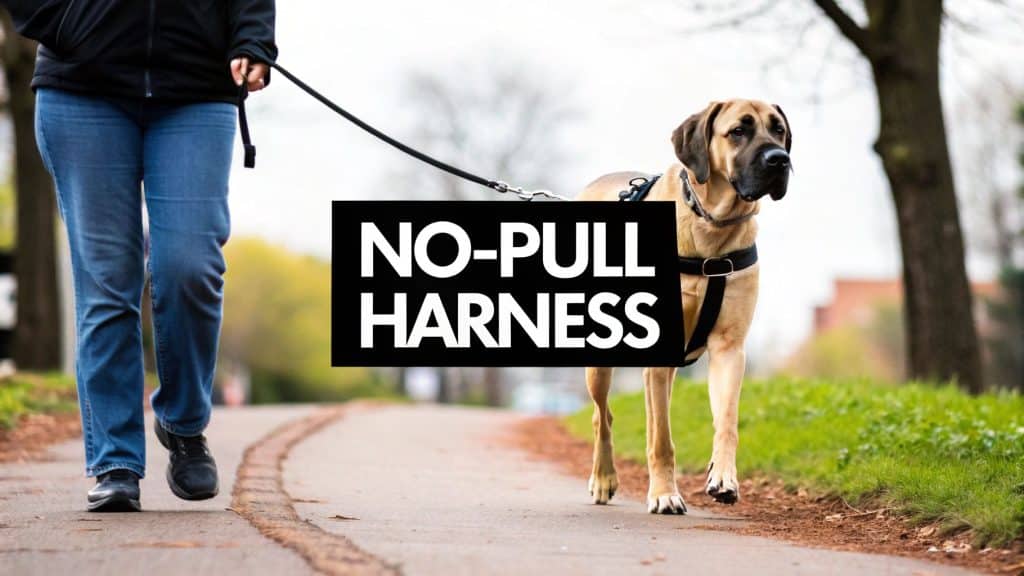
If you've ever felt that familiar, arm-yanking jolt when walking your big dog, you know the struggle is real. What should be a relaxing stroll can quickly turn into a full-blown tug-of-war, leaving you frustrated and your dog potentially at risk. It’s a common problem, but thankfully, there's a straightforward and humane solution: the no-pull harness.
End the Tug of War on Your Walks
Let's be honest, walking a powerful dog who pulls is exhausting. That constant strain on your shoulder, the sudden lunges at squirrels, the feeling that you're just along for the ride—it can sour the whole experience. Many owners feel stuck, thinking their only options are punishing collars or endless, frustrating training sessions.
But what if you could change the dynamic entirely? A no-pull harness is like power steering for your dog. It doesn't sap their strength or spirit, but it gives you a way to communicate and guide them effortlessly. This one piece of gear can completely transform your walks from a battle of wills into a cooperative partnership.
A Modern Solution for an Age-Old Problem
Pulling isn't just annoying; it’s a genuine safety hazard. A strong lunge can pull you off balance, and a standard collar can put immense, dangerous pressure on your dog's throat and windpipe. The genius of a no-pull harness is its design—it shifts the point of leverage from the fragile neck area to the strong, sturdy chest.
When you switch, the benefits are immediate and obvious:
- Better Control: You'll find it much easier to manage your big, enthusiastic pup, especially around distractions or in busy areas.
- Enhanced Safety: It takes the pressure off the throat, dramatically reducing the risk of neck and tracheal injuries common with collars.
- Effective Training: It’s a gentle training tool that teaches your dog a simple lesson: pulling gets them nowhere, so they naturally stop trying.
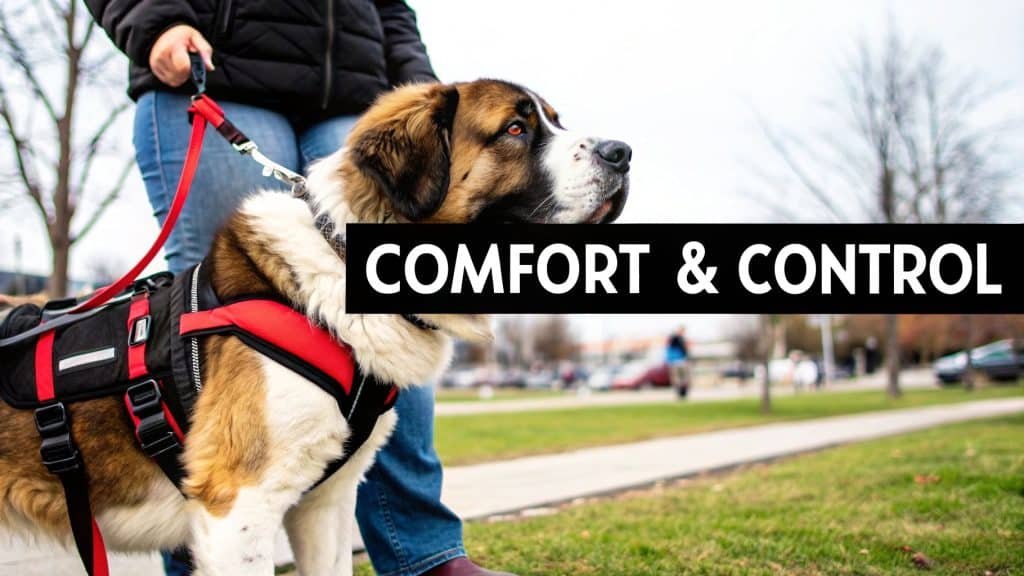
- Superior Comfort: The harness distributes pressure evenly across the chest and shoulders, which is far more comfortable for your dog.
This isn't about restricting your dog; it's about building a better walking relationship. And it's a change that dog owners are embracing worldwide. In the U.S. and UK, sales for no-pull harnesses for dogs over 50 lbs have shot up by over 18% year-over-year. Vets are on board, too—studies show front-clip harnesses can cut the risk of neck injuries by up to 65% in strong breeds compared to traditional collars. To see why so many are making the change, you can explore more market insights about the rise of dog harnesses.
A no-pull harness fundamentally changes the dynamic of your walk. Instead of a contest of strength, it becomes a conversation where you can gently guide your dog, turning pulling into a non-issue and making every outing calmer.
A calm walk is often just one piece of the puzzle. For dogs who pull because they're anxious or over-excited, creating a peaceful environment at home is just as crucial. Many owners find that the combination of better walking gear and a comforting safe space makes all the difference. You might be interested in our guide on the best dog beds for anxiety to help create that complete sense of security for your companion.
How a No Pull Harness Actually Works
It can feel like magic the first time you use one, but the secret behind a no pull harness large dog owners swear by is all about simple physics and smart design. It's not about winning a battle of brute strength against your dog—a fight you're likely to lose. Instead, this tool completely changes the dynamic of your walk from a constant tug-of-war to a gentle conversation.
The magic is all in where you clip the leash. A traditional harness has the clip on your dog's back, which is their center of power. When a strong dog pulls against that point, it actually encourages them to pull harder. It triggers what’s known as the "opposition reflex," their natural instinct to push against pressure. Think about sled dogs—they're harnessed from the back to help them pull with maximum force.
A no-pull harness brilliantly flips that entire concept around.
The Power of Redirection
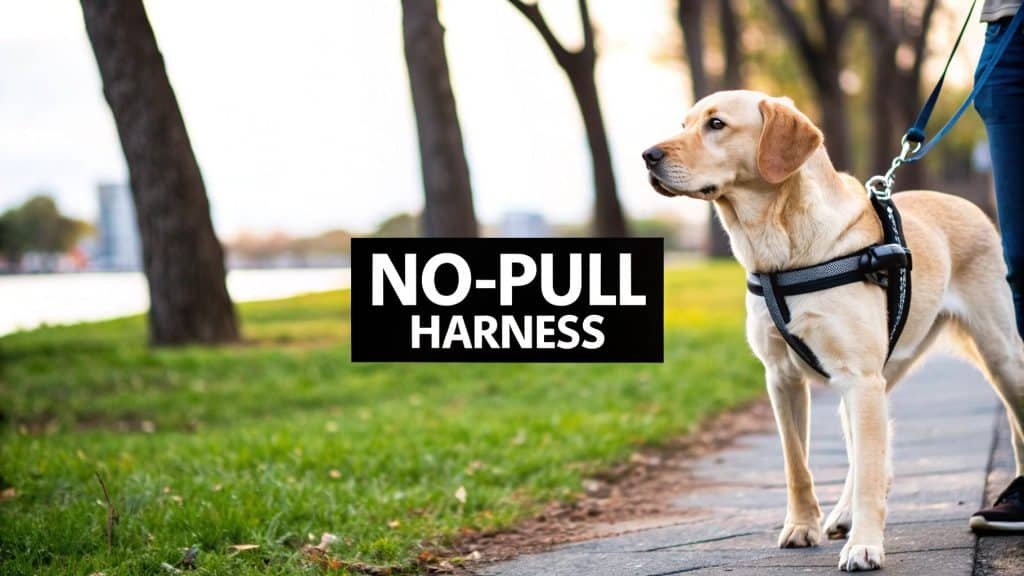
The most popular and effective design is the front-clip harness. This style places a D-ring right in the middle of your dog's chest. When your dog lunges forward, the leash gently tightens and guides their body to turn slightly back toward you.
Suddenly, they can't dig their paws in and use their full body weight to drag you down the street. Their forward momentum gets redirected sideways. Pulling becomes an awkward and pretty pointless exercise. It's not painful or punishing; it just makes pulling a completely ineffective way to get where they want to go. Your dog quickly figures out that walking calmly beside you is the best way to move forward.
This infographic shows exactly how a no-pull harness breaks the frustrating cycle of pulling.
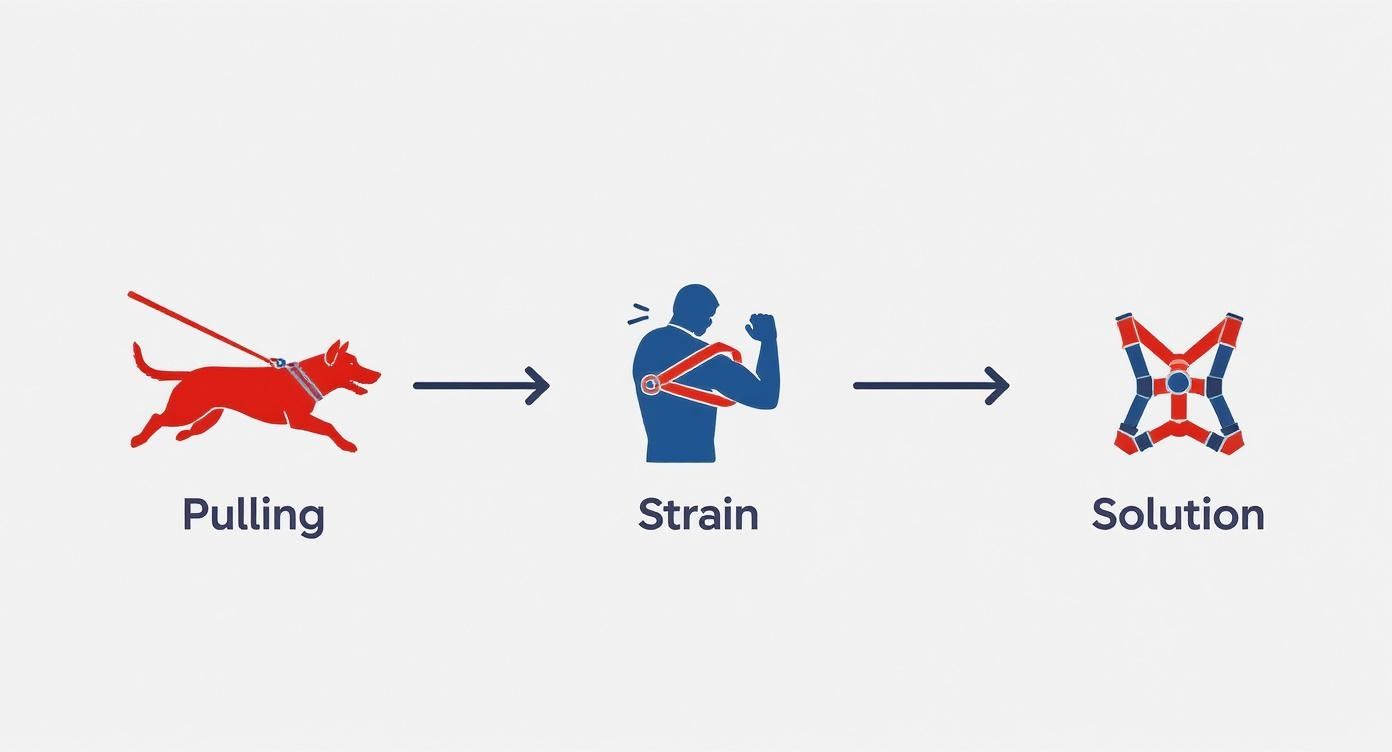
As you can see, the harness interrupts the pulling cycle by redirecting your dog's force, ending the strain for both of you.
Dual-Clip Harnesses for Ultimate Control
For those extra-powerful or reactive big dogs, a dual-clip harness offers the best of both worlds. These harnesses have a clip on the chest and one on the back, giving you incredible flexibility and control on your walks.
This two-clip setup allows for a few different strategies:
- Training Mode: Use the front clip by itself to really zero in on teaching your dog not to pull. This is its main job.
- Relaxed Walks: Once your dog is walking like a pro, you can switch to the back clip for more casual strolls when pulling isn't a concern.
- Maximum Control: In busy areas with lots of distractions, you can use a double-ended leash. Clip one end to the front and the other to the back. This gives you two points of contact, much like holding the reins of a horse, for balanced and secure control.
By shifting the point of leverage from the back to the front, a no-pull harness doesn't just stop pulling—it teaches a new way to walk. It changes the conversation from a tug-of-war into a cooperative journey.
At the end of the day, a no-pull harness is a fantastic training tool. It gives you the control you need to safely and humanely teach your big dog that the best way to explore the world is on a nice, loose leash right beside you.
Must-Have Features in a Large Dog Harness
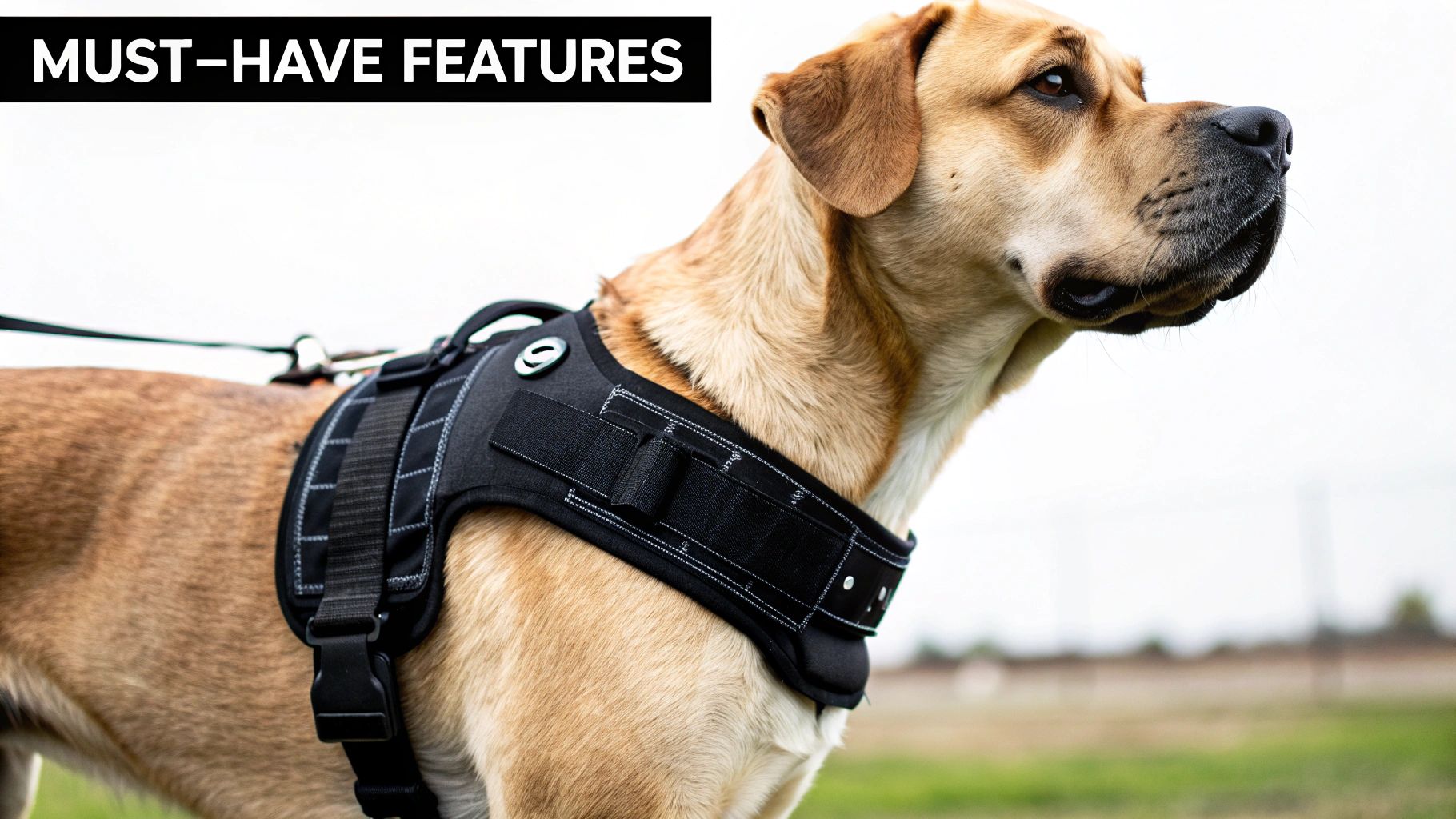
When you’re walking a large, powerful dog, the harness you choose is more than just an accessory—it's your lifeline. A flimsy harness that works fine for a little dog can spell disaster with a determined Great Dane or a powerful Rottweiler. That's why every no pull harness large dog owners pick has to be built for strength from the ground up.
Think of it like comparing climbing rope to a piece of twine. They might look similar, but only one is engineered to handle serious force and keep you safe. Your dog’s harness needs to be that climbing rope.
Durability and Hardware Quality
First things first: look at the materials and the hardware. This is where a harness either proves its worth or becomes a liability. The fabric needs to be tough, something like ballistic or ripstop nylon that can withstand pulling and won’t tear under pressure.
But the real weak points are always the metal and plastic bits—the rings and buckles.
- Welded D-Rings: A strong lunge can easily pry open a non-welded D-ring. Look for rings that are welded shut for maximum security, especially for the front leash attachment.
- Heavy-Duty Buckles: Flimsy plastic buckles are a no-go. You need robust, load-rated buckles (metal is often best) that snap shut with a confident click.
- Reinforced Stitching: At every stress point where straps connect, look for box stitching (a square with an "X" inside). This is the gold standard for strength and durability.
The hardware on your dog’s harness is like the seatbelt in your car. You hope you never need its full strength, but when you do, it absolutely cannot fail.
Comfort and Ergonomic Design
A harness is useless if it’s uncomfortable. If it chafes, rubs, or restricts movement, your dog will dread putting it on, and your walks will become a battle.
Good design is all about pressure distribution. Wide, padded straps are a must for big dogs, as they spread the force across their chest and back instead of digging into their skin. Look for soft, breathable mesh lining to keep your dog cool and prevent hot spots. A truly ergonomic fit won't impede their natural shoulder movement, letting them run and play freely.
It's clear that owners of big dogs are seeking better gear. The no-pull harness market now makes up 15–20% of all premium dog walking equipment sales, largely because manufacturers are finally focusing on creating designs that are both strong and comfortable for larger breeds.
To help you zero in on what's most important, here’s a quick-reference guide to the essential features.
Essential Features of a Large Dog No Pull Harness
| Feature | What to Look For | Why It Matters for Large Dogs |
|---|---|---|
| Front D-Ring Clip | A sturdy, welded metal ring located on the chest plate. | This is the core no-pull mechanism. It redirects their forward momentum, turning them back toward you when they pull. |
| Durable Materials | Ripstop or ballistic nylon fabric; reinforced stitching. | Large dogs exert immense force. These materials prevent tearing and ensure the harness lasts. |
| Heavy-Duty Hardware | Welded metal rings and load-rated plastic or metal buckles. | These are the most common failure points. Weak hardware can snap under the strain of a sudden lunge. |
| Padded Straps | Wide, padded chest and back panels with breathable lining. | Prevents chafing and distributes pressure evenly, ensuring your dog stays comfortable and avoids injury. |
| Multiple Adjustments | At least 4-5 adjustment points around the neck and chest. | A secure, customized fit is non-negotiable. It stops the harness from shifting and prevents escapes. |
| Back Grab Handle | A sturdy, easy-to-grip handle on the back of the harness. | Gives you immediate control in tight situations, like busy streets or encounters with other dogs. |
This table should give you a clear checklist for what makes a harness truly ready for a big dog.
Adjustability and Essential Extras
A perfect fit is everything. A harness with multiple adjustment points—usually around the neck and across the chest—lets you create a snug, secure fit that your dog can't squirm out of. Use the two-finger rule: you should be able to slide two fingers between the harness and your dog’s body, but no more.
One last feature that’s practically a necessity on a no pull harness large dog owners will appreciate is a sturdy handle on the back. It’s perfect for those moments when you need instant, close control—whether you're guiding them through a crowd or helping them into the car.
If you’re ready to find the perfect option for your companion, you can explore our full range of collars, leashes, and harnesses designed with safety and comfort in mind.
Getting the Perfect Fit for Your Dog
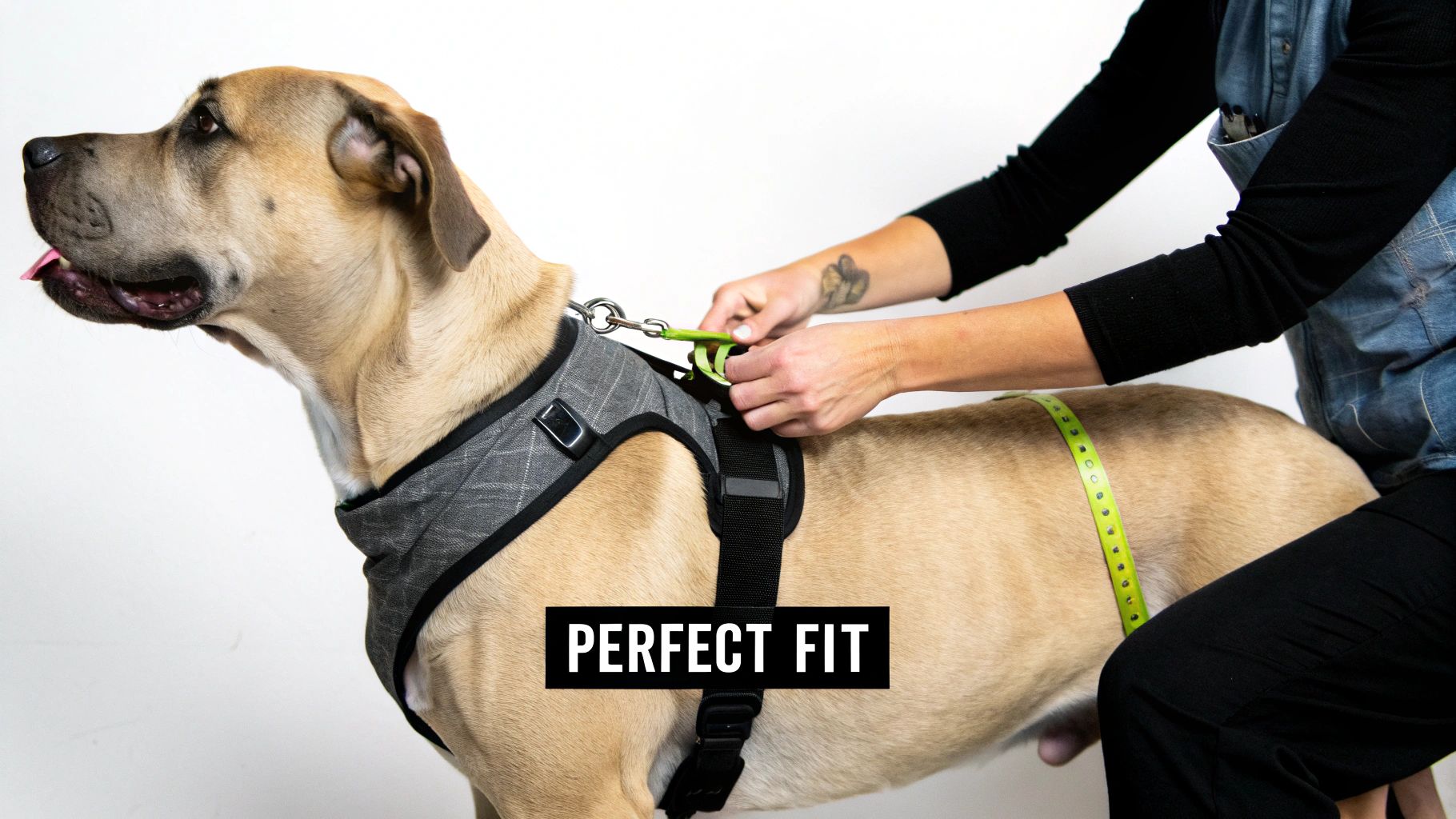
A no pull harness for a large dog is only as good as its fit. It’s a lot like a pair of quality hiking boots—too loose and you’ll get blisters, too tight and every step is agony. A proper fit is the absolute foundation for a harness that’s safe, comfortable, and actually works.
If the harness doesn't fit right, it can shift around, chafe their skin, or even give a clever dog an escape route. It also won't redirect their pulling force correctly, which kind of defeats the whole purpose. Taking just a few minutes to measure and adjust the harness will make all the difference on your walks.
Taking Accurate Measurements
Before you click "buy," you'll need a soft, flexible measuring tape. Just guessing your dog's size based on their weight or breed is a surefire way to end up with the wrong fit. You really only need two key measurements to nail it.
- Chest Girth: This is the most important one. You'll want to wrap the tape around the widest part of your dog’s rib cage, right behind their front legs.
- Neck Measurement: Next, measure around the base of their neck, basically where a collar would naturally rest. Be careful not to measure too high up by their ears.
With those two numbers in hand, check them against the harness manufacturer’s sizing chart. If you find your dog is right on the line between two sizes, it's almost always better to go with the larger one. Most harnesses have plenty of room to tighten the straps for a snug fit.
The Two-Finger Rule for a Secure Fit
Once the harness arrives, it’s time for the first fitting. Loosen all the straps completely before putting it on your dog. Then, you can start adjusting them one by one, usually starting with the neck straps and then moving to the chest.
You're aiming for a snug fit, but definitely not a tight one. The easiest way to check this is by using the classic two-finger rule.
You should be able to comfortably slide two fingers, stacked flat, between any strap and your dog's body. If you can easily fit your whole hand in there, it’s too loose. If you can’t even get two fingers under, it's dangerously tight.
This simple check ensures the harness is secure enough to keep your dog from wiggling out of it, but still loose enough to allow a full range of motion without pinching their skin or rubbing them raw. A good fit will never get in the way of their natural stride.
Final Adjustments for a Balanced Harness
After you think you've got it right, clip on the leash and do a quick test walk around the house. Watch how the harness moves—or doesn't move—on your dog's body. A well-fitted harness will stay centered and won't twist or slide off to one side.
A few final things to look for:
- Check for Gaps: Make sure there aren't any big gaps around the shoulders where a paw could potentially get tangled.
- Observe for Pinching: Keep a close eye on the area behind their front legs—their "armpits"—to see if any straps are digging in or rubbing.
- Front Clip Position: The D-ring on the chest should sit squarely on their breastbone (the sternum), not get pulled over to the side.
Running through these final checks will confirm that the no pull harness for your large dog is perfectly dialed in. This means maximum control for you and total comfort for them on all your adventures together.
Our Top Harness Picks for Large Dogs
Picking the right no pull harness large dog owners can rely on is a whole lot easier when you know what to look for. To make that choice simpler, we've gone through and picked out our absolute best-sellers, each one built to handle the unique needs of bigger, more powerful dogs. We’ll connect the dots between what makes each harness great and the key features we’ve already talked about, so you can feel confident in your decision.
This isn't just a random list—it's a carefully chosen selection based on what we know works: durability, comfort, and real-world effectiveness. The demand for better, more humane walking tools has exploded recently. In fact, the global no-pull dog harness market was valued at USD 1.12 billion, and it’s a key part of a pet accessories industry expected to hit USD 7.05 billion by 2031. North American dog owners, in particular, are leading the charge in looking for top-quality gear for their pets.
For the Strongest Pullers
Let's be honest—for dogs that pull with serious muscle, "durable" isn't just a nice-to-have, it's a must. Our top pick for the super-strong puller is built like a fortress. Think reinforced stitching at every single stress point and heavy-duty, welded D-rings that won't give an inch. It also has an extra-wide, padded chest plate that does a fantastic job of spreading out the pressure, so there’s no single point of strain.
This model is a favorite for a reason. Its tough construction makes it the perfect match for large, muscular breeds like Rottweilers or Mastiffs. The sturdy handle on the back is a game-changer, giving you that extra bit of close-quarters control when you're navigating a busy sidewalk or need to quickly manage an unexpected situation. It’s all about peace of mind.
A harness for a powerful dog must be engineered for safety above all else. Its hardware and stitching are the critical points that stand between a controlled walk and a potential accident.
For the Urban Adventurer
If most of your adventures are on city streets, especially during those early morning or late evening walks, visibility is your biggest safety feature. Our go-to harness for the urban explorer is lightweight but still incredibly strong, and it’s decked out with bright, reflective trim all along the straps. This makes your dog much easier for drivers and cyclists to spot when the sun goes down.
While it still has that all-important front clip for no-pull control, this harness is designed for a sleeker, more comfortable fit that doesn’t get in the way of your dog’s natural movement. It's a fantastic choice for breeds like Greyhounds or German Shorthaired Pointers who need good control without being weighed down by bulky gear.
For Maximum Versatility and Training
Sometimes, what you really need is one piece of gear that can do it all. Our most versatile harness is a dual-clip model that truly excels in its flexibility. You can use the front clip during focused training sessions to correct pulling. Then, once your dog has gotten the hang of walking politely, you can switch to the back clip for a more relaxed, casual stroll. For the ultimate control, you can even attach a double-ended leash to both clips at once.
This adaptability makes it a brilliant long-term investment. If you're someone who appreciates gear that's ready for anything—from an intense training day to a lazy trip to the park—we highly recommend exploring the https://urpetstore.com/product/tactical-dog-harness/ to see these features in action. And if you're looking for more ways to spoil your four-legged friend, you might find some great inspiration in this guide to thoughtful gifts for animal lovers.
Ur Pet Store's Top Harness Picks for Large Dogs
To help you visualize the options, we've put together a quick comparison of our top-rated harnesses. This table breaks down which harness is best for different types of dogs and lifestyles, making it easy to see which one is the right fit for you and your furry companion.
| Harness Model | Best For | Key Features |
|---|---|---|
| The Guardian Pro | Extreme Pullers & Large Breeds | Heavy-duty welded D-rings, reinforced stitching, padded chest plate, and a strong control handle. |
| The Urban Explorer | Night Walks & City Living | High-visibility reflective trim, lightweight design, and a no-chafe, streamlined fit. |
| The Versa-Trainer | Training & Everyday Flexibility | Dual front and back clips for multiple uses, adjustable straps, and breathable mesh lining. |
Each of these harnesses has been chosen because it delivers on its promise of control, comfort, and safety. By matching your dog's specific behaviors and your daily routine to the right features, you'll be well on your way to more enjoyable walks for both of you.
Got Questions? We've Got Answers
Switching from a classic collar to a no-pull harness is a big move, and it's totally normal to have a few questions. You've picked out the gear, but now you want to make sure you're using it right to get the best results for you and your big dog.
Let's clear up some of the most common questions we hear. This way, you can step out on your next walk feeling confident, knowing every outing will be safer and more enjoyable for both of you.
Can My Dog Wear a No Pull Harness All Day?
Even though these harnesses are built for comfort on the move, it's best not to leave one on your dog 24/7. Think of it like your own running shoes—great for a workout, but you wouldn't wear them to bed.
Leaving a harness on all the time can cause skin irritation or matted fur, especially if your dog has a thick coat. More importantly, it's a safety issue. If your dog is home alone, the harness could get snagged on a piece of furniture or their crate, putting them in a dangerous spot. The rule of thumb is simple: harness on for walks and training, harness off for relaxing at home.
Will This Thing Stop My Dog From Pulling Instantly?
A no-pull harness is a fantastic training aid, but it's not a magic wand. You'll likely see a big difference on the very first walk. The front-clip design physically makes pulling feel awkward and less effective for your dog, which is an immediate win.
But the real magic happens when you pair the harness with good training. It gives you the leverage to teach your dog what you do want them to do. Use it as a tool to guide them, and be sure to reward them with praise or a small treat when they walk nicely beside you. This is how you build good habits that last a lifetime.
A no-pull harness isn't about restriction; it's about communication. It opens a door for you to teach your dog that a loose leash is far more rewarding than a tight one.
Is a Front Clip Really Better Than a Back Clip?
When your main goal is to stop pulling, the answer is a definite yes. A harness with a clip on the back can actually encourage pulling. It taps into a dog's natural opposition reflex—their instinct to push against pressure. It’s the same principle used for sled dogs; they're harnessed from the back to help them pull with maximum force.
A front clip, on the other hand, works by gently redirecting their momentum. When your dog pulls, the harness guides them back toward you, making the act of pulling pointless. For the best of both worlds, look for a dual-clip harness. You can use the front clip for training walks and switch to the back clip once your dog has learned to walk politely.
Many dog owners explore various tools to manage behavior. For a wider view on different types of training equipment, you might find valuable insights by understanding different dog training tools like e-collars.
How Should I Clean and Take Care of the Harness?
Keeping the harness in good shape is crucial for safety, especially when you have a strong dog on the other end of the leash. For most fabric harnesses, a simple hand wash with mild soap and warm water does the trick. Just be sure to let it air-dry completely before its next use.
Most importantly, get in the habit of doing a quick safety check before each walk. Look over the stitching, straps, and buckles for any fraying, thinning, or tiny cracks in the plastic. A broken harness is a recipe for disaster, so if you spot any real damage, it's time for a replacement.
At Ur Pet Store, we’re passionate about finding gear that makes life better for pets and their people. A good harness can completely change your daily walks. Ready to find the right one? Explore our full collection at https://urpetstore.com.