


Blog
Choosing a Dog Bed Puppy Will Love


Bringing a new puppy home is one of life’s great joys, but amidst the excitement, it’s easy to overlook a crucial detail: their bed. A proper dog bed for your puppy isn’t just a fluffy accessory; it’s a foundational tool for their well-being. Think of it as their first real piece of property—a safe space that helps them feel secure, supports their tiny, growing body, and helps you establish important boundaries right from the start.
Investing in the right bed isn’t just about comfort. It’s an investment in their health, your training efforts, and their overall happiness as they adjust to their new life with you.
Why Your Puppy Needs a Dedicated Bed
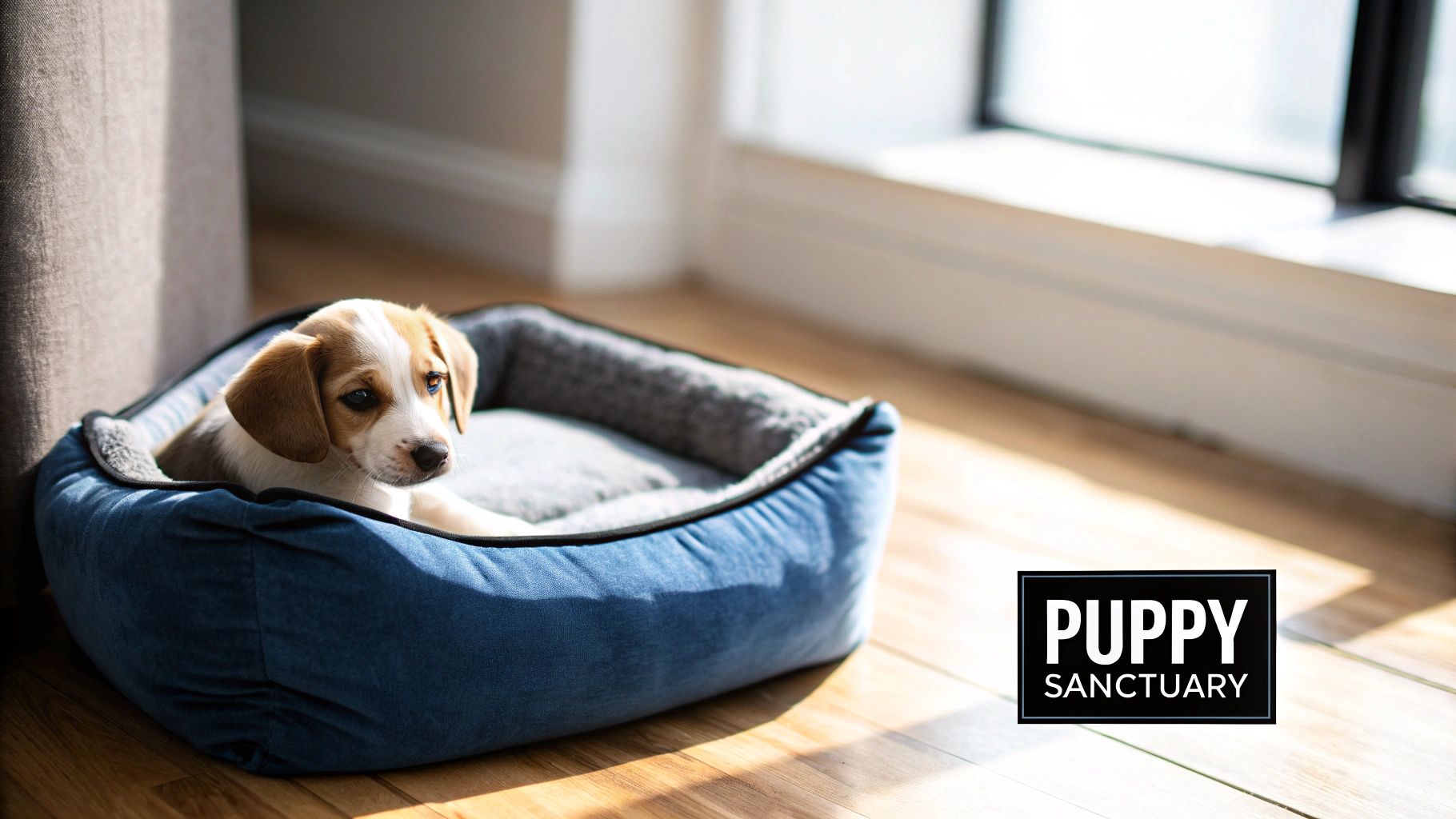
When a puppy first steps into your home, their entire world has changed. Everything is new, big, and a little overwhelming. A dedicated dog bed immediately gives them a sense of territory and security in this strange new place. It becomes their personal den—a predictable comfort zone where they can retreat, decompress, and process all the new sights and sounds.
This little sanctuary is so much more than just a soft spot to nap. It plays a surprisingly big role in their development and training, offering benefits that a simple blanket on the floor just can’t provide.
A Foundation for Training and Behavior
From a training perspective, a puppy bed is your best friend. It gives you a specific place to send them when you need them to settle down, making commands like “go to your bed” concrete and easy for them to understand. This is a game-changer for establishing routines and managing the boundless energy of a young pup.
It also works wonders for setting clear boundaries, which can save your furniture from becoming their personal playground. By teaching your puppy that they have their own special, super-comfy spot, you make it far less likely they’ll try to claim your sofa or bed. You’re proactively preventing habits that can be a real headache to break later on.
- Crate Training Aid: A soft, inviting bed can transform a crate from a cage into a cozy, safe den they willingly enter.
- Housebreaking Support: It helps contain the inevitable accidents and reinforces the idea that some spots are for resting, not for potty breaks.
- Boundary Setting: It gives them a clearly defined space that is theirs and theirs alone, which is key to teaching them to stay off human furniture.
Supporting Healthy Growth and Development
It might seem like all puppies do is sleep, and you’re not wrong—they often clock up to 18-20 hours a day! All that snoozing is serious work, as their bodies are growing at an astonishing rate. A proper dog bed provides the orthopedic support their developing bones and joints desperately need during this time.
A quality puppy bed isn’t just about being cozy. It’s about providing the right support for a body that’s growing incredibly fast. It cushions their joints, helps with proper spinal alignment, and ensures they get the deep, restorative sleep essential for both physical and mental development.
Consistently lying on hard floors can create painful pressure points, especially on their elbows and hips. Over time, this can lead to calluses or even contribute to more serious joint issues down the road. A well-designed bed distributes their weight evenly, protecting their little frame and allowing them to get the high-quality rest they need to grow up strong and healthy.
Getting to Know Your Puppy’s Bed Materials
Picking out the right material for a puppy’s bed is a lot like choosing your own mattress. You’re not just looking for something soft; you’re looking for the right foundation for real comfort, lasting health, and, let’s be honest, easy cleanup. The materials you choose will directly affect your puppy’s sleep, support their growing bones and joints, and make or break your cleaning routine.
Think of the bed’s filling as its engine. Different materials offer completely different benefits, and knowing the difference is the secret to a smart purchase. From orthopedic foam that cushions developing joints to simple polyester that offers a warm cuddle, each option has a role to play.
What’s on the Inside Counts: The Core Filling
The heart of any dog bed is its filling. This is where you’ll see the biggest differences in quality, support, and price, and it’s what will ultimately support your puppy’s skeletal development as they grow.
- Orthopedic Memory Foam: This is the gold standard for support, hands down. Just like a high-end human mattress, orthopedic foam molds to your pup’s body, distributing their weight evenly and taking the pressure off sensitive joints. This kind of support is a game-changer for rapidly growing puppies, especially larger breeds that are more prone to issues like hip dysplasia.
- Polyester Fiberfill (Poly-fill): This is a super common and affordable choice. It gives that plush, fluffy feel that many puppies love to burrow into. While it doesn’t offer the dense, targeted support of memory foam, it’s fantastic for warmth and creating that perfect, cozy nest. Just know that it can get lumpy or flatten out over time, especially with a lot of use and washing.
- Egg Crate Foam: A great middle-ground option. It’s more budget-friendly than solid memory foam but provides better support and airflow than your basic poly-fill. The “peak-and-valley” design helps spread out your puppy’s weight and lets air circulate underneath them, which is great for keeping them cool.
This shift towards better materials isn’t just a trend. As owners like us focus more on our pets’ health, the global dog bed market is expected to hit USD 2.5 billion by 2025. This growth is all about innovations like orthopedic support and fabrics that help regulate temperature, all designed to give growing pups the best sleep possible. You can find more insights on the expanding pet bed market on databridgemarketresearch.com.
The First Line of Defense: The Outer Cover
While the filling is all about comfort, the outer fabric is what stands between you and total chaos. It has to withstand chewing, digging, and the inevitable potty-training accident. The right cover makes a world of difference for the bed’s lifespan—and your sanity.
A removable, machine-washable cover is an absolute must-have for any puppy bed. No exceptions. Look for sturdy zippers and strong stitching that won’t fall apart after a few trips through the laundry.
Pro Tip: I can’t stress this enough: always get a bed with a waterproof liner or, at the very least, a water-resistant cover. This one small feature is a lifesaver during house-training. It stops accidents from soaking into the core filling, which is a nightmare to clean and can lead to odors that never quite go away.
Here are some of the best cover materials to look for:
- Fleece or Sherpa: These fabrics are incredibly soft and perfect for creating a warm, inviting spot. They can mimic the feel of a mother dog’s fur, which is a huge comfort for a young puppy settling into a new home.
- Cotton or Canvas: Both are durable, breathable, and usually pretty easy to clean. Canvas, in particular, is a tough customer that can hold its own against moderate digging and a teething pup’s nibbles.
- Nylon (Ballistic or Ripstop): If you’ve got a serious chewer on your hands, look no further. A heavy-duty nylon cover is your best bet. These fabrics are engineered to resist tearing and are often water-resistant, making them one of the toughest options out there.
- Faux Suede or Microsuede: These materials strike a nice balance between being soft, durable, and looking good in your living room. They’re fairly easy to clean—fur and dirt usually just wipe or vacuum right off—and they stand up well to stains.
At the end of the day, the right material for your puppy’s bed comes down to their personality. A gentle little cuddler will be in heaven on a plush sherpa bed, while a tiny tornado of a puppy will need the rugged resilience of ballistic nylon. Match the material to your puppy’s habits, and you’ll give them a safe, cozy sanctuary that lasts.
Matching Bed Style to Your Puppy’s Sleep Habits
Ever just sat and watched your puppy sleep? It’s more than just adorable. The way they curl, stretch, or burrow is a direct clue to the kind of bed that will make them feel the safest and most comfortable. Think of yourself as a sleep detective, piecing together the evidence to find their perfect match.
Choosing a bed that complements their natural sleep style isn’t just about plush comfort; it’s about honoring their instincts. When a bed supports their preferred posture, they get better, more restorative sleep—something every growing pup desperately needs for their physical and mental development.
For the Puppy Who Curls Up and Leans
Does your little one often sleep curled into a tight little ball? Or maybe they seek out the arm of the sofa to lean against? This is a classic sign that they’re looking for security and warmth, just like when they were snuggled up with their littermates. For these pups, a bolster bed is a fantastic choice.
These beds have raised, cushioned sides that essentially give your puppy a constant hug. The bolsters create a safe, enclosed space to press against, offering a huge sense of security. It’s the perfect setup for a puppy who needs that extra bit of reassurance while getting used to their new home.
For the Puppy Who Sprawls Out
On the flip side, you might have a “sprawler” on your hands—a pup who loves to stretch out in every direction, taking up as much real estate as possible. They flop onto their side or back with legs akimbo, a sure sign they feel completely relaxed and at home.
For these little contortionists, a simple pillow or cushion-style bed is the way to go. These flat, open beds don’t have any restrictive sides, giving your puppy total freedom to stretch, twist, and sprawl to their heart’s content. It’s the ultimate lounging pad for a confident, carefree pup.
This simple infographic helps connect the dots between your puppy’s personality and the right bed materials.
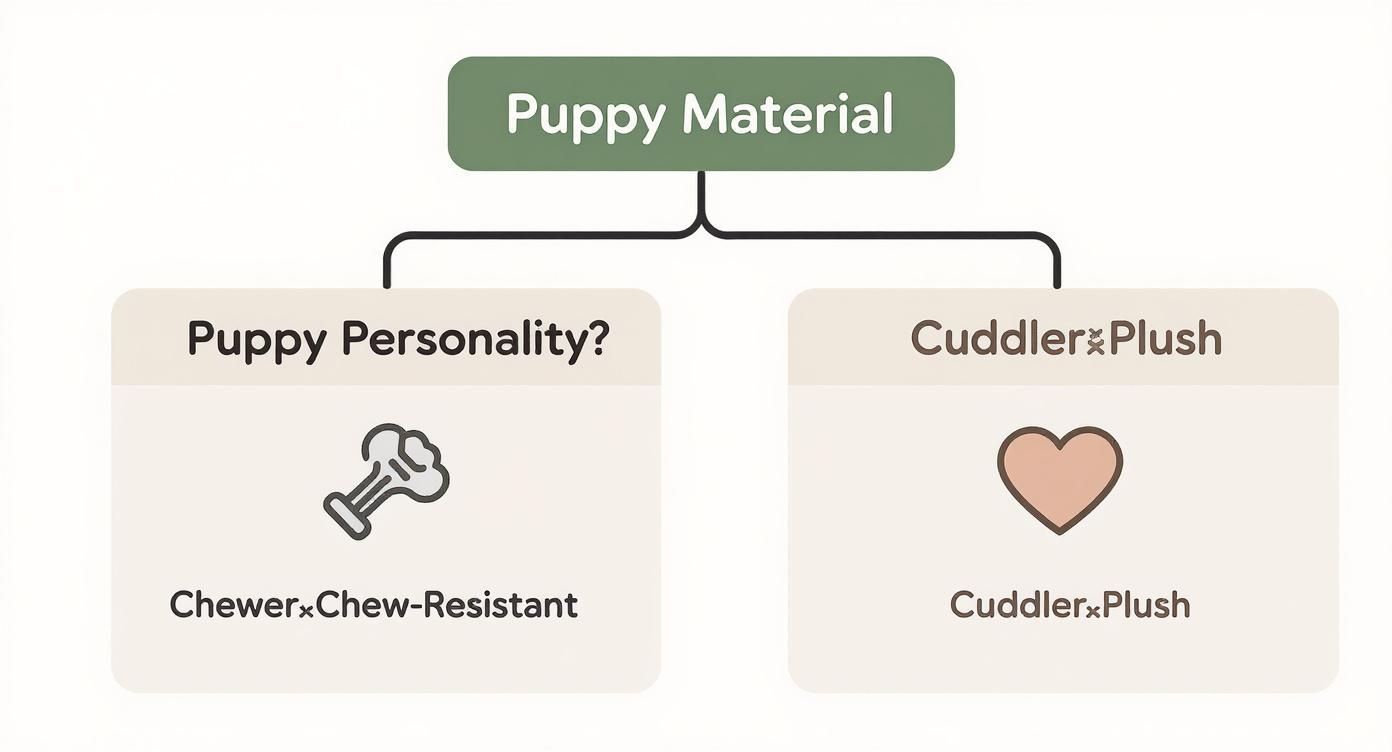
As you can see, a puppy’s habits, whether it’s chewing or cuddling, are great indicators for choosing a durable or plush bed that truly fits their needs.
To make it even clearer, here’s a quick breakdown of how common sleeping habits align with different bed styles.
Puppy Bed Style and Sleeping Habit Match
| Bed Style | Best For Puppies Who… | Key Benefit | Consideration |
|---|---|---|---|
| Bolster Bed | Curl up, lean, or like to rest their head on something. | Provides a sense of security and a built-in pillow. | The inner sleeping area might be too small for sprawlers. |
| Pillow/Cushion Bed | Sprawl out, stretch, and change positions frequently. | Offers maximum freedom of movement and space. | Lacks raised sides, which some anxious pups prefer. |
| Donut/Cave Bed | Burrow, nest, or show signs of anxiety. | Creates a deep, calming enclosure that mimics a den. | Can get warm; may not be ideal for hot-natured breeds. |
| Raised Cot Bed | Get hot easily or prefer sleeping on cool floors. | Promotes 360-degree airflow for excellent cooling. | Not as plush or “cozy” as traditional cushioned beds. |
This table is a great starting point, but always remember to observe your own puppy’s unique quirks!
For the Anxious or Burrowing Puppy
Some puppies are natural-born burrowers or show signs of anxiety, especially when they’re still settling in. You might see them trying to dig into blankets or hide in small spaces to feel safe. For these sensitive souls, a donut or cave-style bed can be a game-changer.
Donut beds have high, plush walls that wrap all the way around, creating a deep, nest-like space. This design can have a powerful calming effect, soothing anxiety by making them feel protected from all sides. If your pup is particularly timid, you might find our guide on the best dog beds for anxiety helpful for even more specialized options.
The rise in premium puppy products reflects a bigger trend. Pet owners are increasingly treating their animal companions as integral family members, investing in high-quality furniture that supports their health and well-being from the very beginning.
This shift in mindset is driving some serious market growth. In 2024, the global pet furniture market was valued at USD 4.23 billion and is projected to hit USD 7.07 billion by 2032. This boom is all about owners seeking out customized, orthopedic, and eco-friendly beds to give their puppies the best possible start in life.
For the Puppy Who Overheats
Finally, let’s talk about the puppy who always seems to be searching for that cool spot on the tile floor. Breeds with thick coats or any pup living in a warmer climate can get hot pretty easily. For these little furnaces, a raised cot-style bed is an excellent choice.
These beds use a sturdy frame with a breathable mesh fabric stretched across it, lifting your puppy completely off the floor. This design allows for incredible airflow, keeping them cool and comfortable. As a bonus, they’re also super durable and a breeze to clean, making them a practical pick for both indoor and outdoor use.
Getting the Right Size Bed for a Growing Pup
It’s the classic new puppy owner dilemma: do you buy a bed that fits your tiny fluffball now, or one they can eventually grow into? Puppies grow astonishingly fast, and no one wants to buy a new bed every few months. It feels like a guessing game, but there’s a practical way to handle it that keeps your pup comfy without breaking the bank.
The trick is finding that sweet spot between their current size and their future frame. A bed that’s way too big can actually make a little puppy feel lost and insecure—imagine a toddler in a king-sized bed. On the flip side, a tiny bed they’ll outgrow in three weeks just isn’t a smart buy. A little foresight and a quick measurement are all you need.
The Foolproof Measurement Method
To get a truly accurate size, you need to measure your puppy when they’re doing what they do best: sleeping. Measuring them while they’re standing or sitting won’t give you a realistic idea of the space they actually need to get comfortable.
- Find your puppy when they’re deep in dreamland, settled into their go-to sleeping position—whether that’s curled up in a tight little donut or sprawled out like a miniature bearskin rug.
- Grab a soft measuring tape and measure from the tip of their nose straight back to the base of their tail.
- Now, add 6 to 12 inches to that number. This little buffer is your secret weapon; it accounts for those sudden growth spurts and gives them plenty of room to stretch out.
This simple method works for any puppy, regardless of how they sleep, and gives you a solid number to take with you when you’re shopping. It’s the best way to choose a dog bed a puppy will love now and a few months from now.
The goal is to provide a space that feels snug and secure for them as a tiny pup but has enough room to accommodate their adult frame. This “grow-with-me” approach is both cost-effective and comforting for your new companion.
Planning for Your Puppy’s Adult Size
The most budget-friendly approach is to buy one bed that will fit your dog when they’re fully grown. This saves you from the cycle of buying, replacing, and storing outgrown beds. To pull this off, you just need a decent idea of how big your pup is going to get.
If you have a purebred, this is easy. A quick search for the breed’s average adult size will give you a reliable target. For mixed-breed puppies, it’s a bit more of a mystery, but your vet can usually give you a surprisingly accurate estimate based on their paw size, current weight, and age.
So, how do you make a big bed feel cozy for a tiny puppy? Just fill the extra space with soft, machine-washable blankets or even a few old pillows. This creates a snug little “nest” that helps them feel safe and secure while leaving plenty of room to grow. As they get bigger, you just take out the extra bedding. You can explore a wide variety of beds and mats to find a durable option that will last from puppyhood to adulthood.
Estimated Adult Dog Size by Popular Breed Group
To give you a head start, here’s a quick-glance chart to help you estimate the final size for some of the most common types of dogs. Use it as a guide to pick a bed that will be a perfect fit for the long haul.
| Breed Group | Example Breeds | Average Adult Weight (lbs) | Recommended Bed Size (Adult) |
|---|---|---|---|
| Toy | Chihuahua, Pomeranian, Yorkie | 4 – 12 lbs | Small |
| Small | Beagle, Dachshund, Pug | 13 – 25 lbs | Small to Medium |
| Medium | Australian Shepherd, Bulldog | 26 – 55 lbs | Medium to Large |
| Large | Golden Retriever, German Shepherd | 56 – 90 lbs | Large |
| Giant | Great Dane, Mastiff, Newfoundland | 90+ lbs | Extra-Large |
By thinking ahead just a little, you can invest in one high-quality dog bed that your best friend will love for years to come.
Keeping Your Puppy’s Bed Clean and Hygienic
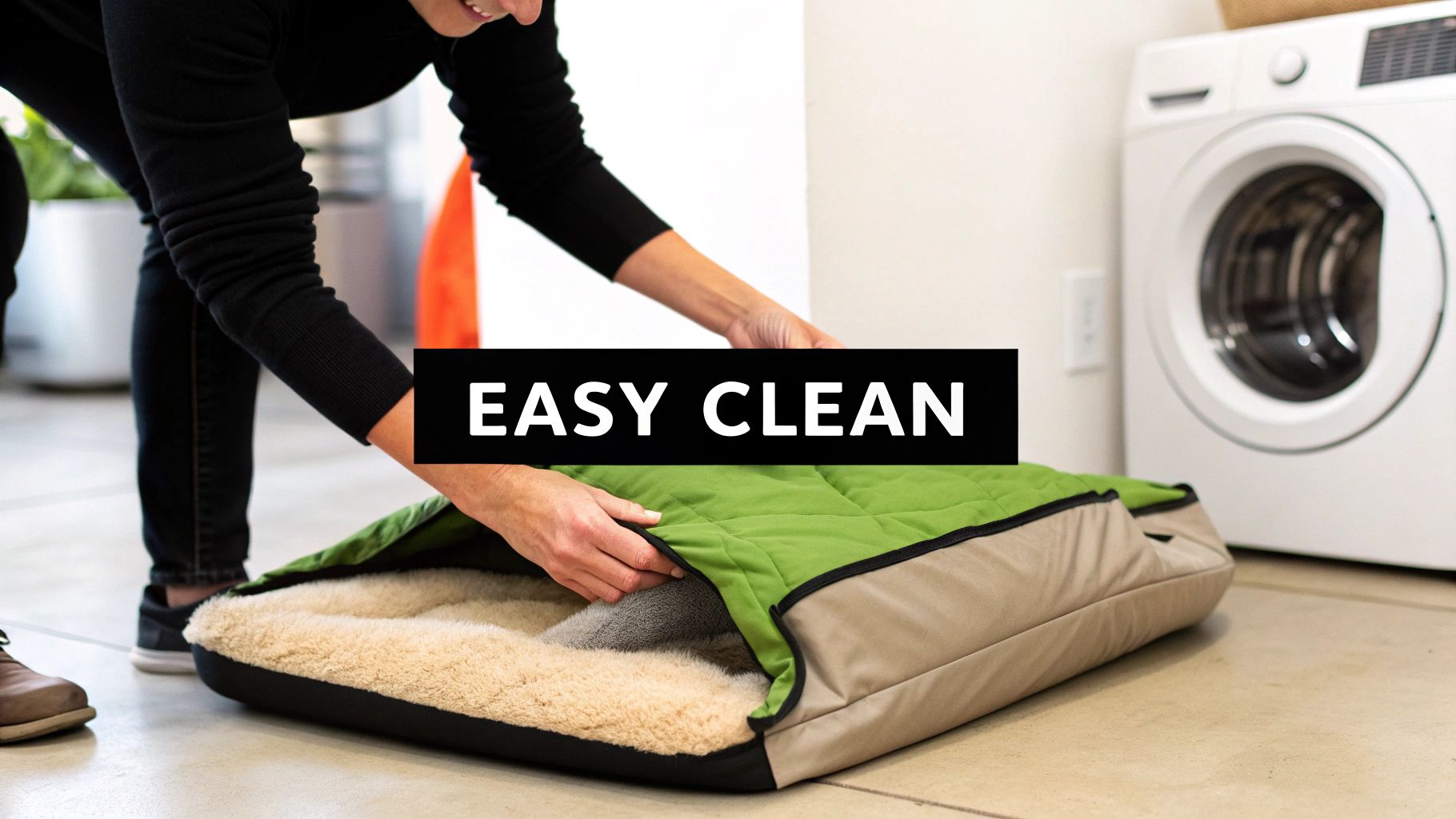
Let’s be honest: puppies are adorable little mess-machines. Between muddy paws and the inevitable potty-training accident, their bed quickly becomes ground zero for dirt, dander, and germs. Keeping it clean isn’t just about looks—it’s absolutely essential for their health and for keeping your home smelling fresh.
A clean sleeping area helps prevent skin irritations, keeps parasites at bay, and gives your pup a truly restful spot to recharge. If you can lock in a simple cleaning routine from day one, you’ll extend the life of the dog bed puppy and make maintenance feel like a breeze.
Creating a Simple Cleaning Schedule
When it comes to hygiene, consistency is everything. Instead of waiting until the bed looks or smells funky, a proactive schedule keeps messes from getting out of hand.
Here’s a practical routine that actually works:
- Daily Shake-Out: Every morning, take the bed outside and give it a good, vigorous shake. This dislodges loose dirt, fur, and any stray kibble. It takes less than a minute but makes a huge difference.
- Weekly Vacuum: Once a week, grab your vacuum and use an upholstery attachment to get into all the nooks and crannies. This pulls out the embedded hair and allergens that a simple shake can’t touch.
- Bi-Weekly Wash: The bed’s cover should hit the washing machine at least every two weeks, or more often if accidents happen. Just be sure to follow the care label and use a pet-safe detergent.
Tackling Tough Stains and Odors
Even with the best routine, stains and stubborn smells are going to happen. The trick is to act fast and use the right tools. You don’t always need harsh chemicals, either—some of the best solutions are probably already in your kitchen.
For urine accidents, start by blotting up as much moisture as you can with a paper towel. Then, spray the spot with a 50/50 solution of water and white vinegar. Let that sit for a few minutes before blotting it again.
The Baking Soda Trick: After cleaning a stain, sprinkle a generous layer of baking soda over the still-damp spot. Let it sit for several hours (or even overnight) to absorb any leftover odors, then just vacuum it all up. It’s a completely natural, pet-safe deodorizer that works like a charm.
Deep Cleaning the Inner Cushion
While the cover gets most of the daily grime, the inner cushion or foam insert needs some love, too. Depending on the material, you probably can’t just toss it in the washing machine.
- Foam Inserts: For memory foam or egg crate foam, spot-clean any stains with a mild soap and water solution and let it air dry completely. To give it a real refresh, leave it out in the sun for a few hours—the UV rays are a natural disinfectant.
- Polyester Fills: Some beds with loose polyester filling can be washed on a gentle cycle. If the tag says no, you can hand-wash the insert in a bathtub with pet-safe detergent. Just be sure to let it air dry thoroughly, fluffing it every so often to keep the filling from clumping.
Choosing a high-quality, easy-to-clean bed is a real investment in your pet’s health. It’s a trend that’s changing the whole industry—the global pet beds market is valued at roughly USD 5.4 billion in 2025 and is projected to nearly double by 2035. This growth is fueled by owners like us who want hygienic and durable options for our pets. You can discover more insights about the pet beds market on futuremarketinsights.com.
Keeping your pup’s bed pristine is all part of this bigger focus on pet wellness. For other essentials to keep your little one healthy and clean, be sure to explore our collection of grooming and cleaning supplies.
Training Your Puppy to Love Their Bed
So you’ve brought home the perfect bed, but there’s one small problem: your puppy isn’t using it. Don’t worry, this is the final, crucial step, and it’s not about force. It’s about making that bed the best spot in the entire house. The secret? Positive association. We need to turn their new bed into a personal retreat they genuinely love.
With a little patience and a pocket full of treats, you can teach your puppy that their bed is a safe, cozy, and rewarding space. This process does more than just get them to sleep somewhere new; it builds their confidence and gives them a special spot that’s all their own.
Making the First Introduction a Great One
First impressions are everything, especially for a curious puppy. The way you introduce the new bed can set the stage for all future training. Your goal is to make the bed synonymous with wonderful things—think tasty treats, belly rubs, and high-pitched praise.
Start by placing the bed in a quiet but central part of your home, like the corner of the living room where everyone hangs out. Let your puppy discover it on their own terms. The moment they show any interest—even just a sniff or a tentative paw—reward them with enthusiastic praise and a really good treat.
The core principle here is simple positive reinforcement. Every single interaction with the dog bed puppy should feel like a win. This forges a powerful connection in their mind: Bed = Good Things Happening.
Teaching a “Go to Bed” Command
Once your puppy seems comfortable around the bed, you can start teaching a command. This is incredibly useful for managing an energetic pup or just establishing a calm-down routine.
- Lure with a Treat: Hold a smelly, delicious treat near your puppy’s nose and gently lead them onto the bed. The second all four paws are on it, clearly say your cue word (like “Bed” or “Place”) and give them the treat and lots of praise.
- Repeat in Short Bursts: Practice this for just a minute or two, a few times a day. Keeping the training sessions short and fun is key to holding their puppy-sized attention span.
- Build Duration: As they start to get it, ask them to stay on the bed for just a few seconds before they get the reward. Slowly, you can increase the time they need to wait.
This kind of structured training builds a clear line of communication. For anyone wanting to dive deeper into canine behavior, pursuing a Certificate in Dog Training offers incredible insights into these foundational training techniques.
Overcoming Common Hurdles
It’s completely normal to hit a few snags. Plenty of puppies would rather curl up on the sofa or in your lap because it smells like their favorite person—you! If this happens, never scold them. Instead, try a different approach.
- Make the Bed Irresistible: Find a special chew toy, one they absolutely love, and make it a “bed-only” treat. They only get access to this amazing toy when they’re on their bed.
- Gentle Redirection: If you catch your puppy snoozing on the couch, gently wake them and guide them over to their own bed. When they settle down there, give them a calm reward.
- Consistency is Key: Make sure everyone in the family is on the same page. If the rules and rewards are consistent, your puppy will catch on much faster.
Before you know it, that bed will transform from just another piece of furniture into their most cherished personal sanctuary.
Your Top Puppy Bed Questions, Answered
Bringing a puppy home is an adventure, and it’s totally normal to have a million questions. When it comes to their sleep, you want to get it right. Let’s tackle some of the most common questions new puppy parents ask, so you can feel confident you’re creating the perfect cozy retreat for your little one.
How Often Should I Replace a Puppy Bed?
There isn’t a hard-and-fast “use by” date for a puppy bed. Its lifespan really comes down to the bed’s quality and, let’s be honest, your puppy’s capacity for chaos. A really well-made bed could easily last into adulthood, but the puppy phase is tough on… well, everything.
Keep an eye out for these tell-tale signs that it’s time for a new one:
- Lingering Smells: If you’ve deep-cleaned the bed and it still has a funky odor, it’s time to say goodbye.
- Pancaked Cushioning: When the filling goes flat, it’s not offering any more support than the floor. That defeats the whole purpose.
- Obvious Damage: Rips, holes, or stuffing poking out can be dangerous if your pup decides to snack on the debris.
A high-quality bed might last for years, while a flimsy one might not even survive your pup’s teething stage. It’s often worth investing a little more upfront.
What if My Puppy Chews Their Bed?
First, don’t panic! Chewing is what puppies do. It’s how they explore the world, soothe their teething gums, and fight off boredom. The trick isn’t to punish the behavior but to redirect it.
When you see them start to nibble on the bed, immediately swap it out for an actual chew toy. Make the toy seem like the most exciting thing in the world! A little praise when they chew the right thing goes a long way. For persistent chewers, a pet-safe bitter spray on the bed’s edges can make it a lot less appealing. A tired pup is also a less destructive pup, so make sure they’re getting plenty of playtime.
Do I Need More Than One Bed?
While one bed is fine, having a couple can be a game-changer. Think about where your family hangs out. Placing a bed in the main living room and another in their crate gives your puppy a designated “safe spot” no matter where they are.
This simple strategy helps them feel secure and can discourage them from claiming your sofa as their own. It builds a consistent routine and gives them a sense of belonging in every part of the house. If you’re looking to set up multiple comfort zones, you can browse a variety of pet beds to find styles that fit different rooms and needs.
At Ur Pet Store, we know that a puppy’s bed is more than just a place to sleep—it’s their first little piece of the world to call their own. Find the perfect durable, comfy sanctuary for your new best friend by shopping our collection today at https://urpetstore.com.