


Blog
A Guide to the Best Calming Pet Bed for Dogs


It’s heartbreaking to see your dog in distress—pacing during a thunderstorm, whining when you leave, or just seeming on edge. While we can’t explain away their fears, we can give them a space that makes them feel safe. A calming pet bed for dogs isn’t just another plush cushion; it’s a thoughtfully designed tool that taps into a dog’s deep-seated need for security.
These beds are engineered to mimic the comforting embrace of a mother’s den, creating a personal sanctuary that can genuinely dial down their stress levels.
Why Your Anxious Dog Needs a Safe Space
Anxiety in dogs shows up in all sorts of ways. You might see trembling, hiding, or even destructive chewing. These behaviors are often triggered by things we can’t control, like fireworks, a new visitor, or simply being left alone.
Just like we might seek out a quiet room to decompress, dogs instinctively look for a secure spot to ride out their stress. A dedicated safe space, like a calming bed, gives them a predictable, comforting retreat they can count on.
This growing understanding of our pets’ mental health has turned a simple pet accessory into a booming industry. The global market for calming dog beds was valued at around USD 1.2 billion and is expected to nearly double to USD 2.4 billion by 2033. That’s a lot of pet owners recognizing that a good bed can make a real difference. You can read more about the growing anxiety pet bed market on datahorizzonresearch.com.
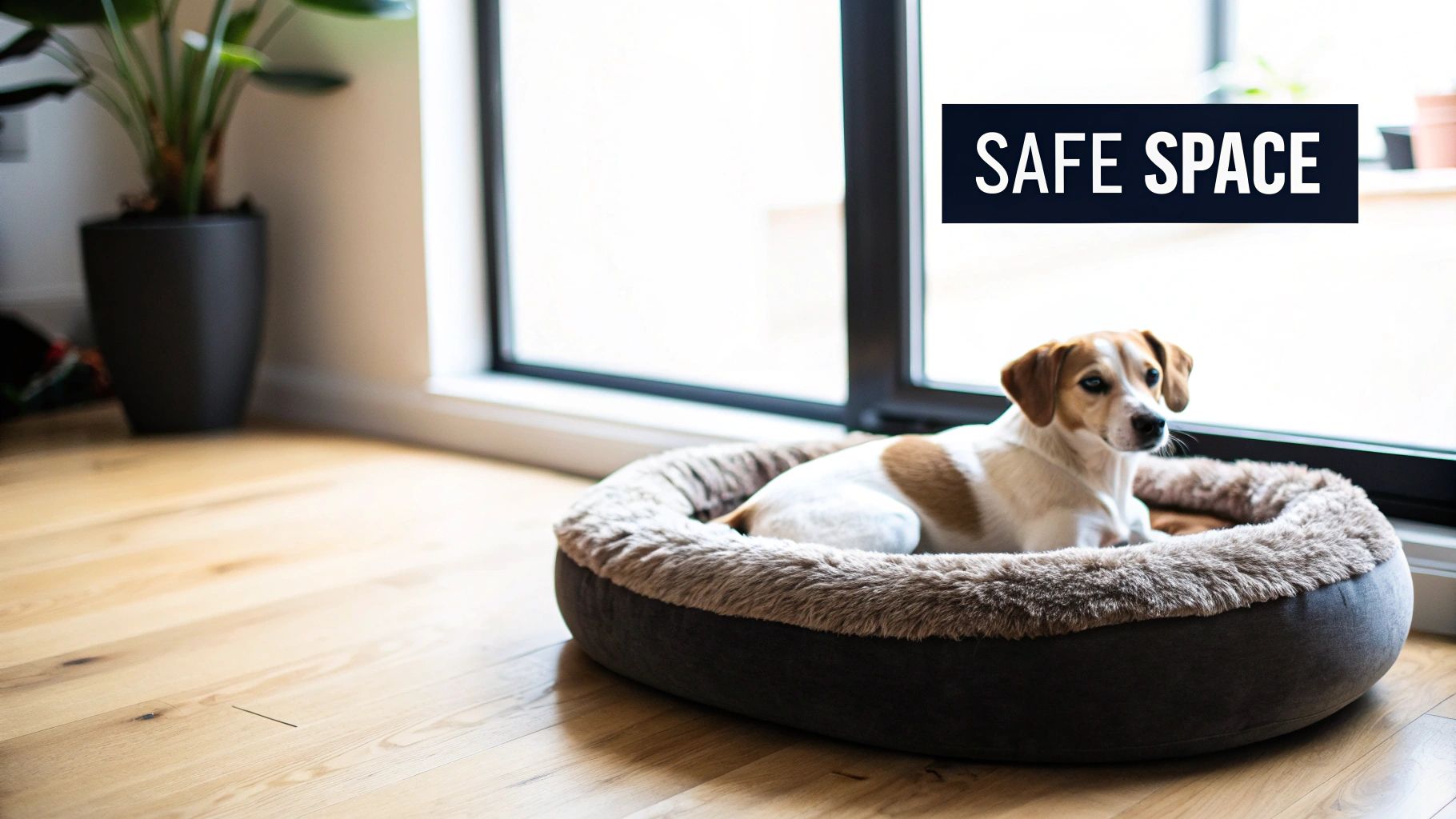
Key Features and Their Calming Effects
So, what makes these beds so effective? It all comes down to a few key design elements, each chosen specifically to provide psychological comfort. They aren’t just cozy; they’re built to soothe.
Let’s break down how these features work together. Here’s a quick look at the design elements of a calming pet bed for dogs and the psychological comfort each one provides.
How Key Features Reduce Canine Anxiety
| Feature | Anxiety-Reducing Benefit |
|---|---|
| Raised Rims | Creates a “hugging” sensation, providing support and security. |
| Plush Faux Fur | Mimics the feel of a mother’s coat, tapping into instinctual comfort. |
| Donut Shape | Encourages a natural, curled-up sleeping position that feels protected. |
| Soft Filling | Relieves pressure on joints and muscles, promoting physical relaxation. |
Ultimately, each part of the bed is there for a reason—to make your dog feel safe and sound.
A well-designed calming bed acts as a consistent, reliable sanctuary. It gives your dog a place of their own where the world feels less overwhelming, empowering them to self-soothe when they feel anxious or scared. This simple addition to your home can make a profound difference in their daily comfort and overall well-being.
How Calming Beds Actually Calm Your Dog
Ever wondered how a simple bed can melt away your dog’s anxiety? It’s not magic—it’s a clever design that taps directly into your dog’s biology and natural instincts. A good calming pet bed for dogs essentially gives your pup a gentle, all-day hug, using the science of touch to make them feel safe and secure.
The real secret sauce is a therapeutic technique called deep pressure stimulation. It’s the same principle behind swaddling a baby or using a weighted blanket for a person. The steady, gentle pressure from the bed’s raised edges helps to quiet a dog’s nervous system.
This constant physical contact sends calming signals straight to the brain, telling your dog, “You’re safe here.”
Playing to a Dog’s Denning Instinct
At their core, dogs are den animals. Long before they were sleeping at the foot of our beds, their wild ancestors sought out small, sheltered spaces to rest and feel safe from danger. That instinct hasn’t gone away, which is why your dog might cram themselves under a desk or into a closet during a scary thunderstorm.
A calming bed is designed to be a personal, modern-day den.
The round shape and high walls aren’t just for show. They’re intentionally designed to mimic the feeling of being curled up in a protective den. This creates a physical barrier that helps your dog feel shielded from the chaos of the outside world, like loud noises or sudden movements.
When your dog feels safely enclosed, they can finally let their guard down and truly relax.
The Science of Feeling Good
The benefits run deeper than just feeling secure. The deep pressure from the bed actually triggers a positive hormonal change in your dog’s body. The gentle squeezing encourages the brain to release oxytocin, which you might know as the “love hormone” or “cuddle chemical.”
This is the very same hormone that floods their system when you pet them or when they cuddle up next to you. It’s directly linked to feelings of trust, bonding, and pure contentment.
At the same time, this pressure helps bring down levels of cortisol, the body’s main stress hormone. Too much cortisol leads to anxiety, fear, and that antsy, can’t-settle-down behavior. By boosting oxytocin and reducing cortisol, a calming bed literally helps shift your dog’s body from a high-alert “fight or flight” mode to a relaxed “rest and digest” state.
This powerful biological shift is why these beds can be such a game-changer. For dogs who struggle when left alone, a calming bed can be an essential part of the puzzle, working alongside other solutions for pet separation anxiety to make them feel more comfortable.
The bed becomes a reliable source of comfort that supports them both mentally and physically. It gives your dog a way to self-soothe, which is a huge step in helping them manage their anxiety. So, a calming bed isn’t just fluffy furniture—it’s a therapeutic tool built for your dog’s well-being.
Choosing the Right Materials and Design
So, what actually makes a calming bed… calming? It really comes down to the nuts and bolts of its construction. The right materials and design are what transform a simple cushion into a genuine sanctuary for your dog. Think of it like building the perfect pillow fort as a kid—the magic is in getting that mix of soft textures and a sturdy, safe structure just right.
The materials aren’t just for looks; they’re selected for their therapeutic qualities. From the plush, furry exterior that brings to mind a mother’s coat to the supportive filling that cradles your dog’s body, every piece plays a part in helping them relax. It’s about creating both physical comfort and a deep sense of security.
Understanding the Core Components
A calming bed really has two main parts: the outside fabric and the inside filling. The exterior is what your dog feels first, so it has to be irresistibly soft. You’ll often see ultra-plush faux fur (sometimes called shag fur) used for this, and for good reason. It mimics the feel of a mother dog’s coat, tapping into a primal instinct for comfort and safety.
When it comes to the filling, you’ve got a few choices depending on what your dog needs. Standard poly-fill is a popular option because it’s light, airy, and gives the bed that signature cloud-like softness. It’s fantastic for dogs who just love to sink in and get completely enveloped by their bed.
This visual guide breaks down how the bed’s design directly leads to a calmer, happier pup.
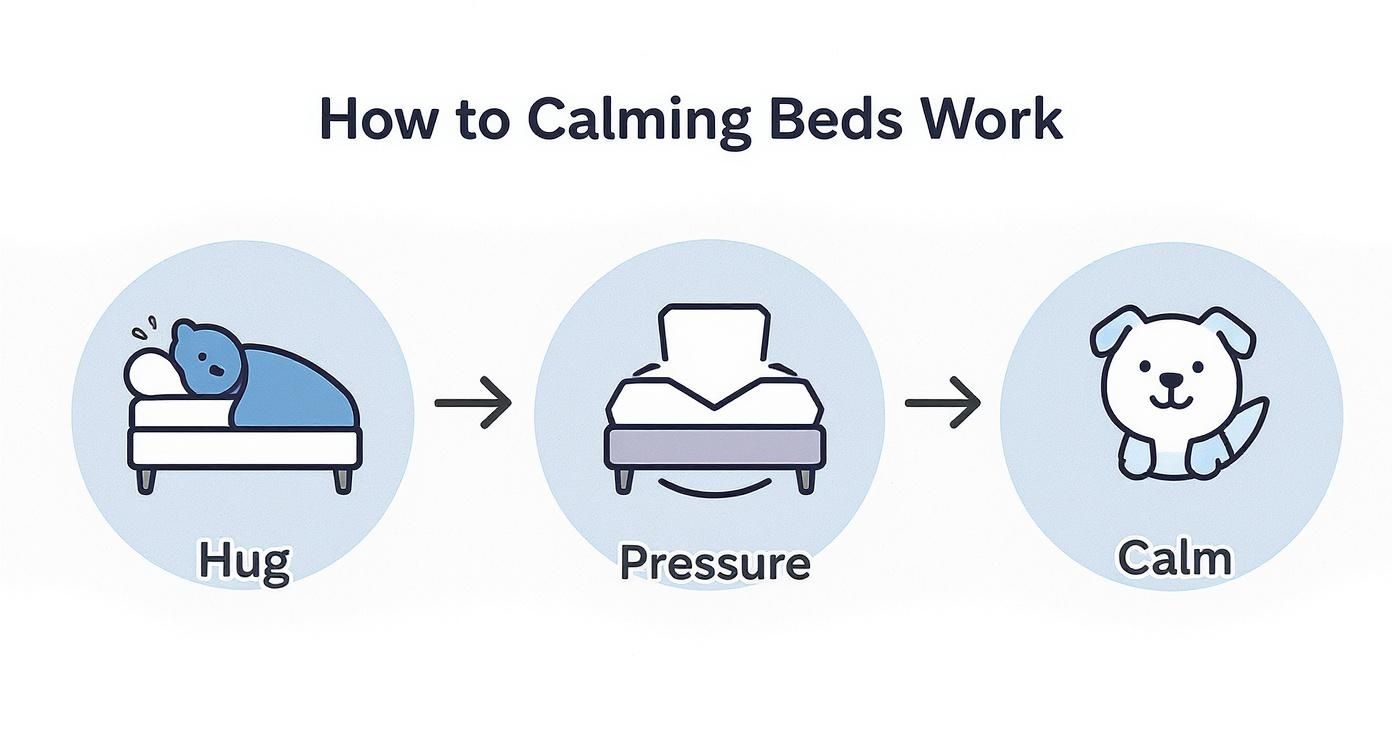
As the infographic shows, it’s a simple but powerful process: the bed’s hug-like design applies just enough gentle pressure to help your dog feel secure and settled.
A Comparison of Calming Bed Materials
Choosing the right material can feel overwhelming, but it’s really about matching it to your dog’s needs and your lifestyle. This table breaks down the pros and cons to help you find the perfect fit.
| Material | Ideal For | Key Advantages | Things to Consider |
|---|---|---|---|
| Faux Fur/Shag | Anxious dogs, curlers, dogs seeking warmth | Mimics a mother’s coat, incredibly soft, provides warmth | Can trap dirt and hair; may require more frequent washing. |
| Microfiber/Suede | General use, dogs who prefer smoother textures | Durable, easy to clean, resistant to stains and pet hair | Less plush and warm than faux fur; doesn’t have the same “calming” texture. |
| Poly-Fill | Dogs who love soft, sink-in beds | Lightweight, affordable, provides a plush, cloud-like feel | Can flatten over time; offers minimal orthopedic support. |
| Memory Foam | Senior dogs, dogs with joint pain or arthritis | Excellent orthopedic support, contours to the body, durable | Heavier, more expensive, and can retain heat. |
Ultimately, the best material is the one your dog will actually use and feel good in. Whether it’s the orthopedic support of memory foam or the comforting plushness of shag, the goal is to create their favorite spot in the house.
Selecting the Ideal Bed Design
Beyond what it’s made of, the bed’s shape is crucial. The most common—and arguably most effective—design for calming beds is the donut or bolster style. That raised, circular rim isn’t just a pillow; it creates a sense of enclosure that satisfies a dog’s natural denning instinct to feel protected from all sides.
Another great option is a cave-style bed, which comes with an attached blanket or “roof.” This design is a lifesaver for dogs who love to burrow or hide when they get nervous, offering them an extra layer of security.
The best way to choose? Watch how your dog sleeps. Do they curl up in a tight ball? They’ll probably thrive in a donut bed that hugs their body. Are they always trying to get under the covers? A cave-style bed will be their new favorite place. Matching the design to their natural behavior is the secret to making them feel truly at home.
For a practical touch, especially if you have a puppy or a senior dog, look for beds with durable, washable covers. Combining a cozy bed with a reusable dog pee pad blanket can be a smart move, making cleanups a breeze while adding another layer of comfort.
Pet owners are definitely getting more discerning about their choices. It turns out that 80% of owners prioritize beds with orthopedic, cushioned, or memory foam features for maximum comfort and support. These preferences even change by region; 75% of North American shoppers look for luxury therapeutic beds, while 70% of European owners put a higher value on sustainable materials.
If you’re diving deep into cozy pet products, you can find some great insights in a guide to custom dog photo blankets, as they often cover similar fabric and design considerations. Making the right choices here will give your dog a calming bed that becomes a beloved retreat for years to come.
How to Find the Perfect Size and Fit
Picking the right size for a calming pet bed for dogs is about more than just making sure they fit. It’s the secret sauce that makes the whole thing work. A bed that’s way too big won’t give them that snug, secure feeling they need to relax. On the flip side, one that’s too small will just feel cramped and uncomfortable, completely defeating the purpose.
Think of it like finding the “Goldilocks” zone—not too big, not too small, but just right. When the fit is perfect, the raised edges can do their job and gently cradle your dog, creating that calming pressure that soothes their nerves. Nailing the measurements from the get-go is the best way to ensure they get the comfort they deserve.
Measure Your Dog the Right Way
Before you start shopping, grab a measuring tape. The trick is to measure your dog how they actually sleep, not just when they’re standing around. Wait until they’re settled in for a nap to get the most accurate dimensions.
Here’s a quick guide:
- For Curlers: Does your dog love to sleep curled up in a little ball? Measure from the top of their head down to their rump. This will give you the perfect diameter for one of those classic donut beds.
- For Stretchers: If your dog is more of a sprawler, measure them from the tip of their nose all the way to where their tail begins. This ensures they have plenty of room to stretch out without their paws hanging off the edge.
Once you have your number, add an extra 6 to 12 inches. This buffer gives them enough wiggle room to shift positions and get truly comfortable inside the bed’s supportive walls. It’s a small step that makes a huge difference.
Common Pitfalls and Sizing Tips
One of the most common mistakes people make is choosing a bed based on weight alone. A weight chart can give you a rough idea, but it doesn’t tell the whole story. A lanky, 50-pound Greyhound has a completely different body shape than a stocky, 50-pound Bulldog, and they’ll need different-sized beds. Always trust your own measurements over a generic weight guide.
Another thing to watch out for is the bed’s interior dimensions. The size you see on the label often includes the big, fluffy outer rim, which means the actual sleeping area is smaller than you think. Dig into the product details and look for the internal measurements to make sure your dog will have enough space to truly relax. Browsing a good selection of beds and mats for dogs will help you get a feel for the different styles and dimensions out there.
Introducing the New Bed to Your Dog
Bringing home a new calming pet bed for dogs is a great first step, but how you introduce it is just as important. Your goal is to help your dog see this new bed not just as another piece of furniture, but as their personal safe haven. It’s all about building a positive connection from the very beginning.
Start by setting the bed up in a familiar, quiet spot in your home. Where does your dog already like to curl up and nap? A cozy corner of the living room or next to your chair in the home office are often perfect choices. Placing the bed where they already feel safe makes it feel like a welcome upgrade, not a strange, new object.

To make the bed instantly more appealing, add a touch of home. You could drape their favorite blanket over it or toss in a well-loved toy. Even one of your old t-shirts can work magic—your scent is incredibly comforting and helps your dog feel secure in a new space.
Creating Positive Associations
Next, it’s time to build some good vibes around the bed. This part is all about positive reinforcement. Whenever you catch your dog sniffing, touching, or stepping onto the bed, shower them with praise and maybe a small treat. This simple act teaches them a powerful lesson: good things happen when I use my bed.
Whatever you do, don’t force them onto it. Patience is your best friend here. Let your dog explore the new bed on their own schedule. Pushing them can create anxiety and fear, which completely defeats the purpose of a calming bed.
Here are a few gentle ways to encourage them:
- The Treat Trick: Toss a high-value treat onto the bed and let your dog find it.
- Praise Any Progress: Get excited and praise them for any interaction, even just a curious sniff.
- Add a Cue: Once they’re comfortable, you can start using a phrase like “Go to bed” and reward them when they head over.
Your calming bed is more than just a cozy spot; it’s a tool for your dog’s well-being. By giving them a reliable safe space, you’re empowering them to self-soothe during stressful moments, like a thunderstorm or when you have to leave the house.
This bed is a foundational piece of a bigger anxiety management strategy. The entire pet calming products market, valued at a whopping USD 17.45 billion, is built around this idea of a holistic approach to pet wellness. In fact, calming chews and supplements alone accounted for a 34.7% revenue share, which shows just how many owners are combining different tools to help their pets. You can learn more about this growing market on straitsresearch.com.
When you integrate the bed into a wider routine, you’re building a powerful support system for your best friend.
Keeping That Calming Bed Fresh and Clean
A clean, fresh-smelling bed is a welcoming oasis for your dog. To make sure their favorite spot stays that way, regular cleaning is a must. Just think about your own sheets—you wash them regularly to keep them hygienic and comfy. The same goes for your dog’s bed. It not only keeps things healthy but also makes the bed last a whole lot longer.
The absolute easiest way to handle this is to buy a bed with a removable, machine-washable cover right from the get-go. Trust me, this one feature turns what could be a huge headache into a simple weekend chore.
A Simple Guide to Washing and Drying
When it’s time for a proper wash, following a few simple steps will keep the bed’s cozy materials and supportive filling in great shape. If you wash it incorrectly, the filling can get lumpy and the fabric can lose that signature softness, which kind of defeats the whole purpose of a “calming” bed.
Here’s the right way to do it:
- Step 1: Shake It Out: First, unzip the cover and take it outside for a vigorous shake. You’ll be surprised how much loose fur, dirt, and dander comes off.
- Step 2: Gentle Wash Cycle: Toss the cover in the wash with a mild, pet-safe detergent. Always use cold water on a gentle cycle, as hot water can ruin those soft, faux-fur fibers.
- Step 3: Low and Slow Drying: Tumble dry the cover on the lowest heat setting possible—or even better, an air-dry cycle. High heat is the number one enemy of plush fabrics; it can cause shrinking and matting. A couple of dryer balls can help re-fluff the cover beautifully.
Keeping the bed clean is about more than just looks. A hygienic space is key for your dog’s physical health and their sense of security, reinforcing the bed as their true safe haven.
For those in-between-laundry days, a quick once-over with a vacuum will pick up most of the daily debris. And if you want to make your entire pet care routine a bit easier, take a look at our collection of grooming and cleaning products—they’re all designed to simplify life with your furry friend.
Got Questions? Let’s Talk Calming Beds
Even after seeing all the great things these beds can do, you probably still have a few questions rolling around in your mind. That’s completely normal. Choosing the right bed is a big deal for your dog’s happiness, so let’s tackle some of the most common things people ask.
Think of this as the final check-in before you find that perfect spot for your pup to relax.
“How Long Will It Take for My Dog to Actually Use It?”
This is a big one, and the honest answer is: it depends entirely on your dog. Some dogs will cannonball into their new bed the second you put it down. Others might give it the suspicious side-eye for a week.
The trick is patience and making it a positive experience.
- Add a Familiar Scent: Toss in one of their favorite toys or a blanket that smells like them. This makes it feel like their own space right away.
- Reward Curiosity: When you see them sniffing or stepping onto the bed, shower them with praise or a small treat.
- Never Force It: Pushing them onto the bed can create a negative association. Let them explore it on their own terms.
Your goal isn’t just to get them on the bed, but to make them love the bed. When they choose it themselves, it truly becomes their safe haven.
“Is This Bed a Magic Cure for My Dog’s Anxiety?”
Calming beds are an incredible tool, but they aren’t a magic wand. They are fantastic for helping dogs manage day-to-day stress, fear of loud noises (hello, thunderstorms!), and the anxiety that comes with being left alone. That feeling of being “hugged” by the bed can genuinely help a dog self-soothe.
However, if you’re dealing with severe anxiety or other deep-rooted behavioral issues, think of the calming bed as part of a team. It works best alongside a solid plan, which might include guidance from your veterinarian or a certified dog trainer.
And what about age? Is this just for puppies or older dogs? Not at all. For a brand-new puppy, the bed mimics the feeling of snuggling with their littermates, making the transition to a new home so much smoother. For a senior dog, an orthopedic version offers much-needed joint support and comfort, tackling physical aches and providing mental peace all at once.
Ready to give your dog a personal retreat where they can feel safe and sound? Finding the right bed can truly change their world. Take a look at our collection at Ur Pet Store and discover the perfect calming bed to bring more peace to your best friend. Shop now at urpetstore.com.