

Blog
The Ultimate Guide to Washable Small Dog Beds


Washable small dog beds isn’t just another pet accessory—it’s essential for your small dog’s health and happiness. It gives them a clean, comfortable, and allergen-free spot to curl up, which goes a long way in preventing skin problems and keeping your home smelling fresh. Honestly, it’s one of the best investments you can make for their well-being and your own peace of mind.
Why a Clean Bed Is Essential for Your Small Dog
Think about it this way: would you want to sleep on the same bedsheets for months without a wash? Of course not. Your dog’s bed is their personal retreat, but it’s also a magnet for everything from dirt and dander to loose fur and germs you can’t even see.
This is especially true for small dogs. Being closer to the ground, they can pick up more irritants, making a clean bed less of a luxury and more of a health necessity.
Washing their bed regularly gets rid of allergens like dust mites and pollen that can cause itchy skin, constant scratching, or even breathing trouble. It also stops bacteria from building up, which is what leads to that stubborn “dog” smell we all want to avoid.
The Connection Between Cleanliness and Comfort
A clean bed isn’t just about hygiene; it’s also about making your dog feel safe and secure. Small breeds especially love having a cozy, den-like space to call their own. When that space is fresh and smells like home, it helps them relax and reduces their anxiety.
On the other hand, a dirty or smelly bed might make them avoid it entirely, forcing them to find other, less suitable places to rest around the house. Keeping your pet’s favorite spots clean is a common challenge, and you can find some great insights from pet couch protectors that highlight just how important washable fabrics are.
A washable dog bed transforms a potential hygiene problem into a simple part of your laundry routine. This simple feature supports not just your pet’s physical health but also their emotional security by providing a consistently clean and safe personal space.
To give you a clearer picture, here’s a quick rundown of why a washable bed is a game-changer for small dog owners.
Key Benefits of Washable Beds for Small Dogs
| Benefit | Why It Matters for Small Dogs |
|---|---|
| Health & Hygiene | Removes allergens, bacteria, and dirt that can cause skin irritation and illness. |
| Odor Control | Regular washing eliminates trapped odors, keeping your home smelling fresh. |
| Convenience | Just toss it in the wash! No need for complicated spot-cleaning or expensive services. |
| Long-Term Value | A durable, washable bed lasts longer, saving you money on frequent replacements. |
| Peace of Mind | You can rest easy knowing your furry friend has a consistently clean and safe place to sleep. |
The benefits are pretty clear—a clean bed means a healthier dog and a happier home.
Why Pet Owners Prioritize Washability
It’s no surprise that pet owners are actively seeking out products that are easy to clean. People understand that good hygiene is a huge part of responsible pet care. When you’re shopping for a bed, features like washability and supportive comfort are usually at the top of the list.
For those moments when accidents happen—especially with puppies or seniors—pairing their bed with an extra layer of protection like a reusable dog pee pad blanket can be a real lifesaver. Ultimately, this focus on practical, easy-care design is what makes washable small dog beds such a smart and popular choice.
Choosing the Right Materials for Comfort and Durability
Picking the right materials for a washable small dog bed is a bit like choosing a good winter coat. You need an outer layer that can handle the elements (or in this case, claws and dirt) and an inner filling that keeps you warm and comfortable. It’s all about finding that perfect combination of cozy and tough.
The exterior of the bed is what takes the brunt of the daily wear and tear. It has to stand up to nesting, digging, and of course, endless trips through the washing machine. This is your dog’s front-line defense against the floor, so it needs to be up to the task.
Decoding the Outer Fabric
Every dog is different, and the best fabric often comes down to your little one’s personality. A dog who loves to burrow and “dig” a nest before bed needs something far more rugged than a pup who just curls up and snoozes.
Here’s a quick rundown of the most common materials you’ll come across:
- Plush Fleece and Sherpa: Think of this as the ultimate cozy sweater. These fabrics are incredibly soft and warm, making them a fantastic choice for dogs who crave that snug, cuddled-up feeling. The only downside is they can be a bit of a magnet for pet hair.
- Durable Canvas or Twill: These are the heavy-duty workhorses of the fabric world. Their tight weave makes them incredibly resistant to tearing and scratching. They’re also a breeze to wipe clean, which is a lifesaver for puppies or more rambunctious dogs.
- Soft Microsuede: This one hits that sweet spot right in the middle. Microsuede has a wonderfully soft, velvety feel that dogs love, but it’s also surprisingly durable and does a great job of repelling stains and fur.
The goal is to find a fabric that feels good to your dog but won’t pill, shrink, or fall apart after just a few washes.
Understanding the Inner Filling
What’s on the inside truly counts. The filling is what gives the bed its shape and support, and frankly, it’s what separates a great bed from a glorified pillow that goes flat in a month.
A good filling is more than just fluff. For small dogs, proper support is key to long-term joint health, especially as they get older. Think of a bed with high-quality filling as an investment in your dog’s comfort and well-being for years to come.
Let’s break down the common types of filling:
- Polyester Fiberfill: This is a popular and affordable choice. It creates that soft, cloud-like surface that’s perfect for dogs who love to sink in and curl up. The trade-off is that lower-quality versions can get lumpy or flatten out over time, particularly with repeated washing.
- Orthopedic Foam: Usually made from memory foam, this is the gold standard for support. It molds perfectly to your dog’s body, distributing their weight evenly and taking pressure off their joints. It’s hands-down the best choice for senior dogs, pups with arthritis, or any small breed that could use a little extra support.
- Shredded Foam: This option offers a nice balance between fiberfill and a solid foam slab. It provides much better support than basic fiberfill and is less likely to clump, but it still has that soft, malleable feel that nesters love.
Ultimately, the best washable small dog beds are built with quality materials from the inside out. Don’t forget to look at the little things, too. Details like reinforced stitching and heavy-duty zippers might seem minor, but they’re exactly what makes a bed last through years of use and cleaning.
Finding the Perfect Fit for Your Pint-Sized Pooch
Picking the right size for a washable small dog bed isn’t just about matching your dog’s length and width. It’s about giving them a spot that feels like their own personal, secure den. The best way to do that is to start by simply watching how your dog likes to sleep. Their natural habits will tell you everything you need to know.Do you have a “curler”? Some dogs instinctively tuck themselves into a tight little ball, nose to tail. This is a classic comfort move, helping them stay warm and feel safe. If this sounds like your pup, a bolstered or donut-style bed with high, soft walls will give them that snug, secure feeling they’re looking for.
Then there are the “sprawlers.” These are the dogs that stretch out in every direction, limbs akimbo, as if they’re trying to claim as much territory as possible. A bed with high sides would just get in their way. For these free-spirited sleepers, a flat mat or a simple cushion-style bed is the way to go, giving them all the room they need to stretch out.
How to Measure for the Right Bed
Eyeballing the size is one of the biggest mistakes people make, and it often results in a brand-new bed that your dog completely ignores. To get it right the first time, just follow these simple steps:
- Measure Your Dog: When your dog is relaxed in their favorite sleeping position, grab a soft measuring tape. Measure them from the tip of their nose right down to where their tail begins.
- Add Extra Inches: Take that number and add an extra 6 to 12 inches. That little bit of buffer room is crucial, allowing them to shift and reposition without feeling boxed in.
- Check Bed Dimensions: Now, compare your total measurement to the interior dimensions of the bed you’re considering, not the outside edges. This ensures the actual sleeping surface is big enough.
Think of it this way: a properly sized bed supports how your dog naturally sleeps and makes them feel safe. If it’s too big, they can feel exposed and anxious. Too small, and they just won’t be comfortable. A quick measurement is all it takes to find a bed that becomes their favorite spot in the house.
This flowchart breaks down the key decisions you’ll make when selecting materials for your dog’s new bed, from the outer fabric to the supportive filling.
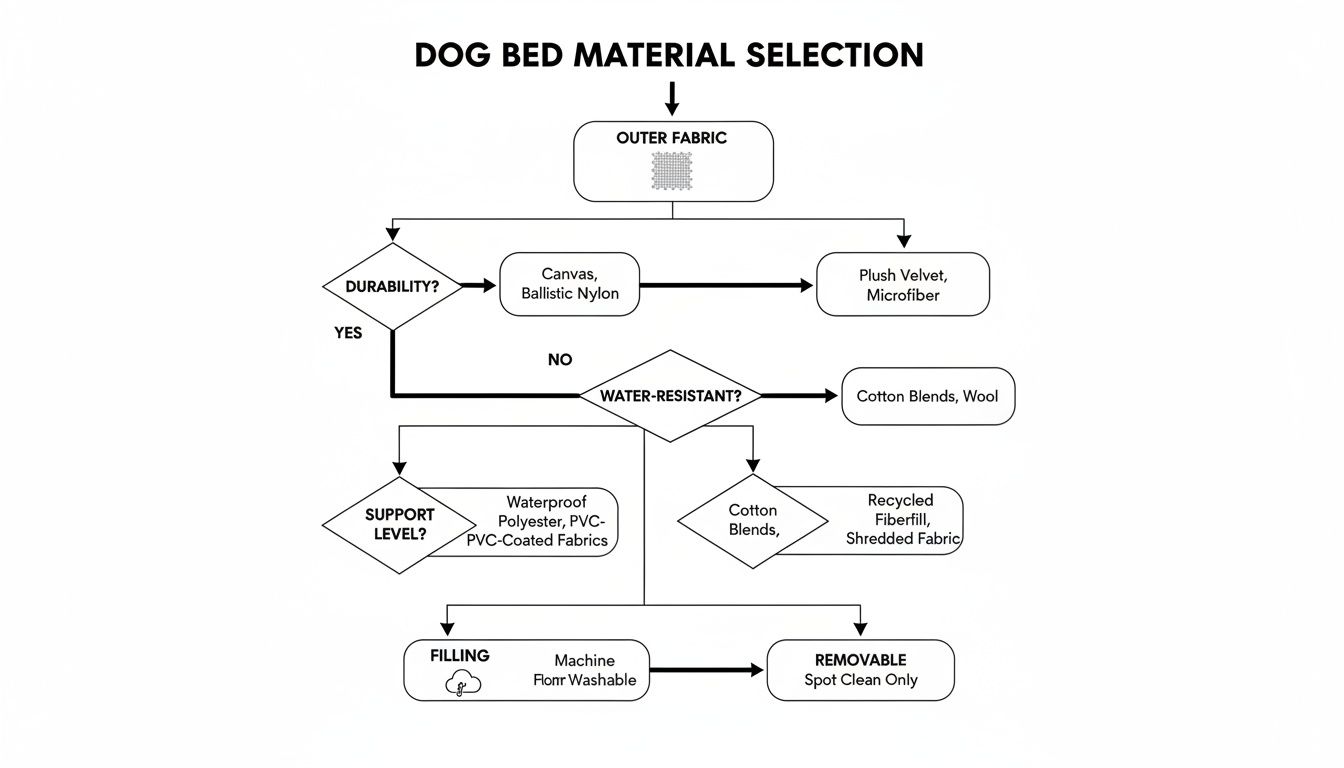
The visual guide helps you prioritize features like durability, comfort, and ease of cleaning, ensuring you choose a bed built to last.
Bed Recommendations for Popular Small Breeds
To give you a head start, we put together this quick guide matching some popular small breeds with the bed types they usually love. Of course, every dog has their own personality, but this chart is a fantastic starting point.
| Breed | Average Adult Weight | Common Sleeping Style | Recommended Bed Type |
|---|---|---|---|
| Chihuahua | 2-6 lbs | Curler, burrower | Donut or cave bed |
| Dachshund | 16-32 lbs | Sprawler, burrower | Rectangular bed with low bolsters |
| Yorkshire Terrier | 4-7 lbs | Curler | Bolstered, plush bed |
| Pomeranian | 3-7 lbs | Curler | Fluffy donut bed |
| Shih Tzu | 9-16 lbs | Sprawler | Flat cushion or pillow bed |
By paying attention to your dog’s unique quirks and matching them with the right design, you’re not just buying a bed—you’re creating a cozy retreat they’ll cherish. You can explore a wide variety of excellent choices in our collection of beds and mats to find the perfect one.
A Step-By-Step Guide to Washing and Care
You’ve got a great washable dog bed, but the real magic happens when you know how to care for it properly. Following a simple routine doesn’t just get rid of that “doggy” smell—it actually extends the life of the bed, keeping it a cozy, clean sanctuary for your best friend.
Think of it like your own favorite sheets or a high-quality sweater. A little bit of prep work before it ever hits the water makes all the difference, protecting both the bed and your washing machine from unnecessary wear and tear.
Before you even think about tossing the bed in the wash, a few minutes of prep will pay off. First, unzip the cover and separate it from the inner cushion. Take both pieces outside for a good shake, or give them a once-over with the vacuum to get rid of all that loose hair and dirt. Trust me, your washing machine’s filter will thank you.
If you’re dealing with a specific spot or a recent accident, now’s the time to pre-treat it. Knowing some effective methods for removing pet urine stains and odors from fabric is a game-changer for any pet owner. A pet-safe stain remover applied directly to the spot can work wonders.
Perfecting the Machine Wash
Alright, with the prep work done, it’s time for the main event. Your first move should always be to check the care tag from the manufacturer—that’s your most reliable guide. That said, a few rules of thumb almost always apply.
Using the right settings protects the fabric’s integrity and the filling’s structure. A gentle cycle with cold water is typically the safest bet, as high heat can shrink fabrics or damage foam inserts.
For a perfectly fresh and clean bed, run through this simple checklist:
- Choose the Right Detergent: Go for something mild and pet-safe, preferably fragrance-free. Strong chemicals and perfumes can really irritate your dog’s skin and nose.
- Select a Gentle Cycle: The delicate or gentle setting on your machine is perfect. It minimizes stress on the seams and fabric.
- Use Cold Water: Cold water does a great job cleaning while being much gentler on the materials. It’s your best defense against shrinking and damage.
- Consider an Extra Rinse: Running an extra rinse cycle is a great way to make sure every last bit of detergent is gone, leaving nothing behind to irritate your pup.
Having the right cleaning supplies is a huge part of maintaining a healthy home for your pet. For more ideas, check out our selection of grooming and cleaning products.
The Right Way to Dry
Drying the bed correctly is just as crucial as washing it. The single biggest mistake people make is using high heat. It can completely warp foam inserts, melt synthetic fibers, and shrink the cover so it no longer fits.
For the bed cover, your best bet is to tumble dry on a low or no-heat setting. I like to toss in a couple of wool dryer balls to help fluff things up and cut down on drying time.
When it comes to the foam or fiberfill inserts, air-drying is the way to go. Just lay them flat somewhere with good airflow, and be sure to flip them over every so often so they dry evenly. Before you put it all back together, make sure every piece is 100% dry to prevent any chance of mold or mildew.
Making Sense of Price, Quality, and Value
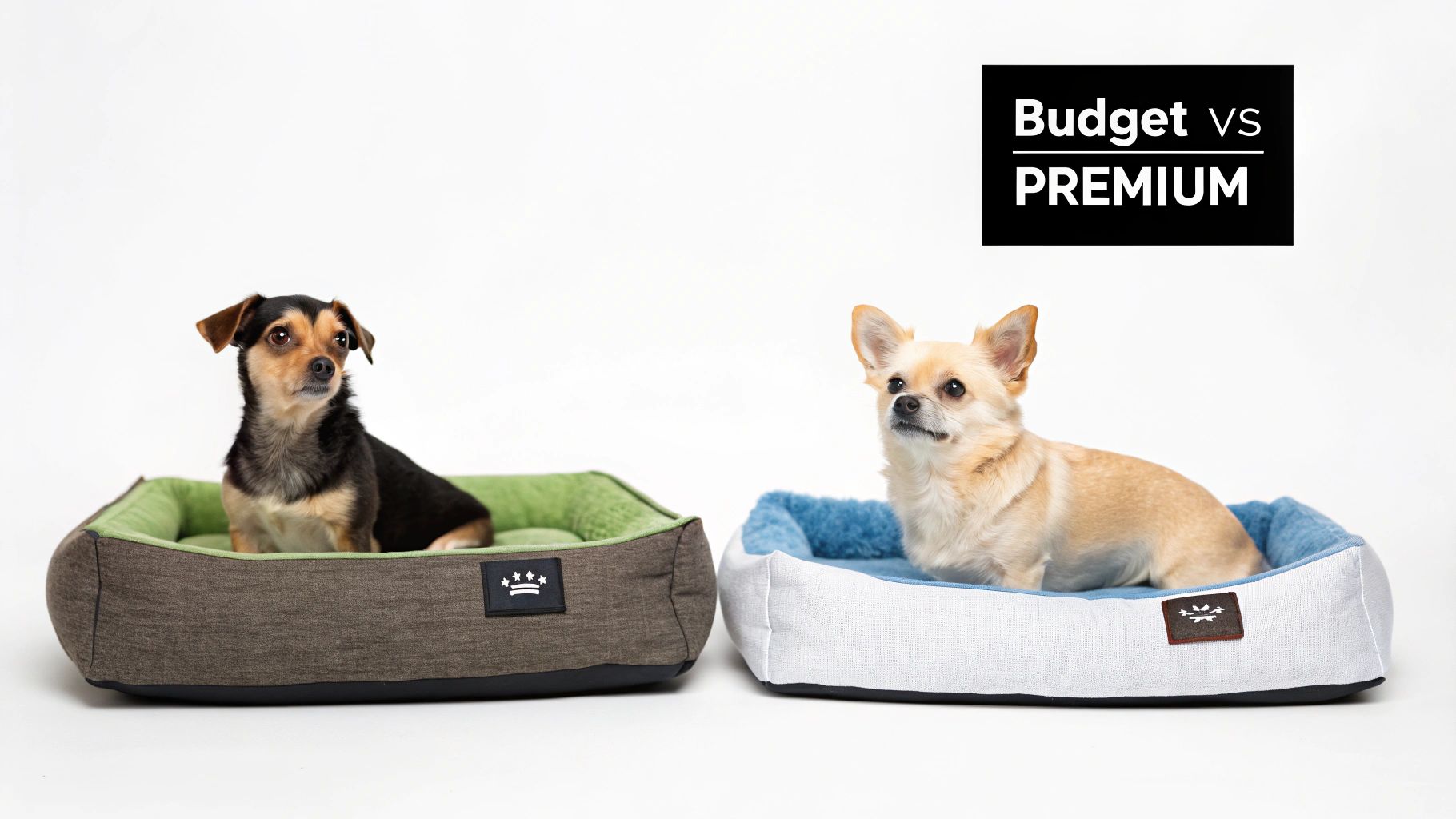
When you start shopping for a washable small dog bed, you’ll see a huge price spread. Some are as low as $20, while others push past $100. This isn’t just arbitrary pricing—it’s a direct reflection of the materials, construction, and long-term value you’re getting for your pup.
Think of it like buying your own mattress. Sure, a cheap foam pad gets the job done for a little while. But a high-quality memory foam mattress offers incredible support, comfort, and durability that pays off for years. It’s the exact same principle for your dog’s bed.
A lower price tag usually means you’re getting simpler materials, like a standard polyester filling inside a thin cover. While they’re easy on the wallet upfront, these beds tend to flatten out and show wear after just a handful of washes. You might find yourself buying a replacement sooner than you think, and those costs can add up.
What You Are Paying For with a Higher Price Tag
Moving up in price means you’re investing in features that genuinely improve your dog’s health and make the bed last. These are the components that separate a “good enough” bed from a truly great one.
- Orthopedic Foam: You’ll find high-density memory foam that provides critical joint support, which is a lifesaver for older dogs or breeds susceptible to arthritis.
- Durable Fabrics: Premium beds use tougher, thicker materials like sturdy canvas or soft microsuede that can handle a dog’s nesting habits and frequent trips through the wash.
- Water-Resistant Liners: This is a total game-changer. An internal liner protects the foam core from accidents, preventing stubborn odors and mildew from setting in.
- Reinforced Construction: It’s all in the details. Stronger stitching and robust zippers mean the bed won’t self-destruct in the washing machine.
A quality dog bed is more than just a place to sleep; it’s an investment in your dog’s long-term health and comfort. Paying a bit more upfront for durable materials and supportive filling often means greater value over the bed’s lifetime.
Finding the Best Value for Your Budget
The price range for small dog beds is definitely broad. You can find basic cushions for $10–$30, while mid-range options with better foam and stitching typically run from $30–$80. The premium orthopedic models usually start at $80 and go up from there. If you’re interested in the numbers behind this, you can learn more about the pet bed market analysis from dataintelo.com.
At the end of the day, the best value isn’t automatically the cheapest option. It’s the bed that fits your dog’s needs and lasts long enough to make your investment feel worthwhile. For most small dog owners, a mid-range bed with a tough, removable cover and good supportive fill often hits that perfect sweet spot between quality and cost.
Got Questions? We’ve Got Answers.
Even after digging into all the details, you probably still have a few questions floating around. That’s perfectly normal! Let’s tackle some of the most common things people ask when picking out and caring for a washable bed for their little pup.
Think of this as your final check-in before you make a decision. We’ve heard these questions time and time again from fellow dog owners, so we’ve put together some straightforward, practical advice to help you feel totally confident.
How Often Should I Be Washing My Small Dog’s Bed?
Honestly, the “right” answer depends on your dog. A good rule of thumb is to toss it in the wash every one to two weeks.
But you’ll want to bump that up to a weekly wash if your dog:
- Struggles with allergies
- Is a major shedder
- Loves bringing the great outdoors indoors with them on their paws and fur
Sticking to a regular schedule keeps nasty allergens, dirt, and bacteria from taking over their favorite snoozing spot.
Can I Wash a Dog Bed That Doesn’t Have a Removable Cover?
You usually can, but you have to check the tag first. The manufacturer’s care label is your best friend here. If it gives you the green light for machine washing, always opt for a gentle cycle with cold water and a mild, pet-safe detergent to keep it from getting misshapen or damaged.
Now, if you have a solid foam bed with no cover, hand-washing is almost always the way to go. This helps the foam keep its supportive shape and prevents it from breaking down.
If there’s one thing to remember, it’s this: beds with removable covers are simply the easiest to clean. You can give the cover a really thorough wash without having to worry about the inner core, which is a lifesaver for those pricey orthopedic foam beds.
What’s the Best Bed Material for a Dog with Allergies?
If your little one is a sneezy, itchy mess, you’ll want to be picky about materials. Look for beds made with hypoallergenic fabrics.
Tightly woven materials like cotton or a tough canvas are fantastic because they don’t give dust mites, dander, and other irritants many places to hide.
A waterproof liner is another game-changer. This little barrier sits between the cover and the filling, stopping moisture, drool, and allergens from soaking into the core of the bed. It keeps everything fresher, longer.
Are Orthopedic Beds Really Worth It for a Small Dog?
Absolutely, 100% yes. Don’t fall into the trap of thinking orthopedic beds are only for big, old dogs. Small breeds are just as prone to developing painful joint problems like arthritis and hip dysplasia.
A high-quality memory foam bed cradles their joints and takes the pressure off those sensitive spots. It’s not just about comfort—it’s about better sleep, easier movement, and investing in your dog’s long-term health. A happy, pain-free dog is always worth it.
Here at Ur Pet Store, we know that a great bed is more than just a place to sleep—it’s a key part of your dog’s health and happiness. We’ve hand-picked a collection of top-notch, durable, and super-easy-to-clean beds perfect for small dogs.
Ready to find the perfect cozy corner for your companion? Explore our small dog bed collection at Ur Pet Store and give them the gift of a great night’s sleep.