

Blog
Pee Pads Dog Guide For A Stress-Free Home

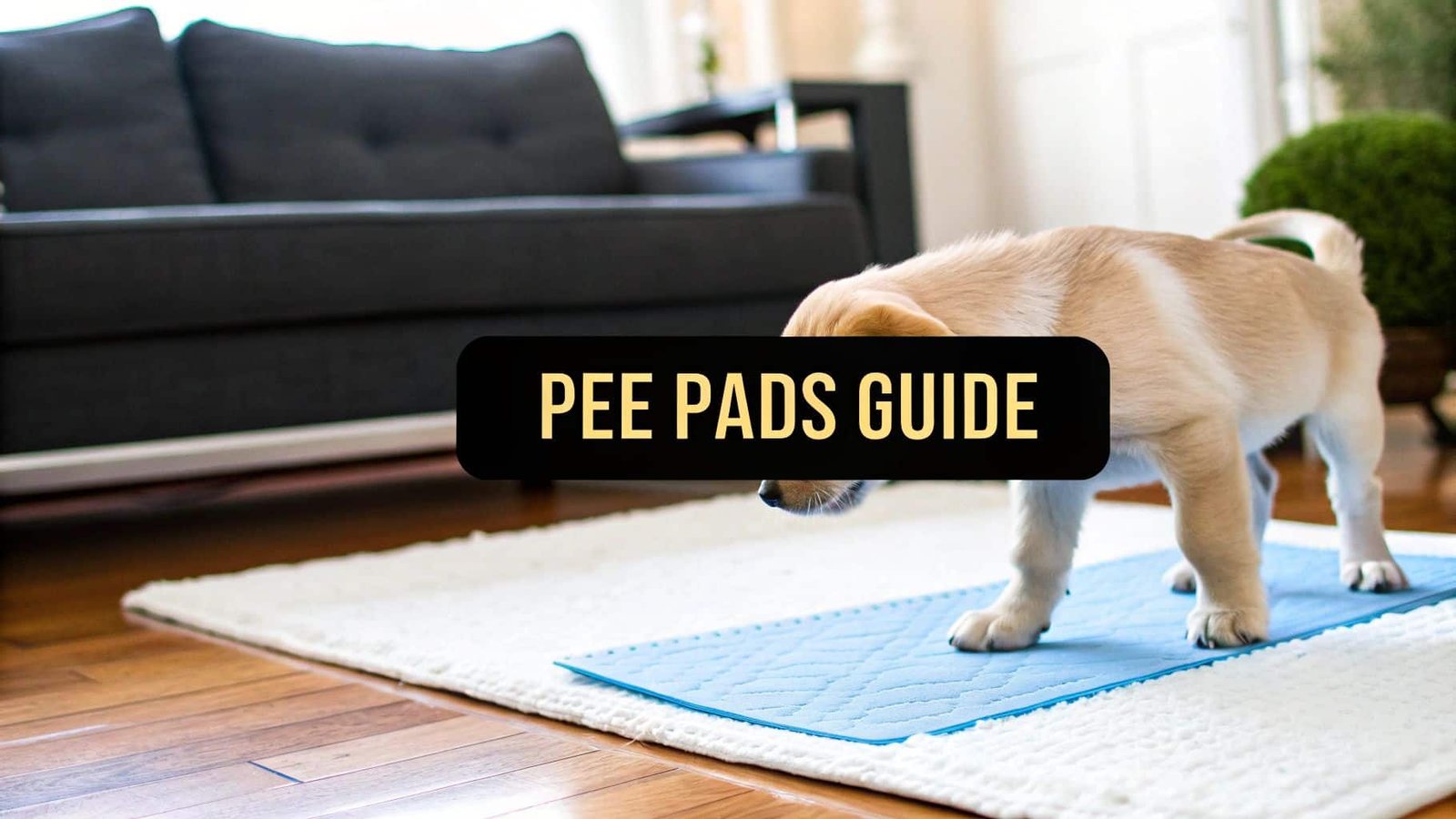
Staring at another puddle on your floor? I get it, and you’re definitely not alone. This is exactly where pee pads dog can be a total game-changer, giving you a smart, simple tool for a cleaner and much less stressful home. Think of them less as a temporary bandage and more as a modern solution for puppies, senior dogs, and city-dwelling pups alike.
Why Pee Pads Are a Pet Owner’s Secret Weapon
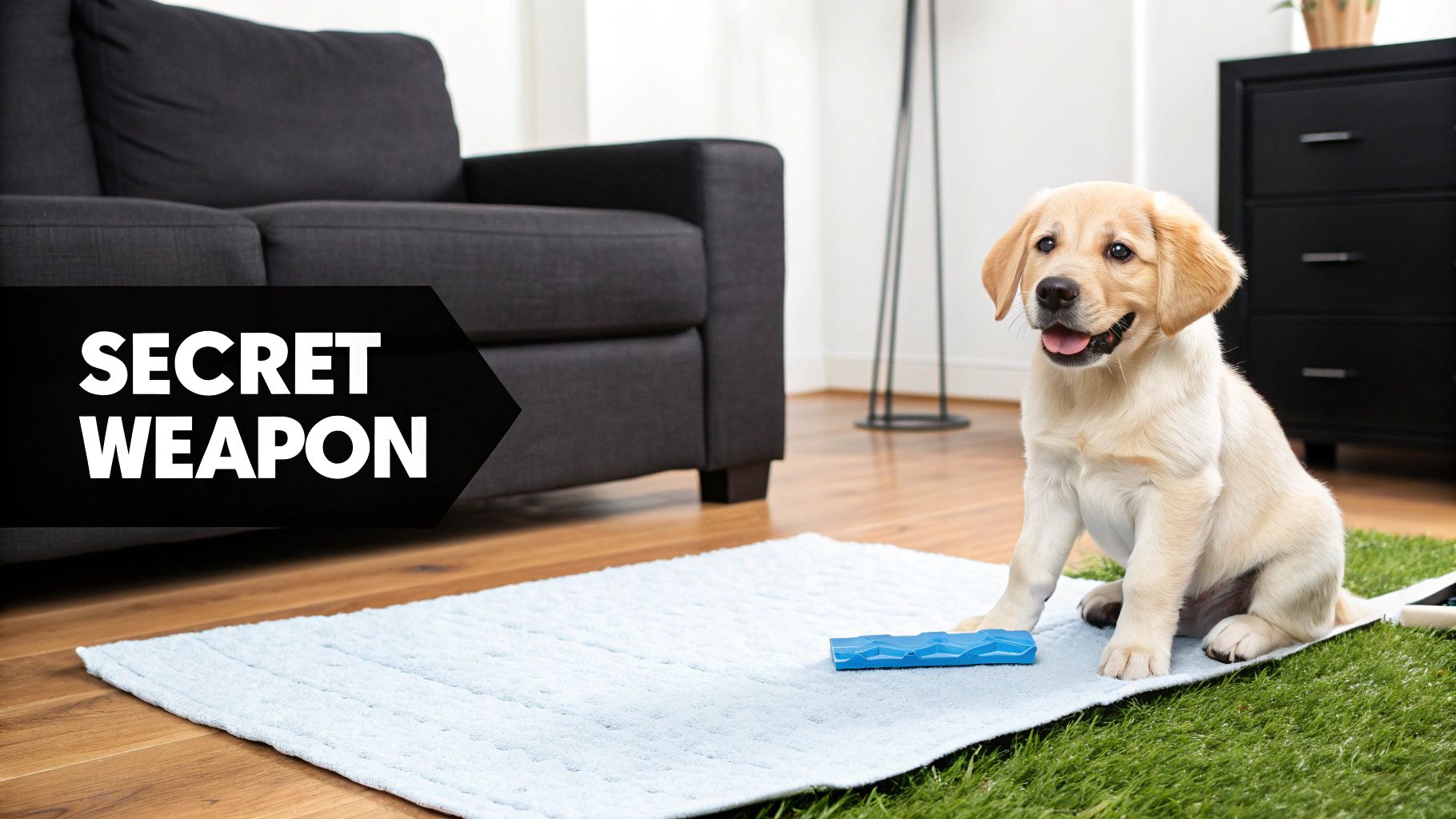
Dog pee pads are so much more than just a sheet of paper you put down while housebreaking a new puppy. They’re a practical, versatile tool designed to manage your dog’s potty needs inside, giving you peace of mind while protecting your floors from those inevitable accidents. For many of us, these pads are a non-negotiable part of our daily routine, offering a reliable and clean solution for all sorts of situations.
Essentially, they’re a safety net for your home. Whether you’re navigating the wonderfully chaotic first few weeks with a new puppy, caring for an older dog who’s started having accidents, or just need a backup plan for a rainy day, pee pads offer a designated indoor spot for your dog to go comfortably. It’s a simple idea that massively cuts down on the stress of potty training and home cleanup.
Key Scenarios Where Pee Pads Shine
The usefulness of a good pee pad doesn’t just stop once your puppy is trained. Modern dog ownership throws all kinds of challenges our way, and these absorbent mats offer real-world solutions for different lifestyles and life stages.
They are especially helpful for:
- Puppy Housebreaking: They give your little one a clear, consistent target. This helps them learn bladder control and reinforces where it’s okay to go potty inside.
- Senior Dogs: Older dogs often struggle with mobility or incontinence. Having an easily accessible indoor spot preserves their comfort and dignity while preventing messes.
- Apartment or High-Rise Living: If you live in the city, you know a quick trip outside isn’t always possible, especially late at night or in bad weather. Pee pads are a convenient and safe alternative.
- Post-Surgery Recovery: Dogs recovering from a medical procedure often have limited movement, making an indoor potty station a crucial part of their healing process.
The whole point of a dog pee pad is to create a specific, appropriate indoor bathroom spot. This simple tool helps you manage potty training and accidents with consistency and positive reinforcement, which ultimately builds a better bond with your dog.
Beyond Just a Basic Absorbent Square
Today’s pee pads are a far cry from the simple squares of the past. They’re designed with clever features to tackle common worries like odors and leaks. Many top-quality pads now have multiple layers, each with a specific job. You’ll often find a quick-drying top sheet that wicks moisture away to keep paws clean and prevent tracking.
Underneath that, a super-absorbent core locks in liquid almost instantly. Many pads even have built-in odor neutralizers, like activated carbon, to keep your home smelling fresh. Finally, a leak-proof plastic backing is your last line of defense, making sure nothing ever soaks through to your carpets or hardwood floors. These upgrades have turned the humble pee pad from a simple necessity into a highly effective tool for modern pet care.
How To Choose The Right Pee Pad For Your Dog
Walking down the pet aisle staring at a wall of pee pads can feel a bit overwhelming. With so many choices, how do you figure out which one is right for your dog? Here’s the secret: there’s no single “best” pad. The perfect one is the one that fits your dog’s unique needs and your own lifestyle.
Choosing the right pad means looking past the picture on the box. You need to think about your dog’s size, age, and habits, and even the layout of your home. A tiny pad that’s perfect for a Yorkie will be a puddle-filled disaster for a Golden Retriever, and a rambunctious puppy has totally different needs than a senior dog.
Matching Pad Size To Your Dog
The first—and most important—decision is getting the size right. A pad that’s too small is just asking for a mess. Dogs often circle or shift around before they go, so a pad that barely fits their paws is a recipe for frustrating near-misses.
A good rule of thumb is to pick a pad that gives your dog plenty of room to move around comfortably.
- Small Breeds (like Chihuahuas or Pomeranians): Standard-sized pads, usually around 22×22 inches, work just fine.
- Medium Breeds (like Beagles or Corgis): You’ll want to look for larger options or even place two standard pads next to each other to create a bigger target.
- Large Breeds (like Labradors or German Shepherds): Don’t even think about a standard pad. Extra-large or giant-sized pads are essential to prevent overflow and give them the space they need.
When in doubt, always go a size up. It’s far better to have a pad that’s a little too big than one that’s an inch too small. This one simple choice can save you from a lot of cleanup duty.
Disposable Convenience vs. Reusable Sustainability
Next up is the big debate: disposable or washable? Each has its own clear advantages, and the best choice really boils down to your priorities—convenience, budget, or your environmental footprint. The global market for pee pads for dogs is booming for a reason, valued at $500 million in 2025 and projected to nearly double to $950 million by 2033, largely thanks to city dwellers with limited yard space.
Disposable Pee Pads are the definition of convenience. They’re perfect for puppy training, travel, or anyone who just wants a quick, no-fuss cleanup. You just pick it up, toss it, and lay down a fresh one. Easy.
Washable Pee Pads, on the other hand, are the eco-friendly and budget-savvy choice for the long run. They cost more upfront and you’ll have to do some laundry, but they drastically cut down on waste. Many dog owners find that a high-quality, reusable dog pee pad blanket is not only tough but also more absorbent and comfortable for their dogs.
Disposable vs Washable Pee Pads At A Glance
To make the decision a little easier, here’s a quick side-by-side look at how disposable and washable pads stack up.
| Feature | Disposable Pee Pads | Washable Pee Pads |
|---|---|---|
| Convenience | Grab-and-go; no cleaning required | Requires regular washing and drying |
| Upfront Cost | Low per pack | Higher initial investment |
| Long-Term Cost | Ongoing expense, adds up over time | More cost-effective over time |
| Environmental Impact | Creates significant landfill waste | Eco-friendly and reduces waste |
| Absorbency | Varies; can sometimes leak or tear | Often more absorbent and durable |
| Best For | Puppy training, travel, convenience-focused owners | Long-term use, eco-conscious owners, senior dogs |
Ultimately, the best option is the one that fits seamlessly into your daily routine while keeping your dog comfortable and your floors clean.
Decoding Absorbency and Special Features
Not all pads are made equal, especially when it comes to performance. The technology inside modern pee pads is actually pretty smart, designed to handle the two biggest worries: leaks and smells.
A pad’s true value lies in its construction. Look for multi-layer designs that feature a quick-drying top sheet, a super-absorbent polymer (SAP) core that turns liquid into gel, and a 100% waterproof backing.
Beyond the basic layers, many pads come with extra features that can make a real difference:
- Pheromone Attractants: Some pads are infused with a special scent that instinctively encourages puppies to use them, which can be a huge help during training.
- Odor Neutralizers: Keep an eye out for pads with built-in odor control, like activated carbon or charcoal layers, to keep your home smelling fresh.
- Adhesive Strips: These sticky tabs on the corners are a lifesaver. They keep the pad from bunching up or sliding around, especially if you have an active dog or slippery floors.
By thinking through the size, type, and these key features, you can confidently pick a pee pad solution that works for everyone—keeping your floors clean, your dog happy, and your home life a little less stressful.
Your Step-By-Step Pee Pad Training Plan
Training your dog to use a pee pad isn’t just about damage control for your floors; it’s about teaching a new skill with a lot of patience and positive vibes. The real goal is to forge a strong, happy connection between your dog, the pad, and the act of doing their business in the right spot. This whole process hinges on consistency, timing, and a mountain of praise—never punishment.
Think of it like teaching a toddler their ABCs. You wouldn’t get frustrated on the first try. Instead, you create a fun learning environment, you repeat the lesson, and you celebrate every little win. That same gentle approach works wonders for pee pad training and deepens the bond you share with your dog.
Phase 1: The Introduction and Association
First things first, you need to get your dog comfortable with this new thing in their space. Lay a clean pee pad down in your designated spot and just let them be. Let your pup sniff it, walk across it, and give it a good investigation on their own terms. No pressure at all.
Once they seem unfazed by it, it’s time to build a positive association. A few times a day, lead your dog over to the pad with an upbeat, happy tone. The second they step onto it, reward them with a super special, high-value treat—something they absolutely love and don’t get all the time. This simple action teaches them that great things happen on this little square.
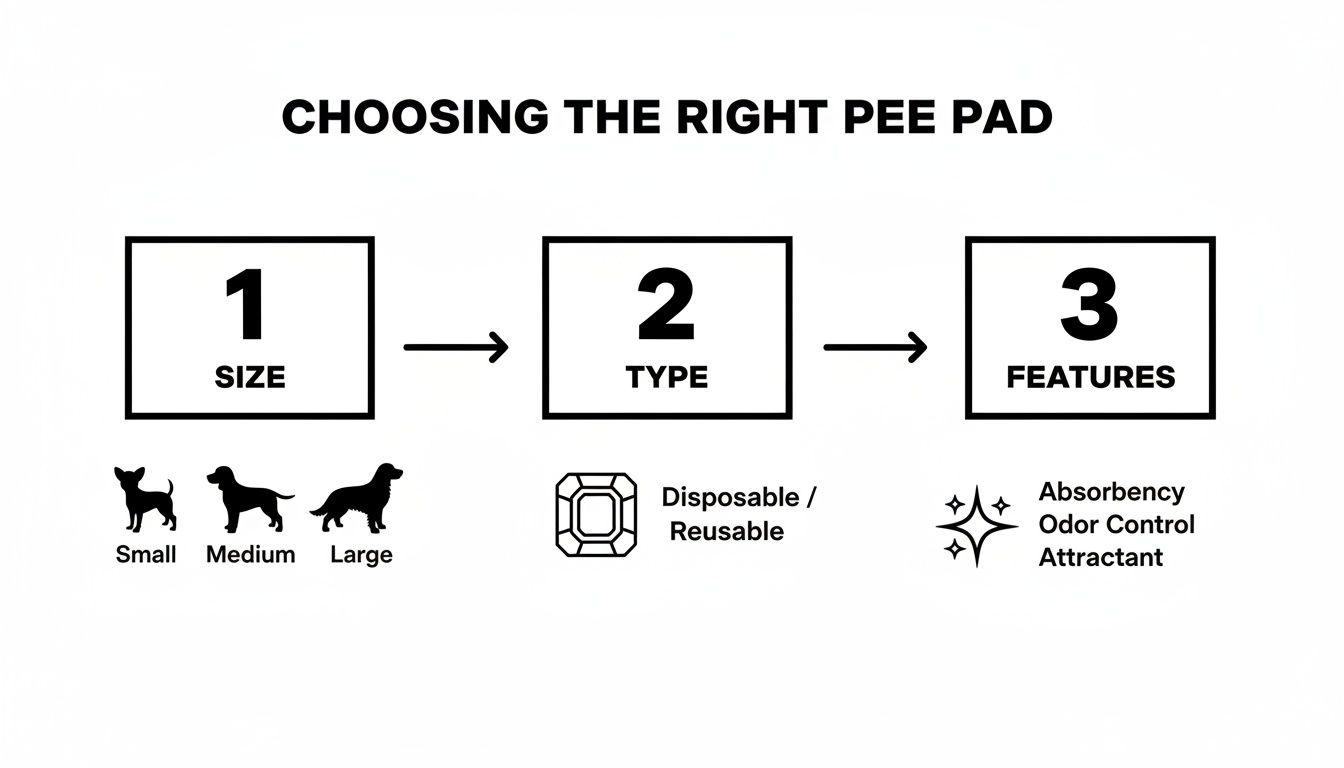
This process really starts before you even bring the pad home. Making the right choice on size, type, and features sets the foundation for successful training from day one.
Phase 2: Establishing a Verbal Cue
Now it’s time to add a command, or a “cue,” that links the action to the pad. Pick a simple, consistent phrase like “Go Potty” or “Pad Time.” Try to avoid using common words you say all the time, as that can just confuse your dog.
Start using your cue when you think your dog needs to go. The most reliable times are first thing in the morning, right after a nap, a few minutes after they eat or drink, and just before bed. Lead them to the pad on a leash to keep them from getting distracted, and calmly repeat your cue. The moment they start to potty, gently praise them with “Good ‘Go Potty’!”
The absolute key here is consistency. Using the same phrase in the same tone every single time helps your dog’s brain connect the words, the place, and the action. This verbal shortcut becomes a lifesaver for guiding them when you know it’s time.
Phase 3: Positive Reinforcement and Celebration
This is where the real learning kicks in. The instant your dog successfully uses the pad, throw a mini-party! Shower them with excited praise, give them that special treat you’ve been saving, and maybe even start a quick game of tug. You want to make them feel like they just won the lottery.
This powerful positive reinforcement cements the behavior way more effectively than scolding ever could. Your dog quickly learns that using the pad brings amazing rewards, which makes them want to do it again. For Ur Pet Store’s customers, pads are a sanity-saver during the messy puppy stage—in fact, 70% of new owners use them for housebreaking, which can slash accidents by up to 60%. You can explore more data on how effective washable pads are for pet owners.
Phase 4: Handling Accidents Gracefully
Look, accidents are going to happen. It’s a completely normal part of the learning curve. How you react can either build your dog’s confidence or shatter it. It is so important to never scold, punish, or rub your dog’s nose in an accident. That approach only teaches them to be afraid of you, and they might start hiding to potty, making training ten times harder.
When an accident happens, just follow these two simple steps:
- Interrupt and Redirect: If you catch them in the act, make a calm noise (like a soft clap) to get their attention. Immediately scoop them up and place them on the pee pad, encouraging them with your verbal cue. If they finish on the pad, praise them like they did it right the first time.
- Clean Thoroughly: This is non-negotiable. You have to use an enzymatic cleaner made specifically for pet urine. Regular cleaners won’t break down the odor molecules that act like a beacon, telling your dog, “This is a good spot to pee again!” Cleaning properly erases that scent marker and prevents a repeat offense.
By sticking to this plan with patience and a positive attitude, you’re not just teaching your dog where to go—you’re building a foundation of trust and clear communication that will last a lifetime.
Mastering Strategic Pad Placement In Your Home
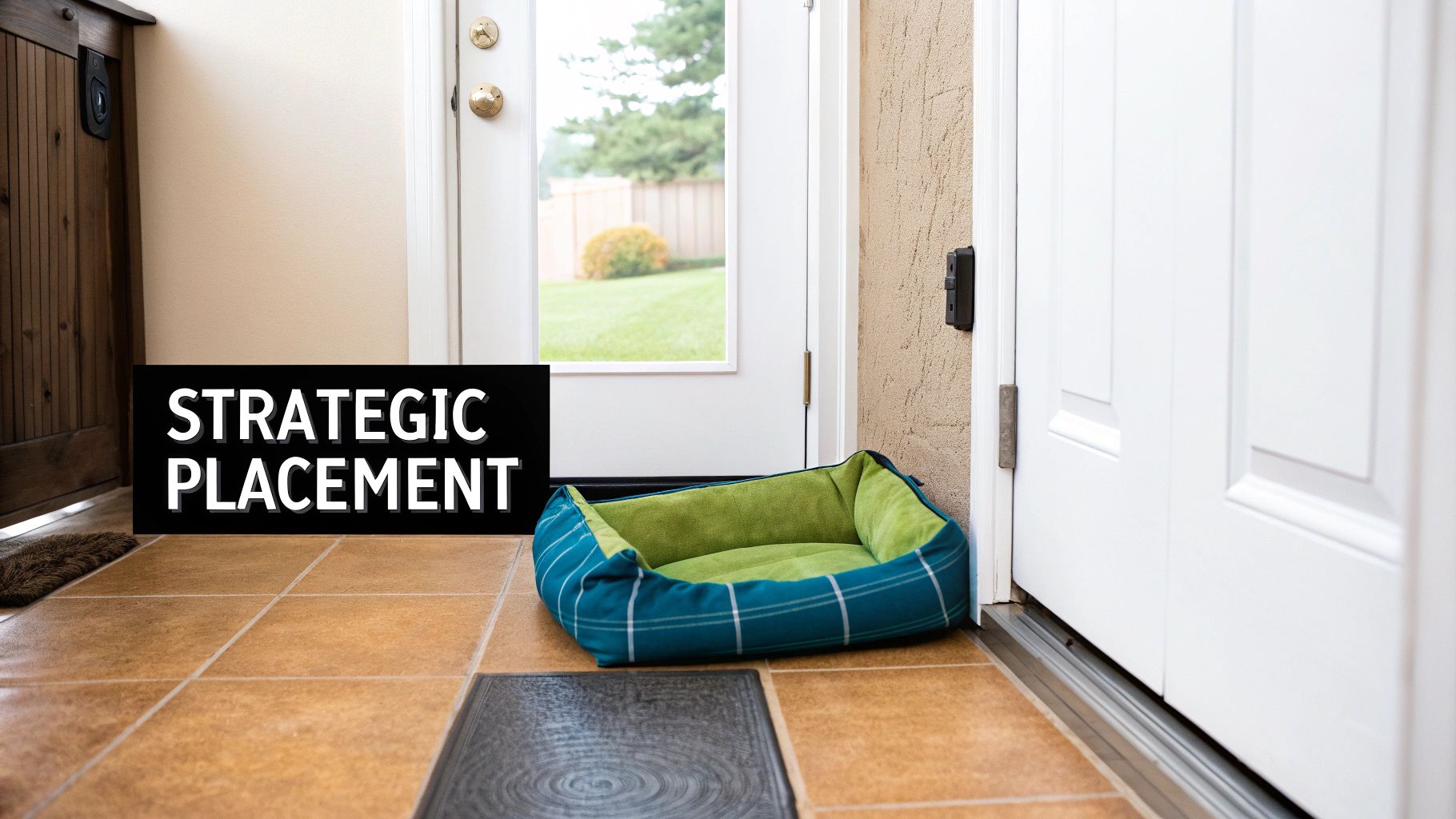
Getting your dog to use a pee pad is only half the battle. The other, equally critical, half is figuring out where to put it. Think of the pad’s location as a landmark. If that landmark is always moving or stuck in a loud, chaotic area, your dog will have a tough time finding it when they need it most. Smart placement works with your dog’s instincts, not against them, creating an obvious, reliable spot that makes training click so much faster.
If there’s one golden rule here, it’s consistency. Dogs are creatures of habit. They thrive on routine, and a predictable potty spot removes a ton of anxiety from the training process. By choosing one location and sticking with it, you’re helping your pup build a powerful habit that becomes second nature.
The “Den” Instinct: Your Dog’s Guide To Cleanliness
Dogs are naturally wired to be clean animals. They have a powerful instinct to keep their “den”—where they eat and sleep—separate from their bathroom. This is a huge advantage for you! Placing a dog pee pad too close to their food bowls, water dish, or bed sends a confusing signal that can completely derail your training efforts.
Instead, find a spot that’s clearly away from their main living quarters. This reinforces their natural desire for a clean den and makes the pad an obvious, appropriate choice for potty time.
- Good Spot: A quiet corner of the laundry room or a spare bathroom.
- Bad Spot: Right next to their crate or in the middle of a busy kitchen.
Just respecting their space in this simple way can make a world of difference in how quickly they take to their new potty spot.
Choosing a low-traffic, easily accessible area is crucial. The location should offer a degree of privacy while still being convenient for your dog to find when the urge strikes. A busy hallway is distracting, while a hidden-away room might be forgotten.
Common Placement Mistakes That Confuse Dogs
Even with the best intentions, it’s easy to make a few placement mistakes that set training back. Avoiding these common pitfalls is key to sending a clear, consistent message to your dog.
Here are the top mistakes I see people make all the time:
- Placing Pads on Rugs or Carpets: This is probably the biggest source of confusion. A dog can’t easily tell the difference between the soft texture of a pee pad and the soft texture of your expensive rug. This accidentally teaches them that any soft surface is a good place to go. Always place pads on hard, non-absorbent flooring like tile, vinyl, or hardwood.
- Moving the Pad Too Often: If the pad is in the living room on Monday and the bathroom on Tuesday, your dog will never form a reliable habit. Pick one spot and commit to it, especially during the early days of training.
- Using Multiple Locations Simultaneously: Offering too many choices can overwhelm a puppy. It’s much better to start with one designated spot to build a strong foundation before you even think about adding a secondary location.
Transitioning From Indoor Pads To Outdoor Potty Breaks
For many dog owners, pee pads are a temporary tool with the end goal of transitioning to outdoor potty breaks. Strategic pad placement is your secret weapon for making this shift go smoothly. The whole process is a gradual one that gently guides your dog toward the door.
Start with the pad in its usual indoor spot. Once your dog is using it reliably, begin moving it a few feet closer to the exit door every couple of days. Keep up this slow migration until the pad is right next to the door. The final step is to place a pad just outside. This step-by-step method connects their established indoor habit with the new outdoor world, paving the way for a successful transition.
Keeping Your Home Fresh And Odor-Free
Let’s be honest, one of the biggest worries about using pee pads is the potential for odor. No one wants their home to smell like a doggy bathroom. But with the right routine, you can keep everything smelling clean and fresh, making dog pee pads a helpful tool instead of a stinky problem.The key is to be proactive. For disposable pads, that means changing them out often. Think of it this way: a dirty pad is not only a bit gross, but it also tells your dog, “This spot is taken.” That can lead to accidents right next to the pad. A good rule of thumb is to swap it out after every one or two uses, especially with puppies who seem to pee every hour.
When you do throw one away, fold or roll it inward to keep the mess contained. Tossing it into a sealed trash can will make a huge difference in keeping those odors locked away.
Washing Reusable Pads Correctly
If you’re using washable pads, a solid cleaning process is your best friend for getting rid of smells and keeping things sanitary. These pads are built tough, but washing them the right way ensures they last and stay fresh.
Here’s a simple routine that works wonders:
- Pre-Rinse First: Give the pad a quick rinse under cool water to wash away any loose debris or urine before it hits the machine.
- Pick a Pet-Safe Soap: Go for a hypoallergenic and fragrance-free detergent. Strong perfumes and harsh chemicals can irritate your dog’s skin or even make them avoid the pad altogether.
- Turn Up the Heat: A hot water cycle is fantastic for sanitizing and knocking out odor-causing bacteria. Just make sure the pad’s material can handle it!
- Add an Extra Rinse: A final, clear-water rinse makes sure every bit of soap is gone, which is super important for dogs with sensitive skin.
Air-drying is usually the gentlest option for preserving the pad’s waterproof layer, but many can handle a tumble dry on low heat. It’s always a good idea to double-check the manufacturer’s care tag.
The secret weapon for any pet parent is a high-quality enzymatic cleaner. Unlike standard household cleaners that just mask smells, enzymatic formulas contain beneficial bacteria that physically break down and eliminate the organic proteins in pet urine, completely removing the scent.
The Power of Enzymatic Cleaners for Accidents
No matter how well-trained your dog is, accidents are bound to happen. When they do, the cleaner you grab makes all the difference. Regular soaps and ammonia-based products might seem like they work, but they can’t break down the uric acid crystals in urine.
So, while the spot might look and smell clean to you, your dog’s incredible sense of smell can still pick up on it. That lingering scent basically acts as a signpost that says, “It’s okay to pee here again!” An enzymatic cleaner, on the other hand, destroys those scent markers on a molecular level, preventing repeat accidents and truly getting the area clean. To handle messes on tricky surfaces, it helps to know about the best hardwood floor cleaners for pet urine.
A consistent cleaning routine paired with the right products is all it takes to keep your home smelling great. For a full lineup of pet-safe solutions, check out our collection of grooming and cleaning supplies made to simplify life with your furry friend.
Troubleshooting Common Pee Pad Training Hurdles
Even with the best game plan, you’re bound to hit a few snags. It’s totally normal for dogs to pick up some confusing or frustrating habits during pee pad training. The trick is to stay patient and figure out why they’re doing it, then respond with a calm, positive solution.
Think of these issues as puzzles to solve, not as failures. Whether your dog is turning their pad into confetti or has decided it’s the perfect new napping spot, there’s always a reason. By getting to the root of the behavior—like boredom, anxiety, or plain old confusion—you can get your training back on track without the stress.
My Dog Shreds The Pee Pad
Does your living room look like it snowed little white bits of fluff? A dog shredding their pee pads is a classic—and messy—problem. But it’s almost never about defiance. More often than not, this behavior is a sign of boredom, pent-up energy, or a teething puppy. That crinkly sound and soft texture can be irresistible for a pup looking for something to do.
To fix this, the goal is to make the pad boring and offer much better alternatives.
- Try a Pad Holder: This is often the easiest and most effective fix. A simple plastic frame holds the pad’s edges down, so your dog can’t get a grip on the corners to start tearing.
- Upgrade Their Toy Box: Make sure your dog has plenty of awesome chew toys to keep them busy. Don’t forget to rotate them every few days to keep things fresh and redirect that chewing instinct to something appropriate.
- Burn Off More Energy: Remember the old saying: a tired dog is a good dog. Adding an extra walk, using a puzzle feeder, or doing a quick training session can work wonders for burning off the excess energy that often fuels destructive habits.
My Dog Sleeps On The Pee Pad
Finding your pup curled up for a nap right on their pee pad can be baffling. This usually happens when the pad is placed too close to their main living space. Dogs are hardwired not to soil their den—and that includes their bed, food bowls, and favorite hangout spots. If the pad is right in that zone, they might just see it as another comfy blanket.
A dog using their pee pad as a bed is a huge clue that its location is sending mixed signals. Take a hard look at where you’ve placed it to create a clearer boundary between their “bedroom” and their “bathroom.”
Anxiety can also play a part. Some dogs find comfort in their own scent, which might draw them to sleep where they’ve peed before. If you think stress is the culprit, focus on creating a super secure and inviting rest area with a plush, supportive bed. For particularly anxious pups, a calming dog bed can provide that extra sense of security they need to relax in the right spot.
Got Questions About Pee Pads? We’ve Got Answers.
Even with the best plan, you’re bound to have a few questions along the way. That’s totally normal. This little FAQ section is here to give you quick, straightforward answers to the things we hear most often about using pee pads for dogs. Think of it as a cheat sheet to clear up any confusion and help you feel confident about the choices you’re making.
We’ve pulled together the most common questions our customers at Ur Pet Store ask, from whether pads are a forever thing to how to fix those frustrating training hiccups. Let’s jump right in.
Are Pee Pads a Permanent Solution or Just for Puppies?
This is a fantastic question, and the short answer is: they can absolutely be a permanent solution! While they’re a lifesaver for housebreaking a new puppy, dog pee pads have a ton of value long-term. They’re a perfect setup for small breeds in high-rise apartments, senior dogs who might struggle with bladder control, or any pup who needs an indoor spot during a blizzard or heatwave.
The best approach is whatever works for your life and keeps your dog comfortable and happy. Many owners find a hybrid system works best, using indoor pads for convenience and outdoor walks for exercise and sniffing adventures.
That flexibility is really one of the biggest perks of using pee pads. It’s not an all-or-nothing deal. You can adapt how you use them as your dog’s needs change over the years, ensuring they always have a safe, clean place to go.
My Dog Keeps Going Right Next to The Pad. What’s Wrong?
Oh, the “near miss.” It’s a classic—and incredibly common—training hurdle! When a dog goes right next to the pad, it’s rarely out of spite. It’s usually just a simple misunderstanding. First thing to check is the size of the pad. Your dog might just need a bigger target, especially if they’re the type to circle a few times before getting down to business.
Next, make sure you’re cleaning up any accidents with a good enzymatic cleaner. Regular household soaps just won’t cut it; they don’t break down the scent molecules that are basically a neon sign telling your dog, “This is a great spot to pee again!” And finally, double down on the positive reinforcement. The second they get it right on the pad, throw a party with praise and a super tasty treat to really lock in that good behavior.
Will Using Pee Pads Make My Dog Not Want to Go Outside?
That’s a valid worry, but you can definitely teach your dog to use both without any confusion. The secret is creating clear, separate routines for inside and outside potty breaks.
Here’s how to keep things crystal clear for your pup:
- Use Different Cues: Give each spot its own command. Something like “Go Pad” for inside and “Go Potty” for your walks. This helps your dog know exactly what you’re asking of them.
- Keep Your Walk Schedule: Don’t skip the walks! Sticking to a consistent outdoor routine reinforces that going outside is still a key part of their day and a great chance to explore.
- Transition Slowly: If your end goal is to phase out the pads completely, do it gradually. Start by moving the pad closer and closer to the exit door over a few weeks to make the transition feel natural.
How Often Should I Be Changing The Pee Pad?
For a happy dog and a home that doesn’t smell like a kennel, it’s best to change a disposable pad after every use. For a tiny dog who only pees a little, you might get away with a couple of uses, but a soiled pad is not inviting. A dirty pad can quickly discourage your dog from using it, which is when you start finding puddles in other places.
Puppies pee a lot, so expect to be changing pads more frequently when they’re young. If you’re using washable pads, it’s a great idea to have a few in rotation. That way, you can always have a fresh one down while the other is in the wash, and your dog never has to wait for a clean spot.
At Ur Pet Store, our goal is to make life with your pet easier and more joyful. From clever training tools to all the daily essentials, we have what you need to build a happy, healthy life together. Check out our full collection today at https://urpetstore.com.