


Blog
Choosing the Best Dog Grooming Clippers for Poodles

Choosing the right dog grooming clippers for poodles is a game-changer. That dense, curly coat demands a powerful motor and specific blades to avoid painful pulling and a botched haircut. The best bet is almost always a set of high-speed, professional-grade clippers with a rotary motor—they’re built to plow through thick fur without snagging or overheating.
Why Your Poodle’s Coat Needs the Right Clippers
Trying to groom a poodle with cheap, standard clippers is like trying to mow a hayfield with a pair of kid’s scissors. It’s not just going to be slow and frustrating; it’s going to be a complete mess. A poodle’s coat isn’t like most dogs’ fur. It’s actually hair that grows continuously, creating that signature dense, curly, and incredibly mat-prone texture.
When you use the wrong tool on a coat like this, you’re asking for trouble. A weak motor will snag and yank on the hair, causing your poodle real pain and making them dread grooming time. This can quickly lead to skin irritation, “clipper burn,” and a very unhappy dog.
The Unique Demands of Poodle Hair
The very same qualities that make a poodle’s coat so stunning also make it a serious challenge to groom. Those tight curls create a complex web of hair that underpowered clippers just can’t get through. The result is often a choppy, uneven cut that looks nothing like the smooth, sculpted finish you were hoping for.
To get a feel for what you’re up against, let’s look at the core differences between a poodle’s coat and a more “standard” dog coat.
Poodle Coat Needs at a Glance
| Grooming Challenge | Poodle Coat Requirement | Why It Matters for Poodles |
|---|---|---|
| Coat Density | Powerful rotary motor | Poodle hair is incredibly thick. A weak motor will stall, snag, and pull, causing pain and an uneven cut. |
| Curly & Mat-Prone | Sharp, precision blades (CeramicEdge or UltraEdge) | Curls trap shed hair, forming tight mats. You need sharp blades that can slice cleanly through or under mats without yanking. |
| Continuous Growth | Durable, cool-running clippers | Poodles need full-body trims every 4-6 weeks. The clippers have to be built to handle long sessions without overheating and burning your dog’s skin. |
| Sensitive Skin | Low vibration and quiet operation | Many poodles have sensitive skin. Loud, vibrating clippers cause stress and can make them fidget, increasing the risk of nicks. |
As you can see, the right clippers aren’t just about getting a pretty haircut—they’re about your dog’s safety and comfort.
Think of it this way: specialized dog grooming clippers for poodles are engineered specifically for this job. They have the muscle from a powerful motor and the finesse of precision blades to glide through those curls. Investing in the right tool isn’t a luxury; it’s a non-negotiable part of responsible poodle ownership.
Understanding Clipper Motors, Speeds, and Power
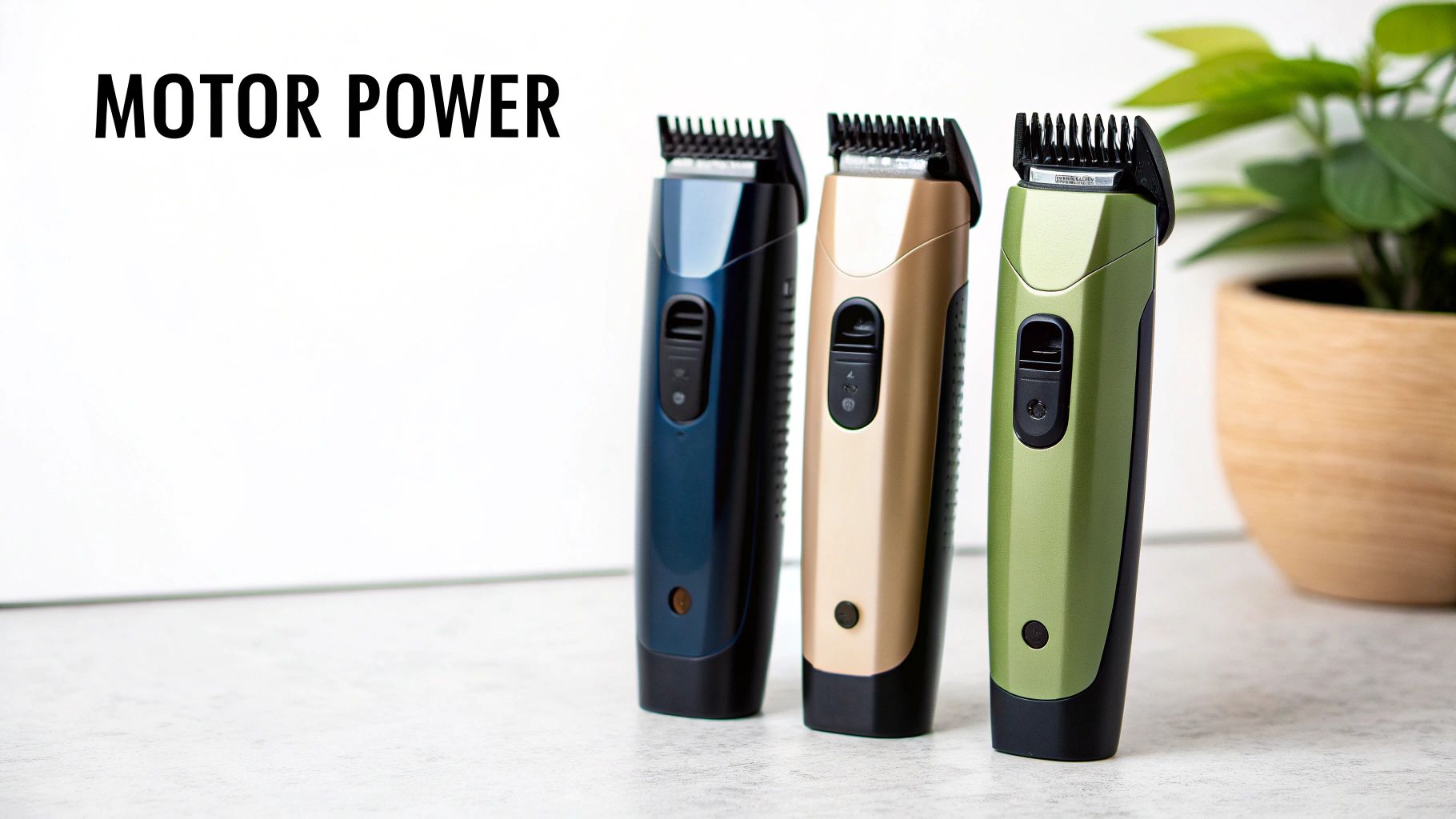
The motor is the absolute engine of your clippers, and for a poodle, you can’t just settle for any old engine. Think of it like a car: a little four-cylinder is fine for cruising around town, but you’d never try to haul a heavy trailer with it. That dense, curly poodle coat is the heavy trailer in this scenario, and a weak motor just won’t cut it.
Picking the right motor isn’t a small detail; it’s the difference between a smooth, easy groom and a frustrating disaster full of pulling, stalling, and a very unhappy dog.
Decoding Motor Types
Let’s stick with the car analogy for a moment. Clipper motors come in a few different “performance classes,” and only one is truly built for the kind of heavy-duty work a poodle’s coat demands.
- Magnetic Motors: These are your basic commuter cars. They’re perfectly fine for very light tasks, like trimming fine human hair or a dog with a simple, thin coat. But against poodle fur? They’ll stall out immediately.
- Pivot Motors: Think of these as a small SUV. They have more torque (pulling power) than magnetic motors, which helps with thicker or even damp hair. They run slower, though, and can still get bogged down in a seriously dense or matted poodle coat.
- Rotary Motors: This is the V8 truck of the grooming world. Rotary motors are what the pros use, period. They deliver the best combination of power, speed, and durability, plowing through the thickest, curliest coats without so much as a hiccup.
For a poodle, a rotary motor isn’t just a nice-to-have feature—it’s non-negotiable. It’s the only type that guarantees the blades have enough power to slice cleanly through the hair instead of snagging it, which is painful and makes dogs dread grooming time.
Understanding Strokes Per Minute (SPM)
Once you’ve settled on a powerful rotary motor, the next number you’ll see is Strokes Per Minute (SPM). This simply tells you how many times the cutting blade zips back and forth in one minute. A higher SPM generally means a faster, smoother cut.
But more speed isn’t always better. This is where variable-speed clippers become your best friend.
A lower speed, around 2,500 SPM, is your go-to for delicate work on sensitive areas like the face, paws, and sanitary spots. The slower speed generates less heat and vibration, giving you more precision and control. For the main body, you can crank it up to 4,500 SPM or more to glide through that thick coat, which saves a ton of time and leaves a beautiful, even finish.
Having clippers with at least two speed settings gives you the versatility to groom every part of your poodle safely and efficiently.
Corded Power vs. Cordless Freedom
The age-old debate: do you want the consistent power of a cord or the freewheeling convenience of a cordless model? It really boils down to a trade-off.
- Corded Clippers: These guys offer a nonstop, reliable stream of power. You never have to worry about a battery dying halfway through a leg, which is a huge plus when you’re in the middle of a full poodle clip. The only drawback is the cord itself, which can feel like a leash at times.
- Cordless Clippers: The freedom is undeniable. Getting around legs, under the belly, and into tricky spots is so much easier without a cord in your way. Modern lithium-ion batteries are much better than they used to be, but they still have a limited runtime and can lose a bit of oomph as the battery drains.
Many professional groomers use both. For home grooming, though, a solid corded model is often the safest bet to ensure you have enough power to finish the job without stopping. As the global pet economy is expected to hit over $380 billion by 2025, companies are pouring money into better battery tech, so powerful cordless options are becoming more common. You can check out more fascinating stats on the growing pet industry at petpalaceresort.com.
Managing Noise and Vibration
Finally, don’t forget how this all feels and sounds to your poodle. Poodles are smart, sensitive dogs, and a loud, rattling clipper can be genuinely terrifying for them. Heavy vibrations and a high-pitched buzz can turn grooming into a stressful ordeal.
When you’re shopping, look for clippers that are specifically marketed as low-noise or low-vibration. A quieter, smoother-running tool goes a long way toward keeping your dog calm, which makes the entire experience safer and more enjoyable for both of you.
How to Select the Right Blades and Comb Guards
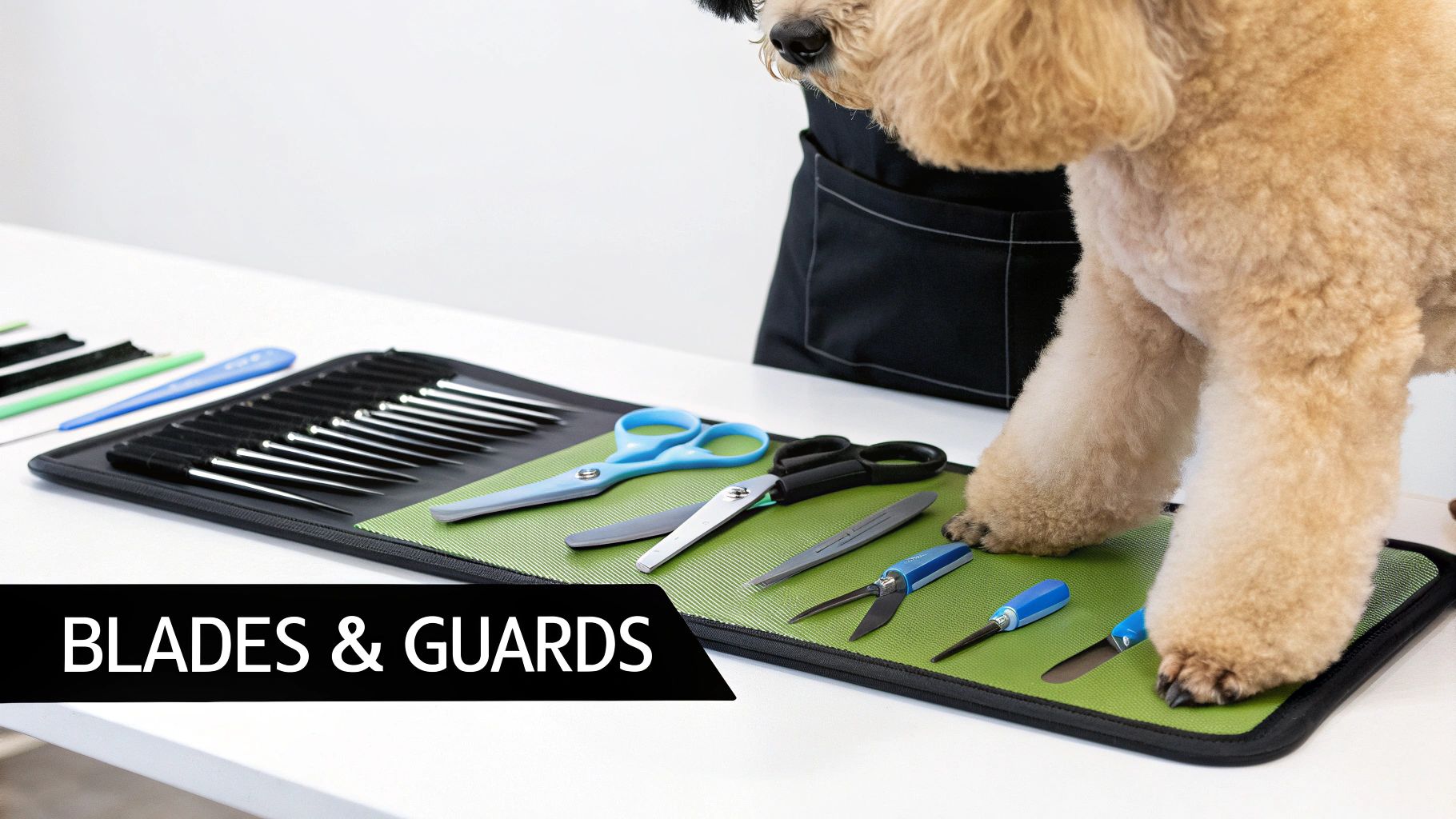
If the clipper motor is the engine, think of the blades and comb guards as the tires. They’re what actually make contact with your poodle’s coat and ultimately determine how the final cut looks. Picking the right ones is what separates a basic trim from a beautiful, intentional style.
I know all the numbers and letters can seem overwhelming at first, but the system is actually pretty simple once you get the hang of it. Nailing this part is crucial for getting the look you want safely, whether it’s a short, practical “kennel cut” or a fluffy, adorable “teddy bear” style.
Decoding Blade Numbers
The blade numbering system is probably the most confusing part for newcomers because it feels backwards. Just remember this one simple rule: the higher the blade number, the shorter the hair will be.
For example, a #10 blade is a grooming staple. It’s a very short utility blade that’s perfect for sanitary trims and keeping the face and paws neat and tidy. It leaves the hair about 1/16 of an inch long. On the other hand, a lower-numbered blade like a #4F or #5F will leave the coat much longer—around 1/4 to 3/8 of an inch—which is ideal for body work on a fluffier style.
What does the “F” mean? You’ll see an “F” on blades like the #4F or #7F. This stands for “Finishing.” These blades have teeth that are set close together to give a smooth, velvety look to a clean, mat-free coat. For all-over body clipping, you always want to use an “F” blade. The alternative is a “skip-tooth” blade (which has no “F”), and those are strictly for pros to rough-in a matted coat. They are not safe for beginners.
Choosing the Right Blade Material
The material your blades are made from makes a huge difference in performance, especially when you’re working on a dense poodle coat for a while. Your two main options are stainless steel and ceramic.
- Stainless Steel Blades: These are the industry workhorses. They’re incredibly durable, can be sharpened over and over, and give a really crisp, precise cut. The only catch is they get hot, and with a poodle, that can happen fast.
- Ceramic Blades: The superpower of ceramic is its heat resistance. The ceramic cutting part of the blade (the small, moving piece) can stay up to 75% cooler than a steel one. This is a game-changer for poodle grooming, as it dramatically reduces the risk of clipper burn and means you don’t have to stop constantly to let your blades cool down. They are, however, more brittle, so dropping one can mean it’s done for.
Honestly, a lot of us use a hybrid approach. We might use tough stainless steel blades for quick jobs but switch to a ceramic blade for those long body clipping sessions to keep things cool and comfortable for the dog.
Using Comb Guards for Fluffy Styles
Want those longer, fluffier styles without spending hours on tricky scissor work? Comb guards (also called attachment combs) are your best friend. These are simply plastic or metal guides that snap right onto a short blade, typically a #10 or #30.
They act as a buffer, lifting the cutting blade away from the skin to leave the hair at a specific, uniform length. This is exactly how groomers achieve those beautiful, even teddy bear looks. Each comb is clearly marked with the length of hair it leaves behind, from as short as 1/8 inch to over an inch long. For any at-home poodle groomer, a good set of comb guards is non-negotiable.
Here is a quick reference table to help you match common poodle styles with the right tools.
Poodle Clipper Blade Guide for Popular Styles
| Poodle Clip Style | Recommended Blade Number | Required Comb Guard Size | Best For |
|---|---|---|---|
| Puppy Clip | #10 on face, feet, tail base. | 1/2″ to 1″ comb on body. | Maintaining a soft, fluffy, uniform look on young poodles. |
| Teddy Bear Cut | #10 on face, feet, sanitary. | 1/2″ or larger comb on body. | Achieving a rounded, plush “stuffed animal” appearance. |
| Kennel Clip (Utility) | #10 or #15 on face/feet. #5F or #7F on body. | None needed for the body. | A short, low-maintenance, practical cut for active dogs. |
| Lamb Cut | #10 on face/feet. | 1/4″ to 1/2″ comb on body. | A classic style with a short body and slightly longer, fuller legs. |
| Sanitary Trim | #10 or #15 | None. | Essential hygiene maintenance for the belly and rear areas. |
Remember, this is a starting point! Feel free to adjust the comb guard size to get a length you love. The key is to always start with a longer guard than you think you need—you can always go shorter, but you can’t put hair back on.
Your Step-by-Step Guide to Grooming a Poodle at Home
Tackling your poodle’s grooming at home for the first time can feel like a monumental task. But let’s reframe it: this is a chance to bond and build trust with your dog. The goal isn’t a show-perfect finish. It’s about keeping your poodle comfortable, healthy, and happy with a safe, practical trim.
If there’s one golden rule to live by, it’s this: preparation is everything. Success is decided long before you ever flip the switch on your dog grooming clippers for poodles.
Why? Because a poodle’s coat has to be perfectly clean, bone-dry, and completely free of mats before a blade ever touches it. Trying to clip a dirty coat will ruin your blades in minutes. Worse, running clippers over a matted area is not just difficult—it’s incredibly painful for your dog.
Pre-Clipping Prep Is Non-Negotiable
Seriously, don’t even think about plugging in those clippers until you’ve done the prep work. Skipping these steps is the single biggest mistake I see home groomers make.
- A Deep, Thorough Bath: Get out a quality dog shampoo and scrub all the way down to the skin. Then, rinse like you’ve never rinsed before. Any leftover shampoo residue can irritate the skin later.
- Get the Coat Bone Dry: A damp coat is a grooming nightmare. Start by towel drying, then switch to a high-velocity dryer on a cool or warm—never hot—setting. The coat needs to be 100% dry, from root to tip.
- Brush, Brush, and Brush Again: This is the most critical part of the whole process. Armed with a slicker brush and a comb, you have to meticulously work through every single inch of that dense, curly coat. An excellent tool for this is a double-sided pet grooming brush, which gives you both a pin and bristle side.
Here’s a pro tip: Use the “Comb Test” as your final quality check. If you can glide a metal greyhound comb smoothly from your poodle’s skin to the very ends of the hair all over its body, you’re good to go. If it snags even once, you’ve got more brushing to do.
The Clipping Process, Simplified
Once your poodle is prepped and ready, it’s time for the main event. Find a quiet, well-lit space where your dog feels secure. To ease your poodle into the process, always start with the largest, least sensitive parts of the body.
Begin on your poodle’s back. Hold the clippers so the blade lies flat against the skin and move in long, even strokes with the direction of hair growth. Think of it like mowing a lawn—overlap each stroke just a bit to get a smooth, even finish and avoid leaving track marks.
After you’ve done the back, you can work your way down the sides and rib cage. Once the main body is done, you can carefully move on to the trickier spots.
- Belly and Chest: Be extra gentle here. To get good access to the belly, you might need to have your dog stand on its hind legs while you support their front paws.
- Legs: Clip downwards on both the outside and inside of the legs, always following the natural direction of the hair.
- Sensitive Areas: For the face, paws, and sanitary areas, it’s time to switch to a shorter blade (like a #10). Use a very light touch, often using a “scooping” motion away from the skin to avoid any nicks.
While poodles have unique coats, the core principles of safe grooming apply to most breeds. If you’re looking to expand your skills, you might find it helpful to read a comprehensive guide to grooming any dog at home for some broader techniques.
Most importantly, remember to take plenty of breaks. Give your dog lots of praise and periodically check that your clipper blades aren’t getting hot. A calm, positive approach makes all the difference and ensures grooming is a good experience for both of you.
Keeping Your Clippers in Top Condition
Think of your clippers as a serious investment in your poodle’s well-being. Just like a professional chef wouldn’t let their knives go dull, you can’t neglect your grooming tools. Taking care of your clippers is the secret to getting a flawless cut every time, and it’s what keeps them running smoothly for years.
Proper maintenance isn’t just about protecting your gear; it’s about protecting your dog. A well-cared-for clipper glides through the coat, preventing painful snags, clipper burn, and general discomfort for your poodle. The goal is to make these simple maintenance habits a complete no-brainer after every single groom.
The Core Maintenance Routine
Getting into a consistent maintenance rhythm is key. With more pets in homes than ever, as noted in long-term trends by the AVMA.org blog, keeping our grooming tools in top shape is a big part of responsible pet care.
Here’s the essential checklist to follow after every grooming session:
- Clean Meticulously: First things first, pop the blade off. Use a small brush to clear out all the hair from the blade teeth and the clipper’s drive mechanism. Even a little bit of trapped fur can dull your blades and put extra strain on the motor.
- Oil Properly: A little oil goes a long way. Place two to three drops of clipper oil right along the blade’s teeth and at the points where the metal surfaces meet. Then, flick the clippers on for a few seconds to let that oil work its way in, and simply wipe off the excess.
- Cool It Down: During a long session, those blades can get surprisingly hot—hot enough to burn your poodle’s skin. A quick spritz of a quality blade coolant spray is a game-changer. It instantly cools the metal, cleanses away tiny debris, and adds a bit of lubrication all at once.
This fundamental process of prepping the coat, clipping, and finishing with scissors is the foundation of every successful poodle groom.
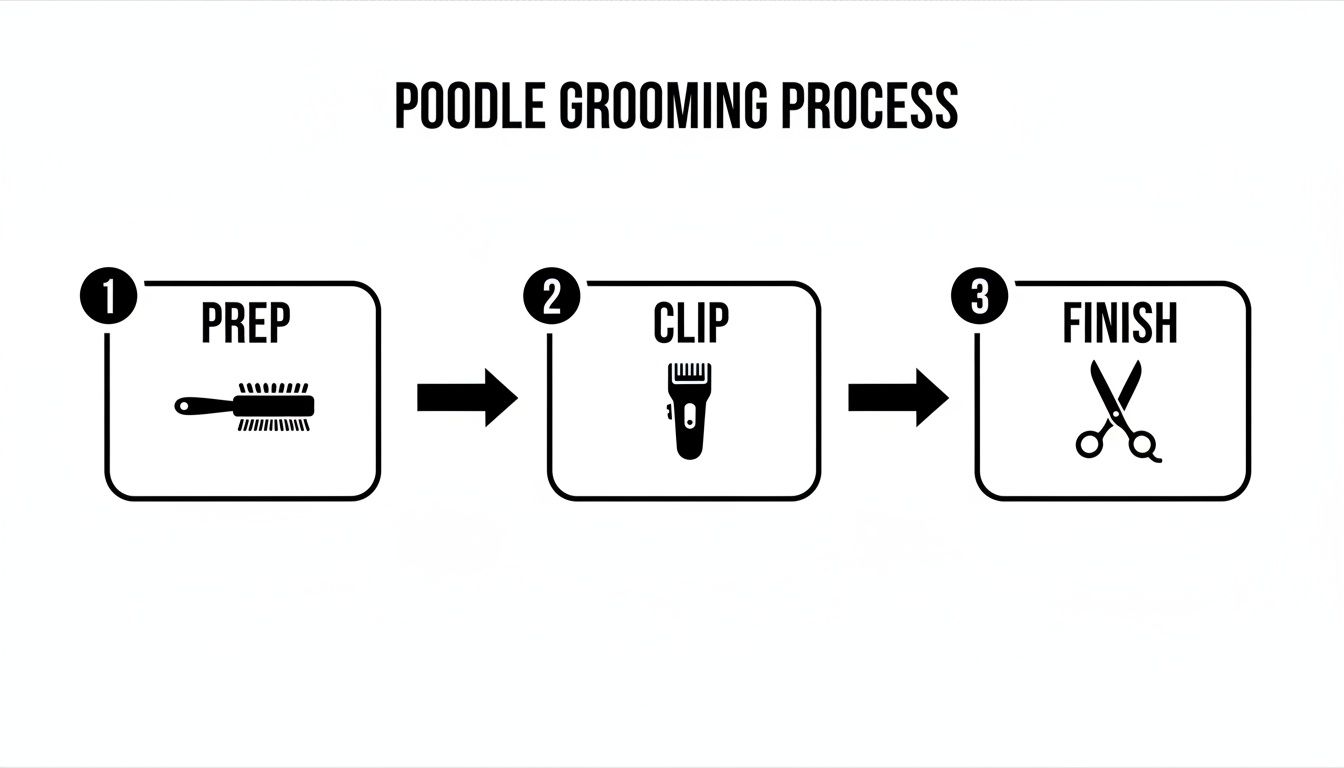
As you can see, the clipping phase is central to the whole process. Keeping your tools in prime condition ensures this step is safe, efficient, and stress-free for both you and your dog.
Eventually, even the most well-maintained blades will start to lose their sharp edge. The moment you feel them pulling hair instead of slicing cleanly through it, that’s your cue to get them professionally sharpened. Don’t put it off! Sharpening them on time actually extends their life. For all your other essential upkeep supplies, from brushes to coolants, take a look at our full range of grooming and cleaning products.
Answering Your Poodle Grooming Questions
Getting the hang of at-home grooming always comes with a few questions. Even with the best clippers in hand, you’re bound to run into situations that make you pause. Let’s walk through some of the most common concerns I hear from poodle owners.
How Often Should I Clip My Poodle?
This really comes down to your poodle’s lifestyle and the specific cut you’re going for. As a solid starting point, plan on a full-body clip every 4 to 6 weeks. This schedule is usually perfect for stopping that thick, curly coat from turning into a matted mess.
Now, if you keep your poodle in a longer, fluffier trim like a Teddy Bear cut, you’ll probably need to do touch-ups more often to keep things looking tidy. On the flip side, a very short kennel clip might let you stretch things to 8 weeks, but only if you’re staying on top of sanitary trims and brushing in between.
What If My Poodle Is Terrified of the Clippers?
It’s completely normal for a poodle to be wary of clippers. They’re smart, sensitive dogs, and that buzzing sound and vibration can be pretty scary. The trick is to build a positive connection with the clippers, never forcing it.
- Step 1: Just Let Them Look. Start by letting your poodle sniff the clippers while they’re turned off. Give them a really good treat and some praise for being brave and calm.
- Step 2: Introduce the Sound. Turn the clippers on a few feet away. Let your dog get used to the noise from a distance, rewarding them for not freaking out. Slowly, over several short sessions, bring the clippers a little closer.
- Step 3: Make Gentle Contact. With the clippers running, briefly touch the plastic casing—not the blade!—to your poodle’s back for just a second. Immediately follow up with a treat.
The whole point is to patiently teach your poodle that the clippers aren’t a monster, but a weird-looking machine that brings treats and praise. Your patience is truly the most valuable tool you have.
Can I Just Use My Own Hair Clippers on My Poodle?
I get this question a lot, and the answer is a hard no. Human clippers are not built for a poodle’s incredibly dense and curly coat. The motor simply isn’t powerful enough and will pull and snag the fur, which is painful and frustrating for everyone involved.
Worse yet, the blades are totally wrong for their hair type, making it not just ineffective but also dangerous. You could easily nick or cut your dog’s skin. You really have to invest in a quality pair of dog grooming clippers for poodles.
Seeing the right tools as an investment is just part of being a responsible pet owner today. It’s a fast-growing part of our economy, too—the US pet market is on track to hit over $150 billion in 2025. That number says a lot about how much we value giving our animals the best care possible. If you want to learn more, you can see some interesting stats about the booming pet industry on revelationpets.com. If you’ve settled on the right clippers for your pup, you can place an order to get them shipped.
At Ur Pet Store, our whole mission is to provide grooming tools that keep your poodle feeling great and looking fantastic. Check out our hand-picked selection of clippers and supplies made for owners who want the best. Explore our grooming collection at urpetstore.com today and get free shipping on every order.