

Blog
Finding the Best No Pull Dog Harness for Large Dogs

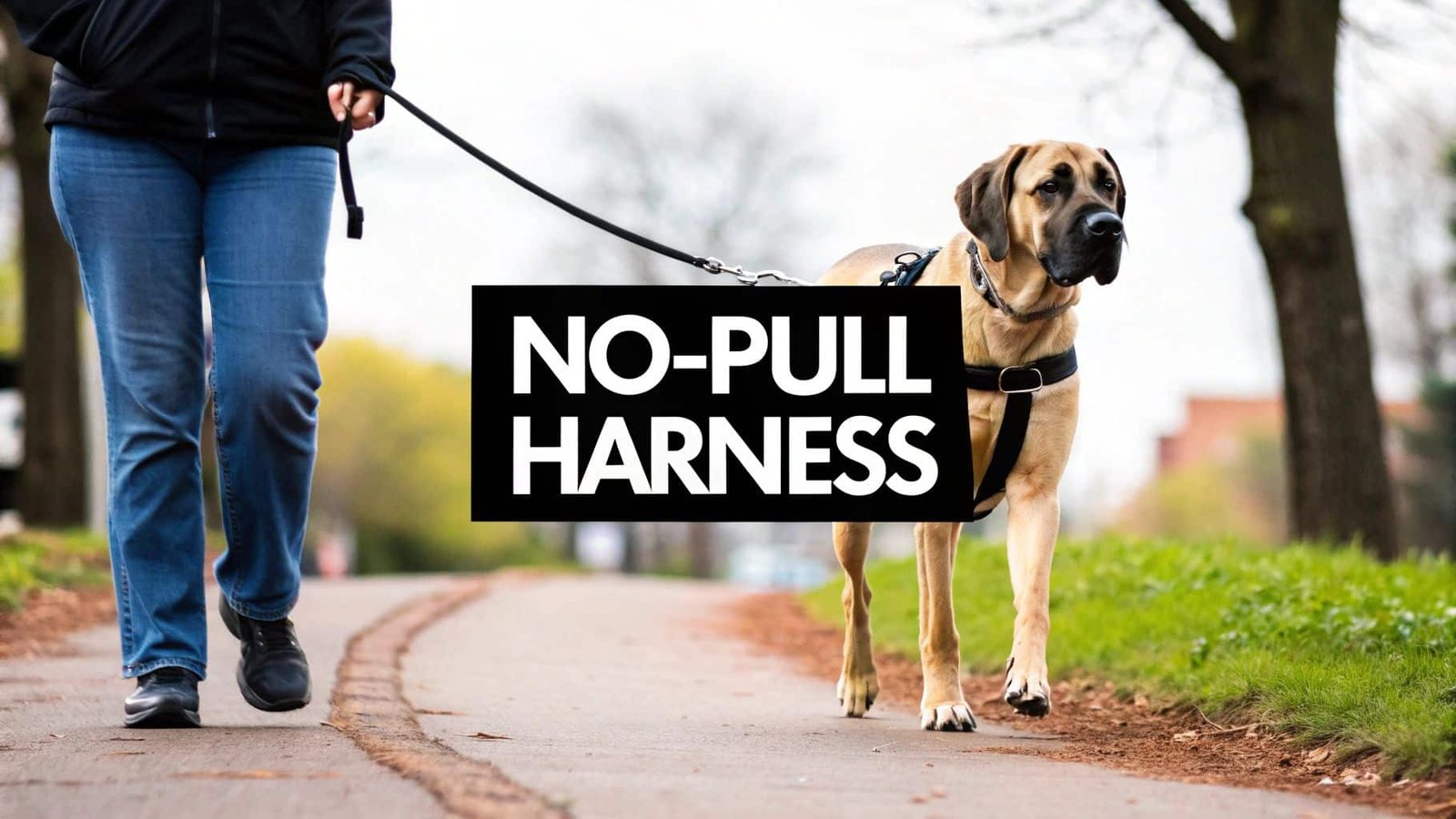
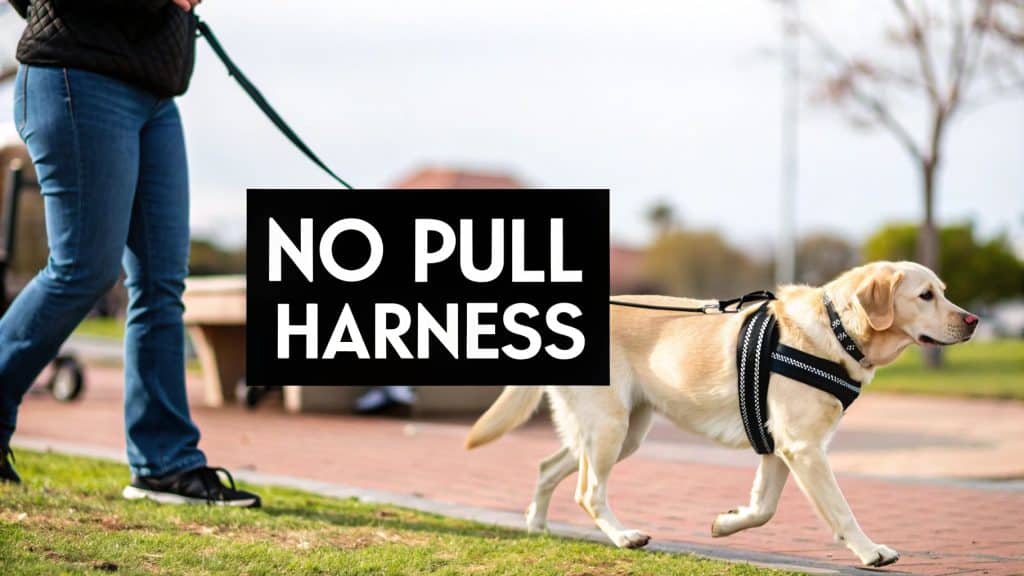
Walking your big, enthusiastic dog shouldn't feel like you're in a tug-of-war contest every time you leave the house. If that sounds familiar, the best no pull dog harness for large dogs can completely change your daily routine. These harnesses typically use a front or dual-clip design, which gives you incredible control by gently redirecting your dog’s momentum—all without putting any dangerous pressure on their throat.
It's a simple piece of gear that can turn frustrating, leash-yanking walks into calm, enjoyable strolls for both of you.
Why a No Pull Harness Is a Game Changer for Large Dogs
Have you ever felt your arm just about pop out of its socket when your powerful dog decides to lunge after a squirrel? You get it. A standard collar focuses all that pulling force right on your dog's windpipe, which can be anything from uncomfortable to downright dangerous. A no-pull harness, on the other hand, is a much smarter and kinder way to walk.
Think of this guide as your complete roadmap to finding the perfect no-pull harness. We’ll break down exactly why they’re a safer, more effective choice than collars, especially for strong breeds. It’s not about winning a battle of strength; it’s about changing the physics of your walk. The right harness gives you the leverage you need to stay in control without having to use force.
The Growing Demand for Safer Solutions
The move toward harnesses isn't just a passing trend. It’s a direct result of owners becoming more aware of what’s truly safe and comfortable for their dogs. In fact, market data shows that the demand for front-clip and dual-clip harnesses is booming, with a projected growth of 22% CAGR through 2032.
When you look at the numbers, it makes perfect sense. The dog harness market as a whole was valued at a whopping USD 5.53 billion in 2024, showing that pet owners are serious about investing in better walking equipment. This lines up perfectly with what vets are saying, too. According to one study, around 62% of vets recommend harnesses over collars for dogs over 50 pounds specifically to avoid tracheal damage. You can find more details on this growing market over at Maximize Market Research.
This article is here to help you sort through all the options and make a confident choice that benefits both your dog's well-being and your own peace of mind. A great walk is about more than just control—it's about strengthening your bond. And ensuring your dog is secure and comfortable is the first step.
A fantastic walk often leads to a relaxed dog at home, and the right gear can make all the difference. If you're looking to improve their rest time, too, you might find our insights on choosing a calming dog bed for large breeds helpful.
From picking the right type and getting the fit just right to using a few simple training tips, we're here to guide you to the best solution. Your journey to peaceful, enjoyable walks starts right now.
How No Pull Harnesses Actually Work
To find the best no-pull harness for your large dog, it really helps to understand the simple physics that make them so effective. This isn't about winning a tug-of-war with your powerful companion. Think of it more like power steering for your dog.
Instead of getting into a frustrating battle of strength, a good no-pull harness just changes the leverage point. When your dog lunges, the harness gently redirects their forward momentum, turning them slightly back towards you. This simple move makes pulling forward feel awkward and less effective, naturally discouraging the habit without any pain, choking, or pressure on their sensitive neck. It's a communication tool, not a restraint.
This is the core idea that lets you guide your dog with finesse instead of force. You're working with their natural movements, not against them. Grasping this concept is the first step toward a much more peaceful walk.
The Front-Clip Harness Advantage
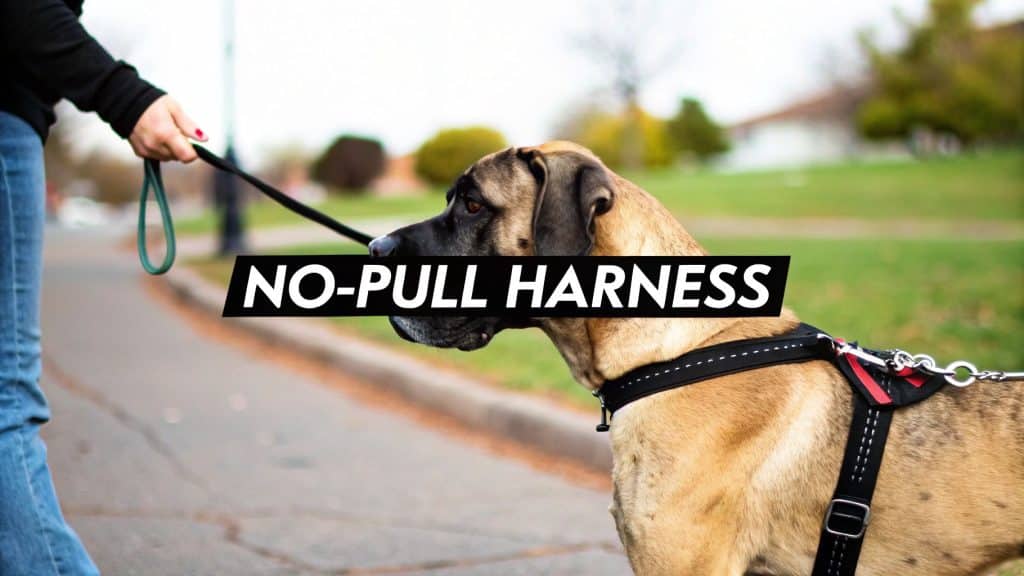
The most popular and effective no-pull harnesses have a front-clip D-ring. This little metal ring, sitting right on the chest strap, is the secret sauce. When you clip your leash there, you get control over your dog's shoulders and chest—their center of power.
Think about steering a shopping cart. If you push it from the back, it can easily veer off in its own direction. But if you guide it from one of the front wheels, you have precise control. A front-clip harness works on that exact same principle.
When a dog pulls on a front-clip harness, the leash tension doesn't drag them forward. Instead, it gently pivots their body to the side, breaking their momentum and redirecting their attention back to you.
This simple redirection disrupts the pulling cycle. Your dog quickly figures out that pulling just gets them turned around, making the behavior pointless. It’s a gentle but clear message that walking politely by your side is the easiest way to get where they want to go.
Dual-Clip Harnesses: The Best of Both Worlds
While front-clip harnesses are specialists at stopping pulling, another fantastic option gives you more flexibility: the dual-clip harness. This design is a real multitasker, featuring two separate leash attachment points.
-
A Front D-Ring: This is your training tool. It provides all the no-pull benefits we just talked about and is perfect for teaching good leash manners.
-
A Back D-Ring: Located between the shoulder blades, this ring works just like a standard harness. It’s great for dogs who are already well-trained or for casual walks where pulling isn’t a concern.
This versatility makes the dual-clip harness a brilliant long-term investment. You can use the front clip for training sessions or in busy areas where you need more control. Once your dog gets the hang of walking politely, you can switch to the back clip for a more relaxed stroll, knowing the front clip is always there as a backup if you need it. This adaptability is why so many owners of large dogs swear by them.
What to Look For in a Harness for a Big Dog
Let's be real: not all harnesses are created equal. This is especially true when your walking buddy has the muscle and enthusiasm of a large breed. A flimsy harness isn't just an annoyance; it's a flat-out safety hazard. To make your walks secure and, dare I say, enjoyable, you need to know exactly what to look for.
Choosing the best no pull dog harness for large dogs means you have to get a little picky. It’s about more than just color; it’s about inspecting the materials, the hardware, the fit, and the safety details. Think of it as an investment in a piece of gear that gives you control, prevents Houdini-like escapes, and is built to last through countless adventures.
Tough-as-Nails Materials and Construction
The heart of any great harness is what it's made of and how it’s put together. For a big dog, this is the absolute first thing to check. Flimsy fabric and weak stitching just won't cut it when you're dealing with the force of a full-body lunge after a squirrel.
You'll want to find harnesses made from reinforced nylon webbing. This stuff is the seatbelt of the dog world—it's engineered to handle huge, sudden force without tearing or stretching. Look for straps that feel thick and substantial, not thin or brittle.
The stitching is just as crucial. Keep an eye out for box stitching (it looks like a square with an 'X' inside) or bar-tack stitching at all the major stress points. These are the spots where the straps meet the D-rings and buckles. This type of heavy-duty stitching is miles better than a simple single line of thread and is a dead giveaway of a high-quality build.
Strong, Dependable Hardware
The buckles and D-rings are the skeleton of the harness. If a buckle snaps or a D-ring bends, the whole thing is useless. Plastic is often the first point of failure with large dogs, which is why metal components are almost always the better choice.
Here’s your hardware checklist:
- Welded Metal D-Rings: Look for leash attachment points made from welded metal. A welded ring is a solid, unbroken circle, making it nearly impossible to pull apart. A non-welded ring has a tiny gap that a powerful puller can eventually pry open.
- Heavy-Duty Buckles: While many harnesses use plastic buckles, the quality varies wildly. You want to find thick, sturdy ones that click securely into place. Some of the best harnesses even offer metal "cobra" style buckles for maximum security.
A harness is only as strong as its weakest link. For a powerful dog, that weak link is often a cheap plastic buckle or a flimsy D-ring that just can't handle a sudden jolt.
The good news is that as pet wellness has become a bigger focus, the quality of gear has skyrocketed. The no-pull harness market, valued at USD 1.2 billion in 2024, proves it. For those of us with big dogs, this has led to better designs that can reduce arm strain by up to 55%. You can dig deeper into these trends with this Verified Market Reports analysis.
Comfort and a Perfect, Adjustable Fit
A harness could be made of steel, but if it’s uncomfortable, your dog will hate wearing it. Even worse, a poorly fitting harness can cause painful chafing, restrict their natural movement, or give a clever dog just enough wiggle room to slip out.
Look for harnesses that are designed for both comfort and a dialed-in fit. A padded chest plate is a must-have. This padding helps spread the pressure across the strongest part of your dog’s body instead of concentrating it in one sensitive area. Soft, breathable materials like neoprene are great for preventing rubbing and irritation.
Beyond padding, a truly great fit comes from having multiple adjustment points. A harness with at least four—two for the neck and two for the chest—lets you customize the fit to your dog's unique build. This is especially important for deep-chested breeds like Great Danes or muscular ones like Pit Bulls. A snug, secure fit is your best defense against escapes and makes sure the harness works the way it's supposed to.
Don't Forget the Safety Features
Finally, a top-tier harness should have features that boost your dog’s safety, especially if you walk in the early morning or late evening when it’s tough to see.
Reflective trim or stitching is a simple feature that makes a huge difference. These reflective bits are woven right into the harness straps and catch the light from headlights and streetlamps. It makes your dog much more visible to drivers and cyclists, seriously cutting down the risk of an accident in low light. It’s a small detail that offers a ton of peace of mind.
How To Measure And Fit A Harness Correctly
Even the best-designed harness on the market won't do its job if it doesn't fit right. An ill-fitting harness can lead to all sorts of problems, from painful chafing and restricted movement to the scary possibility of your dog slipping out of it during a walk. Nailing the fit is half the battle in finding the perfect no-pull harness.
Think of it like getting a custom-tailored suit. Off the rack might be close, but a few precise adjustments make all the difference in comfort and function. The goal is to find that perfect balance: snug enough to be secure, but comfortable enough that your dog barely notices it's there.
Taking Accurate Measurements
Before you even think about clicking "add to cart," grab a soft, flexible tape measure. Guessing your dog's size based on their breed or weight is a common mistake. A 75-pound Lab can have a very different chest size from a 75-pound Shepherd, so actual measurements are non-negotiable.
You just need two simple numbers:
- Neck Girth: Gently wrap the tape measure around the base of your dog’s neck, right where a collar would naturally rest. You want it to be snug, but not choking.
- Chest Girth: This is the most important measurement for a harness. Find the widest part of your dog's rib cage, usually an inch or two behind their front legs, and wrap the tape all the way around.
With these two measurements in hand, you can confidently check the manufacturer’s sizing chart. One pro tip: if your dog's measurements fall right between two sizes, it's almost always a better bet to size up. You can always tighten a slightly larger harness, but you can't make one that's too small any bigger.
Adjusting For The Perfect Fit
Once the harness arrives, it's time for the final fitting. A properly adjusted harness will stay put without pinching, digging in, or impeding your dog's natural shoulder movement—something that’s crucial for their long-term joint health.
The easiest way to check your work is by using the classic “two-finger rule.” It’s a tried-and-true method that tells you if the fit is just right.
After you’ve put the harness on your dog and clipped all the buckles, try to slide two fingers flat between any of the straps and your dog’s body. If you can easily fit more than two fingers, it’s too loose. If you can’t fit two fingers in without a struggle, it’s definitely too tight.
Make sure to check this at every adjustment point—the neck, chest, and back. A frequent mistake with big-chested breeds is leaving the straps around the ribs too loose, which lets the harness slide around. On the flip side, overtightening the straps over the shoulders can mess with their gait. Taking an extra five minutes to get this right will pay off on every single walk.
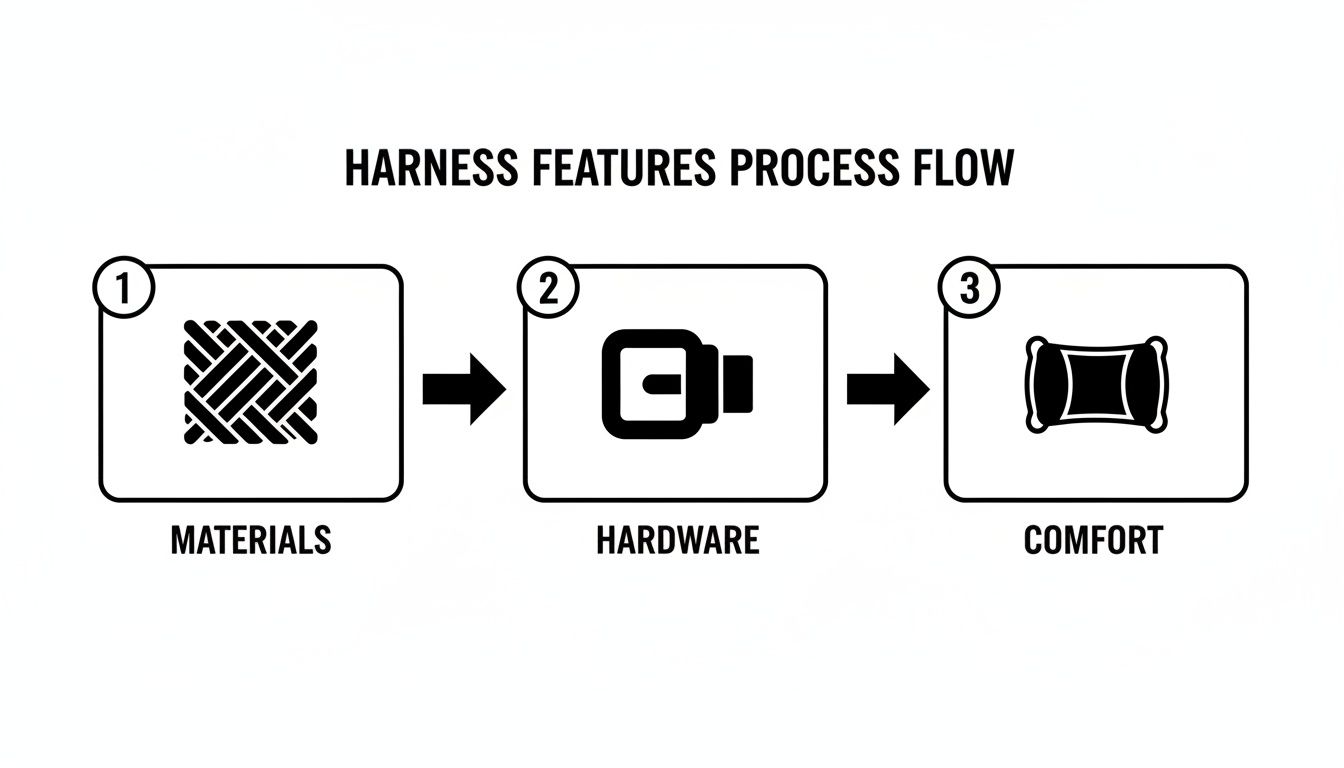
As you can see, a great harness is a system where durable materials, strong hardware, and smart padding come together to keep your dog both safe and comfortable.
To help you get it perfect every time, here's a quick checklist to run through after you've made your adjustments.
Large Dog Harness Fit Checklist
| Check Point | How to Verify | Common Mistake to Avoid |
|---|---|---|
| Two-Finger Rule | Slide two fingers flat under every strap. They should fit snugly. | Making it too tight, which can cause chafing and restrict breathing. |
| Shoulder Movement | Watch your dog walk. The harness shouldn't pinch or limit their front leg extension. | Overtightening the front chest straps, which can alter their natural gait. |
| Neck Position | The neck opening should sit low on the chest, not high up on the throat. | Fitting it like a collar, which can put pressure on the trachea. |
| Girth Strap Placement | The strap behind the front legs should be 1-2 inches back from the "armpit" area. | Letting the strap sit directly in the armpit, a guaranteed recipe for sores. |
| No Gaps | When your dog is standing, there shouldn't be any large, loose gaps, especially around the chest. | Leaving the chest too loose, which allows a dog to back out of the harness. |
| Back Piece | The back piece should lie flat against their spine without pulling to one side. | Not evening out the straps, causing the harness to shift and slide during walks. |
Double-checking these points before you head out the door ensures your harness is a tool for safe and comfortable walks, not a source of discomfort or an escape route.
Pairing the Harness with Positive Training
Let's be clear: a high-quality no-pull harness is an incredible tool, but it's not a magic wand. Think of it less as an instant fix for pulling and more as a piece of equipment that makes your training a whole lot more effective. When you combine the harness with consistent, positive reinforcement, you're not just restraining your dog—you're opening up a clear line of communication.
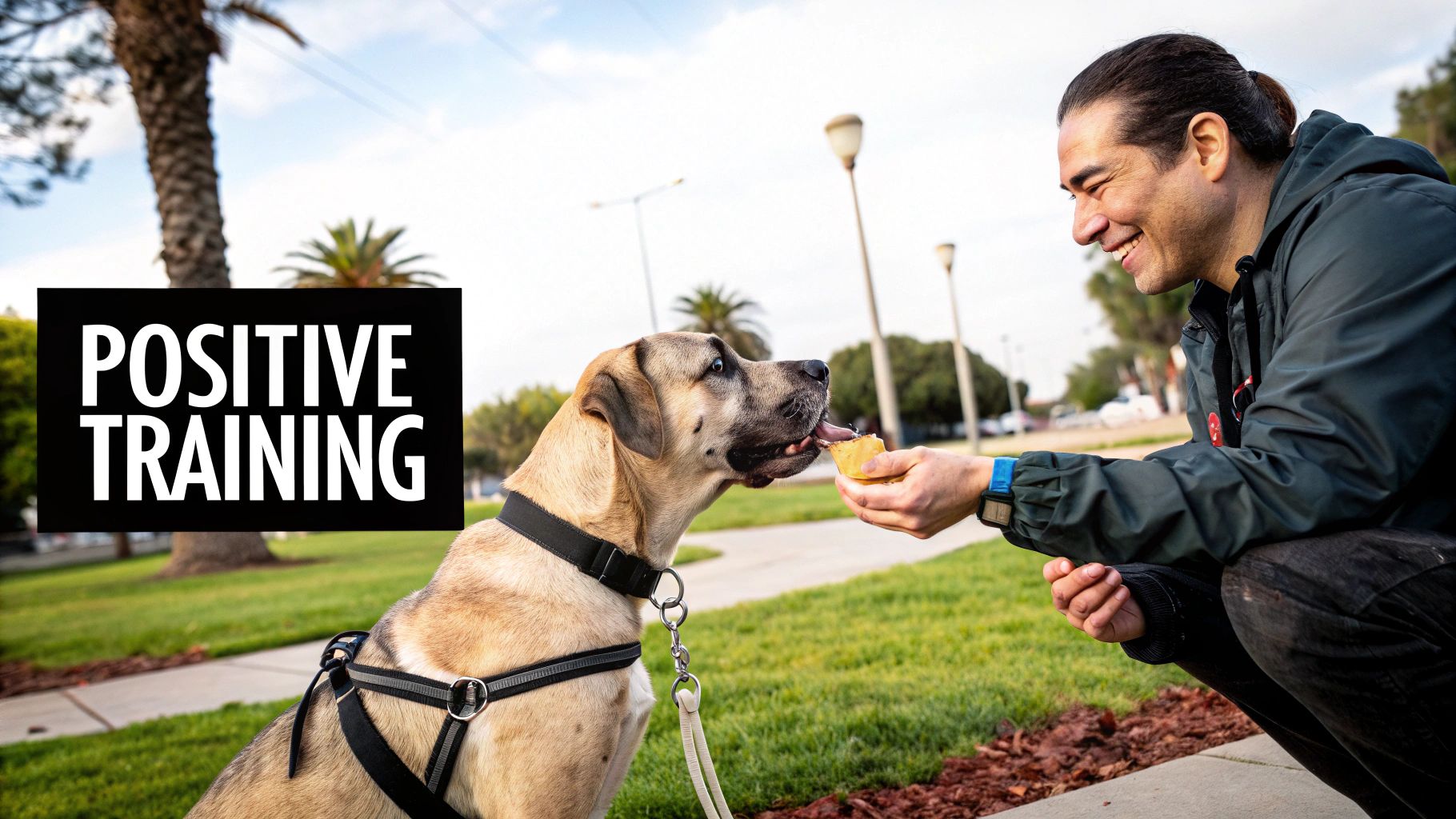
This whole approach is about building a walking partnership based on cooperation, not a tug-of-war. The end goal is simple: to teach your dog that walking calmly by your side is the absolute best way to go explore the world together.
Creating a Positive First Impression
The moment that new harness comes out of the box, the training has already begun. Your first job is to make sure your dog thinks this new piece of gear is the best thing since squeaky toys. If they see the harness and immediately think "Walkies!", you've won half the battle.
Here’s how to make a great first impression:
- Show and Treat: Let your dog get a good sniff of the new harness. As soon as they do, give them a really good treat and some happy praise. Do this a few times.
- Touch and Treat: Next, gently touch the harness to your dog’s back or chest, and immediately follow up with another treat. They’ll start learning that the harness touching them means good things are coming.
- Buckle and Reward: Open and close the buckles near your dog so they get used to the “click.” Each time you make the sound and they stay calm, give them a reward.
Whatever you do, don't force the harness on a nervous dog. Keep these first few sessions short, fun, and packed with rewards. You're laying a foundation of trust that will pay off on every single walk from here on out.
Mastering the Loose Leash Walk
Once your dog is totally comfortable wearing their new gear, it’s time to start teaching polite walking skills. This is where the front-clip design of the best no pull dog harness for large dogs really shines. It gives you gentle leverage to guide your dog without any yanking or causing discomfort.
There's a reason the global market for these harnesses has exploded, hitting an estimated USD 1.12 billion in 2024. People are realizing these tools work. By redirecting pressure away from the neck, these harnesses can cut the risk of injury by up to 70% compared to a standard collar. For more on this trend, check out the market insights at DataIntelo.com.
The core principle of loose-leash walking is simple: a tight leash means the walk stops, and a loose leash means the fun continues. Your dog will quickly learn which behavior gets them where they want to go.
Here are a few simple exercises to put that into practice:
- Be a Tree: The second your dog pulls and the leash goes tight, just stop. Stand perfectly still and silent, like a tree. Don’t pull back or say a word. The instant you feel that leash go slack—even for a second—praise them and start walking again.
- The 180-Degree Turn: If your dog surges ahead, cheerfully say "let's go!" and immediately turn and walk in the opposite direction. The front clip will gently turn their body with you. When they catch up and are walking nicely beside you, reward them with a treat.
- Reward the "Check-In": Any time your dog voluntarily looks back at you or walks close by your side, make a big deal out of it! Give them lots of praise and treats. This teaches them that sticking near you is the most rewarding place to be.
Finding Your Ideal Harness at Ur Pet Store
I know that staring at a wall of harnesses can feel like a monumental task. That's why we’ve already done the hard work for you. At Ur Pet Store, we've handpicked a collection of the best no pull dog harness for large dogs, weeding out anything that doesn't meet our non-negotiable standards for toughness, safety, and genuine comfort.
Every single harness in our shop is one we'd trust with our own powerful dogs. We’re talking about reinforced stitching that won’t give way under strain, heavy-duty metal hardware that clicks securely into place, and smart padding right where it's needed to prevent rubbing and chafing. It's not just a list of features; it's our promise of a reliable tool for you and your best friend.
What We Offer You and Your Pet
We believe getting the right gear for your dog shouldn't be complicated by hidden fees or long waits. It’s simple: we offer free shipping on all orders to make your choice easier.
And once you've found the perfect harness, you can expect it at your door in a hurry. Our fast 4-5 day delivery means you'll be on your way to better, more enjoyable walks in no time.
Think of us as your partner in this journey. We’re not just selling products; we're here to provide real solutions that help you build confidence and a stronger, happier connection with your dog.
To find the perfect no-pull harness and anything else your large dog might need, take a look at Ur Pet Store's comprehensive pet supplies collection.
Feel free to browse our curated selection of top-tier harnesses and walking gear at https://urpetstore.com/product-category/collars-leashes-harnesses/. We're here to help you get one step closer to those peaceful, pull-free walks you’ve been dreaming of.
Common Questions About No-Pull Harnesses
When you're trying to find the right gear for a big, powerful dog, it’s only natural to have a few questions. Getting a handle on how these no-pull harnesses work is the first step toward making your walks more enjoyable and less of a workout. We get these questions all the time, so let’s clear up some of the most common ones.
Think of this as a quick chat with an expert. We'll cover everything from daily use to cleaning, so you can feel confident you're doing what's best for your dog.
Can My Large Dog Wear a No-Pull Harness All Day?
It's a common question, but the short answer is no. While a good harness is built for comfort during walks, it’s best to take it off once you're back inside. Think of it like your running shoes—you wouldn't keep them on to lounge around the house.
Leaving a harness on 24/7 can cause skin irritation or matted fur, especially under the straps and on dogs with thick coats. Taking it off lets their skin breathe and helps them relax completely without anything constricting their movement.
Will a No-Pull Harness Instantly Stop Pulling?
Lots of owners see a difference on the very first walk. The front-clip design just makes pulling feel awkward and off-balance for a dog, so they often back off right away. But it's really important to see the harness for what it is: a powerful training tool, not a magic wand.
The harness gives you the physical control you need to start teaching good leash manners. Real, lasting change happens when you combine that control with consistent, positive training. It’s that partnership—the right tool plus the right training—that turns a determined puller into a great walking partner.
Are Front-Clip Harnesses Safe for Deep-Chested Dogs?
Absolutely. A properly fitted front-clip harness is actually one of the best and safest choices for deep-chested breeds like Great Danes, Boxers, and Weimaraners.
The trick is to look for a model with a Y-shaped front. This design rests on the dog’s breastbone instead of riding up into their throat. Paired with plenty of adjustment points, it allows their shoulders to move freely and naturally, avoiding the chafing and rubbing that poorly designed gear can cause. When it's adjusted right, it stays put without pinching or putting pressure on sensitive spots.
How Should I Clean and Maintain the Harness?
Taking good care of the harness is key, especially when it’s standing up to the strength of a large dog. A little maintenance keeps it safe, extends its life, and prevents built-up grime from irritating your dog’s skin.
Most quality nylon harnesses are easy to clean. Just hand-wash it in cool water with a little bit of mild, pet-safe soap.
- Use a soft brush to gently scrub away any mud or dirt.
- Rinse it really well to get all the soap out.
- Let it air dry completely, but keep it out of direct sun or away from heaters.
Try to avoid tossing it in the washing machine. The tumbling action can beat up the buckles and clips and may weaken the fabric over time. A quick periodic check of the stitching and hardware is also a smart habit to get into. For more great pet care tips, you can always explore the resources on Ur Pet Store, where our team shares their expertise.
Ready to find the perfect harness that combines safety, durability, and comfort for your large dog? Browse the curated selection at Ur Pet Store and enjoy free shipping and fast delivery on all orders. Shop the best no pull harnesses for large dogs today!