

Blog
The Ultimate Guide to Wall Cat Hammocks


Think of a wall cat hammock as more than just a piece of furniture. It's a purpose-built perch that mounts directly to your wall, giving your cat an elevated, cozy spot to nap, watch the world go by, and just be a cat. This simple addition taps into their deep-seated instinct to climb and seek high ground, turning empty wall space into your cat's new favorite hideout.
Why Vertical Space Is a Game Changer for Your Cat
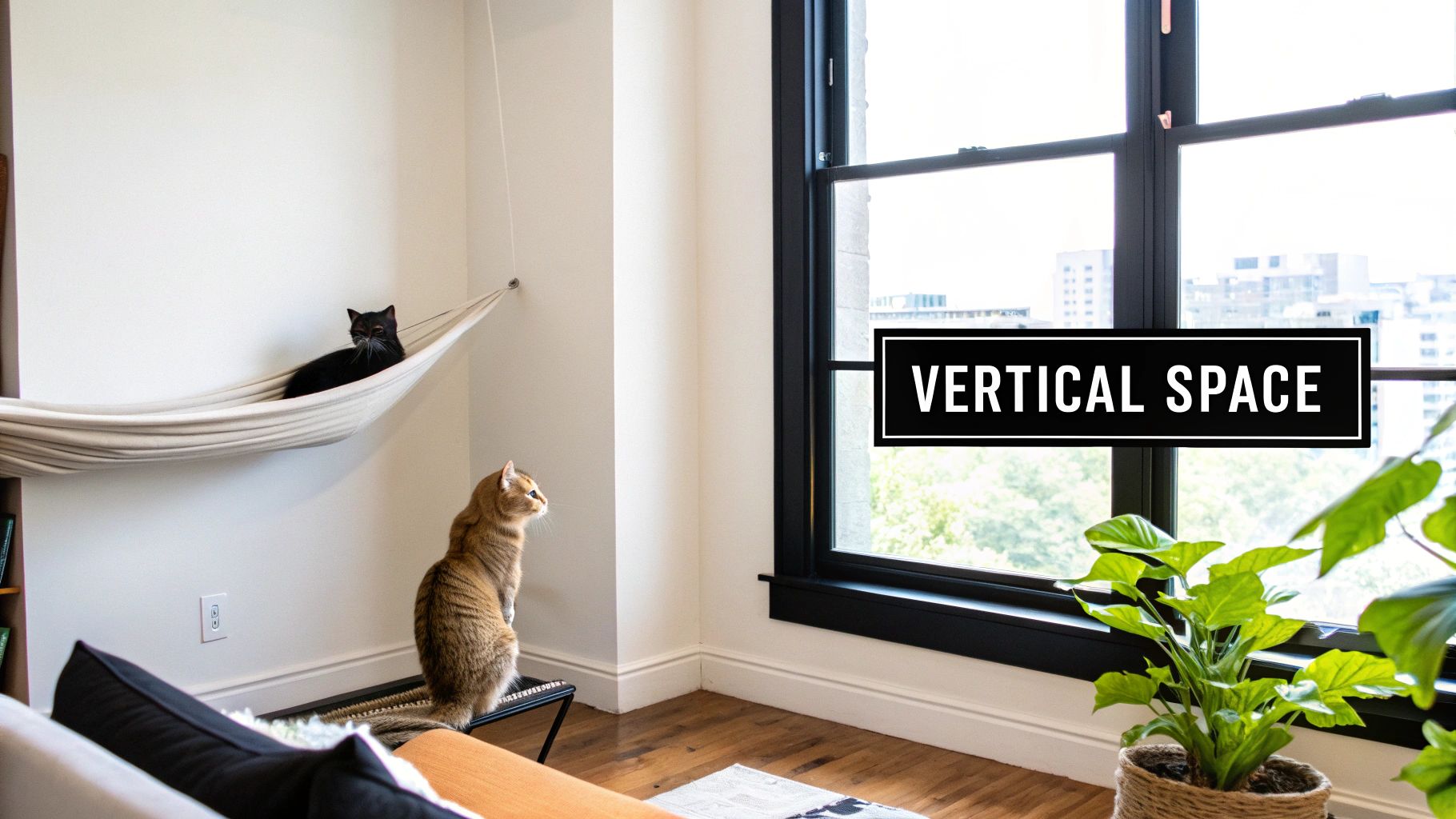
Ever found your cat lounging on top of the kitchen cabinets or a tall bookshelf? That’s not just a weird quirk—it's pure feline instinct at work. For indoor cats, having access to vertical space isn't just a fun bonus; it's a core part of what makes them feel happy and secure.
A wall cat hammock speaks directly to this need. It creates a personal sanctuary that mimics the high-up perches their wild ancestors relied on for safety and a clear view for hunting. By giving them this kind of spot, you're doing more than just offering a new bed; you're fundamentally enriching their environment.
The Psychology of Climbing
Deep down, cats are climbers. Being up high gives them a powerful sense of security and control, letting them watch the household drama unfold from a safe distance. This is a game-changer in multi-pet homes, where a high perch can become a designated "no-go" zone for the dog, dramatically cutting down on stress and territorial squabbles.
This isn't just a hunch cat owners have. As more of us treat our pets like family, there's been a huge surge in products designed for their well-being. The global cat hammock market recently hit USD 254 million, a clear sign that pet owners are invested in giving their cats the best life possible. You can dig into the numbers in this cat hammock market report.
So, what does a cat get out of it?
- A Private Safe Zone: It’s a guaranteed escape from floor traffic, a rambunctious dog, or curious toddlers.
- A Brain and Body Workout: Figuring out how to get up and down from the hammock provides great mental stimulation and physical exercise, keeping them agile and engaged.
- A Bigger World: To a cat, territory is both horizontal and vertical. Adding wall perches literally expands their world, making them feel more confident and in control of their home.
More Than Just a Perch—It's a Space-Saving Solution
The perks aren't just for your cat, especially if you're working with a smaller apartment or a home where every square foot counts. We all know how much floor space a traditional cat tree can devour. Wall-mounted furniture frees up that precious real estate while still giving your cat the vertical playground they crave.
Just as wall shelves help us organize our stuff by thinking vertically, a wall cat hammock does the same for our pets. It’s a clever way to turn an unused patch of wall into a functional, feline-friendly zone.
By taking your cat’s world vertical, you get your floor back. Better yet, a well-chosen hammock can actually complement your decor instead of clashing with it. It's a smart design move that makes both you and your cat happy.
How to Choose the Right Wall Cat Hammock
Picking out the perfect wall hammock for your cat isn't just about what looks cool—it's about finding the right fit for your cat, your home, and your peace of mind. A great choice becomes your cat's favorite new spot in the house. A bad one? It’ll either collect dust or, worse, become a safety hazard. Let's walk through what really matters so you can find the perfect match.
The boom in pet furniture isn't just a fad; it shows how much we value our pets' well-being. The numbers are staggering: the cat accessories market is on track to hit USD 42.3 billion by 2026, with cat furniture alone projected to reach USD 6.46 billion. North America is leading the way, making up 38% of hammock sales. Rope-style designs, which share a lot of DNA with wall hammocks, account for almost 30% of that market.
But here’s the stat that really hits home for cat owners like us: a recent study found that 55% of US cat owners (aged 20-45) saw a noticeable jump in their pet's happiness after adding vertical furniture. Even better, it can cut down on stress-related behaviors by up to 35%. You can dig into more of the data on the growing cat furniture market.
Material Matters Most
The fabric and frame of a hammock determine its durability, comfort, and how much of a headache it is to clean. Be honest about your cat's habits. Is yours a pristine napper or a messy biscuit-maker who might have the occasional accident?
- Durable Canvas: This is the workhorse of hammock fabrics. It's tough, holds its shape, and you can usually just toss it in the wash. It’s a fantastic pick for active cats or those who really get their claws into kneading.
- Cozy Fleece or Sherpa: For the cat who lives for comfort, you can't beat soft fleece. It’s warm, plush, and perfect for serious napping. The only downside is it’s a total fur magnet, so be ready for more frequent cleaning.
- Breathable Mesh: If you live in a warm climate or have a long-haired cat who gets toasty, mesh is a game-changer. It lets air circulate, keeping your kitty cool while they're soaking up the sun.
The frame holding it all together is just as critical. Solid wood frames, like pine or birch, look classic and blend in nicely with most home decor. Metal frames offer a more modern, industrial vibe and are incredibly sturdy, though they can feel a bit cold.
To make the choice a bit easier, here’s a quick breakdown of how different features stack up.
Wall Cat Hammock Feature Comparison
| Feature | Best For | Considerations | Ideal Cat Personality |
|---|---|---|---|
| Canvas Fabric | Active cats, heavy kneaders | Can be less plush than other options | The Energetic Explorer |
| Fleece/Sherpa | Senior cats, comfort seekers | Attracts fur; requires frequent cleaning | The Professional Napper |
| Mesh Fabric | Long-haired cats, warm climates | Less insulating in colder months | The Sunbather |
| Solid Wood Frame | Traditional or rustic decor | Can be heavier to install | The Classic Cat |
| Metal Frame | Modern, minimalist homes | Can feel cold; check for sharp edges | The Sleek Minimalist |
Ultimately, the best material is one that suits both your cat’s lounging style and your tolerance for cleaning.
Weight Capacity and Structural Integrity
Don't just glance at the weight capacity—take it seriously. This number isn't just about your cat's weight while they're sleeping. It needs to handle the force of them launching themselves onto it from across the room. A flimsy hammock is a dangerous one.
Always, always check the manufacturer’s stated weight limit. If you've got a gentle giant like a Maine Coon or Ragdoll, or if you have a pair of feline acrobats who might try to pile on together, you need to be extra careful. For bigger cats or multi-cat homes, look for a hammock rated for at least 25-30 pounds, if not more. We go into more detail on this in our guide to finding a cat hammock for large cats.
A good pro tip is to look for models with a wide base where the brackets attach to the wall. Wider mounting points spread the load more evenly, putting less stress on your drywall and the anchors. It's what keeps the hammock secure day after day.
A wall cat hammock is only as safe as its installation. The sturdiest hammock in the world will fail if it's not anchored properly. Always aim to mount it directly into wall studs for maximum security.
Aesthetics and Your Home's Style
Let's be real—your cat’s new throne doesn't have to ruin your living room's vibe. Wall hammocks now come in tons of styles, from rustic and bohemian to sleek and modern. It's easier than ever to find one that actually complements your decor.
Think about the visual space it will take up. A minimalist design with a neutral fabric can almost disappear into the wall, while a hammock with a funky color or a beautiful wood frame can become a fun conversation piece. Does the wood tone match your other furniture? Does the fabric clash with your color scheme? Choosing a style you genuinely like will make it a welcome addition for everyone in the house, not just the cat.
Installing Your Wall Cat Hammock Securely
You’ve picked out the perfect wall cat hammock—now for the most important part: getting it securely on the wall. This isn't just about looks. It’s about making it sturdy enough for your cat to leap onto without a second thought. A rock-solid installation is everything, and with the right approach, you can get it done right the first time.
It’s easy to see why these perches are so popular. Wall cat hammocks are a big piece of the cat furniture market, which is set to explode from USD 14,445.4 million in 2025 to a massive USD 20,975.2 million by 2035. This huge growth is coming from cat owners in cities who need smart, space-saving furniture. In fact, 62% of cat owners in small city apartments are choosing wall-mounted gear over traditional cat trees. You can explore the full research on cat perches and shelves to see the data behind the trend.
This graphic really simplifies the decision-making process before you even pick up a drill. It all comes down to the material, how much weight it can hold, and whether it fits your home's style.
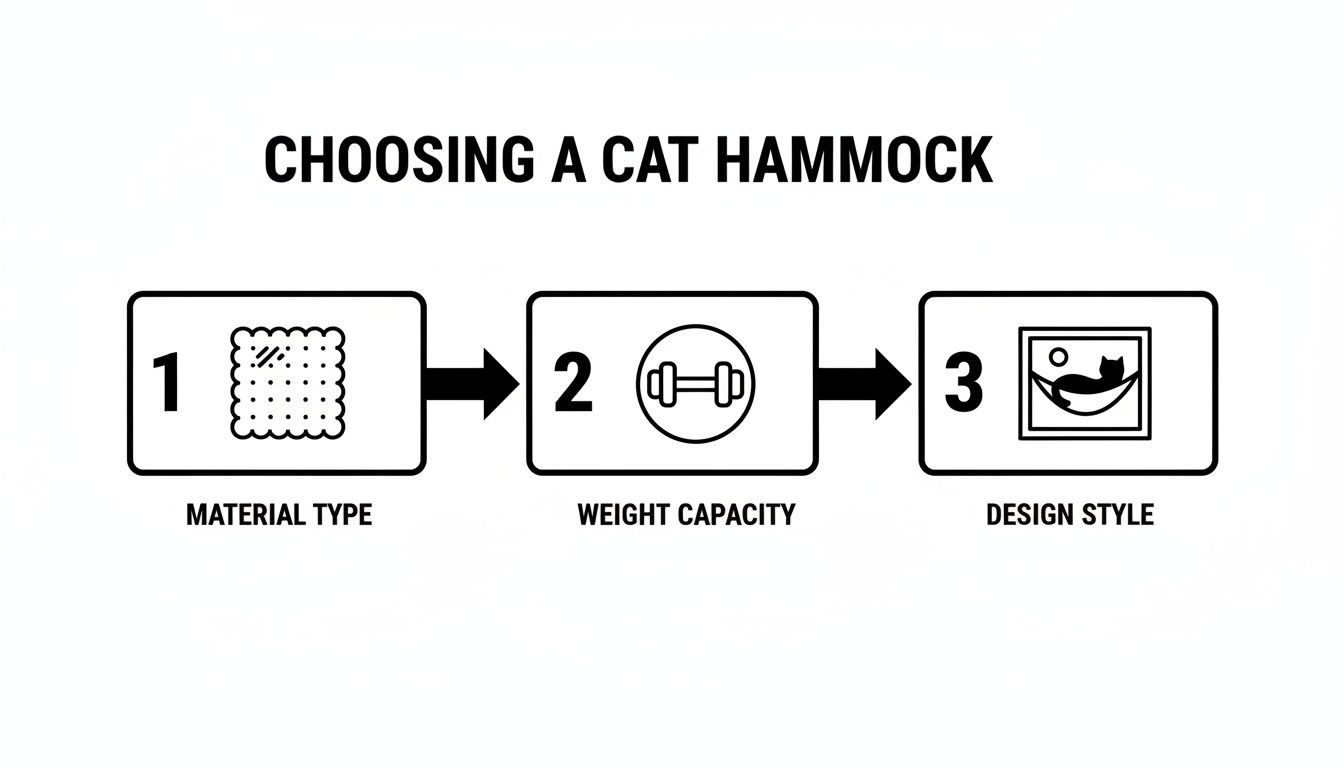
Nailing these three things ensures the hammock you bring home is a perfect match for your cat and your walls.
Gathering Your Essential Toolkit
Before you start making holes, let's get your tools lined up. Having everything ready to go makes the whole process so much smoother and saves you from those frustrating mid-project hunts for a missing bit. You don’t need a pro-level workshop, just the basics.
- Stud Finder: This is your most important tool. Seriously, don't skip it. A good electronic stud finder will be your best friend for finding the solid wood beams behind the drywall.
- Power Drill: A decent drill makes creating pilot holes and driving screws a breeze.
- Drill Bits: You’ll need a bit that's just a little smaller than your screws for the pilot holes. Maybe a larger one too, if you end up needing drywall anchors.
- Level: A crooked hammock looks sloppy and isn't as safe. A level ensures it’s perfectly horizontal.
- Pencil: For marking your stud locations and drill points.
- Tape Measure: Absolutely essential for getting the height right and making sure your brackets are spaced correctly.
Getting these items together first will turn this from a weekend chore into a quick and satisfying project.
The Secret to Stability: Finding Wall Studs
I can't stress this enough: the single most important step for a secure cat hammock is anchoring it into wall studs. Drywall alone is not strong enough to hold a cat, especially one that’s launching itself onto the hammock. Studs are the solid wood frame of your house, and that's what you need for a truly solid mount.
Start by running your stud finder horizontally across the wall. Most models will beep or light up as they pass over the edge of a stud. Mark both edges, then find the center point—that’s your sweet spot.
In most modern US homes, studs are spaced 16 inches apart, but sometimes it’s 24 inches. Once you find one, you can often measure 16 inches over to find the next, but always double-check with your stud finder. Don't just assume.
Pro-Tip: If you’re in an older home with plaster walls, stud finders can be unreliable. A great trick is to use a strong magnet to find the nails or screws already holding the wall to the studs.
Mounting Your Hammock with Confidence
With your studs marked, hold one of the hammock brackets up to the wall, lining up the mounting holes with the center of the stud. Use your level to get it perfectly straight before you mark where to drill.
Next, drill your pilot holes. A pilot hole makes it much easier to drive the screw in straight and prevents the wood stud from splitting. The drill bit should be just a bit thinner than the screw itself.
Now, attach the first bracket, but don't tighten the screws all the way down. Position the second bracket over its stud, then place your level across both brackets to make sure they’re perfectly aligned. Once you’re positive they’re level, mark and drill the pilot holes for the second bracket. With both loosely in place and level, you can drive all the screws in until they’re snug. If you're looking for other heavy-duty hardware ideas, some modern curtain track wall mount systems use similar principles for sturdy installations.
What If You Can't Use Studs?
Sometimes the perfect spot for the hammock just doesn't line up with any studs. It’s not ideal, but you can still get a secure mount if you use the right hardware. Forget the flimsy little plastic anchors that often come in the box; they aren't going to cut it.
You need to get some heavy-duty drywall anchors designed for real weight.
- Toggle Bolts: These have spring-loaded "wings" that pop open behind the drywall, spreading the load over a much bigger area.
- Molly Bolts: As you tighten the screw, these expand behind the drywall to create a super-secure grip.
Always check the weight rating on the anchor package and pick one that can hold at least double your cat's weight. That extra buffer is crucial to handle the force of a pouncing cat. While these are strong, remember that a mount with even one screw in a stud is always better. A well-made hanging cat hammock for large cats will usually include decent hardware, but upgrading is never a bad call for peace of mind.
Finally, give it a firm "pull test." Grab the hammock and pull down on it with some real force—more than your cat weighs. If it moves, wobbles, or you hear any creaking, stop. You need to re-check your installation and make it stronger before you let your cat near it.
Finding the Perfect Spot for Your Cat's New Perch
A securely installed wall cat hammock is only half the battle. Choosing the right location is what turns it from a piece of furniture into your cat’s favorite spot in the whole house. To get this right, you have to stop thinking like a human arranging a room and start thinking like a cat surveying its territory.
Cats really only want three things from a napping spot: safety, comfort, and a good view. The perfect location will check all three of these boxes, making the hammock an irresistible destination rather than just another wall ornament.
Prime Real Estate for Feline Lounging
Not all wall space is created equal in a cat's eyes. Some spots offer that perfect blend of sun and stimulation, while others are just boring stretches of drywall. Let's look at the top-tier locations that will get your hammock the most use.
A spot near a window is a classic for a reason. It's "cat TV"—a constant stream of birds, squirrels, and people to watch. Just make sure the window is well-sealed to avoid chilly drafts that could make the hammock less appealing, especially in the winter.
You'll also want to watch where the sunbeams fall throughout the day. A wall that gets bathed in warm afternoon sun is a five-star location for a nap. Cats are basically solar-powered, and a sun-drenched hammock will quickly become a prized possession.
Finally, think about the social hubs of your home, like the living room or home office. Cats often want to be near their people without being right in the middle of the chaos. A hammock in a social space lets them feel included while staying safely perched above the action.
Building a Cat Superhighway
A single hammock is great, but integrating it into a larger vertical playground is even better. This is where you can get really creative and design a "cat superhighway"—a network of shelves, perches, and hammocks that encourages your cat to climb and explore.
Here’s how you can map it out:
- Create an On-Ramp: Make sure there's a clear, logical path up to the hammock. Your cat could use a sturdy bookshelf to get started, or you can install a few smaller cat shelves as stepping stones.
- Vary the Heights: Mix up the heights and distances between pieces to keep things interesting. A good rule of thumb is to space shelves about 12-18 inches apart vertically and 12-16 inches horizontally, but you'll want to adjust this based on your cat’s age and agility. A spry young cat can handle bigger gaps than a senior.
- Give Them a Destination: Your superhighway should lead somewhere desirable. The wall cat hammock can be the ultimate destination—a comfy reward at the end of an adventurous climb.
This kind of setup is a fantastic way to provide physical exercise and mental stimulation. It prevents boredom and the destructive behaviors that often come with it, transforming a blank wall into an engaging world that satisfies your cat's natural instincts.
Critical Safety No-Gos
Just as important as finding the right spot is knowing which areas to avoid completely. The last thing you want is for this wonderful enrichment tool to become a safety hazard. Keep your cat’s well-being front and center by steering clear of these common mistakes.
Never place a hammock directly above furniture with sharp corners, like a coffee table or a hard credenza. Even the most graceful cat can slip, and a soft landing zone is non-negotiable. If the only available space is above furniture, make sure it’s something soft like a sofa or an armchair.
Also, stay away from high-traffic areas where the hammock could become a literal roadblock. Placing it in a narrow hallway or directly over a busy doorway is just asking for trouble. A startled cat leaping down into someone's path could easily cause an injury—to both of you. Think of the hammock as a quiet retreat and position it away from the main freeways of your home.
Keeping Your Wall Hammock Fresh and Stylish
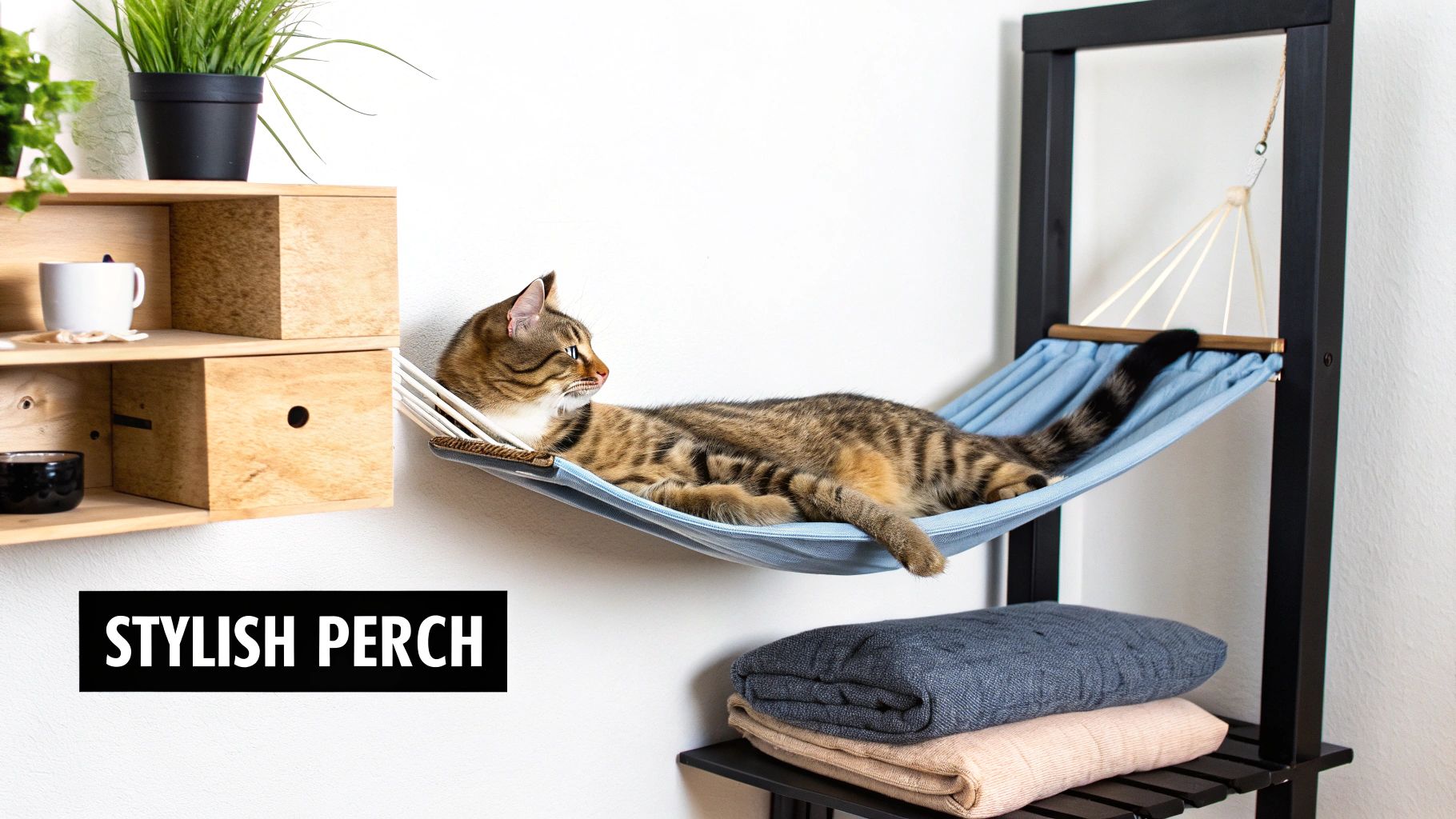
So, your wall hammock is up and your cat is (hopefully) loving it. Now for the fun part: making it a seamless part of your home and keeping it clean enough for your furry royalty. A little bit of upkeep not only keeps the hammock safe and inviting but can also turn it from simple cat gear into a cool design element.
When you blend style with practical care, you end up with a perch that both you and your cat will appreciate for years to come.
How to Keep Your Cat Hammock Clean
Let's be real, regular cleaning is less about aesthetics and more about your cat's health. It gets rid of all that fur, dander, and other stuff you'd rather not think about. The best way to clean it really comes down to the hammock's fabric.
- Machine-Washable Canvas: This is the easiest. Most canvas slings are designed to be unhooked and tossed right in the wash. Just use a pet-safe, unscented detergent on a gentle cycle. The most important part? Always air dry it to prevent shrinking.
- Fleece and Sherpa: These cozy fabrics are absolute fur magnets. Before you even think about washing, grab a lint roller or a damp rubber glove and wipe off as much hair as you can. If it's machine-safe, treat it like canvas—gentle cycle, air dry. For little messes, a bit of mild soap and water is perfect for spot cleaning.
- Wooden and Metal Frames: The frame itself usually just needs a quick wipe-down with a damp cloth. Steer clear of harsh chemical sprays that could be toxic if your cat licks them or that might damage the wood finish.
A regular cleaning routine does more than keep things fresh. It's also the perfect excuse to give the hammock a quick once-over for any wear and tear, making sure it’s still a totally secure spot for a nap.
Quick Safety and Maintenance Checks
Beyond cleaning, you'll want to do a quick safety check at least once a month. Trust me on this one. The force of a cat launching itself onto a perch day after day can eventually loosen things up. It only takes a minute.
Here’s what to look for:
- Check for Wiggles: Gently grab the mounting brackets and give them a little shake. If you feel any give, it’s time to tighten those screws. Just get them snug—overtightening can strip the screws or damage your wall.
- Inspect the Fabric: Take a close look at the sling, especially around the grommets or loops where it connects to the frame. Any signs of fraying, serious thinning, or tearing mean it's time to get a replacement. A worn-out sling is a disaster waiting to happen.
- Examine the Frame: Look for any cracks in the wood or bends in the metal. A frame that's been compromised isn't safe and could fail without warning.
This whole check takes less than five minutes, but it buys you a ton of peace of mind. If you're looking for other types of cat furniture, you can find a variety of beds and mats that benefit from the same kind of routine care.
Making Your Hammock a Part of Your Decor
A cat hammock doesn't have to scream "cat person." With a little planning, it can actually look like it belongs in your home.
Think about creating a dedicated "cat corner." You can arrange the hammock with a few floating shelves holding cat-safe plants (spider plants and cat grass are great choices). This creates a cool, vertical green space that's both enriching for your cat and stylish for you.
Another great idea is to build the hammock right into a gallery wall. Arrange your favorite framed photos and art around it, turning the hammock into a functional, three-dimensional piece of the whole display. It’s a great way to make your cat’s favorite spot a genuine conversation starter.
Got Questions About Your Wall Cat Hammock? We’ve Got Answers
So you’ve picked out the perfect wall cat hammock and have a spot in mind. Awesome! But even with the best plans, a few questions tend to crop up. Getting these final details right is what turns a good cat perch into a great one that your cat will love for years.
Let's dive into some of the most common things cat owners wonder about before, during, and after they get that hammock up on the wall. Think of this as the final piece of the puzzle to making your cat's new vertical space a huge hit from day one. It’s all about mixing a secure installation with a little bit of cat psychology.
How High Should I Mount a Cat Hammock?
There’s no magic number here, but a great starting point for most cats is about 3 to 4 feet off the floor. This hits the sweet spot—high enough to feel like a cool lookout post, but not so high that a jump down becomes a risky business.
Of course, you know your cat best. Is your feline friend a senior citizen or maybe just a bit clumsy? You’ll want to aim lower or even create a little "staircase" with other furniture or smaller cat shelves. On the other hand, if you've got a young, spry acrobat on your hands, you can definitely go higher. Just make sure they have a clear and safe path to get up and down.
Here's a pro tip: The landing zone is just as important as the height. Always check that the area below the hammock is clear of hard furniture or sharp corners. A soft rug underneath is a great idea for extra peace of mind.
Ultimately, you're looking for a height that gives your cat a fun challenge without pushing them past their limits. And remember, getting it perfectly level is non-negotiable for their comfort and safety.
Can I Install a Cat Hammock Without Drilling into Studs?
Hitting a wall stud with your mounting brackets is always the gold standard for safety—no question about it. But let's be real, sometimes the perfect spot for the hammock is right between two studs. In that situation, yes, you can mount it directly into drywall, but only if you use the right heavy-duty hardware.
Please don't use the little plastic anchors that often come included with shelves or pictures. They simply aren't strong enough to handle a cat leaping onto a hammock. You need to upgrade to something designed for serious weight and dynamic force.
Your best bets for a stud-free installation are:
- Toggle Bolts: These are fantastic. They have spring-loaded "wings" that pop open behind the drywall, spreading the load over a much larger area for a super secure hold.
- Molly Bolts (Sleeve-Type Anchors): These work by expanding behind the wall as you tighten the screw, creating an incredibly strong grip that won't pull out.
When you're buying anchors, check the weight rating. A good rule of thumb is to choose anchors rated for at least double your cat's weight. That extra capacity is crucial for handling the force of them jumping up. If you're ever in doubt, getting just one bracket into a stud is way better than none.
How Do I Get My Cat to Actually Use the Hammock?
Ah, the classic cat move. You've spent time installing this wonderful new perch, and your cat gives it a suspicious glance before walking away to sit in a cardboard box. Don't sweat it—this is totally normal. Cats are naturally wary of new things in their territory.
First off, never, ever force your cat onto the hammock. That's the fastest way to make them hate it forever. Instead, you need to make it their idea. A great trick is to just leave the hammock on the floor for a day or two before you install it. This lets them sniff it out and get their scent on it, making it feel less like a strange invader.
Once it's on the wall, it's time to make it irresistible.
- Tuck their favorite fuzzy blanket into the sling.
- Leave a t-shirt that smells like you in there.
- Sprinkle a little catnip or hide a few high-value treats inside.
- Use a feather wand or laser pointer to "guide" them toward it, praising them and giving them a treat the second they hop up.
A little patience and positive reinforcement will go a long way.
At Ur Pet Store, we get that creating an amazing home for your cat is about more than just stuff—it's about enriching their world. Explore our collection of stylish and secure pet products designed to bring comfort and joy to your furry family members.