

Blog
The Best Dog Harness for No Pulling A Complete Guide

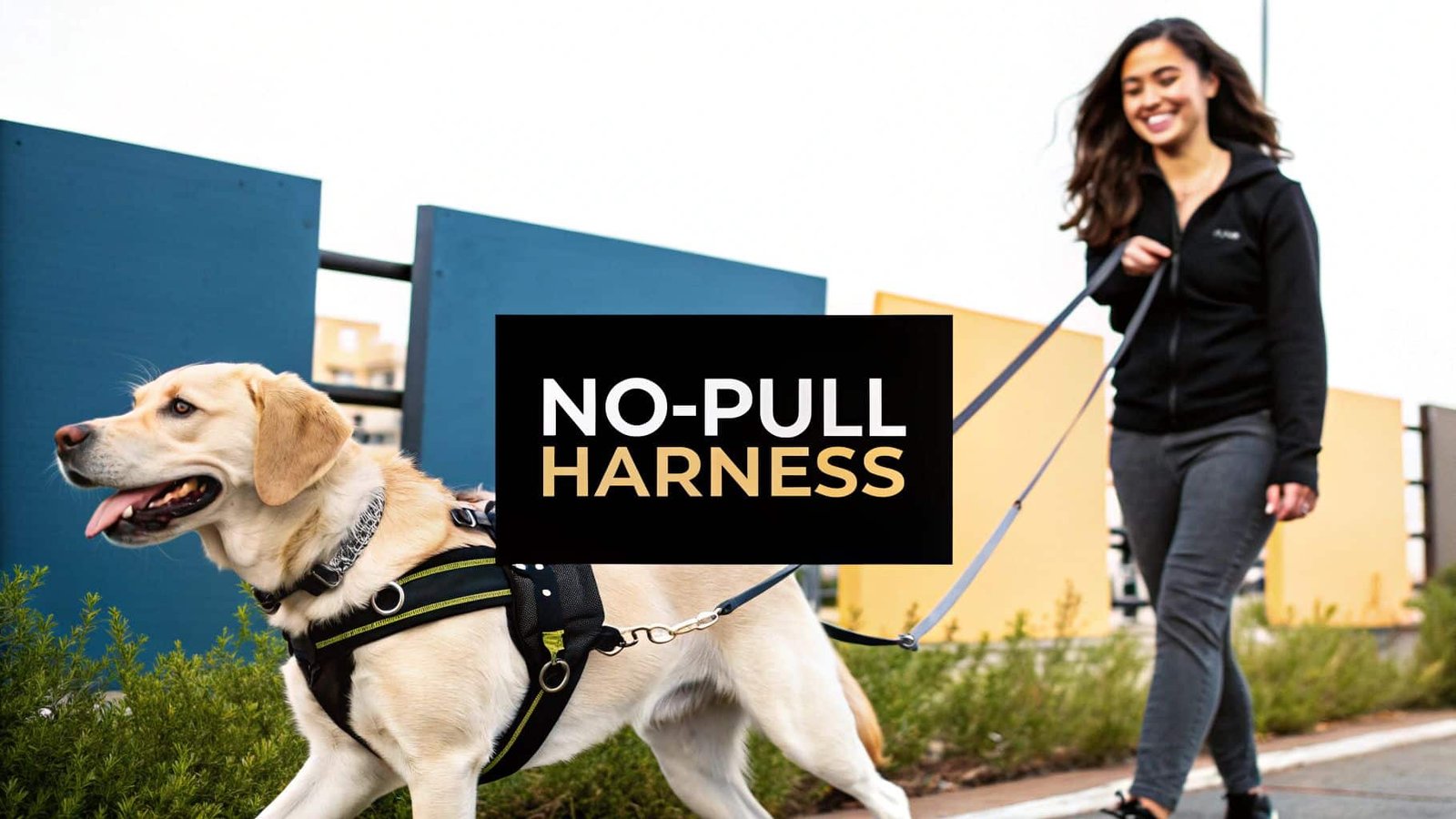
If your daily walk feels more like a strongman competition than a relaxing stroll, you know the frustration all too well. What should be a great bonding moment quickly turns into a stressful tug of war, leaving your arm sore and your dog gasping against their collar.
This isn’t just annoying; it’s a real safety concern. Constant pulling can cause serious neck and tracheal injuries for your dog. For you, it can mean a painful fall or losing control, especially if you have a larger, more powerful companion.
The problem often lies in the gear. A standard back-clip harness can actually give your dog more leverage to pull, a bit like how a sled dog team is set up. It taps into their natural opposition reflex, encouraging them to pull even harder against the pressure.
How a No-Pull Harness Changes the Game
This is where a no-pull harness comes in. It’s designed to work smarter, not harder.
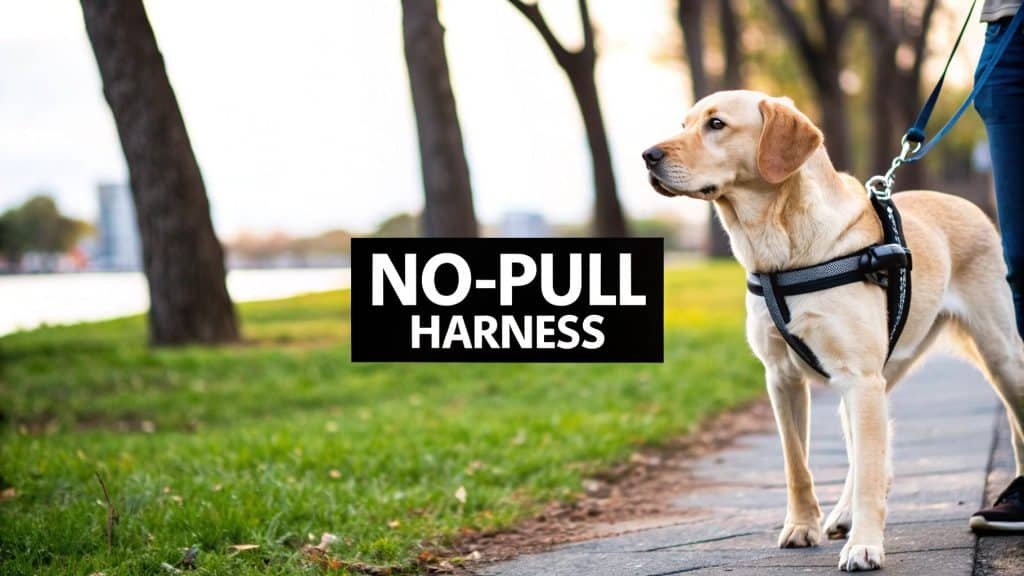
Instead of clipping the leash to your dog’s back, you attach it to a ring on their chest. When your dog tries to lunge forward, the harness gently guides them back toward you, redirecting their momentum and breaking their focus on pulling. It’s a simple change, but it makes all the difference.
A properly fitted no-pull harness isn’t a punishment—it’s a communication tool. It helps you guide your dog’s attention back to you, turning a battle of wills into a cooperative partnership.
You’re not alone in looking for a better way to walk your dog. The global market for dog harnesses hit USD 5.53 billion in 2024 and is expected to soar to USD 27.12 billion by 2032. This huge growth is fueled by pet owners just like you who are searching for safer, more humane alternatives to traditional collars. You can learn more about the dog harness market growth and see why so many people are making the switch.
This guide will walk you through everything you need to know to choose the best no-pull harness, so you can finally get back to enjoying your walks together.
How Different No-Pull Harnesses Actually Work
So, you’re looking for a no-pull harness, but it’s easy to get lost in all the different styles. They aren’t all created equal, and the secret to finding the right one is understanding how they work. Think of it less like buying a dog accessory and more like choosing the right tool for a specific job.
The basic idea is simple: a good no-pull harness makes pulling an ineffective strategy for your dog, turning a frustrating tug-of-war into a pleasant, connected walk.
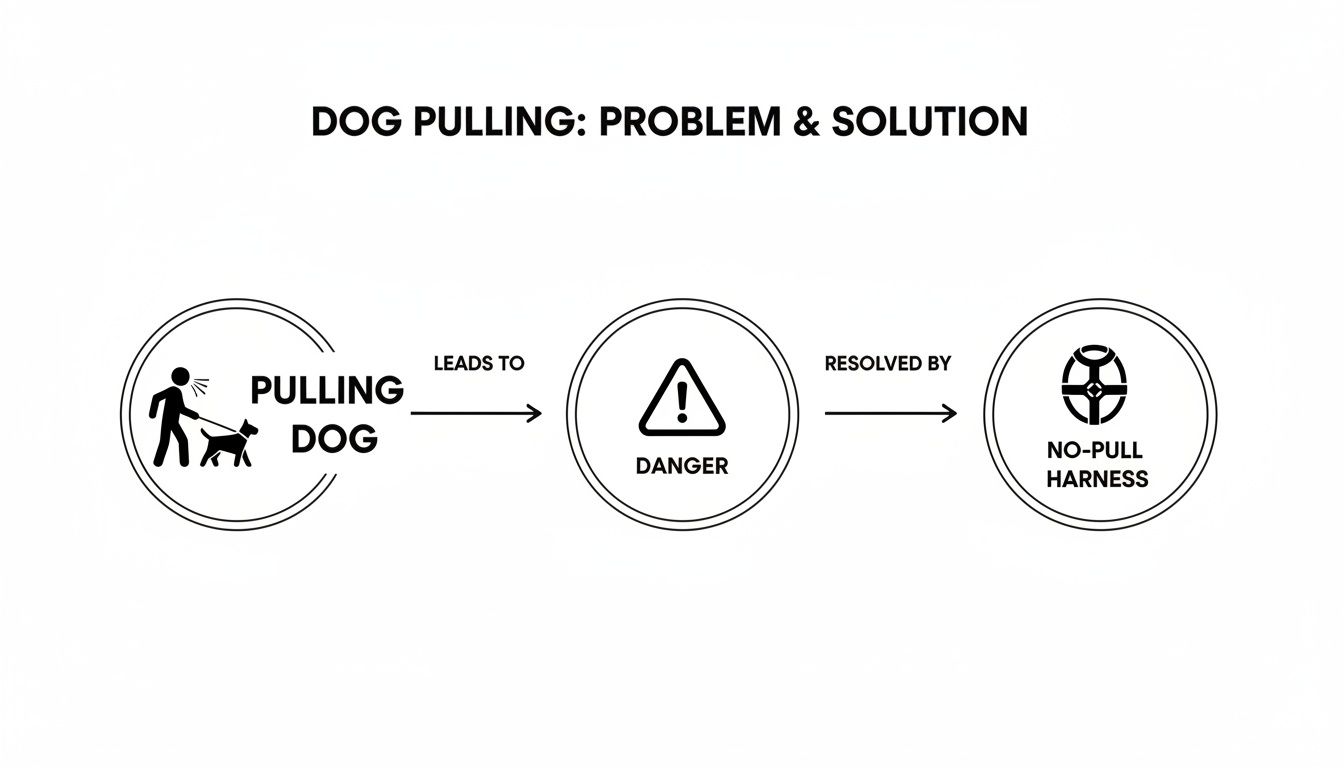
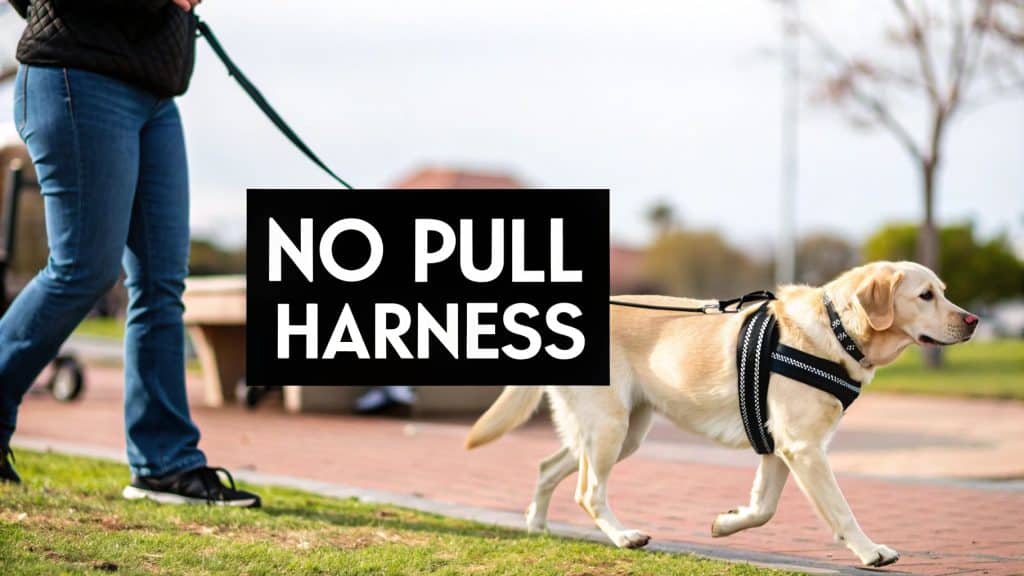
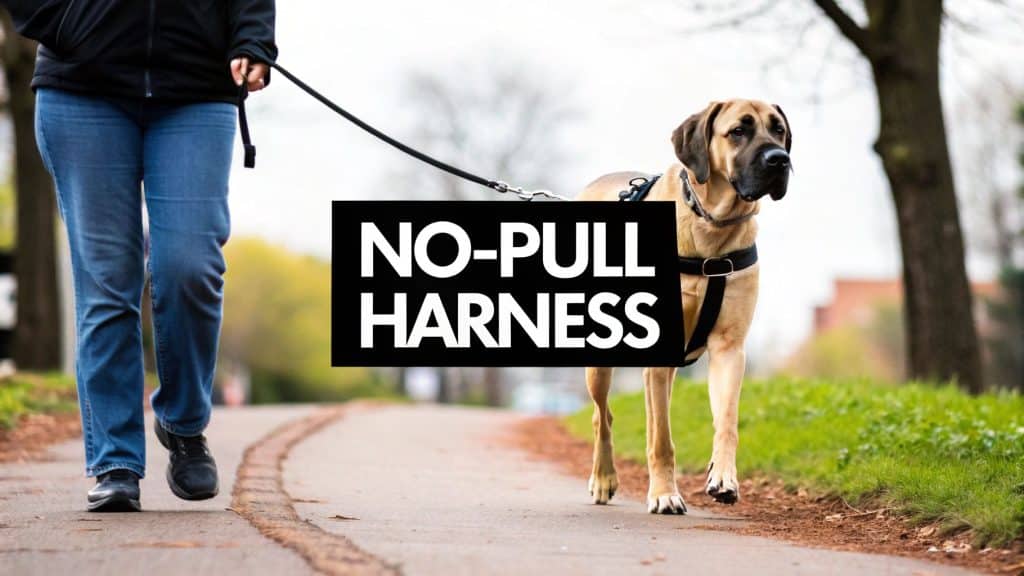
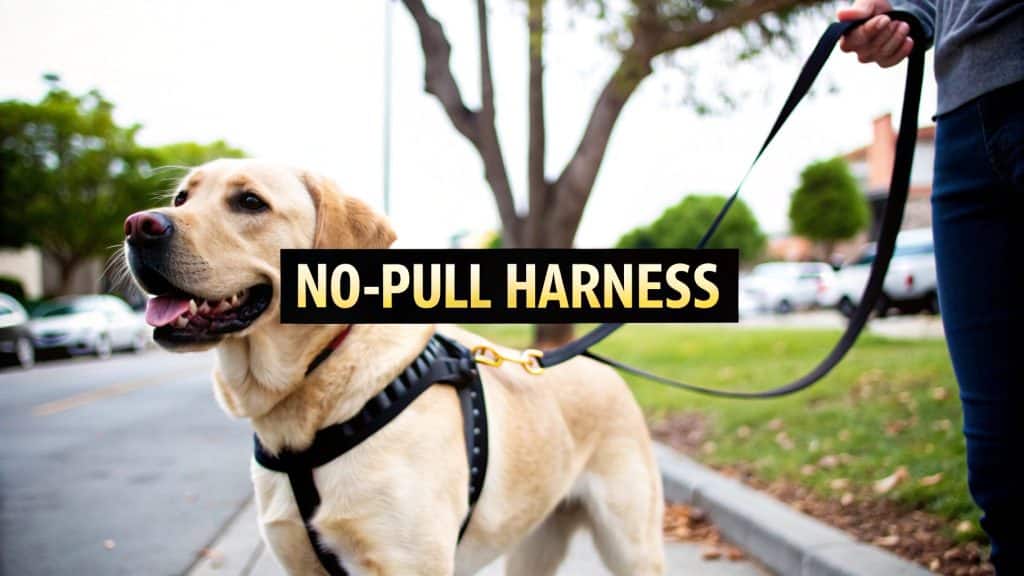
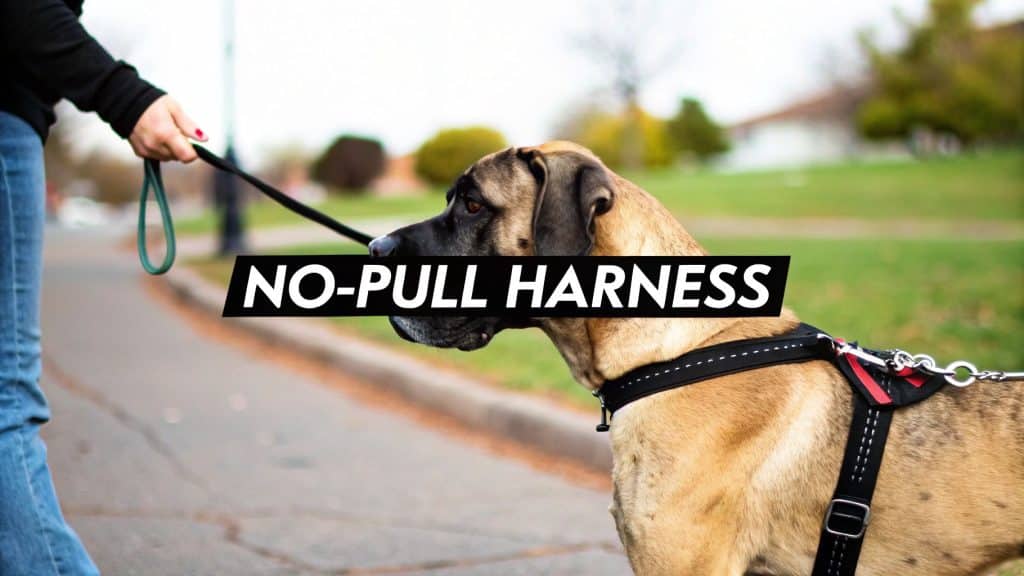
This image really nails the core concept—a pulling dog creates a risky situation, but the right harness provides a simple, effective solution.
The Front-Clip Harness: Power Steering for Your Dog
The most common and often most effective design is the front-clip harness. The magic is all in its simplicity: the leash attachment ring sits right in the center of your dog’s chest.
What does that do? It’s all about physics. Imagine trying to steer a shopping cart by pushing it from the side instead of from the handle—it just spins, right? A front-clip harness works the exact same way. When your dog lunges forward, the leash gently pulls from the front, causing them to pivot back toward you.
This isn’t about yanking or causing pain. It’s a simple, gentle redirection that makes pulling feel awkward and pointless for them. You’re not fighting their strength; you’re just changing the direction of their momentum. There’s a reason front-clip and dual-clip models make up over 60% of the market share; they just work. In fact, independent tests have shown they can reduce a dog’s forward pull by 65-80%. You can dig deeper into the dog harness market and its trends to see why they’re so popular.
The Dual-Clip Harness: The All-in-One Solution
Think of a dual-clip harness as the Swiss Army knife of dog walking gear. It gives you both a front clip for no-pull training and a traditional back clip, offering incredible versatility.
This design lets you adapt to any situation. Use the front clip when you’re actively working on loose-leash skills. Once your dog gets the hang of it and is walking politely, you can switch to the back clip for a more relaxed stroll. Some owners of very strong pullers even use a special two-ended leash connected to both points for ultimate control.
- Front Clip: Your go-to for training sessions and managing pulling.
- Back Clip: Great for casual walks after your dog has learned good leash manners.
This flexibility makes the dual-clip a fantastic long-term investment that grows with your dog’s training.
A dual-clip harness evolves with your dog. It gives you the control you need when you’re starting out and the freedom you’ve both earned once the pulling stops.
The Head Halter: The Specialized Option
For the truly powerful pullers—the big, determined dogs that can drag you down the street—a head halter (or head collar) can be a game-changer. It’s crucial to understand that this is not a muzzle. Your dog can still pant, drink, eat, and bark with it on.
A head halter works on the same principle as a bridle on a horse: where the head goes, the body will follow. It has a strap over the snout and another behind the ears, with the leash attaching under the chin. A gentle tug is all it takes to guide your dog’s head, instantly redirecting their entire body.
This gives you a surprising amount of control with very little effort. However, head halters require a patient introduction period to get your dog comfortable with the feel of it. It’s a specialized tool best reserved for situations where other harnesses haven’t provided enough control for safe and enjoyable walks.
What Makes a No-Pull Harness Great?
Okay, so you’ve figured out which type of harness seems right for your dog. That’s a huge first step! But now comes the real test: sorting the good from the bad. What really separates a five-star harness from one that falls apart after a month?
The best no-pull harness is more than just a front clip. It’s the whole package—smart design, durable materials, and thoughtful features that keep your dog safe and comfortable. Let’s break down what you should be looking for.
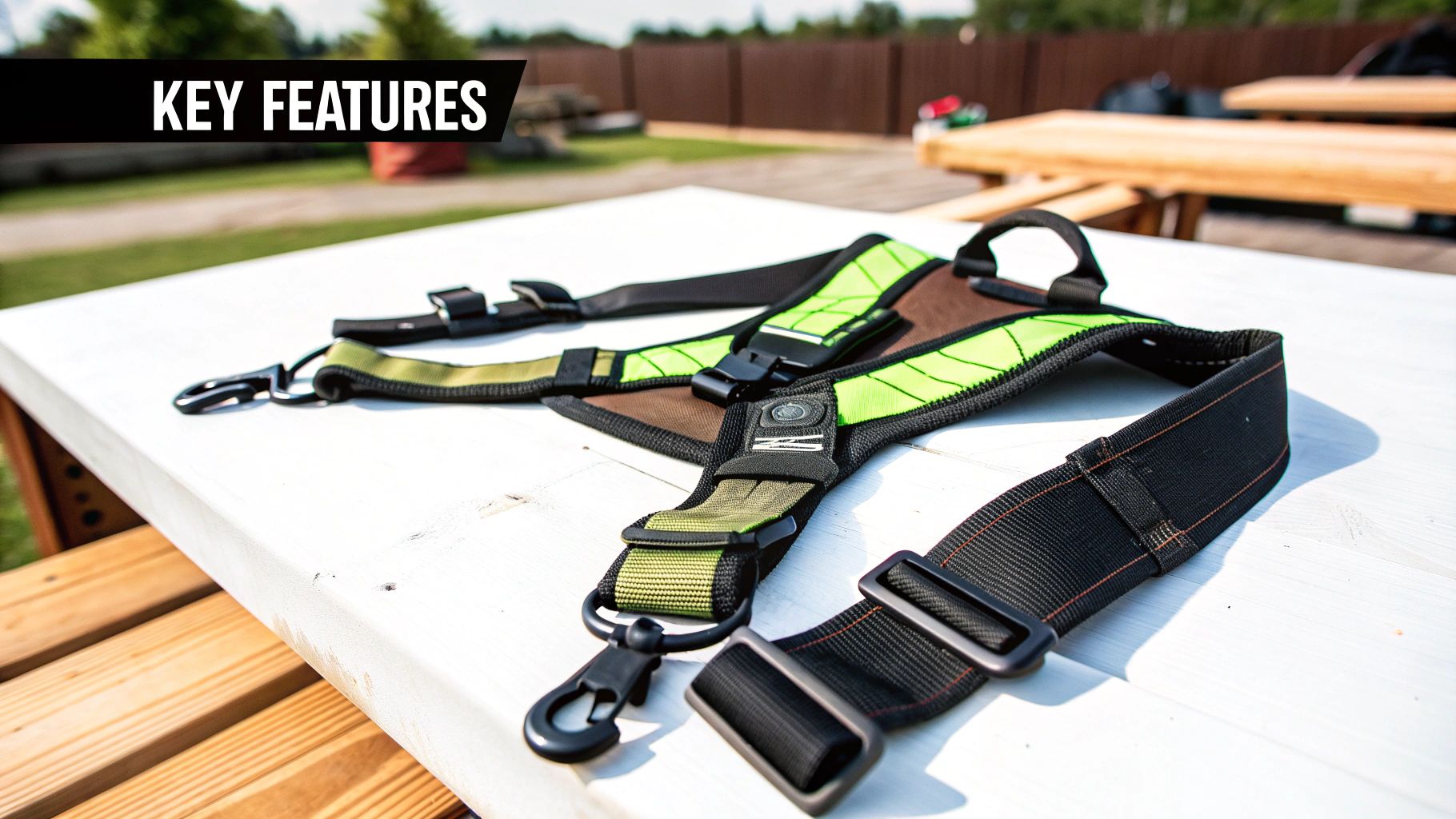
A quality harness just feels different. You can feel the sturdiness in your hands. The materials and construction are the biggest clues to whether it can handle the daily grind with a determined puller.
Built to Last: Material and Durability
The fabric of a harness is doing some heavy lifting, literally. It has to be tough enough to handle constant friction and force without giving up the ghost.
- Reinforced Nylon: This is the go-to for a reason. It’s incredibly strong, a breeze to clean, and stands up to a ton of abuse. Look for a tight weave and double-stitching, especially where the D-rings are attached.
- Breathable Mesh: If you live somewhere warm or have a dog that runs hot, mesh panels are a lifesaver. They offer great ventilation without sacrificing the harness’s structure.
Steer clear of harnesses made from thin, flimsy fabric with single stitching. They simply won’t hold up to a strong dog and could fail when you need them most.
The Perfect Fit: Adjustability is Everything
I can’t stress this enough: a poorly fitting harness is not just useless, it’s dangerous. If it’s too loose, your dog can become a little escape artist. Too tight, and you’re looking at painful chafing and restricted movement.
The perfect fit is non-negotiable. An ill-fitting harness can compromise your dog’s gait or allow them to slip free, turning a training tool into a safety hazard.
The secret to a secure fit? Multiple points of adjustment. A top-notch no-pull harness will have at least four adjustable straps, usually two for the neck and two for the chest. This lets you dial in a truly custom fit for your dog’s specific shape, which is key to preventing both escapes and rubbing. It’s why you’ll see so many customizable options in a good selection of collars, leashes, and harnesses.
More Than Just Straps: Padding for All-Day Comfort
A harness needs to be strong, but it also has to be comfortable. A dog who’s uncomfortable is a dog who can’t focus on the walk or their training. This is where good padding comes in.
Look for soft, cushioned padding on the chest and back panels. These are the areas that take the most pressure when your dog pulls. This padding helps spread that force out evenly and stops the straps from digging in. The goal is for the harness to feel like a secure hug, not a straightjacket.
The Little Things: Hardware and Safety Features
Finally, it’s time to sweat the small stuff, because those details are often what make the biggest difference in day-to-day use.
- Hardware: Check the buckles and D-rings. They should be solid metal, not plastic. Plastic clips can get brittle in the cold or just snap under sudden pressure.
- Reflective Stitching: If you walk in the early morning or after sunset, this is a must-have. Reflective trim or stitching makes your dog way more visible to cars in low light.
- Traffic Handle: This is one of my favorite features. It’s a padded handle right on the back of the harness that gives you instant, close control when you need it—like navigating a crowded sidewalk or a busy intersection.
Getting the Perfect Fit to Maximize Safety and Comfort
Even the best no-pull harness on the market won’t do its job if it doesn’t fit right. An ill-fitting harness can quickly turn from a helpful training tool into a real problem, causing painful chafing or, even worse, giving your dog an easy escape route.
Think of it like your favorite pair of hiking boots. If they’re too loose, you’ll end up with blisters. If they’re too tight, every step is a chore. A dog harness is no different. Nailing the fit is everything, but don’t worry—it’s easier than you think. All you need is a soft, flexible tape measure.
How to Measure Your Dog Correctly
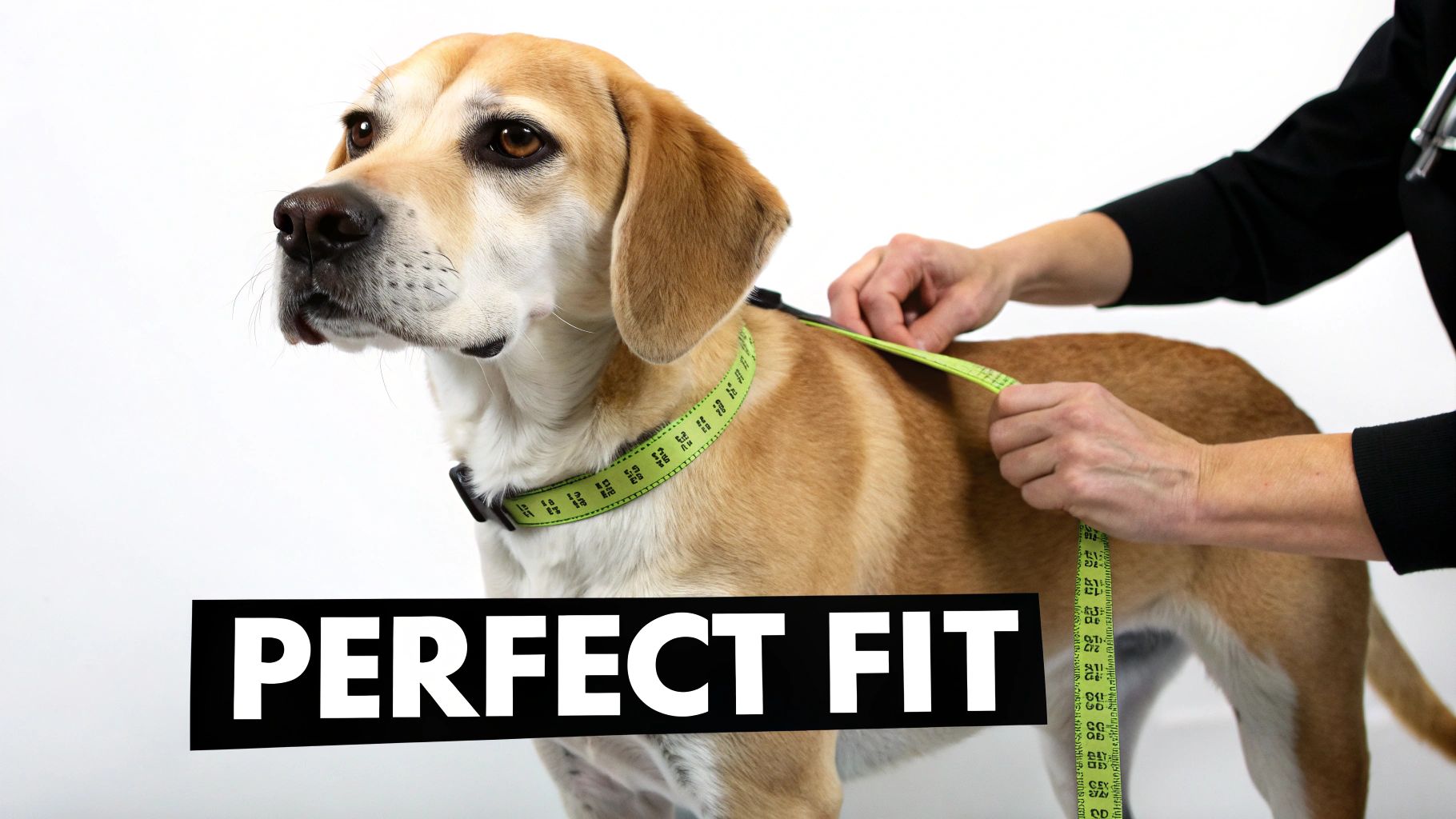
The single most important measurement you’ll take is the chest girth. This is simply the circumference of the widest part of your dog’s ribcage, located just behind their front legs.
- Ask your dog to stand up nice and tall.
- Gently wrap the measuring tape around the broadest part of their chest.
- You want the tape to be snug against their body, but not so tight that it’s digging in.
- Jot down that number!
With that measurement in hand, you can confidently check it against the sizing chart for any harness you’re looking at. Pro tip: if your dog falls between two sizes, always go with the larger one.
The Two-Finger Rule for a Perfect Fit
Once you’ve put the new harness on and adjusted the straps, there’s one final check to do. This is the gold standard for getting the fit just right. You should be able to slide two fingers flat between any part of the harness and your dog’s body—that includes around the neck, back, and chest straps.
If you can fit a whole fist in there, it’s way too loose and your dog could become a little escape artist. But if you can barely squeeze one finger in, it’s definitely too tight and will be uncomfortable.
This simple test ensures the harness is secure enough to keep them safe but still allows them to breathe and move freely. A proper fit is non-negotiable, especially for dual-clip harnesses, which studies have shown can reduce pulling incidents by a staggering 75%. But you won’t see results like that without a snug, correct fit. You can learn more from this detailed dog harness market analysis.
Common Fitting Mistakes to Avoid
We’ve all been there. It’s easy to make a few simple mistakes, but being aware of them will make all the difference for your dog’s comfort and your peace of mind.
- Making it too tight: A harness that’s cinched down too hard can actually interfere with your dog’s natural stride, potentially causing shoulder problems down the road. Not to mention, it can cause nasty skin irritation that makes walks miserable.
- Leaving it too loose: This is probably the most frequent mistake people make. A floppy harness doesn’t just give you less control; it poses a serious safety risk if your dog gets spooked and decides to back out of it.
- Ignoring adjustment points: Modern harnesses often have four or more adjustment points for a reason! Take a few extra minutes to tweak every single strap. This is how you get that truly custom fit that feels like it was made just for your dog.
Combining Your Harness with Positive Training Techniques
A great no-pull harness is a game-changer for managing a dog that pulls, but it’s crucial to see it for what it is: an incredible tool, not a magic wand. The harness gives you the leverage you need to actually make training stick. It stops your dog from getting the self-reward of successfully dragging you down the street.
Lasting change, however, comes from pairing this fantastic piece of gear with consistent, positive training.
Think of the harness like power steering on a car. It makes guiding your dog much easier and safer, but you’re still the one who has to drive. By teaching your dog that walking politely beside you is far more rewarding than charging ahead, you build a true walking partner.
This turns frustrating tug-of-war matches into enjoyable adventures you can share. The real goal is to make pulling an unsuccessful, and frankly, boring choice for your dog.
The Foundation: Positive Reinforcement
Positive reinforcement is the heart of modern, effective, and humane dog training. The idea couldn’t be simpler: you reward the behavior you want your dog to offer more often. When it comes to loose-leash walking, this means rewarding your dog the moment they are in the right spot—calmly by your side on a slack leash.
A reward is anything your dog finds valuable. For most dogs, small, high-value treats are the quickest way to their brain. But don’t underestimate the power of enthusiastic praise (“Yes, good walking!”) or a quick pat. The trick is to mark and reward the exact moment they do the right thing.
A no-pull harness stops the reward of pulling forward, while positive training provides the reason to walk politely. One manages the behavior, the other changes it.
By rewarding a loose leash, you’re teaching your dog a new game where staying close to you is how they win. This simple shift turns the walk from a battle of wills into a fun, cooperative activity.
Simple Techniques for Peaceful Walks
You don’t need to be a professional trainer to start making progress. You can weave these simple, powerful techniques into your daily walks starting right now. Consistency is everything when it comes to building good habits.
Here are a few proven methods to pair with the best dog harness for no pulling:
- Be a Tree: The second your dog hits the end of the leash and it goes taut, stop walking. Plant your feet and stand perfectly still and quiet. Don’t yank the leash or scold them—just wait. The instant they release the tension, even by taking a tiny step back or glancing at you, praise them (“Yes!”) and immediately start walking again. They’ll quickly connect pulling to the fun stopping.
- The Sudden U-Turn: If your dog is fixated on something up ahead and pulling like a freight train, cheerfully call out “This way!” and pivot 180 degrees. Start walking in the opposite direction. Your front-clip harness will gently turn their body with you. After a few steps of them walking nicely, reward them, then you can turn back and try again.
- Reward the “Check-In”: Any time your dog voluntarily glances back at you on a walk, make a big deal of it! Offer praise and a treat. This encourages them to stay connected with you, rather than getting lost in all the sights and smells. You want your dog to think that checking in with you is the most rewarding part of any walk.
Your Final Checklist for Choosing the Right Harness
Alright, let’s put it all together. Think of this as your final walkthrough before you make a decision. Answering these quick questions will help you feel confident that you’re picking the absolute best harness for your walking buddy.
This isn’t just about finding a good harness; it’s about finding the right one for your dog and your specific needs. Let’s make sure it’s a perfect match.
Your Dog’s Profile
- Pulling Intensity: Let’s be honest—is your dog a gentle tugger or a full-blown freight train? The more powerful the pull, the more you’ll need to focus on reinforced stitching and heavy-duty metal hardware.
- Size and Shape: Did you get an accurate chest measurement? Remember, some breeds, like Greyhounds or Bulldogs, have unique body shapes. If your dog has a deep chest or a broad neck, look for a harness with multiple adjustment points to nail that perfect, secure fit.
- Sensitivity: How does your dog feel about things going over their head? If they’re a bit shy or sensitive about it, a harness with a neck buckle that opens completely can make gearing up for a walk way less stressful for everyone.
A great harness fits the dog’s body and their personality. Taking a moment to assess their unique needs is the key to ending the tug-of-war for good.
Harness Features and Use
- Clip Type: Based on what we’ve covered, what makes the most sense for you? A front-clip for training? A dual-clip for ultimate versatility? Or a head halter if you need maximum control?
- Extra Features: Think about your daily routine. Would a traffic handle be a lifesaver when navigating busy sidewalks? Is reflective stitching a must-have for those early morning or late-night walks?
- Climate Considerations: Do you live somewhere that gets hot? If so, a harness made with breathable mesh will be a game-changer, keeping your dog much more comfortable on a sweltering summer day.
Got Questions? We’ve Got Answers About No-Pull Harnesses
It’s totally normal to have a few questions when you’re trying to find the right no-pull harness. After all, you want what’s best for your dog. Let’s clear up some of the most common things we hear from fellow dog owners, so you can turn those pulling battles into peaceful walks.
Can My Dog Just Live in Their Harness?
It might be comfortable, but we really don’t recommend leaving a harness on your dog 24/7. Think of it like your favorite pair of hiking boots – they’re perfect for the trail, but you wouldn’t wear them to bed.
Constant wear can cause skin irritation or even sores from moisture getting trapped underneath. For dogs with longer coats, it can lead to some serious matting. It’s also a safety issue; if your dog is unsupervised, the harness could get snagged on a crate or a piece of furniture.
A no-pull harness is a tool for walking and training, not a full-time accessory. Let your dog’s skin and coat breathe when you’re relaxing at home.
Will a No-Pull Harness Magically Stop the Pulling?
If only it were that simple! A no-pull harness is an incredible tool, but it’s not a magic wand. What it does is make pulling a lot less fun and effective for your dog. When they pull, the front clip gently redirects them back towards you, making it awkward to forge ahead.
The real, lasting change happens when you combine this tool with good training. The harness gives you the leverage you need to teach your dog that walking nicely beside you gets them where they want to go. It’s the team-up of the right gear and consistent training that truly creates a great walking buddy.
Are Front-Clip Harnesses Actually Safe?
Yes, absolutely. When you get the fit right, a front-clip harness is one of the safest pieces of gear you can use. A traditional collar puts all that pulling pressure right on your dog’s delicate throat and neck area, which is a big no-no.
A harness, on the other hand, spreads that pressure out across the strongest parts of their body: the chest and shoulders. This dramatically cuts down the risk of choking or causing a neck injury, which is a genuine concern for heavy pullers. It’s a much more humane and effective way to guide your dog without causing any pain.
Ready to find the perfect fit and finally end the pulling for good? Explore the durable and comfortable options at Ur Pet Store and make every walk a joy. Visit us today at https://urpetstore.com to see our full collection.