

Blog
Finding the Best Dog Harness No Pull for Better Walks

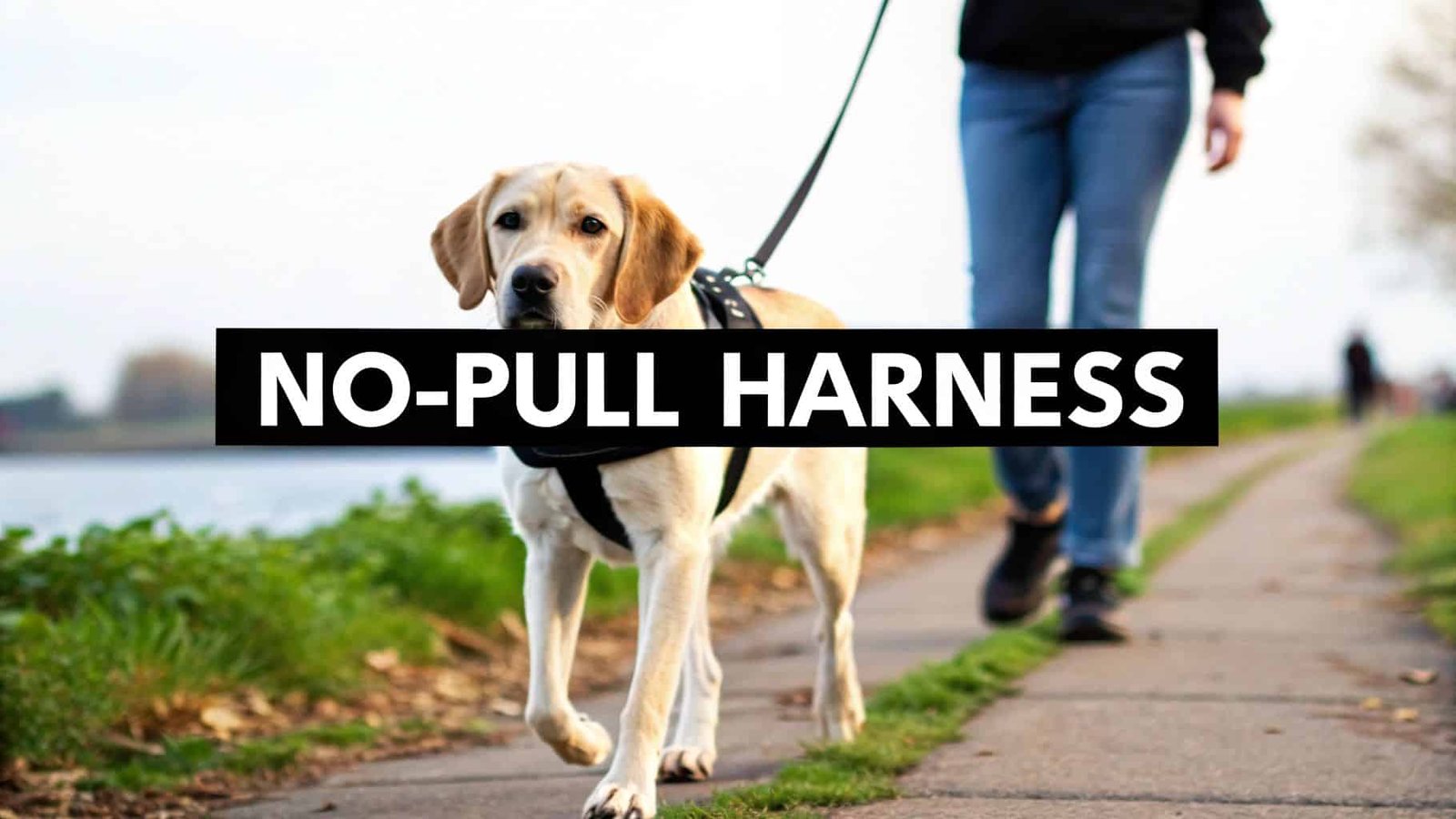
If you've ever felt like your arm is about to pop out of its socket during a walk, you know the struggle. That constant tug-of-war with a determined puller can suck all the joy out of what should be a relaxing stroll. The best dog harness no pull isn't just another piece of gear; it's a total game-changer, using a simple front-clip design to gently turn your dog back towards you, discouraging pulling without any pain or choking. It’s an elegant solution that can completely transform your walks.
Why a No-Pull Harness Can Transform Your Walks
A walk is supposed to be about connection, not a constant battle. It's perfectly normal for a dog to pull—they're excited, they want to sniff everything, and their natural pace is usually faster than ours. But that doesn't make it any less frustrating. Constant pulling can strain your relationship and, more importantly, can be dangerous for your dog, especially if they're wearing a standard collar.
Think about it: a traditional collar puts all that pulling pressure right on your dog’s throat. This can lead to gagging, coughing, or even serious, long-term damage to their trachea. Even a regular back-clip harness can sometimes make things worse. It can actually trigger a dog's natural "opposition reflex," that instinct to pull against pressure. You're basically giving them a perfect anchor point to drag you along like a sled dog.
The Smarter, Safer Solution
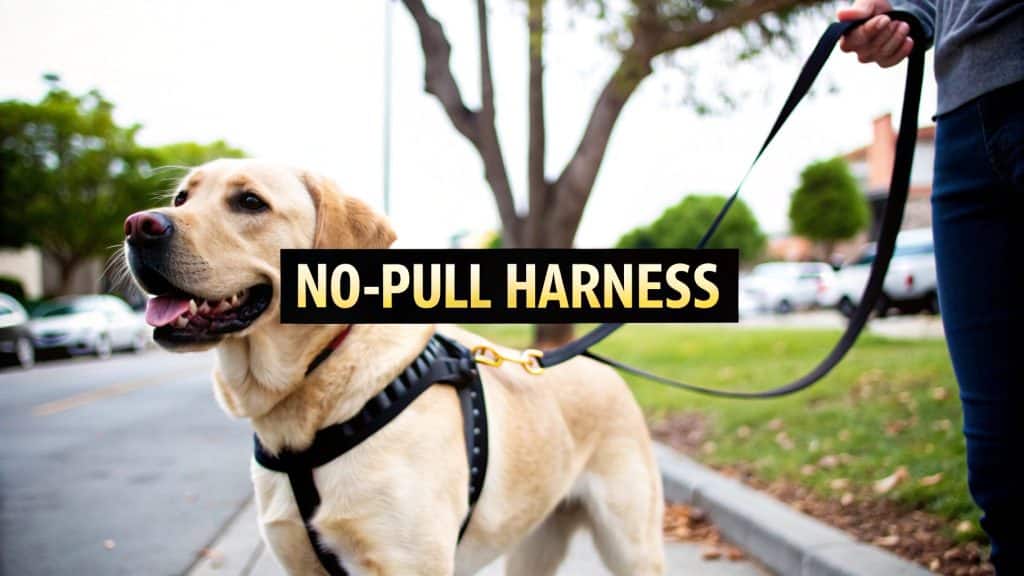
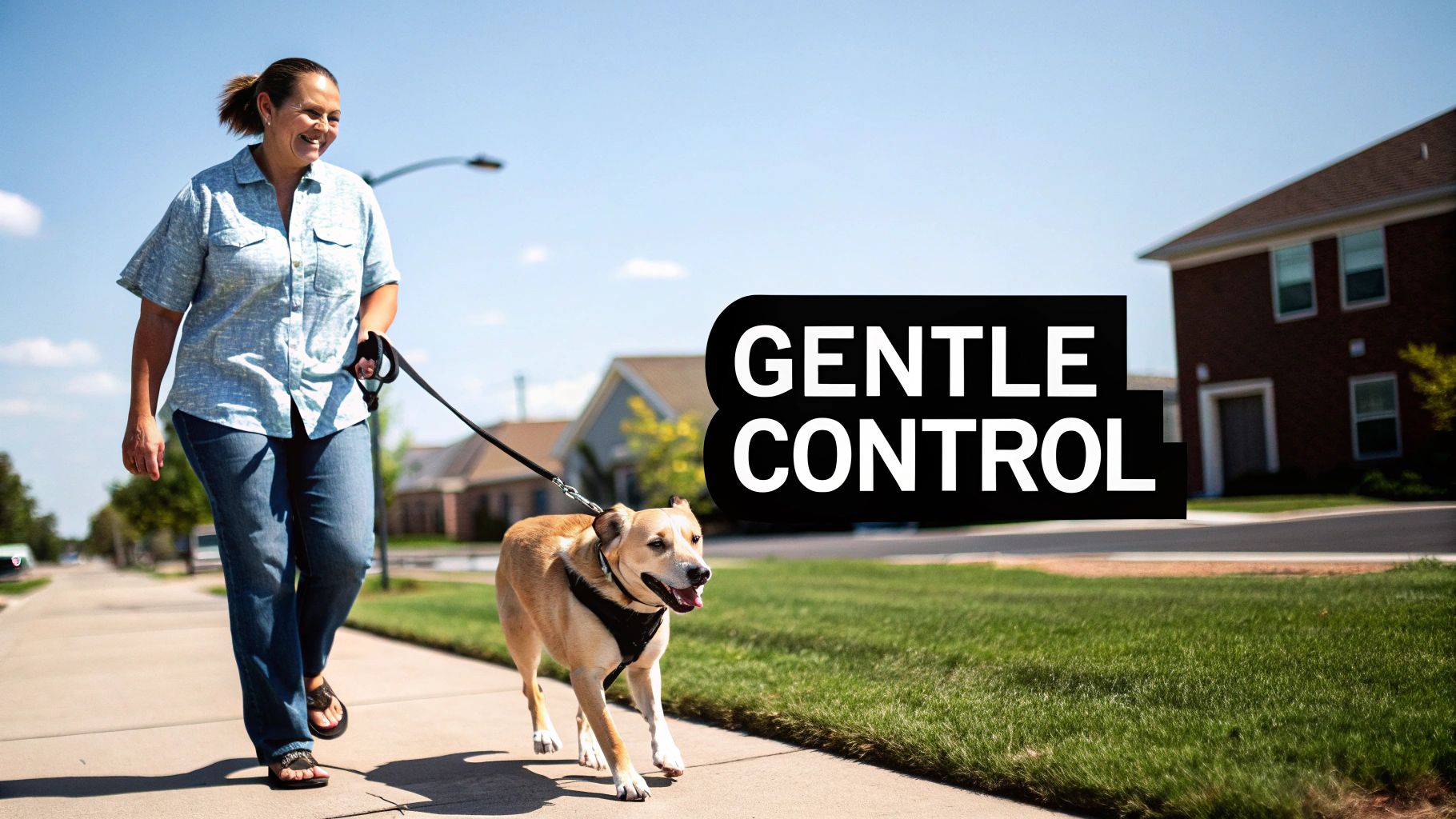
This is where the genius of the best dog harness no pull design comes in. By simply moving the leash attachment point from their back to their chest, the entire dynamic of the walk changes. When your dog surges forward, the tension on the leash doesn't propel them ahead; it gently guides them into a slight turn, redirecting them back toward you.
This clever bit of physics teaches them that pulling doesn’t work. Instead of getting them to that interesting smell faster, it just turns them around. The real path forward is by your side. All of this happens without any yanking, choking, or painful pressure. For dogs whose pulling is tied to bigger issues like reactivity, understanding techniques for calming dog aggression on leash can work beautifully alongside a good no-pull harness.
A no-pull harness works with your dog’s natural movements, not against them. It shifts the point of leverage to the chest, giving you effortless steering and control without the need for force.
It's no surprise that dog owners and professionals are moving in this direction. The dog harness market is on track to hit USD 7.05 billion by 2031, and a whopping 75% of vets now recommend harnesses over collars to avoid restricting a dog's airway. With no-pull models capable of reducing pulling force by as much as 70%, it's clear why they're leading the charge. This trend isn't just about new products; it's a fundamental shift toward smarter, kinder ways to walk with our dogs.
Understanding Different No-Pull Harness Designs
Walking into the world of no-pull harnesses can feel a bit like a maze. With so many options, how do you pick the right one? The key is to understand how each design works, because they all discourage pulling in slightly different ways. Once you know the mechanics, you can match the harness to your dog's size, personality, and pulling habits.
Basically, you’ll run into three main types: front-clip harnesses, tightening harnesses, and the ever-popular dual-clip models that do a bit of everything. Let's break down what makes each one tick so you can find the perfect tool to make your walks enjoyable again.
Front-Clip or Steering Harnesses
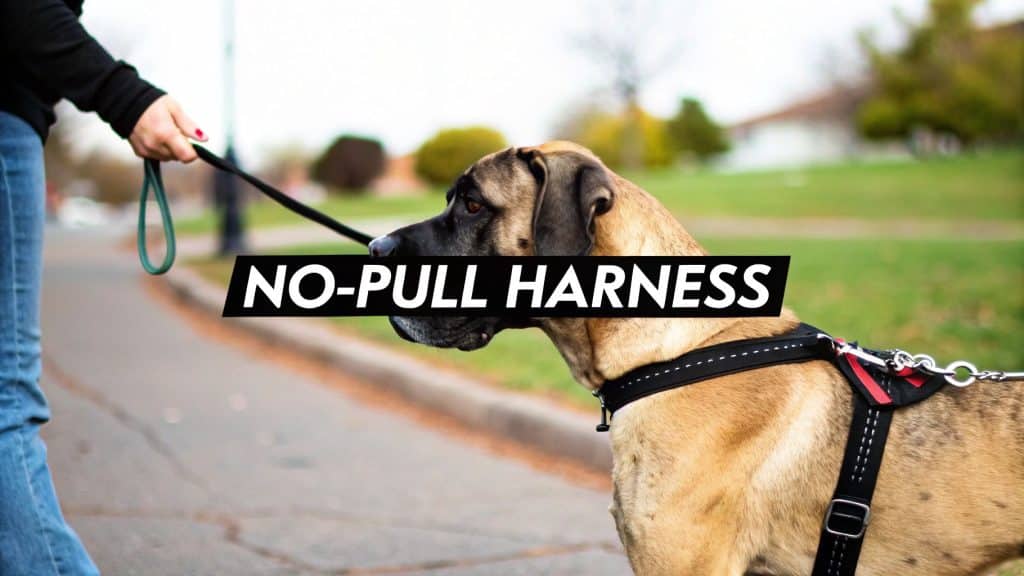
The go-to choice for most trainers, and for good reason, is the front-clip harness. You’ll often hear it called a "steering" harness, and that’s a perfect description of what it does. The leash clips onto a D-ring right in the center of your dog’s chest.
It's all about simple physics. When your dog tries to lunge ahead, the leash gently pivots their body, turning their forward momentum back toward you. They quickly learn that pulling doesn't get them where they want to go; it just brings them back to you.
This design is a game-changer for strong pullers because it completely neutralizes the leverage they get from a standard back-clip harness. A back clip can actually encourage pulling by triggering their natural opposition reflex—think sled dogs. The only potential snag is the leash sometimes getting tangled in a dog’s front legs, which can be more of an issue for smaller or particularly zesty pups.
Tightening or Martingale-Style Harnesses
Another popular option is the tightening harness, which you might see with a martingale-style loop built in. When your dog pulls, a part of the harness gently snugs up around their chest or shoulders, giving them clear, physical feedback.
The feeling is meant to be a mild, uncomfortable pressure—never painful—that tells them, "Hey, pulling causes this squeeze." As soon as the leash goes slack, the harness loosens, instantly rewarding them for doing the right thing. The secret to making this style work is a perfect fit. If it's too loose, the mechanism is useless. If it's too tight, it’ll chafe and cause constant discomfort.
A tightening harness gives immediate tactile feedback that some dogs respond to almost instantly. But its success hinges entirely on a precise fit that delivers a gentle squeeze, not a painful pinch.
These are a great choice for dogs who don't quite get the message from the gentle redirection of a front-clip harness. It’s a step up in communication without having to resort to more aversive tools.
Dual-Clip Versatility
For the best of both worlds, look no further than the dual-clip harness. These have become some of the best dog harness no pull options on the market because they give you maximum flexibility. They feature leash attachment points on both the chest (front-clip) and the back.
This design lets you adapt on the fly:
- Use the front clip: Perfect for focused training sessions or walks through a park full of squirrels where you know pulling is inevitable.
- Use the back clip: Great for more relaxed walks once your dog has learned some leash manners, or for activities like jogging where a front leash would just get in the way.
- Use both clips at once: With a special double-ended leash, you get incredible control and balanced steering, which is a lifesaver for very strong or reactive dogs.
This adaptability makes dual-clip harnesses a smart long-term investment. They can evolve with your dog’s training, starting as a serious training aid and later becoming their go-to comfortable harness. You can see some of our favorite styles in our collection of dog harnesses, collars, and leashes.
The rise of these smarter, kinder walking tools is no surprise. The dog harness industry was valued at an incredible USD 5.53 billion in 2024 and is expected to hit USD 27.12 billion by 2032. This boom is fueled by owners who view their dogs as family and are seeking safer, more humane solutions that also minimize the risk of a great escape—something no-pull harnesses are exceptionally good at. You can learn more about the latest dog harness market trends to see how these designs are changing the game.
How to Compare No Pull Harness Styles
Picking the right no-pull harness isn't about finding the one with the most features. It's about matching the harness design to your dog's personality, their build, and where you walk them. A harness that works wonders for a deep-chested Boxer in a quiet suburb might be all wrong for a small, zippy Terrier navigating a busy city sidewalk. It's all about context.
Instead of just listing pros and cons, let's look at this through the lens of real-world situations. This should help you picture which style is the best dog harness no pull for your life, so you can feel confident in your choice.
Best for High-Distraction Urban Walks
Picture this: you're walking your powerful, determined Labrador through downtown. Squirrels are everywhere, other dogs are passing by, and a million interesting smells are calling their name. In a busy environment like this, you need immediate, reliable control.
A Y-shaped front-clip harness is usually the champion in this scenario. Its design gives the shoulders a full range of motion, which is great for comfort, but that front leash attachment gives you incredible steering power. The moment your Lab lunges for that dropped french fry, the harness gently turns their body back toward you, instantly breaking their focus and redirecting their momentum.
A simple vest-style harness, while secure, often won't give you that same split-second directional control you need for a strong puller in a chaotic setting. That steering mechanism is the front-clip's secret weapon.
Ideal for Trail Hiking and Adventures
Now, let's say you're hitting a wooded trail with your high-energy Australian Shepherd. The ground is uneven, and your dog needs to be able to scramble over logs and splash through streams. Here, pulling is less about stubbornness and more about pure, unadulterated excitement.
This is where a dual-clip harness really shines. You can start the hike on the front clip to manage that initial burst of energy. Once they've settled into a nice pace, you can switch to the back clip, giving them more freedom to move without the leash getting tangled in their legs as they explore.
That adaptability is huge. Relying only on a front clip for a long hike can sometimes alter a dog's natural gait, so having the option to switch to the back is a major plus for their long-term joint health and comfort.
The real magic of a dual-clip harness is its flexibility. It's a training tool and a comfortable walking harness all in one, ready to adapt from the city street to the mountain trail.
This decision tree helps break down how to choose between the main harness types based on how they work.
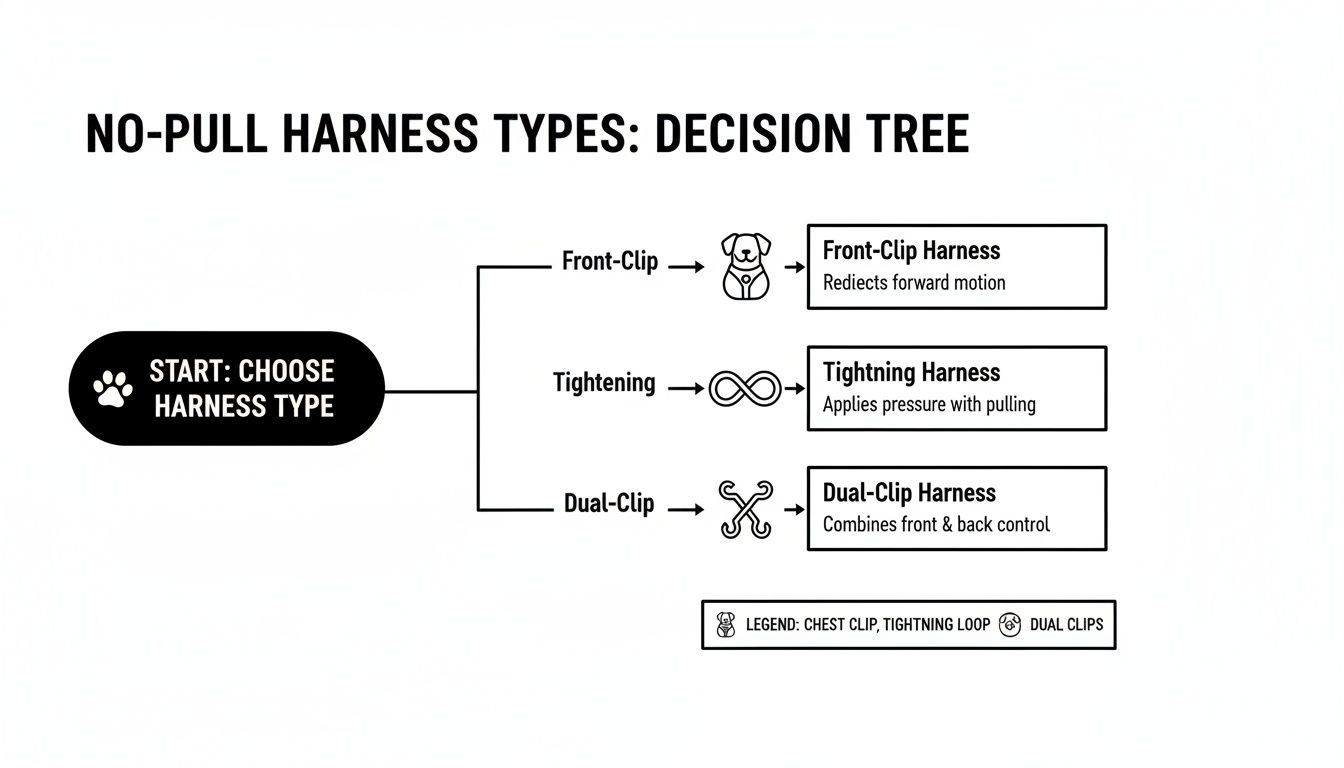
As the visual shows, your choice really boils down to what kind of feedback your dog needs: gentle redirection (Front-Clip), subtle pressure (Tightening), or the versatility of both (Dual-Clip).
Recommended for Anxious Dogs or Escape Artists
For dogs who are anxious, reactive, or have a Houdini-like talent for slipping their gear, security is priority number one. Think of a slender Beagle who spooks at loud noises or a clever rescue who has already mastered the art of backing out of a standard harness.
For these dogs, a tightening harness (or a very snug-fitting vest with a front clip) can provide much-needed peace of mind. The gentle, all-over pressure that a martingale-style harness applies when the dog pulls can have a calming, swaddling effect, almost like a thunder shirt.
Even more importantly, that snugging action makes it incredibly difficult for a dog to back out and escape. For the ultimate security, look for harnesses with five or more adjustment points. This lets you create a truly custom fit that leaves no room for wiggling free. The design should spread any pressure evenly across the chest and shoulders, so no single point becomes a potential escape route.
To make it even clearer, this table breaks down how each harness style stacks up for different dogs and situations.
Comparing No Pull Harness Styles for Different Needs
This table helps you select the best harness by comparing the three primary no-pull styles across key performance and situational criteria.
| Harness Style | Primary Mechanism | Best For Dog Personality | Ideal Walking Environment | Potential Drawback |
|---|---|---|---|---|
| Front-Clip | Redirects forward momentum by turning the dog's body | Confident pullers, dogs easily distracted by sights/smells | Busy urban areas, crowded sidewalks, training sessions | Can tangle around legs; may alter gait over long distances |
| Tightening | Applies gentle, even pressure across the chest/shoulders when pulled | Anxious or fearful dogs, known escape artists, sensitive dogs | Quiet neighborhoods, predictable routes, security-focused walks | Can be over-tightened if not fitted properly; less steering control |
| Dual-Clip | Combines front-clip redirection and back-clip standard walking | Most dogs; offers maximum flexibility for training and recreation | All environments; perfect for transitioning from training to relaxed walks | Can be slightly bulkier; may have more straps to adjust |
By looking at these real-world scenarios, you can go beyond a simple feature list and pick a harness that actually solves your specific challenges. The goal isn't just to stop pulling—it's to make every single walk safer, more comfortable, and more enjoyable for both you and your dog.
Nailing the Perfect Harness Fit: It's All in the Details
A no-pull harness is a fantastic training tool, but only if it fits correctly. A sloppy fit doesn't just make the harness less effective—it can be downright dangerous. We're talking chafing, restricted movement, and for the crafty escape artists, a quick ticket to freedom. Getting the fit right from the start is the key to safe, comfortable, and productive walks.
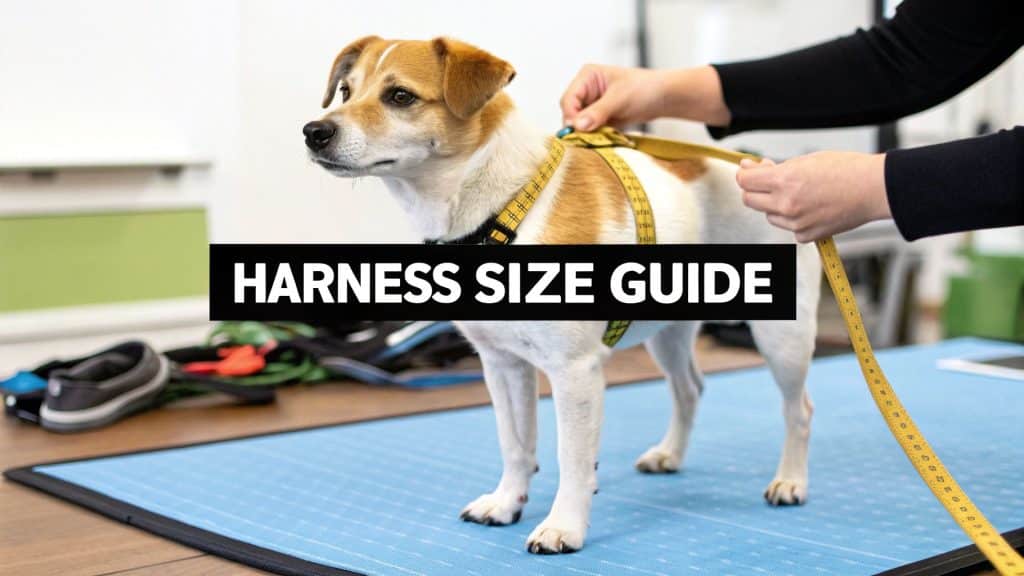
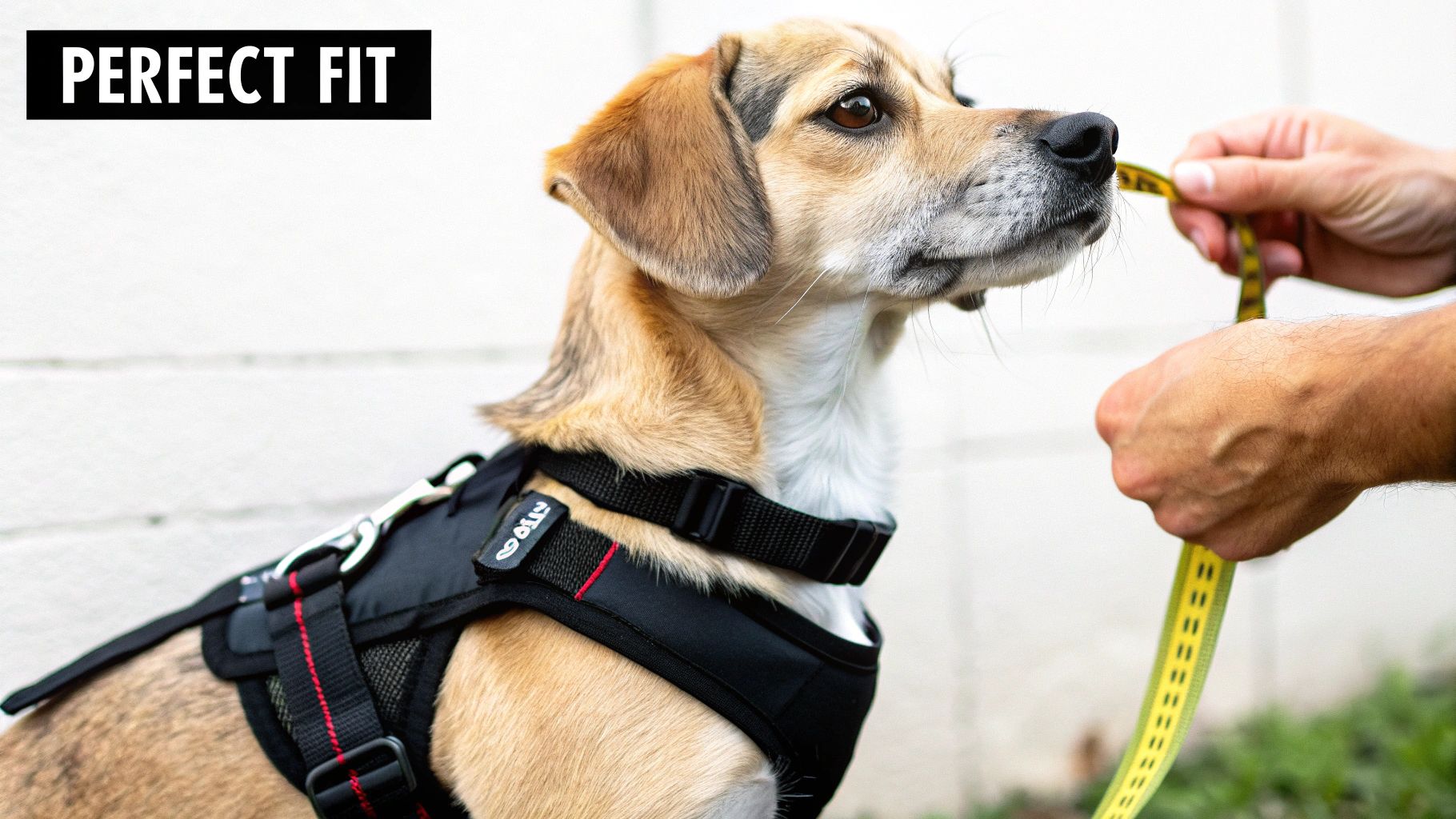
Before you do anything else, grab a soft, flexible measuring tape. If you don't have one, a piece of string and a ruler will do the trick in a pinch. Accurate measurements are the foundation for finding the best dog harness no pull for your dog's specific build.
Taking Your Dog’s Key Measurements
To get this right, you’ll need to measure two critical areas. It’s always best to do this while your dog is standing calmly. A few high-value treats or a dab of xylitol-free peanut butter on a lick mat can be a great way to keep them still for a moment.
- Chest Girth: This is the most crucial measurement. You'll want to wrap the tape around the widest part of your dog’s rib cage, which is usually just behind their front legs.
- Neck Measurement: For harnesses that slip over the head, measure around the base of the neck where a collar would naturally rest. Be careful not to measure too high up toward the ears.
Once you have these numbers, check them against the manufacturer's sizing chart. Never guess or go by weight alone—dogs, just like people, have vastly different body shapes even within the same breed.
The Two-Finger Rule for a Perfect Fit
With the right size in hand, it's time to put the harness on and fine-tune the straps. You're aiming for a snug fit that isn't constricting. This is where the tried-and-true "two-finger rule" comes in.
You should be able to slide two fingers flat between any part of the harness and your dog's body—that means over their back, under their chest, and around their neck.
- Is it too loose? If you can easily slide your whole hand under a strap, it's a no-go. A determined puller can back out of a loose harness in a heartbeat.
- Is it too tight? If you struggle to get two fingers in, it's definitely too tight. This can restrict breathing, alter their natural gait, and lead to some nasty skin irritation or chafing.
A great harness fit strikes a perfect balance between security and comfort. The two-finger rule is your go-to check to ensure the harness will stay put without digging in, giving your dog total freedom to move and breathe easily.
This emphasis on a proper fit is a huge reason why so many dog owners are ditching traditional collars. The global no-pull dog harness market soared to USD 1.12 billion in 2024, largely because these designs put canine safety first. Research even shows that a well-fitted harness can cut down on neck strain by as much as 80% compared to a collar, a game-changer for preventing long-term injuries.
Adjusting for Unique Body Shapes
Dogs come in all shapes and sizes, so a one-size-fits-all approach just won't cut it. A harness that's perfect for a lanky Greyhound might be a disaster for a stocky Bulldog.
Here’s how to handle some common body types:
- Deep-Chested Dogs (like Boxers or Greyhounds): Look for harnesses with a longer chest piece and multiple points of adjustment. This allows you to position the girth strap well behind their elbows to prevent uncomfortable rubbing.
- Broad-Shouldered Dogs (like Bulldogs or Pugs): A Y-shaped front is often the best choice, as it provides ample room for shoulder movement. Just make sure the neck opening is wide enough and doesn't ride up too high.
- Small or Slender Dogs (like Whippets or Terriers): Prioritize lightweight materials and a trim design. A harness that’s too heavy or bulky can easily overwhelm a smaller dog’s frame.
The importance of a good fit for comfort and performance isn't unique to dog gear. Anyone interested in the topic might find it interesting to see the parallels in understanding the principles of a good fit for active gear for humans. And of course, after a walk, it's important to check your dog's skin and coat, especially under the harness straps. This is a crucial step in our recommended https://urpetstore.com/product-category/grooming-cleaning/.
Training Your Dog to Walk on a No Pull Harness
A great no-pull harness is a game-changer for training, but it's important to remember that it's a tool, not a magic wand. Real, lasting change happens when you pair the right equipment with positive, consistent training. Think of it as building a partnership with your dog, transforming those stressful tug-of-war sessions into enjoyable walks you can both look forward to.
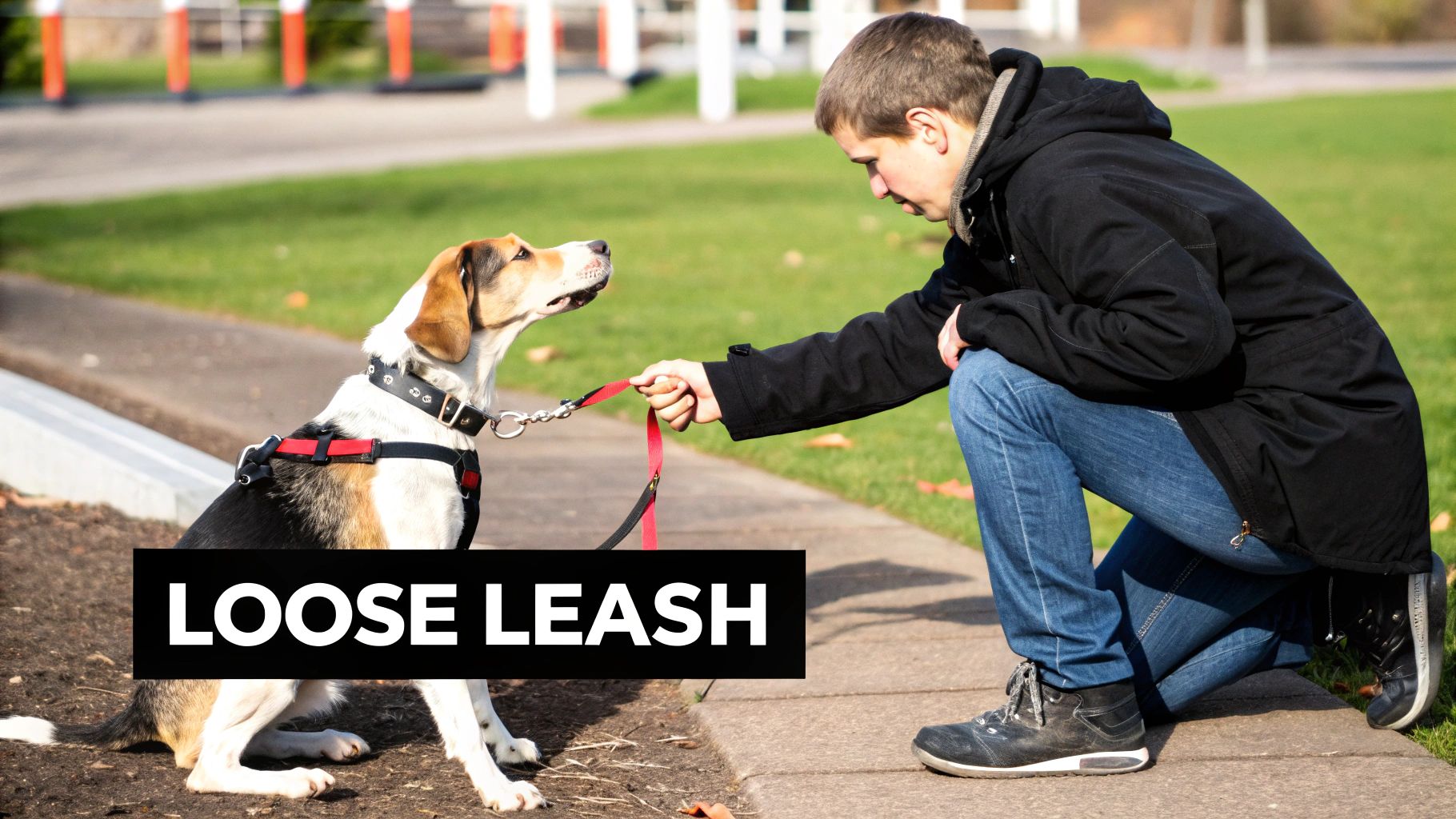
The first and most crucial step is making sure your dog loves their new harness. You want them to see it and get excited, not tuck their tail and hide. This initial introduction should be fun, low-pressure, and full of rewards.
Making a Positive First Impression
Forget about going for a walk right away. Start by introducing the harness in a calm, familiar space, like your living room. Let your dog sniff it, investigate it, and reward every bit of curiosity with high-value treats and happy praise. You're building a positive connection right from the start.
Now, you can slowly start the fitting process. Don't rush it!
- Step 1: Hold the harness up. When your dog looks at it, give them a treat.
- Step 2: Gently touch the harness to their body for just a second, then treat.
- Step 3: Drape it over their back without buckling it, and immediately reward them.
- Step 4: Finally, buckle it for a few seconds, give them a jackpot of treats, and take it right off.
Keep these sessions super short—a minute or two is perfect. The idea is to make wearing the harness the best, most rewarding part of their day. A calm dog learns best, so making sure they're well-rested can make a world of difference. For pups who struggle to relax, supportive tools like a calming dog bed can help them get into a more receptive state of mind before you even begin.
Foundational Loose Leash Walking Exercises
Once your dog is totally comfortable wearing their gear, it's time to practice loose-leash walking indoors. Starting inside, away from squirrels and other distractions, is the key to success. The rule is simple: a loose leash means we go, but a tight leash means the fun stops.
Clip the leash to the harness's front chest clip. Start walking around the room. The second you feel that leash tighten, plant your feet and become a tree. No yanking or pulling back—just stop all forward movement.
Now, wait. The moment your dog turns to check in with you or the leash goes slack, mark the behavior with an enthusiastic "Yes!" and give them a treat right next to your leg. Then, immediately start walking again.
This "be a tree" method is powerful. Your dog wants to explore, and they'll quickly figure out that pulling on the leash does the exact opposite of what they want—it stops the walk. It teaches them that keeping the leash loose is what makes the adventure happen.
Practice this in short, upbeat sessions. Your dog will start to learn that sticking close to you is how they get to where they want to go, setting you both up for success when you finally head outside.
Troubleshooting Common Training Challenges
Even with the best dog harness no pull, you might hit a few snags. That’s completely normal. Patience and consistency are your best friends here.
If your dog still shies away from the harness, you likely moved a bit too fast. No big deal. Just go back to the positive association steps and break them down into even smaller, easier wins. For dogs that are easily distracted, start your training in the most boring place you can find—an empty hallway is great—before graduating to the backyard and then quiet neighborhood streets.
Remember, every dog learns at their own pace. Stick with it, keep it positive, and you'll get there.
Got Questions About No-Pull Harnesses? We’ve Got Answers.
It’s completely normal to have a few questions when you're trying to find the perfect no-pull harness. After all, you want to make the right choice for your dog. Let’s tackle some of the most common things people ask, so you can feel confident you’re using this great tool correctly right from the start.
Will a No-Pull Harness Hurt My Dog?
Absolutely not, as long as it’s fitted and used the right way. A quality no-pull harness is one of the safest walking tools out there. Unlike prong collars or choke chains that put pressure on the sensitive throat area, these harnesses are designed to spread that pressure across your dog’s much stronger chest and shoulders.
The redirection is gentle by design. It's meant to guide your dog back to you, not to correct them with force.
How Quickly Will My Dog Stop Pulling?
That’s the million-dollar question! The answer really depends on your dog—their age, how long they've been a puller, and their individual personality. Many people see a big difference on the very first walk, which is fantastic.
But the harness is just one part of the equation. It works best when you combine it with consistent, positive training.
Think of the harness as the tool that gives you the control you need to effectively teach loose-leash walking. Your consistency is what will lock in that good behavior for the long haul.
Should My Dog Keep the Harness on All Day?
We generally advise against it. Harnesses are best used for walks and other times when you’re right there with your dog. If left on unattended, there's always a small risk it could get snagged on something like a piece of furniture or their crate.
Plus, for dogs with longer coats, wearing a harness 24/7 can lead to matted fur or skin irritation under the straps. It’s best to take it off once you're back home.
What's the Real Difference Between Front-Clip and Back-Clip Harnesses?
This is a key point to understand. A harness that only clips on the back can sometimes make pulling even worse. It can trigger a dog's natural "opposition reflex," where they instinctively pull against the pressure.
A front-clip harness, on the other hand, attaches the leash right at your dog's chest. When they pull, this setup gently steers their body back towards you, redirecting all that forward momentum. It’s a simple but brilliant bit of leverage that discourages pulling without any yanking or struggle.
Ready to make your walks more enjoyable? Having the right gear changes everything. Take a look at our handpicked collection of harnesses, leashes, and more at Ur Pet Store to find the ideal match for your best friend.