

Blog
Finding the Best No Pull Large Dog Harness for Safer Walks

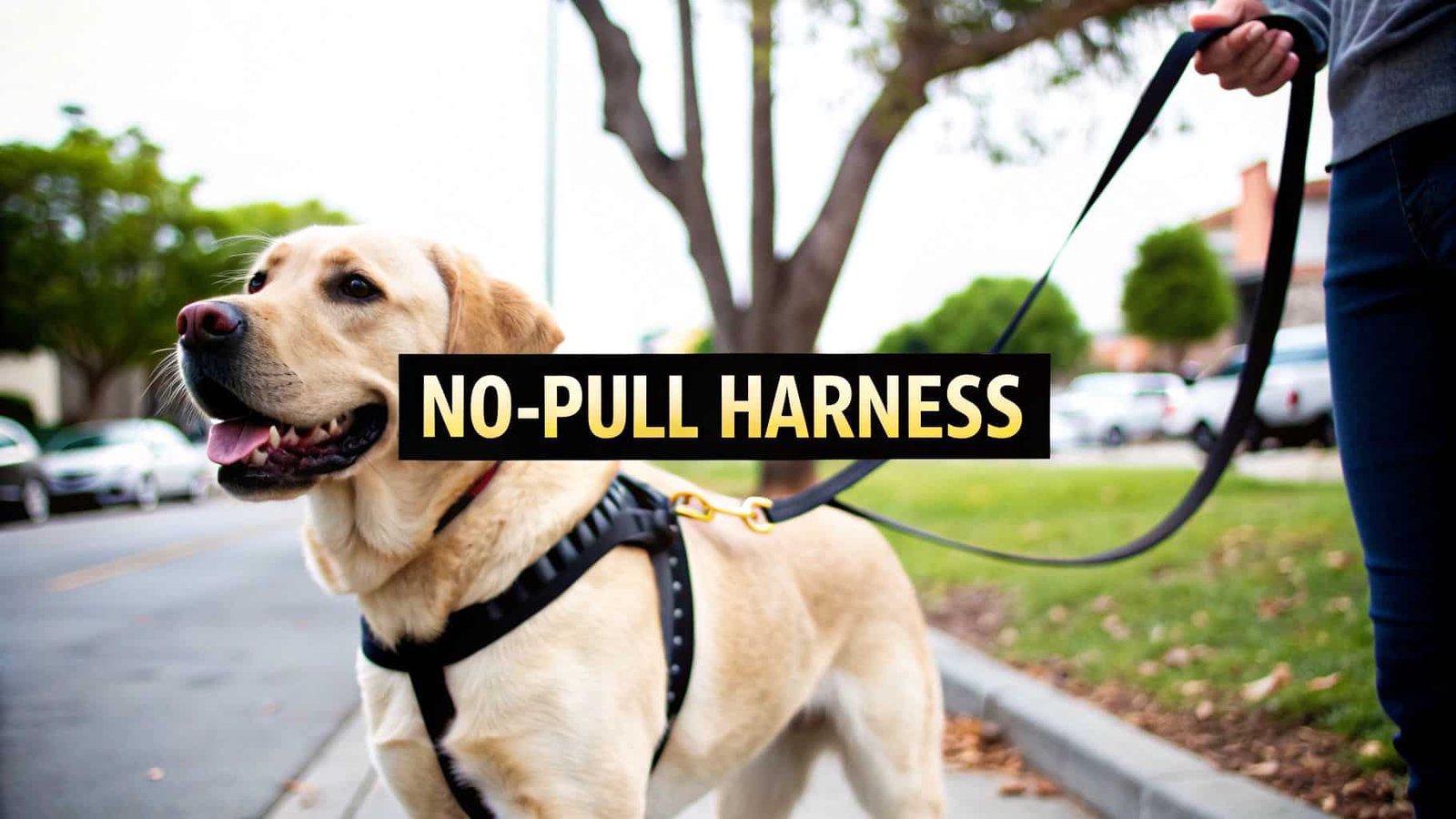
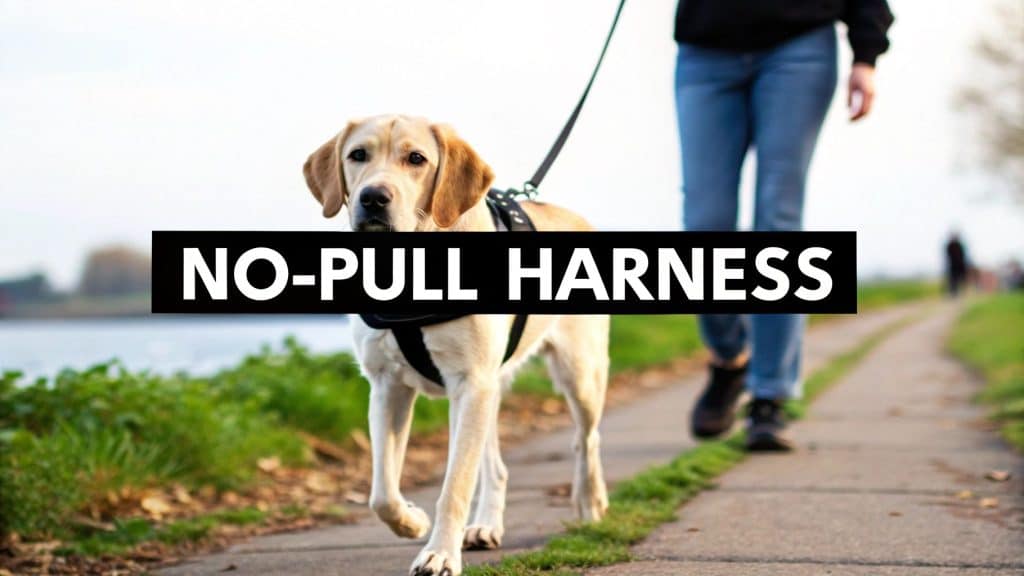
The best no pull large dog harness is your secret weapon for taming a powerful puller. Look for one with a front-clip D-ring, several adjustment points for a snug fit, and tough, padded materials. This combination gives you control and keeps your dog comfortable. The design works by gently turning your dog back toward you when they pull, which quickly and kindly teaches them that pulling gets them nowhere.
Your Guide to Taming the Pulling Power of Large Dogs
Holding the leash of an excited large dog can feel a lot like trying to stop a runaway train. If you've ever felt your shoulder socket protest or your hand cramp up, this guide is for you. A no-pull harness isn't just another accessory; it's a game-changer that can turn those dreaded tug-of-war sessions into genuinely enjoyable walks.
From Frustration to Freedom on Walks
We're going to break down exactly how these harnesses work their magic. We'll dive into the features that really count for strong breeds and show you how to pair this tool with basic training for results that stick. Think of this as your roadmap from leash-yanking frustration to leash-walking freedom.
The battle with a pulling dog isn't just annoying—it can be downright dangerous. Powerful breeds like Labs and Goldens are involved in 68% of reported walking-related injuries to their owners. The good news? No-pull harnesses, especially those with front-clip designs, can reduce the strain on your body by up to 85% compared to a standard collar. You can see more on these trends and safety stats in this detailed industry report.
This simple change gives you back control over your dog's strength without ever needing to use harsh or painful methods. It just makes walks safer for both of you.
A well-fitted no-pull harness is a communication tool. It tells your dog, "When you pull, we go nowhere," helping them learn that calm walking is the best way to explore the world together.
Of course, a great walk is just one part of your dog's day. Creating a safe, comfortable outdoor space is just as important for their happiness. After you've mastered the walk, you might want to check out options for the best ground cover for dogs to make your own yard as pet-friendly as your daily adventures.
How a No-Pull Harness Works for Large Breeds
Ever wonder why walking your big dog feels like a tug-of-war match you’re destined to lose? It all comes down to leverage. When a powerful dog pulls on a regular collar or a harness that clips on the back, all that pressure goes right to their strongest points—the chest and shoulders. This actually triggers their instinct to pull harder, something called the opposition reflex. It's the same principle sled dogs use to haul a heavy load.
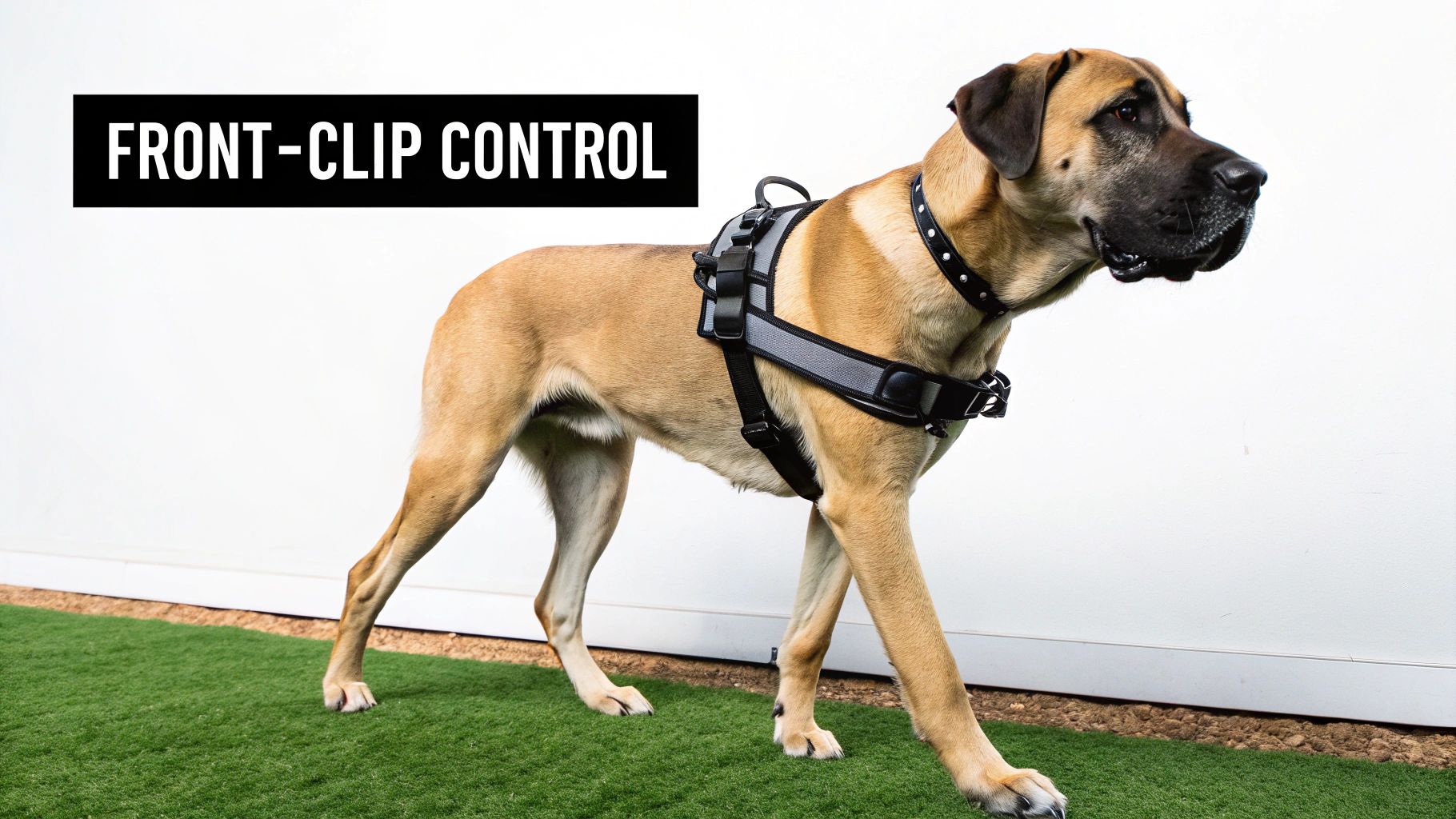
A back-clip harness essentially turns your dog into a four-legged locomotive, giving them all the mechanical advantage while you just hang on for dear life. A no-pull harness flips that entire dynamic on its head.
Redirecting Momentum with a Front Clip
Think about trying to stop a runaway shopping cart. Pushing from behind is a losing battle. But what if you could grab one of the front wheels? With a gentle turn, you could steer the whole cart with very little effort. That's exactly how a front-clip, no-pull harness works.
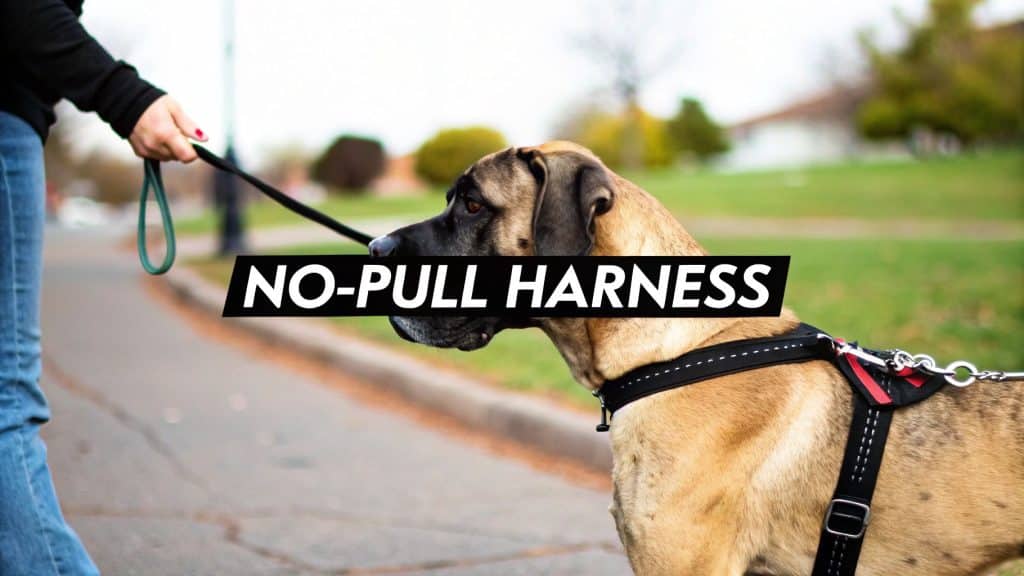
The leash attaches to a D-ring right in the center of your dog's chest. When they start to pull or lunge, the leash creates a gentle tension that pivots their body, turning them slightly back toward you. This simple redirection makes pulling forward awkward and ineffective for them.
This clever design stops their forward drive without causing any pain or choking. Instead of a battle of brute force, the harness offers a subtle, consistent correction that guides your dog right back to your side.
The Physics of Control and Comfort
The magic of a front-clip harness is how it changes the pivot point. Instead of your dog's powerful back legs driving them forward from a clip on their back, the point of control moves to their chest. This gives you, the person holding the leash, way more leverage.
By shifting the point of connection from the back to the chest, a no-pull harness transforms the walk from a contest of strength into a lesson in cooperation. It doesn't restrict movement; it simply redirects it.
This small change brings two massive benefits, especially for big dogs:
- Safety for the Dog: It completely eliminates the dangerous pressure on their trachea (windpipe). That's a huge risk with collars, particularly for strong pullers. A 2021 study on canine neck injuries even highlighted how constant pulling on a collar can lead to long-term health problems.
- Control for the Owner: You can manage a seriously powerful dog without needing Herculean strength. The harness does the hard work by using your dog's own energy to redirect them.
Ultimately, this design doesn't just put a stop to pulling. It actively teaches your dog that staying close to you is the easiest and best way to move forward together.
Back Clip vs. Front Clip Harnesses
To really see why the design works, it helps to compare them side-by-side. Where you clip the leash changes everything about how your dog learns to walk nicely.
| Feature | Back-Clip Harness | Front-Clip No-Pull Harness |
|---|---|---|
| Leash Attachment | On the dog's back, over the shoulders. | On the dog's chest. |
| Effect on Pulling | Can encourage pulling (opposition reflex). | Gently redirects momentum to discourage pulling. |
| Owner Control | Minimal leverage over a strong dog. | Maximum leverage and steering control. |
| Best Use Case | Well-trained dogs, long-line activities. | Training dogs to walk on a loose leash. |
The good news is that many of the best modern harnesses come with both front and back clips, giving you the best of both worlds. You can use the front clip for training walks around the neighborhood and then switch to the back clip for a hike where a bit of pulling is okay. This dual functionality means the harness grows with your dog as their training progresses.
Choosing the Best Harness for Your Dog
You understand how a no-pull harness works, so let's get down to what really matters when you're ready to buy one. Choosing the best no pull large dog harness is about looking beyond the color and focusing on the details that ensure safety, durability, and comfort for your big companion. Think of it as an investment in years of stress-free walks.
This isn't just about picking any old harness off the shelf. We're talking about finding the right one for a dog with some serious muscle behind them. The materials, the clips, the stitching—it all has to be tough enough to handle the force an excited, large dog can throw at it.
The Foundation: Materials and Build Quality
The heart of any reliable harness is the fabric it’s made from. For large breeds, flimsy material is a non-starter. You need something specifically chosen for its strength and resilience, so you can trust it won't fray, stretch, or snap under pressure.
Keep an eye out for harnesses made from these workhorse fabrics:
- Ballistic or Ripstop Nylon: This stuff is engineered to resist tearing and abrasion. It’s the same kind of material you’ll find in heavy-duty luggage and outdoor gear, which makes it perfect for a dog who loves to brush past trees or scramble over rocks.
- Padded Neoprene or Mesh: While the outside needs to be tough, the parts touching your dog should be soft. Padding across the chest and under the front legs is key to preventing chafing and rubbing, especially on those longer adventures.
Hardware: The Unsung Hero of Safety
The hardware—buckles, D-rings, and sliders—might seem like minor details, but for a large dog, they are the most important safety components. Plastic buckles can get brittle in the cold and snap, and weak metal rings can bend or break when your dog suddenly lunges.
When you’re looking at a harness, give these parts a close inspection:
- D-Rings: The leash attachment points need to be made of forged or welded steel, not just wire bent into a circle. This eliminates weak points that could be pulled apart.
- Buckles: Look for heavy-duty plastic buckles, ideally with a locking mechanism. For maximum peace of mind, metal "cobra" style buckles are the gold standard.
- Adjustment Points: The sliders that you use to tighten the straps must grip the fabric firmly. They shouldn't slip and loosen as your dog moves around.
The strength of a harness is only as great as its weakest point. For large dogs, that weak point is often the hardware. Prioritizing forged steel D-rings and sturdy buckles is non-negotiable for safety and peace of mind.
The industry has certainly recognized how crucial these safety features are. Front-clip no-pull harnesses for large dogs have become a game-changer, now commanding 42% of the segment's market share. These brilliant designs use a dog's own forward momentum to gently redirect them, cutting pulling force by an incredible 70-90% in field trials. You can dive deeper into these market trends on Maximize Market Research.
Adjustability Is Your Escape-Proof Guarantee
A harness that fits poorly isn't just uncomfortable; it's a genuine safety risk. If it's too loose, your dog can back out of it in a split second. If it's too tight, it can restrict their breathing and movement. The secret to a perfect, Houdini-proof fit is having multiple points of adjustment.
A top-tier harness for a big dog should have at least four adjustment points—one on each side of the neck and one on each side of the chest. This lets you create a truly custom fit that molds to your dog's specific body shape, preventing both escapes and sore spots. Once you find that perfect fit, you might want to browse our complete collection of collars, leashes, and harnesses to round out your walking gear.
Essential Safety Add-Ons
Beyond the basic construction, a few extra features can make a huge difference in safety and everyday usability, especially if you walk in different environments or at odd hours. These thoughtful touches are what separate a good harness from a truly great one.
- Reflective Stitching or Trim: For those early morning or late-night walks, reflective elements are an absolute must. Bright strips or threads woven right into the nylon make your dog far more visible to passing cars.
- A Padded Traffic Handle: This is one of my favorite features. A sturdy handle on the back of the harness gives you a quick and secure way to grab your dog. It's incredibly handy for navigating crowded sidewalks, helping your dog into the car, or just getting a little extra control in a pinch.
Of course, a great harness is just one piece of the puzzle for outdoor adventures. If you're planning a bigger trip, consulting a thorough dog camping gear checklist will make sure you’re prepared with everything from travel bowls to bedding.
How to Measure and Fit a Harness Correctly
You can have the most thoughtfully designed, best no-pull harness on the market, but if it doesn't fit right, it’s not going to work. An ill-fitting harness isn't just a minor annoyance; it can cause painful chafing, restrict your dog’s natural stride, or worse, become an escape hatch for a determined puller. Nailing the fit is the single most important thing you can do to make every walk safe, comfortable, and controlled.
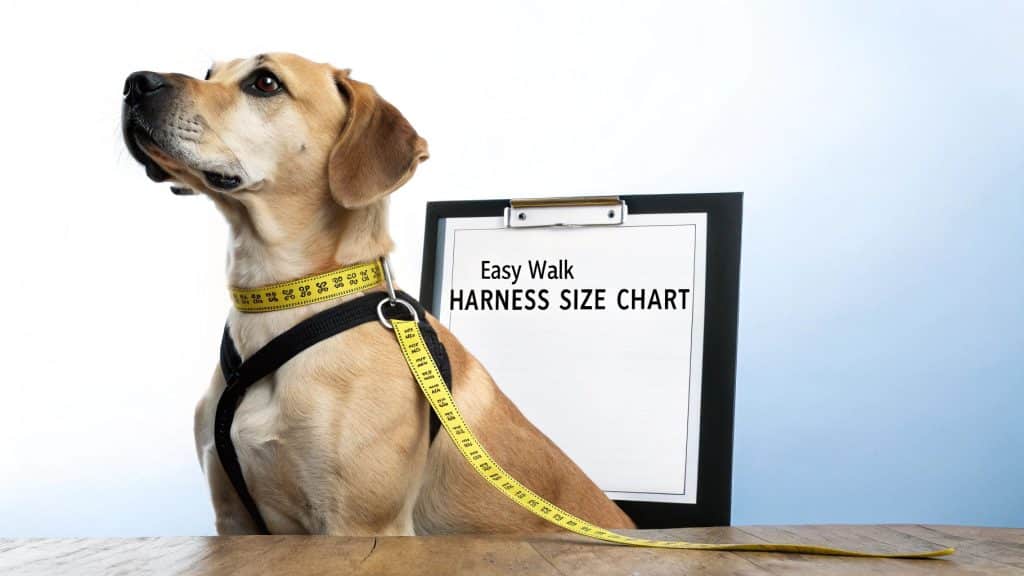
The process actually starts before you even click "add to cart." You need one key piece of information: your dog's chest girth. Think of this measurement as the foundation for everything else. It ensures the harness will sit securely—not too tight, not too loose.
Taking the Most Important Measurement
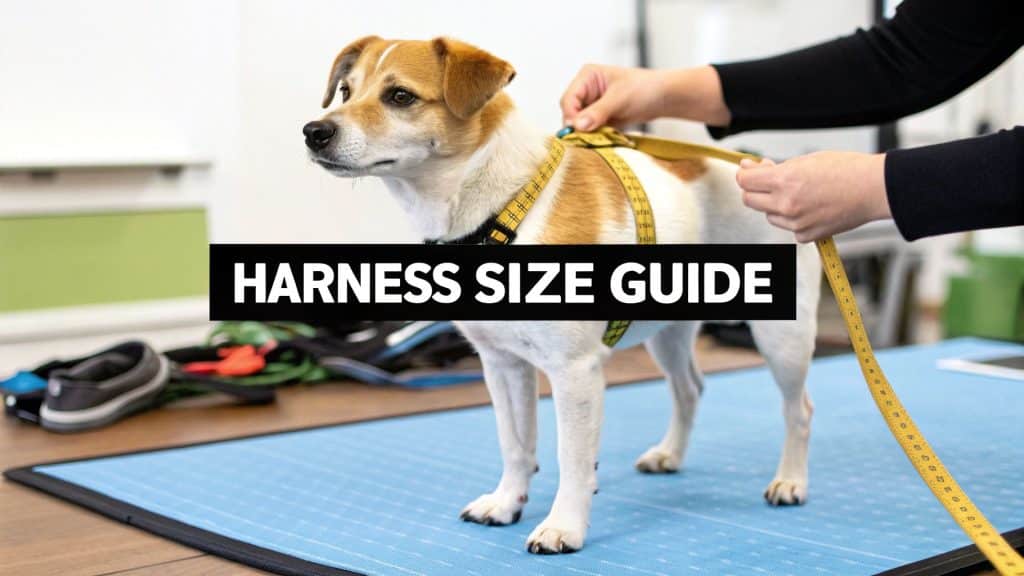
Measuring your dog's chest is a piece of cake and takes just a minute. You'll need a soft, flexible measuring tape, like the kind used for sewing. If you don't have one handy, a piece of string and a ruler will work just as well.
Here’s how to get it right every time:
- Find the Right Spot: Let your dog stand naturally. You're looking for the widest part of their chest, which is usually right behind their front legs.
- Wrap the Tape: Loop the measuring tape all the way around their rib cage. You want it to be snug against their body, but not so tight that it's digging into their fur or skin.
- Read the Number: Take note of the measurement. If you're using a string, just mark where it overlaps and then straighten it out next to a ruler to get the number.
As a rule of thumb, it's smart to add about two inches to this measurement. This little bit of wiggle room accounts for any fluctuations in weight or a fluffy winter coat, giving you the perfect size range to look for on our product pages.
The Two-Finger Rule for a Perfect Fit
Once your new harness arrives, the next step is to adjust it to your dog's unique build. This is where the tried-and-true "two-finger rule" comes in. It's a simple, foolproof test to make sure the fit is just right.
After you put the harness on your dog, go through each adjustable strap, usually around the neck and chest. Slide your index and middle fingers flat between each strap and your dog’s body.
The Goldilocks Fit: You should be able to slide two fingers comfortably under every strap. If you can easily fit your whole hand, it's too loose. If you can't even squeeze one finger in, it's dangerously tight.
A loose harness can shift and rub, causing hot spots and irritation, not to mention creating an easy escape route. On the flip side, a harness that’s too tight can restrict breathing and movement, making walks miserable for your best friend.
This simple checklist is a great habit to get into before every walk, reminding you to quickly check the fit, the hardware's strength, and overall safety.
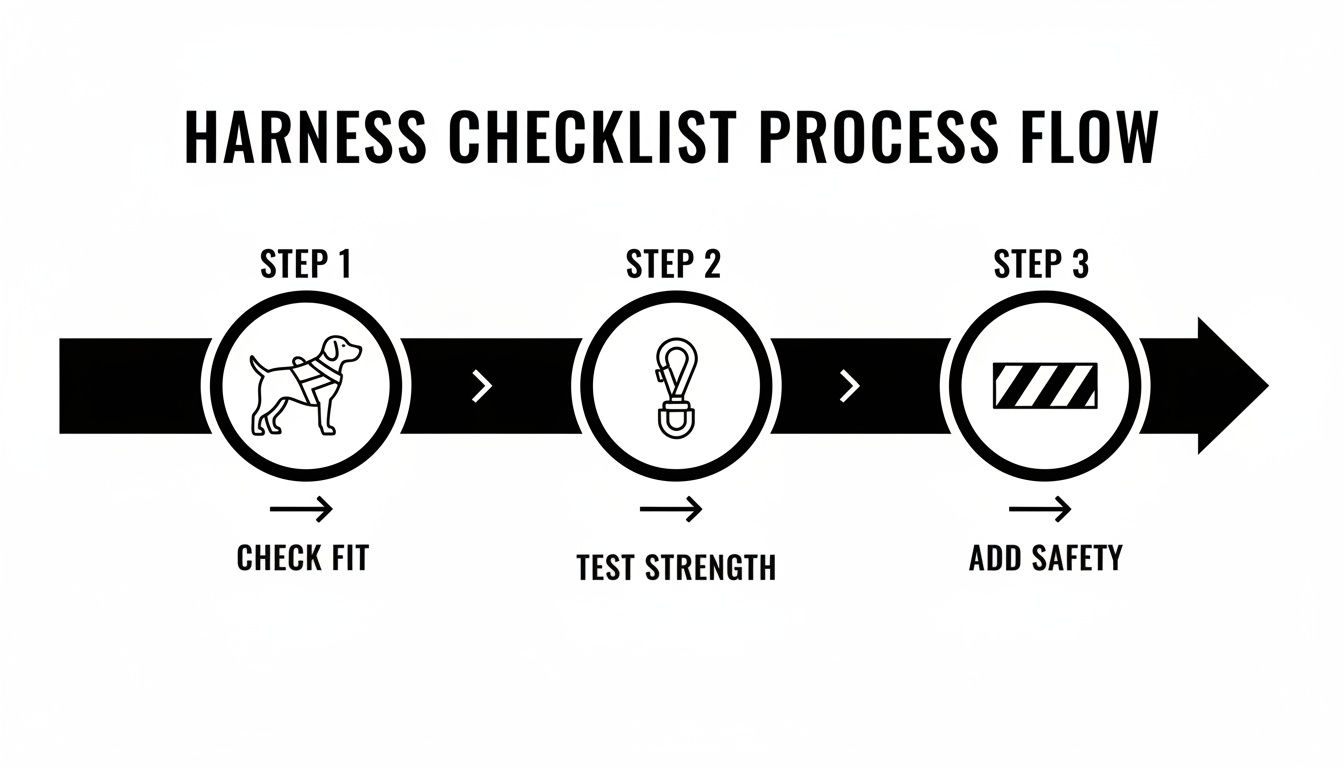
Making this quick check a part of your routine—fit, strength, safety—ensures you're always ready to go.
Common Fitting Mistakes to Avoid
Sometimes, getting the right fit is more about knowing what not to do. Many dog owners with the best intentions make a few common slip-ups that can reduce a harness's effectiveness and comfort.
Keep an eye out for these common pitfalls:
- Forgetting the Neck Straps: It's easy to focus only on the chest straps, but leaving the neck straps too loose is a big mistake. This allows the whole harness to slide down, putting weird pressure on the shoulder joints and messing with your dog's natural gait.
- Assuming One Size Fits Forever: Dogs' bodies change, just like ours. A puppy will grow, and an adult dog might gain or lose weight. Make a habit of checking the harness fit every few weeks.
- Letting the Chest Strap Sit Too Low: The front strap should rest above the shoulder bones, not directly on top of them. When it sits too low, it can get in the way of your dog's front leg extension, which could lead to joint strain over time.
By taking a few extra minutes to measure correctly and use the two-finger rule, you're setting yourself—and your dog—up for success. It's a small investment of time that pays off with miles of happy, pull-free walks together.
Training Tips for a Pull-Free Walk
A no-pull harness is an incredible tool, but it's the training that really cements a lifetime of happy, pull-free walks. Think of the harness as your secret weapon. When you pair it with some simple, positive exercises, it transforms from just another piece of gear into a powerful way to communicate with your dog. These methods are designed to work with the harness's front-clip design, helping your dog quickly learn that walking calmly by your side is the best way to get where they want to go.
It’s no surprise that these harnesses have become so popular. There's been a huge shift in how we think about walking our dogs. After 2020, e-commerce sales for harnesses and similar gear shot up by 166%. And by 2022, after several major awareness campaigns, 72% of large dog owners had made the switch. The result? A 34% drop in vet visits for tracheal injuries. Today’s best harnesses often include reflective materials—a crucial feature since 22% of accidents happen around dusk—and dual clips that give you more training options. You can discover more insights on the dog harness market and see the trends for yourself.
Make a Great First Impression
Before you even think about heading outside, you need to make sure your dog's first encounter with the new harness is a fantastic one. Don't just wrestle it onto them and drag them out the door; that's a surefire way to create anxiety around walks.
Instead, make it a fun game. Place the harness on the floor and let your dog give it a good sniff. The second they do, shower them with praise and a high-value treat. Do this a few times until they start to approach the harness with a happy wag. Next, hold it up and reward them just for poking their head through the opening. Keep these sessions short, sweet, and super exciting.
By building this positive association from day one, you're teaching your dog that the harness signals fun times ahead. This little bit of prep work prevents them from becoming "gear-shy" and makes getting ready for a walk a happy ritual instead of a stressful chore.
Master the Basics of Loose-Leash Walking
Once your dog is totally cool with wearing their new harness, it's time to put it to work. These foundational exercises are designed to work with the front clip to teach your dog a very simple lesson: pulling gets you nowhere.
Find a quiet spot to practice. Your backyard or even a long hallway is perfect for the first few sessions, as there are fewer distractions.
Pro Tip: The beauty of a no-pull harness is that it works without causing pain or fear. It simply makes pulling an ineffective strategy for your dog. This opens the door for you to show them a much better way to walk together.
Here are a couple of my favorite, highly effective methods:
- Be a Tree: The moment you feel that leash go tight, stop in your tracks. Don't say a word. Just stand still like a tree. Wait patiently until your dog either looks back at you or the leash goes slack. The instant that happens, praise them and immediately start walking again. This creates a direct connection: a tight leash means we stop, and a loose leash means we go!
- The 180-Degree Turn: Is your dog fixated on something up ahead, completely ignoring you? This is the move. Without yanking or pulling, simply turn 180 degrees and walk confidently in the opposite direction. The front-clip design of the harness will gently guide their body around to follow you. This keeps your dog on their toes and reminds them to pay attention to where you're going.
With any training, consistency is your best friend. Use these simple, positive techniques every time you walk, and your dog will quickly figure out that the best place to be is right by your side. After a good training session, your dog deserves a comfy spot to relax and recharge. See how our calming dog bed can help your companion unwind in total comfort.
Frequently Asked Questions About No-Pull Harnesses
Even after doing your homework, a few questions can pop up when you're about to choose the right gear for your dog. Let's tackle some of the most common ones we hear from fellow dog owners to make sure you feel totally confident in your decision.
Can My Dog Wear a No-Pull Harness All Day?
Even though our harnesses are built for comfort, it’s not a great idea for any dog to wear a harness 24/7. Think of it like wearing athletic shoes—they're perfect for a run but you wouldn't sleep in them. Constant wear can sometimes cause skin irritation or chafing, especially if your dog gets wet or is particularly active.
The best approach is to put the harness on for walks and training sessions, then take it off when you're back home and it’s time to relax. This also keeps the harness in top shape and prevents the straps from snagging on a crate or furniture.
Will This Harness Instantly Stop My Dog From Pulling?
A no-pull harness is an incredible training aid, but it's not a magic wand. Most people see a huge improvement right away because the front-clip design naturally redirects your dog’s forward momentum, making it physically difficult to lunge ahead.
For long-term success, though, you have to pair the harness with positive reinforcement training. The harness gives you the control you need to teach your dog that pulling simply doesn't work to get them where they want to go.
The harness is the tool; the training is the lesson. Together, they create a lasting change in your dog’s walking behavior by making calm walking the most rewarding option.
What Is the Difference Between a Front Clip and a Back Clip?
It all comes down to leverage and how the leash attachment point works with your dog's natural instincts.
- Back-Clip Harnesses: With the leash attached at the dog's back, it can sometimes trigger what's called an "opposition reflex." It's the same instinct sled dogs use—they feel pressure on their back and lean into it to pull harder. A back clip can accidentally encourage this.
- Front-Clip Harnesses: The leash connects to a ring on your dog's chest. When your dog tries to pull, the pressure gently turns them back toward you. This immediately breaks their forward momentum and redirects their attention to you.
Many of the best no-pull harnesses for large dogs actually come with both clips, which is fantastic for versatility. You can use the front clip when you're actively training loose-leash walking and switch to the back clip once your dog has learned not to pull. For more helpful tips and a wide selection of pet supplies, explore everything we have to offer at Ur Pet Store. We're dedicated to helping you find the perfect products for your furry family members.
At Ur Pet Store, we provide everything you need to keep your pet happy, healthy, and safe. Find the perfect harness and more at urpetstore.com today.