


Blog
Cat Litter Mat Large: The Best Guide to Stop Cat Tracking

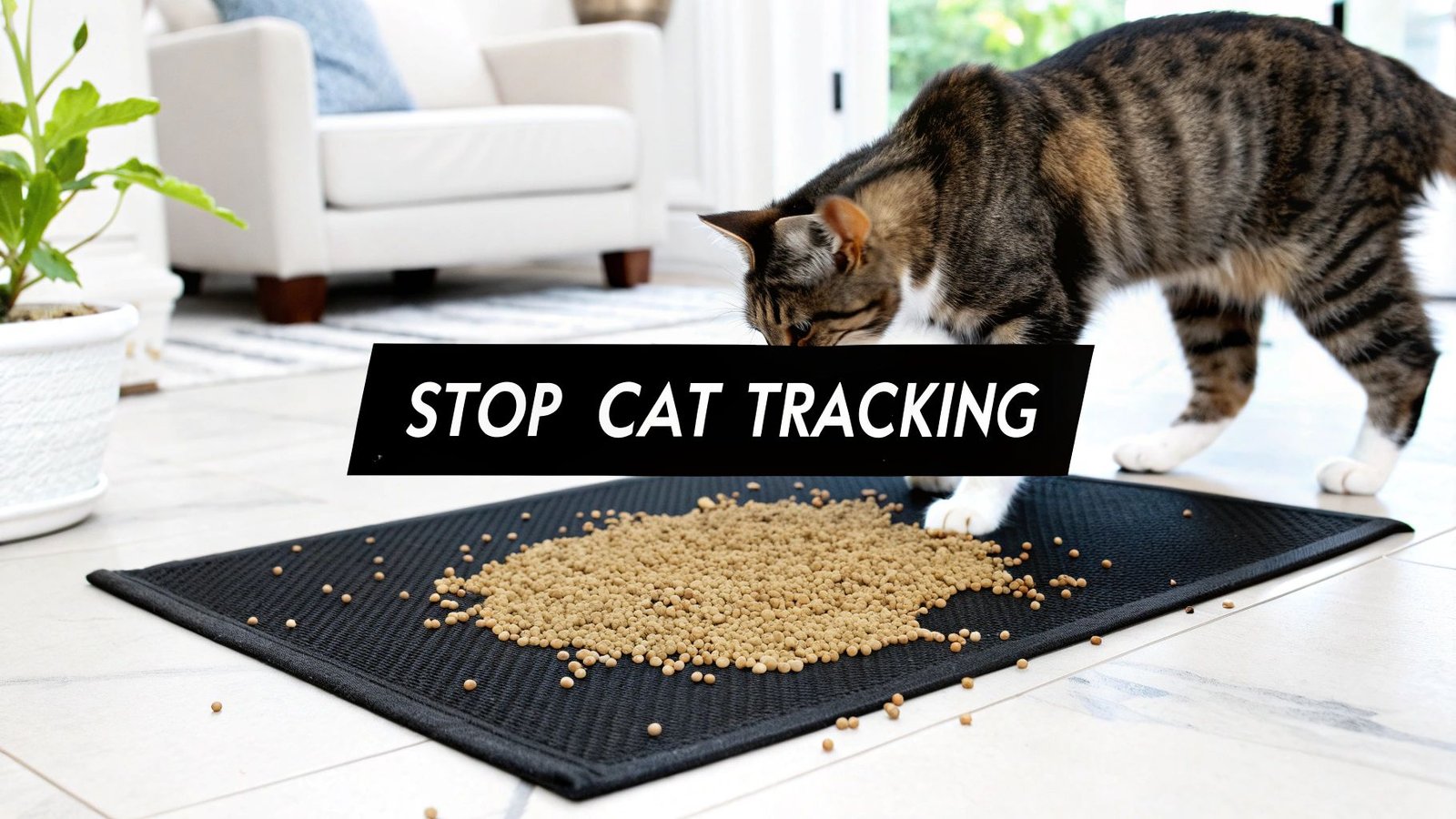
If you're serious about stopping tracked litter, you need a mat large enough to create a "capture zone" around the box. This isn't just about catching a few stray granules; it's about creating a mandatory exit path for your cat. Think of it as a little runway that cleans their paws before they even think about stepping onto your clean floors.
The truth is, a standard-sized mat just doesn't cut it. It’s often too small to be truly effective.
Why a Large Litter Mat Is Your Best Defense Against Tracking
Let's get real for a second. Finding those tiny, gritty bits of litter all over your house is one of the most frustrating parts of being a cat owner. You sweep, you vacuum, and somehow, the scatter just keeps coming back. It’s a constant battle.
The heart of the problem is usually just a simple mismatch in scale. A small mat is like putting a tiny welcome mat in front of a giant's muddy boots—it's easily stepped over and completely outmatched.
A truly large cat litter mat, on the other hand, is a total game-changer. It acts as a dedicated "landing strip" that your cat has to cross after doing their business. This generous surface area is what makes all the difference in grabbing the litter particles that cling to their paws or get kicked out during a particularly enthusiastic digging session.
Creating an Effective Capture Zone
The real secret sauce of an oversized mat is its ability to create a "capture zone." This zone needs to extend well beyond the litter box entrance and sides. The goal is to make it so even a cat who likes to leap out can't bypass it.
A proper capture zone accomplishes a few key things:
- It forces multiple steps. A bigger surface means your cat has to take several steps across the mat, giving its texture more chances to gently pull litter from their paws.
- It contains enthusiastic digging. If you have a cat who digs for treasure, a large mat acts as a backstop, catching all the overflow before it hits your floors.
- It accommodates jumpers. Many cats don’t just walk out calmly—they launch themselves. A large mat gives them a wide landing area, making sure their first point of contact is the mat itself.
Simply put, by creating a non-negotiable path across a litter-trapping surface, a large mat systematically cleans your cat's paws every single time they leave the box. This dramatically cuts down on the amount of litter that finds its way into the rest of your home.
This push for better litter control is a big deal for cat owners everywhere. The global cat litter market was valued at over $14 billion in 2024, showing just how many of us are looking for solutions to manage the mess. While a mat is your number one tool for tracking, it's also smart to think about other feline behaviors. For instance, you can find great tips on furniture protection from cats to keep your upholstery safe.
How to Measure for the Perfect Fit
Picking a cat litter mat large enough for your space isn't just guesswork—it's about being strategic. We've all been there: you eyeball the size, bring a mat home, and realize it’s just a hair too small to do any real good. The whole point is to create a "capture zone" your cat has to walk across, cleaning their paws before they hit your floors.
A good rule of thumb is to get a mat that extends well beyond the litter box on all sides, especially at the exit. Think of it like a runway for your cat's grand departure. This extra real estate is what makes the difference between trapping a little litter and trapping nearly all of it.
So, grab a tape measure. First, get the exact length and width of your litter box. Write those down, as they’re your starting point. From here, you can figure out the perfect mat size by looking at your cat’s habits and the space you have to work with.
Sizing for Your Cat's Unique Habits
No two cats exit the litter box in quite the same way. A mat that’s fine for a neat-and-tidy cat will be completely overwhelmed by a more… enthusiastic one. Figuring out your cat's personal style is the secret to choosing the right dimensions.
You probably have one of these two common culprits:
- The Digger: This is the cat who acts like they're excavating for treasure, flinging litter everywhere. For a Digger, you need a mat that extends at least 12-18 inches around the sides and back of the box to catch all that airborne debris.
- The Jumper: Forget a dignified exit; this cat launches themselves out of the box like a rocket. To stop a Jumper in their tracks, you'll need a mat that reaches at least 24 inches out from the entrance, giving them no choice but to land on its surface.
Not sure how a mat of that size will look? Try this simple trick: use painter's tape to mark out the dimensions on your floor. This gives you a perfect visual of how the mat will fit in your space, especially if you're dealing with a tight corner or placing it between furniture. It's a great way to "try before you buy."
This handy decision tree shows why going bigger is almost always the better choice.
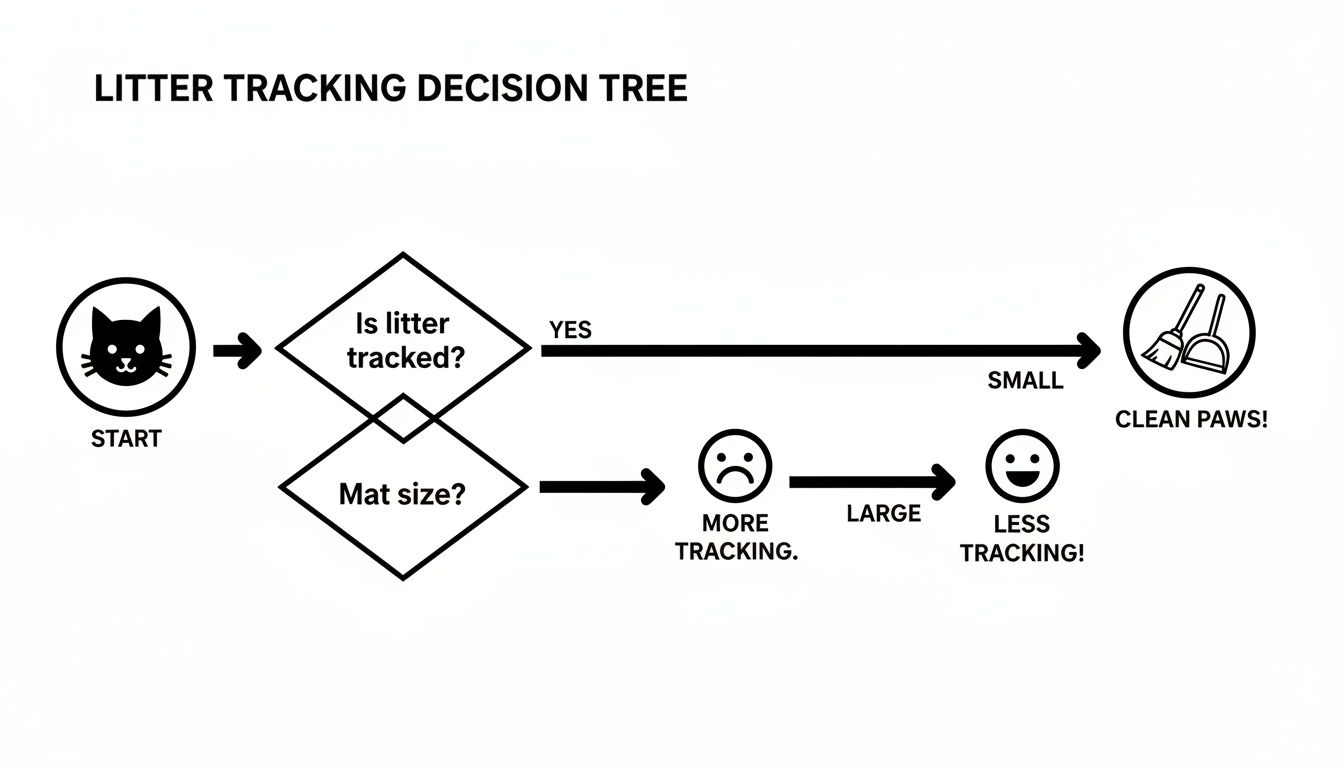
As you can see, a larger mat is your best bet for stopping litter tracking and keeping your home—and you—much happier.
Recommended Mat Coverage by Cat Behavior
To make it even easier, here’s a quick reference to help you choose the right size mat based on your cat's specific litter box habits.
| Cat Habit | Description | Recommended Extra Coverage |
|---|---|---|
| The Digger | Vigorously digs and kicks litter out of the box. | 12–18 inches around sides and back. |
| The Jumper | Leaps out of the litter box, avoiding the immediate area. | 24+ inches in front of the entrance. |
| The Sprinter | Bolts out of the box at high speed. | 18–24 inches in front for a long "runway." |
| The Tidy Walker | Exits slowly and carefully. | 8–12 inches on all sides is usually sufficient. |
Think of these numbers as a starting point. When in doubt, adding a few extra inches of mat coverage is never a bad idea.
Choosing the Right Material for Paws and Floors
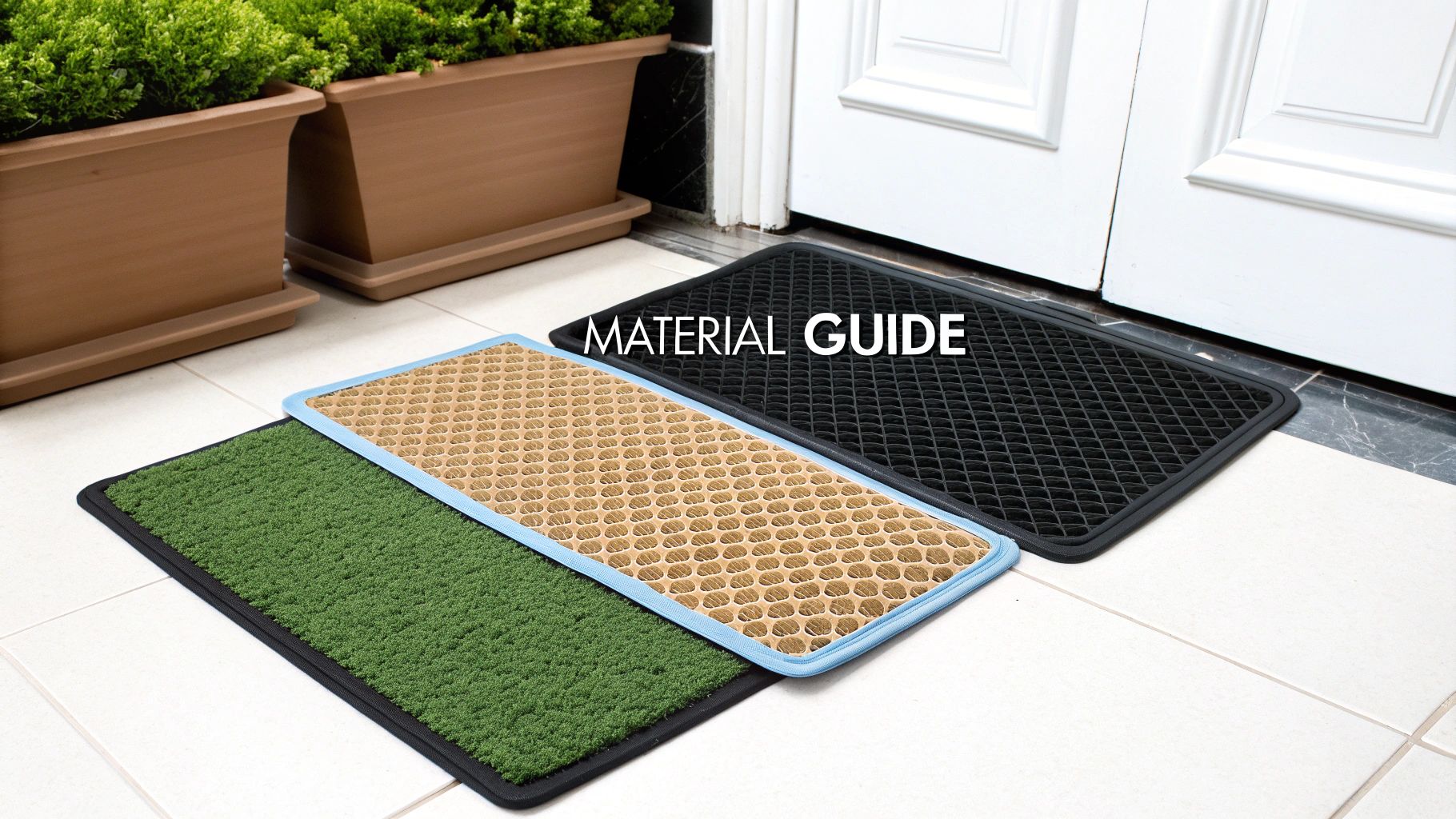
Once you've nailed down the right size, your next big decision is the material for your cat litter mat large. It's kind of like choosing the right shoes for an activity—you wouldn't wear hiking boots to the beach. The material affects everything from your cat's comfort to how much of a headache it is for you to clean.
The sweet spot is a material that’s soft enough for sensitive paws but still rugged enough to grab every last bit of litter. Some cats are incredibly particular about textures. If a mat feels weird or prickly under their feet, they'll simply treat it like hot lava and leap right over it, which completely defeats the purpose. This is why getting familiar with the common materials is so important.
Comparing Common Mat Materials
Most large litter mats you'll find are made from one of three materials: EVA foam, silicone, or PVC. Each has its own personality, with unique pros and cons that depend on your cat, your home, and how much you enjoy cleaning.
-
EVA Foam: You’ll often see this lightweight, almost spongy material in those clever double-layer honeycomb mats. It's a fan favorite because it works so well. Litter falls through the holes on the top layer and gets trapped by the solid, waterproof bottom layer. Cleanup is a breeze—you just open it up like a book and pour the trapped litter back in the box or into the trash.
-
Silicone: This material is soft, flexible, and has a slightly rubbery feel that most cats don't mind walking on. It’s also 100% waterproof, which is a lifesaver for those little "oops" moments that miss the box. Silicone mats usually have ridges or patterns that help pull litter off paws, and you can just rinse them off in the sink or shower.
-
PVC (Vinyl): Often used for those "spaghetti-style" loop mats, PVC is fantastic at scraping litter off paws. The tangled mesh design does a great job of trapping and hiding the granules. The downside? It can be a real pain to deep clean, as litter and moisture can get stuck way down in the loops.
Your cat’s comfort is non-negotiable. A mat made from a hard, scratchy material might look like a litter-trapping powerhouse, but it's useless if your cat refuses to step on it. Always put paw-friendly textures first.
Texture and Trapping Effectiveness
Beyond the base material, the surface texture is what does the heavy lifting. The whole point is to find a design that physically separates the litter from your cat’s paws as they walk across it.
Here are a few textures that get the job done right:
-
Honeycomb or Mesh: These designs let litter granules fall straight through the openings and into a lower chamber, which keeps the top surface clean for the next exit. It’s a super-efficient system for managing a lot of scatter. Our Double-Layer EVA Cat Litter Mat is a perfect example of this design in action.
-
Deep Grooves or Ridges: Think of these like the grooves on a doormat for muddy boots. The channels catch and hold onto litter as your cat walks, cleaning their paws with every single step.
-
Soft Bristles or Loops: This gentle texture works like a soft brush, combing through the fur on your cat’s toe beans to dislodge any stubborn pieces of litter without feeling abrasive.
At the end of the day, the best cat litter mat large is one your cat will actually walk on and one you don't dread cleaning. Find that perfect match, and you’ll have a much cleaner home for everyone.
The Hidden Benefits of an Oversized Mat
Sure, the main job of a large cat litter mat is to stop those tiny granules from trekking all over your house. But honestly, its real value goes way beyond just cleaner floors. Think of it less like a simple accessory and more as a serious upgrade for both your home and your cat care routine.
The most obvious (and often underrated) benefit? Top-notch floor protection.
Your floors are under constant assault from the litter box. A cat's enthusiastic digging can easily scratch up hardwood or laminate. Worse yet are the accidental misses, which can soak into flooring and cause permanent stains, warping, and odors that are impossible to get out. A large, waterproof mat is your last line of defense, acting as a shield to catch these messes before they do any real damage.
It's More Than a Mat—It's a Home Upgrade
Beyond just saving your floors, a generously sized mat brings a welcome sense of order to your cat's corner. It creates a defined "litter station," making the space look tidy and intentional instead of messy and forgotten. This simple visual cue helps the entire area feel cleaner and more integrated with your home's decor.
This defined zone doesn't just contain stray litter, either. It’s also perfect for catching spills when you're refilling the box or dealing with the occasional mess from a sick cat. It’s a small change that makes a huge difference in how clean and manageable your cat’s space feels.
Saving Money and Reducing Waste
Here’s a benefit that might surprise you: a large mat can actually save you money. Many modern mats, especially the ones with a honeycomb or deep-grooved design, are fantastic at trapping clean, unused litter that gets kicked out. Instead of sweeping it up and tossing it in the trash, you can just pour that perfectly good litter right back into the box.
Over time, simply recycling this clean, scattered litter can make a real dent in how much you're buying. You’ll find yourself picking up new bags of litter less often, which is a win for your wallet and for the environment.
The numbers back this up. With the global cat litter market projected to grow to over $7.9 billion by 2032, the cost of supplies isn't going down. In fact, many tests show that a big mat can cut litter loss by 10–30%, especially in multi-cat homes, just by catching those escaped granules. You can learn more about the growing market trends for cat supplies to see why waste-reducing accessories are becoming so popular.
At the end of the day, a large mat isn't just another purchase. It's a smart, long-term investment in your home's cleanliness, your floor's protection, and your budget.
Integrating a Litter Mat with Your Home Decor
Let's be honest, nobody wants their litter box area to be the first thing guests notice. But a cat litter mat large enough to actually work doesn't have to be an eyesore.
Think of it less as a utility item and more as a functional accent piece. The right mat can create a clean, intentional "pet zone" that feels organized and tidy, rather than looking like you just threw something on the floor to catch stray litter.
Fortunately, we've moved past the era of boring, industrial-gray mats. Today’s market is full of options in a whole range of colors, patterns, and textures that can complement almost any interior design style.
Matching Your Mat to Your Style
Choosing a litter mat isn't all that different from picking out a small area rug. You want it to vibe with the color scheme and overall feel of the room. A little coordination goes a long way.
-
For Minimalist Homes: Keep it simple. Go for neutral colors like charcoal gray, beige, or black with a clean, understated texture. A sleek silicone mat with subtle grooves often looks fantastic.
-
For Bohemian or Eclectic Spaces: Don't shy away from a pop of color or an interesting pattern. A mat in a muted earth tone like olive green or terracotta can add just the right amount of warmth.
-
For Modern Farmhouse Decor: A textured mat in a warm gray or off-white is a great choice. It will complement natural wood floors and other rustic touches instead of clashing with them.
The goal is to make the mat look like it belongs there. When it coordinates with its surroundings, the entire litter box setup feels less like a necessity and more like a well-designed part of your home.
This shift toward more stylish pet gear isn't a coincidence. The global pet litter and bedding market is on track to hit $10.48 billion by 2025. This growth is largely fueled by pet owners who see their pets' accessories as part of their home's overall design, not something to be hidden. You can learn more about the growing demand for premium pet products and see how function and style are becoming inseparable.
By putting a little thought into your choice, you can solve a practical pet problem without sacrificing your personal style. Feel free to explore our collection of pet beds and mats to find the perfect stylish and functional fit for your space.
Simple Cleaning and Maintenance Tips
A great cat litter mat—one that's large enough for your space—should make your life easier, not add another chore to your to-do list. The best ones are designed for quick and painless upkeep, so they stay hygienic and effective with just a little effort.
Think of it as a simple three-tier routine: a quick daily tidy, a weekly once-over, and a deep clean as needed. This approach stops litter and grime from building up and keeps the area around the litter box smelling fresh.
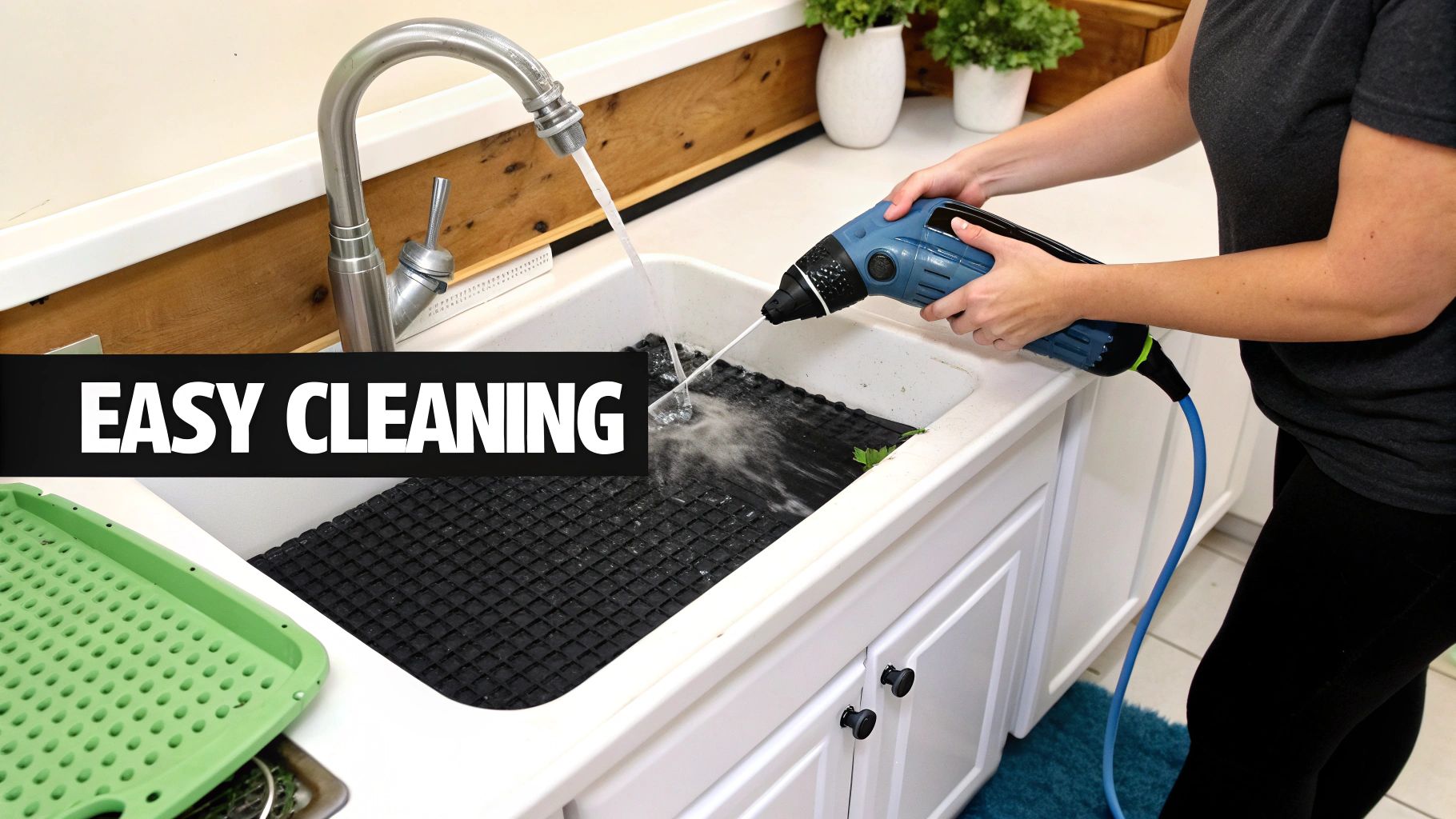
Your Quick Cleaning Routine
Keeping your large cat litter mat clean is refreshingly simple. A bit of regular attention goes a long way in preventing odors and making sure the mat keeps doing its job trapping stray litter.
Here’s a simple schedule that works for most cat owners:
-
Daily Shake-Out: Once a day, just pick up the mat and give it a good shake. You can either dump the trapped litter into the trash or, if it's still clean, pour it right back into the litter box. This literally takes less than 30 seconds and is the single best thing you can do to manage daily scatter. If you have a honeycomb mat, just separate the layers and pour out the contents.
-
Weekly Vacuum: About once a week, run a vacuum over the mat. This will suck up any fine dust or stubborn bits of litter that the daily shake-out might have left behind. A handheld vacuum is absolutely perfect for this.
-
Occasional Deep Clean: Every few weeks, or right after an "oops" moment, it's time for a proper wash. Most mats are made from waterproof materials like EVA foam, silicone, or PVC, so you can just rinse them off in a sink or shower. Use some mild soap and warm water, then let it air dry completely before putting it back.
Pro Tip: For those really stuck-on messes, an enzyme-based cleaner made for pet stains is your best friend. These cleaners work by breaking down the organic waste, which gets rid of both the stain and the smell without harsh chemicals. You can check out a great selection of pet-safe grooming and cleaning supplies to find one that works for you.
Of course, cleaning the mat is only half the battle. Tackling the odors that come with any litter box is key to a fresh-smelling home. For some great, pet-safe ideas, check out these effective pet odor removal strategies. Follow these simple steps, and your mat will work hard for you for years to come.
Common Questions About Large Litter Mats
Switching to a bigger litter mat is a great move, but it's natural to have a few last-minute questions. You might wonder how your cat will react or which features are really worth it for your setup. Nailing these final details is the key to making a purchase you'll be happy with for years to come.
Let's walk through some of the most common things cat owners ask before they upgrade to a cat litter mat large enough to finally stop the tracking. This is your quick-and-easy final check before you commit.
Will My Cat Be Afraid of a New Large Mat?
That's a super common worry, but thankfully, most cats get used to a new mat surprisingly fast. The trick is to pick a material that feels good on their paws—think soft EVA foam or a smooth silicone. Cats usually only reject a mat if the texture feels harsh or prickly.
To make the transition completely seamless, give these tips a try:
- A Slow Introduction: For the first day or two, just place the new mat next to the litter box instead of under it. This lets your cat sniff it out and get comfortable with it on their own terms.
- Make it a Good Thing: Toss a few of your cat's favorite treats or a little pinch of catnip onto the mat. Creating a positive association from the get-go works wonders.
What Is the Best Mat for Multiple Cats?
When you've got more than one cat, your focus needs to be on durability and capacity. More traffic means more wear, and more paws mean a whole lot more litter getting tracked around. For this job, a large, dual-layer honeycomb mat made from heavy-duty EVA foam is a fantastic pick.
These mats are designed to withstand constant use and can hold a staggering amount of litter between their layers. Plus, the easy-pour opening means you can dump all that clean, trapped litter right back into the box—a real money-saver in a multi-cat home.
In a multi-cat household, a great mat isn't just nice to have, it's a necessity. You need something tough enough for the traffic that actually makes your cleaning routine easier, not harder.
Are Large Litter Mats Waterproof?
Yes, and this is a big one. Any quality cat litter mat large enough to do its job properly absolutely must be waterproof. Consider it a non-negotiable feature that guards your floors against the inevitable misses, spills, and other accidents.
Materials like silicone, PVC, and the solid bottom of a dual-layer EVA mat are designed to be totally impermeable. This waterproof shield is what stops liquids from seeping into your hardwood, laminate, or carpet, preventing permanent damage, ugly stains, and nasty, lingering smells. It’s a layer of protection that gives every cat owner peace of mind.
Here at Ur Pet Store, we make it easy. If you want maximum litter-trapping power, check out our dual-layer honeycomb mats. If you have a kitty with sensitive paws, our soft-touch silicone options are perfect. Just use the measurement guide from this article to find the right size for your space. With our fast shipping, a cleaner home is just a few clicks away at https://urpetstore.com.