

Blog
How to Choose the Perfect Dog Carrier Sling


Ever seen someone carrying their small dog in a pouch across their chest and wondered what it was? You’ve likely spotted a dog carrier sling. Think of it as a cozy, wearable hug for your furry best friend, designed to let you carry them hands-free while keeping them snug and secure against your body. It’s an incredible solution for puppies, older dogs, or smaller breeds that sometimes need a little help getting around.
What Is a Dog Carrier Sling Anyway?
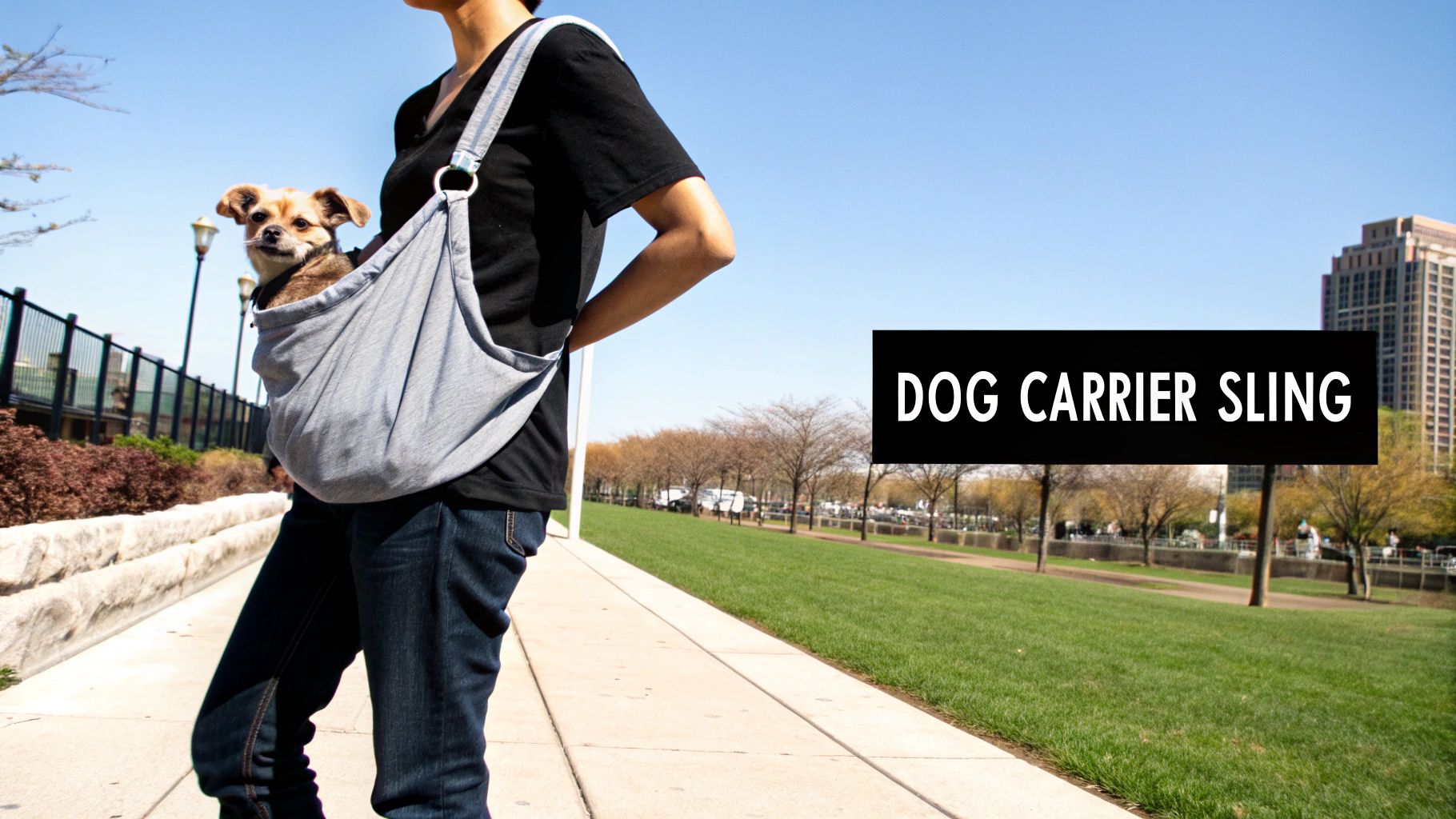
At its heart, a dog carrier sling is your dog’s personal, portable safe space. It’s a beautifully simple idea that combines the convenience of a bag with the intimacy of being held. Unlike those bulky, rigid plastic carriers, a sling is made from soft, flexible fabric. It loops comfortably over your shoulder and across your torso, creating a perfect little pocket for your dog to curl up in, right next to you.
This design is about more than just convenience—it’s about connection. Having your dog nestled so close to you can be a wonderful bonding experience. For them, it provides a deep sense of security, especially in new or chaotic places. The gentle, consistent pressure and the sound of your heartbeat can work wonders to calm an anxious pup, turning a stressful trip to the market into a pleasant outing.
Who Benefits Most from a Sling?
A dog carrier sling is a handy tool for many, but it’s an absolute game-changer for a few specific situations. You’ll find it indispensable if you have:
- Puppies: Little ones who aren’t fully vaccinated can still see and smell the world safely from the comfort of a sling.
- Senior Dogs: Older dogs with arthritis or low stamina can still come along on adventures without overdoing it.
- Small Breeds: Think Chihuahuas, Yorkies, or other small dogs whose tiny legs just can’t keep up on long walks. A sling gives them a lift when they need it most.
- Anxious Dogs: For a pup that gets easily overwhelmed in crowds, being held close offers a feeling of safety and protection that nothing else can.
The rise in popularity of these slings is no surprise. The overall dog carrier market is currently valued at a whopping USD 951.8 million and is expected to keep growing. Slings themselves make up about 20% of those sales, largely because people love the ergonomic, hands-free design.
Dog Carrier Sling vs Traditional Hard Carrier
So, when would you choose a sling over a classic hard-sided carrier? It really comes down to the situation. They each have their place, but they’re built for very different purposes. It’s a bit like choosing the right bed for your pet—for example, our guide on finding the perfect cat hammock for large cats shows how a specific design is tailored to a specific need. The same logic applies here.
Here’s a quick rundown of how they compare.
| Feature | Dog Carrier Sling | Traditional Hard Carrier |
|---|---|---|
| Primary Use | Daily walks, errands, public transit | Air travel, car trips, vet visits |
| Comfort Level | High for pet and owner (soft fabric) | Lower (rigid plastic, less cozy) |
| Portability | Excellent (lightweight, foldable) | Fair (bulky and heavy) |
| Hands-Free | Yes, completely hands-free | No, requires carrying by handle |
| Security | Good for calm dogs (with tethers) | Excellent (fully enclosed, locked) |
| Bonding | High (promotes physical closeness) | Low (creates physical separation) |
Ultimately, a sling is your go-to for everyday closeness and convenience, while a hard carrier is the champion of safety for travel and vet visits. Many dog owners find they need both in their arsenal.
Decoding the Features of a Great Dog Carrier Sling
When you’re shopping for a dog carrier sling, you’re doing more than just picking out a bag. You’re choosing a wearable safety seat and a cozy little nook for your best friend. To go from just browsing to buying with confidence, you need to know what separates a truly great sling from one that’s just… okay.
Think of it like buying a top-notch hiking backpack. You wouldn’t just grab the first one off the shelf, right? You’d inspect the fabric, check the strap design, and test the clips. The same logic applies here. A little bit of know-how ensures both you and your pup have a fantastic, safe experience.
The Foundation: Materials Matter
The fabric is the heart and soul of any sling. It dictates everything from comfort and durability to whether it’s right for a summer heatwave or a chilly autumn walk. You wouldn’t wear a wool coat in July, and your dog’s comfort depends on having the right material for the season.
Here’s a quick rundown of what you’ll typically find:
- Breathable Mesh: This is your go-to for warm weather or for pups that get hot easily. The open weave allows for plenty of airflow, keeping your dog cool and comfortable on sunny days.
- Cozy Fleece or Cotton: Perfect for cooler climates. These fabrics create a warm, soft, and snuggly environment that’s incredibly soothing for nervous dogs or seniors who need extra comfort.
- Durable Polyester Blends: The workhorse of the bunch. These fabrics are often water-resistant and a breeze to clean, striking a great balance between toughness and comfort for everyday, year-round adventures.
It’s no surprise that industry reports show durable polyester blends command a whopping 60% of the dog carrier market. Pet owners love them because they hold up to an active lifestyle. You can learn more about these trends in the dog carrier market.
Non-Negotiable Safety Elements
Comfort is important, but safety is everything. A high-quality sling absolutely must have features built in to keep your dog secure. Without them, it’s just a stylish tote bag, not a safe carrier.
A well-designed sling puts safety first, period. Its number one job is to keep your dog secure so you can have peace of mind on the go. Never, ever cut corners on these critical features.
Here are the safety features you should insist on:
- Internal Safety Tether: This is the most crucial component. It’s a short strap inside the pouch with a clip that attaches to your dog’s harness (never their collar!). This simple feature is what prevents them from jumping or accidentally falling out.
- Secure Closures: Check for strong zippers, reliable cinch closures, or sturdy snaps. These keep the main opening snug around your dog, adding a vital layer of security for wiggly or inquisitive pups.
- Reinforced Seams: Give the stitching a good look, especially where the strap meets the pouch. Double-stitching and strong, reinforced seams are a must to ensure the sling can handle your dog’s weight without any risk of tearing.
Features Designed for You, the Owner
A truly great dog carrier sling isn’t just about the dog—it has to be comfortable for you, too. After all, you’re the one doing all the carrying! These thoughtful, owner-focused details can make all the difference.
First, look for a wide, padded shoulder strap. A skinny, unpadded strap will dig into your shoulder and become painful fast, especially on longer walks or with a heavier dog. A wider, cushioned strap distributes your pup’s weight evenly, saving you from a sore back and shoulders.
Second, pockets! Many of the best slings include small, handy pockets. They’re the perfect spot to stash your phone, keys, and a few treats, letting you keep your hands completely free.
Getting the Perfect Fit for You and Your Dog
Think of choosing a dog carrier sling like buying a new pair of shoes. A size too small will pinch and be uncomfortable, while a size too large can be clumsy and even dangerous. Getting the sizing just right is probably the single most important thing you can do to make sure both you and your furry friend have a good time.
It all starts with your dog’s specific measurements, not just a guess based on their breed. You’ll need two key numbers to find the sling that fits them like a glove.
Measuring Your Dog Correctly
First, grab a soft measuring tape. The most crucial measurement you need is their back length. Get your dog to stand up straight and measure from the base of their neck—right where a collar would naturally sit—all the way to the base of their tail. This length tells you how deep the pouch needs to be so they can curl up or sit without feeling squished.
Next, you need their weight. Every single sling has a strict weight limit set by the manufacturer, and it’s there for a reason. Pushing this limit is a serious safety risk, as an overloaded sling can strain the seams and straps, potentially leading to a catastrophic failure. Always, always choose a carrier rated for a bit more than your dog’s actual weight.
For a bit more guidance, we’ve put together a simple table to help you get started.
Dog Measurement Guide for Sling Carriers
| Dog Weight Range | Typical Breeds | Recommended Sling Size |
|---|---|---|
| Up to 8 lbs | Chihuahua, Yorkie, Toy Poodle | Small (S) |
| 8-15 lbs | Maltese, Shih Tzu, Miniature Pinscher | Medium (M) |
| 15-20 lbs | Pug, Boston Terrier, French Bulldog | Large (L) |
| 20+ lbs | Cocker Spaniel, Beagle | Extra Large (XL) / Backpack-Style |
Just remember, this is a starting point! Every dog is built differently, so always check your measurements against the specific brand’s sizing chart.
This quick visual guide can also help you match your pet’s needs to the right sling features, focusing on comfort, safety, and practicality.
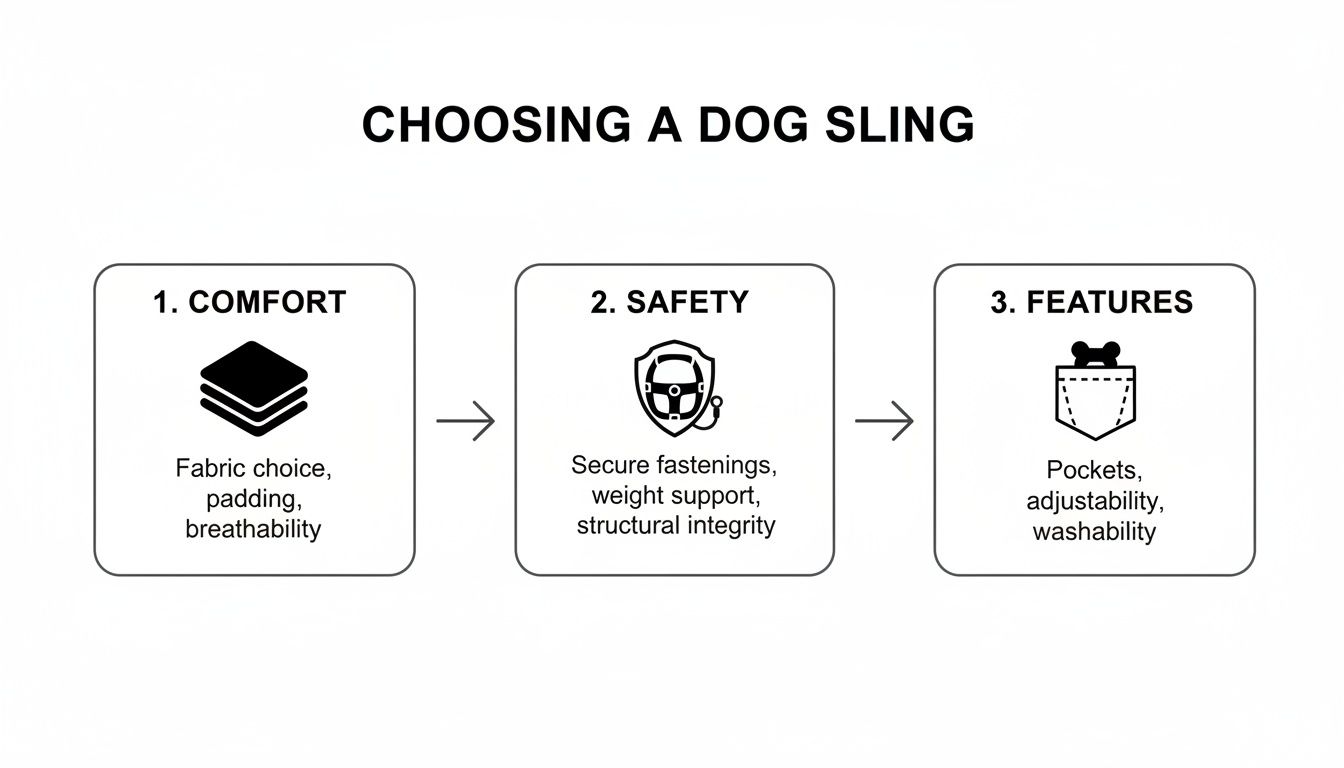
As the chart shows, finding a great sling isn’t about any single feature, but how they all work together to create a safe and comfortable experience.
Finding a Comfortable Fit for You
Once you’ve got your dog’s size sorted, it’s your turn. An ill-fitting sling will absolutely wreak havoc on your back, neck, and shoulders. The magic word here is adjustability. Look for a sling that has a wide, padded shoulder strap that you can easily tweak.
A good fit means your dog rests snugly against your body, either at your hip or a little higher on your waist. If they’re hanging down by your knees, it’s going to throw off your balance and cause some serious strain. The idea is to distribute their weight evenly across your shoulder and back, so adjust the strap until the pouch feels secure and supportive, without any awkward sagging or bouncing as you walk.
And don’t forget the most important safety feature: the internal tether. This little strap is non-negotiable and should always be clipped to a proper harness, never just a collar. Pairing your sling with the right gear is key, so feel free to browse our collection of dog collars, leashes, and harnesses to find the perfect match.
Using Your Dog Sling Safely
A dog sling is a fantastic way to keep your little buddy close, but their safety has to be your number one concern. Like any new experience, the key is making it a positive one right from the start. Never, ever force your dog into the sling.
Instead, make the introduction a fun game. Lay the sling on the floor and let them give it a good sniff and explore it on their own terms. When they show any interest, reward them with their absolute favorite treats and plenty of praise. You want them to think of the sling as a happy, cozy place—not something scary.
Core Safety Rules for Sling Use
Once your dog sees the sling as a friend, it’s time to lock in a few simple habits for every outing. These aren’t just suggestions; they’re the key to making sure every trip is a safe one and preventing any accidents.
The single most important safety feature on any dog sling is the internal tether. Using it correctly isn’t optional—it’s your main line of defense if your dog gets spooked and tries to jump.
Make these safety checks a non-negotiable part of your routine:
- Harness, Not Collar: This is crucial. Always attach the sling’s safety clip to your dog’s harness. Clipping it to a collar creates a serious choking hazard and could lead to a neck injury.
- Check Their Airflow: Make sure your dog can breathe freely and the fabric isn’t covering their nose or mouth. Good ventilation is essential, especially on warm days, to prevent them from getting too hot.
- Do a Quick Inspection: Before you head out, give the sling a quick once-over. Check the stitching, straps, and buckles for any wear and tear. Catching a weak spot early can prevent a disaster.
Activities to Avoid While Wearing a Sling
A sling isn’t just about convenience; it can be a source of real comfort. For pups who get a little anxious, being held close can be incredibly reassuring. In fact, it can be part of a practical guide to calming dog anxiety by creating a secure, mobile safe space.
That said, a sling is built for calm, gentle activities. Think of it as a walking companion, not sports gear. For your dog’s safety and well-being, you have to steer clear of anything high-impact or jarring while they’re inside.
Unsafe Activities Include:
- Jogging or Running: The constant bouncing is uncomfortable at best and can easily cause injury.
- Cycling: The risk of a fall is just too great, and a soft sling offers zero protection in a crash.
- Bending Over Quickly: If you need to pick something up, always bend with your knees to keep your dog stable and secure. A sudden forward tilt could send them tumbling.
- Cooking Over a Hot Stove: It might seem obvious, but keep your slung pup far away from open flames, hot surfaces, and splattering oil.
Stick to these guidelines, and your dog sling will be a safe, wonderful tool for you and your best friend to enjoy countless adventures together.
Keeping Your Dog Carrier Sling Clean and Fresh
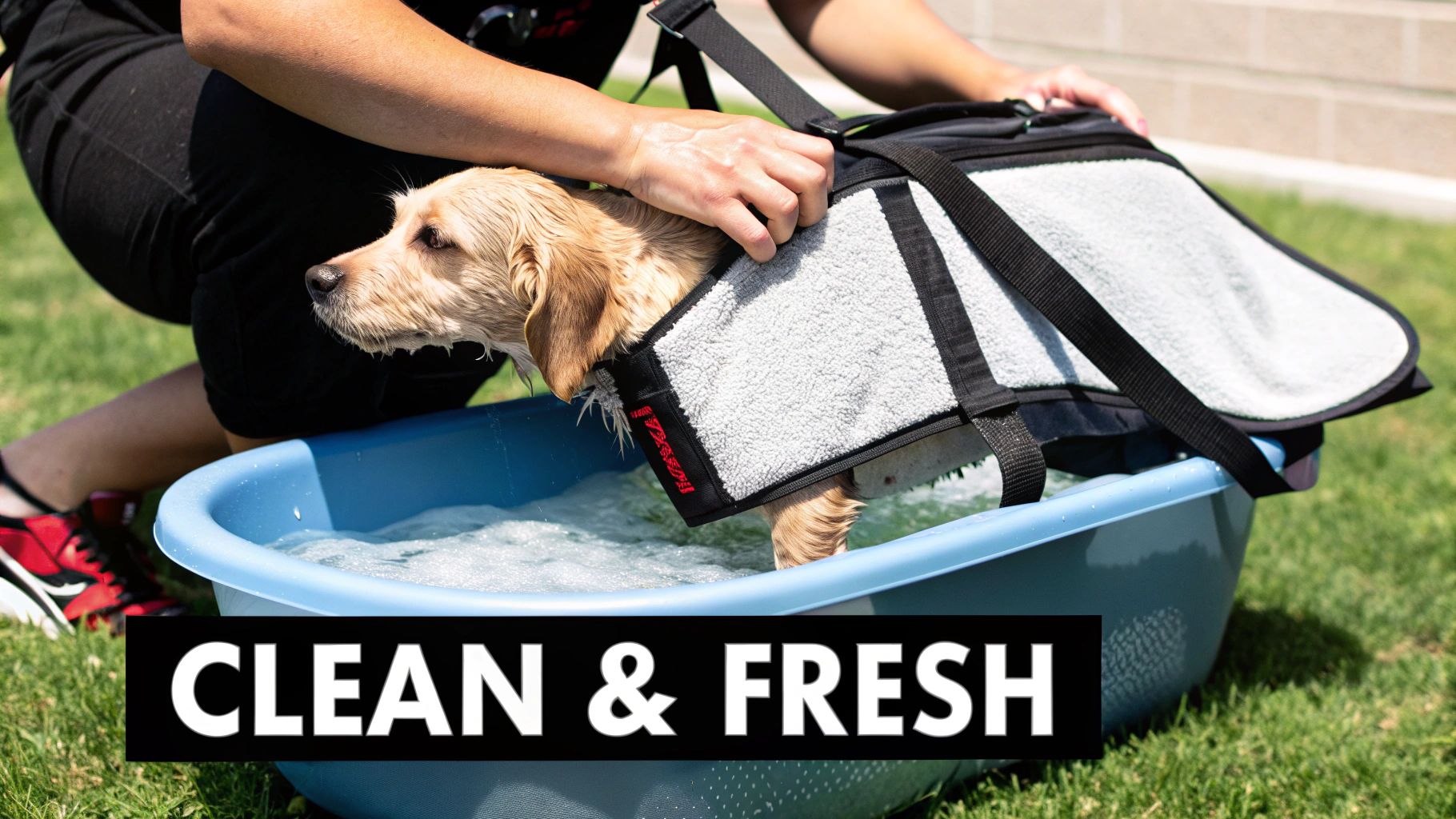
After a few good adventures, your dog carrier sling is bound to collect some dirt, fur, and maybe a little drool. It’s just part of the fun! Keeping it clean is key, not just for your dog’s health but also to make sure the sling lasts for years to come.
The good news? Most slings are made to be cleaned easily. Before you do anything, though, always check the manufacturer’s care label. This little tag is your best friend—it’ll tell you if you can toss it in the machine or if it needs a gentle hand wash. Skipping this step could mean a warped buckle or faded fabric.
Let’s be real, dog hair gets everywhere. Before you wash the sling, a quick pass with a lint roller or even a damp rubber glove can pull off a surprising amount of fur. If you’re dealing with woven-in-there-for-good fur, check out these clever tips on how to get dog hair off fabrics.
Step-by-Step Washing Instructions
If you’ve got a machine-washable sling, you’re in luck. The process is pretty simple. Just fasten all the buckles and zip any zippers, then pop the sling into a mesh laundry bag. This little trick stops the straps from turning into a tangled mess or snagging on anything.
Wash it on a delicate cycle using cold water, and choose a mild, pet-safe detergent. You want something without harsh chemicals or strong perfumes that could irritate your pup’s skin.
Pro-Tip: Stay away from fabric softener. It can leave behind a residue that makes the fabric less breathable and might even cause skin irritation for your dog.
If the label says hand-wash only, no problem. Just follow these steps:
- Fill a sink or basin with cool water and add a small amount of your pet-friendly detergent.
- Dunk the sling and gently swish it around, paying extra attention to any dirty spots.
- Rinse it completely with cool, clean water until the soap is all gone.
- Gently squeeze out the extra water. Don’t wring or twist it! That’s a surefire way to stretch the fabric out of shape.
No matter how you wash it, always air-dry your sling. A machine dryer’s heat can shrink fabrics, damage plastic hardware, and weaken the stitching over time. Hang it up somewhere with good air circulation, but out of direct sunlight.
Once it’s totally dry, store it in a cool, dry spot, ready for your next trip. For other great ways to keep your pup looking and feeling fresh, check out our full line of grooming and cleaning supplies.
Common Questions About Dog Carrier Slings
Even after going through all the details, you probably still have a few questions rolling around in your head about picking and using a dog carrier sling. That’s totally normal! To help you feel completely confident, we’ve gathered up the most common questions we get from pet parents just like you.
Think of this as your final check-in before you make your choice. Let’s dive in.
How Long Can My Dog Comfortably Stay in a Sling?
This is a great question, and the honest answer is: it really depends on your dog. A sling is best thought of as a temporary ride, not an all-day travel solution. For most small dogs, a solid one to two hours is a good stretch before they need a break.
Any longer than that, and they’ll need to hop out to stretch their legs, do their business, and get a sip of water. The most important thing is to watch your dog’s cues. If you see them getting restless, squirming, or looking generally unhappy, it’s definitely time for a break.
You want the sling to be a happy, cozy spot for them. Pushing it for too long can make them dislike it, and that’s the last thing we want.
Are These Slings Suitable for Puppies?
Yes, a sling can be an amazing tool for a puppy, especially before they’re fully vaccinated. It lets them see and hear the big wide world from the safety of your side, which is a huge plus for their early socialization.
But, you’ve got to keep a few things in mind:
- Eyes on the Pup: Puppies are little wiggle worms full of curiosity. Never leave them unattended in a sling and always use the safety tether attached to their harness, not their collar.
- Growing Bodies Need Support: Make sure the sling holds them properly. You don’t want them slumped into a weird, unnatural position that could affect their developing bones and joints.
- Potty Breaks Are Non-Negotiable: Little puppies have little bladders. Plan on taking them out for a potty break every 30-45 minutes to head off any accidents in the carrier.
Is a Dog Sling Safe for Dogs with Back Problems?
This is a critical point, and one where you need to be extremely careful. For a dog with a known back issue like Intervertebral Disc Disease (IVDD), a standard sling that curls their body into a “C” shape can be downright dangerous. That position puts a lot of strain on their spine.
If your dog has any history of back or joint problems, you must talk to your veterinarian before putting them in any kind of carrier. They are the only person qualified to give you medical advice for your dog’s specific needs.
Your vet will likely point you toward a more structured carrier—like a backpack or front-pack—that keeps their spine straight and properly aligned. When it comes to a medical condition, safety has to trump convenience every single time.
Can I Use a Sling on Public Transportation?
Absolutely! This is actually one of the best reasons to own one. Most public transit systems, from the subway to the city bus, require small pets to be completely enclosed in a carrier while on board. A sling is a perfect, lightweight solution for this.
It keeps your dog safe from dirty floors and stops them from getting stepped on in a crowded bus or train car. Before you head out, just do a quick search on your local transit authority’s website. They might have specific rules about carrier sizes or styles, and checking first will save you a headache later.
Plus, for a nervous dog, being snuggled up against you in a sling can make a noisy, crowded commute feel a lot less scary.
Ready to give your little sidekick the gift of closeness and convenience? At Ur Pet Store, we’ve hand-picked a collection of the safest, most comfortable dog carrier slings out there. Take a look and find the perfect one for your next adventure together. Shop Dog Carrier Slings Now