

Blog
The Ultimate Guide to the Medium Dog Harness With Handle

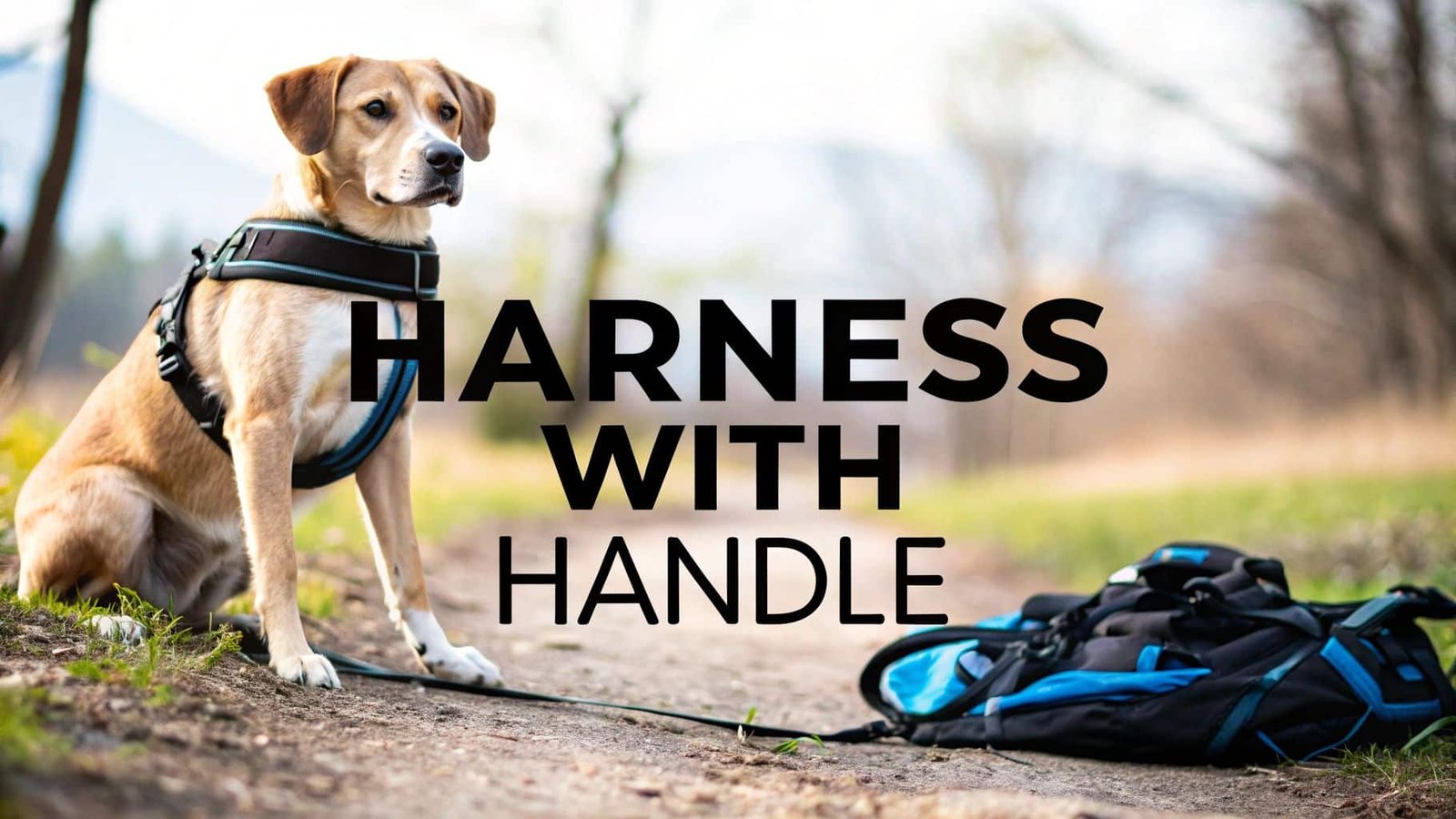
A medium dog harness with handle is so much more than just a piece of walking gear. It’s your direct connection to your dog, giving you a way to offer safety, assistance, and control in all kinds of situations. This one simple feature turns a standard harness into a vital tool for navigating the world together.
Why a Handle Is a Game Changer for Your Dog
Think of the handle on a harness as a built-in, super-short leash right on your dog’s back. It’s like having a manual override for those moments when a six-foot leash feels clumsy and too long. You get a firm, gentle grip to guide your dog instantly, without any fumbling.
This is a lifesaver in crowded places. Picture yourself weaving through a busy farmers market or a packed city sidewalk. A quick hold of the handle keeps your dog tucked in close, preventing them from darting through people’s legs or getting spooked by a sudden noise. It’s a calm way to guide them through the chaos without ever pulling on their neck.
Everyday Scenarios and Emergency Control
The practical uses go way beyond just busy environments. For a lot of us, that handle becomes a go-to tool for daily help and training.
- Assisting Senior or Injured Dogs: A handle gives you the perfect leverage to help an older dog with stiff joints get into the car or manage a few stairs. You can support their weight without putting any strain on them.
- Training and Redirection: When you’re working on new skills, the handle is great for gentle physical guidance. It helps you redirect your dog’s focus without having to rely on leash pops or just your voice.
- Sudden Danger Prevention: Let’s say an off-leash dog rushes up, or your dog spots a squirrel and lunges toward the street. The handle lets you secure them in a split second, stopping a dangerous situation before it can even start.
You really see the value of a harness handle in the moments you least expect it. It’s that quick lift away from broken glass on the sidewalk or the steadying grip when your dog gets nervous at the vet’s office.
If you’re ever learning how to walk multiple dogs, the advantage of a handle gets even bigger. It gives you the close control you need to manage everyone’s movements and keep the whole pack safe and untangled.
Ultimately, choosing a medium dog harness with handle is an investment in your peace of mind. It prepares you for the unexpected and makes everyday life with your dog that much safer and easier.
How to Find the Perfect Harness Fit for Your Dog
Getting the fit right on a medium dog harness with handle is just as important as picking one made from quality materials. If it’s too tight, you risk chafing and restricting your dog’s movement. Too loose, and you’ve got a potential escape artist on your hands.
Think of it like your own favorite pair of hiking boots—a bad fit can ruin the whole experience and even cause injury. You’re aiming for that sweet spot: a snug, secure fit that allows a full range of motion without any pinching or gaping. It all comes down to getting two key measurements right before you even start shopping.
Taking Accurate Measurements
Before you even glance at a sizing chart, you need two key numbers: your dog’s neck and chest measurements. Grab a soft, flexible measuring tape for this part.
- Neck Girth: Wrap the tape around the base of your dog’s neck, right where a collar would naturally sit. Keep it comfortably snug, not tight.
- Chest Girth: This is the most important measurement for a harness. Measure around the widest part of your dog’s rib cage, usually an inch or two behind their front legs.
No flexible tape measure? No problem. Just use a piece of string or even a phone charger cable, mark where it meets, and then measure that length with a standard ruler. These two numbers are your golden ticket.
The Two-Finger Rule for a Perfect Fit
Once you’ve chosen a harness and have it on your dog, it’s time for the final, crucial fit check. It’s a simple trick we’ve used for years, and it works every time.
Just slide two fingers between the harness straps and your dog’s body. If they fit snugly with not much room to spare, you’ve nailed it. If you can’t get two fingers in, it’s too tight. If you can fit your whole hand in there, it’s way too loose.
Remember to check this on both the neck and chest straps. A proper, even fit means the pressure is distributed correctly, keeping your dog safe and comfortable on all your walks.
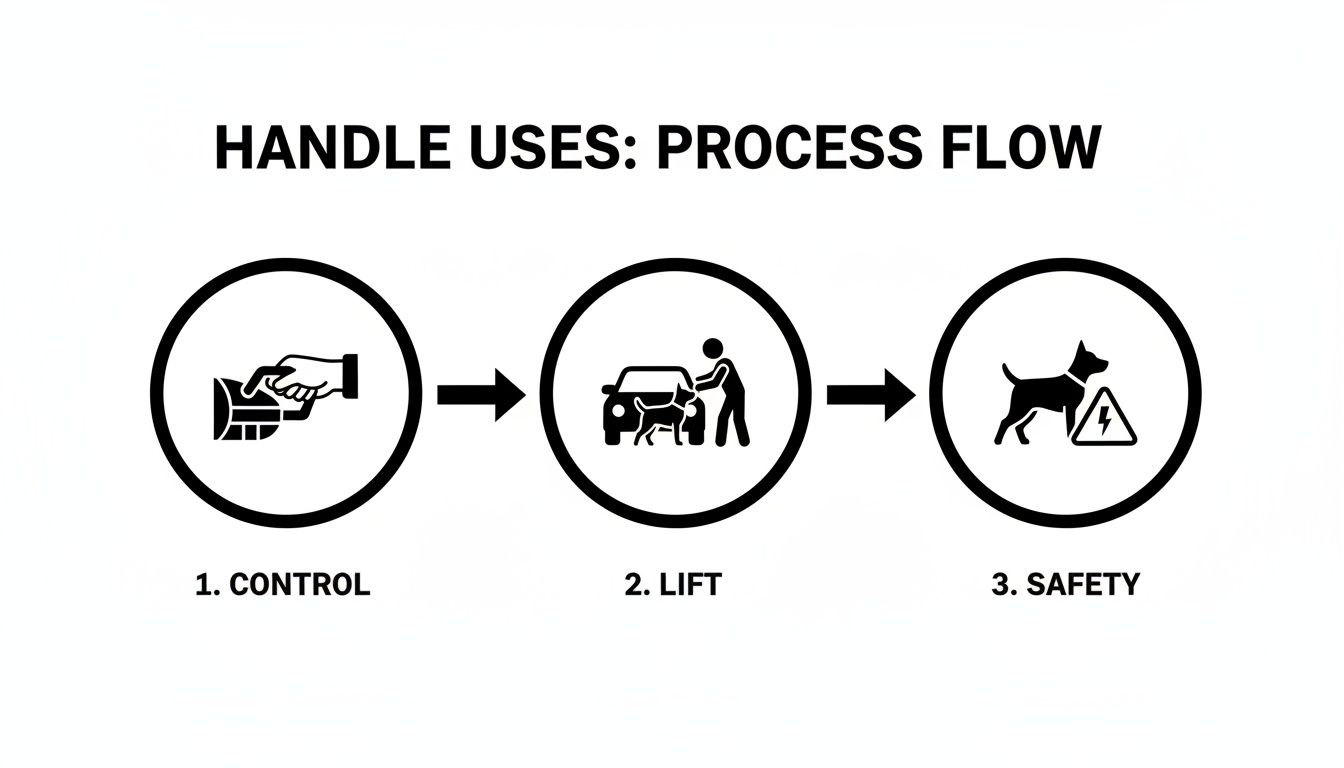
Whether you’re grabbing the handle for a little extra control, giving a lift into the car, or ensuring safety near traffic, a perfect fit is what makes the harness work as intended.
To give you a head start, here’s a chart with some common medium-sized breeds and their typical measurements.
Sizing Guide for Common Medium Dog Breeds
Use this table as a starting point to find the right harness size based on your dog’s breed and typical chest measurements. Always measure your individual dog for the most accurate fit.
| Breed Example | Average Weight (lbs) | Typical Chest Girth (inches) |
|---|---|---|
| Australian Shepherd | 40-65 | 25-32 |
| Basset Hound | 40-65 | 24-30 |
| Beagle | 20-30 | 18-24 |
| Border Collie | 30-55 | 22-28 |
| Cocker Spaniel | 20-30 | 20-26 |
| English Springer Spaniel | 40-50 | 24-30 |
| Pit Bull Terrier | 30-60 | 22-28 |
Remember, these are just averages! A dog’s size can vary a lot, even within the same breed, so that tape measure is still your best friend.
Common Red Flags of a Poor Fit
Keep an eye out for these tell-tale signs that the harness just isn’t fitting right. Catching these early can prevent much bigger problems.
- Chafing or Bald Spots: If you see red, irritated skin or patches of hair loss under the straps, there’s too much friction. The harness is almost certainly too tight.
- Harness Twisting: Does the harness constantly slip to one side when you’re walking? The straps are probably adjusted unevenly or the harness is too big.
- The Great Escape: If your dog can back out of the harness, the neck or chest straps are dangerously loose. This is a major safety hazard that needs to be fixed immediately.
By taking careful measurements from the start and always doing the two-finger check, you can make sure your dog’s harness is a tool for comfort and security, not a source of frustration.
Decoding Materials and Essential Safety Features
Once you’ve nailed the fit, the next step is to look at what the harness is actually made of. The materials and construction are what give a medium dog harness with a handle its real strength and reliability. It’s a bit like choosing a jacket for yourself—a lightweight windbreaker is great for a breezy day, but you’d want a heavy-duty coat for a rugged mountain hike.
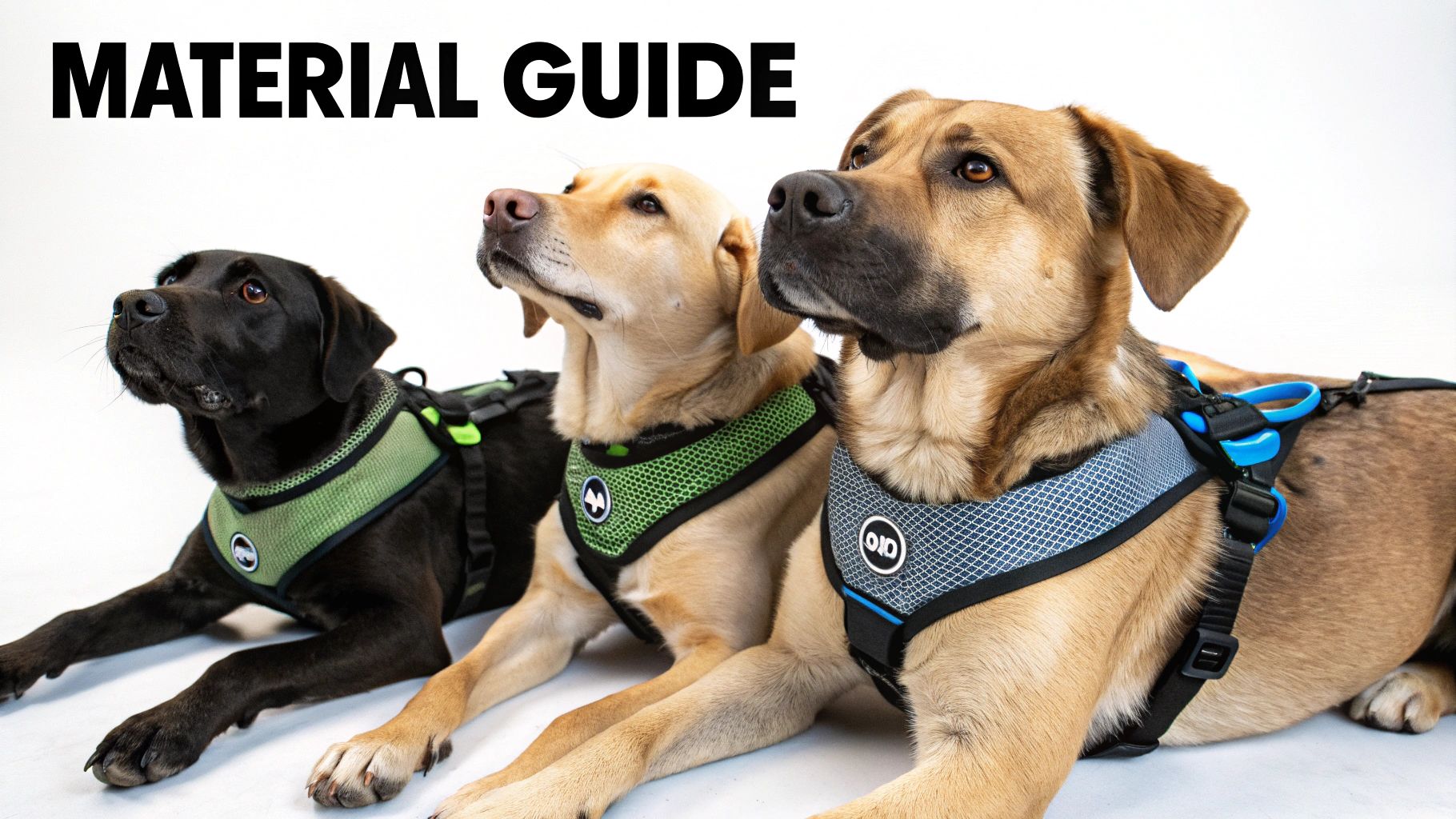
Some harnesses are perfect for casual city strolls, while others are built to withstand muddy trails and all kinds of weather. Knowing the difference helps you make a smart investment in your dog’s gear, matching it to the adventures you’ll share together.
Choosing the Right Fabric for Your Dog
The main fabric of the harness affects everything from how comfortable it is on a hot day to how easy it is to clean. Different materials serve different purposes.
- Nylon: Think of nylon as the workhorse of harness materials. It’s tough, holds up well against scuffs and scrapes, and cleans up easily. This makes it a fantastic all-around choice for daily walks and most adventures.
- Polyester: Very similar to nylon, polyester is strong and does a great job of resisting fading from the sun. It often feels a bit softer to the touch and is another solid pick for durability.
- Breathable Mesh: If you live somewhere warm or have a dog that tends to overheat, mesh is a lifesaver. Harnesses with mesh panels allow air to circulate freely, keeping your dog much cooler and more comfortable when they’re active.
Often, the best harnesses combine a durable fabric like nylon with strategically placed mesh, giving you both strength and breathability.
Non-Negotiable Safety Components
At its core, a harness is a piece of safety equipment. Certain features are absolutely essential to make sure it does its job when it matters most. Checking these details is like checking the tire pressure before a road trip—it’s a small step that prevents big problems down the road.
Shoppers are getting smarter about these things, too. With the global dog harness market valued at USD 5.53 billion in 2024 and expected to keep growing, people are looking for quality. Clear, visible features like padded handles and sturdy hardware are driving that growth because they’re easy to spot, even online. If you’re interested in the data, you can get more insights into these market trends for dog harnesses from this detailed report.
A great harness is more than just its main fabric. The strength is in the details—the stitching that holds it together, the hardware that connects the leash, and the features that keep your dog visible.
When you’re comparing options, keep a close eye out for these critical elements.
Hardware and Stitching: The Unsung Heroes
Finally, get picky about the small parts that take on the most stress. This is where you can really tell a quality harness from a cheap one.
- D-Rings: These are the metal loops where your leash clips on. Always, always choose harnesses with sturdy metal D-rings, like stainless steel. Plastic might seem fine at first, but it can get brittle and snap unexpectedly.
- Buckles: You’ll see both plastic and metal buckles. High-quality plastic can be surprisingly strong and lightweight, but for powerful pullers, nothing beats the peace of mind that comes with metal buckles.
- Reinforced Stitching: Look closely at the high-stress points, especially where the straps connect to the body of the harness and around the D-rings. You want to see thick, heavy-duty stitching, often in a square or “X” pattern. This is what keeps the harness from tearing under pressure.
- Reflective Trim: This is a must-have for early morning or late-night walks. Reflective strips or threads make your dog much easier to see for cars and cyclists in the dark. It’s such a simple feature, but it makes a huge difference for safety.
Using the Handle Safely and Effectively
That handle on your dog’s harness is an incredible feature, but let’s be clear: it’s not a suitcase handle. Think of it more like power steering for your dog—it’s there for subtle guidance, quick control, and giving them a helpful boost when needed, not for carrying their full weight. Using it correctly is the secret to keeping your dog safe, comfortable, and confident on your adventures together.
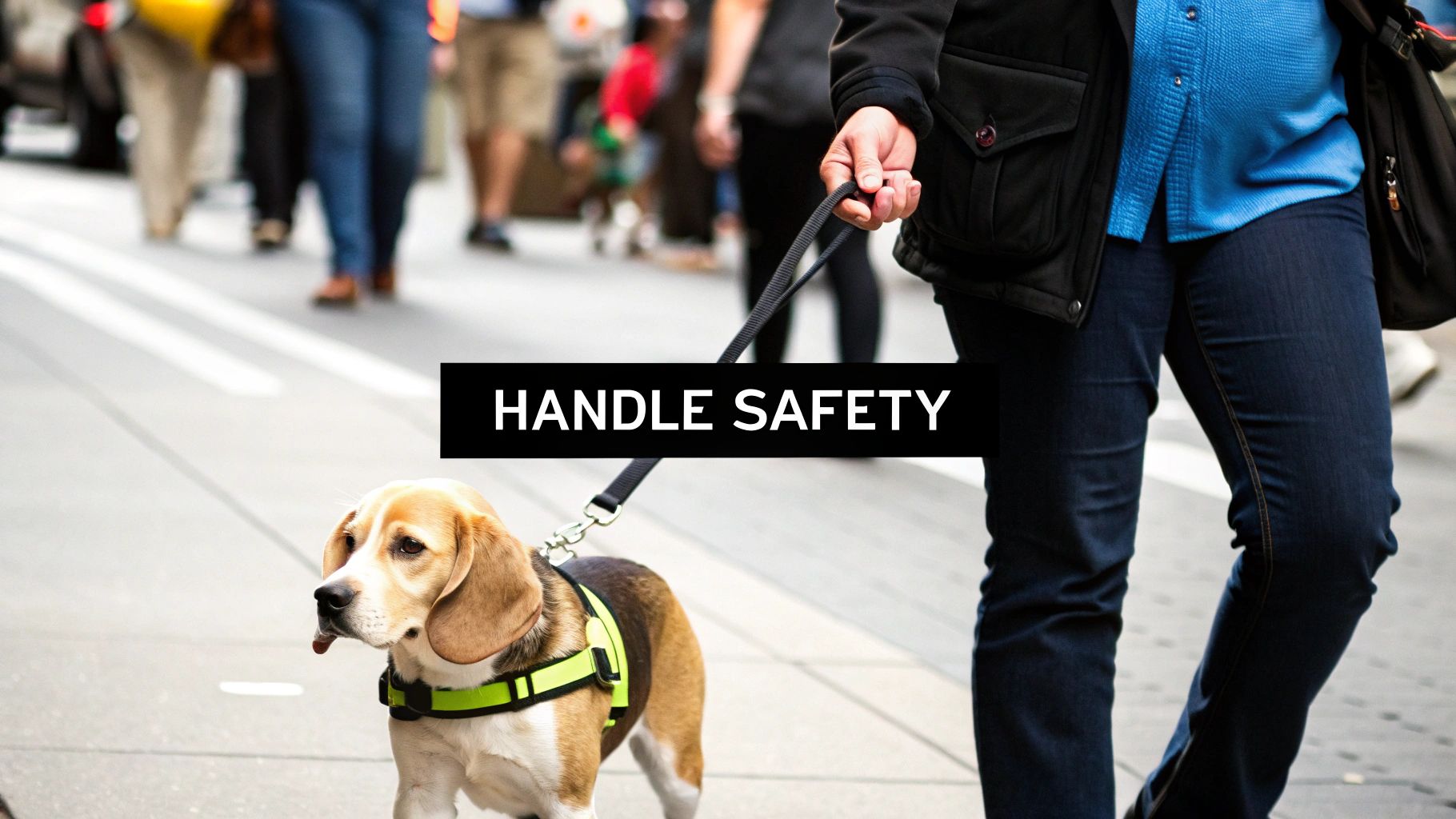
This simple loop offers a much more direct and gentle way to manage your dog in tight spots than yanking on the leash. Instead of a sharp tug, a calm, firm grip on the handle lets you steer your dog through a crowded farmers’ market or away from a dropped piece of food. It sends a clear message without causing the panic or opposition a leash correction sometimes can.
Best Practices for Assisting Your Dog
One of the most practical uses for the handle is simply giving your dog a little help. This could be for a senior dog with achy joints struggling with the car jump, or any medium-sized pup who just needs a little boost. The right technique is everything.
- The Quick Boost: Use the handle to help your dog get into the car or onto the vet’s table. Your lift should be smooth and quick, with the goal of getting their paws onto the surface almost immediately.
- Support the Rear: This is critical. For any lift that lasts more than a split second, you always need to support your dog’s back end with your other arm. This distributes their weight evenly and stops all the pressure from focusing on their chest and shoulders.
- Avoid Full Suspension: Never, ever lift your dog completely off the ground using only the handle. A medium dog harness with handle is not a carrier; it’s a support tool.
Stick to these rules, and you can be sure you’re providing helpful support, not creating dangerous strain.
When Not to Use the Handle
Knowing when not to grab that handle is just as important as knowing when to use it. In the wrong situation, it can make your dog anxious or even put both of you in danger. It’s a tool for control, not brute force.
The handle is for assistance and control in moments you can manage. It is not an emergency brake for an out-of-control situation or a solution for a dog that is panicking or acting aggressively.
For those who travel, a harness handle can be a lifesaver for navigating busy hotel lobbies or new environments. This is especially true when you start understanding pet policies for hotels and realize the importance of keeping your companion close and calm. However, you should absolutely avoid using the handle in these scenarios:
- During Panic or Fear: If your dog is genuinely terrified and trying to bolt, grabbing the handle can make them feel trapped, which will only escalate their fear.
- As Punishment: The handle should never be used to jerk, pull, or physically correct your dog. Using it this way will quickly destroy their trust in you and create a negative association with the harness itself.
- For Major Obstacles: Don’t try to hoist your dog over a big fallen log on a trail or a high barrier using only the handle. That’s an unsafe lift that puts their back and shoulders at risk of injury.
When you use the handle thoughtfully, it becomes another way to strengthen communication with your dog, reinforcing that it’s a tool for safety and support.
Your Smart Shopper’s Harness Checklist
Ready to find the perfect medium dog harness with handle? It’s easy to feel overwhelmed by the sheer number of options, whether you’re walking down a store aisle or scrolling online. This simple checklist boils everything down into a quick, scannable guide to help you pick a winner like an expert.
Think of this as your cheat sheet. Use it to make sure you’re ticking all the right boxes for safety, comfort, and long-term durability. It’ll keep you focused on what really matters for your dog.
The Essential Evaluation Checklist
- Sizing and Fit: Did you measure your dog’s chest and neck girth? Always compare your dog’s numbers directly to the brand’s sizing chart. Once it’s on, don’t forget the “two-finger rule” for a perfect fit check.
- Tough Materials: Does the fabric match your dog’s lifestyle? For everyday adventures, look for rugged materials like nylon or polyester. If your dog tends to overheat, a breathable mesh is a great choice.
- Hardware Check: Take a close look at the D-rings and buckles. Are they solid metal, or are they plastic? Metal hardware is hands-down the more secure option, especially if you have a dog that pulls.
- Reinforced Stitching: Zero in on the high-stress points. You should see thick, heavy-duty stitching—often in a box or “X” pattern—where the handle and leash clips connect to the main body of the harness. This is where it counts.
- Handle Design: Grab the handle. Is it padded and comfortable? It should feel sturdy and be sewn directly into the harness structure itself, not just tacked on as an afterthought.
- Safety Features: Does it have reflective trim or stitching? For anyone who walks their dog in the early morning or after sunset, this is an absolute must-have for visibility.
Understanding the Price Tag
You’ve probably noticed that harness prices are all over the map. Why is one $15 while another is $70? The cost is a direct reflection of the quality of the materials, the construction, and any guarantees the brand offers.
A cheaper harness might get the job done with basic nylon and plastic buckles, which can be okay for very light, casual use. But a premium harness is an investment in better gear: high-grade, weather-resistant fabrics, stainless steel hardware, triple-reinforced stitching, and comfortable, ergonomic padding.
A higher price often translates to better safety and longevity. You’re paying for the peace of mind that comes with knowing the hardware won’t snap and the stitching won’t fail when you need it most.
Market data shows that prices for a medium harness with a handle can start under $20 for mass-market options and climb to $100+ for high-performance models. This wide range is driven by everything from brand reputation to the quality of materials used. You can explore our collection of collars, leashes, and harnesses to see these differences for yourself. The market has grown to meet the demand for both budget-friendly gear and top-tier equipment. For a deeper dive, you can find more insights on these market dynamics at Future Data Stats.
Ultimately, the best harness is the one that strikes the right balance between your budget and your dog’s specific needs for safety and comfort.
Common Questions About Harnesses With Handles
Even with the perfect harness in hand, a few questions might still pop up. I get it. You want to be completely sure you’re doing right by your dog. Let’s run through some of the most common questions I hear from owners, so you can feel totally confident every time you clip that leash on.
Is a Harness With a Handle Better Than a Regular One?
For most situations, I’d say a resounding yes. Look, any harness that fits well is a massive step up from a collar for daily walks. But adding a handle? That’s a game-changer for safety and control.
Think of it as an emergency brake or a helping hand, always right there when you need it. It gives you an immediate, secure grip to guide your dog through a crowded farmers market, steer them clear of something they shouldn’t sniff on the sidewalk, or help your senior pup into the car. That one simple feature turns a walking tool into a versatile piece of safety gear, preparing you for all those little “what if” moments.
Can I Lift My Medium Dog Completely With the Handle?
This is a big one, and the answer is a firm no. The handle is built for assisting, not airlifting. It’s fantastic for giving your dog a little boost over an obstacle on a trail or a gentle lift onto the grooming table.
You should never suspend your dog’s full weight from the handle. It puts a dangerous amount of strain on their chest and shoulders. If you need to lift your dog, use the handle for stability and your other arm to support their rear end. This keeps them balanced and safe.
How Should I Clean and Maintain the Harness?
A little bit of care goes a long way in keeping your medium dog harness with handle in top shape for years. It’s easy, but it’s important.
- Washing: The best way is to hand wash it with some mild soap and cool water. Machine washing and harsh detergents can really weaken the fabric and stitching over time.
- Drying: Always let it air dry. Tossing it in the dryer or leaving it in the hot sun can make the nylon brittle and the plastic clips crack. Just hang it up somewhere out of direct heat.
- Regular Inspections: Give it a quick look-over once a month. Check the seams, straps, and buckles for any fraying or signs of wear. If you find any damage, it’s time for a new one—it’s just not worth the risk.
What Is the Difference Between a Front Clip and a Back Clip?
You’ll notice many modern harnesses have two metal D-rings for the leash, and they do completely different jobs. Knowing when to use each one makes a world of difference.
- Back Clip (Dorsal Clip): This is the ring on your dog’s back, right between the shoulder blades. It’s your go-to for everyday walks with a dog that doesn’t pull much. It’s simple, comfortable, and keeps the leash out of their way.
- Front Clip (Chest Clip): This ring sits right in the middle of your dog’s chest. It’s a fantastic training aid for pullers. When your dog pulls, the leash gently turns them back toward you, which interrupts the pulling behavior without any choking or discomfort.
Having both gives you incredible flexibility. You can use the front clip to work on loose-leash walking and then switch to the back clip once your dog has learned to walk politely by your side.
Ready to give your dog the safety and comfort they deserve? Explore our curated collection of high-quality harnesses at Ur Pet Store and find the perfect fit for your next adventure. Visit our online shop to see the full range.