


Blog
pet calming bed: Soothe Your Pet Anxiety Today


It’s a tough thing to watch—your dog whimpering through a thunderstorm or coming home to find your cat has shredded the curtains again. For any pet owner, it’s just heartbreaking. This is where a pet calming bed comes in. It’s not just another cushion; it’s a therapeutic bed specifically designed to ease your pet’s anxiety by making them feel safe and secure.
The magic is in the details. Features like high, soft rims and super-plush materials are there for a reason: to provide comfort and dial down stress.
Why Pet Calming Beds Are Gaining Popularity
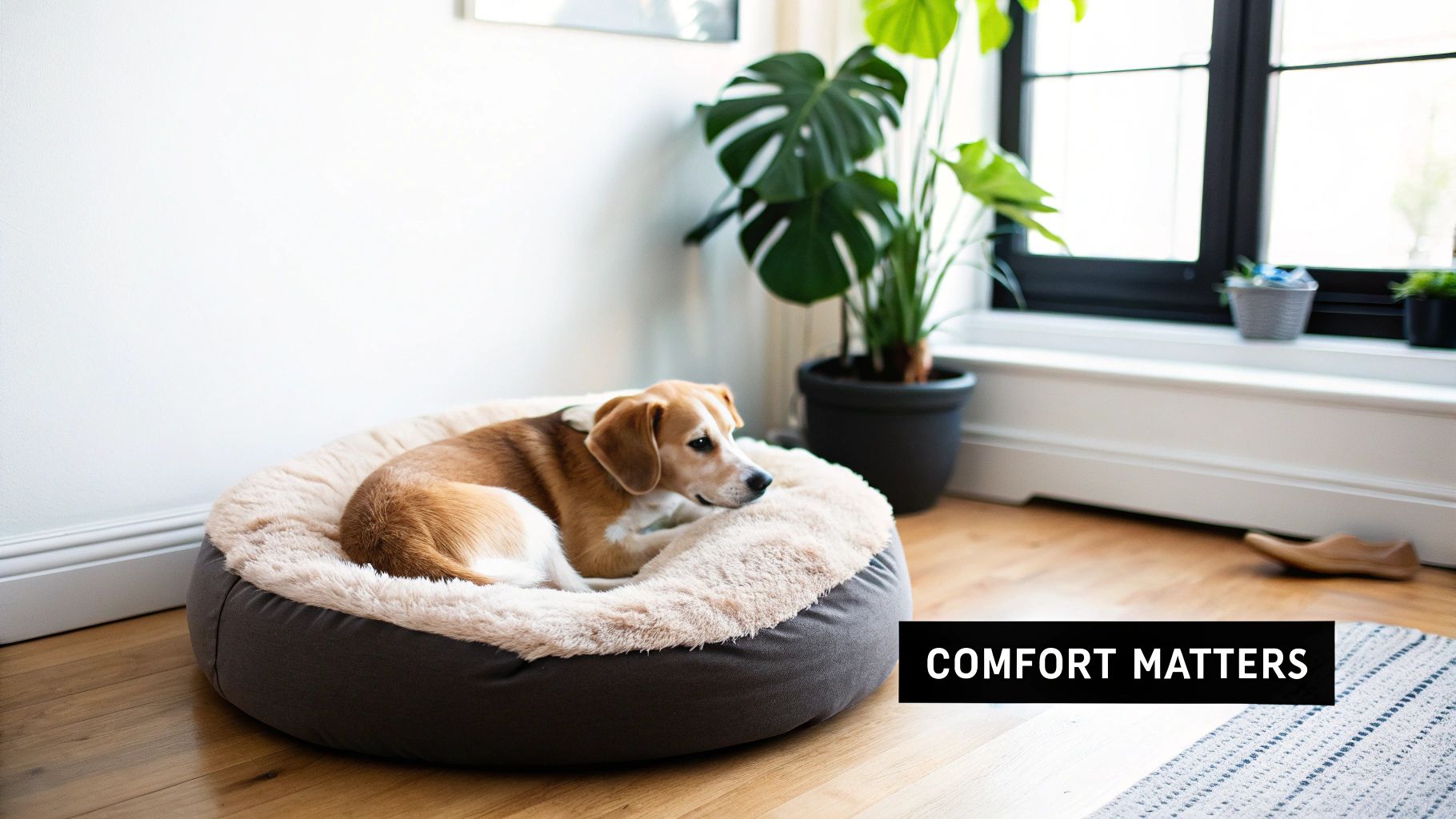
The reason calming beds are suddenly everywhere is simple: we’re finally starting to understand our pets’ mental health better. As owners, we’ve realized that behaviors like non-stop barking, destructive chewing, or frantic pacing aren’t signs of a “bad pet.” They’re often cries for help—symptoms of very real anxiety.
This change in thinking has led us to look for kinder, more effective solutions. Instead of just trying to stop the behavior, we’re now focused on getting to the root of the problem. A calming bed offers a straightforward, powerful way to give our pets a constant source of comfort, helping them feel safe even when we’re not home or when the July 4th fireworks start.
Getting to the Root of Anxiety
As we pay more attention to pet anxiety, it’s crucial to understand what sets it off. The triggers can be anything from loud noises and separation from their favorite human to a traumatic experience from their past. Figuring out what causes the stress is the first step. For a really thorough look at the subject, FORMA has a comprehensive guide to calming dog anxiety that’s packed with helpful insights.
A calming bed taps into a pet’s deep-seated instinct to feel protected. The design is meant to feel like they’re being cuddled or nestled in a safe den, which can have a huge impact on their nervous system.
This sense of security is crucial. When a pet feels safe in their environment, their body can relax, leading to lower levels of stress hormones like cortisol and a slower heart rate.
A Modern Solution for a Common Problem
The buzz around these beds also says a lot about how we see our pets today: as cherished members of the family whose emotional well-being is a priority. A calming bed is more than just a piece of furniture—it’s a proactive tool for making your companion’s life better.
In this guide, we’ll walk through everything you need to know. We’ll cover the science behind why they work, how to pick the perfect one for your furry friend, and share practical advice to help you give your pet the peace and comfort they deserve.
The Science Behind How Calming Beds Work
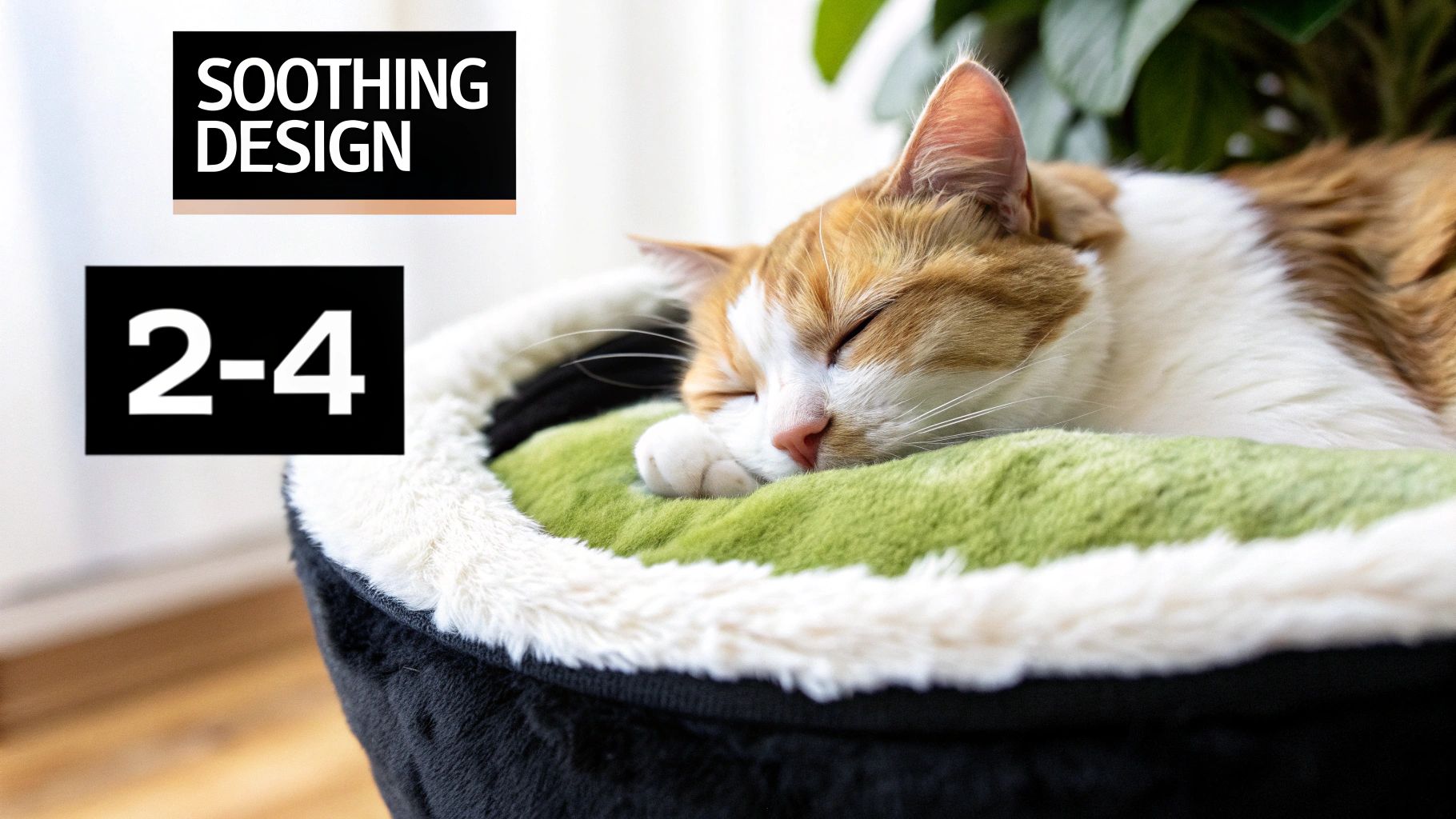
So, how does a simple-looking pet calming bed actually manage to soothe a jittery dog or a skittish cat? It’s not magic, but it is clever. The design taps directly into animal psychology, creating a space that speaks to their deepest, most primal instincts for safety and comfort.
Think of it like giving your pet a constant, gentle hug. These beds are built with specific features that mimic the feeling of a secure den, which has a real, physical effect on their nervous system and helps them truly relax.
The Power of the Protective Embrace
The most obvious feature of any calming bed is that high, cushioned rim. It’s not just there to look cozy; it serves a vital psychological function. That raised border creates a physical barrier, making your pet feel shielded and protected from the world around them.
For a dog or cat, this design brilliantly recreates the feeling of snuggling up against their mom and littermates. It’s a powerful sensation of being enclosed and safe, just like an animal would seek out in a natural den.
This protective design delivers a few key benefits:
- Physical Support: That rim is the perfect place for your pet to rest their head and neck, allowing their muscles to completely let go. This is a game-changer for older pets or those with achy joints.
- Anxiety Reduction: By creating a defined, secure “safe zone,” the bed helps dial down feelings of vulnerability. This can reduce nervous habits like pacing or trembling, especially during stressful events like thunderstorms or fireworks.
- Instinctual Comfort: It just feels right to them. The design satisfies a deep-seated instinct to find a sheltered spot to rest.
By surrounding your pet, the bed becomes their personal sanctuary. It sends a clear signal to their brain: you’re safe here. This allows them to lower their guard, which can in turn help reduce the production of stress hormones like cortisol.
Mimicking a Mother’s Comfort
The other piece of the puzzle is the material. You’ll notice that the best calming beds are covered in an ultra-soft, long-strand faux fur. That’s completely intentional. The texture is designed to feel just like a mother animal’s coat.
This sensation is incredibly comforting, tapping into an animal’s earliest and most positive memories. For a puppy or kitten, their mother’s fur meant safety, warmth, and food. Even as adults, that powerful, positive association sticks around.
The soft texture provides a gentle, steady tactile stimulation that can calm the nervous system. It’s similar to how weighted blankets work for people—the consistent, gentle pressure can help lower heart rate and blood pressure, promoting a state of pure tranquility.
This inviting texture also encourages self-soothing behaviors like kneading or nuzzling. When your pet feels that familiar comfort, they settle down faster and fall into a deeper, more restorative sleep. And a well-rested pet is always better equipped to handle stress.
The Instinct to Burrow and Nest
Finally, let’s look at the plush, deep center of the bed. It’s specifically designed to satisfy that instinct to burrow. You’ve probably seen your dog circle a few times or “dig” at a blanket before lying down—they’re creating a secure nest.
The soft, forgiving fill of a calming bed lets them sink right in and create their own little crater that molds perfectly to their body. This act of burrowing is a fantastic self-soothing mechanism, helping them feel hidden and protected.
This is a crucial feature because it gives your pet a sense of control. By shaping their own sleeping spot, they create a space that feels like it belongs to them. This fosters a strong bond with the bed, making it their go-to safe space whenever they feel anxious or just need to unwind. It’s the combination of all these elements that creates a truly therapeutic environment for your furry friend.
What These Beds Actually Do For Your Anxious Pet
A pet calming bed isn’t just another fluffy accessory you buy on a whim. Think of it as a dedicated safe space, a tool designed to bring real, noticeable changes to your pet’s quality of life. The benefits run much deeper than just comfort—they hit right at the core of anxiety, helping you raise a happier, more stable companion.
For many owners, the first thing they see is a huge difference in their pet’s sleep. Anxious animals are often light, restless sleepers, jolted awake by the smallest noise. A calming bed gives them a secure den, letting them sink into a much deeper, more restorative sleep. And let’s be honest, that probably means a better night’s sleep for you, too.
A Safe Haven for Specific Fears
One of the best things about a calming bed is how it becomes a reliable refuge during stressful moments. It’s not just for low-grade, everyday anxiety; it’s a powerful tool for those specific, predictable events that send your pet spiraling.
Picture a dog that shakes like a leaf during thunderstorms or tries to hide behind the furniture on the Fourth of July. Instead of frantically pacing, they can retreat to their bed—a spot they’ve learned means safety and security. It empowers them with a healthy coping mechanism, a way to self-soothe when the world feels overwhelming.
This works for a whole host of common triggers:
- Separation Anxiety: When you’re gone, the bed’s hug-like design can stand in for your reassuring presence, which often cuts down on destructive chewing or anxious barking.
- Travel Stress: Taking their bed on the road—whether for a car trip or a stay in a new place—can make a world of difference. It’s a portable piece of home that helps them settle down anywhere.
- New People: For pets who are shy or fearful of visitors, the bed offers a designated “safe zone” where they can watch from a distance without feeling cornered or overwhelmed.
If you want to get into the nitty-gritty of how specific bed features help with these issues, our guide to the best dog beds for anxiety is a great next read.
Don’t Forget About Senior Pets
It’s easy to think these beds are only for younger, high-strung animals, but that’s not the case at all. For senior pets, the physical support is just as important as the emotional security. Older dogs and cats often deal with the daily aches of arthritis, hip dysplasia, and stiff joints, making it tough to get truly comfortable.
The deep, cushioned filling helps take the pressure off those sore spots. Plus, the raised donut-style rim is perfect for propping up a tired head and neck, keeping their spine aligned. This kind of orthopedic support can lead to better mobility and less groaning when they get up, giving your old friend the comfort they’ve earned.
A Calmer Pet Means a Happier Home
When all is said and done, a pet who feels safe and secure makes for a more peaceful household. When you lower an animal’s stress, you almost always see a decrease in unwanted behaviors.
It’s a game-changer. A calmer dog means less nervous barking. A calmer cat means less stress-induced scratching. You get a more relaxed companion who can engage with the family in a positive way, which only strengthens the bond you share.
This isn’t just a niche trend; it’s a reflection of how we see our pets today. The market for anxiety pet beds is on track to hit an estimated USD 1.8 billion by 2025, which shows just how many owners are looking for real solutions. As we focus more on our pets’ mental and emotional health, products that provide both physical and psychological comfort are becoming a no-brainer. You can read more about this growing market trend on archivemarketresearch.com.
How to Choose the Perfect Pet Calming Bed
Choosing the right pet calming bed can feel a bit overwhelming at first. Walk into any pet store or browse online, and you’re met with a sea of styles, materials, and sizes. It’s easy to get lost.
But here’s the secret: it doesn’t have to be complicated. If you zero in on a few key things—your pet’s size, how they like to sleep, and their unique personality quirks—you can easily find a bed that will become their ultimate safe haven. The global pet calming products market, valued at USD 410.3 million, is set to hit USD 1,147.5 million by 2035, which just goes to show how many of us are looking for ways to boost our pets’ well-being. You can get more details on this trend over at metatechinsights.com.
Start with the Right Size and Shape
Getting the size right is the absolute first step. It’s also the most important. A bed that’s too big won’t give them that secure, den-like feeling that’s so crucial for easing anxiety. On the flip side, one that’s too small will just be uncomfortable. You’re aiming for that “just right” fit—snug enough to feel like a gentle hug from the raised rim, but not so tight they feel cramped.
So, how do you find that perfect size? Simple. Watch how your pet sleeps. If they love to curl up in a tight ball, measure the diameter of their little donut shape. If they prefer to stretch out, measure them from the tip of their nose to where their tail begins. Either way, always add a few extra inches to your measurement so they have room to shift and get comfy.
Pro Tip: If you’re stuck between two sizes, it’s almost always better to size up. While that snug fit is the goal, a bed that’s too restrictive will get ignored completely.
Material and Durability Matter
The materials make all the difference, not just for comfort but for how long the bed will last. You’ll notice most calming beds are covered in an ultra-soft, long-pile faux fur. That’s intentional. It’s designed to feel like a mother’s coat, which is a huge part of what makes these beds so soothing to our pets.
But don’t stop at the soft cover. Here are a few other things to check for:
- Washability: Life with pets is messy. A removable, machine-washable cover isn’t just a nice-to-have; it’s a necessity for keeping things clean and hygienic.
- Durable Filling: The inside matters just as much as the outside. Look for high-quality, non-clumping fill that will keep the bed’s shape and prevent it from going flat and lumpy after a few months.
- Hypoallergenic Options: Does your pet have sensitive skin or allergies? If so, make sure to find a bed made with hypoallergenic materials to avoid any irritation.
Think of a well-made bed as an investment in your pet’s happiness. Choosing durable, easy-to-clean materials from the start means you won’t be buying a replacement anytime soon.
Match the Bed Style to Your Pet’s Needs
Not all calming beds are the same. Different designs are built for different personalities and physical needs, and knowing your pet’s habits is the key to picking one they’ll actually use. If you want to see the full range of options out there, feel free to browse our complete collection of beds and mats for every pet.
This flowchart is a great starting point for figuring out which style is the best match for your companion, whether they’re a senior dog with achy joints, an anxious pup, or a cat who just loves to burrow.
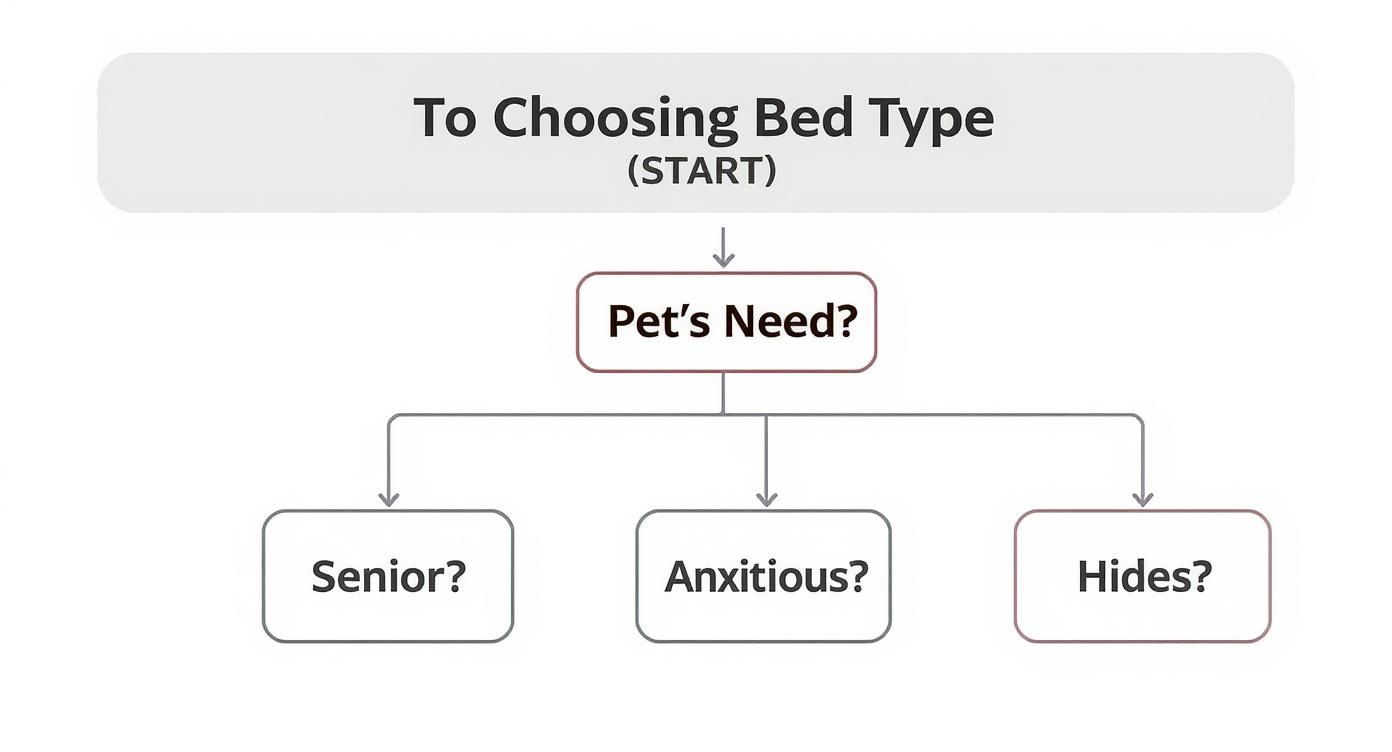
As you can see, matching your pet’s main need—like joint support for older pets or a sense of security for nervous ones—to a specific bed style makes all the difference.
To make things even clearer, let’s break down the most common types of calming beds.
Comparing Types of Pet Calming Beds
This table breaks down the most popular calming bed styles, helping you pinpoint the best choice for your pet’s sleeping style, size, and individual needs.
| Bed Type | Best For | Key Features | Primary Benefit |
|---|---|---|---|
| Donut Cuddler | Pets who curl up; anxious pets | Round shape, high bolstered walls, soft faux fur | Creates a secure, nest-like feeling that eases anxiety. |
| Cave/Hooded Bed | Shy or timid pets; pets who burrow | Enclosed design with a soft “roof” or hood | Offers a private, den-like space for ultimate security. |
| Orthopedic Calming Bed | Senior pets; dogs with joint pain (e.g., arthritis) | Memory foam or orthopedic foam base, supportive bolsters | Relieves pressure on joints and provides superior support. |
| Self-Warming Bed | Small breeds; short-haired pets; pets in cold climates | Special insulating materials that reflect pet’s body heat | Provides gentle, consistent warmth without electricity. |
Each style offers a unique comfort. A donut bed is fantastic for a dog who loves to feel encircled, while a cave bed might be a game-changer for a cat who always hides under the blankets.
Key Features to Look For
Beyond the big three—size, material, and style—there are a few extra features that separate a good bed from a truly great one. It’s these little details that often make the biggest impact.
Keep an eye out for these must-haves:
- Non-Slip Bottom: This is a huge safety feature, especially if you have hardwood or tile floors. It keeps the bed from sliding around when your pet jumps in or out, which helps them feel much more secure.
- Waterproof Liner: An internal liner that’s waterproof or water-resistant is a lifesaver. It protects the filling from accidents, spills, and drool, which is a blessing for anyone with a puppy or a senior pet.
- Bolstered Rims: The raised edges are the heart and soul of a calming bed. Make sure they are generously stuffed and firm enough to provide real support for your pet’s head and neck. This is what creates that all-important feeling of safety.
Making the Most of Your New Calming Bed
So, you’ve brought home a new pet calming bed. That’s a great first step, but the real trick is making it your pet’s absolute favorite spot in the house. You can’t just toss it on the floor and hope for the best. A little bit of thoughtful introduction will turn that new bed from a strange object into a genuine sanctuary.
The whole point is to create a powerful, positive connection right from the start. You want your dog or cat to look at that bed and immediately think “safe,” “cozy,” and “this is my spot.” If you rush it, they might be hesitant, but a little patience here will pay off big time.
Creating a Welcoming First Impression
A new bed has all sorts of unfamiliar factory smells, which can be a bit intimidating for a pet who navigates the world with their nose. The quickest way to fix this? Make it smell like home.
Toss a familiar blanket, an old t-shirt of yours, or their favorite squeaky toy right in the middle. This simple trick instantly layers a comforting, recognizable scent over the new one. It’s like leaving a little note that says, “Hey, this spot is safe and I approve.”
Positive reinforcement is your best friend here.
- Treat Trails: Leave a little path of their favorite high-value treats that leads right into the bed.
- Praise and Pets: The second they show any interest—even just a sniff or a single paw—heap on the praise and gentle pets.
- Never Force It: This is crucial. Don’t ever push or drag your pet into the bed. That will instantly create a negative association that’s incredibly hard to break. Let them discover it on their own terms.
Choosing the Perfect Location
Where you put the bed is just as important as how you introduce it. The best spot is usually somewhere your pet already feels safe, but not right in the middle of a chaotic walkway. Think about a quiet corner of the living room or a peaceful spot in your home office where they can be near you but still chill out.
Try to avoid high-traffic hallways or plopping it right next to a blaring TV. The location should feel like a low-stress zone. If they already have a go-to nap spot, putting the new bed there is a fantastic move.
Think of the bed’s location as its foundation. A bed placed in a calm, secure area gives your pet the confidence to fully relax, knowing they won’t be constantly disturbed. This reinforces the bed’s purpose as a true safe haven.
Keeping the Bed Clean and Inviting
Once your pet has fallen in love with their new bed, you’ve got to keep it that way. A dirty, smelly bed will get abandoned fast. Always check the manufacturer’s tag for washing instructions to keep the filling fluffy and the faux fur soft.
Stick with a mild, pet-safe detergent and steer clear of fabric softeners or scented products. Strong, artificial smells can be a major turn-off for pets. For little messes between deep cleans, a protective layer is a game-changer. An absorbent, washable cover like a reusable dog pee pad blanket can save the bed from accidents and make spot cleaning a breeze.
Keeping the bed consistently clean and fresh-smelling reinforces that it’s a special, comfortable space just for them, ensuring it stays their favorite retreat for years to come.
Exploring Sustainable and Eco-Friendly Beds
Choosing a calming bed for your pet is all about their comfort, but what if that choice could also be good for the planet? More and more, pet owners are looking for products that align with their values, and that means sustainability is no longer an afterthought—it’s a priority.
An “eco-friendly” bed is more than just a marketing buzzword. It’s about what goes into it, from the fabric on the outside to the stuffing on the inside. These beds often ditch virgin synthetic materials in favor of innovative, responsible alternatives. The bonus? This thoughtful approach often leads to a healthier product for your furry friend, since many sustainable materials are naturally free from the harsh chemicals and dyes that can irritate sensitive pets.
What Makes a Calming Bed Sustainable
So, how can you tell if a bed is genuinely “green”? It really comes down to the materials. Truly sustainable options are built with resources that are either renewable, recycled, or biodegradable, which drastically reduces the bed’s environmental footprint.
Here are some of the most common materials you’ll find:
- Organic Cotton: Grown without nasty pesticides or chemical fertilizers, it’s a soft, breathable, and natural choice that’s kind to your pet’s skin and the earth.
- Recycled Plastics: Believe it or not, that super-soft filling might have started life as plastic bottles. This clever process diverts waste from landfills and turns it into something cozy and durable.
- Natural Latex or Foam: Sourced from rubber trees or created from plant-based oils, these materials provide fantastic support without relying on petroleum. Plus, they’re biodegradable.
This isn’t just a small trend. The global market for sustainable pet beds was valued at a whopping USD 2.34 billion and is only expected to grow as more owners seek out green products. If you want to dive deeper into the numbers, you can find more data at Research and Markets.
How to Identify Genuinely Green Products
With “eco-friendly” being slapped on so many labels, it can be tough to separate the real deal from the greenwashing. Your best defense is to look for official certifications. These act as a stamp of approval from an independent third party.
Think of a certification as a guarantee. It means the product has passed strict, specific tests for sustainability. It’s a clear signal that the brand is walking the walk, not just talking the talk, which makes your decision a whole lot easier.
Keep an eye out for labels like the Global Organic Textile Standard (GOTS) on cotton products or other official seals that verify recycled content. When you choose a sustainable calming bed, you’re not just investing in your pet’s comfort—you’re making a small but meaningful contribution to a healthier planet.
Got Questions About Calming Beds? We’ve Got Answers.
It’s completely normal to have a few questions before you bring a new calming bed home. After all, you want to make the best choice for your furry family member. Let’s clear up some of the most common things pet owners wonder about.
Think of this as your quick-reference guide. We’ll give you straight, honest answers to help you feel confident about your decision.
How Long Will It Take for My Pet to Get Used to the New Bed?
This is probably the number one question we hear, and the honest answer is… it really depends on your pet! Some dogs and cats will hop right in and curl up within minutes, instantly claiming their new throne. Others, especially if they’re a bit more cautious, might take a few days to fully warm up to it.
The key here is patience and making it a positive experience.
- Make it smell like them. Toss a favorite toy or a blanket that already has their scent on it into the new bed.
- Treat time! Drop a few of their favorite high-value treats into the bed to build a happy association.
- Never force it. The goal is to create a safe space, so pushing them into the bed will only backfire. Let them discover it on their own timeline.
Are These Beds a Good Idea for a Heavy Chewer?
This is a super important one. While many calming beds are built to last, their main purpose is comfort, not standing up to an aggressive chewer. That soft, shaggy material that makes the bed so cozy can also be an irresistible target for a dog who loves to tear things up.
If you know you have a destructive chewer, look for beds that are specifically advertised with features like reinforced seams or chew-resistant fabrics. Even then, remember that no soft bed is truly indestructible. It’s always a good idea to supervise your pet with the new bed at first and make sure they have plenty of appropriate chew toys to keep them busy.
A calming bed is a tool for comfort, not a chew toy. If your dog’s main hobby is shredding, you’ll want to tackle that behavior with training and durable, dedicated chew products.
Can a Calming Bed Actually Cure My Pet’s Anxiety?
A calming bed can be an incredibly helpful tool, but it’s not a magic pill for anxiety. It’s better to see it as one crucial part of your pet’s overall wellness plan. By providing a secure, comforting physical space, the bed can significantly lower stress and help your pet relax, which makes managing anxious behaviors much easier.
For pets with more serious anxiety, a multi-faceted approach is always the way to go. This usually involves:
- Positive reinforcement training and behavior modification.
- Plenty of daily physical exercise and mental puzzles or games.
- A chat with your vet or a certified animal behaviorist to create a complete strategy.
The bed is a fantastic support system for all these efforts. It gives your pet a reliable sanctuary they can retreat to whenever they feel overwhelmed, boosting the effectiveness of your other training and improving their overall quality of life.
Ready to give your pet the gift of tranquility? Explore the premium collection of calming beds and other high-quality pet supplies at Ur Pet Store. We offer thoughtfully designed products with free shipping on every order. Find the perfect bed for your furry friend today at urpetstore.com.