

Blog
A Complete Guide to the Best Reflective Dog Harness

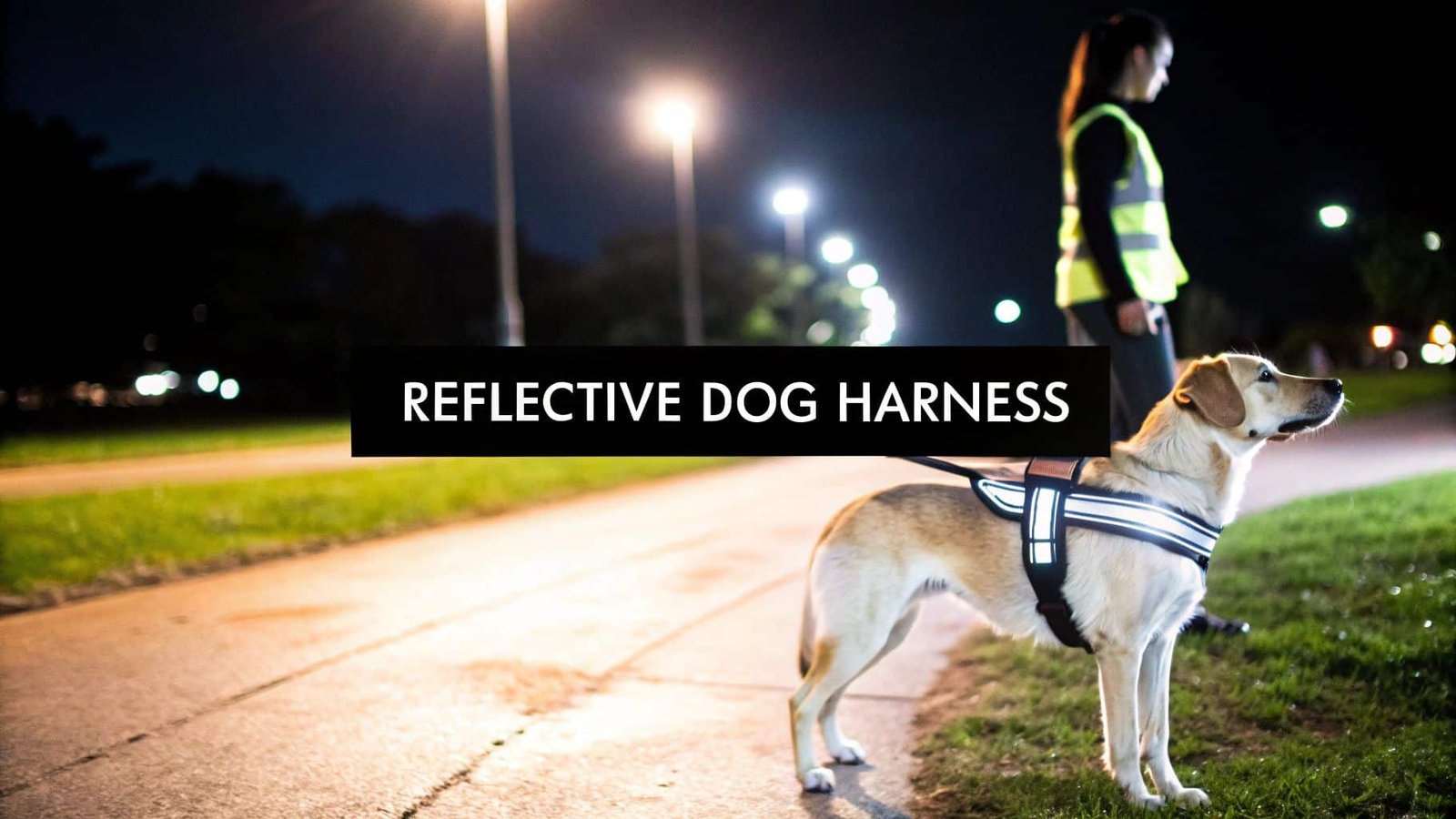
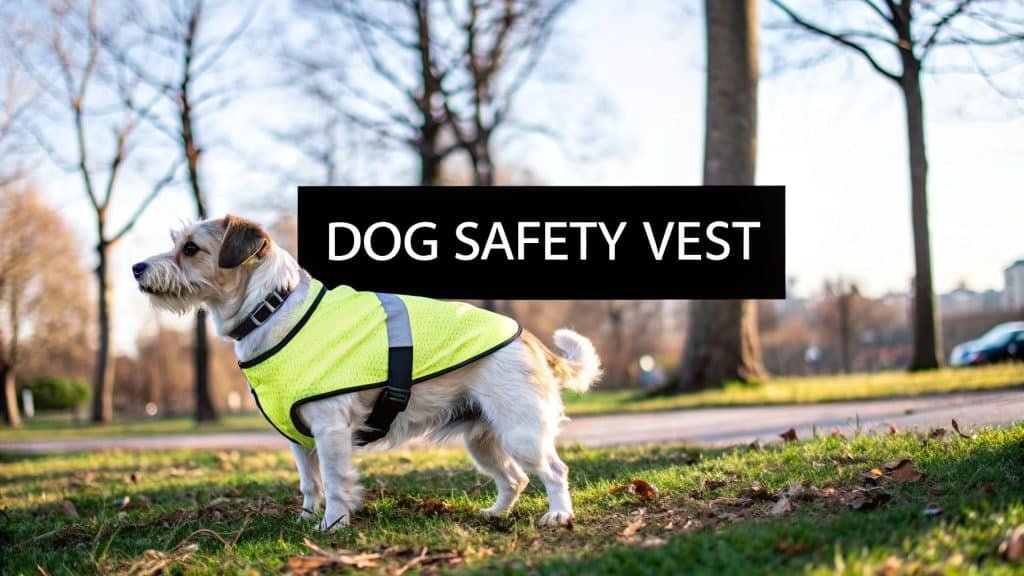
A reflective dog harness is one of the smartest, simplest pieces of safety gear you can get for your dog. It’s made with special materials that catch and throw back light, making your pup stand out like a beacon to drivers when it’s dark.
Think of it like the reflective stripes on a runner’s jacket or a cyclist’s gear. It’s designed to grab a driver’s attention by catching their headlights, making your dog instantly visible during those twilight walks or late-night potty breaks. This small change can make a huge difference in preventing accidents.
Why a Reflective Harness Is Essential for Your Dog’s Safety
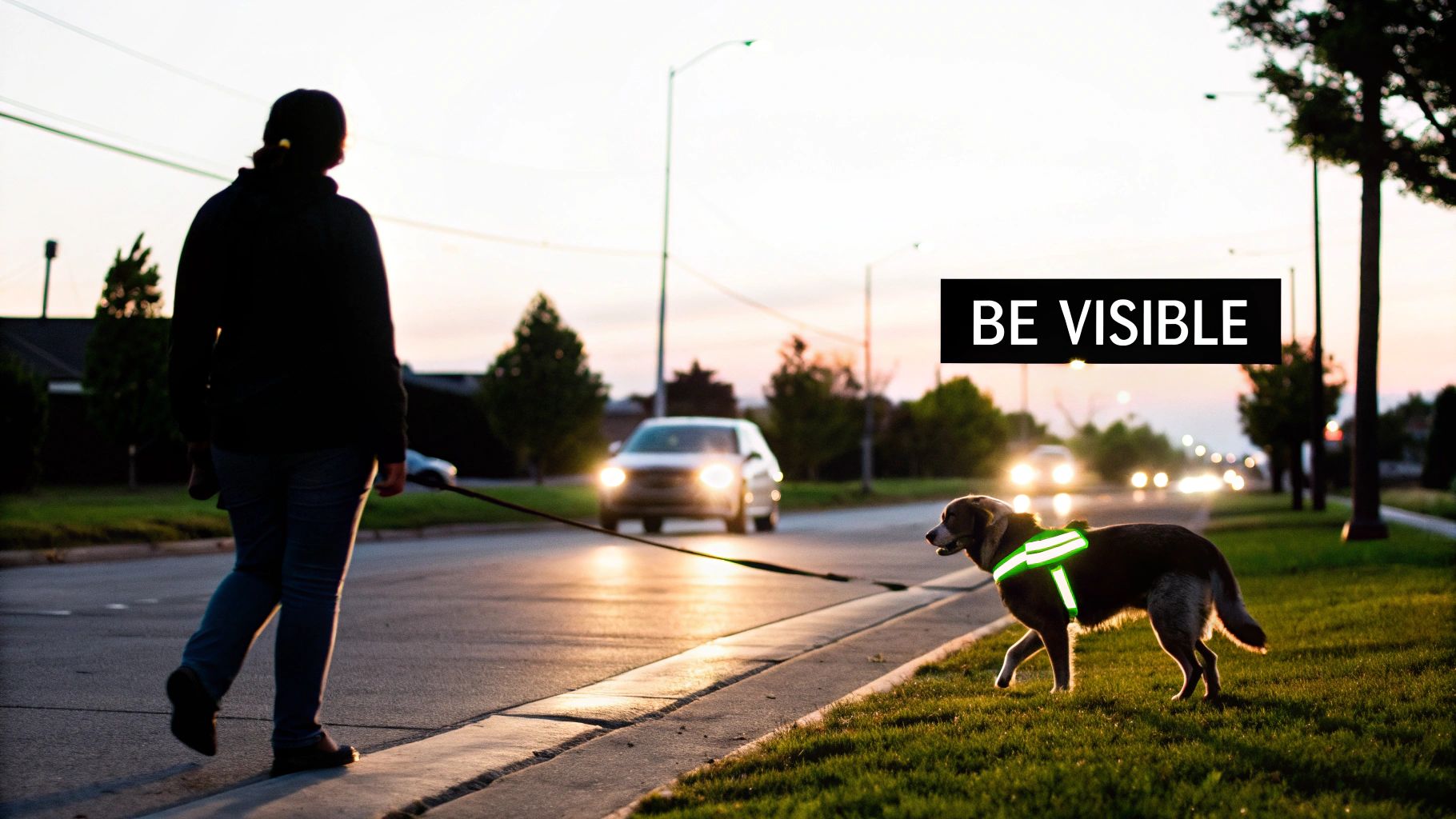
We’ve all been there—out for a lovely evening walk, and a car rounds the corner a little too fast. For a split second, your heart jumps into your throat as you hope the driver sees your dog. A reflective harness is designed to take that specific fear right out of the equation, so you can enjoy your walks without worry.
This isn’t just another accessory; it’s a core part of being a responsible pet owner. A standard harness, no matter how well-made, pretty much vanishes in the dark. A reflective one, on the other hand, uses a clever trick called retro-reflection.
Just like the glowing stripes on a firefighter’s uniform or the bright surface of a stop sign, the material doesn’t create its own light. It’s engineered to bounce any light—like a car’s headlights—directly back to the person behind it. The result is a brilliant, impossible-to-miss glow.
The Proven Impact on Visibility
The difference a reflective harness makes isn’t just something you can feel; it’s backed by real-world data. Studies have found that dogs wearing reflective gear are a staggering 7 times more visible to drivers in low-light conditions. It’s no surprise the global reflective dog harness market has grown into a USD 1.24 billion industry—it’s clear that owners everywhere see the value in keeping their pets safe after sundown.
This boost in visibility delivers a few critical benefits:
- Accident Prevention: It gives drivers precious extra seconds to see your dog, slow down, and react, drastically cutting the risk of a tragedy.
- Peace of Mind: You can finally relax on your walks, knowing your dog is clearly visible to everyone on the road.
- Off-Leash Safety: If you’re in a designated off-leash park at dusk, it helps you keep a close eye on your dog, even from a distance.
A reflective harness is a non-negotiable piece of gear that belongs in every dog owner’s toolkit. To learn more about keeping your best friend safe in all situations, check out these comprehensive pet safety guidelines.
How Reflective Materials Keep Your Dog Seen
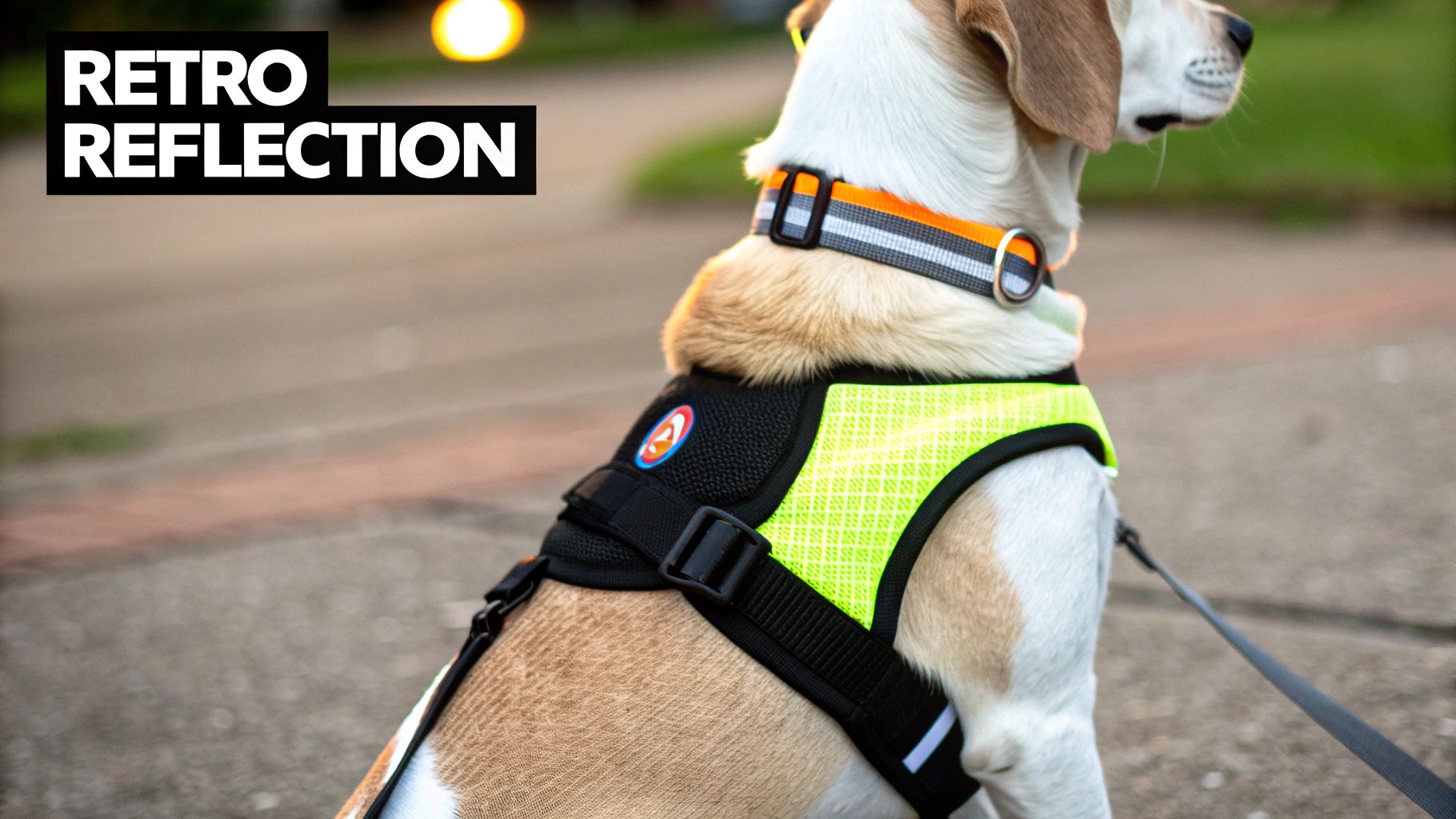
Ever wondered what makes a reflective dog harness blaze to life in the dark? It’s not magic, and the material doesn’t glow on its own. The secret is a brilliant piece of science called retro-reflection.
Think about how a cat’s eyes seem to shine right back at you when caught in a car’s headlights. They aren’t generating light; they’re just bouncing it back with incredible efficiency. A reflective harness works the exact same way.
The material is embedded with thousands of microscopic glass beads or tiny prisms that act like a field of mirrors. When a light source—like a car’s headlights—hits the harness, these little elements catch the light and bounce it directly back to where it came from. This creates a powerful, concentrated glow that makes your dog virtually impossible to miss.
Retro-reflection is what makes these harnesses so much more effective than just putting a white shirt on your dog. A white shirt scatters light in every direction, which makes it look dim from a distance. A reflective surface sends a focused beam of light right back into the driver’s line of sight, maximizing visibility when it matters most.
This simple but powerful technology transforms your dog into a highly visible beacon, giving drivers precious extra seconds to see them, slow down, and react.
Common Types of Reflective Technology
Not all reflective gear is made the same. When you’re browsing for a harness, you’ll mainly come across a few different approaches to visibility. Knowing the difference will help you pick the right gear, whether you’re navigating busy city streets or walking down a dark country lane.
- Reflective Tape and Piping: This is the most common design you’ll see. Strips of highly reflective fabric are sewn right onto the harness, often in wide panels for a big visual impact.
- Reflective Stitching: A more subtle take where the actual threads used to stitch the harness together are made from reflective material. It’s less intense than wide tape but adds a nice touch of 360-degree visibility without changing the harness’s overall look.
- Integrated LED Lights: Some modern harnesses go a step further by including battery-powered LED lights. This is active illumination, meaning the harness creates its own light instead of just reflecting it.
Each of these technologies aims for the same goal: keeping your dog safe and seen. The best choice really depends on your specific walking environment, how much you want to stand out, and even the weather you typically face.
Comparing Reflective Harness Technologies
To help you decide, let’s break down how these different reflective types stack up against one another. Think about where you walk, the typical lighting conditions, and your dog’s activity level to find the perfect match.
| Technology Type | How It Works | Best For | Pros | Cons |
|---|---|---|---|---|
| Reflective Tape | Passive retro-reflection from wide fabric strips. | All-around use, especially in urban and suburban areas with frequent car traffic. | High visibility, durable, no batteries needed. | Can crack or peel over time with heavy use. |
| Reflective Stitching | Passive retro-reflection from integrated threads. | Supplementing visibility on any harness; good for well-lit urban areas. | Subtle look, 360-degree coverage, long-lasting. | Lower intensity than tape or LEDs. |
| LED Lights | Active illumination from built-in, battery-powered lights. | Rural areas with no streetlights, off-leash activities, extreme weather. | Extremely high visibility, effective in total darkness. | Requires batteries, potential for electronic failure. |
Ultimately, the best reflective technology is the one that fits your lifestyle. For most people, a harness with high-quality reflective tape or piping offers a fantastic, hassle-free balance of visibility and durability.
What Makes a Great Harness? Key Features to Look For
While the reflective strips are the star of the show for nighttime safety, they’re only one piece of the puzzle. A truly great harness needs to be more than just visible; it has to be comfortable, durable, and give you confident control. It’s a bit like buying a new pair of hiking boots—they need to have great grip, but if they’re not comfortable and well-made, you won’t want to wear them.
The best harnesses out there perfectly blend high-visibility features with a design that works for your dog’s comfort and your peace of mind. Let’s break down the four key features that separate a top-tier harness from the rest: a secure fit, comfortable materials, sturdy hardware, and smart leash clip options.
A Secure and Customizable Fit
An ill-fitting harness isn’t just a nuisance; it’s a genuine safety hazard. If it’s too loose, your dog could Houdini their way out of it in a split second. If it’s too tight, it can chafe their skin, restrict their breathing, and make walks miserable.
The secret to a great fit is having multiple adjustment points, usually around the neck and chest. This lets you dial in a snug, secure fit that’s perfectly molded to your dog’s unique body shape.
- Four to Five Adjustment Points: The best harnesses have adjustable straps on both sides of the neck and chest, creating a balanced fit that won’t shift or pull unevenly.
- No-Chafe Design: Well-designed harnesses ensure the straps sit away from sensitive areas like the armpits, preventing painful rubbing on longer adventures.
- Room to Grow: This is a huge plus for puppies. Multiple adjustment points mean the harness can grow with them, saving you from buying a new one every few months.
Comfort Through Padding and Breathable Materials
Think about wearing a thick, non-breathable jacket on a jog. That’s what a poorly designed harness can feel like for your dog. High-quality models are made from lightweight, breathable materials like padded air mesh to keep your dog cool and comfortable. This is especially crucial for dogs with short coats or sensitive skin, as it helps prevent irritation and hot spots.
This focus on better, safer materials is why the dog harness market has grown into a USD 1.78 billion industry. Vets and trainers agree that harnesses are a massive improvement over old-school collars, as they distribute pressure across the chest and shoulders, which can reduce the risk of neck injuries by as much as 62%. To see more on this trend, you can explore the full dog harness market research from datahorizzonresearch.com.
Durable Hardware and Smart Clip Placement
The buckles, D-rings, and clasps are the workhorses of any harness. Cheap plastic can get brittle and snap in cold weather, and low-grade metal will rust and weaken. Always look for harnesses with heavy-duty, rust-proof hardware that you can trust, especially if you have a dog that pulls.
Where you clip the leash is just as important as the quality of the clip itself. Different attachment points can completely change the dynamic of your walk, especially if you’re working on training.
For instance, a front-clip on the chest is a game-changer for dogs that pull. When they lunge forward, the harness gently turns them back toward you, discouraging pulling without any choking or discomfort. A back-clip, located on the dog’s back, is perfect for casual walks with a dog that has good leash manners or for activities like jogging where you don’t want the leash getting tangled in their legs. Many of the best harnesses now include both, giving you the flexibility to handle any situation.
How to Measure Your Dog for the Perfect Fit
Getting the right fit for a reflective dog harness isn’t just about comfort—it’s the absolute foundation of its safety and effectiveness. Think of it this way: a harness that’s too loose is an escape route waiting to happen, while one that’s too tight will chafe, restrict movement, and turn walks into a miserable experience.
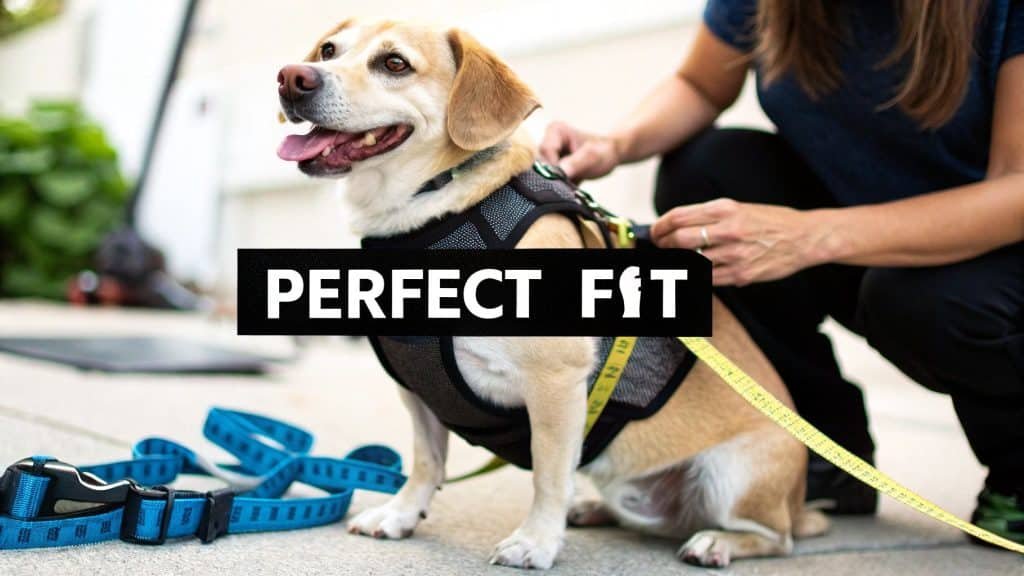
Taking just a few minutes to measure your dog correctly makes all the difference. It ensures the harness does its job, keeping your best friend secure and visible.
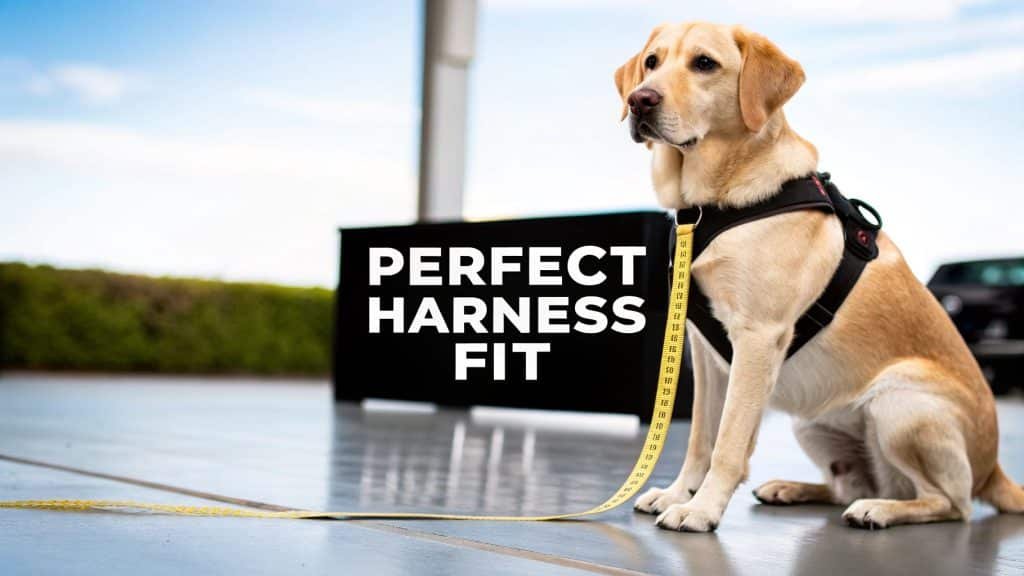
You’ll need a soft, flexible measuring tape to get started. Don’t have one? No problem. A piece of string and a regular ruler will work just fine. We’re going to focus on two key areas: the neck and the chest.
These measurements are the first step toward achieving the three pillars of a great harness: a perfect fit, total comfort, and reliable control.
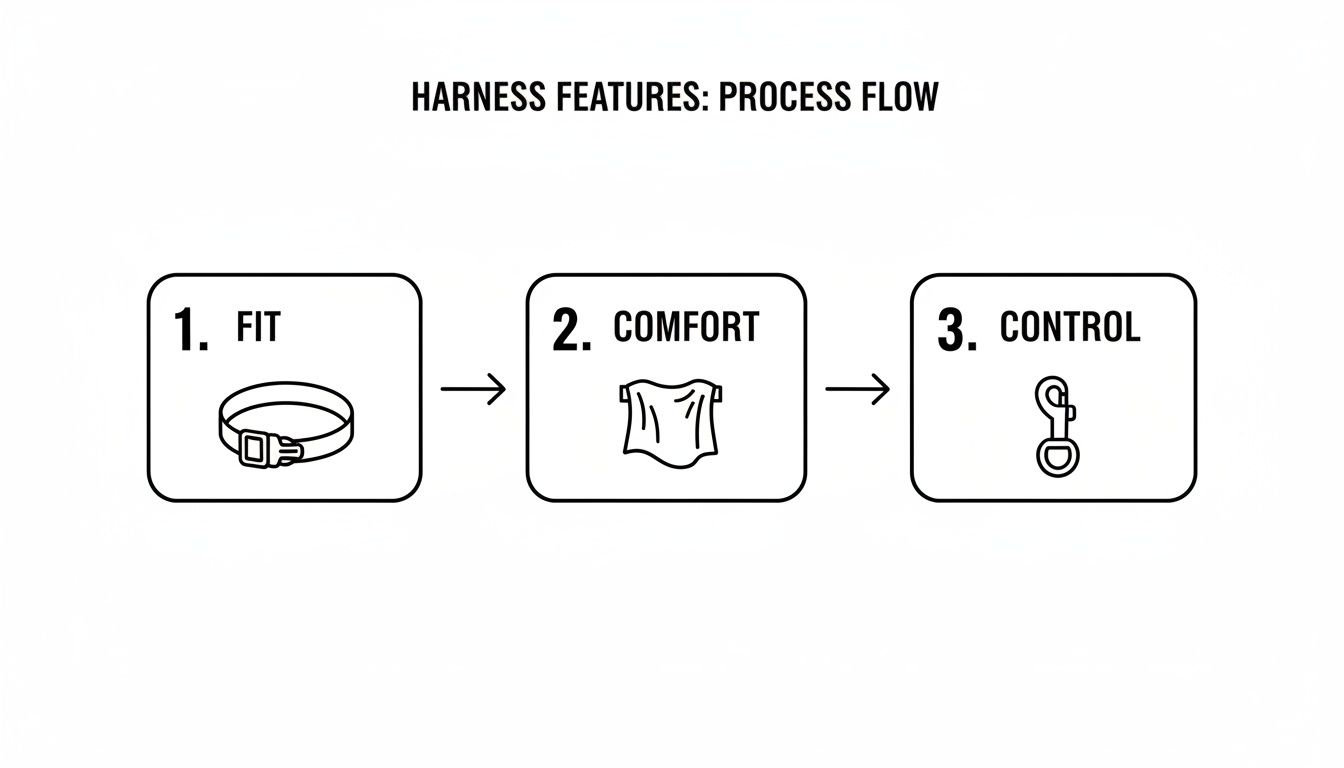
As you can see, everything starts with a secure fit. It’s what allows your dog to be comfortable and what gives you the confidence to guide them safely on your walks.
Step-by-Step Measuring Guide
For the most accurate numbers, try to measure your dog while they’re standing calmly.
- Measure the Neck: Gently wrap the tape around the base of your dog’s neck, right where it’s thickest and meets their shoulders. You’re looking for a snug measurement, not a constricting one.
- Measure the Chest Girth: This is the most important measurement of all. Find the widest part of your dog’s rib cage, which is usually right behind their front legs, and wrap the tape all the way around.
- Check the Size Chart: With those two numbers in hand, find the sizing chart for the harness you’re considering. Every brand is a little different. If your dog is right on the edge between two sizes, it’s almost always better to go with the larger one. You can usually tighten a harness down, but you can’t make a small one bigger.
The Two-Finger Rule
Once the harness is on and you’ve adjusted the straps, it’s time for a quick but critical safety check. I call it the “two-finger rule,” and it’s a lifesaver.
You should be able to slide two fingers flat between any part of the harness and your dog’s body. Can’t fit them in? It’s too tight. If you can easily fit more than two, it’s too loose and needs tightening.
A quick word of advice: avoid the temptation to buy a harness that’s way too big for your puppy, thinking they’ll “grow into it.” An oversized harness is a serious escape risk. Always, always prioritize a secure fit for their current size. It’s the simplest way to make sure every walk is a safe one.
Care and Maintenance for Lasting Visibility
To get years of safe walks out of your reflective harness, a little bit of care goes a very long way. Think of it like any other piece of essential gear—its performance relies on keeping it in top shape. You want to preserve both the reflective elements and the overall strength of the harness.
The reflective strips are basically a network of tiny, powerful mirrors. When they get caked in mud, dirt, or grime, that film blocks their ability to bounce back light. A simple, regular cleaning is the best thing you can do to keep that glow bright and your pup seen.
But it’s not just about cleanliness. Giving the harness a quick inspection before you head out the door can help you spot small problems before they turn into big ones, making sure your gear is always ready for your next adventure.
Best Practices for Cleaning Your Harness
Keeping your reflective harness clean is pretty simple, but your technique matters. You don’t want to accidentally scrub off the very thing that makes it work! Aggressive washing can wear down the reflective coatings and damage the fabric.
For most harnesses, hand-washing is the way to go. Even a gentle machine cycle can be too rough, causing reflective tape to crack or peel over time.
- Go with Mild Soap: Stick to a gentle, pet-safe soap. Harsh detergents or bleach are a no-go, as they can eat away at the reflective material and might irritate your dog’s skin.
- A Gentle Hand-Wash: Let the harness soak for a bit in cool water with a little soap. Use a soft cloth or brush to gently work out the dirt, especially on the grimy spots.
- Rinse Well and Air-Dry: Make sure you rinse out all the soap. Then, just hang it up to air-dry somewhere out of direct sunlight, as intense heat can weaken the materials.
If you need some gentle but effective cleaning supplies, take a look at our collection of pet grooming and cleaning products that are tough on dirt but easy on your gear.
Perform a Regular Safety Check
A great harness is only as strong as its weakest link. It’s a smart habit to give it a quick but thorough once-over at least once a month.
This simple five-minute check is your first line of defense against gear failure. Look for any signs of wear and tear that could compromise the harness’s strength or visibility during a critical moment.
Here’s a quick checklist to run through:
- Check the Stitching: Look closely for any frayed or loose threads. Pay special attention to the areas around the D-rings and buckles, since that’s where the most stress happens.
- Inspect the Reflective Strips: Make sure the reflective material isn’t peeling, cracked, or looking overly worn down.
- Test the Buckles and Adjusters: Snap all the buckles open and closed a few times to make sure they click securely into place. Check any plastic sliders or adjusters for cracks.
- Examine the Hardware: Give the metal D-rings a once-over to ensure they aren’t bent, rusted, or showing any signs of weakness.
Finding the Right Reflective Harness for Your Lifestyle
Choosing the right reflective harness really comes down to matching its features to your daily life with your dog. Think about it—the gear you need for a quick walk around the block is worlds apart from what you’d want for a weekend hike. When you align the harness with your specific activities, you’re not just buying a product; you’re investing in your dog’s safety and comfort.
It’s like picking out your own shoes. You wouldn’t wear flip-flops to go hiking, right? Same idea. A sleek, lightweight harness is perfect for city life, while a tough, padded one is a much better bet for tackling the great outdoors.
Urban Explorer vs. Trail Adventurer
Let’s break down two common scenarios to see how your lifestyle points to the perfect harness.
- The Urban Explorer: If your daily routine involves navigating busy sidewalks, crosswalks, and parks full of traffic, your top priority is being seen. You need 360-degree visibility. A harness with wide reflective stripes or bright piping on a minimal frame is fantastic for making your dog pop under streetlights and in the glare of headlights.
- The Trail Adventurer: For those who prefer dirt paths to pavement, you’re dealing with uneven ground, thick woods, and true darkness away from city lights. Durability and function are key here. Look for a rugged harness built with reinforced stitching, padded chest plates for comfort on long treks, and even a sturdy back handle to help lift your pup over logs or rocks.
If you and your dog are the adventurous types, you already know how crucial visible gear is. Good resources on essential tips for camping with your dog almost always stress this point.
A great harness isn’t just a purchase; it’s an investment in countless safe and enjoyable walks. It provides peace of mind, knowing your companion is protected no matter where your journey takes you.
This growing focus on safety is making a big splash in the pet gear world. The market for dog collars, leashes, and harnesses is projected to soar past USD 6.3 billion globally, mostly because owners like us are demanding better visibility features. And for good reason—reflective elements can boost nighttime visibility by up to 500%, a feature that genuinely saves lives. You can discover more insights about the growing pet safety market from futuremarketinsights.com.
At the end of the day, the best reflective harness is the one that just works for you and your dog, no fuss. Once you’ve thought about your environment and your adventures, you can confidently browse our complete collection of collars, leashes, and harnesses to find that perfect match.
Frequently Asked Questions
When it comes to your dog’s safety, you want straight answers. Let’s tackle some of the most common questions we hear from dog owners about reflective harnesses so you can feel confident you’re making the right choice.
Is a Reflective Harness Better Than a Reflective Collar?
That’s a great question, and the answer is a definite yes. While any reflective gear is better than none, a harness has some major advantages over a simple collar.
First, think about how a leash works. A collar puts all that pulling pressure right on your dog’s throat and neck, which can be dangerous and uncomfortable, especially for smaller breeds or strong pullers. A harness, on the other hand, spreads that force out across the much stronger chest and shoulder areas. It’s a much safer and more humane way to walk your dog.
Plus, a harness just offers a bigger canvas for those bright, reflective materials. You get more coverage, making your pup a much bigger, more obvious beacon to drivers in low light.
For the best combination of safety, control, and visibility on your walks, a well-fitted reflective harness is the clear winner. It’s an investment in both your dog’s immediate security and their long-term well-being.
How Often Should I Replace My Dog’s Harness?
There isn’t a hard-and-fast expiration date on a harness. Its lifespan really comes down to how much you use it and how well it holds up. The key is to get into the habit of giving it a quick once-over before every walk.
Think of it as your pre-flight safety check:
- Stitching: Are any seams looking frayed or loose? Pay close attention to the areas around the D-rings and buckles, as that’s where the most stress happens.
- Reflective Material: Check to see if the reflective strips or piping are peeling, cracked, or just plain worn out. If they’re dull, they aren’t doing their job.
- Hardware: Click the buckles a few times to make sure they engage securely. Look for any rust or bending on the metal D-rings.
If you find any weak spots that could snap or reduce visibility, it’s absolutely time for a new one. A more thorough inspection once a month is a fantastic routine to get into.
Can My Dog Wear a Reflective Harness All Day?
We strongly advise against this. No matter how comfy and well-padded a harness is, leaving it on 24/7 isn’t a great idea. It can cause chafing, skin irritation, and even matted fur over time.
It’s best to think of a harness as gear for a specific activity—walks, car rides, or training. When you’re back home and your dog is just chilling out, take it off. This lets their skin and coat breathe, keeps them more comfortable, and helps your harness last longer, too. For a wide selection of gear designed for your pet’s needs, you can explore the collections at Ur Pet Store.
Ready to make every walk safer? Find the perfect reflective dog harness for your best friend at Ur Pet Store. Shop our full collection now and enjoy peace of mind on every adventure.