

Blog
Choosing a Large Dog Harness No Pull

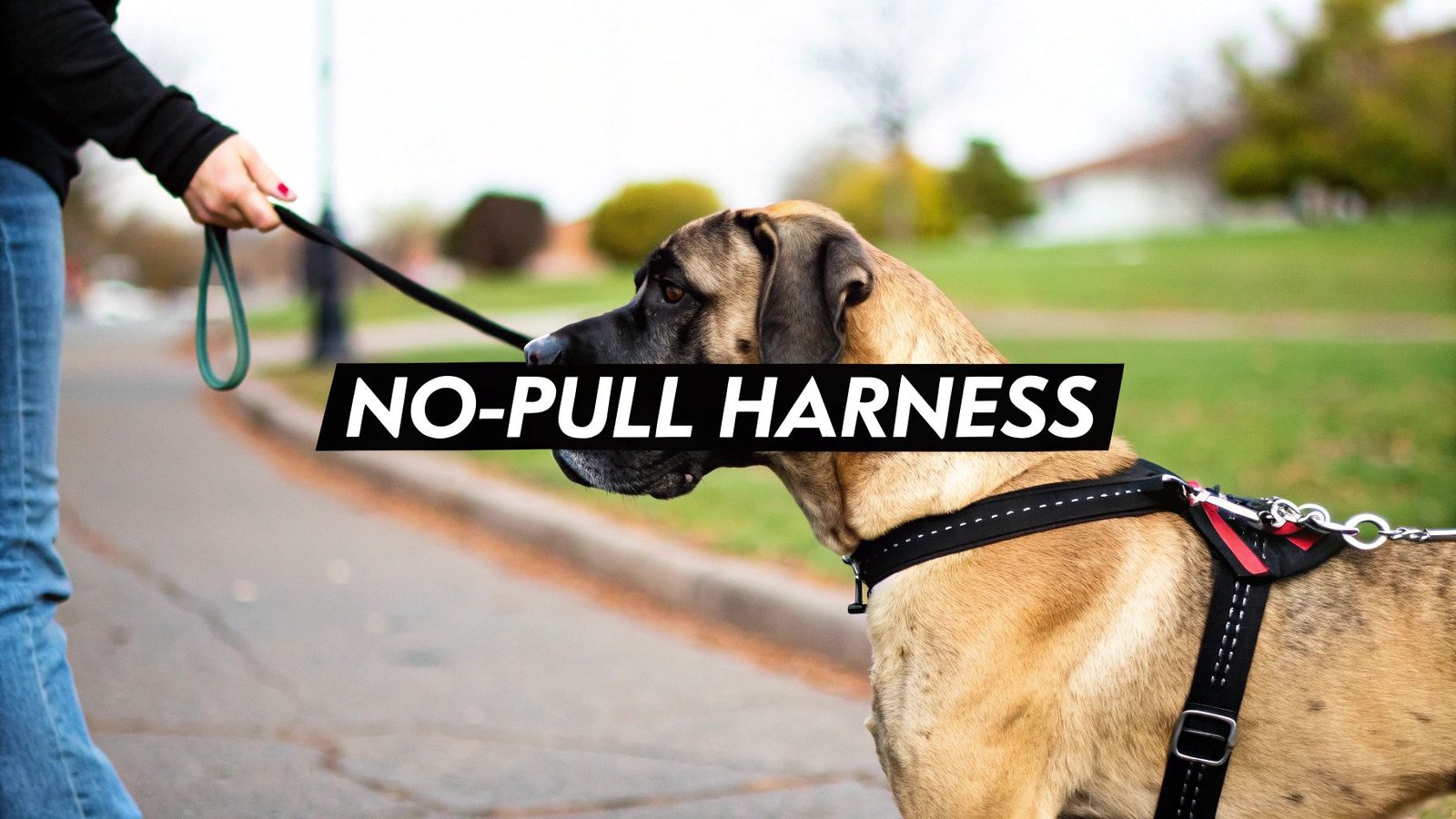
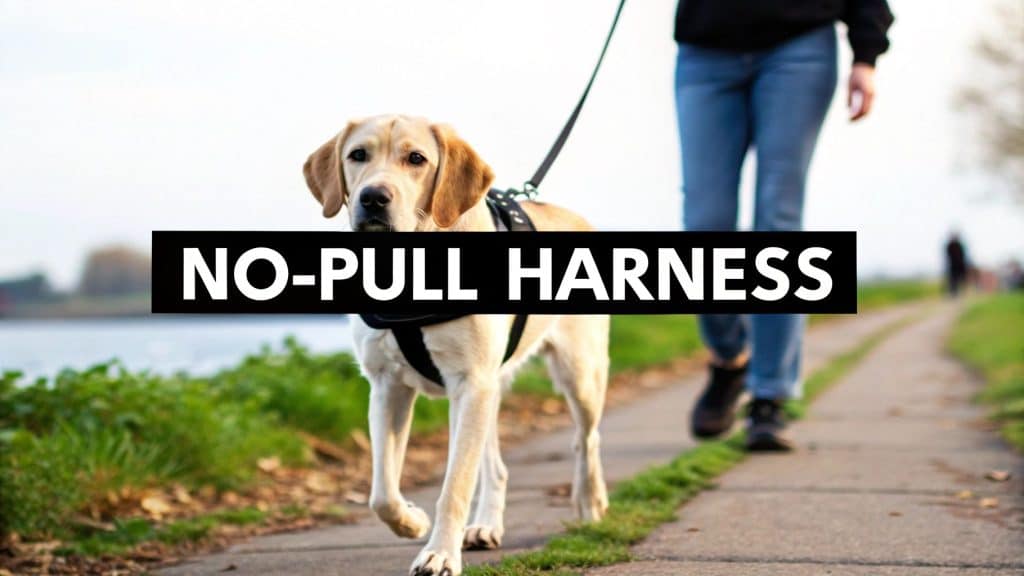
If you’re dealing with a strong puller, a large dog harness no pull is your best friend. It’s designed with a front-clip that redirects your dog’s forward momentum without choking them or causing pain. This simple but brilliant design gives you back the control, turning what was a stressful tug-of-war into a genuinely enjoyable walk.
End The Tug Of War With Your Large Dog
We’ve all been there. You’re trying to enjoy a nice, relaxing stroll, but your powerful, enthusiastic dog has other plans. The constant yanking doesn’t just hurt your arm; a traditional collar can put a dangerous amount of pressure on your dog’s throat. This guide is your complete playbook for finding the perfect no-pull harness to finally win that battle.
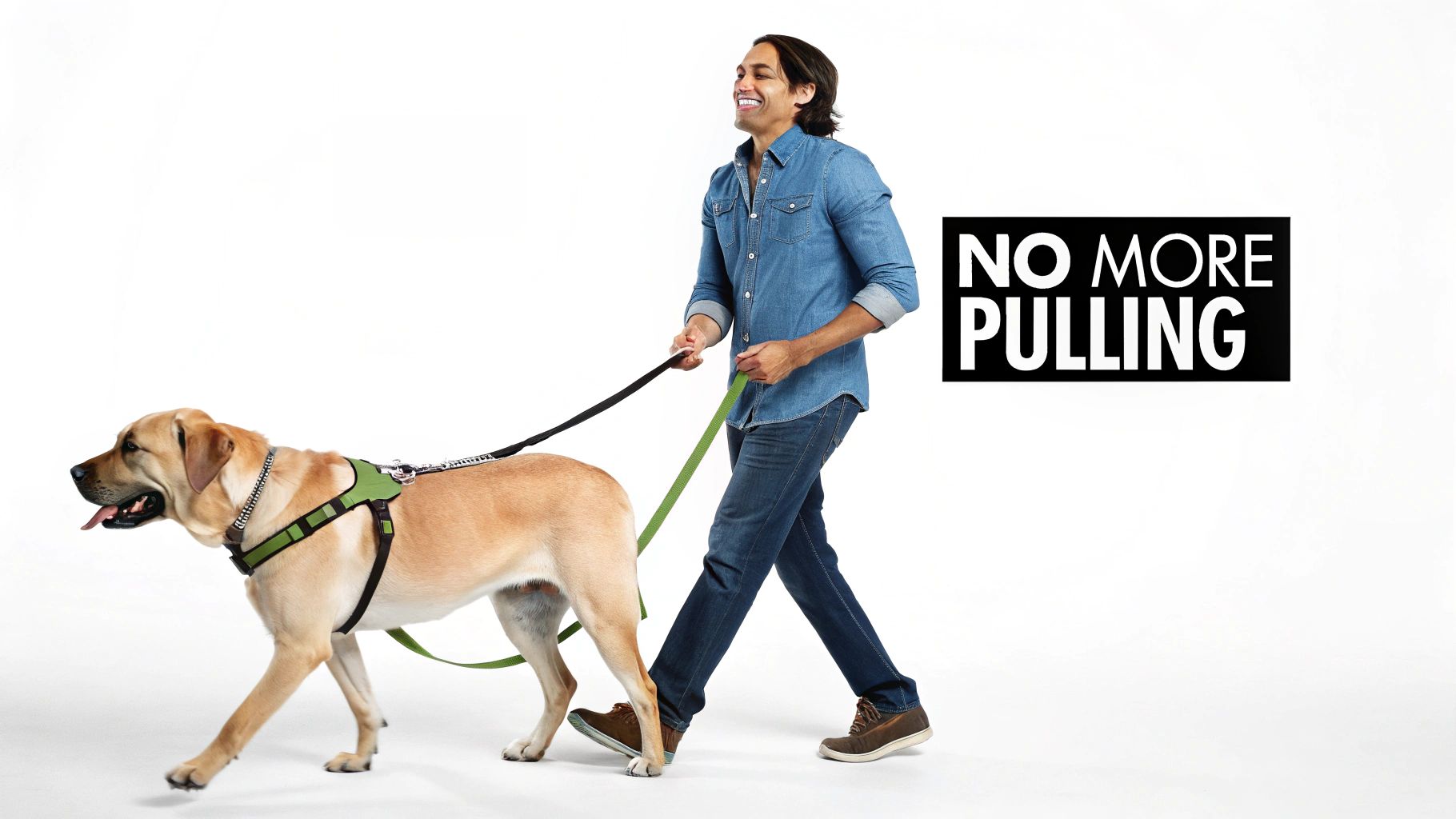
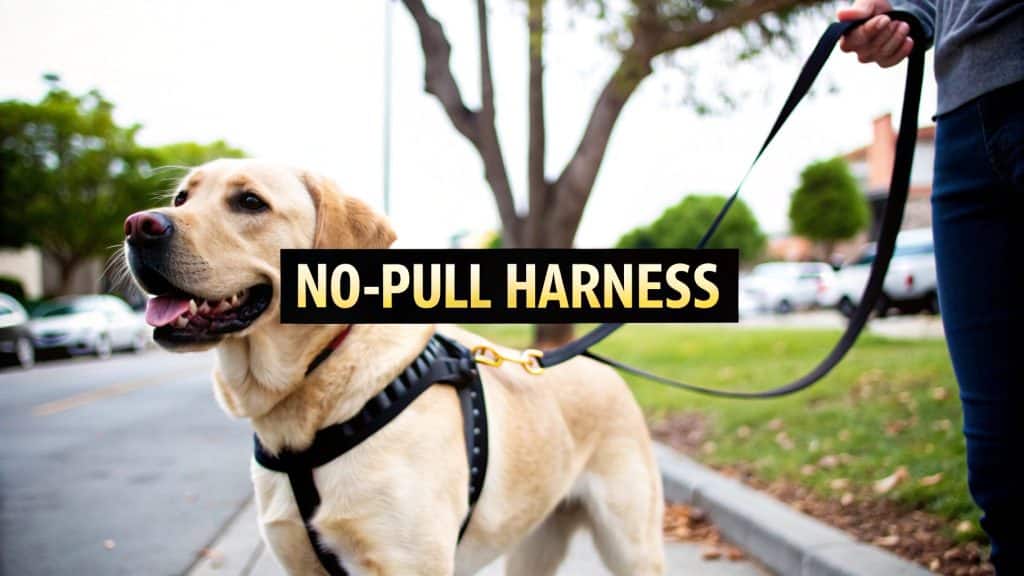
The secret isn’t about brute force—it’s about smart leverage. A quality harness with a leash attachment on the chest gently guides your dog back toward you whenever they try to lunge forward. This simple redirection naturally breaks their momentum and teaches them that pulling doesn’t get them where they want to go.
A no-pull harness works with your dog’s body, not against it. It transforms pulling from a power struggle into a learning opportunity, making it a foundation for better walking habits.
Choosing The Right Tool For The Job
It’s no surprise that this move toward more humane training tools is catching on. The global no-pull dog harness market, valued at around $1.2 billion, is expected to almost double by 2033. This trend shows a clear shift toward responsible pet ownership and a demand for kinder, more effective training solutions.
This guide will walk you through the most important features to consider, such as:
- Front-Clip vs. Dual-Clip: We’ll break down which attachment point gives you the best control for your dog’s unique pulling style.
- Material and Durability: For big dogs, reinforced stitching and tough, durable materials aren’t just a nice-to-have; they’re essential.
- Proper Fit and Adjustment: A snug, secure fit is non-negotiable for the harness to work safely and effectively.
Of course, the right gear is just one piece of the puzzle. Understanding the broader needs of a large dog is key. For some excellent all-around advice, check out these 5 Simple Tips To Take Care Of Larger Breeds Of Dogs. By pairing the right equipment with solid knowledge, you can reclaim control and start enjoying walks again with your best friend.
So, what’s the secret behind a large dog harness no pull design? It’s not magic, and it’s definitely not about punishing your dog. It’s all about simple physics and redirecting their natural instinct to pull. Once you grasp this, you’ll see why it’s a game-changer for walking a powerful dog.
Think about trying to steer a heavy shopping cart. If you push from behind, all you can do is make it go faster in the direction it’s already pointed. That’s a back-clip harness in a nutshell.
Now, imagine you tie a rope to the front corner of that cart. With a gentle tug, you can easily turn the whole thing. That’s exactly how a front-clip no-pull harness works.
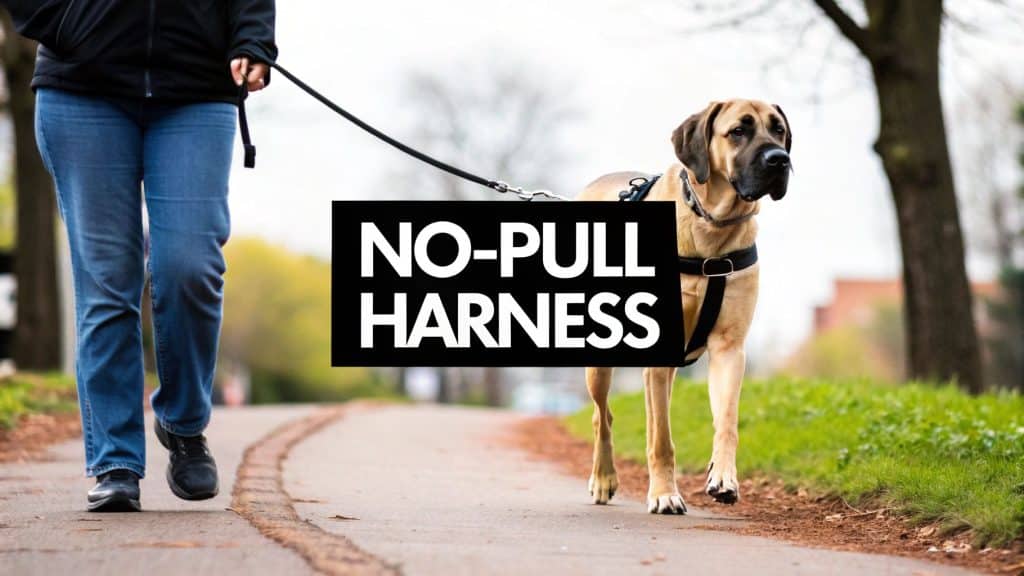
When your dog starts to lunge, the leash attaches to a D-ring on their chest. The gentle pressure doesn’t yank them backward or cause any pain; it simply guides their front end—their chest and shoulders—to the side, turning their entire body back toward you.
Redirecting Force Instead of Fighting It
The real brilliance here is how the harness interrupts your dog’s forward momentum. Instead of getting into a tug-of-war where you’re just pulling against their full strength, you’re changing the direction of their energy. Pulling forward suddenly becomes a very inefficient way for them to get where they want to go.
This simple redirection accomplishes two crucial things:
- It breaks their focus: A dog straining at the leash is laser-focused on whatever is ahead. The gentle turn redirects their attention right back to you.
- It makes pulling awkward: By turning their body, the harness makes it physically clumsy to keep pulling forward, so they naturally slow down.
The point of a front-clip harness isn’t to punish pulling. It’s to make walking calmly by your side the easiest and most rewarding choice for your dog. Think of it as a communication tool, not a restraint.
The Problem with Back-Clip Harnesses
On the flip side, a harness that clips on the back can actually make pulling worse, especially with strong, large breeds. When a dog pulls against that back clip, they can lean in and use their entire body weight, just like a sled dog. This often triggers their opposition reflex—an instinct to push back against pressure.
This “sled dog effect” can accidentally reinforce the exact behavior you’re trying to eliminate. While back-clip harnesses are perfectly fine for dogs who already have great leash manners, they give you almost zero leverage to manage a determined puller. This is why the front clip is the essential feature for a true no-pull solution.
Essential Features For A Large Dog Harness
When you’re shopping for a large dog harness no pull, you’re doing more than just picking out a training aid—you’re choosing a critical piece of safety gear. A harness for a big, powerful dog has to be built like a tank, ready to handle serious force while keeping your dog comfortable and giving you confident control. For strength and reliability, some features just aren’t negotiable.
The first thing to look at is the nuts and bolts: the materials and construction. Think rugged fabrics like ballistic or ripstop nylon, the kind designed to take a beating without tearing. The stitching is just as crucial. Keep an eye out for reinforced seams, especially that tell-tale box “X” stitch pattern at the major stress points. That’s the mark of a harness built to last.
This shift toward heavy-duty design is happening all across the pet gear world, with a huge emphasis on safety and smart design. Unlike old-school collars that yank on a dog’s sensitive neck, a good harness spreads that pulling force safely across their strong chest and shoulders. This is a game-changer for dogs who love to pull. If you’re interested in the data behind this trend, you can read the full research on the growing demand for safer pet harnesses.
Adjustability Is Key For A Secure Fit
A harness that doesn’t fit right is a harness that’s bound to fail. For large dogs, a sloppy fit can cause painful chafing or, even worse, give them an opportunity to back out and slip free. That’s why multiple adjustment points are an absolute must.
You’ll want a harness with at least four points of adjustment—typically two around the neck and two around the chest. This lets you dial in a snug, customized fit that molds perfectly to your dog’s unique body shape, leaving no room for escape.
A secure harness should feel like a firm hug, not a loose jacket. It needs to stay in place without restricting your dog’s natural shoulder movement, ensuring comfort and escape-proof security on every walk.
Safety And Comfort Features
Beyond the basic framework, a few key additions can turn a good harness into a great one. These features make life safer for your dog and easier for you, especially when you’re out and about.
- Padded Chest Plate: A soft, padded panel on the chest is fantastic for distributing pressure and preventing rubbing. It’s a lifesaver for dogs with short fur or sensitive skin.
- Reflective Strips: If you walk in the early morning or late evening, reflective trim is non-negotiable. It makes your dog pop in headlights, which is a massive safety boost.
- Sturdy Back Handle: Sometimes called a “traffic handle,” this loop is a godsend. It gives you a way to get instant, close control of your dog near busy roads, in a crowd, or if you ever need to help them over an obstacle.
To help you sort through the options, we’ve put together a quick checklist of what to look for when choosing a harness for a strong dog.
Harness Feature Checklist for Large Breeds
| Feature | Why It’s Critical for Large Dogs | What to Look For |
|---|---|---|
| Durable Materials | Large dogs generate immense pulling force that can shred weak fabrics. | Ballistic nylon, ripstop nylon, or heavy-duty polyester. |
| Reinforced Stitching | Stress points (where D-rings and straps meet) are prone to failure. | Bar-tack or box “X” stitching at all connection points. |
| Multiple Adjustments | Ensures a snug, escape-proof fit for various body shapes. | A minimum of four adjustment points (neck and chest). |
| Padded Panels | Prevents chafing and distributes pressure evenly across the chest. | Soft, breathable padding on the chest and back plates. |
| Sturdy Hardware | Plastic buckles can snap under strain; weak D-rings can bend open. | Metal buckles (like Cobra-style) and welded metal D-rings. |
| Back “Traffic” Handle | Provides immediate, close control in crowded or high-risk situations. | A well-stitched, easy-to-grab handle on the back. |
| Reflective Trim | Crucial for visibility and safety during walks in low-light conditions. | Reflective stitching, piping, or entire strips of reflective material. |
Keeping these features in mind will make your search much easier. When you’re ready to see how these elements come together in different styles, take a look at our full collection of collars, leashes, and harnesses to find the perfect fit for your big companion.
A Step-by-Step Guide to the Perfect Fit
An ill-fitting large dog harness no pull isn’t just a nuisance; it’s a serious safety risk. If it’s too loose, your dog can pull a Houdini and slip right out. Too tight, and you’re looking at painful chafing, restricted movement, and a dog who dreads their walks. Nailing the fit is absolutely the most crucial step to making sure the harness does its job safely and effectively.
I like to think of it like fitting a good hiking backpack. When it’s adjusted correctly, the pack feels like a part of you, distributing weight so you can move freely. A bad fit, on the other hand, will rub you raw and throw you off balance. Your dog’s harness is no different—it needs that same precise fit to work well and feel good.
Taking Accurate Measurements
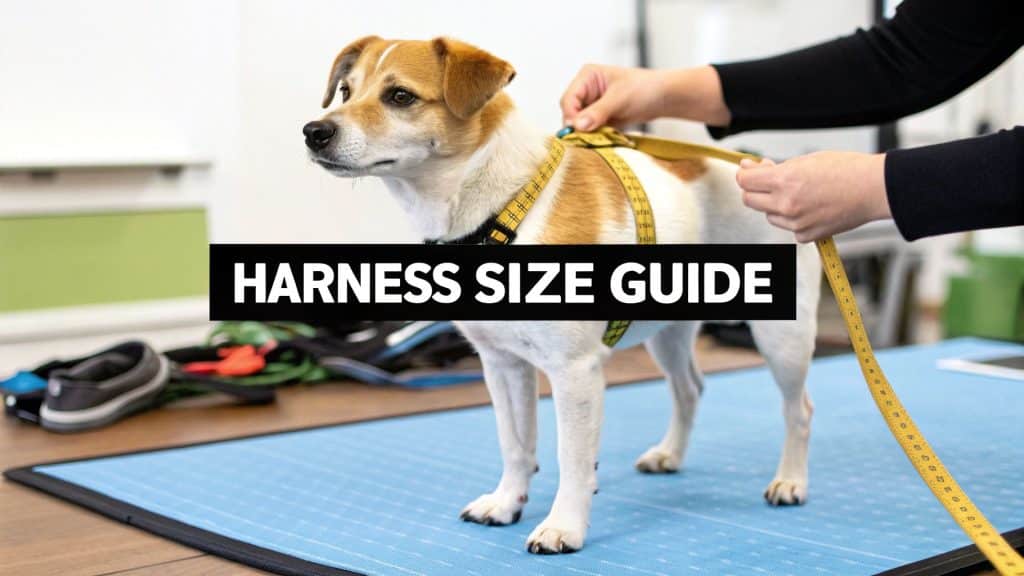
Before you even think about clicking “add to cart,” you need two core measurements. Grab a soft measuring tape (the kind used for sewing works best) and have some high-value treats on hand to make this a positive experience for your dog.
- Chest Girth: This is the big one. You need to measure the widest part of your dog’s rib cage, which is usually an inch or two behind their front legs. Wrap the tape all the way around.
- Neck Circumference: Measure around the base of your dog’s neck, right where a collar would comfortably sit. Keep the tape snug, but not tight.
Jot these numbers down. Every reputable harness brand will have a sizing chart, and these two measurements will be your guide to choosing the right one from the get-go.
As you can see, features like durability and safety are only as good as the fit. A perfect fit is what unlocks their true potential.
Fine-Tuning The Straps
Once your new harness arrives, it’s time to dial in the fit. You’re aiming for snug, not suffocating. The classic “two-finger rule” is your best friend here.
The rule of thumb is simple: you should be able to slide two fingers comfortably between any of the straps and your dog’s body. If you can fit a whole hand, it’s way too loose. If you can’t even squeeze one finger in, it’s dangerously tight.
Make sure you check this rule around the neck and the chest. Pay extra attention to the area right behind their front legs—their “armpits”—as this is a prime spot for chafing if the fit is off. The harness should allow your dog’s shoulders to move freely and naturally.
Once you’ve got it just right, you’ll have the peace of mind that your dog is secure and comfortable. If you’re looking for a harness with maximum adjustability, a well-made tactical dog harness often provides multiple adjustment points, giving you that truly custom, escape-proof fit for any adventure.
Using the Harness as a Training Partner
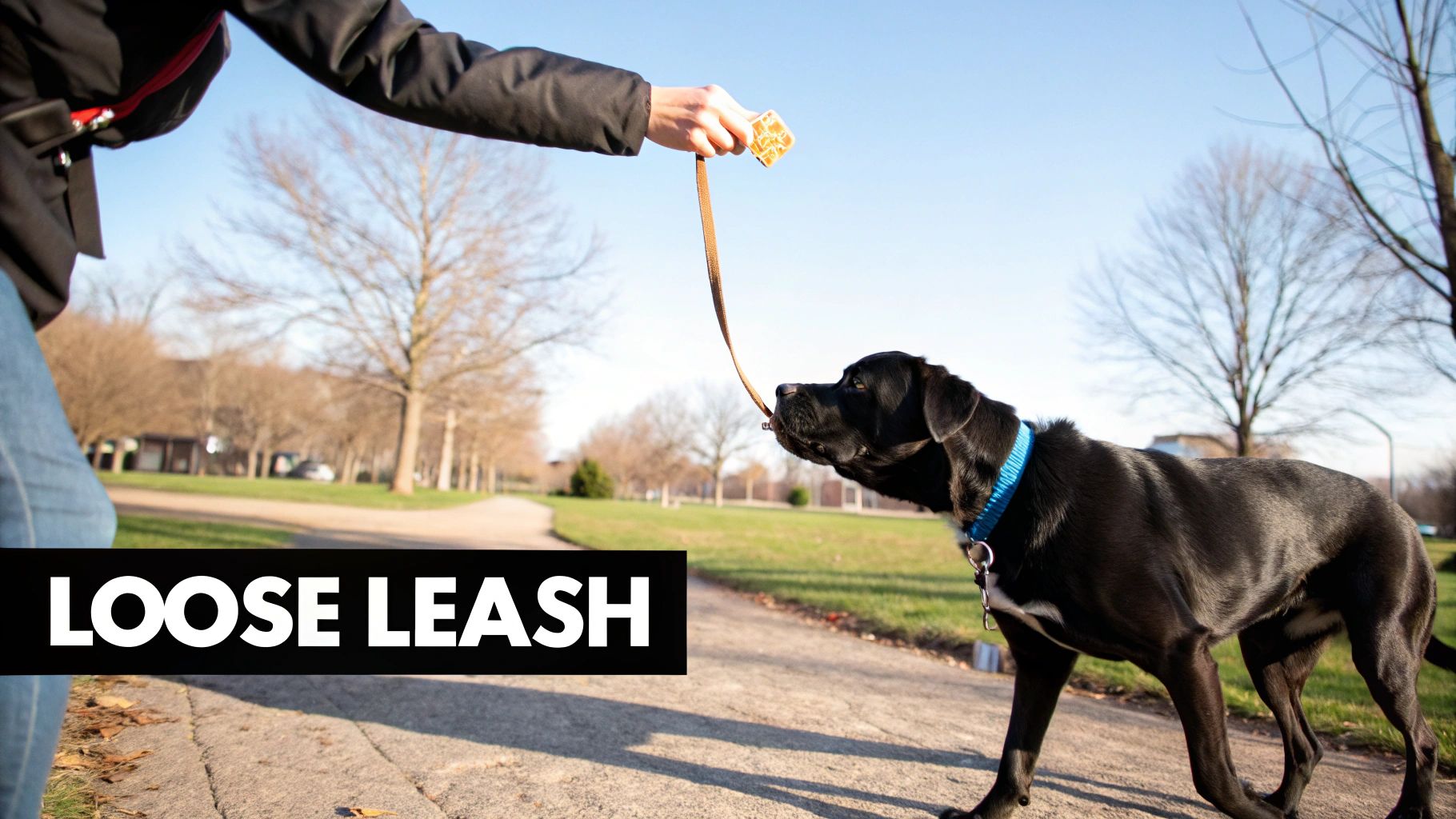
A top-quality large dog harness no pull is an incredible piece of gear, but it’s crucial to see it for what it is: a training partner, not a magic wand. The harness is brilliant at managing the physics of pulling, but real, lasting change happens when you pair it with positive reinforcement. This combination turns the harness from a simple piece of equipment into a powerful communication tool that helps your dog learn better walking habits.
The goal isn’t just to stop the pulling. It’s to teach your dog that walking calmly by your side is the best, most rewarding way to explore the world. This means you have to be an active part of the process, using the harness’s design to guide your dog toward making the right choice.
Building a Positive Association
First impressions are everything, especially for our dogs. You want your dog to see the harness and think, “Yes! Something fun is about to happen!” not, “Ugh, here comes that restrictive thing again.” This whole process starts long before you even think about clipping on the leash.
- Step 1: The Introduction: Don’t just wrestle the new harness onto your dog and head out the door. Let them check it out on their own terms first. Place it on the floor and give them a really good treat every time they calmly sniff or nudge it.
- Step 2: Positive Placement: Once they seem cool with it, hold the harness up. The moment your dog voluntarily puts their head through the opening, shower them with praise and another treat. Take it right back off. Repeat this a few times in short, happy sessions.
- Step 3: Buckle Up with Rewards: Now, it’s time to work on the buckles. Each time you clip one shut, offer a treat. You want the click sound to signal that something good is coming their way.
This slow and steady introduction builds a powerful, positive emotional connection. It ensures your dog associates their no-pull harness with fun, tasty rewards, and the awesome prospect of a walk with their favorite person.
Turning Walks into a Training Game
Once the harness is on and you’re out the door, every walk becomes a chance to train. The front-clip design gives you the leverage to gently redirect your dog’s attention back to you without yanking or getting into a stressful tug-of-war.
Your main job is to reward the behavior you want to see more of: a loose leash. When the leash is slack and your dog is trotting calmly beside you, offer verbal praise or a small treat. The second they start to pull, just stop walking. Stand still and wait.
The harness does the heavy lifting by turning them back toward you, which immediately breaks their forward momentum. The instant the leash goes slack again, praise them and start walking. This teaches a simple but powerful lesson: pulling stops the fun, but walking nicely keeps the adventure going.
This technique marries the mechanical advantage of the large dog harness no pull with clear, consistent communication. You aren’t just stopping the pulling in that one moment; you’re building the foundation for a lifetime of relaxed, enjoyable walks together.
Common Harness Mistakes (And How to Fix Them)
It’s a frustrating feeling: you’ve invested in a top-rated large dog harness no pull, but your dog is still dragging you down the street. It’s easy to blame the harness, but often, the problem isn’t the tool itself—it’s how we’re using it.
A few small, common mistakes can completely undermine how a no-pull harness works. The good news is that they’re all easy to fix. Let’s walk through the most frequent slip-ups so you can get the results you’re looking for.
Getting the Size Wrong
This is, without a doubt, the number one mistake I see. A harness that’s too big gives a clever dog just enough wiggle room to back out of it and make a run for it—a scary situation for any owner. On the flip side, a harness that’s too tight will chafe, dig into their skin, and make walking a miserable experience.
Before you even click “buy,” grab a soft measuring tape. Measure around the widest part of your dog’s chest and their neck, then compare those numbers directly to the manufacturer’s sizing guide. Don’t just guess based on breed or weight.
Leaving the Straps Too Loose
Another huge issue is improper adjustment. Worried about making their dog uncomfortable, many people leave the straps far too loose. This slack defeats the entire purpose of the front-clip design, as there’s no gentle redirection when the dog pulls. It just becomes a sloppy, ineffective chest harness and a serious safety risk.
Pairing It with the Wrong Leash
Using the wrong leash with a no-pull harness is like trying to drive a car with a bicycle chain—it just doesn’t work. Retractable leashes are the worst offenders here. They create constant tension, which teaches your dog that pulling is actually what they’re supposed to do.
This sends a mixed message that directly fights against the harness’s goal. For clear communication and effective training, stick with a standard, non-retractable leash.
A harness isn’t clothing. Leaving it on your dog 24/7 is a recipe for disaster. It can cause matted fur, skin irritation, and even painful pressure sores. Think of it like a pair of hiking boots—you take them off as soon as you get home.
Simple Fixes for Big Problems
Getting your harness to work effectively really comes down to a few simple habits. Once you nail these, you’ll see a world of difference in your walks.
- Do the Two-Finger Check: After you’ve put the harness on and adjusted it, you should be able to slide two fingers snugly between any strap and your dog’s body. No more, no less.
- Take It Off Indoors: The harness goes on for walks and adventures, and it comes off when you’re back inside. This gives your dog’s skin and coat a chance to breathe.
- Stick to a Standard Leash: Pair your harness with a simple 4 to 6-foot leash. This gives you the best control and keeps your communication with your dog clear and consistent.
Steering clear of these common mistakes allows the harness to do its job properly. You’ll not only get a better-behaved walking companion but also build a safer and more enjoyable routine for you both.
Frequently Asked Questions
Even with the right gear in hand, you’re bound to have a few questions. Let’s tackle some of the most common ones that pop up when you’re getting started with a no-pull harness for a large dog.
Are No-Pull Harnesses Cruel?
Not at all—when they’re used the right way, of course. A good no-pull harness is designed to be a humane training aid, a world away from tools like prong or choke collars that work by causing pain.
Instead of yanking on the neck, a no-pull harness gently redirects your dog’s forward motion. It applies a bit of pressure across the chest or guides them back toward you, making pulling feel awkward and ineffective without ever choking or hurting them.
Can My Dog Wear It All Day?
I really wouldn’t recommend it. Keeping a harness on 24/7 can lead to some nasty problems like skin irritation, chafing, and even matted fur under the straps.
Think of it like your own walking shoes. You put them on for the walk, and take them off when you’re back home. Treat the harness the same way—use it for walks and training, then let your dog relax comfortably without it indoors.
A properly working harness, combined with positive training, results in a loose leash. When your dog pulls, the front clip should gently guide them back toward you, making calm walking the easiest and most rewarding choice.
How Do I Know It’s Working?
The proof is in the leash. When you see that leash go slack, you know you’re on the right track.
You’ll notice it working when your dog tries to lunge forward and is instead gently turned back toward you, almost as if they’re being steered. The real win, though, is when your dog starts choosing to walk calmly by your side without that constant tension on the line. That’s when you know the lesson has truly clicked.
Ready to transform your walks from a constant battle into a peaceful stroll? Find the perfect harness for your big companion at Ur Pet Store. Take a look at our hand-picked collection and get free shipping on every order. Discover the ideal harness for your dog today!