

Blog
Your Guide to a No Pulling Dog Harness

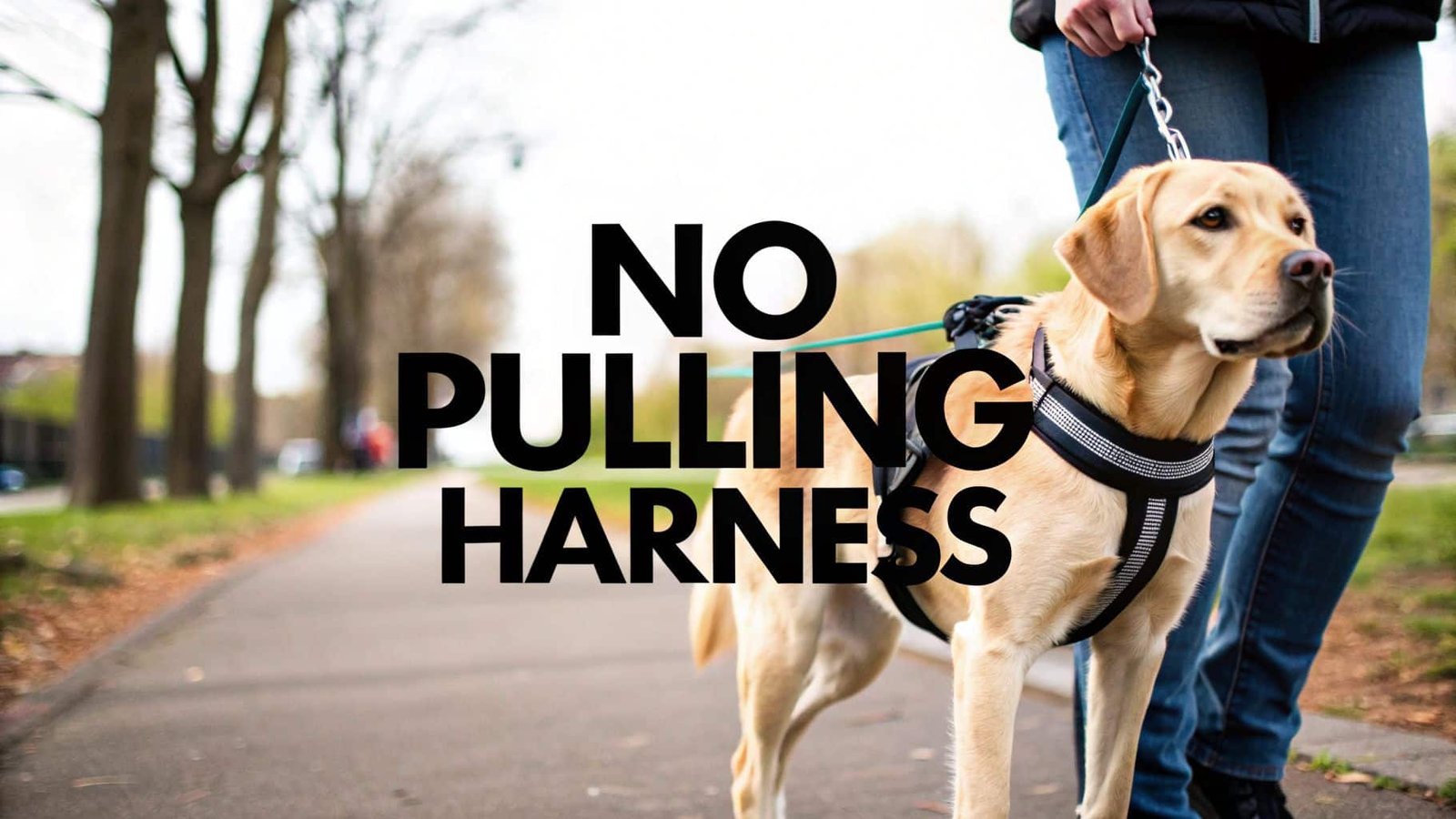
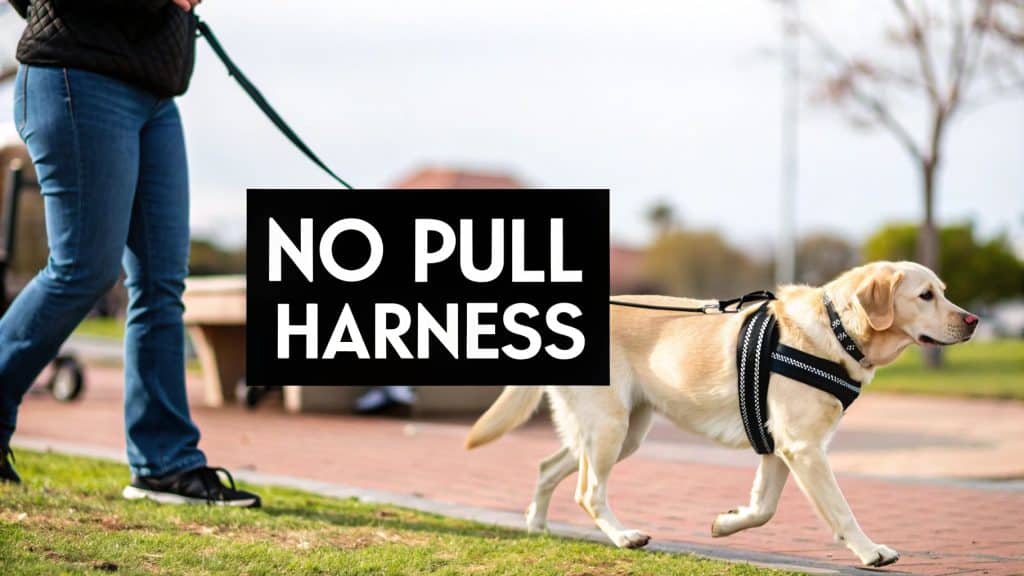
A no-pull dog harness is a game-changer for anyone tired of being dragged down the street by an enthusiastic pup. Its secret lies in a simple design tweak: the leash attaches to a ring on the dog’s chest, not on their back.
This small change gently redirects your dog’s forward momentum, swinging them back towards you whenever they start to pull. It’s a humane, effective way to put an end to the constant tug-of-war that makes walks so stressful.
End the Leash Pulling and Actually Enjoy Your Walks
Does taking your dog out feel more like a full-body workout than a relaxing stroll? If you’re constantly fighting against a pulling, lunging dog, you’re not alone. It’s exhausting for you and can be downright dangerous for your dog. So many owners just resign themselves to it, thinking that’s just how their dog is.
But it doesn’t have to be that way. A no-pull harness can completely change the dynamic of your walk. Standard collars can choke a dog or damage their trachea when they pull. And harnesses with the clip on the back? They can actually trigger a dog’s natural opposition reflex, making them pull even harder—think sled dog.
A Humane and Effective Training Tool
A no-pull harness works with your dog’s body, not against it. There’s no pain or discomfort involved.
It’s all about leverage. When the leash is clipped to the front, any forward lunge is instantly converted into a gentle turn that brings your dog’s attention back to you. This subtle redirection naturally discourages pulling and creates the perfect moment for you to reward them for walking nicely by your side. It’s not magic, but it’s an incredible training aid for teaching loose-leash manners.
This shift toward smarter, kinder training tools isn’t just a fad. The global market for these harnesses is booming, projected to jump from $1.2 billion to $2.5 billion in the near future. This trend shows a massive shift in how we think about dog training—focusing on cooperation over confrontation. You can dig deeper into the market trends driving this growth.
The goal isn’t just to stop the pulling. It’s about building a better walking partnership. A no-pull harness gives you the control needed to teach your dog that sticking with you is the best way to explore the world together.
In this guide, we’ll walk you through exactly how to use this simple tool to transform your dreaded daily drag into a peaceful, connected walk.
How a No-Pull Harness Gently Discourages Pulling
Ever tried to steer a runaway shopping cart by pushing it from behind? You end up wrestling its full momentum just to get it straight. Now, imagine guiding that same cart from the front—a simple nudge is all it takes to change direction. That’s the simple, brilliant idea behind a no-pull dog harness.
Instead of attaching the leash to the dog’s back like a traditional harness, a no-pull design changes the entire point of leverage. By clipping the leash to a ring on your dog’s chest, you get gentle but effective control over where they’re going. It’s not about yanking or forcing; it’s just basic physics.
This infographic does a great job of showing how that constant pulling turns walks into a tug-of-war, and how a no-pull harness offers a far more humane solution.
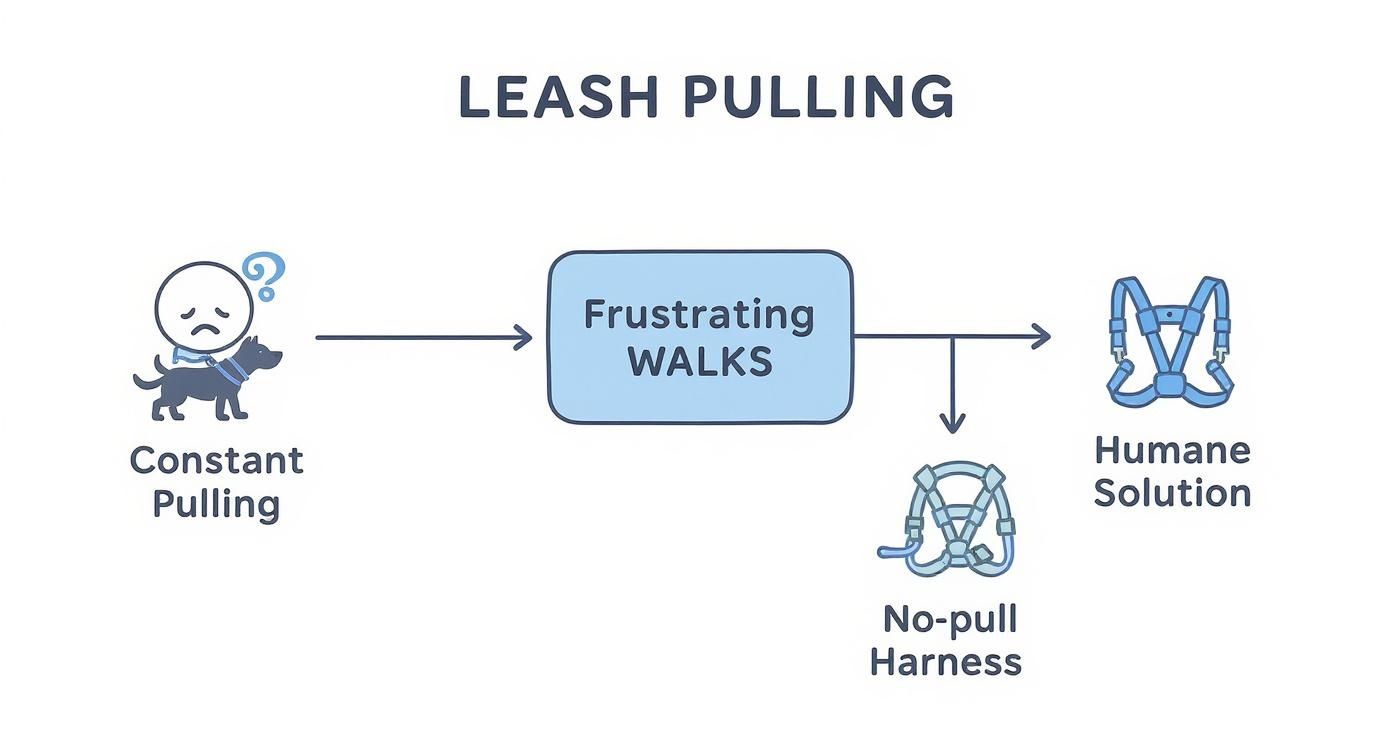
As you can see, the harness helps redirect that pulling cycle, turning it into a chance for better communication. The result is a much more enjoyable walk for both of you.
The Mechanics of Redirection
So, how does it actually work? When your dog lunges forward in a no-pull harness, the leash tightens just a bit across their chest. This pressure doesn’t choke or cause any pain. It simply guides their body into a slight turn, redirecting them back toward you. Suddenly, pulling straight ahead isn’t so easy or rewarding anymore.
This simple redirection is surprisingly effective for a few reasons:
- It breaks their forward focus. That little turn is often all it takes to interrupt their laser focus on whatever they were pulling toward, whether it’s a squirrel or another dog.
- It encourages them to check in. As they turn back in your direction, you have the perfect opportunity to praise them for reconnecting with you.
- It uses their own momentum against them. The harder they pull, the more they get turned. This teaches them that a loose leash is actually the best way to move forward.
This creates a gentle, ongoing conversation during your walk instead of a constant battle of wills.
Why Back-Clip Harnesses Can Encourage Pulling
On the flip side, a harness with the leash attachment on the back can sometimes make pulling even worse. This design can trigger a dog’s opposition reflex—their natural instinct to push back against pressure. It’s the very same reflex that makes sled dogs so good at their jobs.
Think of it this way: a back-clip harness basically gives your dog a green light to pull with their full body weight, turning you into an anchor they have to drag. A front-clip harness, however, acts more like a steering wheel, letting you guide them with minimal effort.
This key difference is why a no-pull harness is such a fantastic training tool. It doesn’t just put a band-aid on the pulling problem. It actively helps teach your dog that walking calmly by your side is the best way to get where they want to go, setting the stage for a great walking partnership built on cooperation, not conflict.
Choosing the Best No Pulling Dog Harness
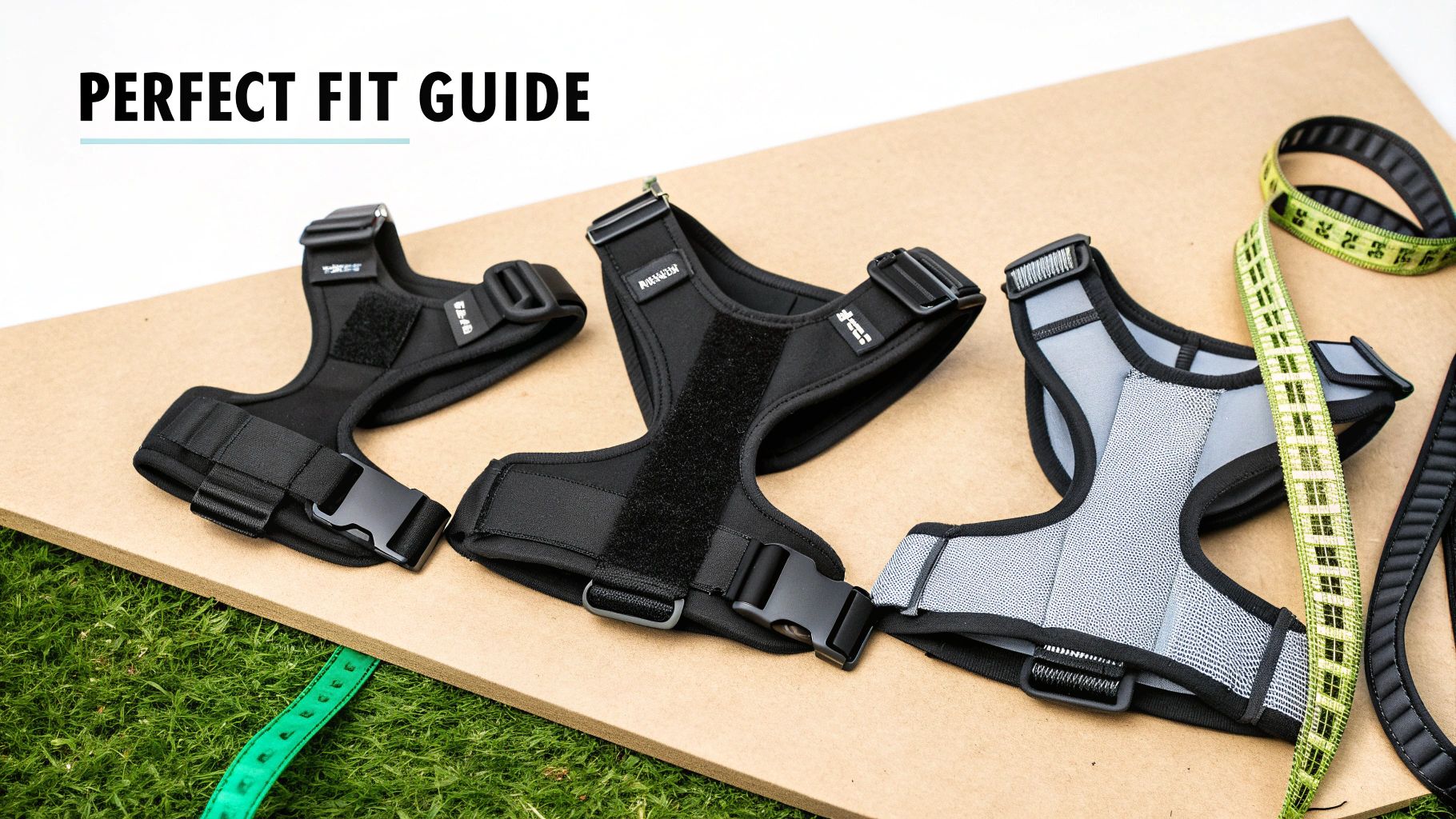
Walking into a pet store or browsing online for the right no pulling dog harness can feel a bit overwhelming with all the options out there. But don’t worry—it gets much simpler when you know exactly what to look for.
Think of it like buying a really good pair of hiking boots. The right fit, materials, and design are what separate a comfortable, effective tool from something that just causes blisters and frustration. The same principle applies here; the small details are what make a harness a great investment for you and your dog.
At its core, a true no-pull harness must have a front D-ring attachment. This is the non-negotiable feature that gives you that gentle “power steering” to redirect your dog when they pull. But a truly great harness offers much more than just a single clip.
Key Features for Comfort and Safety
First things first: the fit is everything. A harness that doesn’t fit correctly is not only useless but can also be dangerous or uncomfortable. Look for models with multiple points of adjustment—usually around the neck, chest, and back. This lets you create a custom, snug fit for your dog’s unique shape, preventing them from wiggling out while still allowing a full range of motion.
Next up is padding. This is a game-changer for your dog’s comfort. Quality harnesses have soft, breathable padding (often neoprene or fleece) along the chest and under the front legs. This simple addition prevents the straps from rubbing or chafing, which is especially important for dogs with sensitive skin or short fur. A comfortable dog is a happy dog.
The demand for these features is clear. The most popular harnesses, which often fall in the $29.99 to $79.99 price range, nearly always include both padded straps and several adjustment points. Shoppers have voted with their wallets, and comfort is king.
An effective no-pull harness must balance control with comfort. It should gently guide your dog’s movement without causing any pain, chafing, or restriction, ensuring a positive experience for both of you on every walk.
Durability and Practical Add-Ons
Beyond a perfect fit, you need a harness that’s built to last. Look closely at the materials. Strong nylon webbing and welded metal D-rings (not just bent wire) are signs of quality construction that can handle daily walks and a determined puller. Double-stitched seams are another detail that points to a durable, well-made product.
When you’re comparing harnesses, it’s often the small, thoughtful extras that make a big difference in your daily routine. Here are a few things to keep an eye out for:
- Reflective Stitching: An absolute must-have if you walk your dog in the early morning, at dusk, or on gloomy days. It makes you both far more visible to traffic.
- Back-Clip Option: Many of the best no-pull harnesses also include a D-ring on the back. This is fantastic for versatility, letting you use it as a standard harness in the car or once your dog has mastered loose-leash walking.
- Easy-to-Use Buckles: Fumbling with complicated clips is no fun, especially with an excited or anxious dog. Quick-release buckles make gearing up and down a quick, stress-free process.
With so many options on the market, it pays to look for a harness that truly ticks all the boxes. The table below breaks down the essential features to help you make a confident choice.
Essential Features of a High-Quality No Pulling Dog Harness
| Feature | Why It Matters | What to Look For |
|---|---|---|
| Front D-Ring Attachment | This is the key no-pull feature. It redirects your dog’s forward momentum sideways, discouraging pulling without choking. | A sturdy, welded metal D-ring positioned squarely in the center of the chest plate. |
| Multiple Adjustment Points | Ensures a snug, secure, and escape-proof fit that’s tailored to your dog’s specific body shape. | At least four adjustment points: two around the neck/shoulders and two around the chest. |
| Padded Straps | Prevents chafing, rubbing, and discomfort, especially on dogs with short fur or sensitive skin. | Soft, breathable materials like neoprene or fleece lining the chest plate and straps. |
| Durable Materials | Guarantees the harness can withstand daily use, strong pulling, and all weather conditions. | High-quality nylon webbing, reinforced stitching, and rust-proof metal hardware. |
| Reflective Elements | Greatly improves visibility and safety during low-light walks (early morning, evening, or overcast days). | Reflective thread stitched into the webbing or reflective trim along the edges. |
Focusing on these core elements will help you cut through the noise and find a harness that is safe, effective, and comfortable.
By using this checklist, you can confidently browse our complete collection of collars, leashes, and harnesses and pick the perfect one for your best friend.
Front-Clip vs. Back-Clip Harnesses Explained
When it comes to picking a dog harness, one of the biggest decisions you’ll make boils down to a single question: where does the leash clip on? That one small detail splits harnesses into two distinct camps—front-clip and back-clip—and each is designed for a completely different job. Figuring out this difference is the secret to getting your walks back on track.
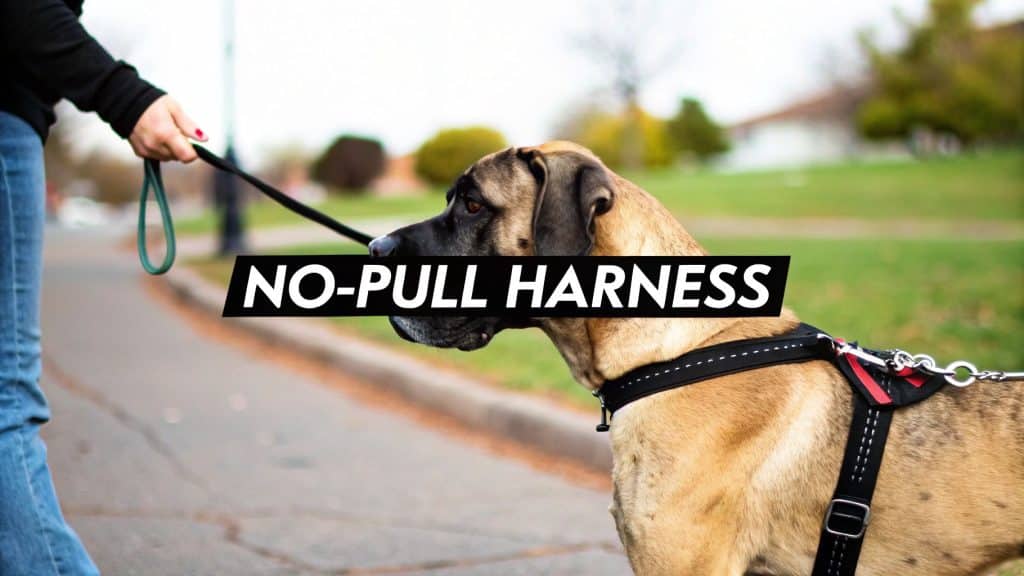
Think of a front-clip harness as your power steering. The leash attaches to a D-ring right on your dog’s chest, giving you gentle, effective control over their direction. The moment they start to pull, the tension on the leash steers them back toward you. It’s a simple, humane way to show them that pulling just doesn’t get them where they want to go. This is the core concept behind every true no-pulling dog harness.
On the other hand, a back-clip harness is more like a tow hitch. The leash connects to a ring on their back, between the shoulder blades. This is a great setup for dogs who already have lovely leash manners or for activities like hiking and running where you need the leash out of the way. But for a dog that pulls? That back clip can actually work against you by triggering their natural instinct to pull against the pressure.
The Right Tool For The Job
So, which one should you choose? It’s not about one being “better” than the other, but about picking the right tool for your current situation. A front-clip harness is a training tool, plain and simple. It’s built from the ground up to help you teach your dog how to walk politely without yanking your arm off.
A back-clip harness is more for management once those skills are learned. You’ll also see this design on specialized equipment, like the rugged back-clip on a quality tactical dog harness, which is perfect for working dogs or tough outdoor adventures where pulling isn’t the main issue.
The growing popularity of the front-clip harness signals a big change in dog training philosophy. Today, no-pull models account for an estimated 20-25% of the entire harness market.
This shift shows that owners are actively seeking out kinder and more effective ways to train. With the overall dog harness market projected to skyrocket from $5.53 billion to over $27 billion by 2032, you can bet that innovative, humane options will continue to be a huge part of that growth. You can dive deeper into the impressive growth of the dog harness market to see the trends for yourself.
Comparison of Front-Clip and Back-Clip Harnesses
To help you visualize which harness fits your dog’s needs, let’s put them head-to-head. This quick comparison breaks down the pros and cons so you can match the right style to your dog and your goals.
| Attribute | Front-Clip Harness | Back-Clip Harness |
|---|---|---|
| Primary Use | Training dogs not to pull on the leash. | General walking for trained dogs, running, hiking. |
| Pull Control | Excellent; redirects forward momentum sideways. | Minimal; can encourage pulling (opposition reflex). |
| Potential Issues | Leash can get tangled in the dog’s legs. | Puts pressure on the throat if the dog pulls hard. |
| Best For | Puppies, strong pullers, and training sessions. | Well-behaved walkers and specific canine sports. |
In the end, many savvy dog owners actually keep both types on hand. You might grab the front-clip harness for your daily training walks around the block and then switch to the back-clip for that fun weekend hike once your dog’s leash manners are solid.
Getting the Fit and Introduction Just Right
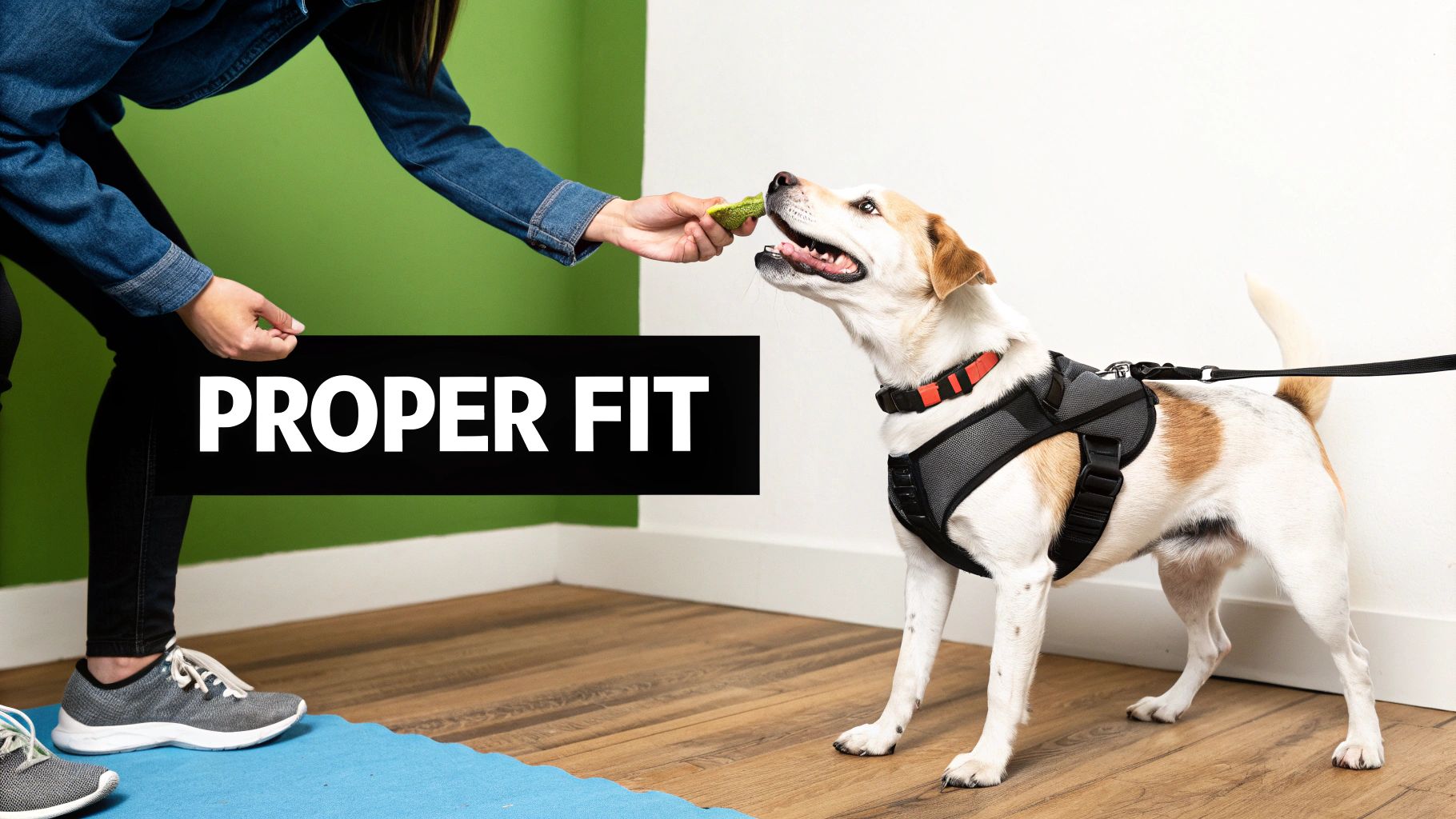
A no-pull harness that doesn’t fit correctly isn’t just a waste of money—it’s uncomfortable and can even be unsafe for your dog. Getting that perfect, snug fit is the most important first step to making your walks enjoyable again. Think of it like a good pair of hiking boots; the right fit makes all the difference.
First things first, you’ve got to measure your dog. Grab a soft measuring tape and get the circumference of their chest at its widest part, which is usually right behind their front legs. Next, measure around the base of their neck. Jot those two numbers down, as they’ll be your map to finding the perfect size.
With the harness in hand, it’s time to adjust it. Your goal is a snug fit that lies flat against your dog’s body without pinching or digging in anywhere.
The tried-and-true method for checking the fit is the “two-finger rule.” You should be able to slide two fingers flat between any strap and your dog’s body. If you can fit more, it’s too loose and they could wriggle out. Any tighter, and you risk chafing and restricting their natural movement.
Making the Harness a Positive Thing
Now, let’s talk about the introduction. You want your dog to see the harness and think, “Yes! Adventure time!” not, “Oh no, what’s that thing?” Creating a positive association from day one is everything. Whatever you do, don’t just force it on them.
Take it slow. Start by just letting your dog sniff the harness. Give them a really tasty treat just for checking it out. A few short, positive sessions like this will get them comfortable with its presence.
Once they’re cool with the harness just being around, you can move on to actually putting it on:
- Step 1: Hold a treat on the other side of the neck loop to gently guide their head through. As soon as they do, praise them enthusiastically and slip it right back off. Do this a few times until it’s no big deal.
- Step 2: After their head is through, fasten just one of the side buckles. More treats, more praise, and then immediately take it off. Keep it light and quick.
- Step 3: Finally, put the harness on all the way. Buckle it, and then throw a treat party! Give them a jackpot of their favorite snacks and lots of praise. Let them wear it for just a few minutes around the house while you play a fun game.
This patient, step-by-step approach teaches your dog that the no-pull dog harness is a predictor of great things. A happy start sets the stage for every walk to begin on the right paw. This same gentle approach is a game-changer for all aspects of their care, like their grooming and cleaning routines, where trust is just as crucial.
Pairing Your Harness with Positive Training
A no pulling dog harness can be a game-changer for your daily walks, but it’s crucial to see it for what it is: a management tool, not a magic fix. Real, lasting change comes when you pair the right equipment with consistent, positive training.
The harness doesn’t actually teach your dog not to pull. What it does is make pulling an inefficient strategy, giving you the control and breathing room to teach them what you want them to do instead—walk politely by your side.
Think of the harness like a safety net. It prevents your dog from practicing the frustrating habit of dragging you down the block. This gives you the perfect opening to step in and show them that making good choices, like walking on a loose leash, gets them what they want.
It’s a subtle but powerful shift in thinking. You’re not just stopping a bad habit; you’re actively building a great one. The harness helps you manage the pulling so you can focus on creating a true walking partnership with your dog.
Simple Exercises for Every Walk
You don’t need to block out huge chunks of time for formal training. Every single walk is a golden opportunity to reinforce good leash manners. The core idea is to make walking near you far more rewarding than pulling toward that interesting smell or another dog.
Here are a few simple positive reinforcement games you can weave into your walks right away:
- Reward a Glance: The second your dog looks back at you, even for a split second, enthusiastically say “Yes!” and offer a tasty, high-value treat. This teaches them that checking in with you is always a great decision.
- The “J-Leash” Game: Whenever you see slack in the leash (it should hang down in a “J” shape), praise and reward your dog. They’ll quickly learn that a loose leash is what earns them the good stuff, not a tight one.
- Focus on You: Before crossing the street or as you spot a potential distraction ahead, ask for your dog’s attention. Reward them generously for looking at you instead of fixating on the distraction.
A harness itself is a neutral tool; it doesn’t reward or punish. Its job is to make pulling less comfortable and less effective. This sets the stage for you to teach your dog that walking calmly is the most rewarding way to explore the world together.
By pairing a no pulling dog harness with these simple training exercises, you turn it from a piece of equipment into a powerful teaching aid. This approach doesn’t just fix a pulling problem—it builds a stronger bond and makes walks something you both can finally enjoy.
Still Have Questions About No-Pull Harnesses?
Even with all the clear benefits, it’s completely normal to have a few questions before you switch up your dog’s gear. A no-pull dog harness can be a game-changer, but knowing the little details helps you use it with confidence right from the start. Let’s tackle some of the most common things people wonder about.
Probably the biggest question is, “Will it stop my dog from pulling instantly?” While many people are amazed at the difference on the very first walk, it’s important to remember this isn’t a magic wand. The harness simply makes pulling an awkward and ineffective strategy for your dog, which opens the door for you to teach them how to walk nicely on a loose leash. Think of it less as an automatic fix and more as a powerful training partner.
Another major concern is about comfort and safety. Can a dog wear one all day? It’s generally a good rule of thumb to take off any harness when your dog is unsupervised, just to make sure they don’t get snagged on anything. They’re perfectly comfortable for walks, but they aren’t meant to be worn 24/7 like a collar that holds their ID tags.
Are They Safe For All Dog Breeds?
Yes, a properly fitted no-pull harness is safe for almost every breed you can think of. The front-clip design is key here—it spreads any leash pressure across the strong parts of your dog’s chest and shoulders, steering clear of their sensitive throat. This makes it a far safer choice than a collar, especially for short-nosed (brachycephalic) breeds like Pugs and French Bulldogs, or for any dog susceptible to tracheal collapse.
There’s a persistent myth that harnesses actually encourage pulling. A front-clip harness does the exact opposite by redirecting your dog’s forward momentum. It’s a tool that supports better walking habits, much like good running shoes support a runner but don’t force them to run.
Proper Care and Maintenance
Keeping the harness in great shape is easy, but it’s crucial for your dog’s safety and for making the harness last.
- Regular Cleaning: Most nylon harnesses can be hand-washed with a bit of mild soap and warm water. Just be sure to let it air dry completely before using it again to avoid any mildew or skin irritation for your pup.
- Check for Wear and Tear: Before you head out the door, give the harness a quick once-over. Look for any frayed stitching or tiny cracks in the plastic buckles. A compromised harness is a safety hazard and needs to be replaced.
Getting these common questions answered should help you feel great about choosing a no-pull harness. It’s a smart, safe, and effective way to make your walks better for both of you.
Ready to transform your walks? Find the perfect harness for your best friend at Ur Pet Store and enjoy a more peaceful connection. Explore our collection today at https://urpetstore.com.