

Blog
Your Guide to a Home Grooming Kit for Dogs

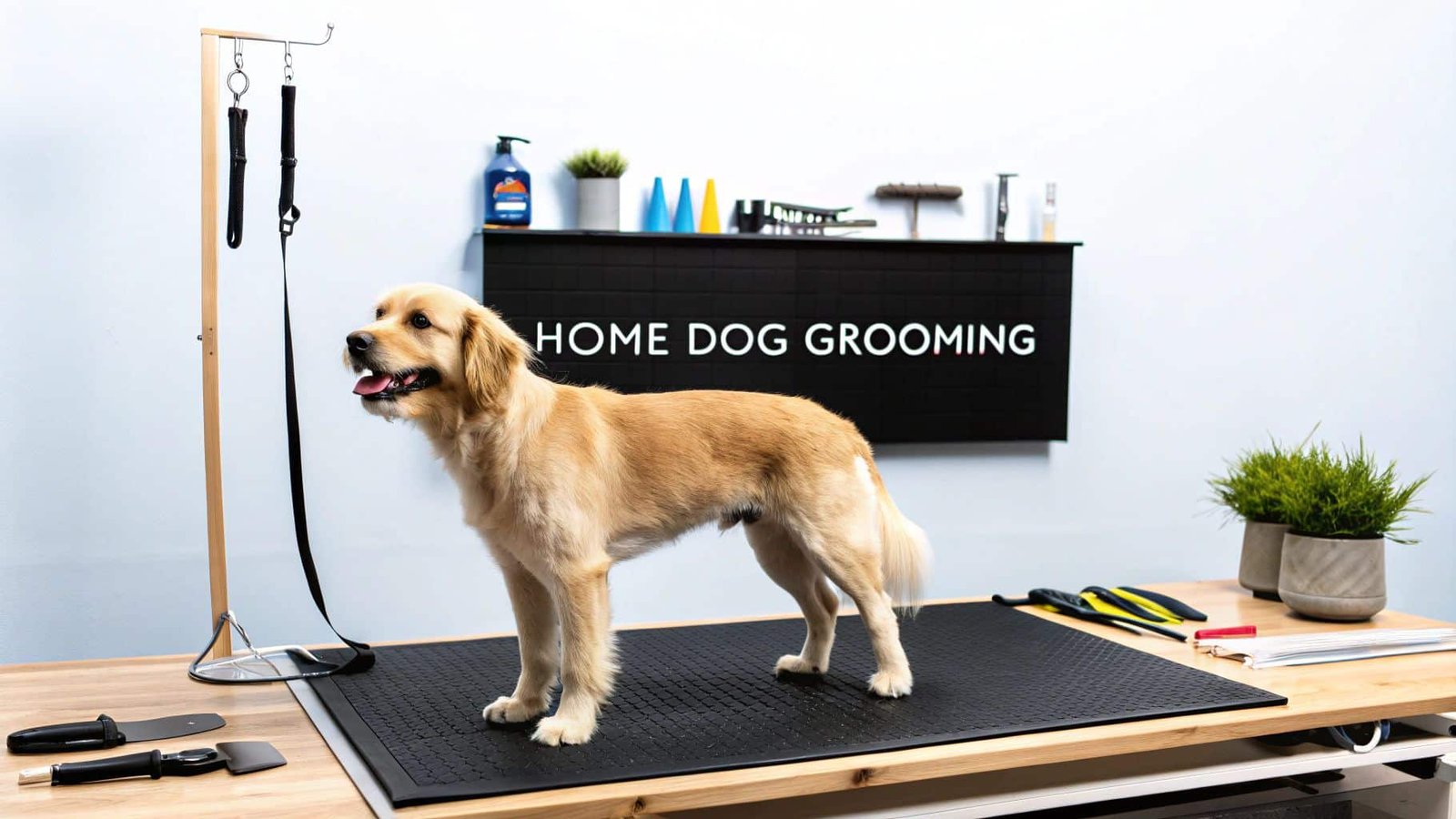
A home grooming kit for dogs is your secret weapon for keeping your furry friend looking and feeling great between professional grooming sessions. Think of it as your all-in-one toolbox for everything from a quick brush-out to a full haircut, saving you a trip to the salon and strengthening the bond you share with your dog.
Why Grooming Your Dog at Home Makes Sense
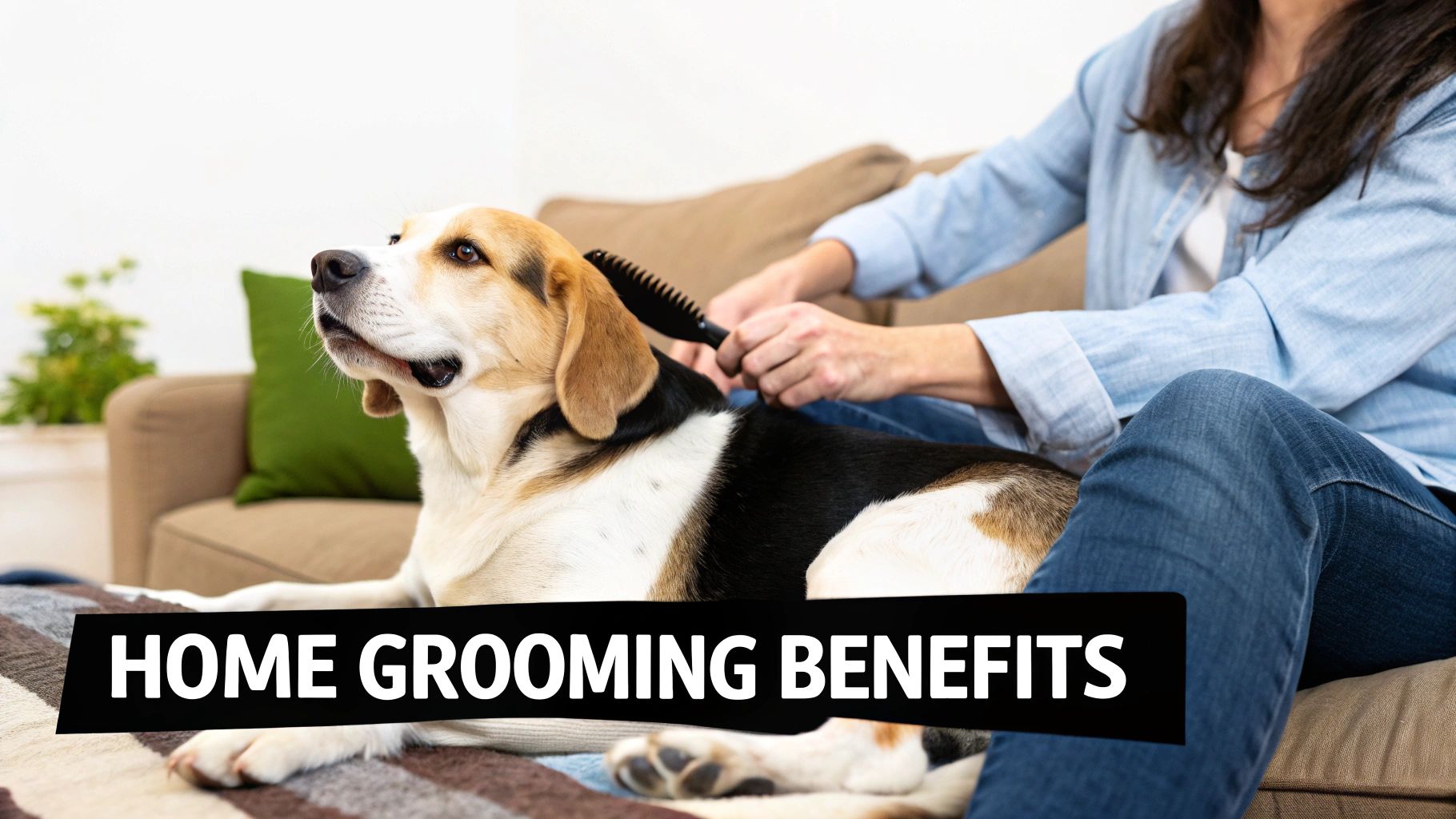
More and more dog owners are discovering the benefits—both practical and personal—of grooming their dogs themselves. While a great professional groomer is worth their weight in gold, taking on the day-to-day care at home has some unique advantages. It’s a chance to turn a chore into a positive bonding experience.
This isn’t just a passing trend. The global pet grooming market was valued at a staggering USD 77.12 billion and is expected to climb to USD 135.20 billion by 2032. This boom shows just how many owners are rolling up their sleeves and getting more involved in every aspect of their pet’s health.
The Real Perks of a Home Grooming Routine
For many dogs, a busy grooming salon can be a source of stress. Grooming at home, in their own safe space, changes the entire dynamic. You set the pace, use tools they’re familiar with, and create a calm atmosphere, which helps build a foundation of trust. Over time, this consistent, gentle handling makes your dog more cooperative for everything from vet check-ups to professional appointments.
The upsides are pretty clear:
- A Stronger Bond: Grooming is a hands-on activity that requires focus and trust. That quiet time spent brushing or trimming reinforces your connection.
- Early Health Checks: When you’re regularly running your hands through your dog’s coat and checking their paws, you’re the first line of defense. You’re far more likely to notice lumps, ticks, skin rashes, or ear troubles before they become bigger issues.
- Saves Time and Money: Let’s be honest, professional grooming adds up. Investing in a good home grooming kit for dogs pays for itself after just a few sessions, not to mention saving you the hassle of drop-offs and pick-ups.
Grooming your dog at home is more than a money-saving tactic; it’s an investment in their well-being and in your relationship. You’re taking an active role in keeping them healthy and comfortable.
Building your skills can make these sessions even better. Brushing up on general dog grooming information will give you the confidence to create a grooming routine that’s safe, effective, and maybe even a little fun for both of you.
Building Your Custom Home Grooming Kit for Dogs
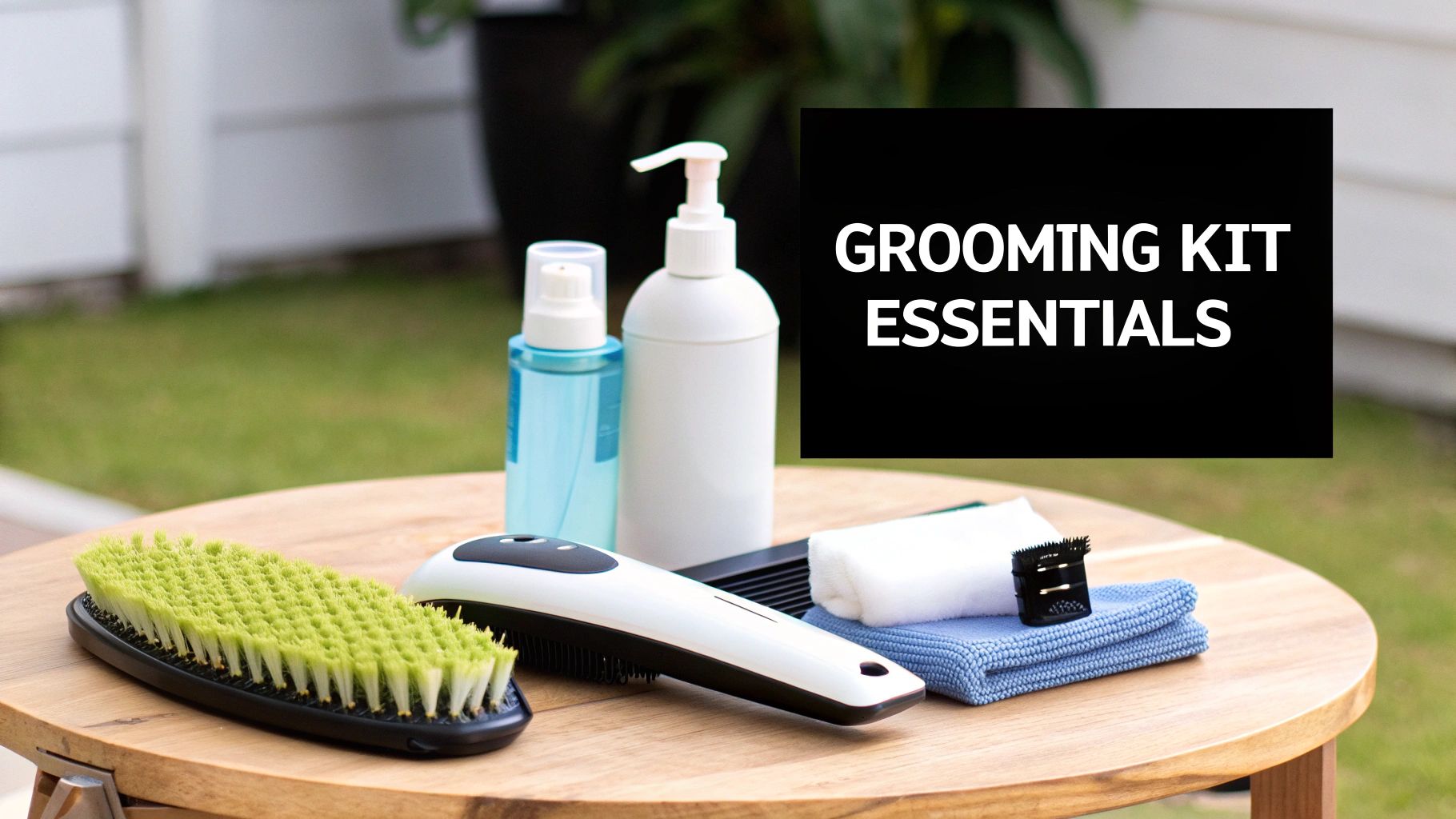
Putting together the right home grooming kit for dogs isn’t about grabbing a pre-packaged box with a dozen tools you’ll never touch. It’s about being selective and picking the right equipment for your dog’s specific needs. Think about it: the slicker brush that works magic on a Golden Retriever’s thick undercoat is pretty much useless for a Boxer’s short, sleek fur.
The real goal is to build a personalized arsenal that makes grooming sessions less of a chore and more of a bonding experience. This hands-on approach is becoming more popular. While the professional pet grooming market is huge—valued at USD 6.89 billion and projected to hit USD 10.35 billion by 2030—it also shows just how much owners are investing in their pets’ well-being. North America alone accounts for over 40% of this market. If you’re interested in the numbers, you can dive into the full market research on Grand View Research.
Brushes and Combs: The Foundation of Your Kit
Your brush is going to be your most-used tool, hands down. It’s the key to preventing mats, spreading natural skin oils, and keeping shedding under control. The right one completely depends on your dog’s coat.
Building your kit starts with understanding what each tool does and why it’s a good fit (or not) for your pup.
Essential Tools for Your Dog Grooming Kit
| Tool | Primary Use | Best For Coat Types |
|---|---|---|
| Slicker Brush | Removing tangles, mats, and loose undercoat fur. | Long, curly, or thick double coats (Poodles, Golden Retrievers). |
| Bristle Brush | Removing loose hair and stimulating the skin for shine. | Short-haired, smooth coats (Boxers, Beagles, Greyhounds). |
| Undercoat Rake | Reaching deep to remove dead undercoat fur. | Heavy shedders with double coats (Huskies, Malamutes). |
| Nail Clippers | Trimming nails quickly and efficiently. | Most dogs, though requires a steady hand. |
| Nail Grinder | Gradually filing down nails for a smooth finish. | Anxious dogs or owners nervous about cutting the quick. |
Once you’ve identified the right tools for your dog’s coat and temperament, you’re well on your way to creating a truly effective grooming routine at home.
You can browse a great selection of grooming and cleaning supplies to find the perfect match for your dog.
Clippers and Trimmers: Choosing Your Power Tools
For any breed that needs a haircut, a good set of clippers is a worthwhile investment. The biggest decision you’ll face is whether to go corded or cordless.
Corded clippers typically pack more power, which is a lifesaver when you’re working through thick or matted fur. On the other hand, cordless models give you freedom and flexibility—no tangled cords to wrestle with, which can be a game-changer for a dog that gets a little wiggly.
A quieter motor can make all the difference. That buzzing sound is often what freaks dogs out the most, so investing in a low-noise model can turn a stressful ordeal into a much calmer experience.
Nail care is another pillar of a solid grooming routine. You’ve got a couple of great options:
- Guillotine or Scissor-Style Clippers: These are the classic tools for the job. They’re fast and effective, but you need a confident, steady hand to avoid accidentally cutting the quick (the sensitive part of the nail).
- Nail Grinders: These are a fantastic alternative, especially for nervous dogs or owners. A grinder files the nail down slowly, which dramatically lowers the risk of hitting the quick and leaves a much smoother edge.
By carefully choosing each tool based on your dog’s breed, coat, and personality, you’re creating a custom home grooming kit for dogs that sets you both up for success. This isn’t just about saving a trip to the groomer; it’s about transforming a necessary task into a positive, manageable part of your life together.
Creating a Calm Grooming Environment
Honestly, a good grooming session is won or lost before you even pick up a single tool from your home grooming kit for dogs. The secret is creating a calm, predictable space. Trying to groom a nervous dog when you’re in a rush is a recipe for disaster for both of you, so setting the stage is always your first, most important job.
Find a quiet room where you won’t be disturbed. Remember, your dog feeds off your energy, so take a moment to relax and get into a patient headspace. If you’ve got a dog that’s already a little on edge, having a dedicated safe space can be a game-changer. For many dogs, just having a comforting spot nearby can dramatically lower their stress; you can get some great ideas for this by checking out the best dog beds for anxiety and applying those same concepts to your grooming area.
Setting the Stage for Success
The physical environment is just as crucial as the emotional one. Your main goals here are safety and comfort—you want to prevent any slips and help your dog feel totally secure.
Here’s a quick checklist for prepping your space:
- Get a Grip: A slippery floor can really freak a dog out. I always recommend putting down a yoga mat or a rubber-backed bath mat, whether you’re working on the floor or a sturdy table. It gives them confidence in their footing.
- Lay Everything Out: Have all your brushes, clippers, towels, and treats within easy reach before you bring your dog in. Scrambling to find something mid-clip is a surefire way to spike their anxiety.
- Make Friends with the Tools: Don’t just fire up the clippers next to their head. Let your dog sniff the clippers while they’re off. Give them a treat. Turn the clippers on for a split second, then off, and offer another treat. This is a classic desensitization technique, and it works wonders for building positive connections.
The real takeaway here is to make the entire grooming environment feel predictable and positive. The tools are familiar, the ground is stable, and amazing treats are a constant part of the deal.
The Power of Positive Distraction
One of my favorite tricks for keeping a dog happy and still is a simple distraction. Smear some xylitol-free peanut butter or plain yogurt on a lick mat and stick it to a wall or the floor. It gives them something delicious and engaging to focus on while you do your work.
Now for the most important pre-grooming step of all: a complete brush-out. Never, ever bathe a dog that has mats or tangles. Water tightens them into painful knots that are an absolute nightmare to remove. You must brush and comb through their entire coat before it even sees a drop of water. Trust me, this one step will prevent so much discomfort and make the whole experience infinitely better for everyone involved.
Your At-Home Dog Grooming Walkthrough
Alright, you’ve got your home grooming kit for dogs laid out and your space is ready to go. Now for the fun part. The real secret here is to be patient and confident. Your goal is to turn what might feel like a chore into a calm, predictable routine for you and your dog.
Think of grooming as a sequence. Each step builds on the last, and trying to skip ahead—like bathing before a thorough brush-out—almost always backfires. You’ll just end up with a tangled, matted mess that’s much harder to deal with.
Bathing and Drying Without the Drama
First up is the bath, but only after you’ve brushed out every last tangle and bit of loose fur. Grab a good, dog-specific shampoo and lather up, being super careful to avoid their eyes and ears. A neat little trick I’ve learned is to gently place a cotton ball just inside their ear canal to keep water out.
When it comes to rinsing, be relentless. Seriously. Shampoo residue is one of the biggest culprits behind itchy, irritated skin. Just when you think you’ve rinsed enough, do it one more time.
For drying, a high-velocity dryer is a lifesaver, especially for dogs with double coats. It literally blows the loose undercoat right out. If you’re using a regular hairdryer, stick to the lowest heat setting and always keep it moving a few inches from their skin. You don’t want to cause any burns.
Pro Tip: Keep the vibe positive. Your calm, reassuring voice and a steady stream of praise can make all the difference. If you sense your dog is getting stressed, just take a break. Pushing through the anxiety will only make them dread the next session.
This infographic breaks down how to set the stage for a calm grooming session before you even turn on the water.
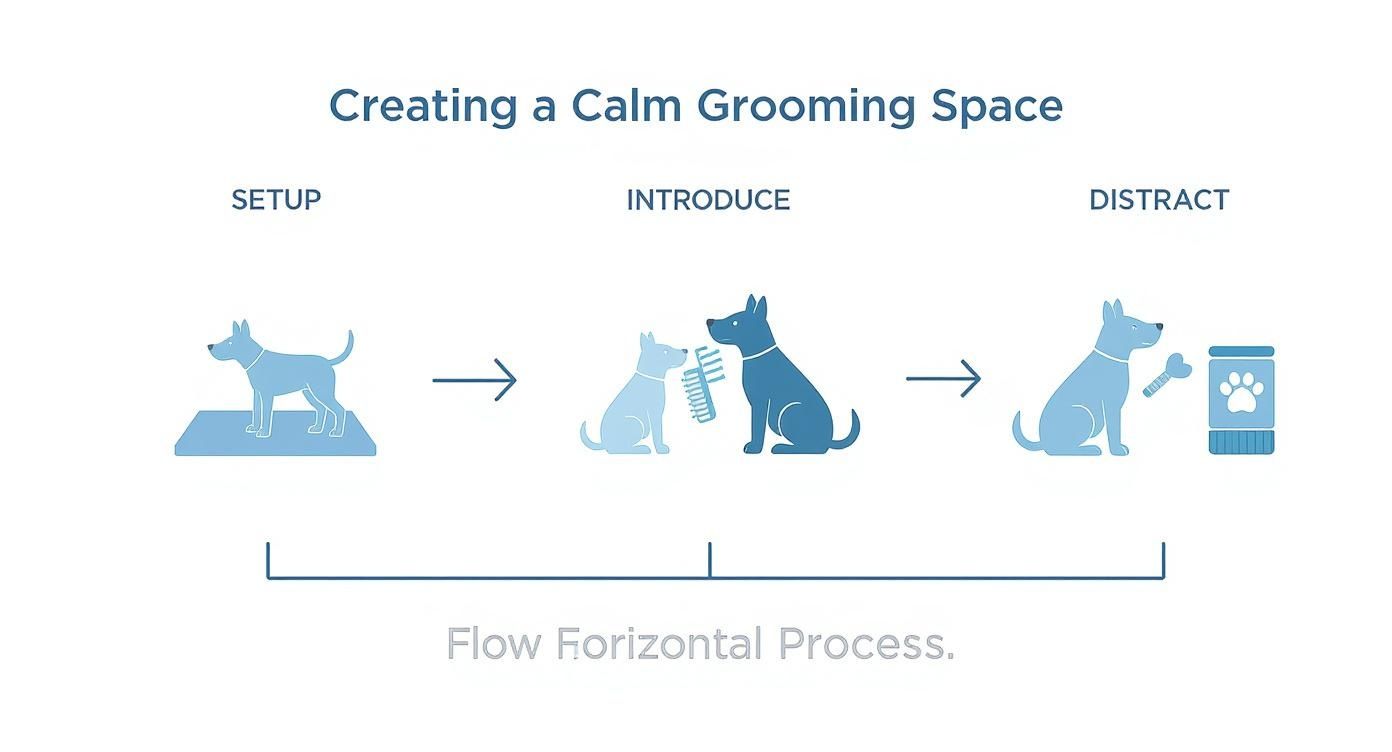
As you can see, a successful groom starts with a good setup, introducing tools positively, and having some high-value treats on hand for distraction.
Mastering Brushing and Clipping
Once your dog is bone-dry, it’s time to get down to the detail work. The right brush really depends on your dog’s coat. For a Labrador, for instance, a slicker brush or an undercoat rake is a must-have for tackling that thick double coat and seasonal shedding. We actually have a whole guide on the best brushes for Labrador Retrievers if you want to explore the best options.
When you pick up the clippers, the first thing you should do is snap on a guard comb. Think of it as your safety net—it guarantees an even cut and makes it nearly impossible to nick your dog’s skin.
- Move with the Grain: Always, always clip in the same direction the hair grows. Going against the grain gives a choppy look and can uncomfortably pull on their skin.
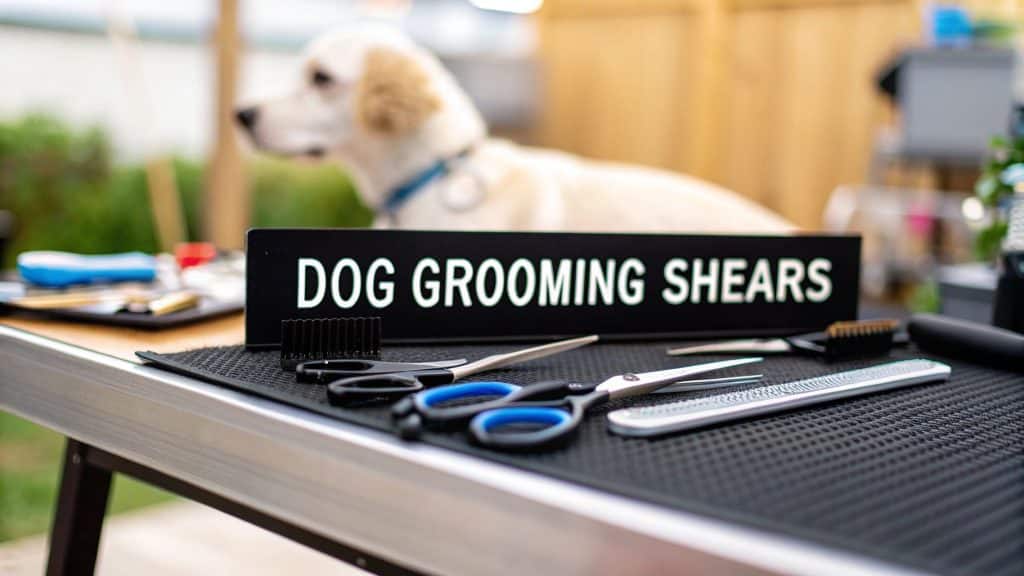
- Handle with Care: For sensitive spots like the face, paws, and sanitary areas, switch to scissors with rounded safety tips. Slow, careful snips are way safer than trying to take off too much at once.
- Check Blade Temperature: Clipper blades get hot, and they get hot fast. Every few minutes, stop and touch the blade to the inside of your wrist. If it’s too warm for you, it’s way too hot for your dog. Let it cool down.
It’s no surprise that so many people are grooming at home now. The pet grooming market in the U.S. alone has grown to USD 2.06 billion and is expanding at a 7.2% annual rate. And get this—dogs account for a whopping 83% of that market. It just goes to show how many of us are taking the clippers into our own hands.
A Clear Guide to Nail Trimming
Okay, let’s talk about nail trimming. It’s the part of grooming that makes most owners nervous, but it doesn’t have to be a battle. Whether you’re using clippers or a grinder, the strategy is simple: take off a tiny bit at a time to avoid hitting the quick.
The quick is the soft, pinkish tissue in the center of the nail that contains nerves and blood vessels. It’s easy to spot on dogs with light-colored nails, but on dark nails, it’s practically invisible.
The safest approach is to trim just the very tip of the nail. After each tiny snip, look at the cut surface. As you get close to the quick, you’ll start to see a small, dark circle appear in the center of the nail. That’s your cue to stop.
If you do accidentally nip the quick, don’t panic. It happens. Just grab your styptic powder, apply it to the nail tip with a bit of pressure, and the bleeding will stop in seconds. Having it within arm’s reach before you start is an absolute must.
Essential Safety Tips for DIY Dog Grooming
https://www.youtube.com/embed/V4unUtxmEFs
Your dog’s safety is non-negotiable during any grooming session. Before you even fire up the clippers from your home grooming kit for dogs, you need to be absolutely certain you can keep them secure and comfortable. This starts with learning to read their signals and knowing the common mistakes that can happen.
Dogs are always communicating, even if they aren’t barking. Watch for the subtle cues: excessive yawning, a flurry of lip licking, or showing the whites of their eyes (often called “whale eye”). These aren’t signs of disobedience; they’re clear indicators of stress. When you see them, it’s time to take a break, not power through.
Avoiding Common Grooming Mishaps
A few common mistakes can quickly turn a grooming session from a bonding experience into a painful one. The good news? They’re all preventable with a bit of patience and awareness. Your dog’s well-being should always come before a picture-perfect haircut.
Here are the absolute must-knows for keeping your dog safe at home:
- Prevent Clipper Burn: Those clipper blades get hot, and they get hot fast. Every few minutes, switch them off and carefully touch the metal to the inside of your wrist. If it feels hot to you, it’s scorching your dog’s sensitive skin. Let it cool down completely before you continue.
- Avoid the Nail Quick: When you’re trimming nails, the golden rule is to take off tiny slivers at a time. For dogs with light-colored nails, you can often see the pink quick—avoid it! On dark nails, look for a small, dark circle to appear in the center of the trimmed surface. That’s your signal to stop. Always have styptic powder nearby, just in case you do go too short.
- Protect Their Eyes: Soap and eyes don’t mix. Even a “tear-free” formula can be irritating, so be extra cautious during bathtime. I always recommend using a damp washcloth to gently clean your dog’s face, steering clear of the eye area entirely.
Never, ever use human shampoo on your dog. A dog’s skin has a completely different pH balance. Human products will strip away their natural protective oils, leading to dry, itchy skin and a host of other problems. Always stick to a formula made just for them.
Building a Foundation of Trust
At the end of the day, safe grooming boils down to one thing: trust. Your dog needs to learn that the grooming table (or a non-slip mat on the floor) is a safe space where good things happen.
Keep your initial sessions short and sweet. The goal is progress, not perfection.
Make sure to end every single grooming attempt on a high note. A shower of praise, a high-value treat, or a quick game of tug-of-war reinforces the positive association. This simple step makes them far more relaxed and cooperative for the next time, and that trust is the most valuable safety tool you’ll ever own.
Answering Your Top Home Dog Grooming Questions
Even with the best home grooming kit for dogs, you’re bound to have a few questions as you get started. That’s completely normal. Think of it like learning any new skill—there’s always a bit of a learning curve, and working through some common challenges is part of the process.
Let’s dive into some of the questions I hear most often from first-time home groomers.
How Often Should I Actually Groom My Dog?
This is the classic “it depends” answer, but it’s true! Your dog’s breed, coat type, and how much time they spend rolling in the mud are the biggest factors. A Poodle with a curly coat might need a daily once-over with a brush to stop mats from forming, while a sleek Beagle might only need a quick brushing once a week.
As a general rule of thumb, most dogs benefit from a full groom—bath, haircut, the works—every 4 to 8 weeks. The best advice I can give is to simply observe your dog. Is their coat looking a little tangled? Do they feel a bit greasy when you pet them? Has that “doggy” smell started to creep in? If so, it’s time to break out the grooming kit.
What Do I Do If My Dog Hates the Grooming Tools?
This is a big one, and the key here is patience. You can’t force it. The goal is to build a positive association, which takes time and lots of high-value treats.
Start by introducing one tool at a time, without even turning it on or using it.
- Let your dog sniff the clippers while they’re off. Then, treat.
- Turn them on for just a second, far away from your dog. Treat.
- Slowly bring the running clippers closer, rewarding calm behavior at every step.
Distraction is also a fantastic technique. A lick mat with some xylitol-free peanut butter or a frozen Kong can keep them happily occupied and associate grooming time with something they love. If your dog has severe anxiety and these slow, positive steps aren’t making a dent, it’s a good idea to chat with a professional groomer or your vet.
Can I Just Use My Own Scissors or Hair Clippers?
I get this question a lot, and the answer is a firm no. Human clippers just aren’t built to handle thick dog fur. They’ll snag and pull, which is painful for your dog and will leave you with a choppy, uneven mess. Dog clippers have more powerful motors designed specifically to glide through dense coats.
The same goes for scissors. Your kitchen or craft scissors likely have sharp, pointed tips, which is a major safety risk. Professional grooming shears are designed with rounded or blunted safety tips for a reason—to protect your dog when you’re trimming around sensitive spots like their eyes, ears, and paw pads. Using the right tools is non-negotiable for safety.
Your brush is the most important tool in your entire kit. Seriously. Consistent brushing does so much more than just make your dog look good—it prevents painful mats, spreads natural oils through the coat for a healthy shine, cuts down on shedding, and gives you a chance to spot any weird lumps, bumps, or pests on their skin. A great brush is the foundation of it all.
At Ur Pet Store, we know that having the right tools turns a chore into a positive bonding experience. Take a look at our hand-picked collection of grooming supplies to find everything you need to build the perfect kit for your best friend.