

Blog
Dog Harness Size Chart Your Ultimate Guide


When it comes to picking out the right harness, it really boils down to two key things: your dog’s chest girth and their weight. Nailing these measurements is the secret to keeping your dog safe and comfortable on every walk, preventing nasty chafing or, even worse, a great escape.
Breed can give you a ballpark idea, but nothing beats getting out the measuring tape for a truly secure and comfortable fit.
Why a Perfect Harness Fit Matters
Choosing a dog harness is a bigger deal than you might think; it directly impacts your dog’s daily comfort and safety. A poorly fitting harness can cause all sorts of issues, from simple skin irritation to serious escape risks. And because every dog is built a little differently, just guessing or going by breed alone often leads to a bad fit.
If a harness is too snug, it can dig into their skin, restrict their natural movement, and even make breathing difficult. On the flip side, a harness that’s too loose is a major safety hazard. A spooked dog can slip right out of a loose harness in seconds, which is incredibly dangerous, especially near a busy street.
Taking a few minutes to measure properly makes all the difference, ensuring your walks are safe and fun.
This guide is designed to be your go-to reference for getting that perfect fit. We’ll walk you through:
- How to take accurate measurements at home.
- Common size estimates for different breeds to help you narrow down the options.
- The differences between various harness styles and how their fit varies.
Ultimately, a great harness is a fundamental piece of gear for safe, enjoyable walks. Before you dive into the charts, feel free to check out our complete collection of dog collars, leashes, and harnesses to see all the great options available for your best friend.
How to Measure Your Dog for a Harness
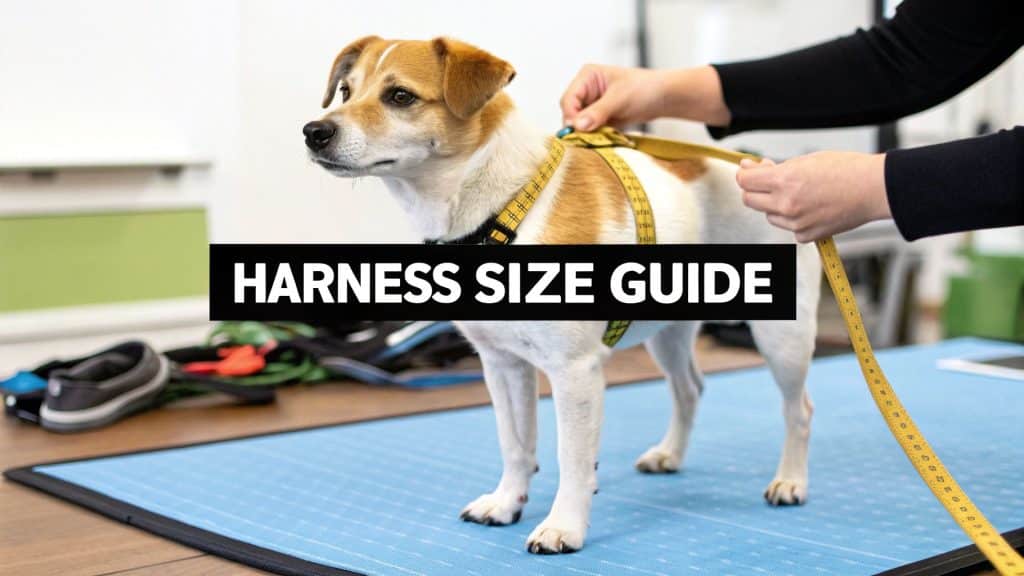
Getting the right fit for a harness all comes down to a couple of simple, accurate measurements. It might seem tricky at first, but for most harness brands, you really only need to focus on two key spots to nail the perfect size.
The best tool for the job is a soft, flexible measuring tape. If you don’t have one handy, no worries—a piece of string and a ruler will do the trick just as well. Just make sure your dog is standing comfortably on all fours to get a true measure of their natural body shape.
Key Measurement Points
The two measurements that matter most for a secure and comfy fit are the chest girth and the neck circumference. Getting these right is the secret to keeping your dog safe and happy on their walks.
- Chest Girth: This is, without a doubt, the most important measurement. You’ll want to wrap the tape around the widest part of your dog’s chest, which is usually located just behind their front legs.
- Neck Circumference: Measure around the base of your dog’s neck, right where a collar would normally rest. Be careful not to measure too high up; a harness sits lower than a traditional collar.
This infographic gives a great visual breakdown of how to measure, compare those numbers to a size chart, and get that final perfect fit.
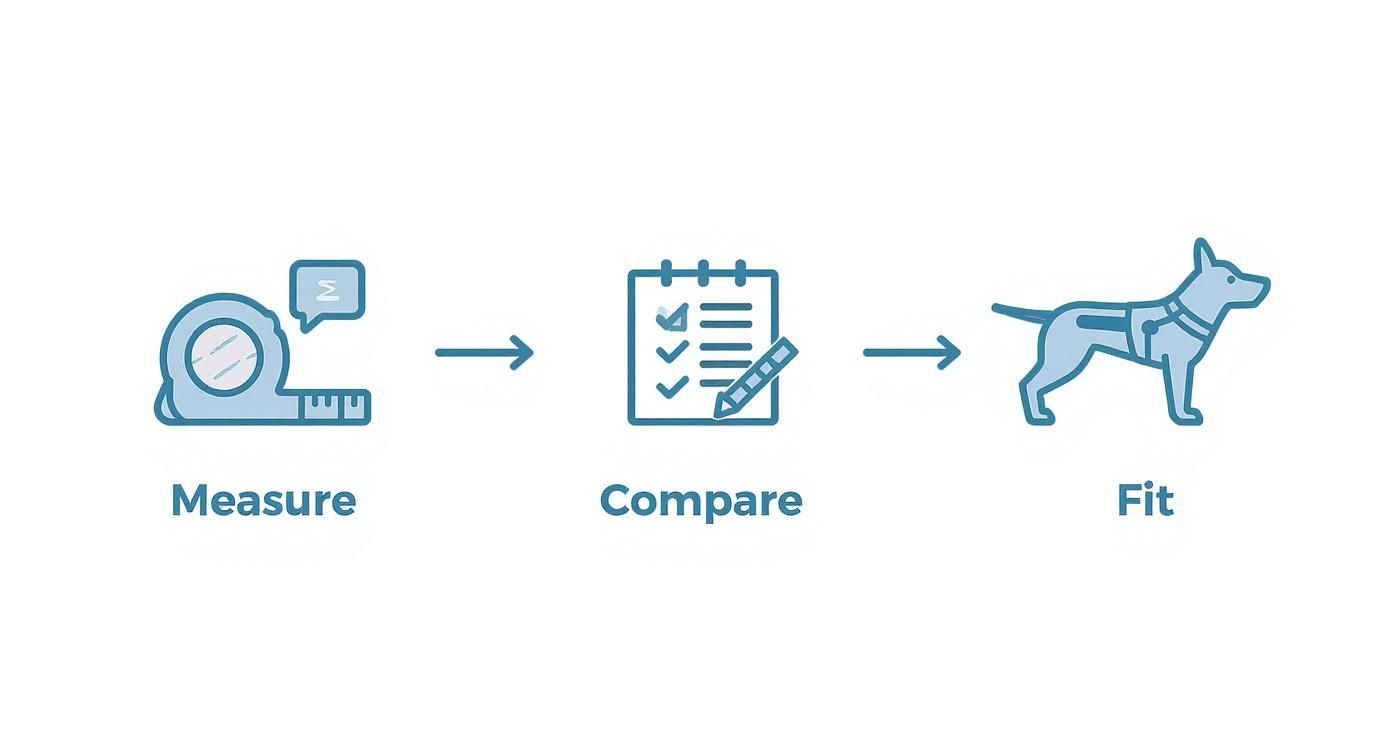
As you can see, it’s a straightforward process: measure correctly, check the brand’s chart, and then do a final fit check.
Ensuring a Comfortable Fit
Once you have your measurements, it’s time for the famous “two-finger rule.” This is a simple gut check to ensure the harness isn’t too snug. You should be able to easily slide two fingers between any of the harness straps and your dog’s body. This gives them enough room to move freely without the harness being so loose they could wiggle out of it.
A common mistake is pulling the measuring tape too tight, which almost always leads to buying a harness that’s too small and restrictive.
Always refer to the manufacturer’s size chart. They provide detailed measurements for chest, neck, and sometimes even body length to help you find a precise fit. Using these charts is the best way to make sure the harness is both comfortable and secure, which can prevent chafing, discomfort, or injury when you’re out and about. You can find more information about why proper harness sizing is so important in the pet care market.
Choosing the Right Type of Dog Harness
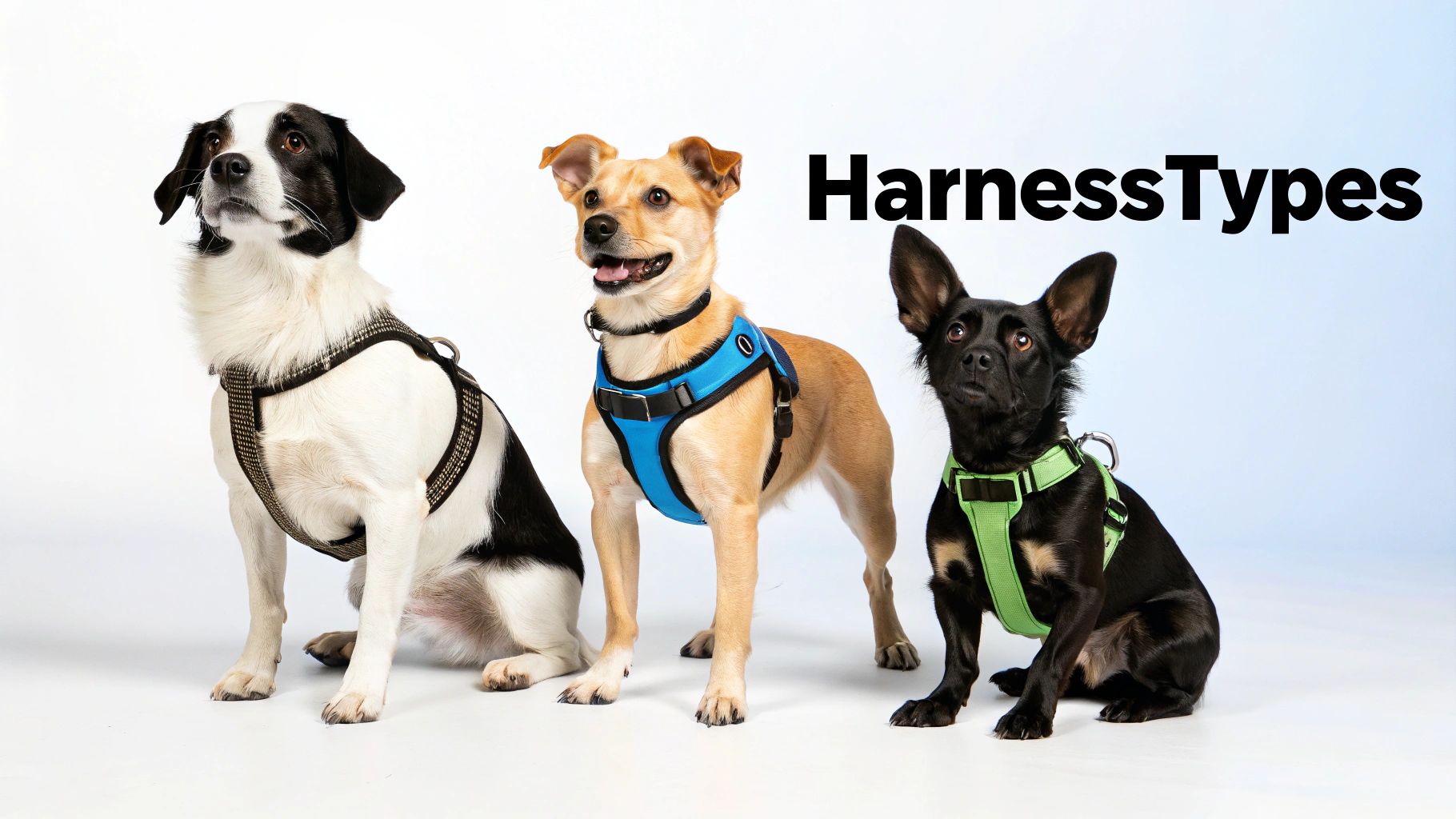
Once you’ve got your dog’s measurements, it’s time for the fun part: picking a harness style that actually works for your dog’s personality and your daily routine. Let’s be honest, not all harnesses are created equal. The right choice can turn a stressful tug-of-war into a pleasant stroll.
While your numbers from the dog harness size chart are the foundation, the style of the harness is what really determines control, comfort, and how the leash feels in your hand.
Common Harness Styles
Getting familiar with the main harness types is the key to making a smart decision. Each one has its own set of pros and cons, depending on whether you’re walking a powerful puller or a laid-back lounger.
- Back-Clip Harnesses: This is probably the style you see most often, with the D-ring sitting right on your dog’s back. They’re a fantastic choice for dogs who already walk calmly on a leash, as they are simple to put on and keep the leash clear of their legs. The downside? They don’t offer much leverage if your dog decides to pull.
- Front-Clip (No-Pull) Harnesses: Designed specifically to discourage pulling, these harnesses have a D-ring positioned in the center of the dog’s chest. When your dog lunges forward, the leash gently guides them back toward you instead of letting them power ahead. This makes them a great tool for training better leash manners.
- Dual-Clip Harnesses: For maximum flexibility, you can’t beat a dual-clip harness. It gives you the best of both worlds with attachment points on the chest and the back. You can switch between the front clip for training sessions and the back clip when you’re on a more relaxed walk.
Specialized Harness Options
Sometimes, a standard walking harness just won’t cut it. For specific activities, you’ll want a harness built for the job, with features designed for enhanced safety, comfort, and durability.
For instance, a car safety harness is a must for road trips; these are crash-tested to keep your dog secure in the car. If you and your pup are avid hikers, a padded harness designed for the trail will provide extra comfort during those long adventures. For working dogs or those needing extra support, a rugged option like a tactical dog harness can offer superior durability and utility.
If you’re interested in learning more about the various products and services in the animal world, you can find some good general pet care industry information.
Dog Harness Size Chart by Breed
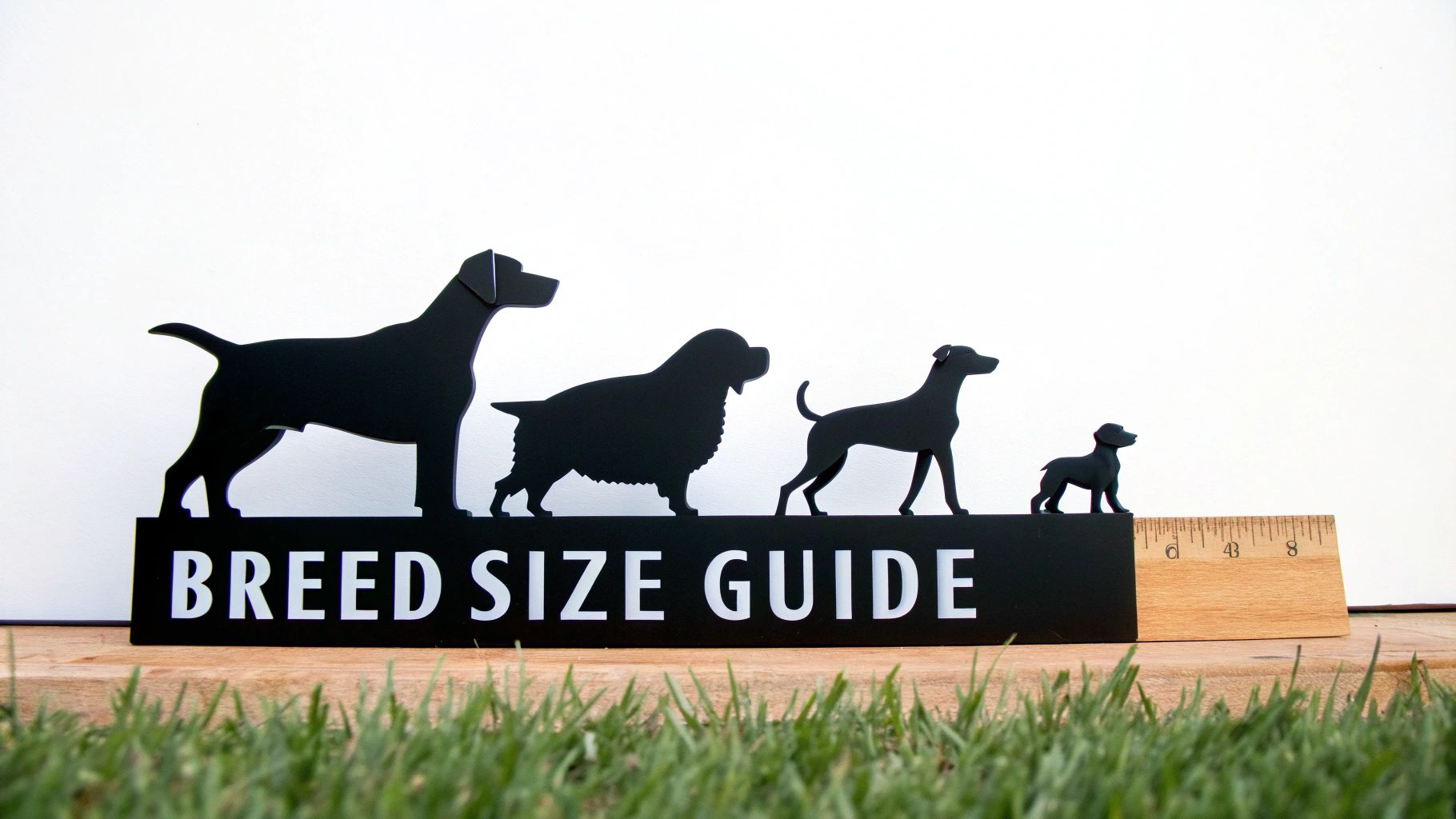
While nothing beats taking your dog’s actual measurements, a dog harness size chart by breed can be a fantastic starting point. It’s especially handy when you’re browsing online and need a general idea of where to begin your search. Think of it as a reliable guide to narrow down the options.
Keep in mind that every dog is unique, even within the same breed. You might have a particularly stocky Labrador or a leaner-than-average Beagle. This chart gives you a solid estimate, but always trust your tape measure—as detailed in our “How to Measure Your Dog” section—for the final call.
This is why you’ll see harnesses categorized by size. For example, harnesses for small dogs (under 20 lbs) usually fit chest girths of 10 to 18 inches, while medium dogs (20–50 lbs) need something in the 18 to 28-inch range. For more on how the dog harness market is categorized, you can explore market insights.
Getting the Most Out of the Breed Chart
The best way to use this chart is to find your dog’s breed and get a ballpark size. If you have a German Shepherd, you can skip the small sizes and head straight for the Large or X-Large section. This saves you a ton of time.
Once you have that general size, compare the chart’s estimated chest girth with your dog’s real measurement. If your dog is right on the edge between two sizes, it’s always smart to check the specific brand’s adjustment range. Some harnesses offer more wiggle room than others.
Important Reminder: Your dog’s actual chest measurement should always be the deciding factor. A proper fit is everything—it keeps your dog safe, prevents them from wiggling out, and stops uncomfortable chafing.
The table below is a quick-reference guide for some of the most popular breeds. Use it to get a confident start, then double-check with your dog’s measurements to find that perfect, secure fit.
Harness Size Estimates by Dog Breed
Knowing the average size for your dog’s breed is a huge help. This table gives you a starting point by listing common breeds alongside their typical weight, chest girth, and a recommended harness size.
| Breed | Average Weight (lbs) | Estimated Chest Girth (inches) | Recommended Harness Size |
|---|---|---|---|
| Australian Shepherd | 40–65 | 24–32 | Medium / Large |
| Basset Hound | 40–65 | 24–32 | Medium / Large |
| Beagle | 20–30 | 18–24 | Small / Medium |
| Bernese Mountain Dog | 70–115 | 30–40 | X-Large |
| Bichon Frise | 12–18 | 15–20 | Small |
| Border Collie | 30–55 | 22–28 | Medium |
| Boston Terrier | 12–25 | 16–22 | Small |
| Boxer | 65–80 | 28–34 | Large |
| Bulldog | 40–50 | 26–30 | Medium / Large |
| Cavalier King Charles Spaniel | 13–18 | 15–20 | Small |
| Chihuahua | 2–6 | 10–14 | X-Small |
| Cocker Spaniel | 20–30 | 18–24 | Small / Medium |
| Dachshund (Miniature) | Under 11 | 12–16 | X-Small |
| Dachshund (Standard) | 16–32 | 16–22 | Small |
| Dalmatian | 45–70 | 26–32 | Medium / Large |
| Doberman Pinscher | 75–100 | 30–38 | Large / X-Large |
| French Bulldog | 16–28 | 18–24 | Small / Medium |
| German Shepherd | 50–90 | 28–36 | Large |
| Golden Retriever | 55–75 | 28–34 | Large |
| Great Dane | 110–175 | 34–44 | X-Large / XX-Large |
| Greyhound | 60–70 | 28–34 | Large |
| Havanese | 7–13 | 14–18 | X-Small / Small |
| Labrador Retriever | 55–80 | 28–34 | Large |
| Maltese | Under 7 | 12–16 | X-Small |
| Mastiff | 120–230 | 36–46 | XX-Large |
| Miniature Schnauzer | 11–20 | 16–22 | Small |
| Papillon | 5–10 | 12–16 | X-Small |
| Pembroke Welsh Corgi | 22–30 | 20–26 | Medium |
| Pomeranian | 3–7 | 12–15 | X-Small |
| Poodle (Miniature) | 10–15 | 15–20 | Small |
| Poodle (Standard) | 40–70 | 24–30 | Medium / Large |
| Pug | 14–18 | 18–22 | Small |
| Rottweiler | 80–135 | 32–40 | X-Large |
| Shetland Sheepdog | 15–25 | 18–24 | Small / Medium |
| Shiba Inu | 17–23 | 18–22 | Small |
| Shih Tzu | 9–16 | 14–20 | Small |
| Siberian Husky | 35–60 | 24–30 | Medium / Large |
| Weimaraner | 55–90 | 28–34 | Large |
| West Highland White Terrier | 15–20 | 17–22 | Small |
| Yorkshire Terrier | 4–7 | 12–16 | X-Small |
Remember, this chart is an estimation tool. The absolute best way to ensure a safe and comfortable harness is to measure your dog’s chest girth and compare it to the specific manufacturer’s size chart before you buy.
How to Check for a Perfect Harness Fit
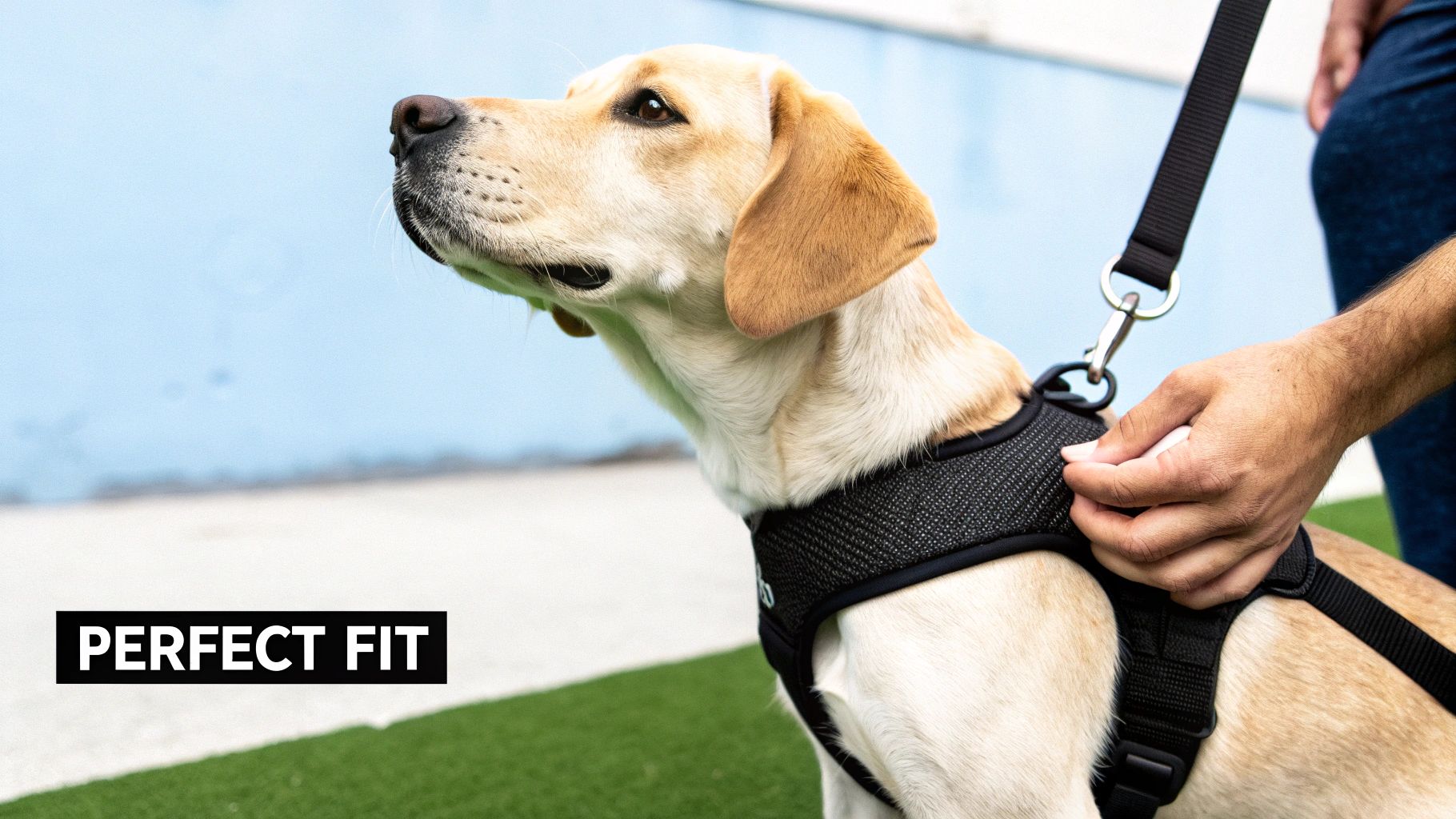
So you’ve consulted a dog harness size chart and brought home a new harness. The final, and arguably most important, step is to dial in the fit. A harness that seems fine out of the package often needs a few key adjustments to be truly safe and comfortable for your dog. Getting this right is about more than just comfort—it’s a critical safety check that prevents everything from chafing to a scary escape.
The go-to method for this is what we call the two-finger rule. It’s simple: you should be able to slide two fingers flat between any part of the harness and your dog’s body. This quick test tells you if the harness is snug enough to be secure without being so tight that it pinches or restricts your dog’s breathing. If you can’t easily slide two fingers underneath, it’s too tight. If you can fit a third finger or even your whole hand, it’s definitely too loose.
Visual Cues for a Correct Fit
Beyond the finger test, a quick visual inspection can tell you a lot. A properly fitted harness will stay put as your dog moves, without sagging, twisting, or riding up. When you’re checking it over, pay close attention to a few specific areas.
- Shoulder Movement: Watch your dog take a few steps. The harness should allow for a full, natural range of motion in their shoulders, not restrict their stride.
- Armpit Clearance: Look for plenty of space where the straps pass behind your dog’s front legs. If a strap is digging into that sensitive armpit area, it’s a recipe for painful chafing.
- Neck and Back Position: The harness should sit squarely across the chest and back. It shouldn’t be so loose that it slides up and puts pressure on the throat when your dog pulls.
A poorly fitted harness isn’t just an annoyance; it’s a genuine safety hazard. If it’s too loose, a determined dog can back right out of it. On the other hand, a harness that’s too tight can cause chafing, limit breathing, and even contribute to skin problems. Keeping your dog’s skin and coat healthy is essential, which is why proper grooming and cleaning go hand-in-hand with making sure all their gear fits just right.
Getting the Right Fit: Common Sizing Mistakes to Avoid
Even the most careful dog owner can get tripped up when picking out a new harness. It’s easy to do! Navigating the different charts and measurements can be a bit of a headache, but steering clear of a few common mistakes will save you from the hassle of returns.
The number one pitfall is simply guessing. We’ve all been tempted to just eyeball it or pick a size based on our dog’s breed. While a breed chart can give you a ballpark idea, it’s no substitute for actually measuring. Your stocky Lab might need a completely different size than your neighbor’s lanky one.
Don’t Overlook the Little Details
Another classic slip-up? Forgetting about all that fluff. If you have a dog with a thick coat, like a Samoyed or a Golden Retriever, their fur can easily throw off your measurement. You need to make sure the measuring tape is pulled snug against their actual body, not just floating on top of their fur.
It’s also a big no-no to buy a harness for a puppy to “grow into.” This is a serious safety hazard. A harness that’s too loose is an escape waiting to happen, putting your pup at risk. It’s far safer to get a well-fitting, adjustable harness for them now and simply size up as they get bigger.
A proper fit is everything. Too loose, and your dog could slip out. Too tight, and you risk painful chafing, restricted movement, and even difficulty breathing.
Size Labels Aren’t Universal
Finally, never assume that a “Large” from one brand will fit the same as a “Large” from another. There’s zero standardization in the pet industry when it comes to sizing.
- The Mistake: Relying on the size name (S, M, L) instead of the actual measurements.
- The Fix: Always, always ignore the letter on the tag and compare your dog’s exact measurements to the specific size chart provided by that brand.
The good news is that manufacturers are providing more detailed size charts than ever before, which has helped people find the perfect harness for their dogs. This focus on fit has been a big factor in the growing popularity of harnesses, as owners prioritize both comfort and safety. You can read more about the growth of the dog harness market and see just how much the industry has evolved.
Frequently Asked Questions About Harness Sizing
Even with the best size chart in hand, you might still run into a few tricky spots when picking out a harness. Let’s tackle some of the most common questions that pop up so you can get the fit just right.
What if My Dog Is Between Two Sizes?
It happens all the time—your dog’s measurements land squarely between a medium and a large. So, what’s the right call? The golden rule here is to always choose the larger size.
Most harnesses come with plenty of room for adjustment on the straps. You can easily cinch down a slightly bigger harness for a snug and secure fit. A harness that’s too small, on the other hand, leaves you with no wiggle room and can end up digging into your dog’s skin, restricting movement, and causing painful chafing. Sizing up is almost always the safer, more comfortable option.
How Do I Choose a Harness Size for a Growing Puppy?
Sizing a harness for a puppy is all about finding something with maximum adjustability. You’ll measure your pup the same way you would an adult dog, but don’t fall into the trap of buying a huge harness for them to “grow into.” That’s a serious safety risk, as a wiggly puppy can slip out of a loose harness in a heartbeat.
Your best bet is to find an affordable, highly adjustable harness that fits them properly right now. Get in the habit of re-measuring your puppy every couple of weeks, especially during those big growth spurts. You’ll likely need to buy a few different sizes as they grow, but it’s a small price to pay to keep them safe and secure on your walks.
Is Sizing the Same for All Harness Brands?
Absolutely not. This is probably the biggest mistake people make. A size “Medium” from one brand can be completely different from a “Medium” made by another company. There’s no universal standard for harness sizing in the pet industry.
Always, always ignore the generic size label (S, M, L) and focus only on your dog’s actual measurements. Compare those numbers directly against the specific size chart provided by the brand you’re buying from. It’s the only way to be sure you’re getting a harness that truly fits.
And if you love showing off your four-legged friend, you might also enjoy personalizing gear with these beautiful OESD Floral Dog Embroidery Designs.
Ready to find the perfect harness? At Ur Pet Store, we offer a wide selection of high-quality, adjustable harnesses to ensure your dog’s safety and comfort on every adventure. Explore our collection today! https://urpetstore.com