

Blog
Easy Walk Dog Harness Size Chart Guide


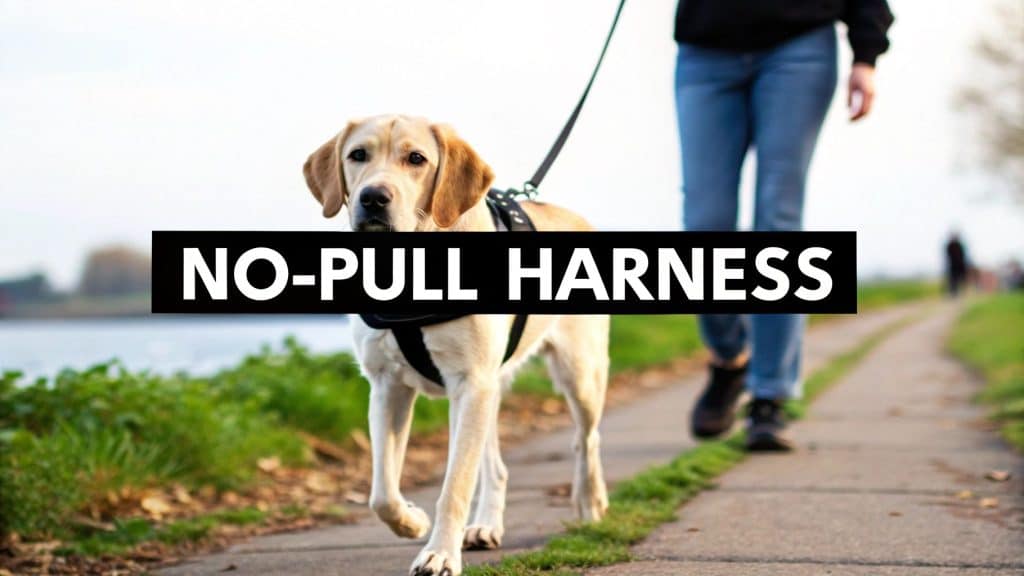
Getting the right size Easy Walk harness isn’t just a suggestion—it’s the key to making it actually work. If the fit is off, the no-pull feature is useless, and you risk making your dog uncomfortable. A good fit ensures the chest strap sits where it’s supposed to, giving you gentle control without painful chafing or restricting your dog’s natural stride.
It’s the difference between a frustrating tug-of-war and a genuinely pleasant walk for both of you.
Why a Perfect Harness Fit Changes Everything
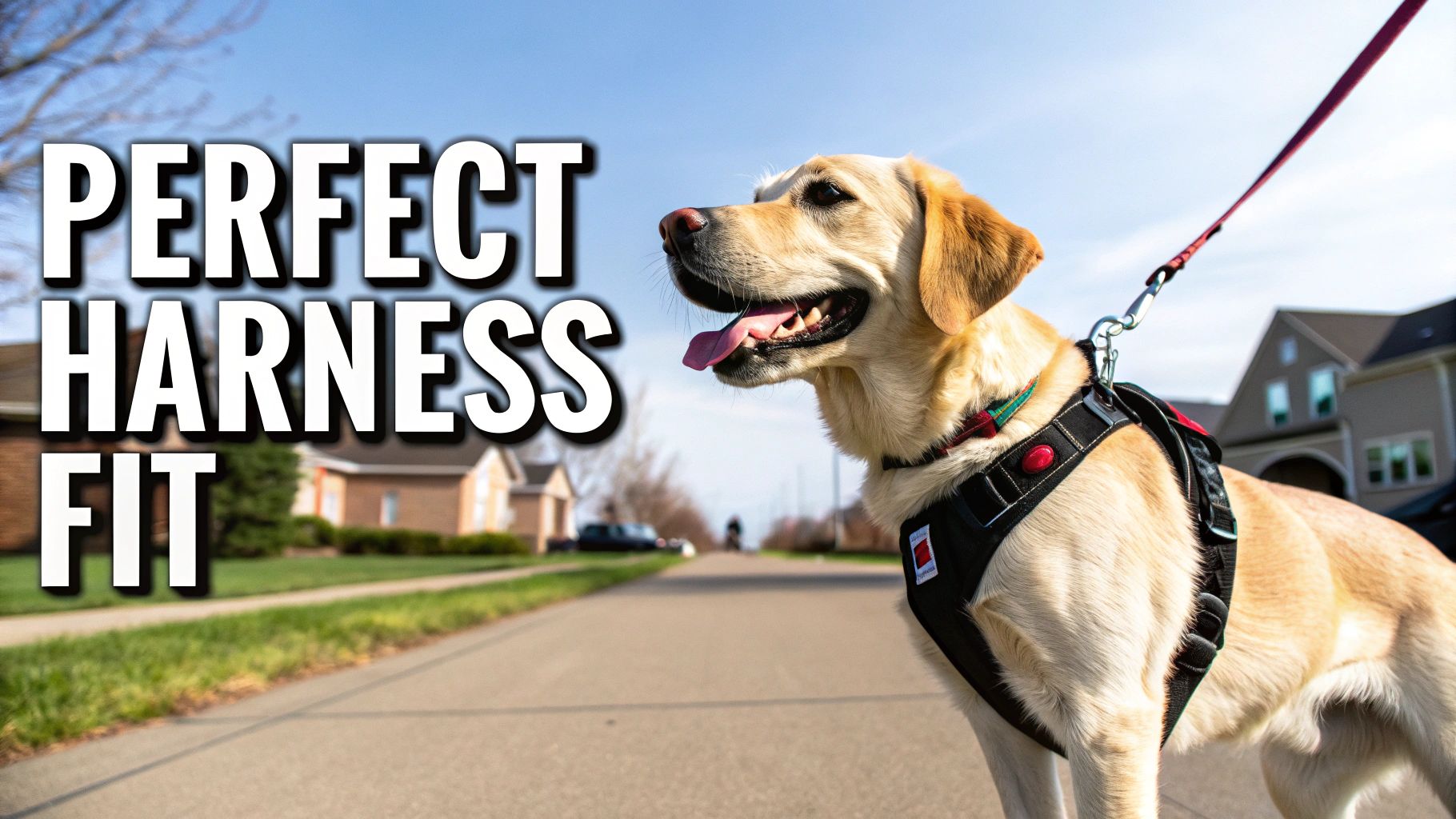
Before you even glance at a size chart, let’s talk about why the right fit is a game-changer. An ill-fitting harness is more than a small annoyance; it’s often the root cause of the exact problems you’re trying to solve.
Common Issues from a Poor Fit
Think of it this way: if your shoes don’t fit, you’re miserable. It’s the same for your dog’s harness.
- Chafing and Sore Spots: A harness that’s too loose will constantly shift and rub against the skin. This often happens in the sensitive area behind the front legs, leading to raw, painful spots.
- Restricted Movement: On the flip side, a harness that’s cinched down too tight can pinch your dog’s shoulders. This constriction interferes with their natural gait and can make walking feel awkward and uncomfortable.
- The Great Escape: This is a big one. A loose harness, especially around the chest and belly, is an open invitation for a Houdini-like escape. It’s a serious safety hazard you can easily avoid.
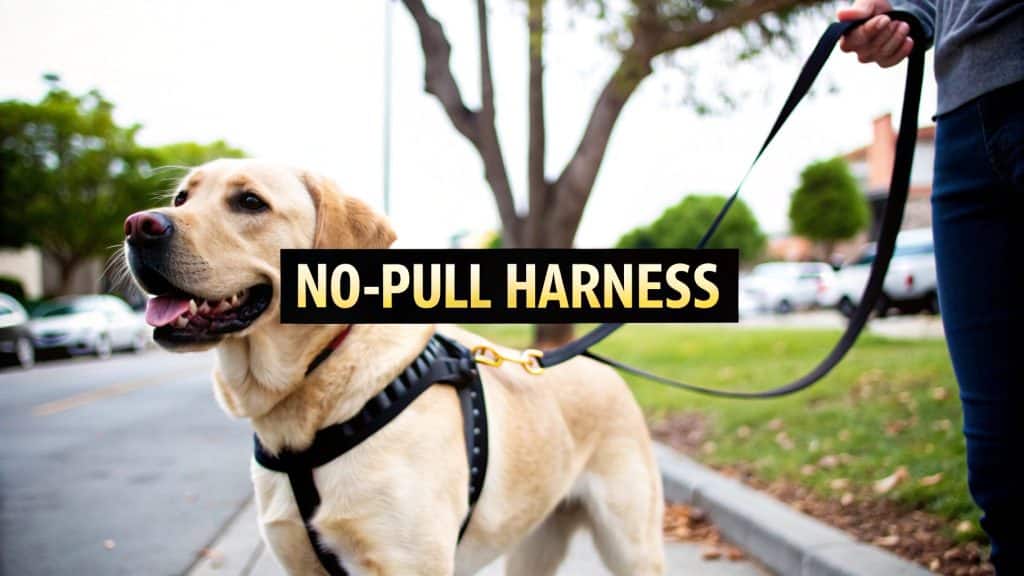
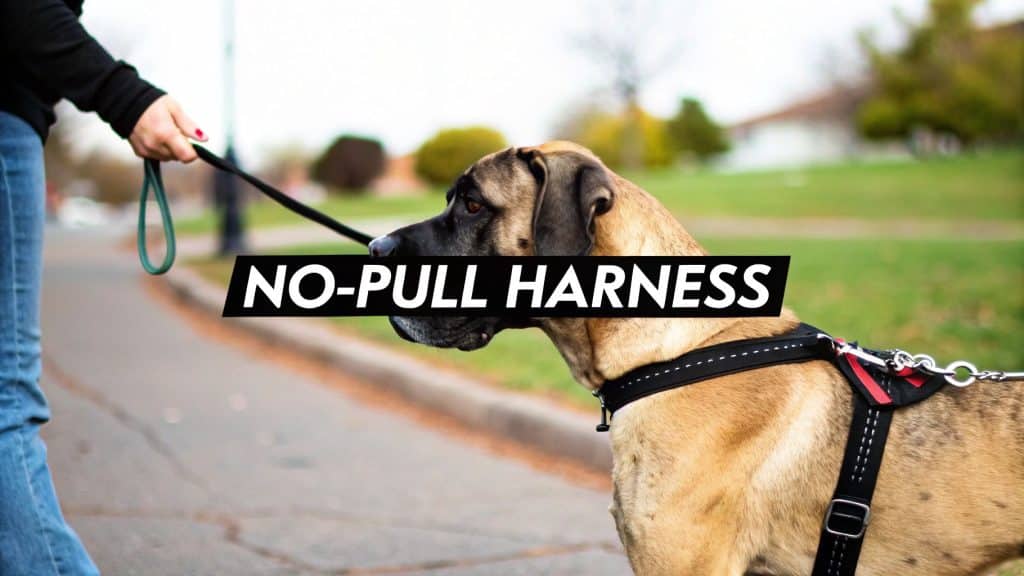
- No-Pull Fail: The Easy Walk harness is designed to gently redirect your dog by putting light pressure on the chest. If the harness is sagging or sitting too low, it can’t do its job, and the pulling continues.
A well-fitting harness is a huge part of your dog’s daily comfort and safety, which is a core piece of exploring the joys and challenges of pet parenthood. I’ve heard countless stories from owners who saw their dog’s pulling habits improve almost instantly once they got the fit right.
This focus on better, safer gear isn’t just a trend. The global dog harness market was valued at USD 2.0 billion and is projected to keep growing as more owners look for effective walking solutions. Taking a few minutes to measure correctly ensures you get all the benefits you’re paying for.
How to Measure Your Dog for an Easy Walk Harness
Getting the right fit for an Easy Walk harness all comes down to one simple measurement. I’ve seen so many people try to eyeball it or guess based on their dog’s breed, but that’s a recipe for a harness that either chafes or lets your dog slip right out. Taking a minute to measure properly is the secret to getting a perfect fit the first time.
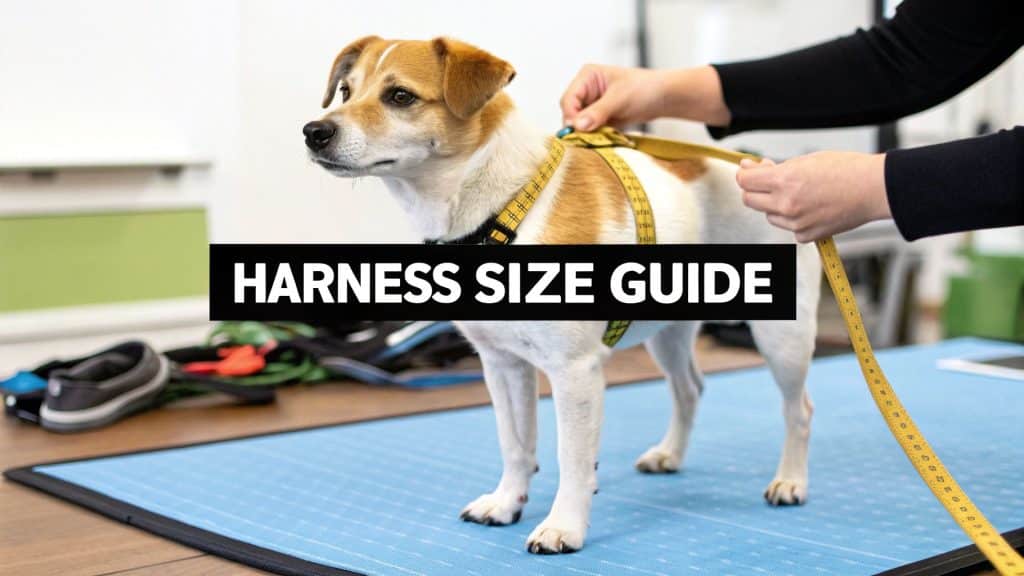
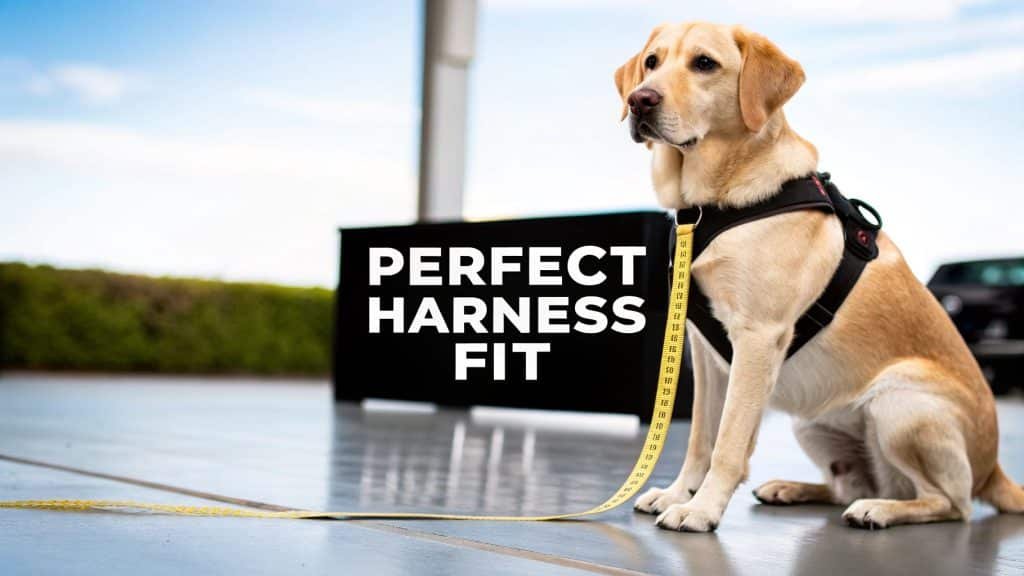
The only measurement you need is your dog’s girth. This is simply the circumference of the widest part of their chest, right behind the front legs. If you were to give them a hug, it’s pretty much where your arms would go.
Finding the Girth Measurement
For this, you’ll want a soft, flexible measuring tape. If you don’t have one, no worries—a piece of string and a regular ruler or yardstick will do the trick just as well.
Get your dog to stand up, then loop the tape (or string) around the deepest part of their chest. You want it to be snug against their fur, but definitely not tight. Think of it like a belt—secure, but not squeezing.
The Two-Finger Rule
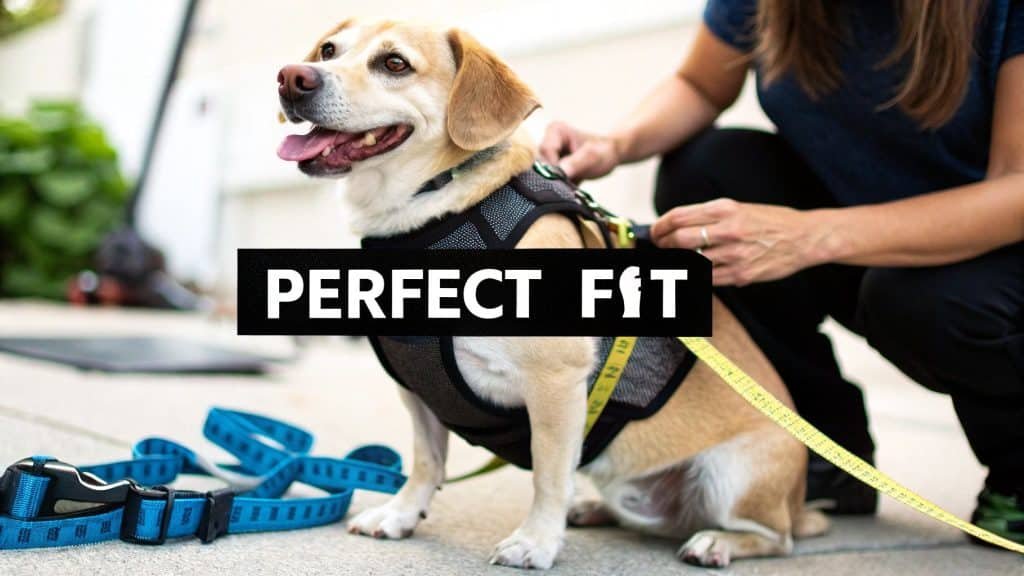
Here’s a tried-and-true trick I always recommend: once the tape is around their chest, you should be able to comfortably slide two fingers between the tape and your dog. If you can fit your whole hand in there, it’s too loose. If you can’t even get one finger in, it’s way too tight.
This little check ensures the harness will be secure enough to do its job without digging in or restricting your dog’s natural movement. Jot that number down—it’s the only one you’ll need for the easy walk dog harness size chart.
Tips for Measuring a Wiggly Dog
Of course, not every dog is going to stand perfectly still like a statue. If you’ve got a wiggler on your hands, here are a few things that can help:
- Bring in a Helper: This is a two-person job with an energetic dog. One person can keep them steady with some pets and praise while the other gets the measurement.
- Time it Right: Try measuring after a long walk or a good round of fetch when your dog is more likely to be relaxed and tired.
- Use High-Value Treats: Turn it into a fun game! Reward your dog with their favorite snack for staying still, even if it’s just for a few seconds at a time.
Nailing this one measurement is the most critical step. If you want more general insights on sizing and measuring for other types of gear, this general size guide is a great resource that covers the basics really well.
Using The Official Easy Walk Dog Harness Size Chart
Alright, you’ve got your dog’s chest measurement—that’s the magic number. Now, let’s turn that number into the perfect harness fit using the official size chart. Forget about guessing based on your dog’s weight or breed for a moment; the tape measure tells the real story.
Simply find your dog’s girth measurement on the chart to see which size corresponds. This takes all the guesswork out of the process. For example, if you measured a chest girth of 23 inches, you’re looking right at a Medium size. A bigger dog with a 34-inch chest would need the Large/X-Large.
This infographic breaks down the simple steps to get that measurement before you even look at the chart.
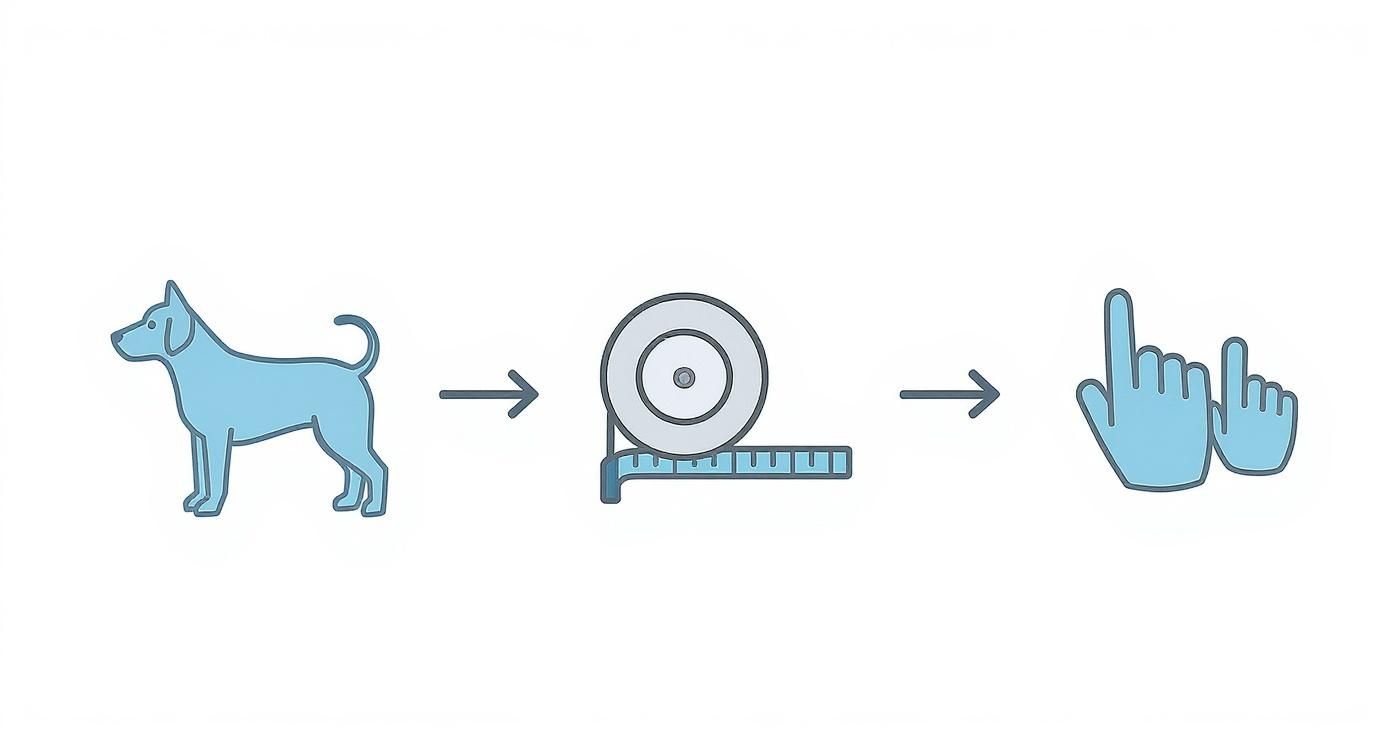
As you can see, it all comes down to a calm dog, measuring the widest part of their chest, and doing that final two-finger check to make sure it’s snug but not too tight.
Easy Walk Harness Size Chart by Measurement
Use your dog’s chest girth measurement to find their recommended Easy Walk Harness size in the official chart below.
| Harness Size | Chest Girth (Inches) | Chest Girth (cm) | Typical Dog Weight (lbs) | Common Breed Examples |
|---|---|---|---|---|
| Petite | 12 – 16 in | 30 – 40 cm | 6 – 11 lbs | Miniature Poodle, Yorkshire Terrier |
| Petite/Small | 14 – 18 in | 35 – 45 cm | 10 – 20 lbs | Jack Russell, Sheltie |
| Small | 15 – 20 in | 38 – 51 cm | 15 – 30 lbs | Pug, Boston Terrier |
| Small/Medium | 19 – 25 in | 48 – 63 cm | 25 – 45 lbs | Beagle, Corgi |
| Medium | 20 – 28 in | 51 – 71 cm | 40 – 65 lbs | Border Collie, Australian Shepherd |
| Medium/Large | 25 – 35 in | 63 – 89 cm | 60 – 95 lbs | Boxer, Dalmatian |
| Large | 27 – 38 in | 68 – 96 cm | 70 – 100 lbs | Labrador Retriever, Golden Retriever |
| Large/X-Large | 33 – 48 in | 84 – 122 cm | 90 – 130+ lbs | Great Dane, Saint Bernard |
The chart is your best friend here, but remember, every dog is an individual. The breed examples are just a general guide. Always trust your measurement first.
Navigating The Size Chart
Of course, dogs don’t always fit neatly into a chart. It’s pretty common for a measurement to fall right on the line between two sizes. So, what do you do?
- When in Doubt, Size Up: Let’s say your dog’s chest is 25 inches. That puts them at the very top of the Medium/Large range. In this case, always go with the larger size. You can easily tighten a slightly bigger harness for a secure fit, but you can’t make a small one bigger.
- Breed Examples Are Just a Guide: Seeing “Labrador” next to the Large size is a great gut check, but it’s not a rule. I’ve seen stocky, barrel-chested Labs that need a Large/X-Large. Your tape measure is far more accurate than any breed standard.
Front-clip harnesses like the Easy Walk are incredibly popular for a reason—they account for around 40% of the dog harness market. The fact that Medium and Large sizes make up more than half of all sales shows just how vital getting the right fit is for most owners. You can read more about these dog harness market trends.
What If My Dog’s Measurement Is An Outlier?
Some dogs just have unique body shapes. Think of a Greyhound or a Whippet—they often have a deep chest that might measure into a Large, but their bodies are so slender that the rest of the harness would be swimming on them.
Remember, the chart provides the starting point. The final, perfect fit is achieved through careful adjustment of the straps, ensuring the harness is snug but not restrictive. You can explore our full collection of collars, leashes, and harnesses to find the ideal match for your dog’s specific needs.
Getting the Perfect Fit: Fine-Tuning Your Easy Walk Harness
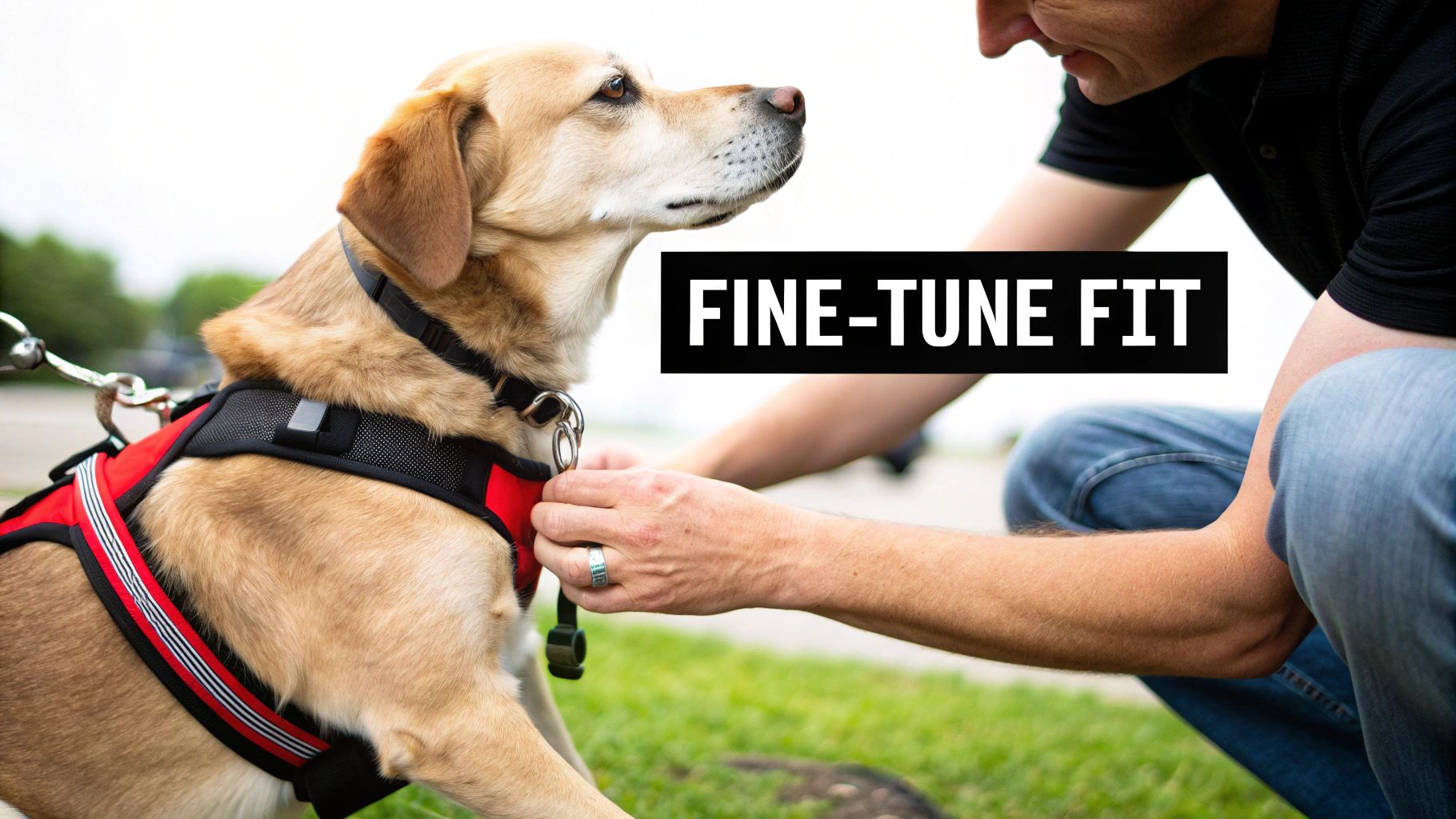
Using the easy walk dog harness size chart is the perfect starting point, but the real key to success is in the final adjustments. A perfectly tuned harness is what makes the no-pull feature work its magic, all while keeping your dog comfortable and secure on your walks.
When you first put the harness on, it should feel snug but not tight. The goal is to check two main areas to make sure everything is sitting where it should be. Taking a minute to do this now will save you from common problems later, like chafing or having the harness ride up into your dog’s throat.
Adjusting the Straps for a Custom Fit
The most important piece of this puzzle is the chest strap—the one that runs horizontally across your dog’s front. This needs to sit right across the breastbone, low and straight. If it creeps up toward the neck, it can put pressure on their throat when they pull, which is exactly what we’re trying to avoid.
Once the chest strap is in place, you can move on to the body straps:
- Shoulder Strap: This is the one that sits behind your dog’s front legs, and it’s often a different color. You want it to look like a straight, vertical line.
- Belly Strap: This strap secures the whole setup. Make sure it’s snug enough that the harness doesn’t slide around from side to side when your dog is moving.
You’re aiming for that sweet spot between secure and comfortable. If the straps are too loose, they can sag and rub, causing some nasty sores under the front legs.
A great rule of thumb is the “Two-Finger Rule.” You should be able to slide two fingers snugly between any strap and your dog’s body. If you can fit more, it’s too loose; if you can’t fit two, it’s too tight.
When adjusted correctly, the front D-ring (where you clip the leash) will stay centered on your dog’s chest. This is crucial because it’s what gently steers them back toward you when they try to pull ahead.
For dogs with unique body shapes or for owners who need extra security and features, a tactical dog harness can be a fantastic alternative with more adjustment points. Taking just a few moments to get the fit right turns the Easy Walk from a simple piece of equipment into a genuinely effective and humane training tool.
Common Sizing Mistakes and How to Avoid Them
Getting the right fit for your dog’s harness isn’t always as simple as it seems. Even with careful measurements, a few common mistakes can trip you up. Trust me, I’ve seen it all, and understanding these little pitfalls is the key to getting a perfect fit with the easy walk dog harness size chart.
One of the biggest culprits? Measuring too loosely. It’s a natural instinct—we don’t want to make our dogs uncomfortable, so we leave a little extra room with the tape measure. The irony is that this almost always leads to buying a harness that’s too big, which can cause way more issues than one that’s a bit snug.
The Real Reason for Chafing
Believe it or not, a harness that’s slightly too large is the #1 cause of that nasty chafing you sometimes see under a dog’s front legs. When the belly strap is loose, it sags and slides back and forth with every single step, creating constant friction.
Many dog owners see the irritated, raw skin and immediately think the harness is too tight and rubbing. In reality, the opposite is true—it’s too loose and moving around.
Before you rush out to get a bigger size because of chafing, try one thing first: tighten the straps. A snug fit, where you can slide just two fingers underneath, is usually all you need to solve the problem.
Another classic mistake is guessing the size based on your dog’s breed. A stocky, barrel-chested 60-pound bulldog is built completely differently than a lean 60-pound greyhound. The measuring tape doesn’t lie, so always trust your numbers over any breed examples on the packaging.
Keeping these simple tips in mind can save you a lot of guesswork and ensure your dog is comfortable and secure on your walks together.
Got Sizing Questions? We’ve Got Answers
Even with a detailed easy walk dog harness size chart, it’s common to run into a few tricky situations. I’ve been fitting these harnesses for years, and a few questions pop up time and time again. Let’s clear up the confusion so you can get the perfect fit.
“My Dog Is Right on the Line Between Two Sizes. Which One Should I Get?”
Ah, the classic sizing dilemma. When your dog’s chest measurement lands right on the cusp, my advice is always the same: go with the larger size.
The Easy Walk is designed with multiple adjustment points. This means you can easily snug down a slightly larger harness for a secure, customized fit. A harness that’s too small, on the other hand, offers no wiggle room and will quickly become uncomfortable or even restrictive for your dog.
“Can’t I Just Go by My Dog’s Weight?”
While weight can give you a general idea, it’s a notoriously unreliable metric for fitting a harness. You should never rely on weight alone.
Think about it: a burly, 50-pound bulldog has a completely different build than a lean, 50-pound border collie. Their chests are shaped differently and will absolutely require different harness sizes. Trusting your tape measure over the scale is the key to getting it right.
My Pro Tip: The chest girth measurement is your golden ticket. It’s the single most critical number for a perfect fit. Always prioritize that measurement over any weight range or breed suggestion you see on the packaging.
“The Harness Is Chafing My Dog. Does That Mean It’s Too Small?”
This is a common misconception, but chafing under the front legs is almost always a sign that the harness is too loose, not too tight.
When the belly strap isn’t snug enough, it sags and slides with every step your dog takes. That constant back-and-forth movement is what causes painful friction. Before you rush to size up, double-check your adjustments. Make sure every strap is snug—you should just be able to slip two fingers underneath, and no more.
Ready to put an end to pulling and give your dog the comfort they deserve? Find the perfect fit at Ur Pet Store and start enjoying your walks again. Check out our full collection of harnesses and walking accessories today.