

Blog
A Guide to Small Dog Beds Washable and Fresh

A clean, cozy bed is a cornerstone of your dog’s health, and honestly, picking a good washable one is the easiest way to get there. The best small dog beds have fully removable, machine-washable covers and tough materials that won’t fall apart after a few spins. This one feature turns a dreaded chore into just another load of laundry.
Why a Washable Bed Is a Must-Have for Your Small Dog
Your dog’s bed is their little sanctuary—their go-to spot for naps, security, and a good old-fashioned curl-up. But day after day, that beloved spot becomes a magnet for dirt, dander, fur, and whatever else they track in. For a small dog who spends so much time there, this buildup can really start to affect their well-being.
Think about it: a non-washable bed is like using the same bedsheets for months on end. It becomes a permanent home for all that grime. A washable bed, on the other hand, is like hitting the reset button. Every wash cycle gives them a fresh, clean, and hygienic place to rest.
The Link Between Health and Hygiene
Washing your dog’s bed regularly does a lot more than just keep it from smelling up the living room. It’s a huge part of keeping a healthy home for everyone, two-legged and four-legged alike.
A clean bed helps to:
- Cut Down on Allergens: Dust mites, pollen, and dander love to settle in fabric, and they can be a nightmare for allergies in both pets and people. A good wash in hot water gets rid of these irritants.
- Prevent Skin Problems: Bacteria and fungi flourish in dirty, warm places. Keeping the bed clean means your dog isn’t constantly exposed to microbes that can cause rashes, infections, and itchy skin.
- Keep Odors in Check: That “dog” smell often comes from bacteria trapped in their bedding. Regular washing eliminates the source, keeping your home smelling much fresher.
It’s clear people are catching on. The global pet beds market was valued at USD 1.43 billion and is expected to hit USD 2.47 billion by 2032. A big part of that growth comes from people like us looking for practical, durable, and easy-to-clean beds. You can read more about the rising demand for pet wellness products to see how the trend is shaping the industry.
A washable dog bed isn’t a luxury; it’s a fundamental tool for preventative pet care. It actively supports your dog’s skin health, reduces household allergens, and provides the clean, comfortable retreat every pet deserves. Investing in washability is an investment in their long-term health.
Choosing Materials Built for Easy Cleaning
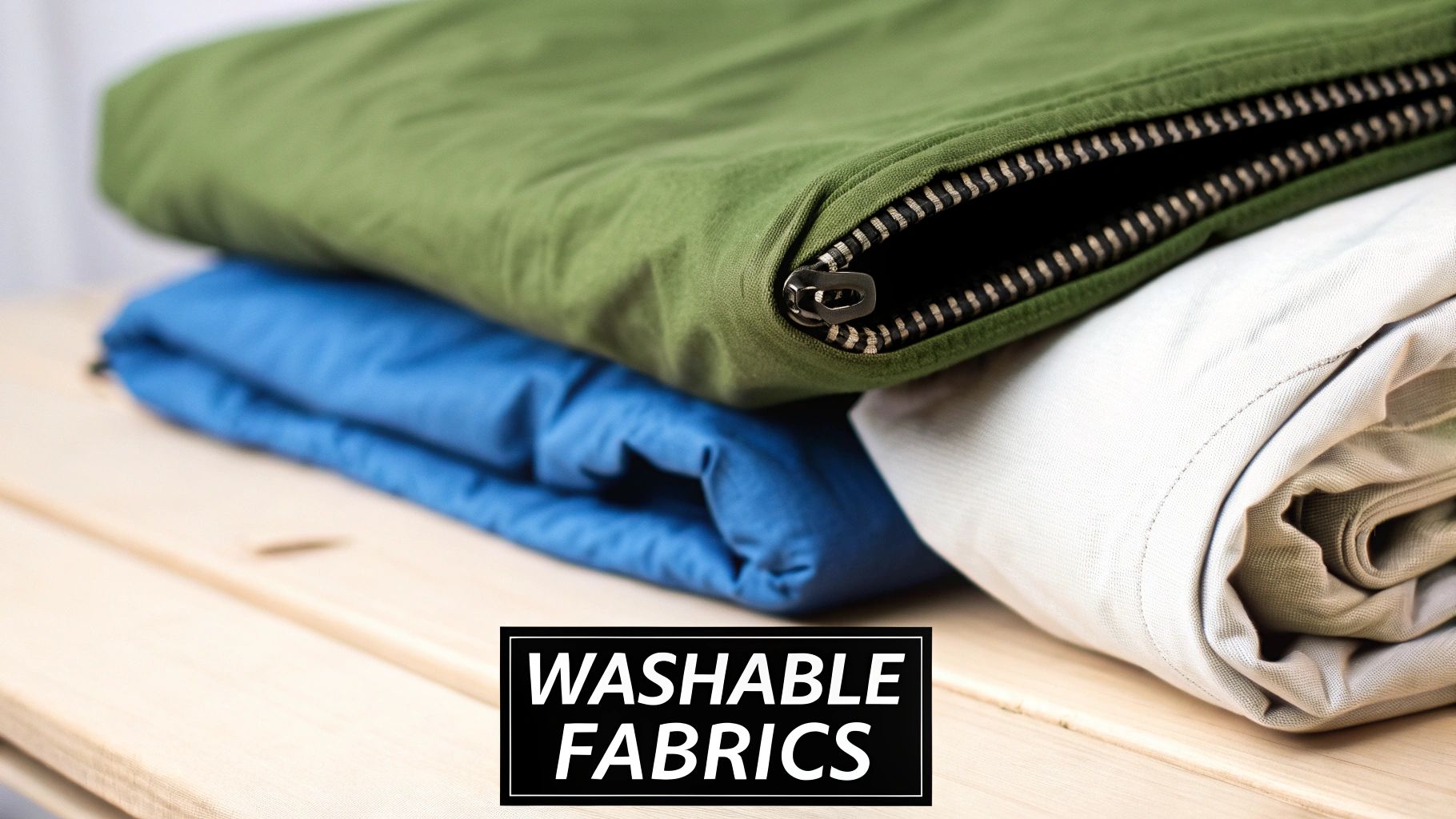
When you see the word “washable” on a dog bed label, it’s easy to assume you can just toss the whole thing in the machine. But in reality, that term can mean anything from a truly machine-safe design to a spot-clean-only headache.
To find a genuinely low-maintenance bed, you have to play detective and look past the marketing claims. The real secret to easy cleaning is all about the materials—both the cover on the outside and the filling on the inside.
Decoding the Cover Fabric
A bed’s cover is its first line of defense against muddy paws, surprise accidents, and everyday dog life. For a bed to survive the laundry cycle again and again, the fabric has to be tough. A flimsy cover will shrink, pill, or rip after just a few washes, leaving you with a useless pile of fluff.
The best materials are a blend of durability and comfort. You want something that can stand up to your dog and your washing machine.
- Polyester and Microfiber: These synthetic wonders are fantastic choices. They’re naturally stain-resistant and incredibly durable. Plus, they don’t soak up moisture, which helps keep mildew at bay and makes for a quick trip through the dryer.
- Fleece and Faux Fur: Nothing beats these for pure coziness, but they can be hair magnets. The trick is to look for high-quality versions, which tend to wash beautifully and stay soft without trapping every stray piece of fur.
- Canvas or Twill: If you have a digger or a nester, these tightly woven fabrics are your best friends. They offer incredible strength and get softer with every wash without falling apart.
This isn’t just an opinion; it’s what pet owners are demanding. Market data shows that 68% of consumers are specifically looking for pet beds that are not only washable but also chew-proof and durable. It’s clear that material quality is a top priority for today’s dog owners.
Understanding the Inner Filling
What’s inside the bed is just as crucial as the cover. The filling determines the bed’s comfort, support, and, most importantly, how it survives a wash. We’ve all seen it: the lumpy, misshapen insert that comes out of the dryer looking like a failed science experiment. The right filling prevents that.
Pro Tip: A zippered, fully removable cover is a non-negotiable feature. It simplifies everything, letting you quickly wash the soiled exterior without having to wrestle the entire bed into the machine for every little spill.
Here’s a look at the most common types of filling and how they hold up:
- Poly-fill (Polyester Fiberfill): This is the go-to for a reason. It’s lightweight, affordable, and usually machine washable and dryable. For an easy-care bed, poly-fill is almost always a safe bet.
- Memory Foam (Solid or Shredded): While it offers incredible orthopedic support, most memory foam can’t go in the washer—it will crumble and degrade. If you choose foam, a waterproof liner protecting the core is absolutely essential.
- Cedar Chips: Often mixed in with poly-fill, cedar is great for naturally repelling fleas and keeping odors down. The downside? Cedar-filled inserts are not washable and need to be replaced over time.
For a bed that will truly last through years of use and washing, exploring various Durable Fabrics is a smart move. Investing in quality materials from the start saves you a lot of hassle down the road.
Comparing Washable Dog Bed Materials
To make things even clearer, let’s break down how different cover and filler materials stack up against each other. This table will give you a quick snapshot of what to look for based on your dog’s needs and your cleaning preferences.
| Material Type | Best For | Washing Method | Durability Score (1-5) |
|---|---|---|---|
| Covers | |||
| Microfiber/Polyester | Everyday use, stain resistance | Machine wash cold, tumble dry low | 5 |
| Canvas/Twill | Diggers, scratchers, and heavy-duty chewers | Machine wash cold or warm, tumble dry | 5 |
| Fleece/Faux Fur | Cuddlers who value softness | Machine wash cold (gentle), tumble dry low or air dry | 3 |
| Fillers | |||
| Poly-fill | All-around ease of care and affordability | Machine washable and dryable (check label) | 4 |
| Shredded Memory Foam | Dogs needing joint support (with liner) | Hand wash or spot clean only; liner is key | 3 |
| Solid Memory Foam | Maximum orthopedic support (with liner) | Spot clean only; never submerge | 3 |
Ultimately, the best material is the one that fits your dog’s habits. A tough canvas might be overkill for a gentle senior, while a delicate fleece won’t last a day with a rambunctious puppy. Use this guide to find that perfect balance of comfort, durability, and easy maintenance.
Finding the Right Style of Washable Bed
Picking the right small dog bed isn’t just about what looks good in your living room. It’s really about matching your dog’s personal sleep style to a design that won’t make your life a nightmare come laundry day. Think about it like choosing your own favorite chair. Some of us sink into a big, plush armchair, while others need something with more solid back support. Dog beds are the same—each style offers a different kind of comfort, and the way it’s built directly affects how easy it is to keep clean.
You’re looking for that perfect intersection where your dog’s happiness meets your need for easy cleaning. A bed they absolutely love but you dread washing is a recipe for frustration.
Matching Bed Style to Sleep Habits
First things first: watch your dog sleep. Do they burrow deep under the blankets, or curl up into a tight little donut? Maybe they’re a full-on sprawler, legs going in every direction. Their natural sleeping posture is your biggest clue to finding a bed they’ll actually use and love.
- Donut and Cuddler Beds: With their high, soft walls, these are a dream for dogs who need to feel secure. The raised bolsters create a den-like feeling, offering a sense of safety and warmth that’s perfect for nervous pups or natural-born burrowers.
- Pillow and Mat Beds: Got a sprawler on your hands? These simple, flat beds are for them. They offer plenty of room to stretch out without any confining walls getting in the way. In cities, 65% of pet owners lean towards smaller, portable beds, which makes these compact mats a very popular option. You can dig into more pet bed market trends to see what’s driving these choices.
- Orthopedic Beds: These are a must-have for seniors or any dog breed prone to achy joints like arthritis. Usually made with memory foam, they give firm, even support that takes the pressure off sensitive spots and helps them get a better night’s rest.
- Elevated Cots: These are fantastic for dogs that run hot or hang out outside a lot. The raised frame lets air flow freely underneath, keeping them cool. Plus, the mesh fabric is ridiculously easy to just spray down with a hose.
Assessing Washability by Design
Okay, so you’ve narrowed down the style your dog will probably love. Now comes the part that’s all about you: figuring out how washable it really is. This is where the design details matter more than anything.
If you remember one thing, make it this: the most critical feature for any small dog beds washable is a fully removable, zippered cover. This one detail is the difference between an easy-to-clean bed and one that’s just “spot-cleanable”—and it will save you a world of time and effort.
Think about a one-piece donut bed. It seems simple at first, but then you’re trying to shove the entire bulky thing into your washing machine. More often than not, this leads to lumpy, shifted filling and parts that never seem to dry completely. A bed with a similar look but with a zip-off cover and separate inner pillows is a game-changer. You can just toss the dirty cover in the wash, leaving the clean cushions aside.
The same goes for orthopedic beds—that memory foam core can’t go in the wash. A quality waterproof liner sitting between the foam and the outer cover is non-negotiable. It acts as a barrier, protecting the expensive foam from accidents. Taking a look through a full range of beds and mats is a great way to see these different designs and features up close. By making both your dog’s comfort and smart, washable design a priority, you’ll find a bed that keeps everyone happy and your home smelling fresh.
Your Step-By-Step Guide to Washing a Dog Bed
A clean dog bed is more than just a tidy-looking part of your home—it’s essential for your dog’s health and comfort. Getting the washing process right not only blitzes dirt and odors but also helps the bed last longer, keeping your pup’s favorite spot cozy for years to come. Think of it as a reset button for their little sanctuary.
Before you toss that bed into the washer, a bit of prep work will make all the difference. Grab your vacuum and give the bed a good once-over. Use the crevice tool to get deep into the seams and corners where fur, dirt, and crumbs love to hide. This simple step keeps clumps of hair from gunking up your washing machine’s filter.
Once the loose debris is gone, check for any stubborn stains. A quick spot treatment with a pet-safe cleaner can work wonders on mud, drool, or little accidents. It’s always a good idea to follow safe cleaning practices for pet products to ensure you’re not using anything that could irritate your dog.
The Washing and Drying Process
Alright, now for the main event. A successful wash comes down to using the right settings and supplies to get things sanitized without shrinking or damaging the bed.
- Pick a Pet-Safe Detergent: Your dog’s skin can be sensitive, so regular laundry soap might be too harsh. I always recommend a mild, hypoallergenic detergent—one without any added dyes or perfumes. We’ve got some great options in our lineup of grooming and cleaning supplies.
- Check the Water Temperature: Hot water is fantastic for zapping bacteria and dust mites, but always check the care label first. If the tag says to use cold water, listen to it! The last thing you want is a shrunken cover or damaged fabric.
- Dry It the Right Way: This part is crucial for avoiding that dreaded mildew smell. Most removable covers are fine to tumble dry on a low-heat setting. If you’re drying an insert with stuffing, toss in a couple of clean tennis balls or wool dryer balls. They’ll bounce around and break up any clumps, helping the filling dry evenly. A big no-no: memory foam should never see the inside of a dryer. Just let it air-dry completely, away from direct sunlight.
This infographic breaks down how to pick a bed based on your dog’s habits, your home’s style, and, most importantly, how easy it is to clean.
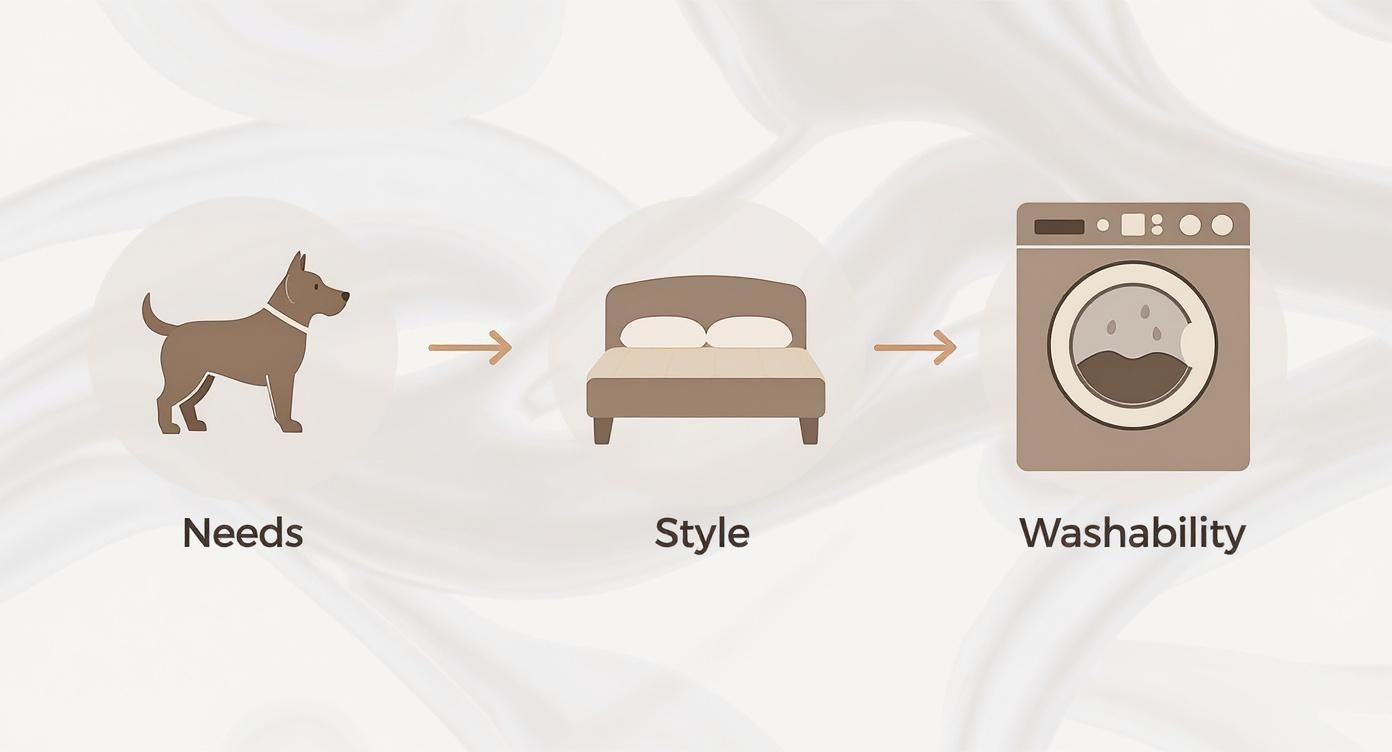
As you can see, thinking about washability from day one makes keeping things fresh and clean so much easier in the long run.
Pro Tip for Stubborn Smells: If a pesky odor lingers after a wash, add a half-cup of baking soda or white vinegar to the wash drum along with your detergent. They’re natural deodorizers that are tough on smells but gentle on your dog’s skin. Just be sure the bed is 100% dry before giving it back—a damp bed is a perfect breeding ground for mildew.
What to Look for When Buying a Washable Bed
https://www.youtube.com/embed/xnseDN85Mxo
Shopping for a washable small dog bed can feel like a chore, but it gets a lot easier once you know exactly what to look for. Think of this as your go-to checklist—a quick guide to help you pick a bed that will stand up to endless naps and wash cycles.
The first thing I always check is the overall construction. Get a close look at the seams and zippers. Is the stitching tight and even? Durable stitching, especially double-stitched seams, is a great sign that the bed won’t fall apart in the washing machine. A cheap, flimsy zipper is another deal-breaker. If it snags or breaks, that “removable cover” is suddenly not so removable anymore.
Don’t forget to flip it over and check for a non-slip bottom. My little guy loves to launch himself into his bed, and without a good grip, it would go sliding across the hardwood floor. A rubberized base keeps the bed firmly in place, which is safer and a lot less annoying.
Final Checks for Safety and Longevity
Once you’ve covered the basics, a few extra details can tell you if you’re holding a good bed or a great one.
Always hunt for the care tag and read the manufacturer’s washing instructions. If they’re vague, that’s a red flag. You want clear directions on water temperature and drying methods to keep the bed in top shape.
A truly washable bed is designed with maintenance in mind from the start. It’s not just about surviving a wash cycle; it’s about emerging from the laundry just as comfortable, supportive, and safe as it was before.
If the bed has any foam, look for safety certifications. The CertiPUR-US® seal is one you can trust. It guarantees the foam is made without nasty chemicals like formaldehyde or heavy metals, so you know your dog has a non-toxic place to sleep.
More and more, you’ll see beds made with eco-friendly fabrics, which is a fantastic trend for durability and sustainability. For more on this, check out the latest insights on the rise of sustainable pet products on futuremarketinsights.com.
And if you’re constantly dealing with accidents from a puppy or a senior dog, understanding your options for reusable dog pee pads vs disposable can be a huge help in keeping their space clean. With this checklist, you’re ready to find a well-made bed that will last for years to come.
Frequently Asked Questions
Even after you’ve found the perfect washable bed for your little companion, a few questions are bound to come up. Let’s walk through some of the most common ones so you can keep that bed fresh and clean without any guesswork.
How Often Should I Wash My Small Dog Bed?
For most dogs, a good cleaning every one to two weeks is the sweet spot. This routine keeps the everyday accumulation of dirt, fur, and general doggy smells under control.
Of course, you know your dog best. If your pup has allergies, is a super-shedder, or has the occasional accident, you’ll want to aim for a weekly wash. This helps create a healthier, more comfortable space for them to rest.
Can I Use My Regular Laundry Detergent?
You can, but I’d recommend against it. It’s much safer to stick with a mild detergent that’s free of dyes and fragrances. A dog’s skin is surprisingly sensitive, and the chemicals and strong scents in many standard detergents can easily cause skin irritation or flare up allergies.
Your best bet is to grab a hypoallergenic laundry soap or one made specifically for pets. It’s a small change that can make a big difference for your dog’s comfort.
What if the Bed Still Smells After I Wash It?
Ah, the dreaded lingering odor. It happens! If a regular wash isn’t cutting it, try adding a natural deodorizer to the cycle along with your pet-safe detergent.
- White Vinegar: A cup of white vinegar works wonders at neutralizing tough smells.
- Baking Soda: A half-cup of baking soda is another excellent, pet-safe option.
Both of these household staples don’t just cover up odors—they actually break them down. Also, a critical step is making sure the bed is 100% bone dry before letting your dog use it. Even a hint of dampness can quickly turn into that musty, mildew smell.
Always check the care label for drying instructions. Most covers and simple poly-fill beds do just fine in the dryer on a low-heat setting. If the bed has memory foam, though, you’ll need to let it air-dry completely to maintain its shape and supportive qualities.
At Ur Pet Store, we hand-pick beds that are not only cozy but also a breeze to clean. Find the perfect, easy-care bed for your small dog today!