

Blog
A Pet Owner’s Guide to Washable Dog Pee Pads

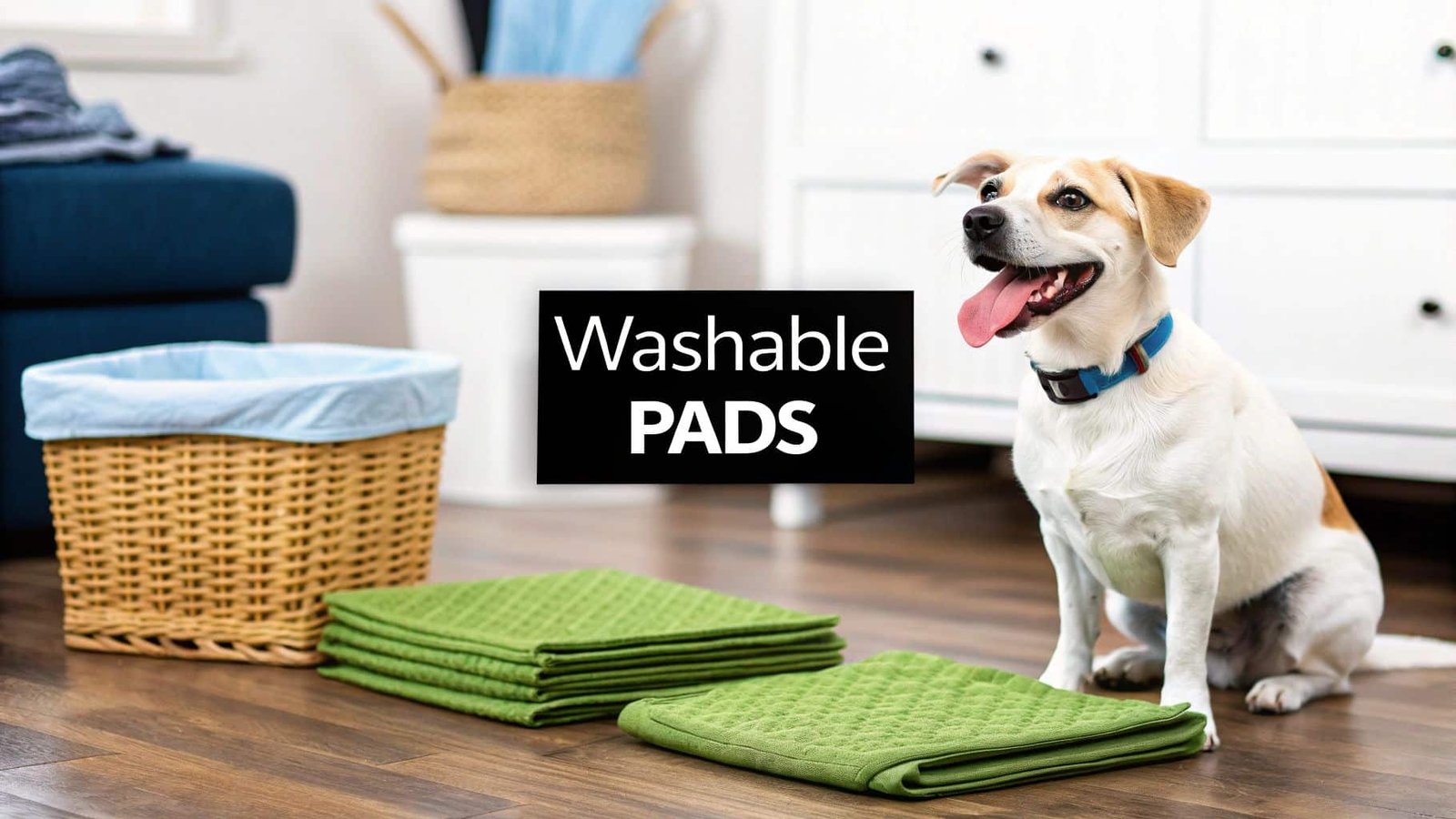
If you’ve ever looked at the mountain of used disposable pee pads in your trash can and thought, “There has to be a better way,” you’re definitely not alone. The great news is, there is. Washable dog pee pads are a game-changer for pet parents, offering a solution that’s easier on your wallet, kinder to the planet, and built to last. Making this one simple change can turn your pet care routine from a never-ending expense into a smart, one-time investment.
Why Pet Owners Are Switching to Washable Pee Pads
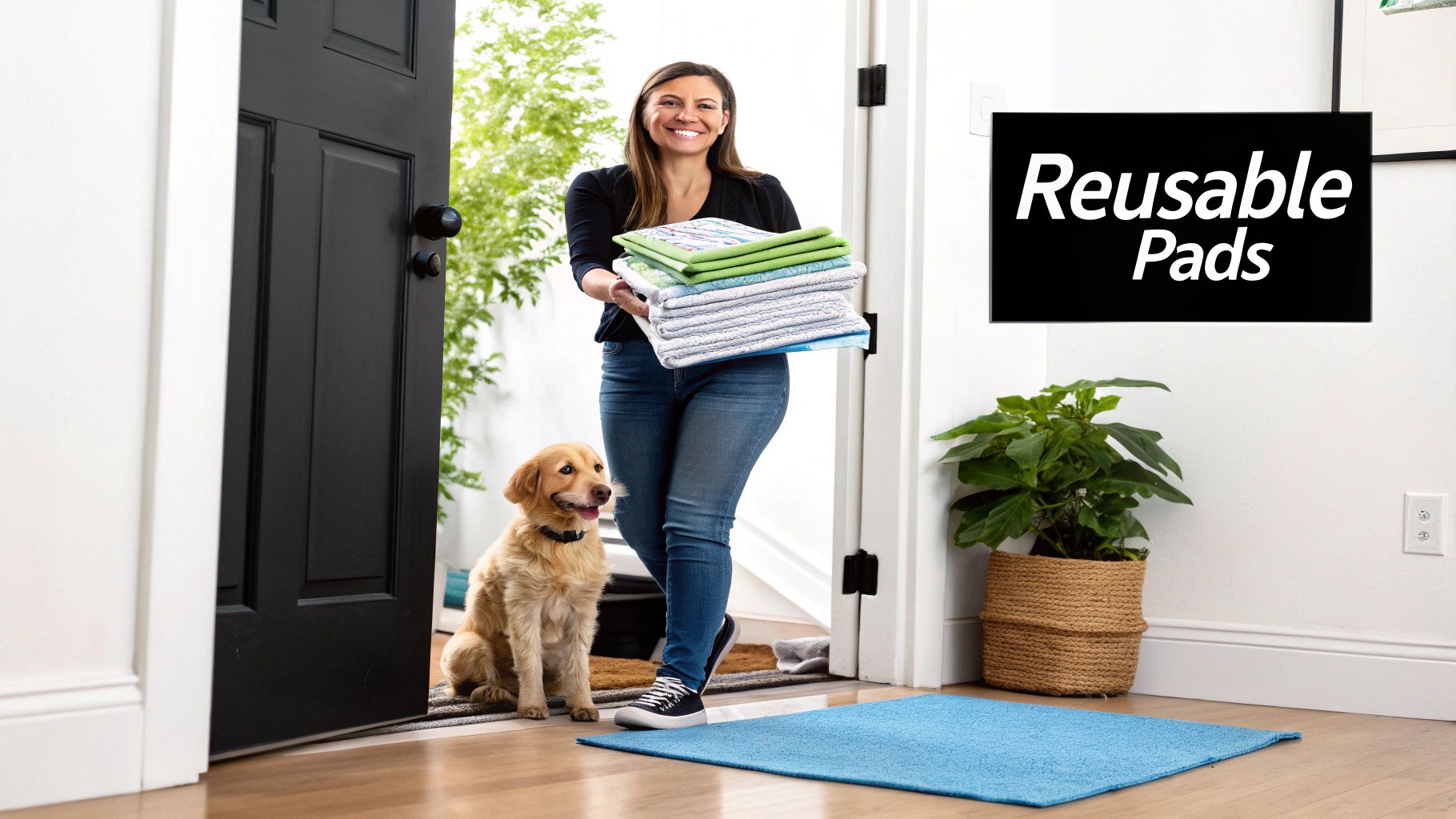
The move from disposable pads to washable ones is a lot like the choice parents make when they opt for cloth diapers over single-use ones. At first, the throwaway option seems incredibly convenient. But the reality of that convenience quickly sinks in: the endless trips to the store, the steady drain on your bank account, and the sheer amount of waste you’re sending to a landfill.
Washable dog pee pads are the perfect answer to these problems. They completely change the game, shifting your mindset from a temporary, throwaway fix to a durable, long-term solution.
Solving Common Pet Owner Frustrations
For most pet owners, disposable pads are a cycle of frustrations that reusable pads solve beautifully. Think about these all-too-common issues:
- The Constant Expense: Those packs of disposables really add up. Before you know it, you’ve spent a small fortune over the course of a year.
- Environmental Waste: A single dog can go through hundreds, even thousands, of plastic-lined pads a year. All of that ends up sitting in landfills for a very, very long time.
- Flimsy Performance: We’ve all seen it. Thin disposable pads get bunched up, shredded by playful paws, or worse, leak right through to the floor.
- Poor Odor Control: Many disposable options just don’t cut it when it comes to trapping odors, leaving your home with a lingering, unpleasant smell.
By offering a durable, super-absorbent, and long-lasting alternative, washable pads aren’t just a substitute—they’re a genuine upgrade in performance, reliability, and your own peace of mind.
A Smarter, More Sustainable Choice
At its core, the decision to switch is about finding a more practical and responsible way to care for your pet. Today’s pet owners are looking for products that work well and align with their values, like being financially savvy and environmentally conscious. Washable pads check both of those boxes.
Sure, they’re an upfront investment, but they pay for themselves surprisingly fast. Just think—you might never have to buy another pack of disposables again. This is a huge reason why so many people are looking into the key differences between reusable dog pee pads vs disposable options. In the end, making the switch shows you’re not just a caring pet owner, but a smart one who values lasting quality over throwaway convenience.
Why Going Reusable is Great for Your Wallet and the Planet
When you’re weighing your options for pee pads, two huge benefits of washable pads jump out right away: they save you a ton of money over time, and they’re so much better for the environment. It’s easy to get sucked in by the convenience of disposable pads, but when you look closer, you realize you’re stuck in a cycle of constantly buying and throwing away. Making the switch to a reusable option is a smart move that really pays off.
The financial logic is simple. A single pack of disposable pads doesn’t seem like much, but that cost adds up fast. Week after week, you’re essentially throwing money in the trash. In contrast, washable pads are a one-time purchase. Think of it as an investment that stops hundreds of dollars from leaving your bank account over your dog’s life.
The Clear Financial Advantage
Let’s run the numbers. It’s not uncommon for a dog owner to spend $30 to $50 per month on disposable pads. For a small dog or a puppy in training, it could be even more. That little expense quickly balloons into $360 to $600 per year.
Now, look at the alternative. A good set of three or four washable pee pads will run you about $40 to $70 upfront. Even at the high end, you’ve broken even in just two months. After that, it’s all savings.
Over five years, the difference is staggering. A pet parent could easily save over $2,000 just by choosing reusable pads. That’s money you could put toward better food, vet visits, or a whole lot of new toys.
This simple math is why more and more people are moving to reusable options. While the market for disposables is huge—the industry churns out a mind-boggling 4.6 billion pads every year—savvy pet owners are catching on. Washable pads are quickly gaining ground with people who see the long-term value and eco-friendly upside.
Reducing Your Environmental Paw Print
Beyond the savings, the environmental case for washable pads is just as strong. Every single disposable pad is designed to be used once and then tossed. Its journey is short and wasteful: it’s made, used for a few hours, and then sits in a landfill for hundreds of years.
Now, multiply that by millions of dogs using several pads a day. The scale of the waste is enormous. Pet products are a surprisingly big contributor to landfill buildup, with single-use plastics being a major culprit.
This is where washable dog pee pads really shine:
- Massive Waste Reduction: A single washable pad can take the place of hundreds, maybe even thousands, of disposables over its lifetime.
- Saves Resources: By choosing reusables, you cut down on the demand for the raw materials, energy, and water needed to constantly produce and ship disposable products.
- Fewer Nasty Chemicals: You’re keeping plastic liners and those weird absorbent chemical gels out of our soil and water.
Switching to washable pads is one of the most effective practical alternatives to single-use plastics a pet owner can make. It’s a small tweak to your routine that has a genuinely positive impact. By simply choosing to wash instead of toss, you’re part of a more sustainable way of caring for your pet—proving that what’s good for your budget can also be great for the Earth.
A Look Inside: What Makes a Washable Pee Pad Work?
Ever wondered what’s going on inside a washable dog pee pad that lets it soak up messes, protect your floors, and come out of the wash ready for another round? It’s not magic, but it is some pretty clever design. A good pad is built like a high-tech sandwich, with each layer doing a very specific job to keep things clean and dry.
Think of it like a quality raincoat. You’ve got a soft inner lining, an insulating middle, and a waterproof shell on the outside. Washable pads use that same multi-layer philosophy. This construction is what separates a pad that will last for years from a flimsy one that gives up after a few washes.
The Soft and Comfortable Top Layer
The first thing your dog feels is the top layer. This layer’s main goal is to be soft and inviting for your dog’s paws, which is why it’s usually made from materials like fleece or a soft polyester.
But it has a more important job: moisture-wicking. It doesn’t actually hold any liquid. Instead, it lets urine pass straight through to the absorbent layers below. This keeps the surface feeling dry, so your dog isn’t standing in a puddle or tracking wet paw prints all over your clean floors.
The Ultra-Absorbent Core
Right below that soft top layer is the real workhorse: the absorbent core. This is the thick, sponge-like middle that’s designed to trap and lock in liquid. It’s usually a dense blend of fibers like rayon and polyester, sometimes called a “soaker” layer.
This core is what gives the pad its capacity. A well-made one can hold a surprising amount of liquid—often several times its own weight—without leaking. This is what keeps messes contained and helps control odors until laundry day.
Key Takeaway: The quality of the absorbent core is the single biggest factor in a pad’s performance. A better core means fewer leaks, less smell, and a pad that can handle anything from a tiny puppy to an incontinent senior dog.
The Impenetrable Waterproof Barrier
The third layer is your floor’s last line of defense. This waterproof barrier is a tough, non-porous sheet, typically made from polyurethane (PU) or thermoplastic polyurethane (TPU). Imagine it as a flexible, durable raincoat bonded to the back of the absorbent core.
Its only job is to stop a single drop of liquid from getting through. This layer has to be strong enough to handle hundreds of trips through the washing machine without cracking or losing its integrity. This is often where premium pads really pull away from cheaper, less reliable options.
This side-by-side comparison clearly shows how the initial investment in a washable pad translates into major long-term savings.
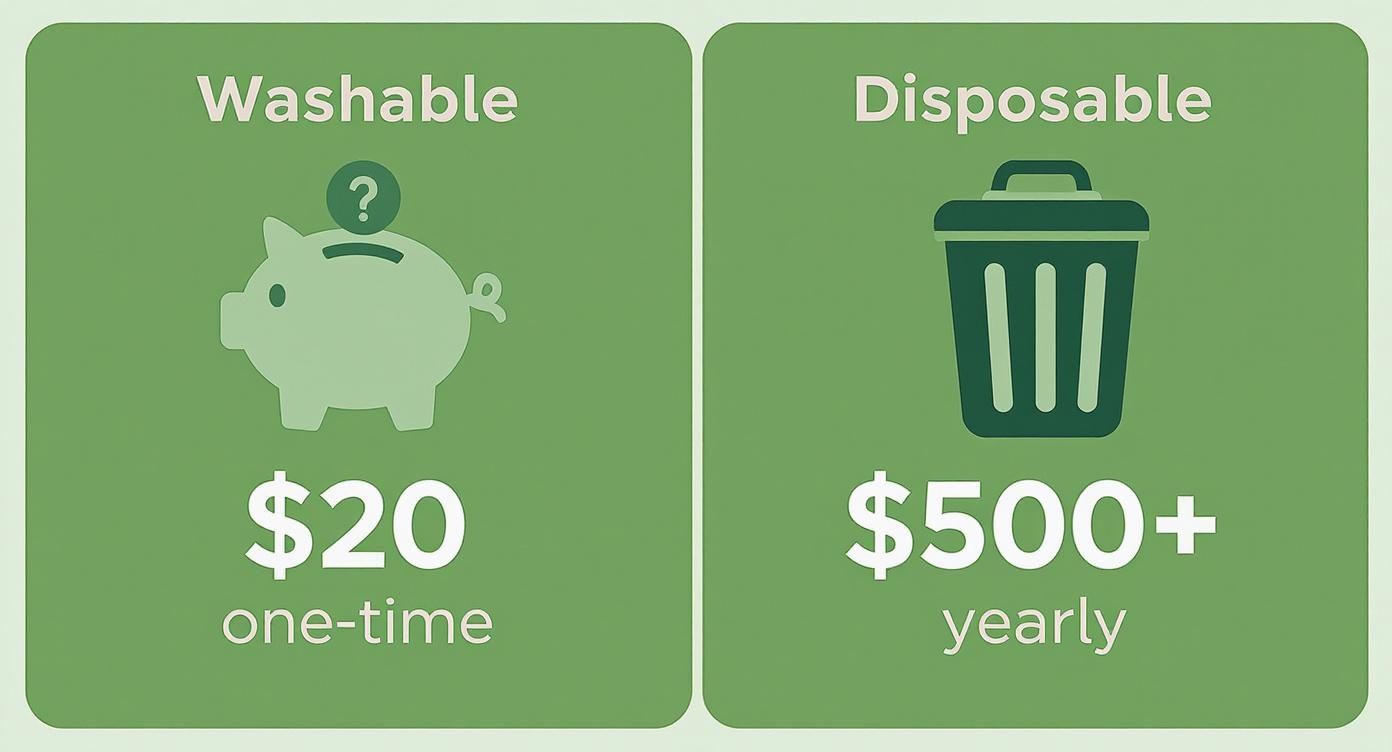
The data visualizes a stark contrast, showing that what starts as a small purchase with disposables quickly becomes a significant annual expense.
The Final Layers for Grip and Odor Control
Finally, we get to the bottom of the pad, which features a non-slip backing. This layer often has little silicone dots or a slightly tacky texture to help it grip the floor. This is a huge deal for safety, as it keeps the pad from sliding out from under your dog on slick surfaces like tile or hardwood.
Many newer pads also add in extra materials to boost performance. For example, some have layers woven with bamboo charcoal, which naturally helps neutralize odors and keep your home smelling fresher between washes. All these layers work together to create a pad that isn’t just absorbent, but also safe, stable, and odor-resistant.
How to Choose the Perfect Washable Pee Pad
Picking the right washable pee pad isn’t nearly as complicated as it sounds. When you boil it down, it’s all about matching the pad to your dog and your home. Focus on your dog’s size, their age, and what you’ll be using the pad for, and you’ll find the perfect fit.
Think of it like buying a raincoat. You wouldn’t buy a toddler-sized coat for a grown adult, and you wouldn’t choose a flimsy one for a torrential downpour. The same logic applies here—the right pad will save you a ton of cleanup and keep both your dog and your floors happy.
Sizing Up Your Options
First things first: size. This is probably the most critical part of the equation. A pad that’s too small is a recipe for messes, as your dog might miss the mark. On the other hand, a giant pad in a tiny apartment is just impractical.
You want to give your dog enough space to do their little circling ritual before they go, all without stepping off the edge.
Here’s a quick cheat sheet to get you started:
- Small Breeds (like Chihuahuas or Yorkies): A standard 24″ x 36″ pad usually does the trick. It gives them plenty of room without taking over your floor space.
- Medium Breeds (like Beagles or Cocker Spaniels): It’s best to size up to something like 36″ x 48″. This gives them a more comfortable and forgiving target.
- Large Breeds (like Labs or German Shepherds): Definitely go big. Look for pads that are 48″ x 60″ or even larger. For a truly giant breed like a Great Dane, you might even lay two large pads side-by-side.
As more people bring dogs into their families, the market has responded with better, more specialized products. The demand, especially for pads that can handle bigger dogs, is pushing companies to innovate. You can get a sense of these market trends and see how different dog breeds influence product development.
Absorbency and Material Quality Matter
Not all pads are created equal when it comes to soaking up liquid. The right absorbency level really depends on your dog. A tiny puppy who is still potty training will have lots of small accidents. A senior dog dealing with incontinence, however, might need a pad that can handle a much larger volume, especially overnight.
Pro Tip: Always check the pad’s liquid capacity, which is usually listed in ounces or cups. A truly high-quality pad can hold several cups of liquid, keeping your floors bone-dry even after a few uses. This is a huge sign of a well-made product.
The materials make all the difference. Look for pads built with multiple layers—a soft, quick-drying top layer is essential for comfort, while a dense, absorbent core does the heavy lifting. The best washable dog pee pads are tough enough to survive hundreds of washes without falling apart or losing their absorbency.
The Non-Slip Backing Is a Must-Have
This is a feature that’s easy to overlook, but trust me, it’s non-negotiable. A pad that slides all over your hardwood, tile, or laminate floors isn’t just annoying—it’s dangerous.
Picture your dog making a dash for the pad, only to have it shoot out from under them. This can easily cause an injury and might even make your dog scared to use it again. A good pad will have a backing with little silicone dots or a rubbery texture that grips the floor. It’s a simple feature that makes a world of difference.
Choosing Your Washable Pee Pad: A Feature Comparison
To make it even simpler, this table breaks down what to look for based on how you’ll be using the pad. Finding the right match for your dog’s profile is key.
| Dog Profile / Use Case | Recommended Size | Recommended Absorbency | Key Feature to Look For |
|---|---|---|---|
| Puppy House Training | Medium to Large | High | Durability to withstand chewing and frequent washes. |
| Senior Dog with Incontinence | Large to XL | Maximum | High liquid capacity for overnight protection. |
| Apartment Living / Indoor Potty | Varies by breed | High | Excellent odor control, like charcoal-infused layers. |
| Crate Liner or Travel | Match crate size | Medium | A secure non-slip backing to prevent bunching up. |
Thinking through these points will help you land on a pad that truly works for you. If you’re looking for an all-around great option that’s versatile enough for floor protection, crate lining, or even furniture covers, a high-quality product like this reusable dog pee pad blanket is an excellent choice. It’s the perfect blend of comfort, serious absorbency, and durability.
A Step-By-Step Guide to Cleaning and Maintenance
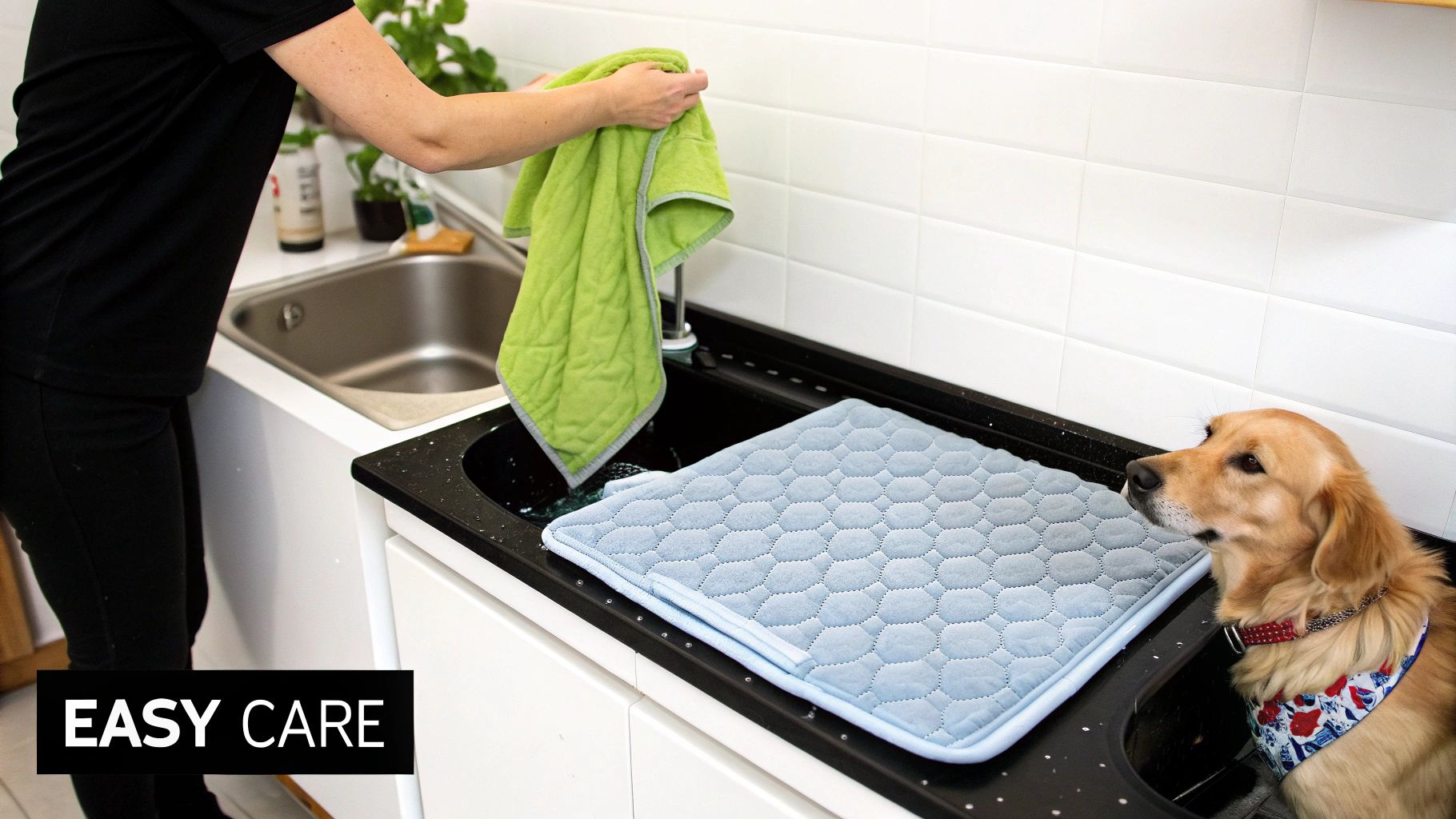
Let’s be honest—the biggest question on everyone’s mind is, “Isn’t cleaning these things a huge hassle?” It’s a fair question. But I can tell you from experience that keeping washable dog pee pads clean is much simpler than it sounds.
Think of it like any other part of your laundry routine, whether it’s sweaty gym clothes or dirty kitchen towels. You develop a system, find the right settings, and it just becomes second nature. With a few simple steps, your pads will stay absorbent, keep your home smelling fresh, and last for years.
The Simple Three-Step Cleaning Process
Getting your pads fresh and ready for another use is as easy as 1-2-3. Following this routine consistently will protect the all-important waterproof backing and the absorbent core, making sure you get the most out of your investment.
- Remove Solids and Pre-Rinse: First things first, get rid of any solid waste. Then, give the pad a quick rinse to wash away as much urine as possible before it hits the machine. You can do this with a laundry sink sprayer, a hose outside, or even in the shower. This initial step makes a huge difference in how clean the pad gets in the main wash.
- Machine Wash with Care: Toss the pad into the washing machine. I always recommend using warm water, not hot, as high temperatures can damage the waterproof layer over time. Stick with a mild, pet-safe detergent. Pro tip: run an extra rinse cycle to make sure every last bit of soap is gone. Any lingering residue can actually make the pad less absorbent.
- Dry Properly to Preserve the Pad: When it comes to drying, you’ve got two great options: tumble dry on low or simply hang it to air dry. Just remember that high heat is the enemy of the waterproof layer. It’s the fastest way to ruin a good pad. Air drying is the gentlest method and will help you get the maximum lifespan out of it.
That’s really all there is to it. The durability of modern pads makes cleaning a straightforward task that easily fits into your life.
Critical Mistakes to Avoid During Maintenance
How you wash your pads is just as important as how you use them. I’ve seen people accidentally ruin a perfectly good pad with a few common laundry mistakes. Knowing what not to do is key to protecting its absorbency and leak-proof power.
The goal is to get it clean without damaging the specialized fabrics or leaving behind any residue. It’s a similar idea to best practices for washing highly absorbent items like bathroom mats, where preserving absorbency is the name of the game.
The Golden Rule of Pad Washing: Never, ever use fabric softeners or dryer sheets. These products leave a waxy film on the fibers that makes them feel soft but also repels liquid—completely defeating the purpose of an absorbent pee pad.
Here are the top things to steer clear of:
- Bleach and Harsh Chemicals: Chlorine bleach is too aggressive. It will break down the waterproof backing, causing it to crack and leak, while also damaging the absorbent fibers. Always stick to gentle, pet-safe detergents.
- Fabric Softeners and Dryer Sheets: This is the big one. As I mentioned, they create a water-resistant coating on the pad, which is the last thing you want.
- High Heat Settings: I can’t stress this enough. Whether it’s in the washer or the dryer, high heat can melt or warp the waterproof membrane. Stick to warm or cool water and a low-heat or air-dry setting.
- Overloading the Washing Machine: Don’t cram the machine full. The pad needs plenty of room to move around to get properly agitated and rinsed.
By sticking to these simple dos and don’ts, your washable pee pads will stay in great shape for hundreds of washes. Proper care makes them a reliable, budget-friendly, and eco-conscious choice for any pet owner. For more great products to keep your home and pet feeling fresh, check out our full line of grooming and cleaning supplies.
Still Have Questions About Washable Pee Pads? Let’s Clear Them Up.
Even after seeing all the perks, it’s totally normal to have a few questions before you commit to switching over to washable pads. It’s a new routine, after all, and you want to be sure it’s the right call for you and your dog.
Let’s walk through some of the most common questions I hear from pet owners. My goal is to clear up any lingering doubts so you can feel confident you’re making the right choice. Think of this as the final check-in before you start a smarter, more sustainable routine with your furry friend.
How Many Washable Pads Do I Actually Need?
This is probably the most practical question of all, and getting the number right from the start will make your life so much easier. The last thing you want is to get caught without a clean pad when you need one.
As a solid rule of thumb, I always recommend starting with three pads. This creates a simple, foolproof rotation system that keeps you covered:
- One pad is on the floor, ready for action.
- One pad is in the laundry, getting clean.
- One pad is fresh and waiting on the shelf.
This “one in use, one in the wash, one ready to go” method means you’ll never be in a pinch. However, if you’re dealing with a young puppy in the thick of potty training or an older dog with incontinence, having four or five pads can be a real game-changer. It just gives you that extra buffer and means you’re not constantly running the washing machine.
Is My Dog Going to Chew on It?
It’s a fair question, especially with puppies who see everything as a potential chew toy. While any dog might be tempted, the good news is that washable pads are generally much tougher and far less appealing to shred than their flimsy disposable cousins.
The weight and quilted texture of a well-made pad often deter chewing right away. Unlike a disposable pad that a dog can rip into confetti in seconds, a good reusable one is built to last.
If you know you have a power-chewer on your hands, look for pads with reinforced stitching around the edges. When you first introduce the pad, keep an eye on your dog. If they start to chew, gently redirect them to an actual chew toy. It’s a simple way to teach them the pad is for potty, not for play.
Can I Use These Pads for Anything Else?
Absolutely! This is one of my favorite things about them. Their incredible versatility is what makes them such a fantastic tool for any pet owner. Thanks to their super-absorbent and waterproof design, you’ll find uses for them all over your house.
Here are just a few ideas to get you started:
- Crate Liners: They make a crate so much more comfortable and protect the tray from messes.
- Car Seat Protection: Throw one over your seat to save it from muddy paws, shedding, or accidents on the road.
- Under Food & Water Bowls: Perfect for catching spills from enthusiastic eaters and drinkers.
- Whelping Boxes: A soft, hygienic surface is crucial for a new mom and her puppies.
- Furniture Covers: Drape one over your dog’s favorite spot on the couch to protect it from hair and dirt.
Their durability also makes them a great choice for lining small animal cages for guinea pigs or rabbits. They truly become a household workhorse.
How Long Do Washable Dog Pee Pads Really Last?
When you invest in washable pads, you’re buying a long-term solution, so you need to know they’re going to hold up. A high-quality pad can easily withstand hundreds of wash cycles. With the right care, that often means you’ll get several years of reliable use out of them.
Of course, the actual lifespan depends on a couple of things. The quality of the materials is number one—look for a sturdy waterproof backing and strong stitching. Better materials will stand up to repeated washing without breaking down.
To get the most life out of your pads, just follow the care instructions. The two biggest things that will shorten a pad’s life are high heat and harsh chemicals. Avoid high-heat cycles in the washer and dryer, and skip the bleach and fabric softeners. This will protect the absorbent layers and waterproof barrier, ensuring your pads stay leak-proof and effective for years to come.
Ready to make the switch to a smarter, more sustainable solution? At Ur Pet Store, we offer a range of high-quality, durable, and super-absorbent washable pee pads designed to make your life easier and your home cleaner. Explore our collection today and discover the perfect fit for your pet.