

Blog
A Pet Owner’s Guide to Large Dog Beds Washable

When you bring a big dog into your family, you’re signing up for a lot of love, a lot of slobber, and a lot of mess. It just comes with the territory. The secret to keeping your home fresh and your dog happy is finding a great large dog beds washable. And I don’t just mean a bed with a removable cover—I mean the whole nine yards. A bed designed for deep cleaning offers hygiene, longevity, and a lot less stress for you.
Why a Truly Washable Bed Is a Must-Have
For big dogs like German Shepherds, Labs, or gentle giants like Great Danes, their bed is their kingdom. But that kingdom can quickly become a collection point for mud, fur, drool, and whatever they dragged in from the yard. A quick spot-clean just isn’t going to cut it.
Think of it this way: you wouldn’t sleep on the same sheets for months on end. Your dog’s bed deserves the same attention. It can easily become a breeding ground for bacteria, allergens, and odors that impact not just your pup’s health, but the air everyone in your home breathes.
The Health and Hygiene Connection
Beyond the obvious dirt, a genuinely washable bed is a game-changer for your dog’s health. It helps tackle those invisible issues, like common household allergens. For a deeper dive into this, you might find this guide on understanding dust mites and protecting against allergens pretty insightful.
Washing the bed regularly gets rid of these microscopic troublemakers, which is critical for a few key reasons:
- Preventing Skin Irritations: A clean surface keeps nasty bacteria and fungi from causing rashes, hot spots, or skin infections.
- Reducing Allergens: Washing away dander and dust creates a healthier home for your dog and any family members with allergies.
- Eliminating Odors: A thorough wash gets to the source of that lingering “dog smell” instead of just covering it up.
This focus on pet wellness isn’t just a hunch; it’s a huge trend. The global market for pet beds is expected to grow from USD 5.4 billion in 2025 to a massive USD 10.5 billion by 2035, all because we’re treating our pets more like family. You can see more on this trend over at Future Market Insights. Choosing a fully washable bed is a simple, practical way to give your dog the best care possible.
What Makes a Dog Bed Truly Washable? A Deep Dive into Materials
Let’s be honest, the word “washable” gets thrown around a lot. But when you’re dealing with a large dog, “washable” needs to mean something more than just “survives one trip through a gentle cycle.” The real secret to a bed that lasts is in the materials—both inside and out.
Think of it like buying a heavy-duty work jacket versus a cheap raincoat. One is built to handle mud, rain, and rough use day after day, while the other falls apart at the first sign of trouble. A great dog bed is the same; its cover and filling are chosen specifically to withstand the unique challenges a big dog presents.
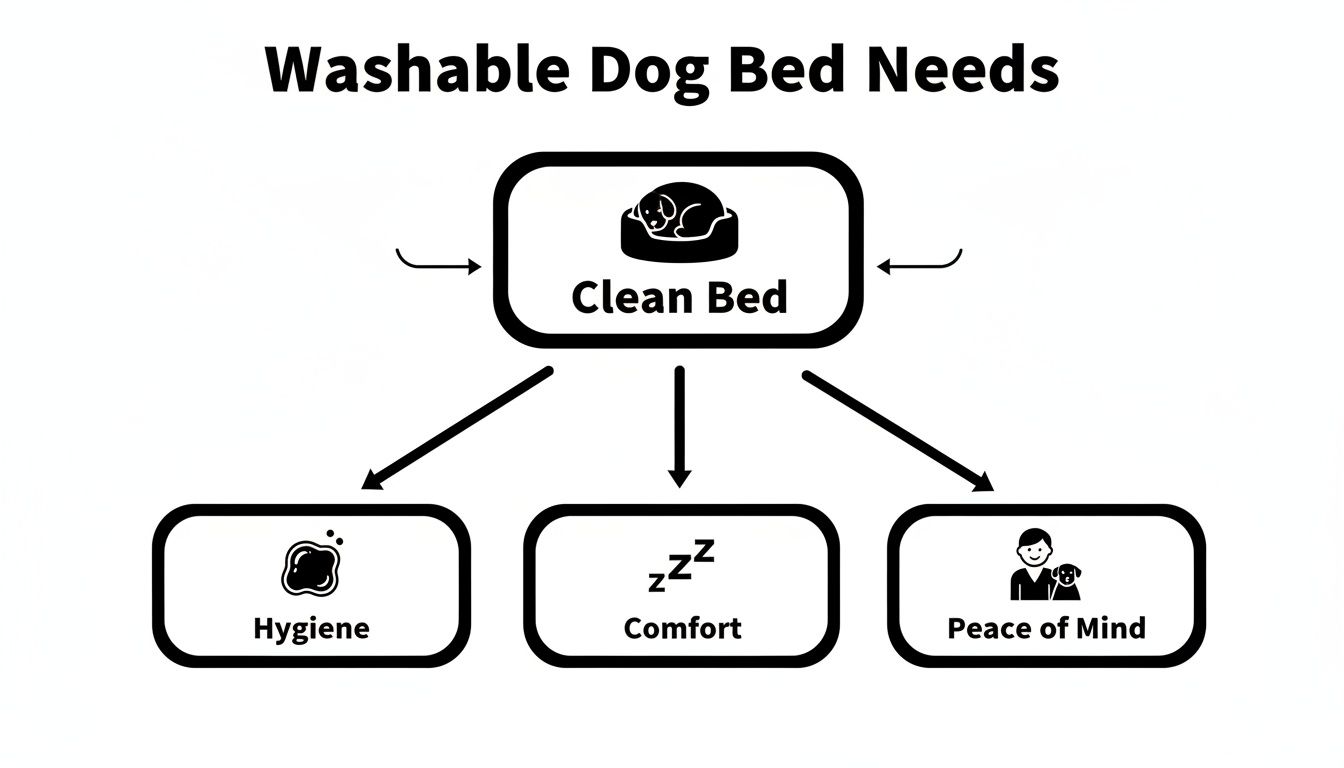
A clean, durable bed isn’t just a convenience—it’s essential for your dog’s health and your own peace of mind.
The Best Cover Fabrics for the Job
The cover is your first line of defense against dirt, drool, and dander. You need a fabric with a tight weave that can take a beating from claws and constant use. Here are a few materials that consistently get the job done:
- Heavy-Duty Canvas or Denim: Just like your favorite pair of rugged jeans, these fabrics are incredibly tough. They stand up to digging and nesting and often get softer and more comfortable with every wash without losing their strength.
- Microfiber or Microsuede: These synthetic materials are fantastic at repelling moisture and stains. Because the fibers are woven so tightly, pet hair tends to sit on the surface, making it easy to brush or vacuum off between washes.
Gaining a better grasp of different fabrics is always helpful. For a wider look, you can check out this guide on understanding materials for dog comfort items, which can help you spot quality textiles in any pet product.
It’s All in the Details: Stitching and Zippers
Even the toughest fabric won’t hold up if the construction is shoddy. This is where you can really tell a premium bed from a cheap imitation.
Look for reinforced stitching, especially around the seams and corners. Double-stitching is a clear sign that the manufacturer knew this bed was going to see some serious use. Next, inspect the zipper. It should be heavy-duty and well-protected, not a flimsy little thing that will snag or break after a few cycles in the laundry.
Don’t Forget What’s Inside: The Fill
The inside of the bed is just as critical as the outside. The filling determines your dog’s comfort and support, but it also plays a huge role in how easy the bed is to keep clean and odor-free.
The gold standard is a bed with a waterproof liner protecting the inner cushion. This is non-negotiable. This liner stops accidents and spills from ever reaching the core foam or fill, preventing permanent odors and bacteria growth. Without it, you’re only ever cleaning the surface, while the real mess soaks deep inside.
Here’s a quick comparison of common materials you’ll find in dog beds to help you decide.
Washable Dog Bed Material Comparison
| Material Type | Best For | Washability Rating | Durability Notes |
|---|---|---|---|
| Cover: Canvas/Denim | Heavy chewers, diggers, and outdoor use | Excellent | Extremely tough and gets softer over time. Can be stiff initially. |
| Cover: Microsuede | Dogs that shed a lot; comfort-seekers | Very Good | Resists hair and stains well. Soft texture but less rugged than canvas. |
| Fill: Memory Foam | Senior dogs or those with joint issues | Poor (Foam itself) | Best protected with a waterproof liner. Provides excellent support but can’t be machine-washed. |
| Fill: Poly-Fill/Fiberfill | General use, dogs who like to nest | Good to Excellent | Often fully machine washable. Can clump over time if not high quality. |
Ultimately, a truly washable bed is a complete system. The cover, zipper, liner, and fill all need to be designed to work together to give you and your dog years of clean, comfortable rest.
Finding the Perfect Fit and Style for Your Big Dog
Picking the right size and style for a large dog bed isn’t just about what looks good in your living room. It’s a huge factor in their long-term health and happiness. A bed that’s too small forces them into awkward, cramped positions. This puts a ton of unnecessary strain on their joints and muscles—a real problem for bigger breeds already prone to issues like hip and elbow dysplasia.You want to give them a space that supports their whole body, whether they’re curled up in a tight little ball or sprawled out like they own the place. A bed that fits just right becomes their personal safe haven, a spot where they can truly relax and recharge.
How to Measure for the Perfect Size
Getting the size right is step one, and it’s easier than you think. Ditch the guesswork and grab a flexible measuring tape. With your dog standing, take these two simple measurements:
- Length: Measure from the tip of their nose to the base of their tail.
- Width/Height: Measure from the top of their shoulder down to the floor.
Now for the magic formula: add 8 to 12 inches to both of those numbers. That bit of extra room is the secret sauce. It gives them the freedom to stretch out completely without a paw or their head hanging off the edge. This simple step makes all the difference.
Matching Bed Style to Your Dog’s Needs
Once you have the right dimensions, you can start looking at styles that fit your dog’s personality and health needs. Different dogs have different preferences, and the best beds are designed with both comfort and easy cleaning in mind.
- Orthopedic Beds: These are a game-changer for senior dogs or any breed susceptible to arthritis. Built with high-density memory foam, they offer incredible joint support. The best large dog beds washable in this category will always have a waterproof liner under the main cover to shield the foam from accidents.
- Bolster Beds: Do you have a “leaner”? If your dog loves to prop their head up on something, a bolster bed is perfect. Those raised, cushioned edges act like built-in pillows, giving them a sense of security and a comfy headrest.
- Elevated Cots: Great for dogs that get hot easily or for anyone living in a warmer climate. These beds lift your dog completely off the floor, allowing air to circulate all around them. The mesh material is also a breeze to just hose down and let air dry.
Choosing the right bed is a smart investment in your dog’s well-being. Today’s pet parents are increasingly seeing these items as essential furniture, not just accessories.
The market reflects this shift. The global pet furniture industry is projected to hit USD 11.52 billion by 2032, and within that, pet sofas and beds make up a whopping 37.2% share. This isn’t just a trend; it shows how dedicated owners are to providing the absolute best for their pets. You can discover more insights about the pet furniture market on Coherent Market Insights.
From supportive orthopedic options to stylish loungers, you can explore a wide variety of beds and mats to find the perfect one for your big companion.
Keeping It Clean: A Simple Guide to Washing and Maintenance
You’ve invested in a great washable dog bed, which is half the battle. But the real secret to making it last is a solid cleaning routine. Think of it less as a chore and more like essential upkeep—it keeps your home fresh, protects the bed’s materials, and ensures your best friend always has a comfy, clean spot to crash.
Proper care is more than just tossing the cover into the machine whenever it looks dirty. A little prep work goes a long way.

Pre-Wash Prep: The 5-Minute Fix
Before that cover even sees a drop of water, spending a few minutes on prep will give you a much better result. It also saves your washing machine from getting clogged with dog hair.
- Give It a Good Vacuum: Grab your vacuum and use the upholstery attachment to suck up all that loose fur, dirt, and dander. Don’t forget to get into the corners and seams where all the gross stuff loves to hide.
- Tackle Tough Stains: See a muddy paw print or a stubborn drool spot? Hit it with a pet-safe stain remover first. Let it sit for 15-20 minutes so it can work its magic and break down the grime before the wash.
- Zip It Up: This is a simple but crucial step. Always close all zippers and clasps on the cover. This prevents them from snagging on the fabric (or other items in the wash) and causing tears.
Nailing the Wash Cycle
With the prep work done, it’s time for the main event. Getting the settings right is key to getting the cover clean without shrinking it or fading the color.
When it comes to detergent, stick to something mild and pet-safe. Dogs have sensitive skin, and the harsh perfumes and dyes in many standard detergents can cause irritation. We offer a selection of gentle grooming and cleaning supplies designed with your pet’s well-being in mind.
Pro Tip: Always use a cold or lukewarm wash cycle. Hot water is a no-go—it can shrink durable fabrics like canvas and can actually “cook” protein stains like drool or urine, setting them permanently. Stick to the gentle or delicate cycle to be safe.
Drying Done Right
How you dry the bed is just as important as how you wash it. The wrong move here can ruin the foam and warp the cover, and nobody wants that. The number one rule is to always check the care tag, but here are some reliable guidelines:
- The Cover: Most covers are fine to go in the dryer, but only on a low-heat or no-heat (air-fluff) setting. High heat is the ultimate enemy; it will shrink the fabric, and you’ll never get it back on the cushion.
- The Foam/Inserts: Never, ever put a memory foam or solid foam insert in the dryer. The heat will literally make it crumble and fall apart. The best method is to let it air-dry completely, preferably somewhere out of direct sunlight, which can also degrade the foam over time.
By washing the cover every 1-2 weeks, you’ll keep your large dog beds washable in top condition. Your dog gets a clean, healthy space to sleep, and you get peace of mind.
Key Features That Signal a High-Quality Bed
Once you move past the basic materials, you start to notice the little details that separate a decent dog bed from a truly great one. These features are the real markers of quality, showing that a bed was designed not just for comfort, but for the long haul. It’s the difference between buying a simple cushion and making a smart investment in your dog’s well-being and your own peace of mind.
Think of it like buying a really good winter coat. The basic fabric matters, of course, but it’s the reinforced seams, the high-quality zipper, and the waterproof lining that make it dependable year after year. A top-notch dog bed is built with that same attention to detail, protecting both your dog and the bed itself from the rigors of daily life.
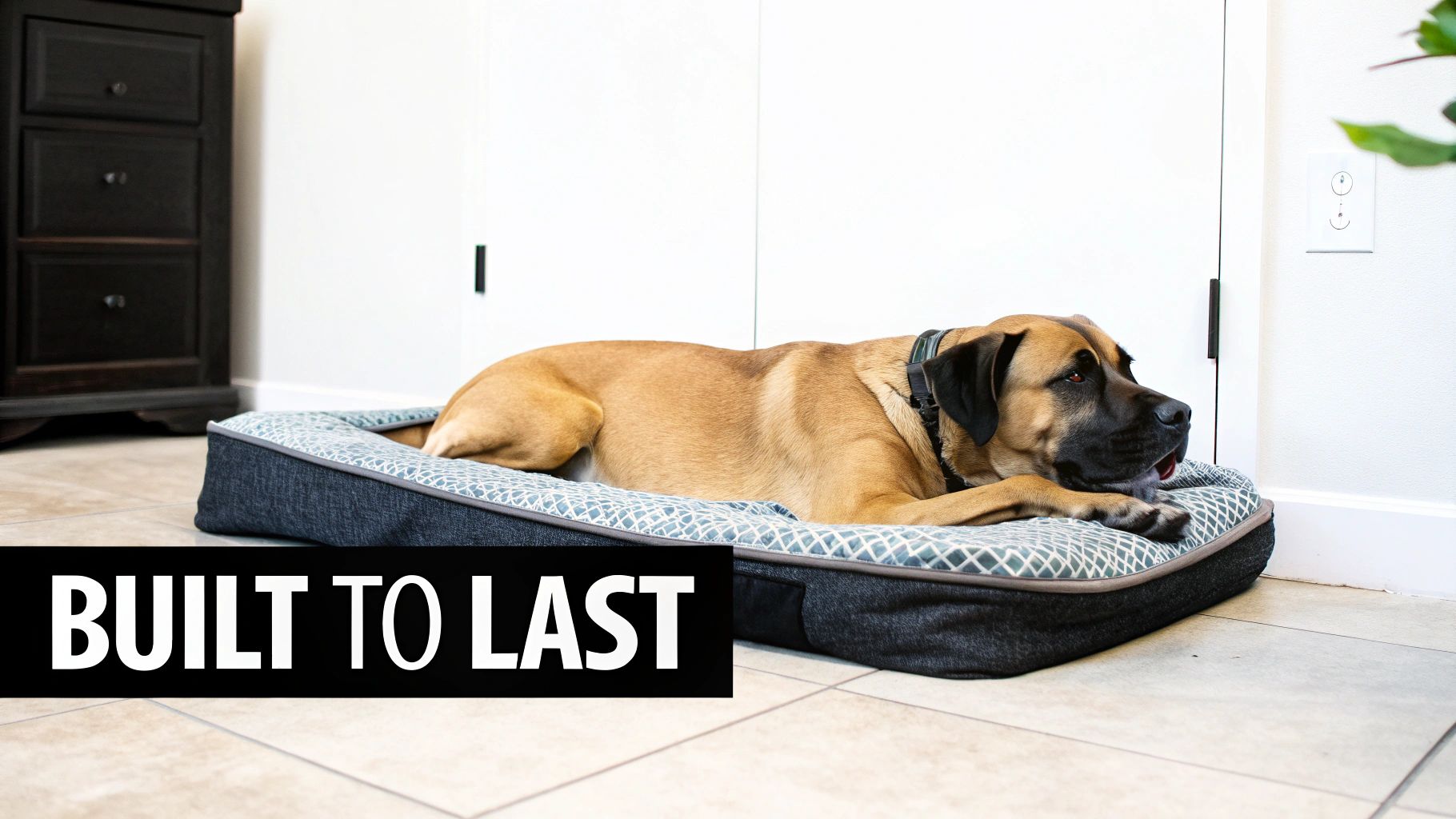
Built for Safety and Durability
Let’s be honest: for large dogs, durability isn’t just a nice-to-have, it’s a must. Keep an eye out for beds labeled as chew-resistant, which usually means they’re made with tougher, reinforced fabrics. While no fabric is completely indestructible against a determined chewer, these beds are designed to handle the casual nesting, digging, and light gnawing that comes with being a dog.
Another make-or-break feature is a non-slip bottom. If your dog’s bed is going on hardwood, tile, or any other smooth surface, this is critical. It keeps the bed firmly in place when your dog plops down or gets up, preventing dangerous slips that can lead to joint injuries, especially for older dogs.
Here are a few other smart design choices to look for:
- Hidden or Tucked Zippers: An exposed zipper pull is basically a shiny toy for a curious dog. A well-designed bed tucks the zipper away into a fabric “garage,” keeping it out of sight and out of mind.
- Non-Toxic Materials: Always double-check that the bed is made from pet-safe, hypoallergenic materials. This helps you avoid potential skin irritation or allergic reactions, which is a common issue for dogs with sensitive skin.
- Reinforced Seams: Take a close look at the stitching. Double-stitching or reinforced seams are a tell-tale sign of quality, dramatically increasing the bed’s lifespan by preventing it from splitting at the seams.
The Unsung Hero: A Waterproof Liner
If there’s one feature that’s an absolute game-changer for a large dog beds washable product, it’s a waterproof internal liner. This is the hidden layer between the outer cover and the inner filling, and its job is absolutely essential.
A waterproof liner is your best defense against accidents, spills, and slobber. It stops moisture from ever reaching the core of the bed, which is where nasty odors, mold, and mildew love to grow. Without one, you’re really only ever cleaning the surface.
This is more important than ever. With 48% of households in the USA owning dogs, the popularity of large breeds is on the rise, and so is the demand for truly washable beds. The best beds have zip-off covers that can handle 200+ wash cycles without falling apart—a necessary feature for any home with a heavy shedder. You can read more about these market trends in this detailed report on the dog bed market.
For an extra layer of protection, consider pairing the bed with a reusable dog pee pad blanket. This can save the main cover from frequent washing, especially during potty training or for senior dogs.
Got Questions About Large Washable Dog Beds? We’ve Got Answers.
Choosing the right bed for your big dog is a big deal, and it’s totally normal to have a few questions. To help you feel confident you’re making the right call, we’ve put together answers to the questions we hear most often from fellow large dog owners.
How Often Should I Actually Wash My Dog’s Bed?
This is easily the most common question we get, and the honest answer is: it depends on your dog. A good starting point is to wash the cover every one to two weeks. But you might need to toss it in the laundry more or less often depending on a few things.
- Shedding: If you share your home with a fur-generating machine like a Golden Retriever, a weekly wash is probably a good idea just to keep the fluff under control.
- Allergies: For dogs with sensitive skin, or even people in the house with allergies, washing the bed weekly is key to minimizing dander and dust mites.
- Lifestyle: Got a dog who thinks a mud puddle is a spa? You’ll want to wash the cover right after any particularly messy adventure.
The inner cushion, on the other hand, doesn’t need nearly as much attention. As long as it’s protected by a waterproof liner, giving it a good clean every one to two months—or whenever a big spill happens—should be more than enough.
Are “Chew-Proof” Beds Really Indestructible?
Let’s be real: no dog bed is 100% indestructible. If a big dog is determined enough, they can destroy just about anything. A better way to think about these beds is “chew-resistant.” They’re built tough, often with materials like ballistic nylon or heavy-duty canvas and reinforced stitching that can stand up to a lot more abuse than your average plush bed.
It’s kind of like the difference between a pair of steel-toed work boots and a pair of running sneakers. One is clearly built for a tougher job, but neither is going to survive being put through a wood chipper. The best approach is to combine a durable, chew-resistant bed with consistent training and a good supply of actual chew toys to give them a better outlet for that instinct.
What’s the Best Detergent to Use on a Dog Bed?
When it comes to washing your large dog beds washable cover, you’ll want to skip your usual laundry detergent. The strong perfumes, dyes, and chemicals in many popular brands can be really harsh on a dog’s sensitive skin, sometimes causing rashes, itching, or other irritations.
Your best bet is to find a mild detergent that is both dye-free and fragrance-free. There are plenty of pet-safe formulas out there, but many plant-based detergents designed for sensitive human skin work just as well. Whatever you choose, the most important thing is to make sure the cover is rinsed completely to get rid of any soap residue before drying.
Water-Resistant vs. Waterproof: What’s the Difference?
This one is a huge deal, and getting it right can save you a lot of headaches and money. The two terms sound alike, but they mean very different things for the longevity of your dog’s bed.
A water-resistant cover will cause small spills to bead up on the surface. This gives you a brief window to wipe away the mess before it soaks through. But it won’t hold up against a serious accident or a large volume of liquid.
A waterproof bed, however, has an internal liner or membrane that acts as a total barrier. It completely stops any liquid from getting to the foam core. This is an absolute must-have for puppies, senior dogs, or any dog prone to accidents. A waterproof liner is the only thing that truly protects the bed’s inner cushion from stains, odors, and permanent damage.
At Ur Pet Store, we know that a great dog bed isn’t just a purchase—it’s an investment in your dog’s comfort and well-being. Check out our handpicked collection of top-quality, durable, and genuinely washable beds made for the biggest and best dogs. Find the perfect spot for your best friend to land at https://urpetstore.com.