

Blog
Your Ultimate Dog Harness Size Guide for the Perfect Fit

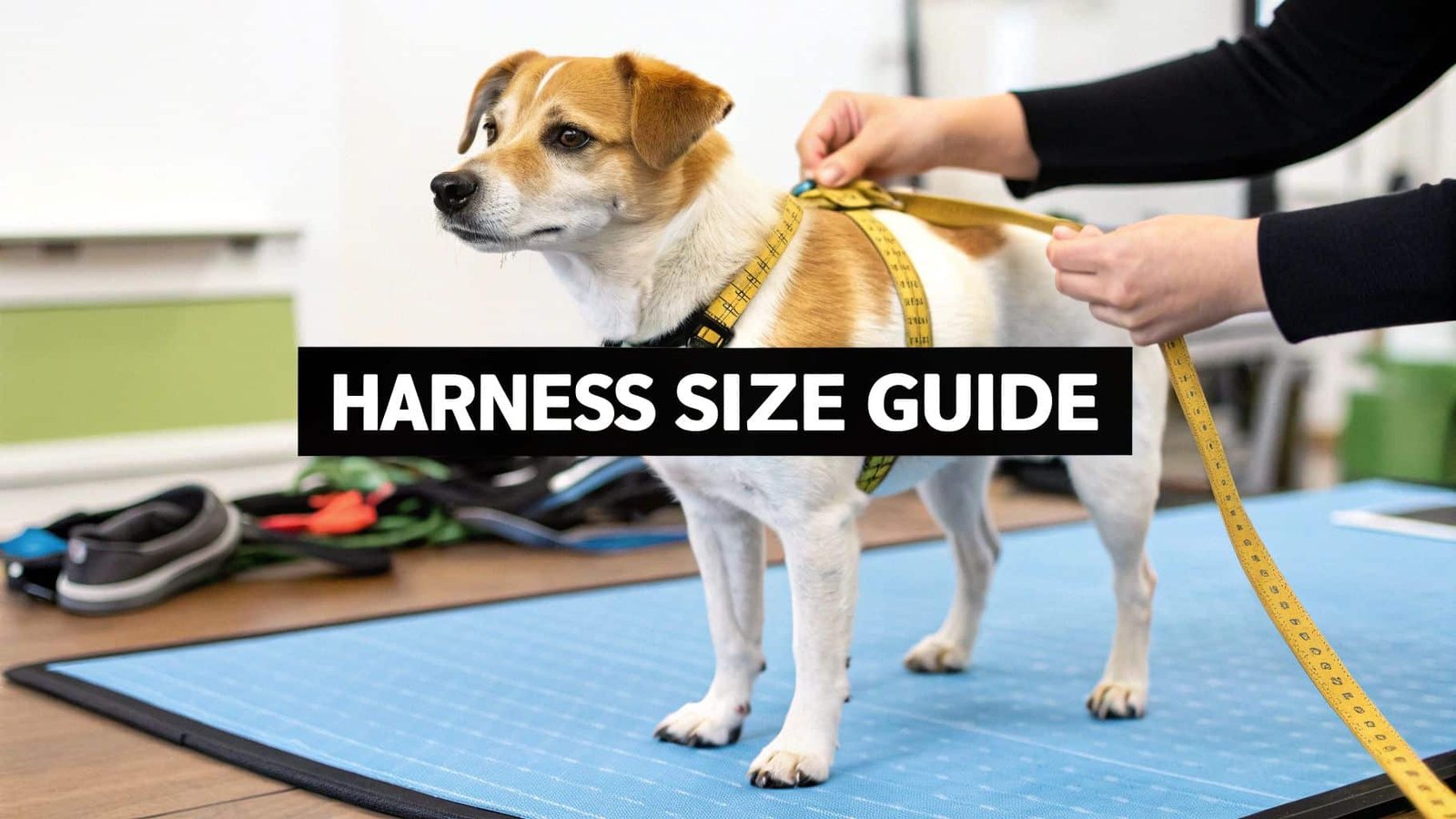
Finding the right harness isn't about picking a size off the shelf; it's about guaranteeing your dog's safety and comfort on every walk. A properly fitted harness is the difference between a happy adventure and a potential disaster. It all boils down to two simple, crucial measurements: chest girth and neck circumference.
Why a Perfect Harness Fit Matters So Much
Think of your dog's harness like a good pair of hiking boots. The right fit means you can tackle any trail with confidence and comfort. But a pair that's too loose or too tight will cause painful blisters and ruin the entire experience. It's the exact same for your dog, and getting the fit right is a massive part of their well-being.
A poorly fitting harness isn't just a small inconvenience—it's a real safety hazard. If it's too loose, a spooked dog can back right out of it, which is a horrifying thought next to a busy road. On the other hand, a harness that’s too snug will dig in, causing painful chafing, skin irritation, and even making it hard for them to breathe. Over time, it can even affect their natural stride and cause joint strain.
The Hidden Dangers of a Bad Fit
The problems with an improper fit go deeper than you might think. A snug, secure harness is essential for everyday walks, but it's even more critical for keeping them safe during all your active dog days. When the fit is off, you open the door to a host of issues:
- Painful Chafing and Sores: Straps that rub constantly, especially in the sensitive area behind the front legs, can leave their skin raw and sore.
- Restricted Movement: If a harness is too tight across the shoulders, it can change the way your dog walks, potentially leading to strain.
- The Escape Artist: Any significant gaps around the chest or neck are an open invitation for a scared or stubborn dog to slip free.
- Walk-Time Anxiety: Constant discomfort can make your dog dread going for walks, turning what should be a fun bonding experience into a source of stress.
The Perfect Fit is More Important Than Ever
More and more dog owners are switching from traditional collars to harnesses, and for good reason—it’s all about safety. The global dog harness market was valued at an impressive USD 5.53 billion in 2024 and is expected to jump to USD 27.12 billion by 2032. This boom shows just how many of us want to avoid the neck injuries collars can cause.
But here's the catch: a recent survey found that a staggering 40% of harness returns are because of wrong sizing. It's clear there's a disconnect between buying a harness and knowing how to fit one correctly.
A well-fitted harness is designed to distribute pulling pressure evenly across the strongest parts of your dog’s body—their chest and shoulders. This simple design principle prevents all that force from being concentrated on their delicate throat, making it a fundamentally safer and kinder choice.
Taking a few moments to measure your dog is the single most important step you can take. It’s a small investment of time that protects their health, boosts their comfort, and gives you invaluable peace of mind every time you head out the door together.
How to Measure Your Dog for a Harness in 3 Simple Steps
Getting the right measurements is hands-down the most important part of finding the perfect harness. Think about it: you wouldn't buy a pair of hiking boots just by eyeballing them. You’d get your foot measured to make sure you have the right support and comfort for the trail. It's the exact same idea for your dog, and luckily, it’s a lot simpler than it sounds. All you need is a flexible measuring tape, a few treats, and a couple of minutes.
First things first, let's get your dog in the right position. A common mistake is trying to measure a dog while they're sitting, lying down, or doing the full-body wiggle. For an accurate reading, your dog needs to be standing straight on all four paws. This posture lets their chest expand naturally and distributes their weight evenly, giving you the true size of their frame. If you've got a wiggly pup, grab a friend to help hold a treat to keep them focused and still.
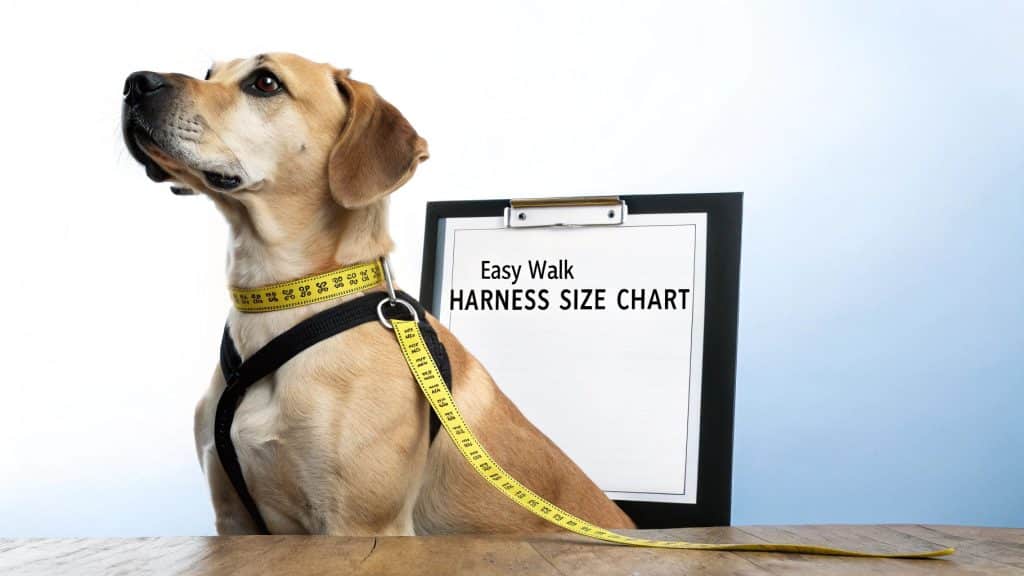
Now, let's talk tools. A soft, flexible sewing tape measure is your best friend here. Don't have one? No problem. A piece of string or even a phone charging cable works just as well. Simply wrap it around your dog, mark where it meets, and then measure that length with a regular ruler or tape measure. Just try to avoid using a stiff, metal construction tape measure directly on your dog—it’s clunky, uncomfortable, and won't give you an accurate measurement on their curved body.
Step 1: Measure the Chest Girth
This is it—the single most critical measurement for almost any harness. The chest girth is the distance around the widest part of your dog's ribcage, which you'll find right behind their front legs. Picture where a little vest would fit snugly; that’s the spot you're after.
Gently wrap your soft measuring tape all the way around their chest. You want it to be snug against their body, but not so tight that it's squeezing them or pinching their fur. Make sure the tape is lying flat and isn't twisted. Jot down this measurement in both inches and centimeters, as different brands sometimes use different units on their size charts.
Getting this right prevents the two biggest harness problems: being too tight, which can restrict breathing and movement, or being too loose, which is just an escape waiting to happen. A proper chest fit means the leash pressure is spread safely across their torso, not their delicate neck.
Step 2: Measure the Neck Circumference
Next up is the neck. It's important to remember that a harness neck measurement is different from a collar measurement. Instead of measuring high up on the neck, you want to measure lower down, right where the front of the harness will naturally sit across their lower neck and upper chest.
Place the measuring tape around the base of their neck, just above their shoulders. Once again, the goal is snug but not tight. You aren’t fitting them for a choker; you’re just getting the circumference of that specific area. This step ensures the harness won’t be so tight that it causes discomfort, or so loose that your dog can slip their head right out of it.
Step 3: Apply the Two-Finger Rule
After you've got your chest and neck numbers, there's one last little check to perform: the "two-finger rule." This is a classic trick of the trade to make sure you've left just the right amount of wiggle room for both comfort and safety.
At both the chest and neck measurement points, you should be able to slide two flat fingers between the measuring tape and your dog's body.
- If you can't fit two fingers, the measurement is too tight.
- If you can easily fit your whole hand, it's way too loose.
This rule is the perfect way to double-check your work because it mimics how the actual harness should fit. It accounts for your dog’s breathing, movement, and even small weight changes, ensuring the fit is secure without ever being restrictive.
This infographic really brings home the difference between a poor, unsafe fit and a proper, secure one.

As you can see, the right fit leads to a happy, comfortable dog and prevents the chafing and escape risks that come with a harness that's just not right.
How to Read and Use a Dog Harness Size Chart

Okay, you've wrangled your dog and got those chest and neck measurements. The hard part is officially over! Now, let's turn those numbers into the right harness size. This is where the size chart comes in—it’s the key that decodes your dog's unique shape into the perfect fit.
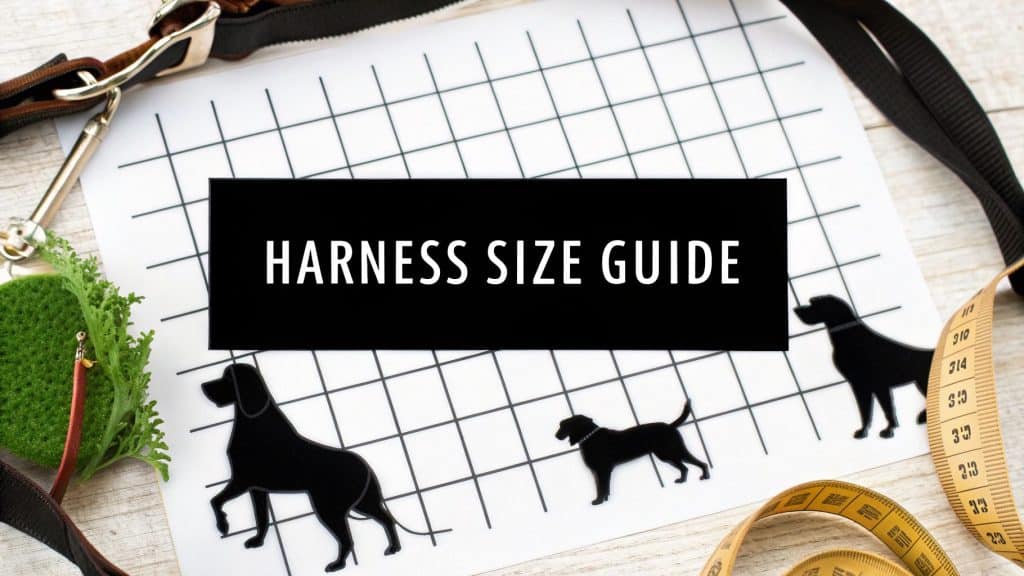
A size chart might just look like a grid, but it’s your most important tool for getting the right gear. It’s crucial to remember that every brand's sizing is a little different. A "Medium" from one company could easily be a "Large" from another, so always, always use the specific chart for the harness you're buying.
Cracking the Code of a Sizing Chart
Reading a size chart is really just a matching game. You'll see columns for the harness size (like XS, S, M, L), and the corresponding measurements for chest girth and neck size. All you have to do is find the row where your dog's numbers fall comfortably within the ranges listed.
If you remember one thing, make it this: chest girth is almost always the most important number.
Let's say your dog's neck measurement puts them in a Small, but their chest is a solid Medium. Go with the Medium. The chest straps on a harness have far less wiggle room for adjustment than the neck straps do, so getting that part right is non-negotiable.
The biggest sizing mistake we see is people guessing based on weight or breed. While those details can give you a starting point, they can't replace a tape measure. A stocky 25-pound French Bulldog is built completely differently than a lanky 25-pound Beagle. This is exactly why measuring first is the only way to guarantee a safe, comfortable fit.
When Your Dog Is Between Two Sizes
So, what do you do when your dog lands squarely between two sizes? It happens all the time. Maybe their chest is 22 inches, and the chart lists Small as 18-22 inches and Medium as 22-26 inches.
The answer is simple: always size up.
Choosing the larger size gives you room to work with. Our harnesses have several adjustment points, so you can easily snug up a slightly bigger harness for a secure, customized feel. A harness that’s too small, on the other hand, gives you no options. It’s just too small, and it will restrict your dog's movement and be incredibly uncomfortable.
A Look at Our General Size Chart
To give you a clearer picture of how it all works, we’ve put together a general size chart for our Ur Pet Store harnesses. It’s designed to help you cross-reference your measurements with typical weight ranges and even common breed examples. Think of it as a way to double-check your work and feel confident in your choice.
Here’s our general size guide to get you started:
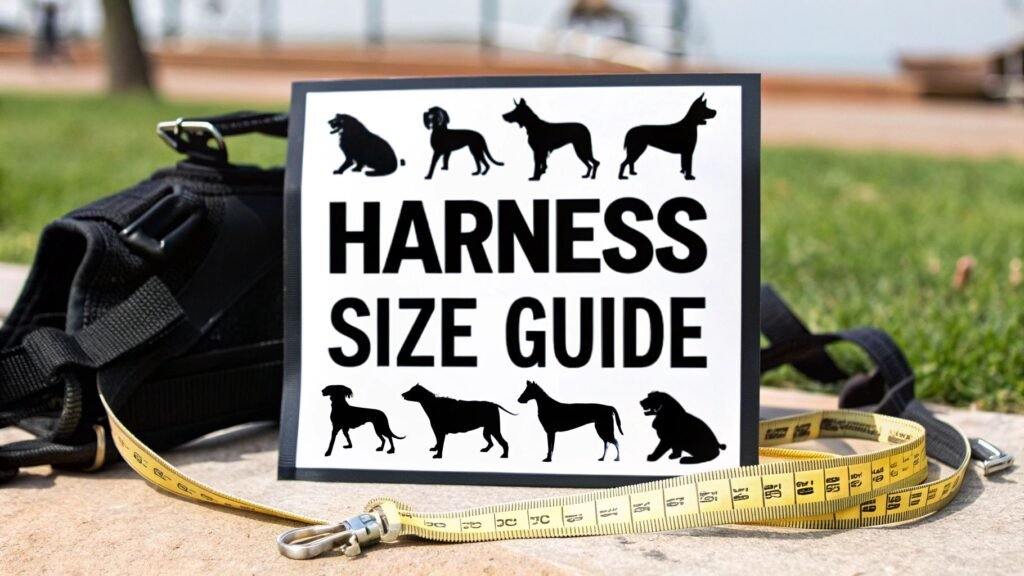
Ur Pet Store General Dog Harness Size Chart
| Harness Size | Chest Girth (Inches) | Dog Weight (lbs) | Common Breed Examples |
|---|---|---|---|
| X-Small | 12-18 | 5-10 | Chihuahua, Pomeranian, Yorkie |
| Small | 16-22 | 10-25 | Pug, Jack Russell Terrier, Shih Tzu, Boston Terrier |
| Medium | 18-26 | 20-50 | Beagle, Border Collie, Corgi, French Bulldog |
| Large | 24-34 | 45-75 | Golden Retriever, Labrador, German Shepherd, Boxer |
| X-Large | 32-44 | 70-95+ | Great Dane, Bernese Mountain Dog, Rottweiler, Saint Bernard |
This chart is a fantastic starting point. For instance, if you have a Corgi with a 23-inch chest, you'd scan the chart and see that measurement falls right into the Medium range. A quick glance at the breed examples confirms that Corgis are a common fit for a Medium, giving you that extra peace of mind.
Our goal is to take all the guesswork out of the process. With the right measurements and a quick check of the chart, you can click "add to cart" knowing you’ve picked the perfect harness for your dog's comfort and safety on all your adventures.
Choosing the Right Harness Style for Your Dog's Needs

Once you've got your dog's measurements down, it's time to pick the right tool for the job. Not all harnesses are built the same—think of them like shoes. You wouldn't wear stilettos on a hike, and you wouldn't wear bulky snow boots to the beach. The best harness isn't just about the fit; it's about matching the design to your dog’s personality and the adventures you have together.
Getting familiar with the different styles is your ticket to a better walk for both of you. A harness made for a dog that trots calmly by your side is going to be wildly different from one designed to manage a pup that pulls like a tiny freight train. When you choose a style that solves a specific problem, the gear becomes a perfect functional match.
For the Calm Companion: The Back-Clip Harness
The back-clip harness is probably the style you see most often, and for good reason. It's the classic choice for dogs who are already well-behaved walkers. The leash clips onto a ring on the dog’s back, which is great for keeping the leash from getting tangled in their legs.
This design is also super comfortable for dogs that don't pull, giving them a full range of motion without putting any pressure on their throat. If your dog has already mastered loose-leash walking, this style is a simple, comfy, and effective option for your daily strolls. You can explore a great selection of reliable and stylish collars, leashes, and harnesses to find the perfect one.
For the Eager Puller: The Front-Clip Harness
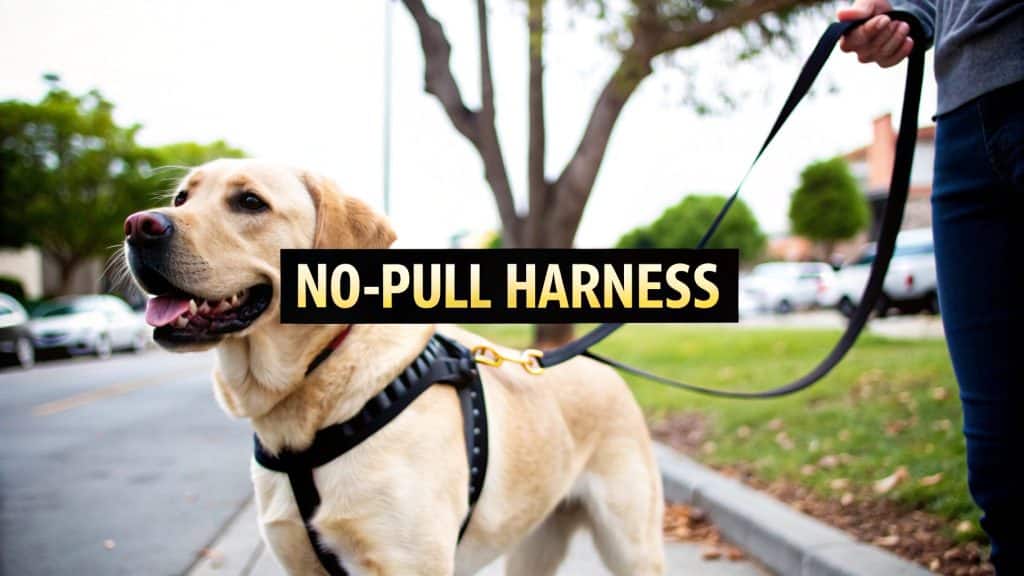
Do your walks feel more like an intense game of tug-of-war? If so, the front-clip harness is about to become your new best friend. Sometimes called a "no-pull" harness, this design features a leash attachment right on the chest strap. That one simple tweak completely changes the dynamic of your walk.
When your dog tries to lunge ahead, the leash gently pivots them back toward you, redirecting their forward momentum. It’s not about causing discomfort; it’s about making pulling an ineffective way to get anywhere. This makes it a fantastic and humane tool for teaching better leash manners.
Getting the size right is a huge factor in safety, which is why personal use makes up 60% of the global market for dog harnesses. Reports show a poorly fitted harness can increase the risk of injury by 25%, and an estimated 22% of dog escapes happen because of ill-fitting gear. Front-clip models, which saw an 18% growth in popularity in 2024, are proven to reduce pulling by up to 40%, making walks safer and more pleasant for everyone.
For the Best of Both Worlds: The Dual-Clip Harness
Can't decide? You don't have to. The dual-clip harness is the jack-of-all-trades, offering maximum versatility with D-rings on both the front and the back. This clever design lets you switch things up depending on the situation.
- Training Mode: Use the front clip when you're working on those loose-leash walking skills.
- Casual Walks: Once your dog is walking like a pro, just switch to the back clip for a relaxed stroll.
- Maximum Control: For extra security in busy areas, you can even use a special double-ended leash and clip it to both rings at the same time.
This all-in-one solution is perfect if you want one piece of gear that grows with your dog's training or adapts to your environment, taking you from a quiet neighborhood sidewalk to a bustling city street.
The Final Fit Check and Solving Common Problems
Alright, the new harness is out of the box. You're so close to that perfect walk, but don't just clip it on and head out the door. This last step—the final fit check—is where the magic happens. It's how you customize every strap to make sure the harness is both escape-proof and genuinely comfortable for your dog.
Think of it like getting a suit tailored. Your measurements got you the right size, but these final tweaks make it fit like it was made just for them. The gold standard here is the classic "two-finger rule," and we’re going to apply it to every key point to dial in that perfect fit.
The Two-Finger Rule Checklist
Get your dog into their new gear, making sure none of the straps are twisted. Now, let’s run through a quick check at the neck, chest, and behind the front legs.
- Check the Neck Straps: Gently slide two fingers flat between the harness and your dog’s neck. They should fit without you having to force them, but it shouldn't be loose.
- Check the Chest Straps (Girth): Repeat the same check around the widest part of your dog's ribcage. This is the most important spot for preventing a wily dog from backing out of their harness.
- Check the "Armpit" Area: Make sure there's enough room behind the front legs to avoid rubbing or chafing, but not so much that they could easily slip a leg through.
A tell-tale sign of a bad fit is a harness that constantly slides to one side on your walks. A well-adjusted harness will stay centered on your dog's back, keeping the pressure distributed exactly where it should be.
Troubleshooting Common Harness Issues
Even after measuring perfectly, you might hit a snag. It happens! Here are some quick fixes for the most common problems we see, so you can get back to enjoying your walks.
My Dog Is Slipping Out of the Harness
This is every owner's biggest fear, and it's almost always because the chest strap is too loose. Go back and re-tighten those girth straps until you can just fit two snug fingers underneath. Also, double-check that the harness isn't riding up too high on their neck, as this can give a determined pup an easy escape route.
The Harness Is Rubbing Under Their Legs
Chafing is a clear sign that something’s not right. It’s usually caused by the harness being too tight or the belly strap sitting too close to the sensitive skin behind the front legs. Try loosening the girth straps a bit. If that doesn't work, you may need a different style—some dogs with deep chests need a harness with a longer chest piece to position the strap further back. Keeping the area clean also helps prevent irritation from trapped dirt. Our grooming and cleaning supplies have some great options for this.
The Straps Keep Loosening on Their Own
It’s incredibly frustrating when the sliders on the straps won’t stay put. First, make sure the strap is threaded through the slider the right way. If it keeps happening, you can often secure the extra webbing with a strap keeper or even a sturdy rubber band to create some friction. This is a crucial detail for professionals providing dog walking and pet sitting services, who depend on their gear being reliable for every single dog, every single time. A little extra security goes a long way.
Sizing Advice for Puppies and Unique Dog Breeds
Let’s be honest, dogs come in all sorts of wonderful shapes and sizes. That’s what we love about them! But it also means that a “one-size-fits-all” harness just doesn’t cut it, especially for a rapidly growing puppy or a breed with a unique body type. Getting the fit right for these dogs takes a little extra care, but it’s worth it to make sure they’re safe and comfortable on every walk.
Think of buying a harness for a puppy like buying shoes for a toddler—what fits perfectly today will be too small before you know it. Puppies grow fast, so an adjustable harness isn't just a nice-to-have; it's a must. Look for harnesses with multiple adjustment points on both the neck and chest straps. This gives you the most wiggle room to expand the fit as they go through those inevitable growth spurts.
Navigating Puppy Growth Spurts
With a young, growing pup, you’ll want to get into the habit of re-measuring often. A good rule of thumb is to check the harness fit every one to two weeks. Just slip two fingers under the straps each time to make sure it hasn't gotten too tight. This simple check stops the harness from becoming restrictive, which can cause discomfort or even affect their development.
A tight, pinchy harness can quickly create a negative feeling about walks, which is the last thing you want while they’re learning. A comfortable puppy is a happy puppy, and the right gear helps make your adventures together a positive experience. After all that playing and growing, they'll love curling up in a cozy spot, like a supportive calming dog bed, to recharge.
Sizing for Uniquely Shaped Breeds
Some breeds are just plain tricky to fit because of their distinct body shapes. We’re talking about barrel-chested dogs like Bulldogs and Pugs, or deep-chested, slender-waisted breeds like Greyhounds and Whippets. These pups often don't fit neatly into standard sizing charts.
For these dogs, your tape measure is your best friend. The chest girth is still the most important measurement, but you also need to pay attention to the harness design itself, particularly the length of the piece that runs along their chest.
-
Barrel-Chested Breeds (e.g., Bulldogs, Pugs): These dogs are built like little tanks with wide, powerful chests. You'll need a harness with a ton of room for adjustment around the girth. It's common to size up to fit their chest and then cinch the neck straps down.
-
Deep-Chested Breeds (e.g., Greyhounds, Dobermans): With these athletes, the challenge is finding a harness where the girth strap sits far enough behind their front legs to prevent rubbing or chafing in their sensitive "armpit" area. A harness style with a longer chest piece usually works best.
The numbers back this up. North America holds a 40% market share in pet products, often focusing on smaller breeds that need a precise fit. Meanwhile, European markets often cater to breeds like Bulldogs that need specialized harness designs. Data shows that 35% of first-time buyers struggle with sizing, but you can avoid being part of that statistic just by understanding your dog’s unique build.
Your Dog Harness Sizing Questions Answered
Even with the best guides, sometimes you just have a specific question. We get it! To help you feel totally confident you're picking the right size, we've put together answers to the most common questions we hear from fellow dog parents.
What Should I Do If My Dog Is Between Sizes?
This happens all the time, and the answer is refreshingly simple: always size up. Think of it like buying a new pair of jeans; a little extra room can be managed, but you can't magically add more material.
A harness that's slightly too big can easily be adjusted down for that perfect, secure fit. Our harnesses are built with plenty of adjustment points for this exact reason. On the flip side, a harness that’s too small is completely unusable and will just be uncomfortable and unsafe for your dog.
Can I Just Use My Dog's Collar Size for a Harness?
Nope! This is probably the most common mistake we see, and it's a critical one to avoid. A collar only measures the neck, but a harness needs to fit snugly around your dog's chest and torso.
The single most important measurement for any harness is the chest girth—that's the widest part of their ribcage. Relying on a collar size will result in a dangerously poor fit, which can lead to chafing or, even worse, your dog slipping out.
Your dog's safety and comfort are everything. Taking a minute to get a proper chest measurement is the most important thing you can do. It's what ensures the harness works the way it's supposed to, keeping them secure and happy on your walks.
How Often Should I Recheck My Dog's Harness Fit?
For adult dogs, it’s a good idea to check the fit every few weeks. Just like us, their weight can fluctuate a bit. For puppies, however, it's a whole different ball game.
You'll want to check a puppy’s harness fit at least once a week. They grow so fast it’s almost unbelievable! A harness that was perfect on Monday could be uncomfortably tight by Friday. Keep using the "two-finger rule" as your guide—if you can't easily slide two fingers under the straps, it's time to loosen things up.
My Dog Hates Things Going Over Their Head. What Can I Do?
You're not alone! A lot of dogs get anxious about things being pulled over their heads. If that sounds familiar, a "step-in" style harness is going to be your new best friend.
With this design, your dog just steps their front paws through two loops on the floor. Then you simply pull the harness up around them and clip it securely on their back. It’s a much calmer, less intimidating experience for sensitive pups, and we have several great step-in options designed for exactly this reason.
Ready to find that perfect, escape-proof harness for your best friend? Explore the full collection at Ur Pet Store and start enjoying safer, more comfortable walks today. Find your perfect fit at urpetstore.com