

Blog
Finding the Best Dog Pee Pad for Your Home and Pup

Finding the best dog pee pad isn't a one-size-fits-all situation. The perfect pad for your dog depends entirely on their specific needs and your home environment. We're generally looking at three main paths: the convenience of disposable pads, the sustainability of washable pads, or the outdoor-mimicking experience of natural grass pads. The right answer for you hinges on your dog’s age, your living situation, and what you’re trying to accomplish with training.
Your Guide to Choosing the Right Dog Pee Pad
Choosing a dog pee pad is a foundational part of managing your pet's potty needs indoors. It's a must-have whether you're house-training a brand-new puppy, giving a senior dog a comfortable option, or navigating apartment life without a backyard. The ultimate goal is to find a reliable system that keeps your floors protected and gives your dog a clear, designated spot to go.
After all, a good pad prevents the much bigger headache of eliminating dog urine smell from your floors and rugs. It's no surprise that pee pads command a whopping 42.6% share of the pet pad market, a testament to how vital they've become for pet owners, especially in urban areas.
Understanding Your Options
Before we get into the nitty-gritty details, let's get a handle on the basic differences between the types of pee pads out there. Each one is built for a different purpose and fits a different kind of lifestyle.
Think of a pee pad as more than just a bathroom spot. It's a training tool, a major convenience for you, and a source of comfort and security for a dog that needs a dependable indoor option.
To help you get started, here's a quick look at the main categories. This table will help you instantly see which direction might be the best fit for you and your dog.
At-a-Glance Dog Pee Pad Comparison
| Pad Type | Ideal for | Primary Benefit | Key Consideration |
|---|---|---|---|
| Disposable Pads | Puppies, travel, and owners prioritizing convenience | Easy, no-mess cleanup and high absorbency | Ongoing cost and environmental waste |
| Washable Pads | Eco-conscious owners and long-term indoor use | Cost-effective over time and reduces landfill waste | Requires regular laundering and initial investment |
| Grass Pads | Dogs transitioning to outdoor potty training | Natural feel and scent encourages use | Higher initial cost and requires maintenance |
This table gives you the high-level view, but let's break down what these differences really mean for your day-to-day life.
Disposable vs. Washable vs. Grass Pads: A Detailed Comparison
When it comes to choosing the best dog pee pad, you're really balancing convenience, cost, and your training goals. Every option—disposable, washable, and grass—has its place, but the right one for you depends entirely on your lifestyle and your dog's specific needs. Let's get past the basic pros and cons and look at where each of these truly shines in the real world.
This isn't a small decision, either. You're joining a massive community of pet owners who are shaping a global pet pad industry already valued at USD 1.5 billion. That number is expected to more than double by 2034, mostly because we all want practical, convenient ways to care for our pets. Disposables are currently leading the pack, making up almost a third of the market simply because they are so easy to use.
The Case for Convenience: Disposable Pads
Disposable pads are the definition of "grab and go." Their biggest selling point is the no-fuss, no-mess cleanup. You just pick it up, toss it out, and put a new one down. This makes them a lifesaver for busy households, for travel, or during those first chaotic weeks of puppyhood when you feel like you're changing pads every hour.
If you live in an apartment, especially a high-rise, disposables are incredibly practical. When a quick trip downstairs isn't an option, these pads offer a reliable indoor spot without adding another load of laundry to your chore list.
- Best Scenario: A new puppy owner in a city apartment who needs a simple, hygienic solution for constant potty breaks.
- Key Feature: The good ones use a super-absorbent polymer (SAP) core. This technology turns liquid into a gel on contact, locking away moisture and stopping those dreaded wet paw prints from being tracked across your floor.
- Drawback: The cost adds up over time, and the environmental waste is a serious downside for long-term use.
The Sustainable Choice: Washable Pads
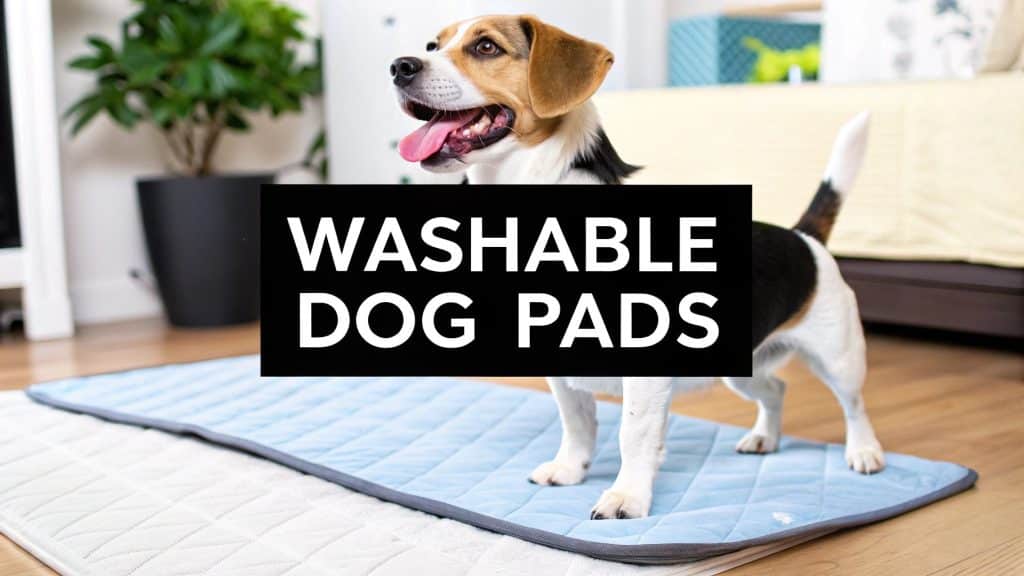
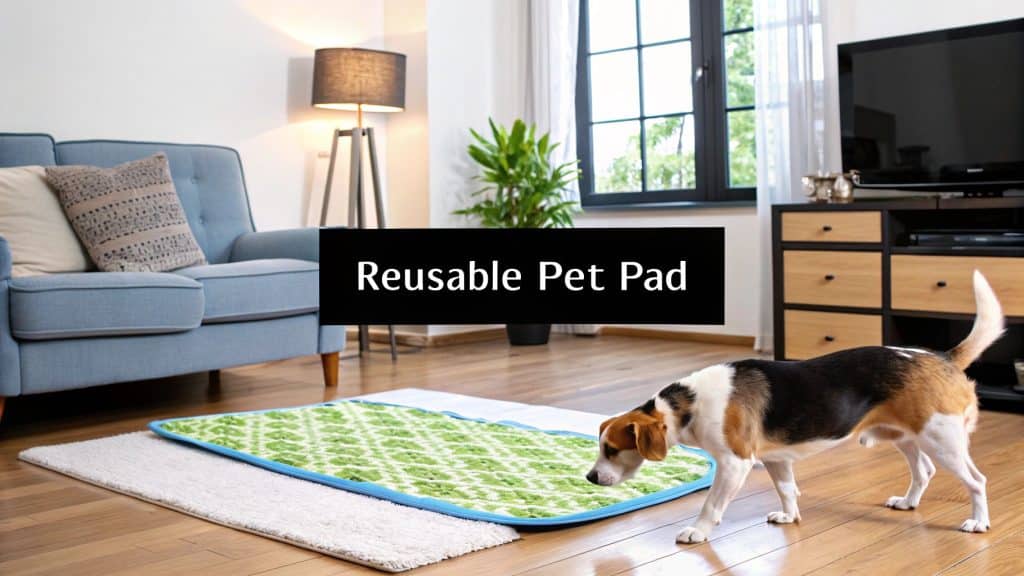
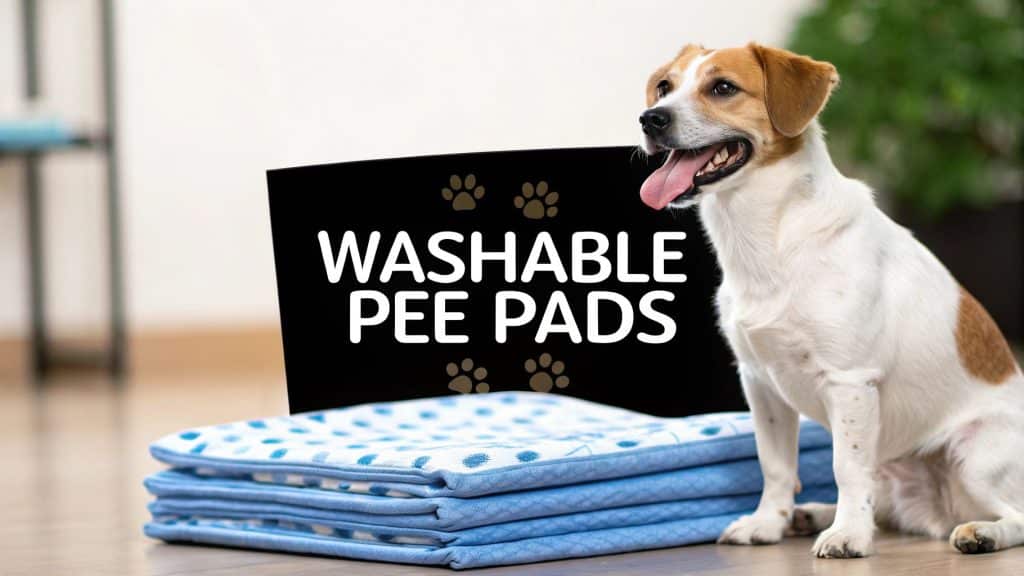
For pet parents who prioritize sustainability, washable pads are a fantastic alternative. Yes, the initial cost is higher, but they quickly pay for themselves since you're not buying new packs every week. By choosing a reusable option, you're also dramatically cutting down on landfill waste, which is a huge win for the environment.
These pads are built to last. Look for multiple quilted layers and a tough, waterproof backing designed to handle hundreds of trips through the washing machine. They're a perfect permanent solution for dogs with incontinence, mobility issues, or any dog that will always need a designated indoor potty spot. If this sounds like a fit, our reusable dog pee pad blanket is a tough, highly-rated option our customers love.
Think about it this way: a single washable pad can easily replace hundreds of disposables over its life. That’s a lot of savings in your pocket and a much smaller environmental footprint.
The Natural Trainer: Grass Pads
Grass pads are the perfect middle ground between indoor convenience and the great outdoors. These systems, which use either real or synthetic turf, play on your dog's natural instinct to do their business on grass. This makes them an incredibly effective tool for house-training puppies that you eventually want to go outside full-time.
The scent and feel of real grass are very intuitive for most dogs, which can significantly shorten the training curve. I've found they work especially well for dogs that turn their nose up at traditional pads, as the grassy surface just feels more natural and inviting to them.
- Best Scenario: Someone in a house with a yard training a new puppy. You can create a seamless transition from the indoor grass pad to the backyard.
- Key Feature: Real grass pads are amazing at absorbing odors naturally, which helps keep your home smelling fresh in a way many artificial options can't match.
- Drawback: Real grass needs some upkeep, like light watering, and the initial investment is higher. Both real and synthetic versions are also bulkier and less portable than other pads.
The Anatomy of a Great Pee Pad: What to Look For
Let's be honest—not all pee pads are created equal. The difference between a high-performance pad and a soggy, leaky mess comes down to a few key features. Once you know what to look for, you can skip the trial-and-error and pick the right product for your dog from the start. It’s all about looking beyond the marketing and understanding what makes a pad truly effective.
The absolute number one feature is absorbency. This is the pad's main job, and it’s usually handled by a multi-layer design. A good pad has a top sheet that wicks moisture away instantly, so your dog doesn't leave wet paw prints all over the house. The real magic, though, is in the core. High-quality disposable pads use a super-absorbent polymer (SAP) that transforms liquid into a gel on contact, locking it away for good.
Floor Protection and Smart Training Features
Of course, a pad is worthless if it doesn't protect your floors. Always check for a leak-proof barrier on the bottom. This waterproof plastic layer is your final defense against seepage, making it a must-have if you have hardwood floors or carpet. A flimsy backing that tears easily is a deal-breaker.
For puppies or dogs who are still learning the ropes, a built-in attractant can make a huge difference. These are usually pheromonal scents that we can't smell but that tell your dog, "This is the spot!" It’s a simple trick that taps into their natural instincts and can seriously cut down on training time.
A pad's true value isn't just in what it holds, but in what it prevents. The best dog pee pad stops leaks, controls odor, and actively helps with training, protecting your home and your peace of mind.
This simple guide helps visualize which pad type might suit your top priority.
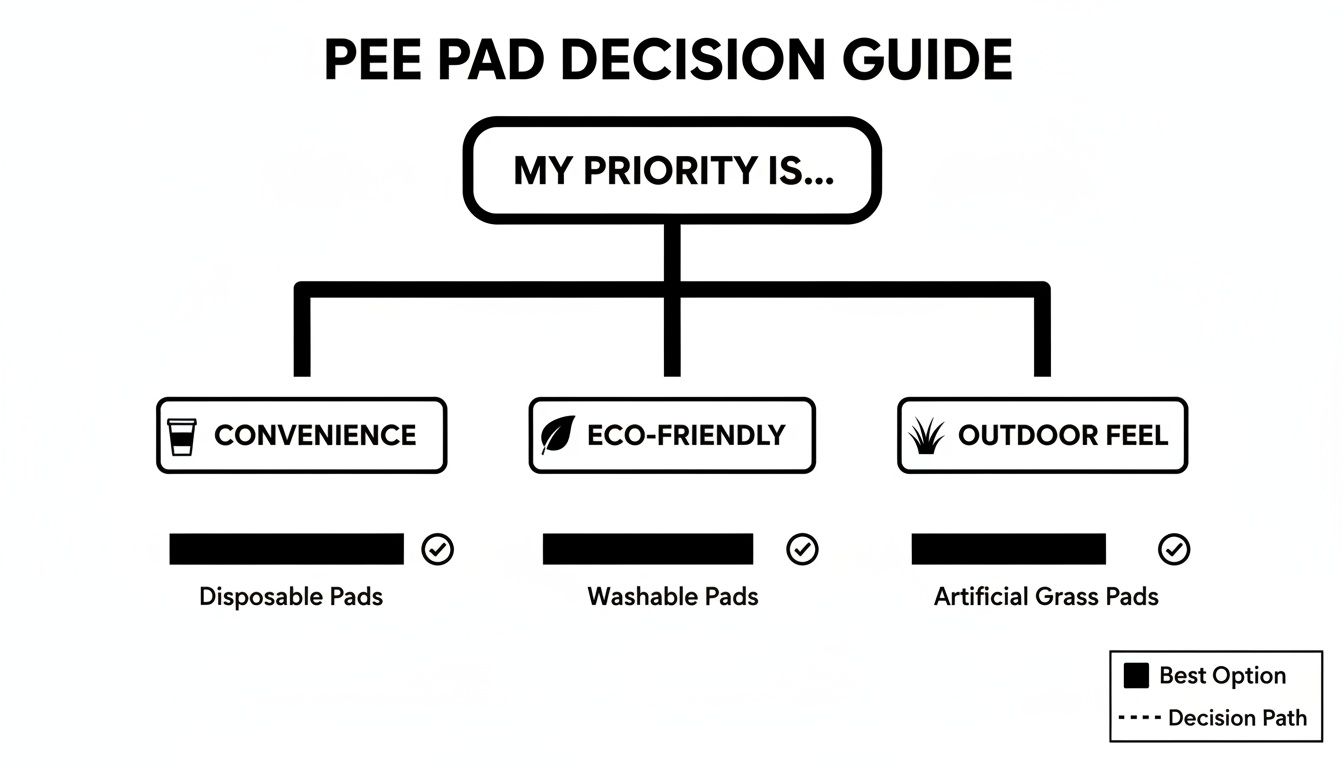
The decision tree clearly shows how your primary goal—be it convenience, eco-friendliness, or a natural feel for training—points directly to a specific type of pee pad.
The Right Fit and Safe Materials
Lastly, don't overlook size and material safety. A pad needs to be big enough for your dog to comfortably circle and do their business without missing the mark. A tiny Chihuahua and a Golden Retriever on bed rest have vastly different needs, so always match the pad’s dimensions to your dog.
Safety is also a big one, especially if you have a puppy who thinks everything is a chew toy. Look for pads made from non-toxic, pet-safe materials. This way, if your pup does decide to nibble on a corner, you won’t have to worry about them ingesting something harmful. Product safety is just part of being a responsible pet owner, a philosophy we apply to our entire line of grooming and cleaning supplies. When you focus on these essential features, finding a reliable pee pad becomes a much simpler task.
Picking the Right Pad for Your Dog's Life Stage
The "best" dog pee pad isn't one-size-fits-all. It’s about finding the right tool for the job, and that job changes dramatically depending on your dog's age and circumstances. A tiny, bouncing puppy has completely different needs than a senior dog who’s slowed down a bit. If you match the pad to your dog's current situation, you'll get much better results—and a cleaner floor.
This way of thinking is key, especially since the market is exploding with options. The dog pad industry, already valued at around USD 500 million, is expected to almost double by 2033. This boom in pet ownership and demand for clean, simple solutions means more choices than ever. You can learn more about the trends shaping the dog pad market on archivemarketresearch.com. Let's break down what works best for different dogs.
The Energetic New Puppy
When you have a puppy, the name of the game is house training. Their bladders are tiny and their energy is endless, so you can expect frequent, and often surprising, potty breaks. The right pad should be an active part of the training process, not just a passive target.
Disposable pads with a built-in pheromonal attractant can be a lifesaver. You can't smell it, but your puppy can, and it sends a clear signal: "This is the spot." It really can speed up the learning process. You'll also want a pad with a top layer that dries fast to avoid those tell-tale wet paw prints all over the house.
The Senior Dog Needing Extra Support
As our dogs get older, they might struggle with things like incontinence, arthritis, or just getting around as easily as they used to. A quick run outside might not be in the cards anymore. For them, comfort and reliability are everything.
This is where a large, highly absorbent washable pad really shines. It gives them a bigger target, which helps a lot if they have trouble squatting or positioning themselves. The heavy-duty absorbency and leak-proof backing give you peace of mind, and the soft, quilted top is so much more comfortable for their old joints than crinkly plastic.
For senior dogs or those with chronic conditions, a pee pad isn't just a convenience—it's an essential tool for maintaining their dignity and comfort at home.
The Small Breed in an Apartment
For little dogs living the high-rise life, an indoor potty spot is often their main bathroom. It’s a permanent fixture in your home, so it needs to work for both of you.
A grass pad system or a high-quality washable pad is usually the best bet here. Real grass feels natural under their paws, something small dogs often take to immediately, and it does a fantastic job of controlling odors. On the other hand, a durable, well-made washable pad can be a great long-term investment that looks good and cuts down on endless trash.
The Large Dog in Post-Op Recovery
If your big dog is recovering from surgery or an injury, their movement is going to be limited. Stairs and long walks are off the table for a while. You need something temporary that offers maximum coverage and can handle a large volume of liquid.
Go for an extra-large or oversized disposable pad. Look for ones that have adhesive strips on the corners to keep them from sliding around on hard floors. The goal here is simple: a massive, super-absorbent surface that keeps your dog comfortable and your home clean while they get back on their paws.
Mastering Pee Pad Placement and Positive Training
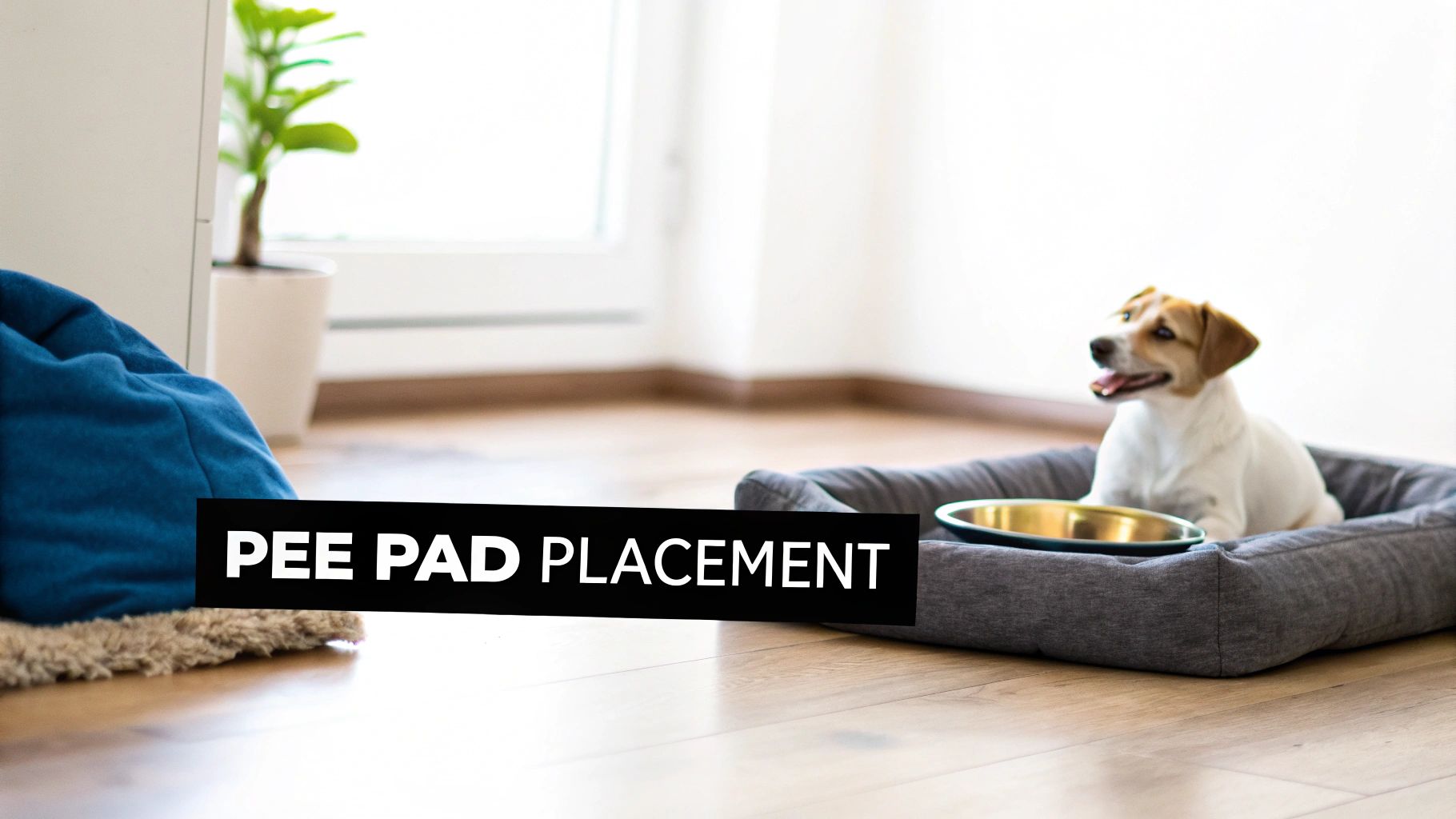
Even the most absorbent pee pad won't do you any good if your dog doesn't use it. Success really comes down to smart placement and a consistent, positive training routine. Think of it less as just protecting your floor and more as creating a designated, trusted bathroom spot for your pet.
First things first, you need to pick the right spot. This should be a permanent location that’s easy for your dog to get to but isn't in the middle of a high-traffic area. A quiet corner of a laundry room, mudroom, or a secondary bathroom usually works perfectly. The golden rule here is to keep the pad far away from their food, water, and bed. Dogs are naturally clean animals and have a strong instinct not to soil where they eat or sleep.
Creating a Positive Potty Routine
With your spot picked out, the real work begins. The goal is to build a positive association with the pee pad using rewards and praise—never punishment. This approach builds trust and teaches your dog to make the right choice on their own, rather than out of fear.
Here’s a simple, effective training process:
- Introduce the Pad Calmly: Set your dog on the pad and let them sniff around. As they explore, use a consistent cue like "go potty" in a calm, encouraging voice.
- Anticipate Their Needs: The best way to succeed is to predict when they need to go. Take your puppy to the pad right after they wake up, after a play session, and about 15-20 minutes after a meal.
- Reward Success Immediately: The second they finish using the pad, shower them with enthusiastic praise and a high-value treat. That immediate connection is what teaches them that using the pad gets them something great.
- Stay Consistent: Everyone in the house needs to be on the same page. Use the same location, the same verbal cue, and the same reward system to avoid sending mixed signals.
Remember, training is a partnership. Patience and positive reinforcement are your most powerful tools. Scolding a dog for an accident often creates fear, which can make house training much more difficult.
Troubleshooting Common Challenges
Of course, even the best-laid plans can hit a snag. If you find your dog is consistently missing the edge of the pad, you might just need a larger one. You can also try placing two pads side-by-side to create a bigger target area until their aim improves.
What if your dog thinks the pad is a new chew toy? A pee pad holder is a fantastic solution. These simple frames or trays lock the pad in place and cover the edges, preventing your pup from shredding it. If you catch them chewing, give a firm "no," remove the pad, and immediately redirect their attention to an actual chew toy.
So, Why Choose Ur Pet Store for Your Pee Pads?
After digging into all the details—from absorbency layers to non-toxic materials—you know exactly what makes a great pee pad. The last step is finding a retailer that shares those same high standards. That’s where we come in.
At Ur Pet Store, we've already done the legwork. We sift through the options to stock only the products we’d feel good about using with our own pets. Our focus is squarely on pads made from reliable, highly absorbent materials that actually protect your floors and keep your furry friend safe.
But our commitment doesn't stop with a great product lineup. We know that pet care needs to be simple and accessible.
We built our store around the very same principles outlined in this guide: quality, convenience, and trust. When you shop with us, you’re not just buying a product; you’re getting a solution you can count on.
To make things even easier, we offer free shipping on every single order and get it to your door with fast 4–5 day delivery.
When you're ready to make a choice, feel free to explore the full range of pet care products at Ur Pet Store. You can shop knowing you're getting the best for your best friend.
Common Questions About Dog Pee Pads
Even after picking the perfect pad, a few questions are bound to pop up. Let's walk through some of the most common things pet owners wonder about, so you can feel confident you're doing what's best for your dog.
How Often Should I Change a Dog Pee Pad?
For disposable pads, you should plan on swapping them out at least once every 24 hours. If it's heavily used, you'll want to change it sooner to keep things clean and odor-free.
Little puppies have tiny bladders, so they go a lot more often. For them, you might find yourself changing the pad two or even three times a day. With washable pads, stick to the same schedule—toss the used one in the laundry and lay down a fresh one to prevent bacteria from growing.
What Should I Do If My Dog Chews the Pee Pads?
Ah, the chewing phase. It's a classic puppy problem, but one you can definitely manage. The first step is to make sure your pup isn't just bored. A good rotation of interesting chew toys can work wonders.
A pee pad holder or a tray is also a fantastic tool. These frames clamp the pad down, covering up those tempting, shreddable edges.
If you catch your dog in the act of chewing the pad, give a firm but calm "no" and immediately hand them a chew toy they are allowed to have. It's all about redirection and teaching them what's fair game for their teeth.
Can Pee Pads Confuse a Dog During House Training?
This is a great question, and the answer is no—as long as you use them as a consistent training tool, not a permanent solution (unless needed for health or apartment living). Consistency is everything. Designate one spot for the pad and stick to it. Every time you take your puppy there, use a cue word like "go potty" to build a strong association.
As your puppy masters this, you can start inching the pad closer and closer to the door. This little trick helps bridge the gap between using an indoor spot and learning to go outside. Of course, accidents are part of the process, so knowing a bit about hardwood floor pet stain removal is always a good idea to protect your floors.
At Ur Pet Store, we're all about providing reliable, high-quality solutions that make life with your pet a little easier. You can find the perfect pad for your best friend by exploring our collection at https://urpetstore.com.