

Blog
A Pet Owner’s Guide to the Best Dog Pee Pads

If you’re looking for the best dog pee pads, you already know the goal: a clean floor and a happy dog. The best pads out there nail three things every time—they soak up messes like a sponge, keep odors locked away, and don’t leak. Period.
It doesn’t matter if you’re house-training a brand new puppy or giving an older dog a comfortable indoor spot. A reliable pad means less stress for everyone.
Finding the Right Pee Pad for Your Dog
So, how do you choose the right one? With so many options, it can feel a little overwhelming. This guide is here to cut through the confusion and show you what actually makes a difference.
We’ll walk through the essentials, from how they’re built to what makes them absorbent and how they keep your home from smelling like a kennel. Think of this as your roadmap to making a smart, confident choice. Of course, a clean home is about more than just potty spots; making sure your dog has a comfortable place to relax is key. You can check out a great selection of beds and mats to complete their space.
Key Factors at a Glance
Before we dive deep, let’s get a handle on the main types of pads available. The best choice for you will really depend on your dog, your lifestyle, and your budget.
A great pee pad isn’t just an absorbent sheet; it’s a training tool that provides peace of mind for you and a reliable spot for your dog. It transforms a potential source of stress into a manageable part of your daily routine.
To help you get started, here’s a quick side-by-side look at the most common options. Use this table to quickly compare the different types of dog pee pads, see their main benefits, and figure out which one might be the best fit for your situation.
Quick Comparison of Dog Pee Pad Options
| Pad Type | Key Feature | Best For | Average Cost |
|---|---|---|---|
| Disposable | Ultimate convenience and easy cleanup. | Puppy training, travel, and pet owners prioritizing ease of use. | $0.20 – $0.60 per pad |
| Reusable/Washable | Eco-friendly and cost-effective over time. | Long-term use, environmentally conscious owners, and senior dogs. | $15 – $40 per pad |
| Charcoal/Odor Control | Advanced odor neutralization. | Multi-dog households or small, enclosed living spaces. | $0.35 – $0.75 per pad |
| Adhesive Strips | Stays securely in place on floors. | Active puppies or dogs that tend to move or bunch up pads. | $0.30 – $0.70 per pad |
This table gives you a starting point. Now, we can get into the nitty-gritty of what makes a pee pad work and how to choose the perfect one for your home.
What’s the Secret Behind a Good Pee Pad?
Ever really thought about what makes a dog pee pad work? It’s easy to dismiss them as just fancy paper towels, but the reality is way more interesting. The best ones are actually a piece of clever engineering, designed layer by layer to tackle the one thing we all want to avoid: a mess on the floor.
Think of it like a high-tech diaper for your dog. Each part of the pad has a very specific job, and they all work in sync to pull liquid away, kill the smell, and keep your floors pristine.
A Peek Inside the Pad
From the outside, most pee pads look pretty much the same. A white quilted top, a plastic-y bottom. But the real difference between a bargain-brand dud and a premium pad is hidden between those two surfaces. The best pads use a “sandwich” design to manage moisture the second it hits.
When you see a package advertising “6-layer protection,” they’re talking about this internal structure. Let’s break down what’s actually in there:
- The Top Layer: This is what your dog steps on. It’s usually a soft, non-woven fabric that feels dry to the touch. Its main job is to let urine pass through instantly, so your dog doesn’t end up with wet paws and track little prints all over the house.
- The Absorbent Core: Here’s where the magic happens. This layer is packed with something called super-absorbent polymer (SAP). This stuff is incredible—it can soak up hundreds of times its own weight in liquid. The moment urine hits it, the SAP turns it into a gel, locking it away so it can’t leak out.
- The Waterproof Backing: This is your last line of defense. It’s a sheet of tough, leak-proof plastic that makes sure nothing ever seeps through to your hardwood or carpet.
This technology is a huge reason why the pet pad market is booming, with projections showing it could hit USD 2.1 billion by 2031. With disposable pads holding around 32.7% of the market share, it’s clear that pet owners value this convenience and reliability. You can read more about these market trends to see just how popular they’ve become.
This diagram really simplifies what to look for, breaking it down into the three most important factors: absorbency, odor control, and the right size.
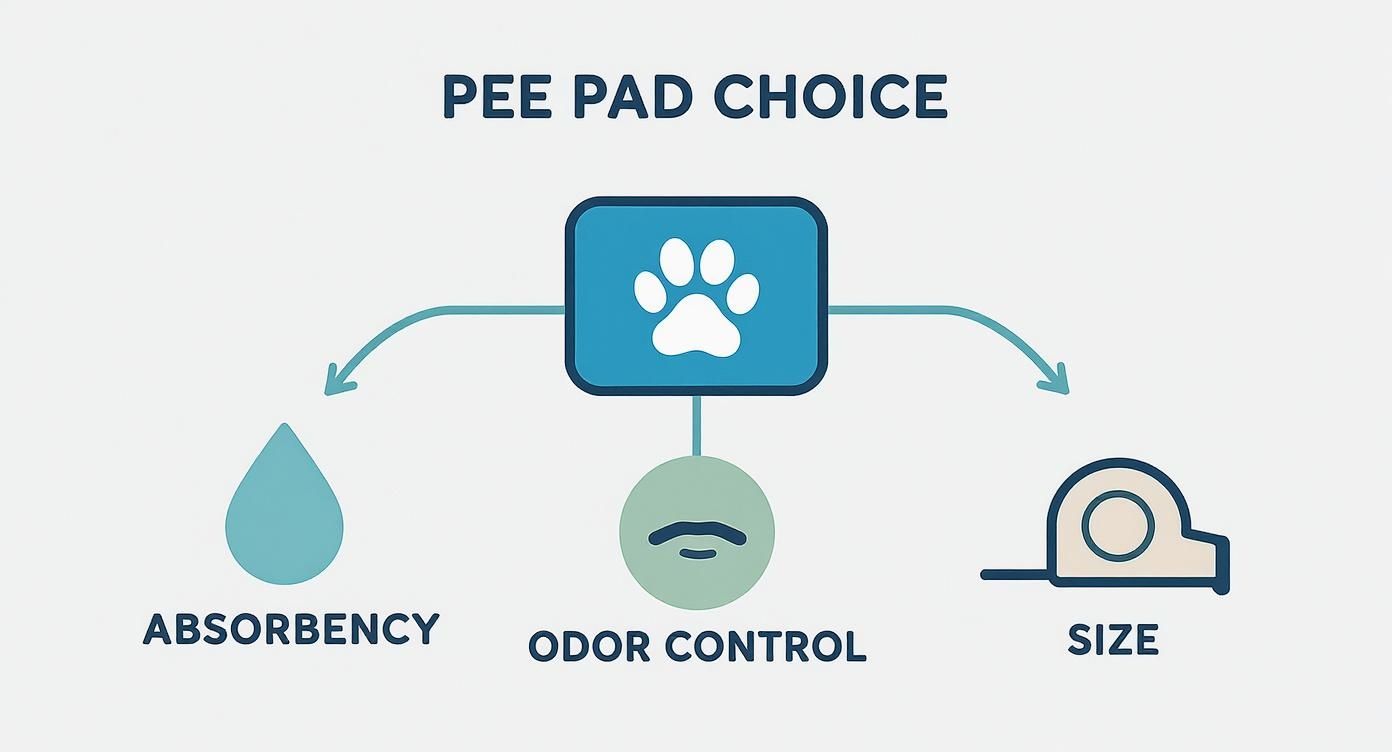
As you can see, the best pads aren’t just good at one thing—they nail all three to give you a solution you can actually count on.
It’s Not Just About Soaking It Up
Absorbing liquid is only half the battle. If your house still smells like a kennel, the pad isn’t doing its job. That’s why the best dog pee pads have extra tricks up their sleeve to tackle odor before it even starts.
The core idea behind a great pee pad is simple: turn liquid into a solid gel, and do it fast. This not only stops leaks but also traps the smelly bacteria inside.
Here are a few of the odor-fighting ingredients you’ll find baked into high-quality pads:
- Activated Carbon: Tiny flecks of carbon are often mixed into the core. They act like little odor magnets, grabbing onto stinky molecules and stopping them from escaping into the air.
- Baking Soda: It works in your fridge, and it works here, too. Baking soda is a fantastic natural neutralizer for the acidic smells in dog urine.
- Built-in Attractants: This one is especially smart for puppies. Some pads are infused with a pheromonal scent that humans can’t detect, but it encourages dogs to do their business right where you want them to. A huge help during house-training!
Once you understand what’s going on inside the pad, you can see right past the flashy marketing and pick a product based on the science that actually keeps your home clean and smelling fresh.
Choosing Between Disposable and Reusable Pads
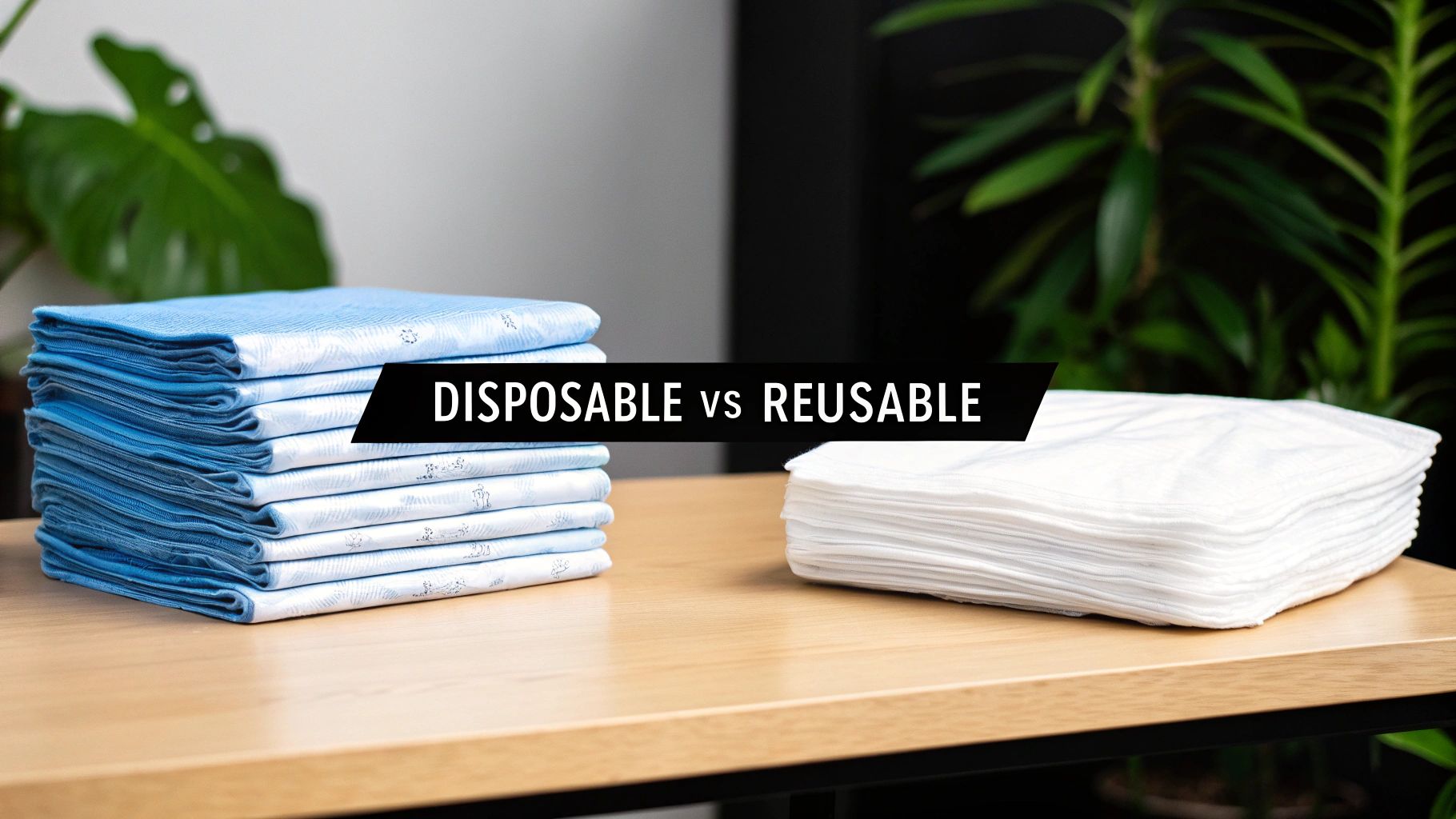
So, you’re standing in the pet aisle, staring at a wall of pee pads. The big question hits: disposable or reusable? Honestly, there’s no single right answer here. The best choice really boils down to your lifestyle, your budget, and what you’re looking for long-term.
Disposable pads are the champions of convenience. Think of them as the paper plates of the puppy world—use them, toss them, and you’re done. This grab-and-go simplicity is a lifesaver during the chaotic puppy training phase, for travel, or for anyone who just can’t face another load of laundry.
The beauty of disposables is that there’s zero cleanup. You just fold it up and put it in the trash. It’s a quick, hygienic way to manage messes, especially when accidents are a daily (or hourly) occurrence.
The Case For Reusable Pads
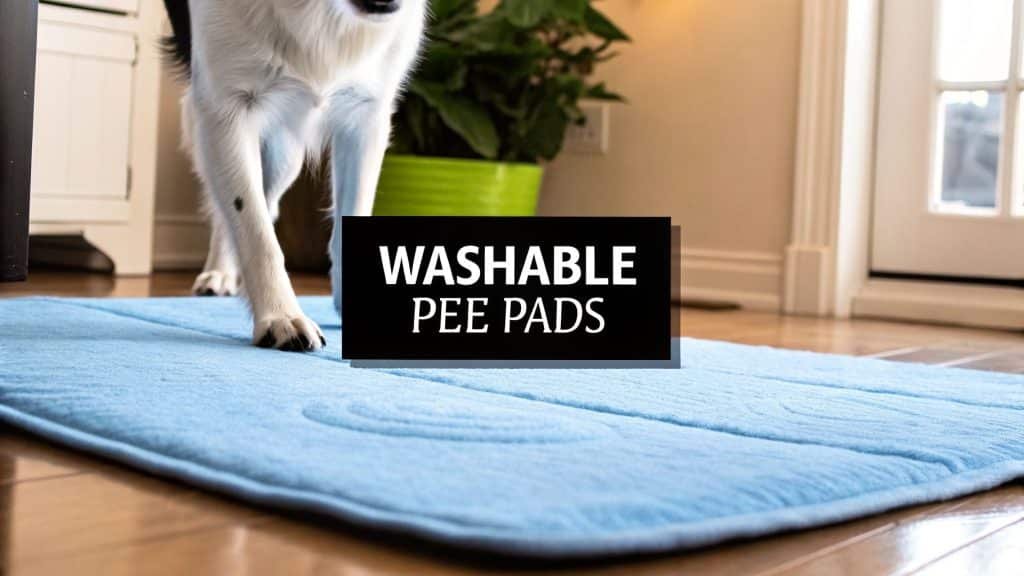
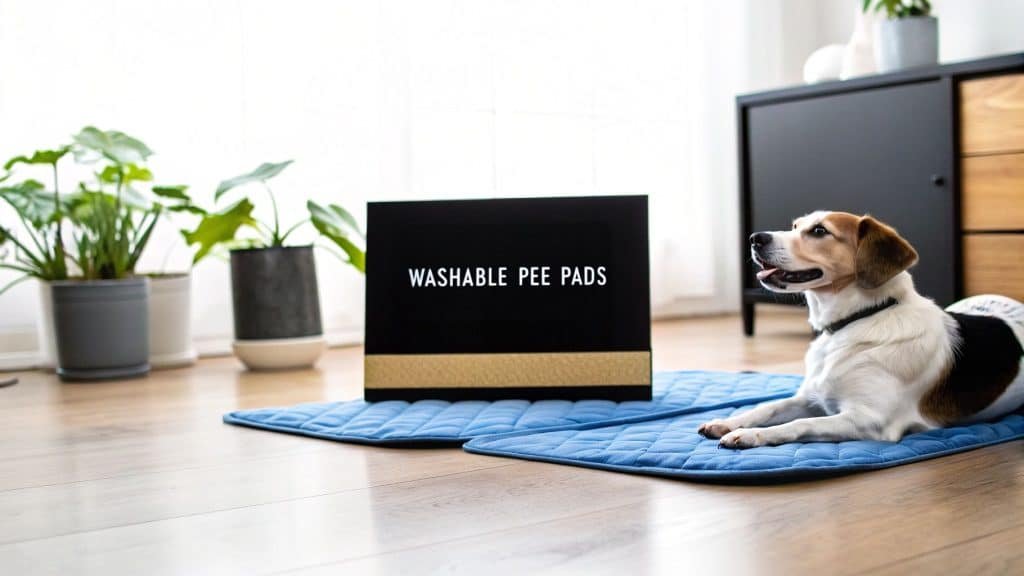
On the other side of the coin, you have washable, reusable pads. These are built to last, a bit like cloth diapers for babies. They definitely have a higher price tag upfront, but they can save you a surprising amount of money over your dog’s lifetime. Instead of constantly buying new packs, you just toss the soiled pad in the wash.
This durability is a huge plus. A good reusable pad is usually made from multi-layered, quilted fabric that can handle hundreds of wash cycles without falling apart or losing its absorbency. It’s the same logic you’d apply when choosing durable and machine washable covers for furniture that need to stand up to real life.
And, of course, there’s the environmental angle, which is a big deal for a lot of pet owners. By choosing a washable option like a reusable dog pee pad blanket, you’re keeping a ton of waste out of landfills. It’s an eco-friendly approach that’s becoming more and more popular.
A Growing Trend Toward Sustainability
This shift toward reusable products isn’t just a small movement; it’s a rapidly growing part of the pet care market. Driven by a desire to be more eco-conscious, the washable pet pee pad market is on track to be worth around $890 million globally in 2025. And it’s not slowing down, which tells you a lot about where consumer preferences are headed.
It all goes to show that while disposables offer that instant convenience, many dog owners are finding that the long-term value and eco-friendly benefits of reusables just make more sense.
The choice isn’t just about cleaning up a mess. It’s about deciding between short-term convenience and a long-term investment—both for your wallet and the planet.
To make things a little clearer, let’s break down the key differences in a simple chart.
Disposable vs Reusable Pee Pads a Head-to-Head Comparison
Sometimes seeing the pros and cons side-by-side is the easiest way to figure out what works for you.
| Feature | Disposable Pads | Reusable Pads |
|---|---|---|
| Upfront Cost | Low; you just buy a pack as you need it. | High; it’s a one-time purchase for each pad. |
| Long-Term Cost | High; those packs add up over time. | Low; it quickly pays for itself. |
| Convenience | Excellent; just throw it away when used. | Good; but it does require regular laundering. |
| Environmental Impact | High; every pad ends up in a landfill. | Low; you’re significantly reducing waste. |
| Durability | Low; they’re designed for single use. | High; built to last for hundreds of washes. |
Ultimately, finding the best dog pee pads for your home means weighing these factors against your own needs. If quick, no-fuss cleanup is your top priority, disposables are a fantastic tool to have. But if you’re thinking about long-term savings and sustainability, reusable pads are the clear winner.
What Makes a Great Dog Pee Pad?
Once you’ve decided between disposable and reusable pads, it’s time to look at the details that separate a soggy mess from a sigh of relief. The best dog pee pads on the market have a few things in common, and knowing what to look for will save you a ton of frustration—and protect your floors.
It’s a bit like buying a good raincoat. Sure, a cheap plastic poncho will keep some rain off, but a high-quality jacket is designed with sealed seams, breathable fabric, and a fit that actually keeps you dry and comfortable. The same idea applies to pee pads; the little things make all the difference.
Leak-Proof Construction and a Quick-Dry Top
A pad’s first job is containment, and that starts with its physical design. Always look for pads with sealed, leak-proof edges. This creates a plastic border that acts like a little dam, stopping any liquid from spreading out and seeping onto your floors.
Just as critical is a quick-drying top layer. This surface is engineered to pull moisture away from your dog’s paws almost immediately. It’s the key to preventing those annoying wet paw prints from being tracked all over your clean house. The mess stays right where it’s supposed to.
This kind of advanced material science is why the dog pee pad market, valued at around $500 million in 2025, is booming. With projections showing it could nearly double by 2033, companies are constantly innovating on features like absorbency and odor control. You can dig deeper into the growth of the dog pad market to see where the industry is heading.
Taming the Smell with Odor Control Tech
A leaky pad is a problem, but a smelly one can make your entire home feel off. The best pee pads don’t just mask odors—they actively neutralize them.
The most effective odor control technology traps and eliminates smells at a molecular level. It stops bad scents before they even have a chance to escape.
Here’s a look at the most common technologies that actually work:
- Activated Carbon: Many top-tier pads are infused with carbon. These tiny particles are like magnets for smelly molecules, trapping them deep inside the pad’s core so they can’t stink up the room.
- Baking Soda: It works in your fridge, and it works here, too. Baking soda is a fantastic natural odor neutralizer that helps cut through the sharp, acidic smell of urine.
- Pheromonal Attractants: This is a real game-changer for anyone house-training a puppy. Some pads are treated with a scent that humans can’t detect, but it instinctively encourages dogs to “go” on the pad. It’s a simple trick that can speed up the training process by pointing your pup in the right direction.
When you focus on these features, you’re not just buying a square of paper; you’re getting a reliable system designed to keep your home clean, fresh, and accident-free. Just remember to match the pad’s size and absorbency level to your dog’s specific needs to get the best results.
A Practical Guide to Pee Pad Training
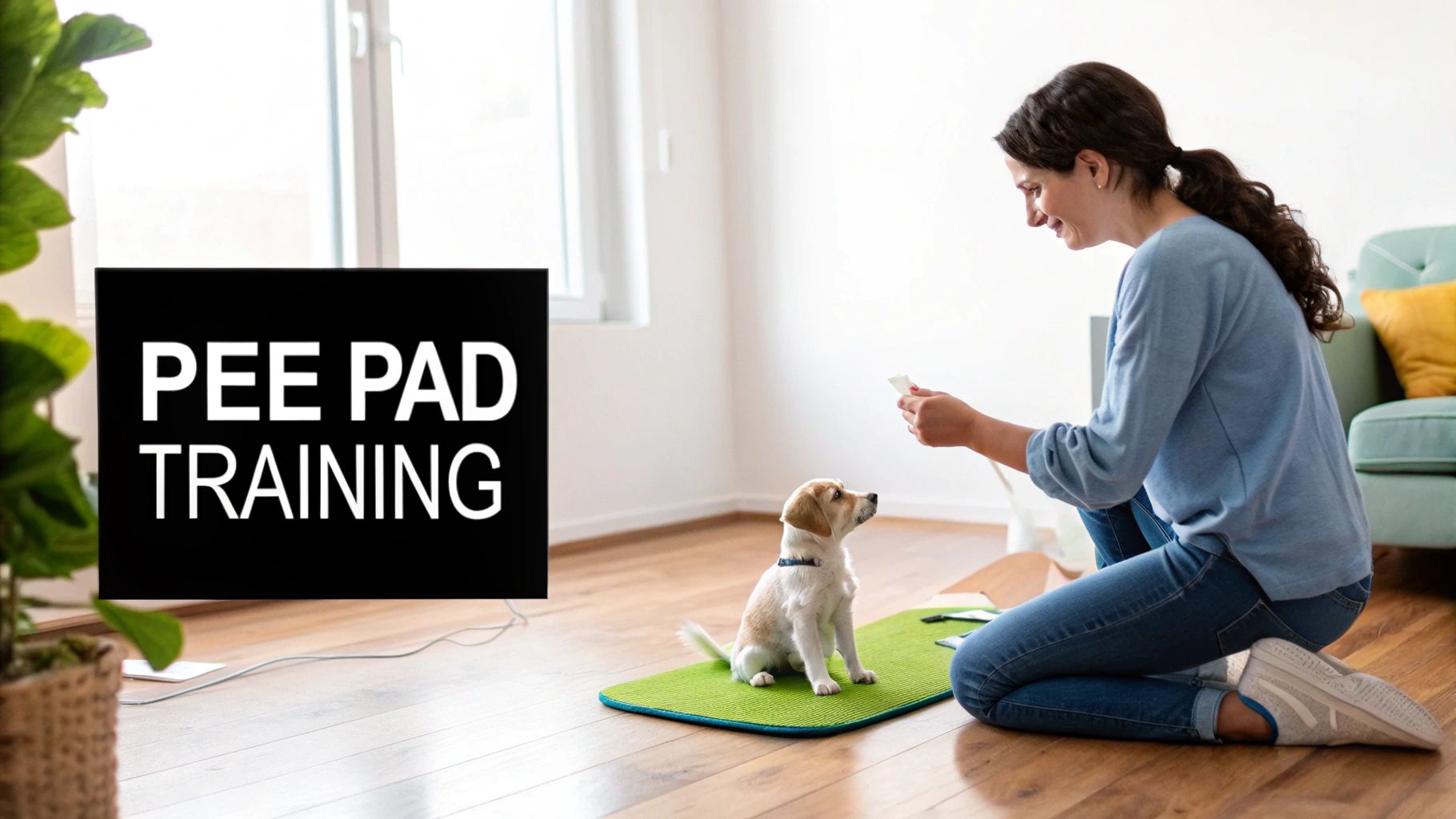
Picking out the best dog pee pads is a great first step, but the real magic happens when you teach your pup how to use them. The key is a patient and positive approach that turns the pad into a designated, trusted potty spot. Think of it less as a chore and more as building a positive routine with your dog.
It’s a lot like teaching a kid a new habit—consistency and praise are your best friends. This whole process hinges on clear signals and rewarding your dog for getting it right.
Setting Up for Success
Before you even bring your puppy over to the pad, where you put it makes a huge difference. The right location can make training a breeze, so pick a spot that’s easy for your dog to get to and convenient for you to clean.
- Pick a Permanent Spot: Find a quiet, low-traffic area where your dog feels secure, like a corner of the laundry room. You’ll want to keep it away from their food, water, and bed—no one likes to eat where they potty. Once you’ve chosen a location, stick with it. Moving it around will only confuse your dog.
- Make a Calm Introduction: Unfold the pad and just let your dog sniff around and check it out. Gently place them on it for a moment while using a happy, encouraging voice. If they seem nervous, don’t force it. The goal is just to show them it’s a normal, safe part of the room.
The Training Process Step by Step
Alright, the pad is down, and it’s time to start the real training. This part is all about watching your dog’s schedule and rewarding good timing.
Most puppies have to go right after they wake up, after a good play session, and shortly after meals. These are your prime training moments! When you see the classic signs—like circling and sniffing the floor—that’s your cue to gently lead them over to their pad.
At its core, successful pad training is all about making the pad the easiest and most rewarding choice for your dog. Praise will always work better than punishment.
The second they go on the pad, shower them with praise, offer a favorite toy, or give them a tasty treat. That immediate reward is what helps their brain connect the dots: “I pee here, I get something great!”
Troubleshooting Common Training Hurdles
Even with the best intentions, you’re bound to hit a few snags. It’s totally normal! Here’s how to navigate some common issues:
- Missing the Target: If your dog goes right next to the pad, try not to get frustrated. It’s actually a good sign—they have the right idea! Just clean the spot thoroughly to get rid of any lingering smell and maybe try a larger pad for a while. You can find excellent enzymatic cleaners in our collection of grooming and cleaning products.
- Chewing the Pad: Puppies explore the world with their mouths, and pads can look like a fun new toy to shred. If you catch them chewing, redirect their attention to an actual chew toy. A pee pad holder can also be a game-changer, as it locks the pad in place and covers the tempting edges.
- Accidents Elsewhere: Accidents are going to happen. It’s just a part of the process. The most important thing is to avoid scolding your dog, as that can lead to fear and anxiety around potty time. Clean it up with a good enzymatic cleaner to completely break down the odor so they don’t see it as a repeat spot.
Patience is everything. Stay consistent, and before you know it, your dog will understand that the pee pad is their personal indoor bathroom.
Common Pee Pad Mistakes to Sidestep
Even with the best pee pads on the market, it’s easy to hit a few training roadblocks. These common slip-ups can confuse your pup and make the whole process frustrating for you both, but don’t worry—they’re simple to correct. The trick is making the pee pad the clearest, most rewarding spot for them to do their business.
Inconsistent Placement
One of the biggest hurdles is moving the pad around. If it’s in the kitchen one day and the hallway the next, your dog will never learn where their “potty spot” is. Imagine if someone kept moving your bathroom—it’s confusing and bound to cause accidents. Pick one spot and stick with it.
Leaving a Soiled Pad Down Too Long
Another classic mistake is not changing a dirty pad quickly enough. Dogs instinctively avoid soiling their space and won’t want to use a pad that’s already saturated. A dirty pad not only stinks up the house but also encourages your dog to find a new, cleaner spot… like your favorite rug.
Punishing Accidents Is a Major Setback
This is probably the most harmful mistake you can make. Punishing a dog for an accident by scolding them or, worse, pushing their nose in it, doesn’t teach them the right thing to do. All it does is teach them to be afraid of you. This fear can cause them to start hiding when they need to go, which makes house training a nightmare.
Positive reinforcement is always the way to go. When an accident inevitably happens, remember these steps:
- Never punish your dog. No yelling, no scolding.
- Clean it up right. Use a good enzymatic cleaner to completely eliminate the scent so they aren’t drawn back to the same spot.
- Celebrate the wins. When they use the pad successfully, shower them with praise, pets, and treats.
Even with perfect training, accidents happen. Knowing the ins and outs of removing pet stains from your carpet and furniture is a lifesaver for any pet parent. By steering clear of these common pitfalls, you’ll create a positive and stress-free path to potty training success.
Still Have Questions About Dog Pee Pads? Let’s Clear Them Up.
Even the most seasoned dog owners have questions about pee pads. They seem simple, but getting the little details right can make all the difference, whether you’re house-training a tiny puppy or caring for an older dog.
How Often Should I Be Changing the Pee Pad?
This is a big one. For disposable pads, think of it as a once-a-day minimum, but you’ll want to swap it out sooner if it’s heavily used. A soaked, smelly pad isn’t just unpleasant for you; your dog might start avoiding it altogether, which defeats the whole purpose.
If you’re using reusable, washable pads, the same daily rule applies. Get it into the laundry pile and put a fresh one down. Sticking to a daily wash routine is the best way to keep your home hygienic and smelling fresh.
Are Pee Pads Just for Puppies, or Can My Adult Dog Use Them?
Absolutely, they’re not just for puppies! While they are a lifesaver during the potty-training phase, pee pads are incredibly practical for dogs of all ages.
They’re a perfect solution for senior dogs who might struggle with bladder control, pups recovering from surgery, or any dog that’s stuck indoors during a blizzard or a heatwave. Apartment dwellers find them indispensable.
Will Using a Pee Pad Mess Up My Dog’s Outdoor Potty Training?
It’s a common worry, but rest assured, you’re not going to confuse your dog. With a little consistency, dogs are smart enough to learn there’s a place for “inside potty” and “outside potty.” The trick is to use different command words and routines for each.
If your long-term plan is to have your dog go exclusively outside, you can use the pads as a stepping stone. Start by slowly moving the pad closer and closer to the door. Eventually, you can place it right outside the door for a few days to help your dog make the final connection.
At Ur Pet Store, we know that a clean home and a happy pet are the ultimate goals. We’ve curated a collection of top-tier pet supplies designed to make life easier for you both. Shop now at Ur Pet Store and discover products that simplify pet care.