

Blog
Best Pee Pad for Dogs: Top Picks for Absorbency and Odor Control

Picking the right pee pad really boils down to one key decision: disposables for pure convenience or washables for long-term savings. If you're just starting out, a quality disposable pad is usually the easiest path forward for puppy training or handling the occasional accident.
Your Guide to Finding the Perfect Dog Pee Pad
Let's be honest, the pee pad aisle can feel a little overwhelming. But it doesn't have to be.
Whether you're bringing home a brand-new puppy, caring for a senior dog, or just need an indoor potty spot for your apartment-dwelling pal, the right pad is a total game-changer. It's about protecting your floors, sure, but it's also about making life easier and less stressful.
Think of this as your roadmap. We’ll break down what actually matters so you can find a pad that works for your dog and your lifestyle. There’s no one-size-fits-all answer here—the best choice depends on your dog's size, age, and habits, plus your budget and how much cleanup you're willing to do.
Understanding Your Core Options
First things first, you're choosing between two main camps. Each has its own perks, and figuring out which one fits your life is the best place to start.
Disposable Pads: These are all about convenience. Use it, toss it, done. No laundry, no fuss. It’s no surprise they’re so popular—disposable pads make up a whopping 32.7% of the market share in a global pet pad industry expected to hit $3.2 billion by 2034. They are fantastic for house-training puppies, for travel, or for anyone who values a quick and easy cleanup above all else. You can find more pet pad market trend data on market.us.
Washable Pads: If you're looking for an eco-friendly and budget-smart option, reusable pads are a fantastic long-term investment. They do cost more upfront and you'll have to do laundry, but they produce far less trash and can save you a lot of money over time. Plus, they're typically more durable and often have grippy, non-slip bottoms to keep them in place.
The goal isn't just to buy a pee pad. It's to find a reliable system that fits seamlessly into your daily routine. It’s a tool that helps you keep your home clean and happy for everyone—two-legged and four-legged alike.
While you're stocking up on essentials, it's always fun to look at other gear that can make life with a dog even better. Many of these practical items are often featured in lists of the best gifts for dog owners.
Now, let's dig into the details that really make a difference—absorbency, odor control, size, and materials—so you can pick the perfect pad with confidence.
4. Disposable vs. Washable Pee Pads: A Head-to-Head Comparison
When it comes to picking the best pee pad, you’re really facing one big decision: convenience or sustainability? This is the classic showdown between disposable and washable pads. There’s no single right answer here—the best choice really comes down to your lifestyle, your budget, and what you can realistically manage day-to-day.
Let’s start with disposables. Think of these as the ultimate "grab-and-go" solution for your dog's potty needs. Their biggest selling point is how incredibly easy they are to use. When your pup has an accident, you just scoop it up, toss it, and lay down a new one. No fuss, no mess, no laundry.
Behind this simplicity is some pretty clever tech. Most disposable pads have a core made of super-absorbent polymer (SAP). This stuff is amazing—it’s a powder that instantly turns liquid into a gel, locking moisture away so your dog doesn’t track wet paw prints all over the house. For anyone deep in the chaos of puppy training or traveling a lot, that convenience is a lifesaver.
The Case for Convenience: Disposable Pads
The appeal of disposable pads is simple but strong. They completely cut out the cleanup, which is a huge win for busy owners or anyone who just isn't thrilled about the idea of washing soiled pads.
Here’s a quick look at why people love them:
- Ultimate Convenience: The "use and toss" design means zero cleaning effort. You save time and energy, plain and simple.
- Serious Odor Control: Many pads now come with odor-fighting ingredients like activated carbon or baking soda built right in, which helps neutralize those strong ammonia smells.
- High Absorbency: Thanks to that SAP technology, these pads can hold a surprising amount of liquid, keeping the surface feeling dry and your floors safe.
But, of course, there are downsides. The cost of constantly buying new pads adds up fast, especially over the lifetime of a dog. And for eco-conscious pet parents, the environmental impact is a big deal. All those single-use pads end up in landfills.
This flowchart can help you see which option might be a better fit for your situation.
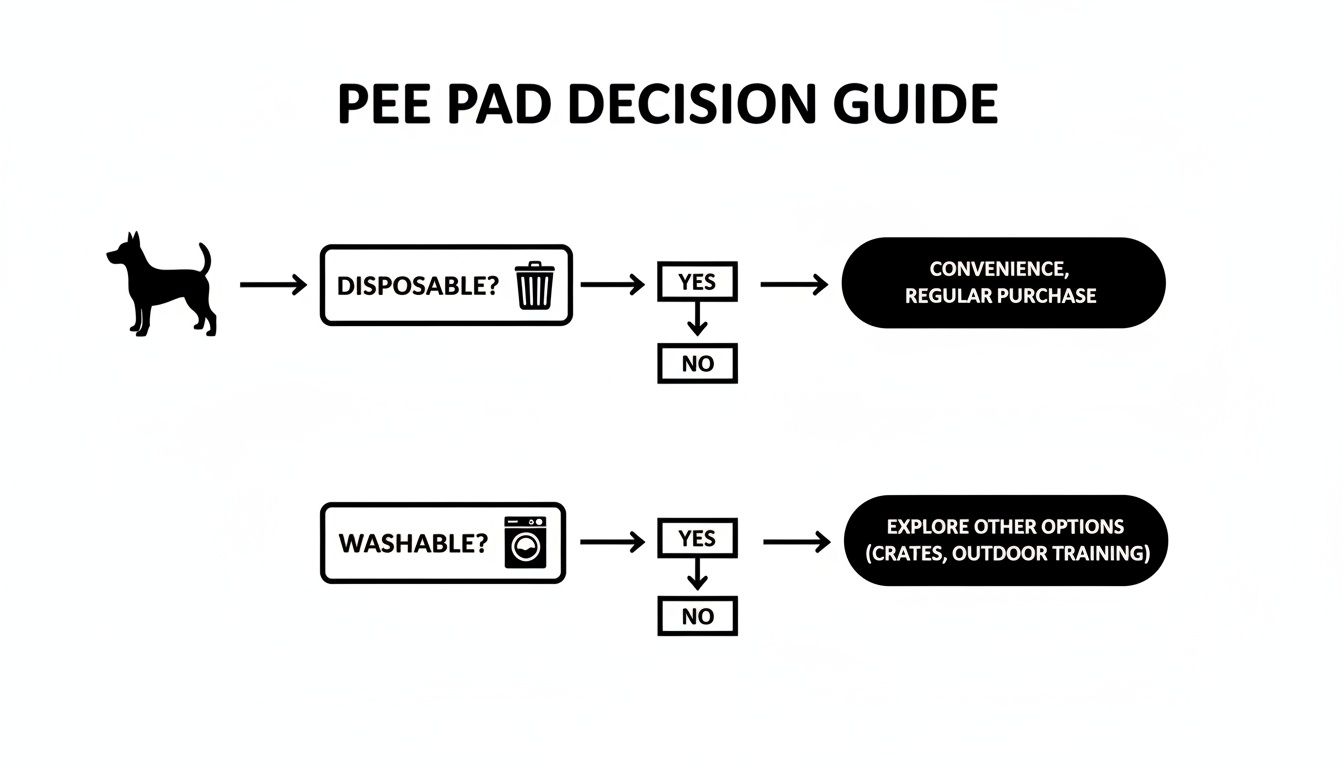
As you can see, disposables are a no-brainer if ease is your top priority. But if you’re thinking more about long-term value and sustainability, washable pads are where it's at.
The Sustainable Choice: Washable Pads
On the other side of the aisle, you have washable pee pads—the eco-friendly, budget-savvy option. They cost more upfront, but a good set can last for years, saving you a ton of money in the long run.
Instead of polymers, washable pads are all about fabric layers. They typically have a soft, moisture-wicking top layer to keep your pet comfy, a super-absorbent core, and a waterproof non-slip backing to keep the pad from sliding around on your floor. That sturdy design is built to withstand hundreds of trips through the washing machine.
The real win with a washable pad isn’t just saving money—it's the reliability. Their durable build and non-slip grip create a stable, consistent potty spot that your dog can learn to trust.
For anyone trying to reduce their carbon pawprint, washables are the clear winner. You’ll be cutting down on a huge amount of plastic and paper waste. If you’re leaning this way, our reusable dog pee pad blanket is a fantastic, durable option that blends comfort with serious protection.
The catch? Laundry. You’ll need a system for storing dirty pads until wash day, which definitely adds another chore to your weekly routine.
Making Your Final Decision
So, which pad is right for you and your dog? It all comes down to what you value most.
If you’re juggling a hectic schedule and your number one goal is to save time and avoid messy cleanups, disposable pads are probably your best bet.
But if you’re looking to save money over the long haul and want a more environmentally friendly option, washable pads are an excellent investment. It’s a classic trade-off: you either pay with your time (doing laundry) or with your wallet (buying more pads).
Decoding Key Features for a Leak-Proof Pad
Okay, so you’ve got a handle on the disposable vs. washable debate. That's the first big decision, but the real secret to finding a pee pad that actually works lies in the nitty-gritty details. The difference between a reliable pad and a soggy, leaky disaster often comes down to just a few key features. Once you know what to look for on the packaging, you can pick a pad that truly protects your floors.
Think of it like choosing paper towels. A flimsy, single-ply sheet might handle a tiny water spill, but for a real mess, you're reaching for the thick, quilted, multi-layered stuff. Dog pee pads are built on the same principle; it's all about what's inside.
The Magic of Absorbency
The powerhouse behind every great disposable pee pad is a layer of super-absorbent polymer (SAP). This isn't just cotton fluff—it's a high-tech granular material that acts like a tiny sponge army. The moment liquid hits the pad, these polymers swell up and turn it into a solid gel.
This gel-locking technology is a game-changer for two big reasons. First, it stops those dreaded wet paw prints from being tracked all over your house. Second, it allows the pad to hold a surprising amount of liquid, which is a lifesaver with larger dogs or for those times you can't swap out the pad right away. A pad that skimps on SAP will get saturated fast, leading straight to leaks.
It's no surprise the pet training pee pad market is booming, now holding a 42.6% market share in pet care. The market has grown from a value of $1.25 billion and is on track to hit $2.5 billion by 2033, largely because urban pet owners need these advanced features to keep their homes clean and sanitary. You can discover more insights about the pet pad market on verifiedmarketreports.com.
Neutralizing Odors at the Source
Let's be real: nobody wants their home to smell like a dog's personal restroom. Good odor control is non-negotiable, and the best pads tackle this with more than just a blast of perfume.
Here are the technologies that actually work:
- Activated Carbon: This is the MVP of odor control. It’s a super porous material that traps and neutralizes smelly molecules instead of just covering them up. If you want to eliminate that strong ammonia scent, look for pads with carbon.
- Baking Soda: Just like the box in your fridge, baking soda is a natural and totally safe odor absorber. It works by neutralizing acidic smells, keeping the area much fresher for much longer.
- Subtle Attractants: Some pads have a faint, pheromone-based scent meant to encourage your puppy to use the pad. This is a training aid, not a heavy fragrance designed to mask odors.
A truly effective pee pad doesn't just cover up smells; it eliminates them. Look for pads that use ingredients like activated carbon to neutralize odors at a molecular level, ensuring your home stays fresh.
While scented pads might seem like a good idea, they can sometimes put off dogs with sensitive noses. If you find your pup is avoiding a new perfumed pad, an unscented option with carbon or baking soda is probably your best bet.
Critical Defenses Against Leaks
Even the most absorbent core is useless if the pad itself is poorly constructed. A genuinely leak-proof design relies on a whole system of features working together. Of course, a happy dog is a well-behaved dog, so consider making their potty corner extra comfy with some essentials from our collection of dog beds and mats.
Here’s the anatomy of a pad you can trust:
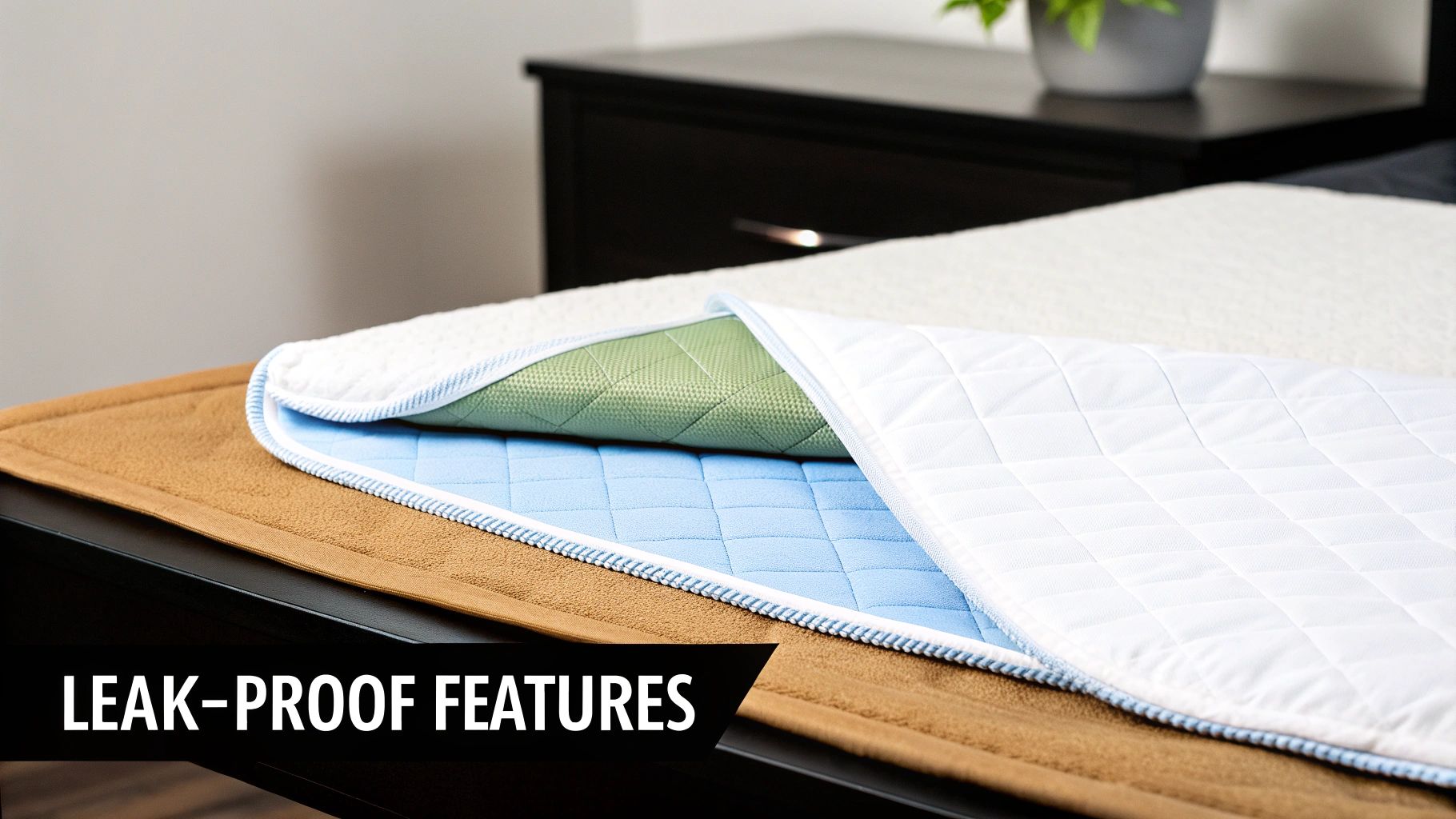
- Quilted Top Layer: That textured, diamond-patterned surface isn't just for show. The little channels are designed to pull moisture down and away from the surface, spreading it evenly into the absorbent core. This prevents puddles from forming and helps the gel lock in faster.
- Sealed Edges: A good pad will have a thick, sealed plastic border around the entire perimeter. This acts like a little dam, stopping any liquid from spilling over the sides if your dog’s aim isn’t perfect.
- Durable Waterproof Backing: The bottom layer is the final barrier between the mess and your floor. It needs to be a tough, tear-resistant plastic (polyethylene) film that absolutely stops moisture from seeping through to your carpet or hardwood.
Once you know these features, you can look at any product description and know exactly what you’re getting. You’ll be able to spot the difference between a flimsy, budget pad and a high-performance one built for total protection and peace of mind.
Finding the Perfect Fit for Every Dog Size
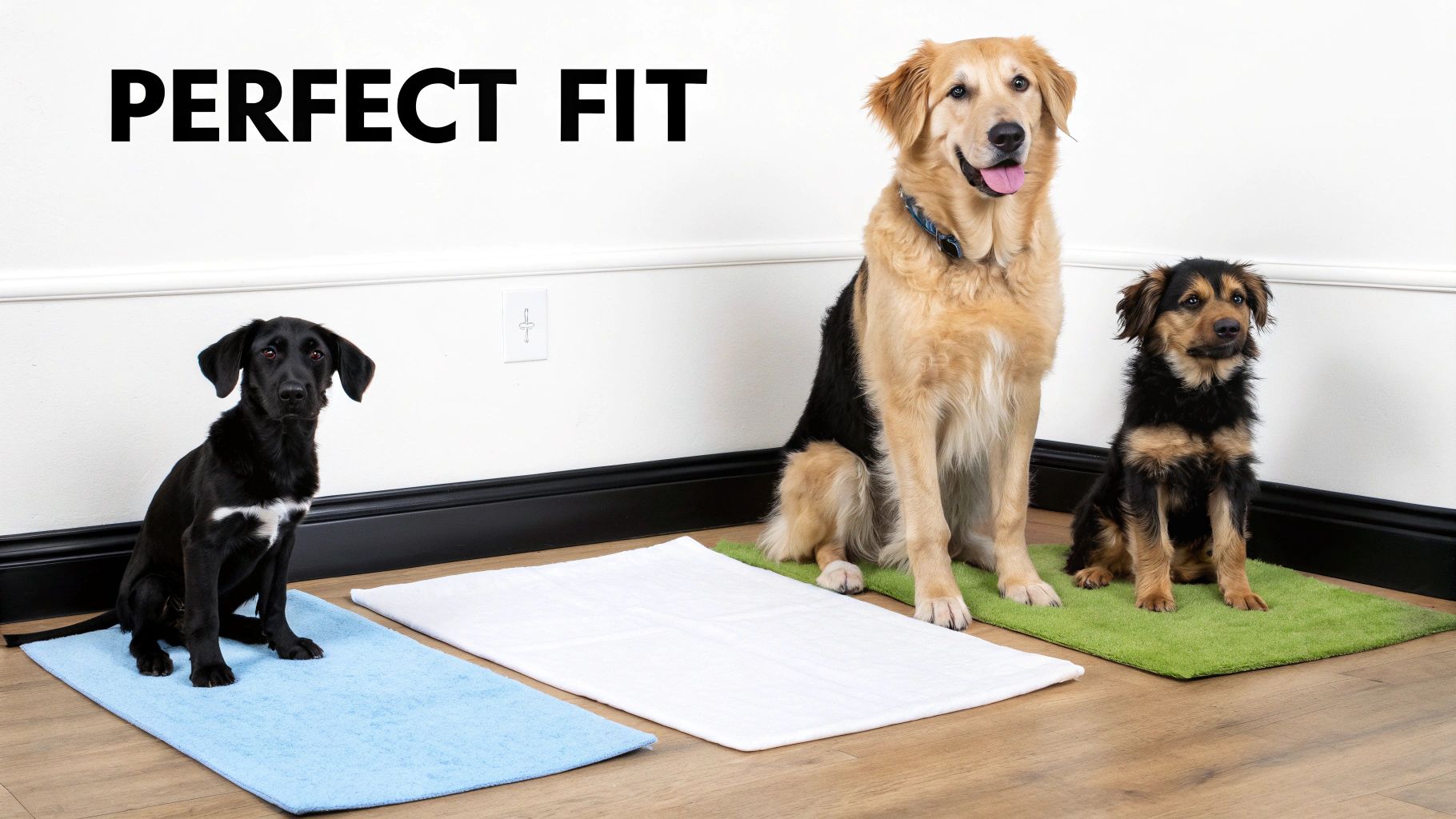
Let's be real—choosing the right size is the first line of defense against messes. A pad that’s too small is an accident waiting to happen. Think of it like trying to catch a massive rainstorm with a tiny coffee mug; it's just not going to work. The best pee pad isn’t just about absorbency—it has to be the right size for your dog.
A fantastic rule of thumb is to find a pad large enough for your dog to walk on and circle a couple of times before they do their business. You've probably seen them do this little ritual outside. It's totally instinctual, and giving them the space to do it indoors makes it much more likely they'll hit the target every single time.
Sizing Up for Different Life Stages
Your dog’s needs aren't static, and their pee pad size shouldn't be either. The tiny pad that worked for your 8-week-old puppy won't stand a chance against them as a full-grown adult.
For Puppies: When they're small, you can start with smaller, super-absorbent pads. A standard 22×22 inch pad is usually a great starting point. It gives them a clear target without being overwhelming, which can make those early house-training days a little less intimidating.
For Adult Dogs: As your dog gets bigger, it's time to upgrade. For medium to large breeds, look for extra-large or even giant pads, which can be 30×36 inches or even larger. This gives them plenty of real estate to move around without accidentally stepping off the edge.
For Senior Dogs: Older pups dealing with incontinence or mobility challenges need all the help they can get. This is where creating a larger surface by overlapping a few XL pads can be a game-changer. It gives them a bigger, more forgiving target area, which is a huge confidence booster when their aim isn't what it used to be.
It’s no surprise that the market for these pads is booming. The puppy potty pad market alone was valued at USD 0.95 billion and is expected to hit USD 1.47 billion by 2033. That’s a lot of pet parents looking for the right training tools! Meanwhile, the wider dog pads market is sitting around USD 500 million, largely because more people in cities need reliable indoor potty solutions. You can discover more insights about the dog pad market from archivemarketresearch.com if you're curious.
The Pad Holder Advantage
Even the most perfectly sized pad is useless if your dog thinks it's a chew toy. Puppies are especially guilty of this—shredding, dragging, and bunching up their pads until your floor is covered in a snowstorm of fluff. It’s messy and completely defeats the purpose of the pad.
Enter the pee pad holder. This simple device, usually a plastic frame, is designed to lock the pad down and keep those tempting edges out of reach.
A pee pad holder does more than just stop shredding—it creates a clear, defined "potty station." This visual boundary helps your dog understand exactly where they are supposed to go, reinforcing training and improving consistency.
A holder turns a flimsy, slidable pad into a stable, designated potty spot. It stops the pad from scooting around on hardwood or tile, keeps it perfectly flat to maximize the usable surface, and pretty much eliminates the chance of your dog turning their bathroom into a confetti party. For anyone with a playful or destructive pup, a holder is a sanity-saver.
A Step-by-Step Guide to Potty Training with Pee Pads
Let's be honest: the pee pad itself isn't magic. Success comes down to your training, your consistency, and a whole lot of positive reinforcement. Think of it as teaching your dog a new language where the pee pad means "this is the right spot to go indoors." Your job is to make that the easiest, most rewarding choice they can possibly make.
It all boils down to creating a clear and predictable routine. You’re guiding your dog, so patience is key.
Setting the Stage for Success
Where you put the pad is half the battle. Don't just toss one down in the middle of the room. Find a permanent, quiet spot that your dog can always get to, but make sure it's well away from their food, water, and bed. It's a dog's instinct not to soil their den, and that includes where they eat and sleep.
Once you pick a spot, commit to it. Moving the pad around will only confuse your dog and set your training back. A corner of the laundry room or a low-traffic part of the living room usually works great.
Now for the introduction. Let your dog sniff and check out the new pad. Gently place them on it and use a simple, consistent verbal cue like "go potty." Keep your tone calm and encouraging. The moment they use it—and they will—shower them with praise, a high-value treat, or their favorite toy. You need to create a powerful, positive connection in their mind.
The secret to making this work is timing. You have just a few seconds to connect their action (peeing on the pad) with the reward. That immediate praise is what makes the lesson stick.
Building a Reliable Routine
Consistency is everything in dog training. A predictable schedule helps your puppy learn to anticipate potty breaks and gives them the structure they need to succeed.
Here are the non-negotiable times you should be taking your dog to their pad:
- First thing in the morning. Their bladder is full after sleeping all night.
- Right before bed. This is the final pit stop to help them make it through the night.
- After every meal. Digestion gets things moving, usually within 15-30 minutes of eating.
- After waking up from a nap. Just like us, the first thing they often need to do is relieve themselves.
- During and after playtime. All that excitement can make them forget they have to go, so a proactive trip to the pad is a smart move.
Watch for the classic "I gotta go" signals: circling, sniffing the floor intensely, or whining. The second you see these, gently and quickly guide them to their pad.
To help you visualize what a consistent day looks like, here is a sample schedule that can make a world of difference for a young puppy.
Sample Puppy Potty Training Schedule
This schedule is a great starting point to help you build a routine that works for your puppy's natural rhythms. The key is consistency and repetition.
| Time or Event | Action to Take | Training Goal |
|---|---|---|
| 7:00 AM (Wake Up) | Immediately carry puppy to the pee pad. | To establish the first potty break of the day. |
| 7:30 AM (After Breakfast) | Guide puppy to the pad 15-20 minutes after eating. | To connect eating with the need to eliminate. |
| 9:30 AM (After Playtime) | Take puppy to the pad after a short play session. | To manage excitement-induced urination. |
| 12:00 PM (Midday) | Proactive trip to the pee pad. | To prevent accidents before they happen. |
| 12:30 PM (After Lunch) | Guide puppy to the pad 15-20 minutes after eating. | To reinforce the mealtime potty routine. |
| 3:00 PM (After Nap) | Take puppy to the pad as soon as they wake up. | To build the habit of going potty after sleep. |
| 5:30 PM (After Dinner) | Guide puppy to the pad 15-20 minutes after eating. | To maintain consistency with evening meals. |
| 8:00 PM (After Playtime) | Take puppy to the pad after evening fun. | To prevent late-night accidents. |
| 10:00 PM (Before Bed) | Final trip to the pee pad for the night. | To empty the bladder before a long sleep. |
Remember, this is just a template! Adjust the times based on your dog's specific needs and your daily schedule.
Troubleshooting Common Training Hurdles
Even with a perfect plan, you're going to hit some bumps in the road. Don't worry, it's completely normal. Here’s how to handle the most common issues.
- Missing the Pad: Is your dog going right next to the pad? This is a classic sign that the target is too small. Try a larger pad or place two of them side-by-side to give them more room for error.
- Shredding or Chewing: This is peak puppy behavior, especially for dogs who are teething or just plain bored. The easiest fix is a pee pad holder. These simple plastic frames lock the pad in place and cover the edges, making it nearly impossible to turn into confetti.
- Refusing to Use the Pad: First, make sure the pad is clean. A lot of dogs are fussy and won't step on a soiled pad. If it’s a new problem, think about what else might have changed. New noises or activity near the pad could be making them anxious.
Transitioning to Outdoor Potty Breaks
For most people, pee pads are a temporary tool on the way to fully outdoor-trained bliss. Once your dog is using the pad like a pro and has more bladder control, you can start the transition outside.
The trick is to do it gradually. Start by moving the pee pad a little closer to the door you use for walks. Over a few days, keep inching it closer until it's right by the door. This helps your dog build an association between that door and the act of going potty.
The next step is to place the pad just outside the door. Finally, you can remove the pad altogether. When you take them to their new outdoor spot and they go, celebrate like they just won the lottery. This process smoothly transfers the good habits they learned inside to the great outdoors.
Got Questions? Here’s What Other Dog Owners Ask About Pee Pads
Even the perfect pee pad can leave you with a few questions. Trust me, it's totally normal to wonder if you're getting it right, especially when you're in the thick of house training a new puppy. Let’s tackle some of the most common things that pop into pet parents' heads.
My goal here is to help you feel confident about the pad you choose and how you use it. With the right info, you can sidestep the usual frustrations and turn this into a training win.
Will Pee Pads Mess Up My Puppy's House Training?
This is probably the #1 fear I hear from new dog owners. The short answer? Not if you use them the right way.
Think of pee pads as a temporary tool—like training wheels—not the final destination. They’re a bridge to get you to fully outdoor potty training. The trick is consistency.
Always keep the pad in the same spot, and get your pup on a regular schedule for trips outside. Once they start getting the idea, you can slowly inch the pad closer and closer to the door. This little trick helps them make the connection: "Oh, this feeling means I should head toward the door."
Think of the pad as a stepping stone. It’s teaching your puppy where it’s okay to go inside while you’re still working on the main goal: doing all their business outdoors.
How Often Should I Be Changing the Pee Pad?
This one really depends on the pad itself and how much your dog is using it. But for a quick rule of thumb, you should change a disposable pad at least once a day, or right away if it's heavily soiled. A soggy, smelly pad isn't just gross—it can actually discourage your dog from using it again.
If you're using washable pads, plan on swapping them out for a fresh one and tossing the used one in the laundry every day or two, based on how much action it’s seeing. For more pro tips on keeping your dog's area clean and fresh, take a look at our guide to essential grooming and cleaning supplies.
Help! My Dog Won't Stop Chewing the Pads!
Ah, the classic pad-shredding problem. It’s a rite of passage for many puppy owners. First things first, make sure your pup has a mountain of awesome, appropriate chew toys to keep them busy. Boredom is the enemy here.
But the real game-changer is often a pee pad holder. These are simple plastic frames that clamp the pad down, covering up those tempting edges. It makes it way harder for your dog to get a grip and turn the pad into confetti. A little extra supervision right when you put a new pad down can also help you stop the habit before it even starts.
At Ur Pet Store, we're all about making your life as a pet owner easier with products that just work. Check out our full collection for everything you and your pet need at https://urpetstore.com.