

Blog
Cat Hammock Wall The Ultimate Guide to Feline Vertical Living

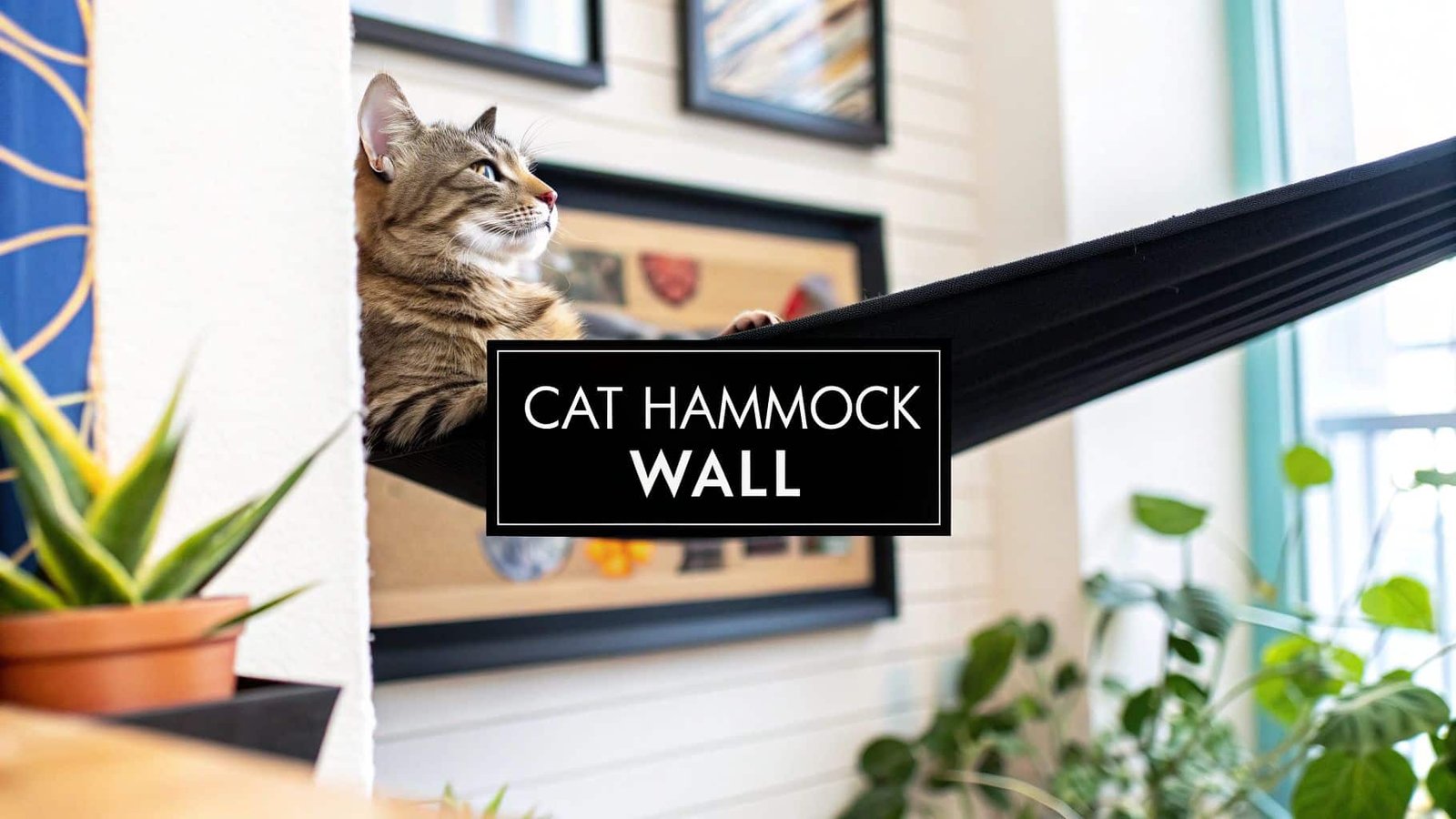
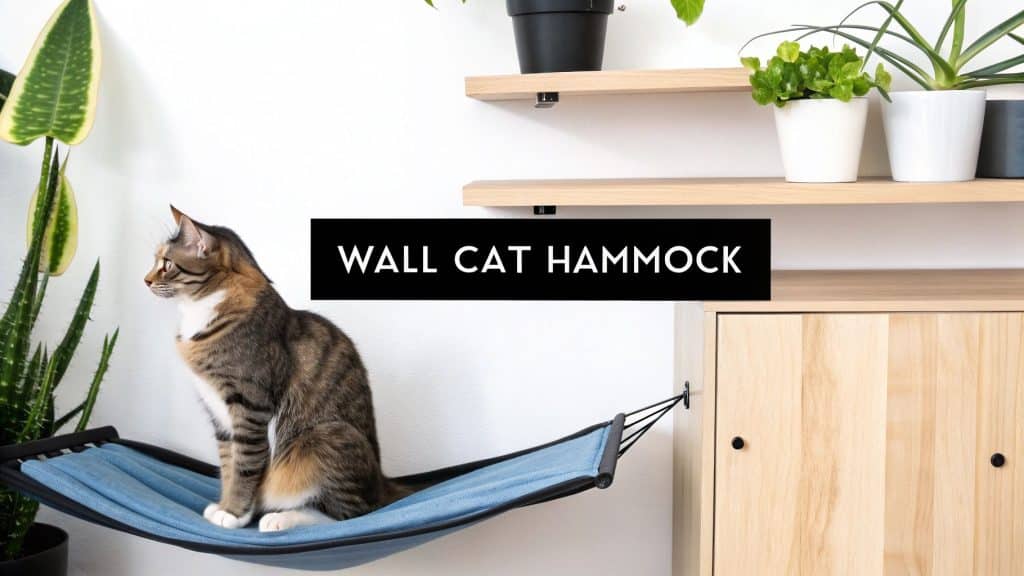
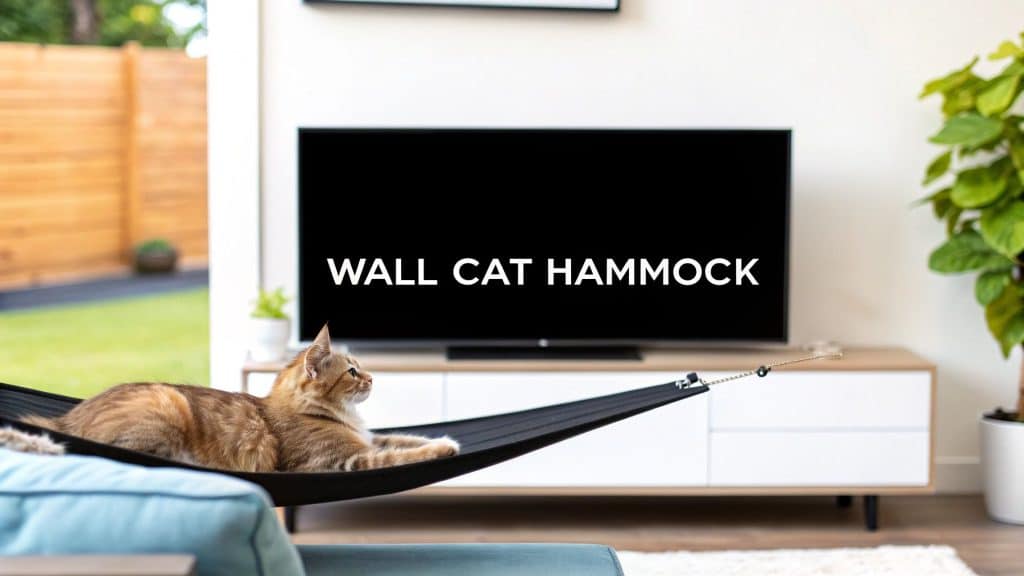
A cat hammock wall is basically a special piece of furniture you mount on your wall, giving your cat their own dedicated spot to lounge, climb, and watch the world go by from up high. It's way more than just a bed; it's a vertical playground that taps into a cat's natural instincts while saving you precious floor space.
Why a Cat Hammock Wall Is More Than Just Furniture
Welcome to the world of vertical living, cat-style. A cat hammock wall isn't just another pet accessory; it's a ticket to satisfying your cat’s deepest, most primal instincts. It plays right into their inherent need to climb, perch, and survey their kingdom from a safe, elevated spot.
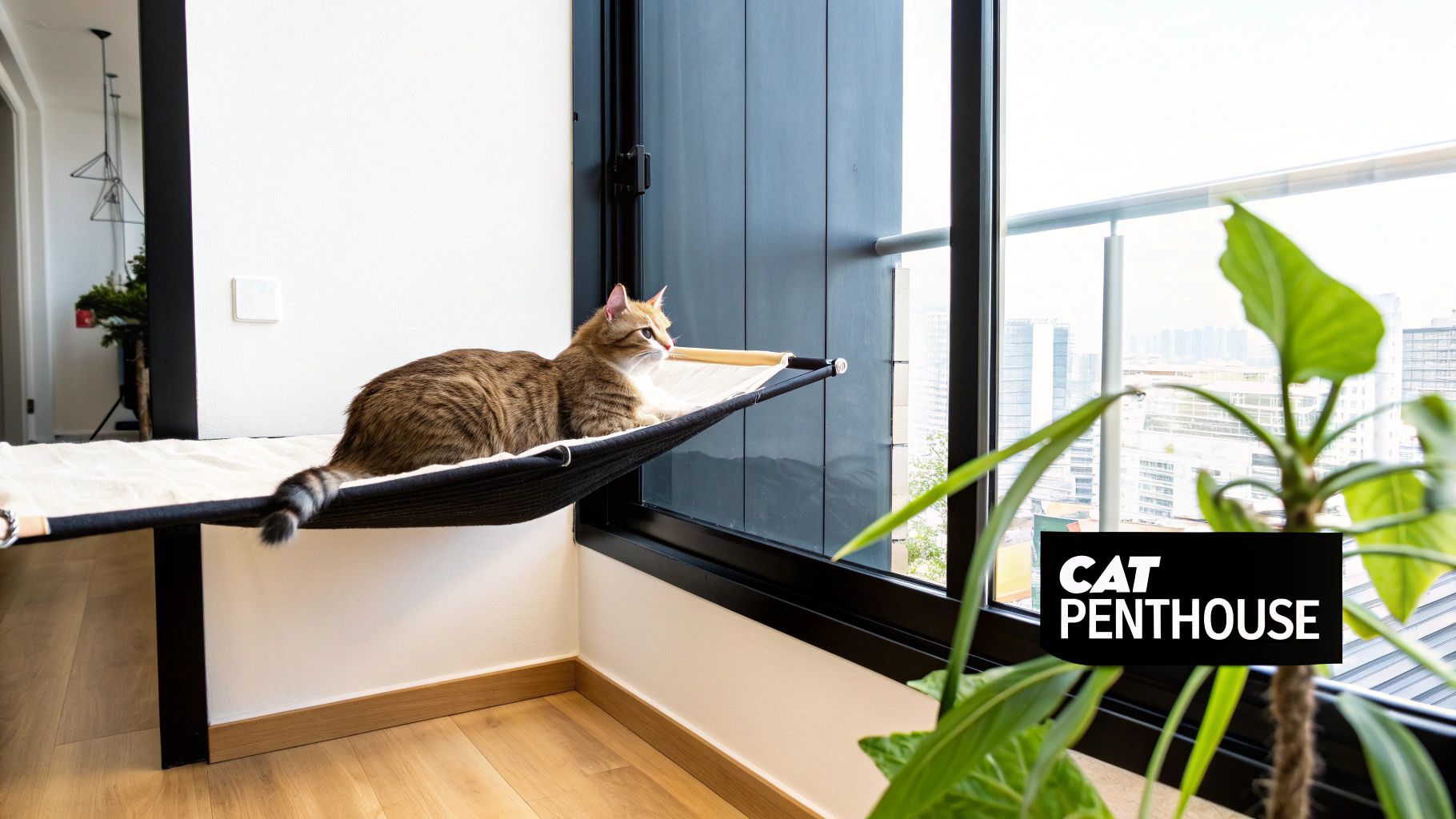
Think of it as giving your cat their own private penthouse with the best view in the house. This setup helps them feel secure and in control, all without taking up a single square inch of your floor. That makes it a perfect solution for modern pet owners, especially if you're in an apartment or a smaller home where every bit of room counts.
The Rise of Vertical Cat Spaces
The demand for creative, space-saving cat furniture has absolutely blown up recently. In fact, the global cat hammock market hit an impressive USD 254 million in 2024, which shows a huge shift in how we think about our pets' needs at home.
This boom is part of a bigger trend where we treat our indoor cats more like family, buying products that work for them and look good in our homes. If you're curious about the market numbers, you can read more on dataintelo.com.
This is especially true for cat owners who get that an interesting indoor environment is key to a cat's happiness. A cat hammock wall is a direct answer to this need, offering:
- Mental Stimulation: It gives them a new perspective and a fun challenge, which helps keep boredom at bay.
- Physical Exercise: It encourages natural behaviors like climbing, jumping, and stretching, which is great for maintaining a healthy weight and strong muscles.
- A Sense of Security: A spot up high is the perfect retreat from household chaos, other pets, or curious kids.
By turning unused wall space into a dynamic playground, you’re not just decorating your home—you’re enriching your cat’s entire world. It’s a real investment in their happiness, health, and natural instincts.
This guide will walk you through everything you need to know. We’ll get into choosing the right materials and design, how to install it for maximum safety, and even share some creative ideas for making it look great with your decor. Our goal is to help you build a safe, stylish, and exciting space that both you and your cat will love.
Have you ever watched your cat scramble to the top of a bookshelf, survey the room like a tiny king, and then curl up for a nap? That's not just a cute quirk. It's a deep-seated instinct, a whisper from their wild ancestors, and it’s the key to understanding why a cat hammock wall is so much more than a piece of chic pet furniture.
Think about it from a wildcat's perspective. Height meant survival. A high branch was the perfect lookout post to spot predators from a safe distance. It was also the ultimate sniper's perch, offering a bird's-eye view of any potential meals scurrying below. Safety, strategy, and a full belly—it all started with getting off the ground.
That instinct doesn't just vanish because your cat's biggest threat is the vacuum cleaner. The drive to climb, perch, and observe is hardwired into their DNA. Your living room is their jungle, and that high shelf? It’s their watchtower.
Giving Them a Personal Sanctuary
A well-placed cat hammock wall taps directly into this primal need, creating a secure, elevated sanctuary that’s all theirs. It's a space away from the chaos of household foot traffic, boisterous dogs, or curious toddlers.
This is huge for a cat's mental health. Having a reliable escape route gives them a sense of control over their environment. When things get too overwhelming, they know they have a safe spot to retreat to. It’s not just a luxury; it’s a powerful stress-reducer.
A cat hammock wall transforms your unused vertical space into a personal safe haven, giving your cat a designated spot where they can truly relax and feel secure in their territory.
This becomes even more important if you have more than one cat. Feline social structures are complex, and height is often used to establish hierarchy without resorting to hissing matches or scraps. By providing multiple high-up spots with a hammock system, you give each cat a chance to claim their own turf, which can dramatically cut down on territorial spats.
Why Vertical Space is a Game-Changer
For an indoor cat, the world can get pretty boring. The same four walls, day in and day out, can lead to frustration, which often shows up as shredded furniture, over-grooming, or even aggression. Environmental enrichment isn't just a nice-to-have; it's essential.
A cat hammock wall is a fantastic way to break up that monotony. It encourages natural behaviors—jumping, climbing, balancing—that provide a great physical workout, helping to keep them lean and agile.
But the real magic is the mental stimulation. It gives them a puzzle to solve and a new environment to master. This is a powerful antidote to boredom and a constructive outlet for all that pent-up energy, leading to a much calmer and happier companion. In fact, some studies on enrichment show that a good hammock system can boost a cat's activity levels by 30-40%. You can explore more about the growing cat furniture market and how it’s changing pet well-being.
At the end of the day, a cat hammock wall speaks your cat’s language. It satisfies their need for height, gives them a safe space to decompress, and provides the physical and mental workout they crave. It’s one of the best investments you can make for your indoor cat’s happiness.
Wall Hammock vs. Traditional Cat Tree: A Quick Comparison
Wondering how a modern wall system stacks up against the classic, carpeted cat tree? While both offer vertical space, they cater to different needs and home environments. Here’s a quick breakdown to help you decide.
| Feature | Cat Hammock Wall | Traditional Cat Tree |
|---|---|---|
| Space Usage | Utilizes vertical wall space, keeping floors clear. | Takes up a significant amount of floor space. |
| Customization | Highly modular; can be expanded or reconfigured. | Fixed, one-piece structure with limited flexibility. |
| Aesthetics | Sleek, modern designs that blend with home decor. | Often bulky and can clash with interior design styles. |
| Installation | Requires mounting to wall studs; more involved. | No installation needed; just place it on the floor. |
| Stability & Safety | Extremely stable when installed correctly. | Can be wobbly, especially for large or active cats. |
| Best For | Small apartments; modern homes; multi-cat families. | Renters; larger spaces; those who prefer no-install options. |
Ultimately, a cat hammock wall is an incredible solution for enriching your cat's life, especially if you're looking to save floor space and create a setup that grows with them. It’s a direct line to their happiness, proving that sometimes, the best things in life are wall-mounted.
How to Choose the Perfect Cat Hammock Wall
Think of yourself as a custom home designer for your cat. Choosing the right wall-mounted hammock isn't just about picking something off a shelf; it's about creating a safe, stylish, and utterly irresistible high-rise sanctuary that fits your cat's personality like a glove.
Let's walk through the key things to look for. We'll cover everything from the nuts and bolts of materials to the fun of matching it with your home decor.
Decoding Materials: Wood vs. Fabric
The heart of any cat hammock wall lies in its two core components: the frame that provides the muscle and the sling that delivers the comfort. Getting this combination right is everything.
The frame is the backbone. You'll usually find them made from solid woods like pine, birch, or bamboo. These aren't just for looks—they provide the rigid, sturdy base needed to handle a cat launching itself for a nap, day after day.
Then there's the hammock sling, which is what your cat will actually be snuggling into. This choice directly affects both your cat's happiness and how easy the hammock is for you to clean. Here are the most common options:
- Durable Canvas: This is the workhorse of hammock fabrics. It’s tough, holds its shape, and stands up to some serious kneading and scratching. Plus, most canvas slings are machine washable, which is a huge win.
- Plush Fleece or Faux Fur: If you have a certified snuggler, this is the way to go. Nothing says "cozy" quite like soft fleece or faux fur. It creates a warm, inviting nest that’s perfect for serious napping.
- Breathable Cotton: A fantastic all-rounder. Cotton is soft yet strong, and it allows for good airflow, which helps keep your cat comfortable, especially when the weather gets warm.
A sturdy pine frame paired with a removable, washable canvas sling is often the sweet spot—it gives you long-lasting durability and your cat a comfy, clean place to lounge.
Finding the Right Design and Size
Beyond the materials, the actual design of the cat hammock wall determines how your cat will use it. You can find everything from a simple, single perch to elaborate, multi-level systems that become a feline superhighway across your wall.
A minimalist single hammock is a great starting point. It works beautifully in small apartments or as a new spot to add to your cat's existing network of furniture.
For more adventurous cats or households with a whole crew of them, a modular system is a fantastic investment. These let you add steps, bridges, and other perches over time, creating an ever-changing playground that keeps things interesting. If you have a larger cat or a pair that loves to pile up, you might need to look into a hanging cat hammock for large cats built specifically to handle the extra weight.
Speaking of which, weight capacity is non-negotiable. Always, always check the manufacturer's specs. A typical hammock might hold 20-30 pounds, but for a big cat like a Maine Coon or for multiple cats, you need a system rated for 50 pounds or more. This is one of the most important safety checks you can make.
Matching Your Home's Aesthetic
Let’s be honest—you have to look at this thing every day, so it should look good! Thankfully, modern cat furniture has come a long way. You can find cat hammocks in all sorts of styles, from rustic wood finishes that feel warm and natural to sleek, minimalist designs that blend right into a modern home.
When thinking about style, it helps to consider the same things you would when choosing any pet friendly furniture, focusing on materials that are durable and easy to clean.
This push for better-looking pet gear is part of a huge trend. The pet accessories market, which includes these stylish wall hammocks, is expected to grow to USD 42.3 billion by 2026. This is happening for a couple of reasons: more people are bringing cats into their homes (32.1% of US households had cats in 2024), and we're all looking for smart, space-saving solutions that don't scream "crazy cat person." By keeping all this in mind, you can find a perfect cat hammock wall that you and your cat will both love for years.
Your Step-by-Step Guide to a Safe and Secure Installation
Getting your cat hammock wall mounted correctly is, without a doubt, the most critical part of the whole project. This isn't like hanging a picture frame; think of it more like building a tiny piece of architecture for your cat. A truly solid installation doesn't start with a drill—it starts with a good plan, the right tools, and a healthy respect for both gravity and a cat's pouncing power.
We'll walk through the whole process together, from finding the bones of your wall to giving the final setup a thorough shakedown. The goal here is to make you feel completely confident that you're creating a rock-solid climbing space where your cat can leap, lounge, and nap safely for years.
Part 1: Getting Ready for a Perfect Mount
Before you even think about drilling a hole, take a moment to plan your layout. The first thing you absolutely have to do is find the wall studs. These are the vertical wood beams inside your wall that form its skeleton, and they're the only things strong enough to securely anchor your cat hammock.
Your top priority is safety. Never, ever mount a cat hammock directly into drywall. Drywall is just a sheet of plaster and paper; it has no structural integrity and will rip right out under the weight of a jumping cat. Every single bracket must be screwed directly into a wall stud.
Once you know where your studs are, it's time to gather your tools. Having everything on hand before you start makes the job go so much more smoothly.
- Stud Finder: This is non-negotiable. You need one to find the center of each stud accurately.
- Tape Measure: For getting all your measurements and spacing just right.
- Pencil: For marking stud locations and where you'll drill.
- Level: Absolutely essential for making sure your shelves and hammocks aren't crooked.
- Drill with Drill Bits: To create pilot holes and drive in the screws.
- Screwdriver or Socket Wrench: The hardware included will determine which one you need.
With your studs marked and your toolbox ready, you can start mapping out your cat's new superhighway. Think about the flow. How will your cat get up and down? Try to plan a logical path with steps or shelves spaced about 12-18 inches apart vertically and 12-16 inches horizontally. That's a comfortable jumping distance for most cats.
Part 2: The Mounting Process
Alright, now for the hands-on part. If you follow these steps carefully, you'll end up with a cat hammock wall that's as sturdy as they come. Just take your time and double-check your work as you go.
- Mark Your Pilot Holes: Hold the first bracket up against the wall, centered over the stud you marked. Use your level to get it perfectly straight, then mark the screw holes with your pencil.
- Drill Pilot Holes: Grab a drill bit that's just a little bit smaller than the screws you're using. Drilling pilot holes first stops the wooden stud from splitting and makes it way easier to drive the screws in straight.
- Attach the First Bracket: Screw the first bracket securely into the wall. You want it snug and firm, but don't go overboard and strip the screw head or damage the wall.
- Position and Level the Second Bracket: Now, hold the second bracket over its stud mark. Rest the hammock or shelf between the two brackets and use your level to make sure it's perfectly flat. Once it is, mark your pilot holes for the second side.
- Secure Everything: Attach the second bracket, then put the hammock or shelf together based on the manufacturer's directions. Give all the hardware a final tightening.
- Repeat for All the Pieces: Just follow these same steps for every component of your cat wall. Always double-check that things are level and that every single screw is going straight into a stud.
This flowchart can also help you think through your options before you even start the installation, making sure you've picked the right product for your cat and your home.
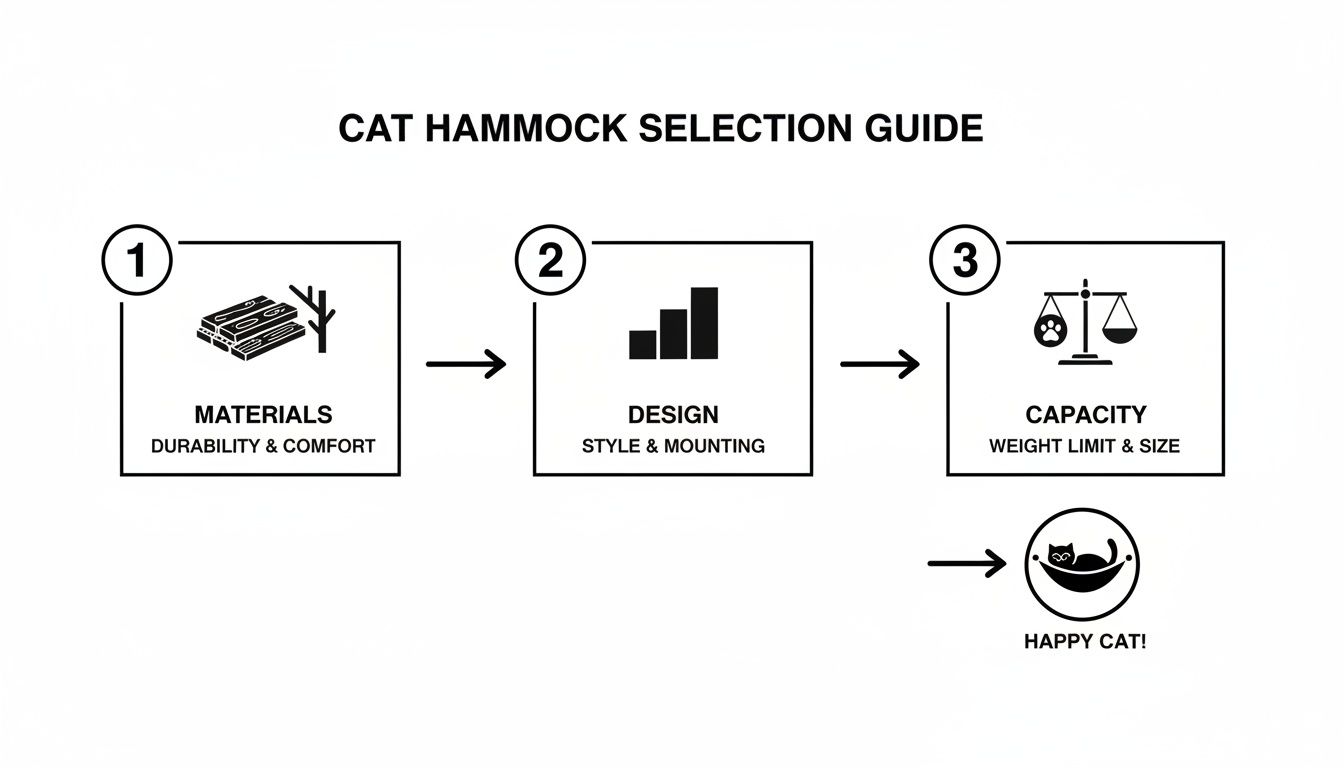
Breaking down your decision-making like this helps ensure you end up with something that's a perfect fit all around.
Part 3: The Final Safety Check
Once everything is up on the wall, there's one last crucial step: a thorough stability test. Do not let your cat anywhere near it until you are 100% confident it’s not going anywhere.
Press down firmly on every single shelf, step, and hammock. Give each piece a good wiggle to see if there's any movement or looseness where it's mounted. If you feel any give at all, go back and tighten the hardware. You're trying to mimic the force of a cat launching itself, so don't be shy. If you have a bigger kitty, you might want to look into a cat hammock for large cats to make sure the one you chose can handle the extra weight.
And for the handy folks who love a good DIY project, this guide on how to make cat wall shelves has some great tips on building and mounting your own custom setup. With a little careful planning and a serious focus on safety, your new cat hammock wall will become your cat's favorite spot in the house.
Integrating a Cat Wall into Your Home Decor
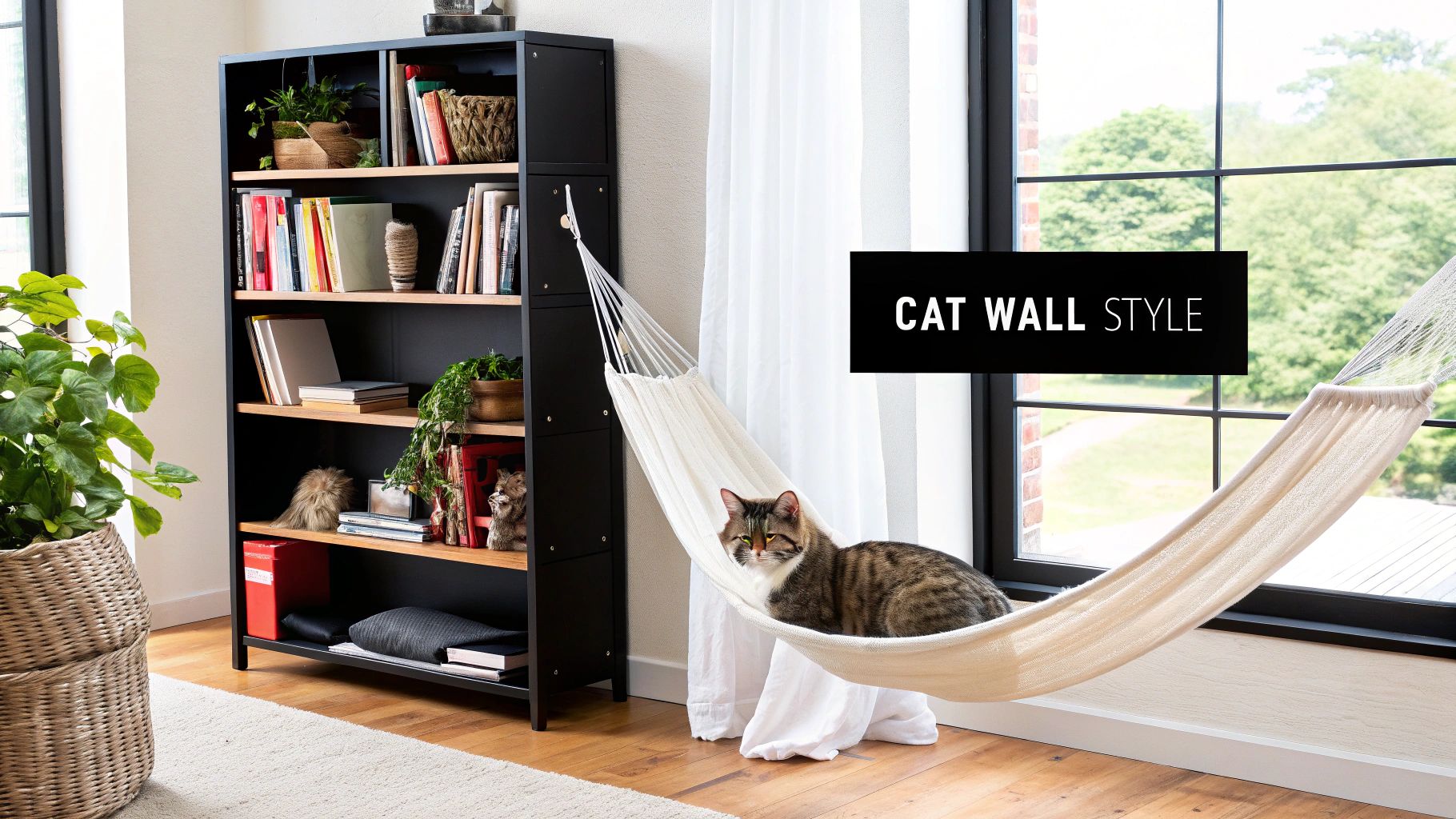
A cat hammock wall can be so much more than just a place for your cat to nap. With a bit of creative thinking, it can become a stunning design feature that really pulls a room together. The trick is to see it not as a pet accessory, but as a piece of interactive art that complements your home's unique style.
Instead of just sticking it on a wall, think of it as an extension of your existing decor. When you get it right, the cat furniture feels like it was always meant to be there, making the room look better and giving your cat an amazing space of their own.
Creating a Feline Superhighway
One of my favorite ways to integrate cat furniture is by creating what I call a "cat superhighway." This is all about designing a continuous path of shelves, steps, and hammocks that flows across an entire wall. It's a real showstopper.
This setup does more than just give your cat the ultimate playground; it creates a dynamic focal point in the room. A well-designed superhighway naturally draws your eye along the path, adding a sense of movement and life to an otherwise flat wall.
- Flow and Logic: You want to arrange the pieces so your cat has a clear, intuitive route to climb. I always suggest starting low—maybe next to a sturdy bookcase—and letting the path wind its way up to the best seat in the house.
- Vary the Elements: Don't just use one type of shelf. Mix in small steps, wider platforms for lounging, and a few cozy hammocks. This keeps things visually interesting and offers different kinds of challenges and comforts for your cat.
- Prime Locations: Every good road trip needs a destination. Make sure your highway ends somewhere amazing, like a cat hammock wall positioned in a sunny spot by a window. Bird-watching from a comfy perch? That's the jackpot.
Seamlessly Blending with Existing Furniture
If a full-blown superhighway isn't your style, you can take a more subtle approach by blending the cat furniture with pieces you already own. This makes everything feel like it belongs together, creating a much more cohesive look.
For example, imagine a few climbing shelves that seem to grow right out of the side of a bookshelf, leading up to a hammock tucked neatly above it. By matching the wood stain or color, you create a thoughtful, unified design. If you're looking for inspiration, you can explore a wide variety of pet beds and mats to find styles and materials that will complement your furniture.
Think of your cat furniture as floating shelves that just happen to be cat-friendly. When you coordinate the finish and placement with your existing decor, you end up with a sophisticated look that’s both stylish for you and enriching for your pet.
Maximizing Small Spaces with Vertical Design
For those of us living in smaller apartments or homes, a cat hammock wall is a total game-changer. It's a designer's secret weapon for making a room feel bigger. By drawing the eye upward, you create an illusion of height and openness.
Going vertical means you get to reclaim all that precious floor space a bulky cat tree would normally gobble up. This is a huge win, especially if you love minimalist or modern design where clear floors and clean lines are everything.
To keep things feeling light and airy, opt for sleek, low-profile designs in light-colored woods or neutral fabrics. A thoughtfully placed cat wall can transform a tight, awkward corner into a beautiful feature, adding tons of personality without any of the clutter.
Of course. Here is the rewritten section, designed to sound natural and human-written, as if from an experienced expert.
Keeping Your Cat's Hammock Safe and Sound for the Long Haul
You've invested in a fantastic piece of cat furniture—think of it as their own personal penthouse suite. And just like any good piece of furniture, a little bit of regular upkeep on your cat hammock wall will keep it safe, sturdy, and looking sharp for years to come.
This isn't just about preserving the materials; it's about protecting your cat. A wobbly bracket or a bit of frayed fabric can quickly turn their favorite nap spot into a hazard. Thankfully, all it takes is a simple routine to make sure their high-rise sanctuary stays secure.
How to Keep the Hammock Fresh and Clean
The fabric sling is where all the action happens, so it's naturally going to collect a fair share of fur, dander, and whatever else your cat brings along. Keeping it clean is easy and makes a big difference. Most well-designed hammocks come with a removable sling for this exact reason.
A few times a week, a quick once-over with a lint roller or the upholstery brush on your vacuum will handle most of the daily fluff. For a deeper clean, here's what to do:
- Check the Tag First: Before you do anything, look for the manufacturer's care label. Different fabrics need different handling.
- Machine Washing: If it's a typical canvas or cotton sling, you can usually toss it in the wash on a gentle cycle with cold water. Just be sure to use a mild, pet-safe detergent.
- Spot Cleaning: For little spills or muddy paw prints, you can often get by with just a damp cloth and a touch of soap. No need for a full wash every time.
- Air Dry Only: This is a big one. Always let the sling air-dry. Popping it in the dryer is a surefire way to shrink it and damage the fibers.
A clean hammock isn't just for looks. It's about creating a healthier space for everyone by cutting down on the allergens and dander floating around your home.
The 5-Minute Monthly Safety Check
With all the leaping and lounging your cat will be doing, it's normal for hardware to loosen a tiny bit over time. That's why a quick safety inspection is a must. I recommend doing this once a month—it seriously only takes a few minutes.
Your Monthly Safety Checklist:
- The Wiggle Test: Give each bracket and shelf a firm push and pull. You want to feel zero movement or give. If anything budges, it's time to grab a screwdriver.
- Check the Hardware: Take a close look at all the screws and bolts. Go through and make sure every single one is snug against the wall. You don't need to crank down on them, just ensure they're not loose.
- Inspect the Fabric: Look over the hammock sling itself, paying special attention to the seams and where it attaches to the frame. Check for any fraying, thinning spots, or stretched-out areas.
Making this a quick monthly habit helps you spot small issues before they become big problems. This simple routine is all it takes to keep your cat hammock wall a stable, dependable spot for countless hours of climbing, snoozing, and just being a cat.
Your Top Questions About Cat Hammock Walls, Answered
Even with all the planning in the world, it's totally normal to have a few last-minute questions before you start drilling into your walls. Let's walk through some of the most common ones I hear from cat owners, so you can feel confident and ready to build that amazing vertical playground for your furry friend.
Are These Hammocks Safe to Install on Drywall?
This is probably the most important question, and I'll give it to you straight: no, not really. You might see some kits that include basic drywall anchors, but you should never, ever trust them to hold a cat hammock wall. Just picture your cat taking a flying leap onto that perch—that’s a lot of dynamic force, way more than a simple piece of drywall can handle.
To get a secure, wobble-free installation that you and your cat can trust, you absolutely have to mount the brackets into the wooden studs behind your drywall. This is the only way to ensure the structure can safely support your cat's weight as they climb, jump, and nap. A stud finder is a cheap and non-negotiable tool for this job.
How Can I Get My Cat to Actually Use the New Hammock?
Patience and a little bit of positive bribery are your best tools here. A big new structure can seem scary at first, so whatever you do, don't just plop your cat onto the hammock and hope for the best. You need to make it their idea.
Here are a few tricks that usually work:
- Let them investigate first: Before you even pick up a drill, lay the hammock and shelf pieces out on the floor. Let your cat give everything a good sniff and inspection.
- Make it smell like home: Place one of their favorite blankets or even an old t-shirt of yours in the hammock. Familiar scents are incredibly comforting.
- Break out the good stuff: Leave a trail of high-value treats or a little sprinkle of catnip on the shelves leading up to the hammock.
- Turn it into a game: Grab their favorite wand toy and lead them on a "chase" up the climbing path. Making the journey fun is half the battle.
Some cats will be up there exploring in minutes. More timid kitties might take a few days to work up the courage.
The secret is to make the cat wall the source of all good things—treats, playtime, and a perfect napping spot. Once they make that connection, it'll become their go-to hangout.
What’s the Average Weight Limit for a Cat Hammock?
This really depends on the specific product, so it’s crucial to always check the manufacturer's specifications. A typical single-cat perch is often rated for around 20-30 pounds. More heavy-duty systems, built for multiple cats or larger breeds, can sometimes hold 50 pounds or more.
But remember, that number on the box is only half the equation. The real weight limit of your setup hinges entirely on how well you've installed it into the wall studs. If you have a gentle giant like a Maine Coon, or a pair of cats who love to pile in together, you need to go for a high-capacity model and be extra certain that every single mounting point is rock-solid.
Can I Put One of These Up in My Rental Apartment?
In most situations, yes! A cat hammock wall is a fantastic way for renters to give their cats more territory without taking up precious floor space. The key, though, is to get permission first. Check your lease agreement and have a quick chat with your landlord before you bring out the power tools.
Putting one up will mean drilling holes, but most landlords are reasonable about it, especially if you agree to patch them up properly when you move out. Filling a few small screw holes is an easy fix, making this a great, low-impact way to enrich your cat's life without risking your security deposit.
Ready to turn that empty wall into a feline paradise? Check out the stylish and sturdy collection over at Ur Pet Store. Find the perfect cat hammock wall for your home today!