


Blog
Choosing Dog Beds Large Dog Owners Trust


When you’re picking out a dog bed for a large dog, you’re doing more than just buying them a comfy spot to nap. It’s a real investment in their health and mobility for years to come. A good bed provides the right support for their big frames, and that directly impacts how good they feel every single day.
Why the Right Bed Is So Important for Your Large Dog
It’s easy to get lost in the sea of dog bed options out there. You might even wonder if your big dog really needs something special beyond a standard fluffy pillow. The answer is a resounding yes, and it all comes down to their unique physiology.
A large dog’s body is under a lot of stress. Their weight puts constant pressure on their joints, especially their hips and elbows. Day after day, that strain adds up and can lead to serious health problems down the road, which is why a supportive surface for rest is non-negotiable.
Think of Them as an Athlete
Here’s a way to think about it: asking your Great Dane to sleep on a flimsy, unsupportive bed is like telling a professional football player to recover on a cheap, saggy cot. It just doesn’t work. An athlete needs the right gear to stay in peak condition, and your large dog needs a bed that can properly support their heavy frame so their body can fully relax and repair during sleep.
Without that proper support, you open the door to a whole host of problems:
- Joint Pain: A bed with poor cushioning won’t relieve pressure points, which leads to stiffness and discomfort.
- Bad Sleep: If your dog can’t get comfortable, they’ll toss and turn all night. That means a tired, grumpy pup the next day.
- Worsening Health Issues: For breeds prone to conditions like hip dysplasia or arthritis, a bad bed can make their symptoms much, much worse.
It’s a Piece of Health Equipment, Not a Luxury
At the end of the day, a well-made dog bed for a large dog isn’t just a fluffy accessory—it’s a vital piece of health equipment. It has a direct line to their mobility, their mood, and their overall quality of life. As more owners have caught on to this, the demand for specialized beds has shot up. Orthopedic beds, especially those with memory foam, are now a huge part of the market as people look for ways to ease the arthritis and hip dysplasia so common in big breeds. You can even discover more insights on the dog bed market to see just how much trends are shifting toward health-first products.
Investing in a high-quality, supportive bed is one of the most important things you can do for your companion’s long-term health. It gives them a safe, comfortable space that encourages healing, reduces pain, and guarantees they get the restorative sleep they need to thrive.
How to Measure Your Dog for the Perfect Bed
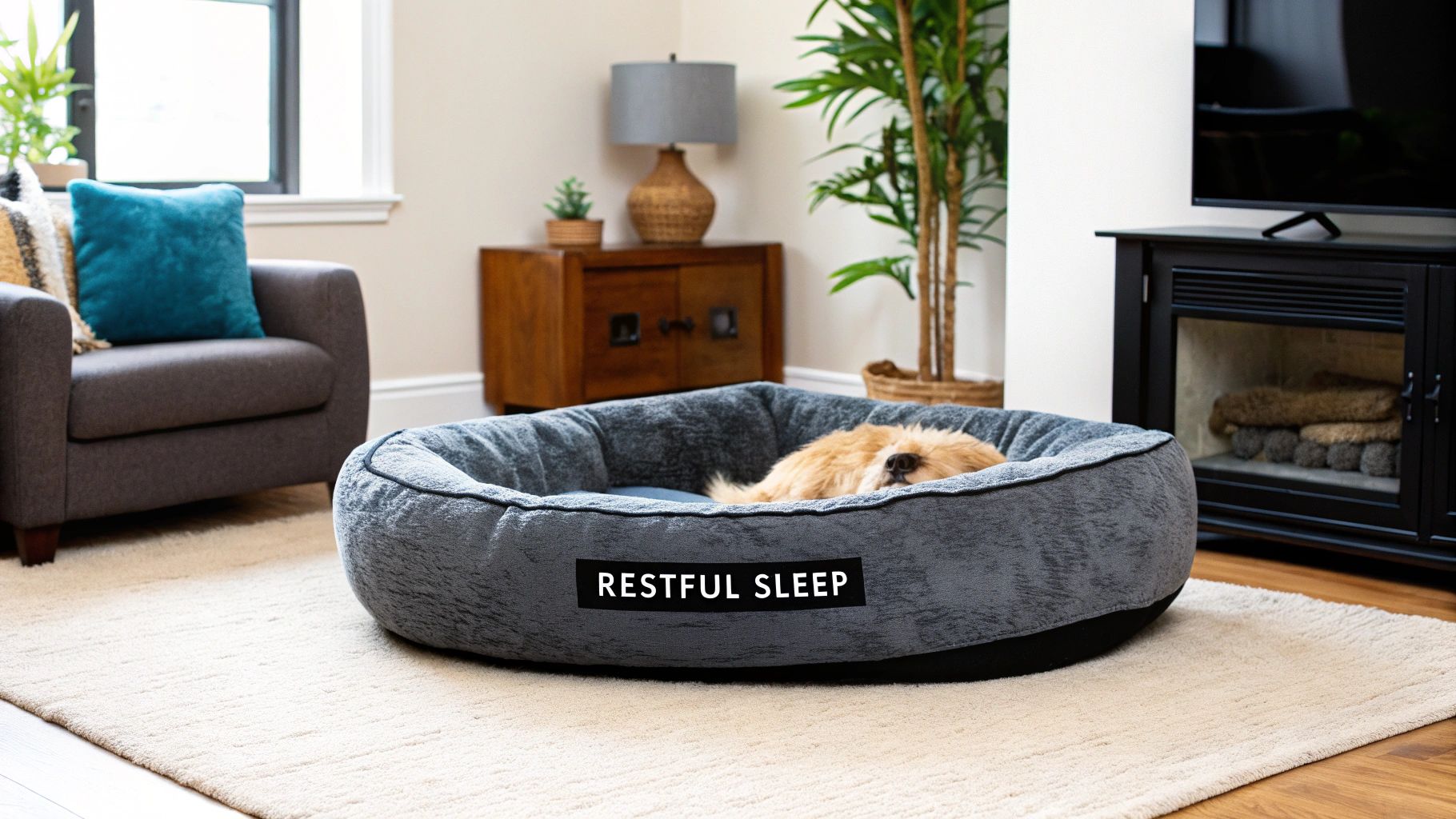
Buying a bed that’s too small is probably the most common mistake I see dog owners make. It’s easy to just eyeball it in the store, but that often leads to a bed that leaves your poor pup hanging off the edges, which completely defeats the purpose of providing full-body support. Let’s ditch the guesswork and use a simple, surefire method to get the perfect fit.
The real trick is to measure your dog while they’re in their natural sleeping position. This ensures the bed you buy will actually accommodate how they like to rest, not just how big they are when they’re standing up. A relaxed, snoozing dog is your best bet for getting an accurate measurement.
The Sprawler vs. The Curler
First, you need to be a bit of a sleep detective. How does your dog usually sleep?
Do they stretch out completely, limbs flying in every direction like they’re making a snow angel? That’s a sprawler.
Or do they tuck themselves into a tight, cozy little ball? That’s your classic curler.
- For Sprawlers: Catch them when they’re fully stretched out in their favorite sprawling pose. Grab a soft measuring tape and measure from the tip of their nose straight back to the base of their tail. This number is the absolute minimum length they’ll need.
- For Curlers: Even dogs who love to curl up need room to stretch out sometimes. You should still measure them in their stretched-out position. A round or bolstered bed might seem perfect, but you have to make sure the internal sleeping surface is still big enough for them to fully extend their legs when they feel like it.
The Simple Formula for a Perfect Fit
Once you have that nose-to-tail measurement, you can use a straightforward rule of thumb to find the ideal bed size.
Your Dog’s Measurement + 8 to 12 inches = Perfect Bed Length
This extra buffer is crucial. It gives your dog plenty of room to shift around, stretch, and get comfortable without a paw or their head falling off the side. Adding at least 8 inches provides enough space for them to rest comfortably, preventing unnecessary strain on their joints. If you have a truly giant breed, I’d lean closer to adding a full 12 inches just to be safe.
This simple bit of math transforms a wild guess into a concrete number you can shop with.
Finally, don’t forget about the bed’s depth. A thin, flimsy bed will just flatten like a pancake under a large dog’s weight, offering zero real support. You should be looking for a bed with a thick, supportive core—at least four inches deep if it’s high-density foam—to ensure it properly cushions their joints. When you’re shopping for dog beds for a large dog, depth is just as important as length and width for providing true, lasting comfort.
Decoding Bed Materials for Comfort and Durability
The outside of a large dog bed is what first grabs your attention, but what’s inside is what really counts for your dog’s comfort and long-term health. Think of it like choosing your own mattress. You wouldn’t just pick one based on the color of the sheets, right? The same logic applies here; the right filling and cover can make all the difference for your dog’s joints, sleep quality, and overall happiness.
Let’s dig into the materials that make up a great bed, so you can find the perfect match for your big companion.
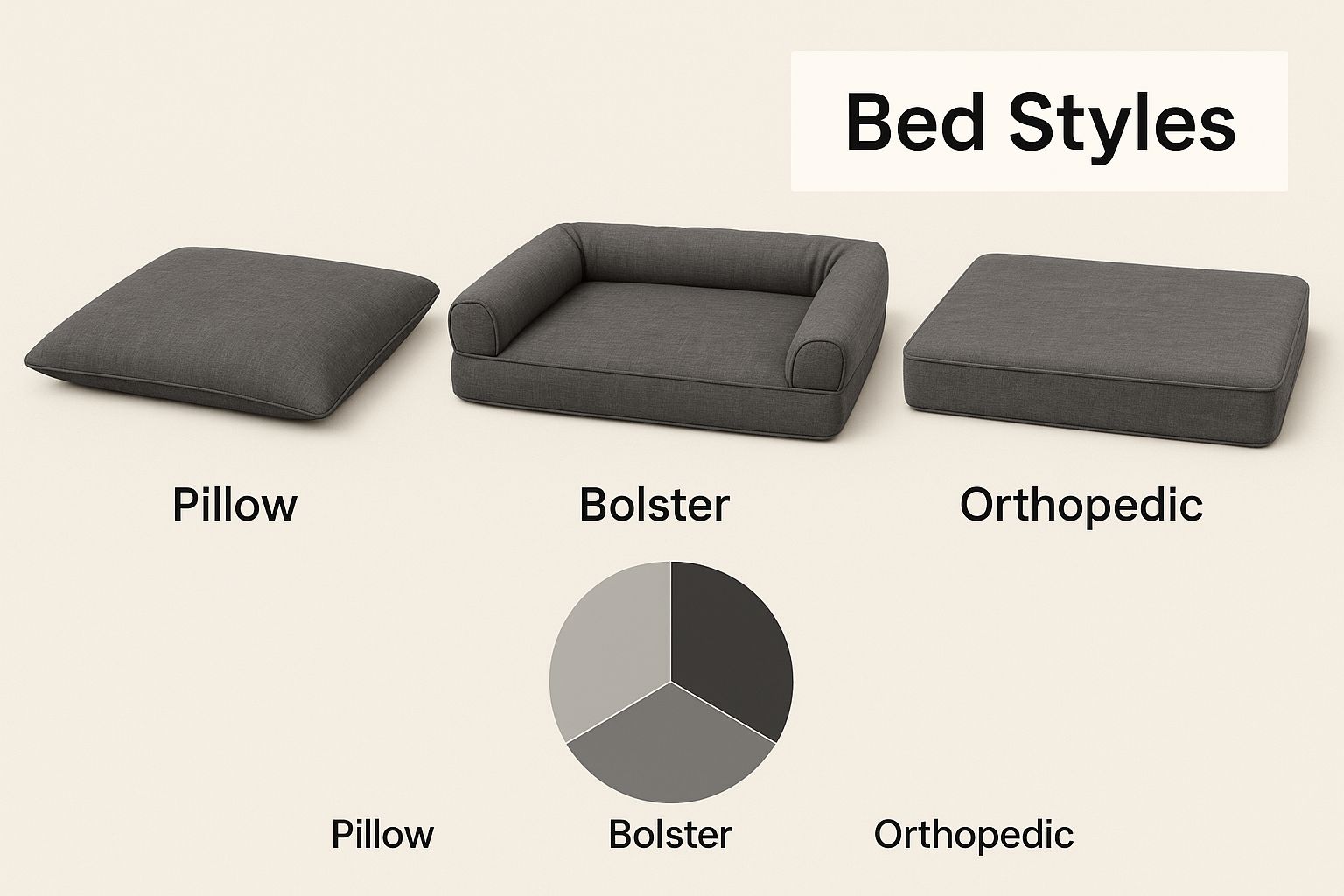
As you can see, different bed styles are built around specific materials to deliver unique benefits—from the firm support of an orthopedic slab to the cozy embrace of a bolstered nest.
The Core Fill: What’s Inside Matters Most
The heart of any large dog bed is its filling. This is what will support your dog’s weight, cushion their joints, and ultimately determine how long the bed lasts before it turns into a sad, lumpy pancake. The options run the gamut from basic stuffing to high-tech foams designed for therapeutic relief.
Choosing the right filling is the most important decision you’ll make. The table below breaks down the most common options to help you compare them at a glance.
Large Dog Bed Material Comparison
| Material Type | Best For | Key Benefit | Consideration |
|---|---|---|---|
| Orthopedic Foam | Senior dogs, dogs with arthritis, giant breeds | Provides firm, consistent support that alleviates joint pressure. | Can be stiff at first; a higher-cost option. |
| Memory Foam | Dogs of all ages who need pressure relief | Contours perfectly to the dog’s body for personalized comfort. | Tends to retain body heat, which some dogs dislike. |
| Cooling Gel Foam | Breeds prone to overheating (Huskies, Newfoundlands) | Actively pulls heat away from the body for a cooler sleep. | Typically more expensive than standard memory foam. |
| Polyester Fiberfill | Young, healthy dogs; as a temporary or budget option | Soft, plush, and very affordable. | Flattens quickly and offers minimal joint support. |
As you can see, what works for a spry young Labrador won’t be the best choice for a 12-year-old Great Dane with achy hips. Always prioritize support, especially for larger, heavier breeds whose joints are under constant strain.
Finding the Right Cover Fabric
The bed’s cover is its armor. It’s the first line of defense against muddy paws, shedding, sharp claws, and the occasional accident. You need something tough enough to handle daily wear and tear but still soft and inviting for your pup.
- Durable Canvas or Denim: These are workhorse fabrics. They stand up well to digging and scratching and are usually a breeze to spot-clean or toss in the wash.
- Soft Microfiber or Suede: If pure coziness is the goal, these plush materials are fantastic. They feel luxurious but are generally less resistant to heavy-duty nesting or chewing.
- Ballistic Nylon: Got a super chewer? This is your answer. It’s an incredibly tough, tear-resistant material designed to withstand even the most determined destroyers.
The right cover can do more than just protect the bed—it can also create a sense of safety. Anxious dogs often find comfort in soft, den-like spaces. If your dog gets nervous, take a look at our guide to the best dog beds for anxiety to see how certain fabrics and bed designs can create a calming sanctuary.
Picking the Right Bed Style for Your Dog
Once you’ve got a handle on materials, the next step is finding a style that clicks with your dog’s personality. A dog bed for a large dog isn’t just a cushion; it’s their personal space—their den, their sofa, their lookout spot. The best way to figure out what they need is to simply watch them. How do they sleep when they’re most relaxed? Their natural habits will tell you everything.
The shape of a bed makes a huge difference in how secure and comfortable your dog feels. Some dogs are all about that cozy, den-like security, while others want to stretch out and claim their space. When you match the bed style to their instincts, you’re doing more than just buying furniture. You’re creating their favorite spot in the house.
The Head-Rester: The Bolster Bed
Does your dog treat pillows, couch arms, or even your leg like a personal headrest? If that sounds familiar, a bolster bed is calling their name. These beds have raised, cushioned edges that act like a built-in sofa, giving them a supportive pillow on every side.
This style is a dream for dogs who love to lean or just feel a bit more enclosed. Those raised walls offer a gentle, reassuring hug, which can be incredibly calming. Plus, it provides great support for their neck and spine, making it an excellent choice for long, comfortable naps.
The Sprawler: The Pillow Bed
What about the dog who sleeps like they’re making a snow angel—limbs flung out in every direction? For them, a simple, flat pillow or mattress-style bed is the way to go. These beds give them all the surface area they need to sprawl out without any edges getting in the way.
It’s a classic for a reason. When you’re looking at a pillow bed, the most important thing is the core support. A thick, high-density foam mattress is key to making sure they don’t just sink straight to the floor, keeping their joints cushioned no matter how they stretch.
A well-chosen bed becomes more than just a place to sleep; it’s a sanctuary. It provides a predictable, safe space that belongs entirely to them, which is essential for a dog’s sense of well-being and security.
The Outdoor Lounger: The Elevated Cot
If your big dog is an outdoor enthusiast or just seems to run hot all the time, an elevated cot-style bed can be a total game-changer. These beds use a sturdy frame with a stretched mesh fabric that allows for 360-degree airflow. That’s how your dog stays cool and comfortable, even when the temperature rises.
They’re also tough as nails and a breeze to clean, which makes them perfect for the patio, deck, or even camping trips. By lifting your dog off hot, cold, or damp ground, the elevated design provides firm, even support.
This growing focus on pet health and comfort is driving some serious growth in the pet furniture world. The global market for pet beds is projected to jump from USD 5.4 billion in 2025 to USD 10.5 billion by 2035, as more owners look for ergonomic and orthopedic solutions. You can learn more about these market trends and see why premium options are becoming so popular. To find the perfect style for your own dog, you can explore our full collection of beds and mats.
Keeping Their Favorite Spot Fresh and Clean
A great dog bed for a large dog is more than just a piece of furniture—it’s an investment in your best friend’s comfort and well-being. And just like our own sheets, it needs regular cleaning to keep it fresh, make it last, and ensure a healthy spot for them to rest.
Think about it: your dog tracks in all sorts of dirt, dander, and oils every single day. Over time, their bed can become a hotspot for allergens and germs. A simple cleaning routine isn’t just about looks; it’s about protecting your dog’s skin and keeping your home smelling clean.
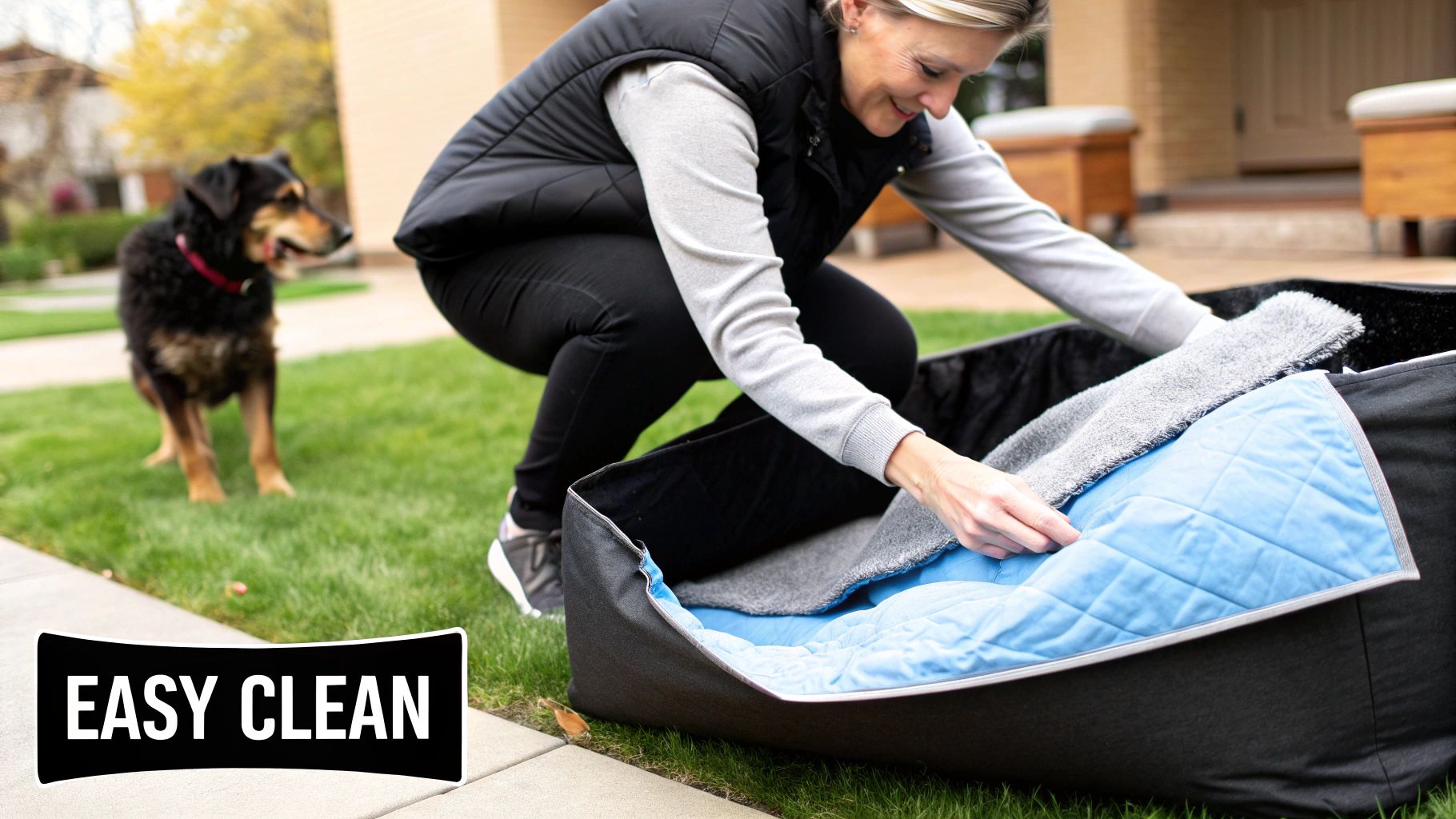
The secret to easy maintenance? A bed with a removable, machine-washable cover. Honestly, this is a non-negotiable for big dog owners. It turns what could be a huge hassle into just another load of laundry.
A Simple Weekly and Monthly Cleaning Plan
You don’t have to deep-clean the bed every single day. Breaking it down into small, consistent tasks is the way to go and stops dirt from getting ground into the fabric.
Here’s a practical schedule that works:
- Once a Week: Grab your vacuum and use the pet hair attachment to quickly go over the bed. This pulls up all the loose fur, dirt, and dander before it has a chance to settle in.
- Every 1-2 Weeks: Pop that cover off and throw it in the wash. Always check the tag for washing instructions, and it’s a good idea to use a pet-safe detergent without strong perfumes that might irritate your dog’s nose or skin.
- Once a Month: While the cover is washing, give the inner cushion or foam a quick once-over. If you see any spots, now’s the time to treat them. If the core smells a little stale, letting it air out in the sun for a few hours can work wonders.
A clean bed is a healthy bed. Regular washing does more than just get rid of that “doggy” smell—it washes away allergens like dust mites and pollen that can cause real skin and breathing problems for sensitive pups.
Dealing with Stubborn Stains and Smells
Let’s be real—accidents are going to happen. The key is to act fast. When a mess occurs, blot the area with a towel immediately. Whatever you do, don’t rub! Rubbing just pushes the stain deeper into the fabric.
Apply an enzyme cleaner made for pet messes, as it will actually break down the organic material causing the stain and odor.
If you’re dealing with a lingering smell, you can’t go wrong with a simple mix of equal parts white vinegar and water in a spray bottle. Give the inner cushion a light misting, let it sit for about 15 minutes, and then let it air dry completely. It’s a natural, effective way to neutralize odors without resorting to harsh chemicals.
Keeping your dog’s bed clean is a big part of their overall hygiene. For more ways to keep your furry friend looking and feeling great, check out our selection of grooming and cleaning supplies.
Common Questions About Large Dog Beds
Even with all this info, I find that dog owners usually have a few lingering questions right before they commit. It’s a big purchase! So let’s tackle those common concerns head-on and give you that last bit of confidence you need.
Think of this as your final checklist. We’ll cover everything from knowing when a bed is past its prime to the age-old problem of washing something that’s just too big for your machine.
How Often Should I Replace a Large Dog Bed?
There’s no magic expiration date, but a good rule of thumb is to give the bed a thorough inspection every six months. A really high-quality bed might last for years, but its true lifespan comes down to your dog’s size, sleeping habits, and, of course, their desire to chew.
Keep an eye out for these tell-tale signs that it’s time for a new one:
- Flattened Foam: If you press down on an orthopedic bed and the foam doesn’t spring back, it’s lost its supportive mojo. It’s not doing its job anymore.
- Lumps and Sags: An uneven surface is the enemy. It creates new pressure points instead of relieving them, leading to a stiff and uncomfortable pup.
- A Stubborn Smell: If a deep clean can’t get rid of a funky odor, it’s time to say goodbye.
- Torn Covers: Once the cover is ripped, the inner foam becomes a prime target for a dog who loves to shred.
Are Expensive Orthopedic Beds Really Worth It?
For large breeds? Absolutely. An orthopedic bed isn’t just a cushy luxury; it’s a smart investment in their long-term health. Breeds prone to issues like arthritis and hip dysplasia need all the joint support they can get, and a good bed is your first line of defense.
High-density orthopedic foam works by distributing their weight evenly, taking that constant, grinding pressure off their joints. The price tag might be higher upfront, but the payoff in your dog’s quality of life is immense, especially as they get older. It could even save you money on vet bills related to pain management down the road.
A great orthopedic bed is the difference between your dog waking up stiff and sore versus rested and ready for the day. It’s a therapeutic tool that works all night long.
What Is the Best Bed for a Dog That Chews?
This is the million-dollar question. Let’s be honest: no fabric bed is 100% indestructible if you have a truly determined chewer on your hands. But some are built so much tougher than others, making them a far better choice.
Your best bet is to hunt for beds made with ultra-durable materials. Look for covers made from ballistic nylon or heavy-duty canvas—these are worlds apart from the soft, plushy fabrics that tear so easily. Another fantastic option is an elevated, cot-style bed. The combination of a metal frame and taut fabric leaves no stuffing to pull out or floppy corners to gnaw on.
And a pro tip: always steer clear of beds with zippers, decorative piping, or big tags. To a chewer, those little details are just invitations to start tearing.
How Do I Clean a Bed That Won’t Fit in My Washer?
I see this problem all the time with dog beds for large dogs. The single most important feature to solve this is a removable cover. Seriously, without one, cleaning is a nightmare.
If the cover is just too big for your machine at home, a quick trip to the laundromat is your answer. Their industrial-sized washers can handle it no problem. For the inner foam core, you’ll want to spot-clean. An enzyme cleaner designed for pet stains works wonders here.
To freshen up the foam between washes, a 50/50 mix of white vinegar and water in a spray bottle is a fantastic natural deodorizer. Just give it a light mist and let it air dry completely—preferably in the sun, which is a great natural bacteria killer—before putting the clean cover back on.
At Ur Pet Store, we get it. Finding the right bed is about so much more than a soft place to land. It’s about protecting your dog’s health and happiness for years to come. Check out our hand-picked collection of beds built specifically for the needs of bigger breeds.