

Blog
The Ultimate Guide to pee pads for dogs reusable


If you’re a dog owner, you know the routine all too well. The constant cycle of buying, using, and tossing disposable pee pads feels like a never-ending chore. It’s not just the expense that adds up; it’s the mountain of trash bags, too. But what if there was a better way? A modern solution that’s easier on your wallet and the planet?
Enter the reusable dog pee pad.
The Smart Switch to Reusable Dog Pee Pads
Let’s get one thing straight: these aren’t just glorified towels. Think of a reusable pad as a piece of high-performance gear for your home. They’re intelligently engineered with multiple layers, each doing a specific job.
It starts with a soft, comfortable top layer that wicks moisture away from the surface almost instantly, so your pup isn’t standing in a puddle. Underneath lies a super-absorbent core that locks away liquid and odor. The final layer is a waterproof, non-slip backing that acts as a fortress for your floors, preventing any leaks from seeping through.
A Modern Solution for Every Dog Owner
This is about more than just being eco-friendly; it’s about simplifying your life. Reusable pads are a genuine game-changer in so many situations. They are an essential tool when you’re learning how to potty train a puppy, giving you a consistent and reliable spot for them to go.
But their usefulness doesn’t stop there. They are perfect for:
- Apartment Dwellers: When a quick trip outside isn’t an option, they provide a dependable indoor potty spot.
- Senior Dogs: They offer comfort and dignity for older dogs struggling with incontinence or mobility issues.
- Crate and Travel Liners: Keep your dog’s crate clean and protect your car seats from those “just in case” moments.
The demand for these products is exploding for a reason. In 2023, the global pet pad market was already valued at USD 1.13 billion and is expected to climb to USD 2.08 billion by 2031. As more owners look for smarter alternatives to the 4.6 billion disposable pads made annually, reusables are leading the charge. You can dig into these pet market trends on market.us.
By making a one-time investment in a few high-quality reusable pads, you’re stepping off the disposable treadmill. This means fewer trips to the store, less plastic in landfills, and more money in your wallet over the long run.
This guide is here to walk you through everything you need to know to make this smart switch.
How Reusable Pee Pads Keep Your Floors Dry
Ever looked at a reusable pee pad and wondered how it holds so much liquid without a single drop hitting your floor? It’s not magic, but it is a pretty clever bit of engineering. Think of it like a high-tech sandwich, where each layer has a very specific job to do.
This layered system is designed to pull liquid away from the surface and lock it deep inside, fast. Let’s break down exactly how this works, layer by layer, to see what makes these pads so reliable.
The Moisture-Wicking Top Layer
The first thing your dog touches is the soft top layer. This isn’t just there for comfort; its main role is to immediately pull moisture away from the surface. Usually made from materials like fleece or a specialized polyester, it acts like a one-way street for liquid.
This rapid wicking action is what keeps your dog from tracking wet paw prints all over the house. Just seconds after your pup goes, the surface already feels surprisingly dry to the touch, which also encourages them to use that same spot again.
This infographic really drives home the benefits of making the switch, connecting the pad’s smart design to real-world wins for your home, your wallet, and the planet.
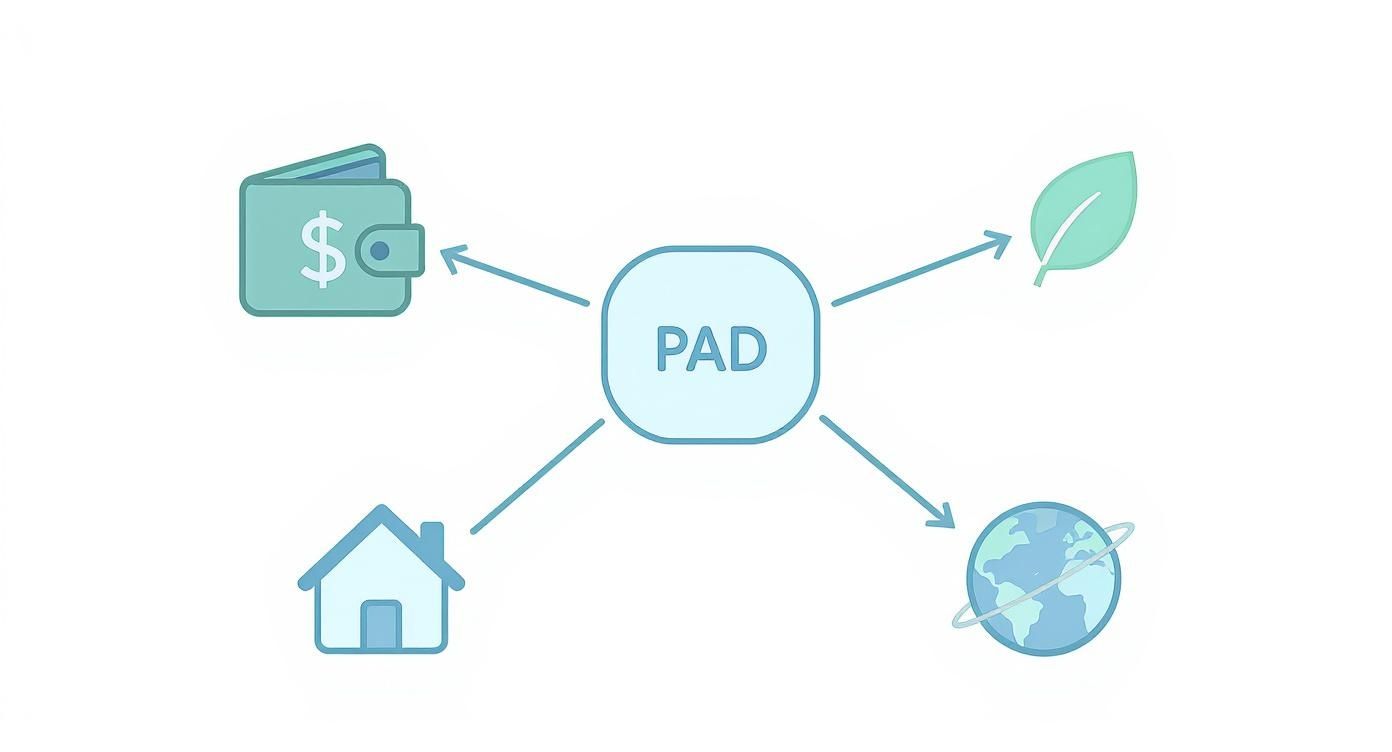
You can see how the way the pad is built directly leads to saving money, keeping the house cleaner, and reducing your environmental footprint.
The Super-Absorbent Core
Right below that quick-drying surface is the real workhorse: the absorbent core. This middle layer is usually made from super-absorbent fibers like a rayon or microfiber blend, specifically designed to soak up and hold a ton of liquid.
Think of it as a dense, thirsty sponge. Its job is to trap urine and lock it away, preventing it from pooling on top or seeping back through. The best pads also weave in materials to help neutralize odors, which goes a long way in keeping your home smelling fresh.
The core’s capacity is what really counts. A high-quality reusable pad can often hold several cups of liquid, making it a dependable choice for everything from tiny puppies to larger dogs or even for overnight use.
This high-capacity design means the pad can handle multiple visits before it needs a wash, giving you both convenience and peace of mind.
The Waterproof Non-Slip Backing
The final layer of defense is the waterproof backing, and it’s non-negotiable. This bottom layer is a totally impenetrable barrier, guaranteeing that absolutely no moisture ever reaches your floors. It’s typically made from a material called Polyurethane Laminate (PUL)—the same tough, leak-proof fabric you’d find in modern cloth diapers.
But stopping leaks is only half its job. This layer almost always features a non-slip grip, which is crucial for keeping the pad from sliding around on hardwood, tile, or laminate floors.
This grip prevents the pad from bunching up or getting pushed into a corner, which could easily cause an accident right next to it. The combination of a leak-proof barrier and a stable grip gives you the ultimate protection for your floors, making pee pads for dogs reusable a solution you can actually trust.
Choosing the Best Materials for Durability and Comfort
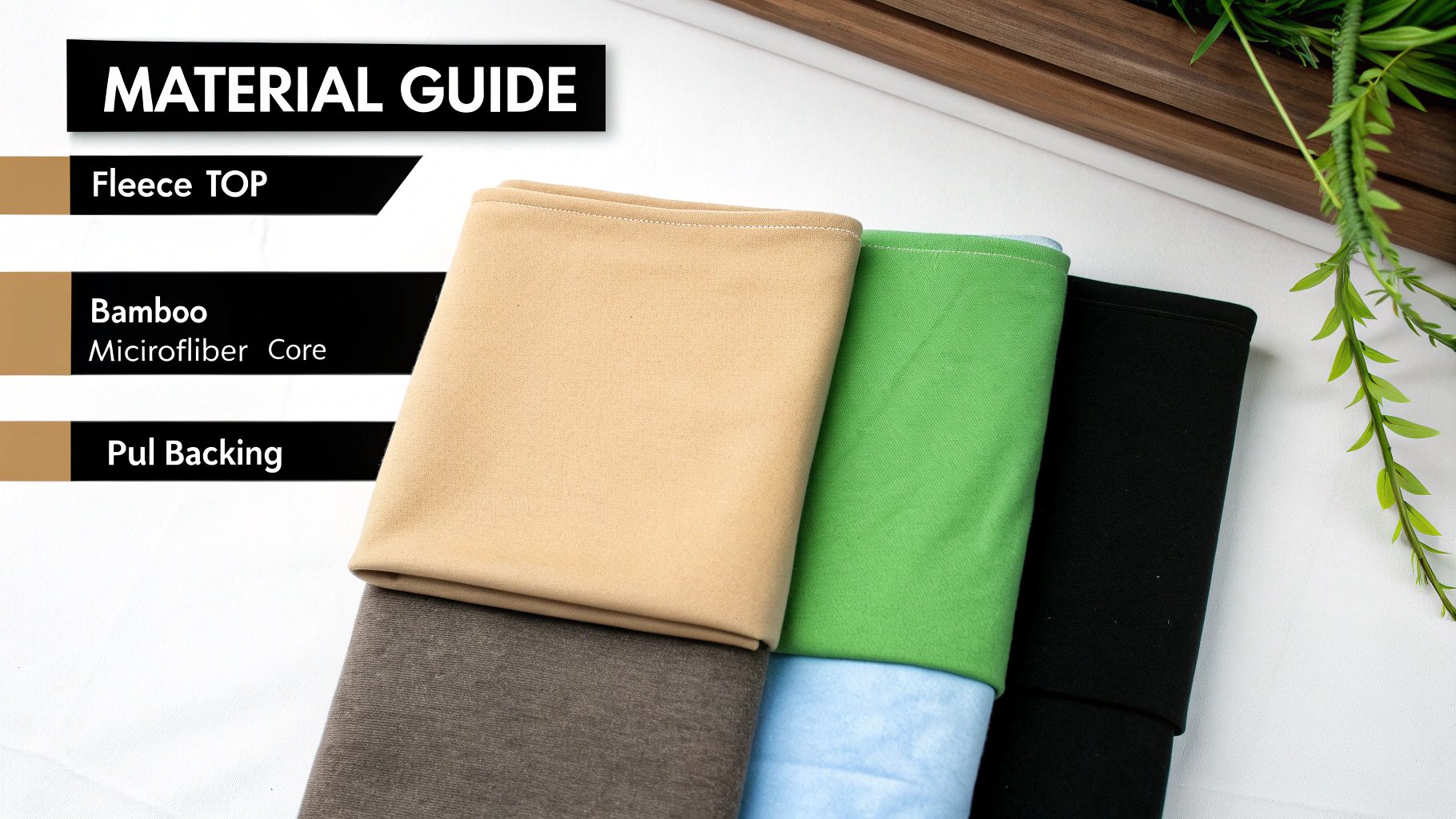
When you start shopping, you’ll quickly notice that not all pee pads for dogs reusable are created equal. The real secret to a pad’s success—or failure—is hidden in its layers. The materials used will make all the difference in absorbency, odor control, and how long it holds up to constant washing.
Let’s pull back the curtain and look at the fabrics that make up these pads. Once you know what to look for, you can pick one that’s both comfortable for your dog and tough enough for the job.
The Top Layer: What Your Dog Feels
This first layer is all about comfort and quick action. It needs to be soft on your dog’s paws while immediately wicking moisture away to prevent those dreaded wet paw prints across the floor. A good top layer should feel dry to the touch almost instantly.
Here’s what you’ll typically find:
- Fleece: Incredibly soft and inviting, fleece is a popular choice for a reason. It does a fantastic job of pulling liquid down into the core, and its cozy texture is a big plus for puppies or senior dogs.
- Quilted Cotton Blends: These have a classic, soft feel and are built to last. The quilted pattern isn’t just for looks—it helps prevent the inner absorbent layers from shifting and bunching up during washing, which adds years to the pad’s life.
Think of this layer as the welcome mat. If it’s not comfortable and effective, your dog won’t want to use it.
The Absorbent Core: The Hardest Working Layer
This is where the heavy lifting happens. The core’s only job is to soak up liquid and lock it away, fast. The material here dictates how much the pad can hold and how well it neutralizes odors.
You’ll usually find one of two main materials:
- Microfiber: This synthetic material is like a super-sponge. It’s famous for absorbing an incredible amount of liquid very quickly. The one thing to watch for is that it can sometimes trap odors if not washed thoroughly.
- Bamboo or Rayon Blends: These plant-based fibers, often mixed with cotton, are naturally super absorbent and have antimicrobial properties. This gives them an edge in fighting the bacteria that cause those nasty smells, keeping your home smelling fresher.
Your choice really comes down to what matters most. If you have a dog who lets it all go at once, microfiber’s rapid absorption is a game-changer. But if lingering odors are your biggest pet peeve, a bamboo-blend core is probably your best bet.
The Waterproof Backing: Your Floor’s Ultimate Guardian
The final layer is the one you can’t compromise on: the waterproof backing. This is the last line of defense protecting your floors from accidents. It has to be 100% leak-proof and tough enough to survive hundreds of washes without cracking or peeling.
The go-to material for this is Polyurethane Laminate (PUL). It’s the same high-tech, waterproof-yet-breathable fabric you find in modern cloth diapers and medical supplies. It stops leaks in their tracks while allowing a bit of air to circulate, which helps prevent mildew buildup.
Another critical feature is a non-slip grip. Look for pads with little silicone dots or a textured finish on the bottom. This is essential for keeping the pad from sliding around on tile, laminate, or hardwood floors, giving your dog a stable, secure spot to go.
Reusable Pee Pad Material Comparison
To make things even clearer, let’s break down how these common materials stack up against each other. Each one plays a specific role, and knowing their strengths and weaknesses can help you find the perfect pad for your home.
| Material | Primary Use (Layer) | Key Benefit | Potential Drawback |
|---|---|---|---|
| Fleece | Top | Ultra-soft, comfortable, and wicks moisture fast | Can pill or hold onto pet hair |
| Quilted Cotton Blends | Top | Durable, soft, and prevents internal bunching | May not wick moisture quite as fast as fleece |
| Microfiber | Absorbent Core | Extremely fast absorption, high capacity | Can retain odors if not washed properly |
| Bamboo/Rayon Blends | Absorbent Core | Naturally antimicrobial and odor-resistant | Can be slightly more expensive |
| Polyurethane (PUL) | Waterproof Backing | Completely waterproof, durable, and breathable | Low-quality versions can crack over time |
Ultimately, the best reusable pads combine these materials thoughtfully, creating a system where each layer does its job perfectly to keep your dog happy and your floors clean.
Reusable vs. Disposable: A Cost and Impact Breakdown
When you’re standing in the pet aisle, choosing between reusable and disposable pee pads feels like a simple decision. But it really boils down to two big things: your wallet and your environmental footprint. Disposables seem cheaper and easier at first glance, but once you start running the numbers and thinking long-term, a very different story starts to unfold.
This isn’t just about the price tag you see on the shelf. It’s about understanding the real cost of buying something over and over again versus making a smart, one-time investment.
The Financial Showdown
Let’s talk money, because for most of us, that’s where the rubber meets the road. Disposable pads are a recurring expense, and that cost sneaks up on you faster than you’d think.
Picture this: your small dog uses two or three disposable pads a day. A big pack of 100 pads might run you about $25. Before you know it, you’re spending $25 every month—that’s $300 a year on something you immediately throw away. For larger dogs or puppies still getting the hang of things, you could easily double or even triple that figure.
Now, let’s flip the script. A set of high-quality pee pads for dogs reusable might cost you between $40 and $60 upfront. Yes, the initial hit is bigger, but it’s a one-and-done purchase. These pads are built to last through hundreds of wash cycles, meaning that one set can serve you well for years.
The breakeven point? You’ll likely hit it in just two to three months. After that, every single day you use your washable pads, you’re actively saving money. Over your dog’s life, that adds up to hundreds, maybe even thousands, of dollars.
For a deeper dive into the numbers, check out our detailed guide comparing reusable and disposable dog pee pads.
The Environmental Toll
Beyond your bank account, there’s a much larger cost to consider: the impact on our planet. Disposable pee pads are, at their core, a single-use plastic product, and their journey from factory to landfill is a rough one for the environment.
Think about the sheer scale of it. Billions of disposable pads are made and tossed out globally every year. Each one has a plastic backing that can take centuries to decompose, piling up in our landfills and contributing to plastic pollution. Not to mention, making them consumes a ton of resources like water and energy.
This is where reusable pads offer a genuinely sustainable alternative. By choosing a product you can wash and use again and again, you’re stepping out of that wasteful cycle. A single reusable pad can easily replace 300 or more disposable ones during its lifespan.
Making that one simple switch makes a huge difference in your household’s plastic waste and lowers your carbon footprint. It’s a conscious choice for a product that takes care of your pet without trashing the planet.
Performance and Convenience Compared
Of course, cost and eco-friendliness don’t matter if the pad doesn’t actually work. So, how do these two options really stack up in day-to-day use?
- Absorbency: You might be surprised to learn that top-tier reusable pads often absorb better than disposables. Their multi-layer construction can hold a lot more liquid, which means fewer leaks and messes.
- Durability: Disposables are flimsy by design. A playful puppy can shred one in seconds, creating a huge mess and a potential safety hazard. Reusable pads are made from tough fabrics that can handle digging, chewing, and daily life.
- Odor Control: Many disposables use powders like baking soda for odor, but reusable pads with antimicrobial or bamboo fibers often do a better job by tackling odor-causing bacteria right at the source.
- Stay-in-Place Design: Ever seen a disposable pad bunched up in a corner? The non-slip backing on most reusable pads keeps them flat and secure on tile or hardwood floors, preventing that annoying sliding and shifting.
This shift in thinking is showing up in the market, too. The pet pee pad industry was valued at an estimated USD 366.75 million in 2023 and is on track to more than double by 2033. While disposables still sell in massive numbers, the real growth is happening with reusable options as pet owners look for smarter, more sustainable products. You can read more about these trends on factmr.com.
When you weigh all the factors, the choice becomes pretty clear. Reusable pads deliver better performance, save you a significant amount of money in the long run, and are a whole lot kinder to the environment.
Your Guide to Cleaning and Maintaining Reusable Pads
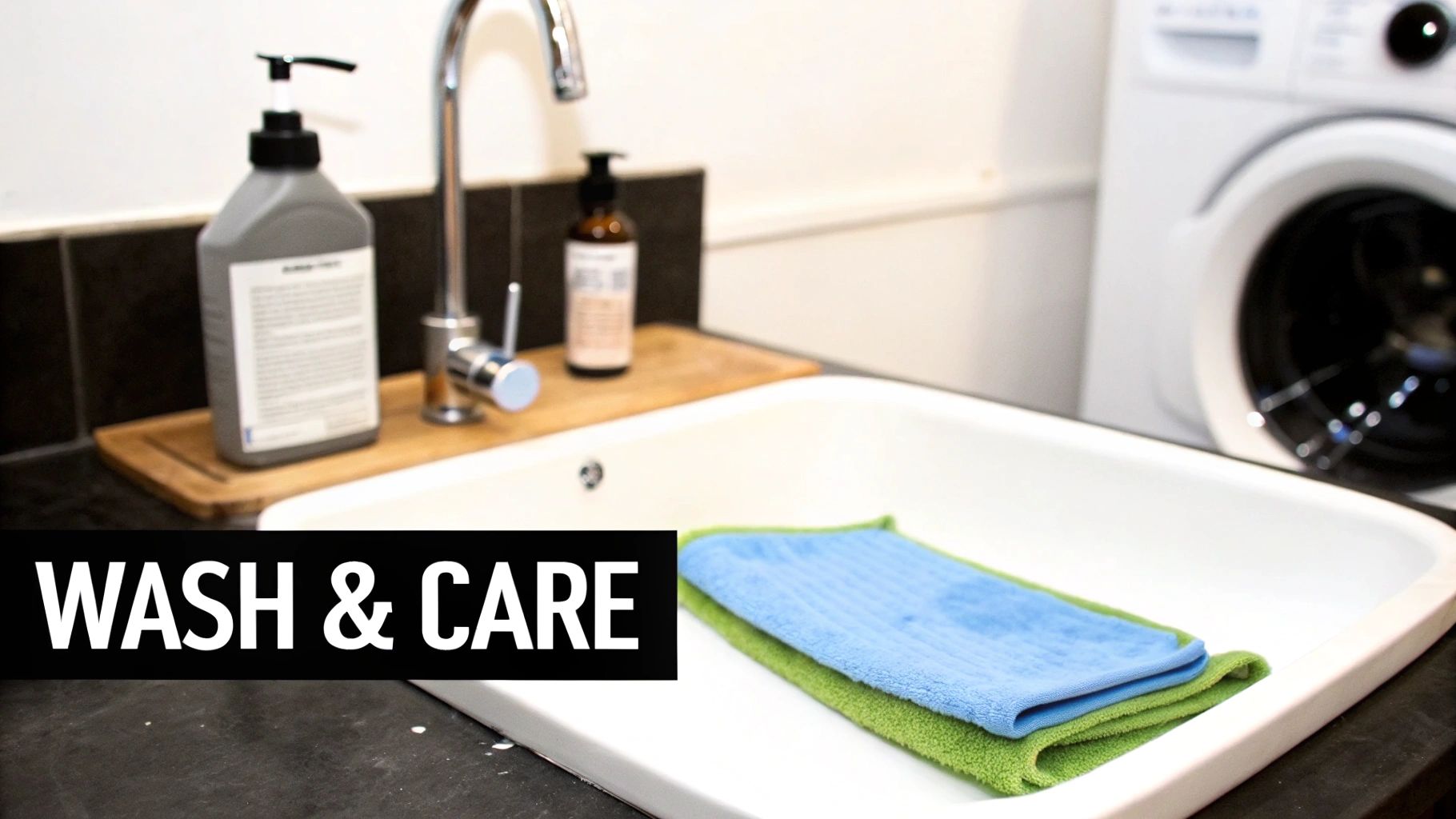
Let’s be honest, the thought of washing something your dog peed on can seem a bit daunting at first. But I promise, keeping pee pads for dogs reusable is surprisingly simple. With a good, consistent routine, you can keep them fresh, sanitary, and working like new for years.
You can forget about complicated scrubbing or special treatments. The whole process is designed to be as easy as tossing in a load of laundry. Just follow a few key steps, and you’ll keep your pads super absorbent and completely odor-free, wash after wash.
The Foolproof Laundry Routine
Think of this as your go-to playbook for getting those pads perfectly clean every single time. Sticking to this routine does more than just clean—it protects the high-tech fabric layers and gets the most out of your investment.
Step 1: The Pre-Rinse (Optional but Recommended)
Before it goes into the machine, giving the pad a quick rinse can be a big help. I usually use a utility sink or an outdoor hose just to wash away any excess urine. It’s not a must-do every time, but it definitely eases the load on your washing machine, especially for those heavily used pads.
Step 2: The Main Wash Cycle
Pop the pad into your washing machine. You can wash it on its own or with other pet-friendly items like old towels or their blankets.
- Water Temperature: Always opt for warm or hot water. That heat is your secret weapon for killing bacteria and breaking down the stubborn uric acid crystals that cause that distinct ammonia smell.
- Detergent: Stick with a quality, pet-safe liquid detergent. I’d steer clear of powdered detergents; they can sometimes leave a residue that clogs up the pad’s absorbent fibers over time, making it less effective.
- Extra Rinse: If your machine has an extra rinse cycle, use it. This makes sure every last bit of detergent is washed away, which is absolutely critical for maintaining maximum absorbency.
Crucial Tip: Whatever you do, never use fabric softener or dryer sheets. These products coat fabrics in a waxy film that will completely ruin the pad’s absorbency and waterproof backing. It’s the number one mistake people make, and it can permanently damage your reusable pads.
By getting these simple settings right, you’ll sanitize your pads perfectly without harming their special construction.
Drying Your Pads Correctly
How you dry your pads is just as important as how you wash them. You’ve got two great, safe options.
- Tumble Dry on Low Heat: The quickest method is to toss the pad in the dryer on a low or medium heat setting. High heat is the enemy here—it can damage the waterproof PUL backing, causing it to crack or peel over time.
- Air Dry: For the gentlest touch, just hang the pad up to air dry. This uses zero energy and completely removes any risk of heat damage, making it the absolute best way to extend the life of your pad.
Tackling Odors and Buildup
Even with a perfect washing routine, you might occasionally notice a faint ammonia smell, especially if a used pad has been sitting for a bit. This is almost always caused by a buildup of detergent or minerals from hard water, which can trap odor-causing bacteria.
Luckily, the fix is easy. About once a month, just add one cup of distilled white vinegar to the wash cycle. Vinegar is a fantastic natural deodorizer that cuts right through any residue, restoring the pad’s absorbency and leaving it smelling fresh.
For really tough stains or odors, an enzymatic cleaner is your best friend. These cleaners use special enzymes to break down the organic proteins in urine, completely eliminating the source of the smell instead of just covering it up. For more great tips on keeping your pet’s environment clean, check out our full line of grooming and cleaning supplies.
Finding the Perfect Size and Placement Strategy
Choosing the right reusable pee pad isn’t just about the fabric—it’s about getting the size and location spot-on. I’ve seen it time and time again: the perfect pad in the wrong spot just leads to frustrating misses and more cleanup. Think of it like real estate for your dog—location and square footage are everything.
A classic mistake is buying a pad that just barely fits the dog. Dogs rarely just stand still; they circle, sniff, and shift around before they go. If their paws are on the pad but their rear end isn’t, you’ll be cleaning up a mess right on the edge.
As a rule of thumb, I always recommend choosing a pad that’s at least 50% larger than your dog. That extra buffer zone gives them plenty of room to get comfortable, which dramatically increases your chances of success.
For tiny breeds like Chihuahuas or Yorkies, a small pad might seem like enough, but trust me, upgrading to a medium size can make all the difference. If you have a larger dog or a few small ones sharing a space, don’t hesitate to go big with an extra-large option or even a versatile reusable dog pee pad blanket that can cover a serious amount of floor.
Strategic Placement for Every Situation
Once you’ve got the right size, figuring out where to put it is the next crucial step. The best spot really depends on your dog’s daily routine and your specific goals. You want it to be convenient for them and logical for whatever you’re trying to achieve.
Here are a few proven placement strategies that I’ve seen work in countless homes:
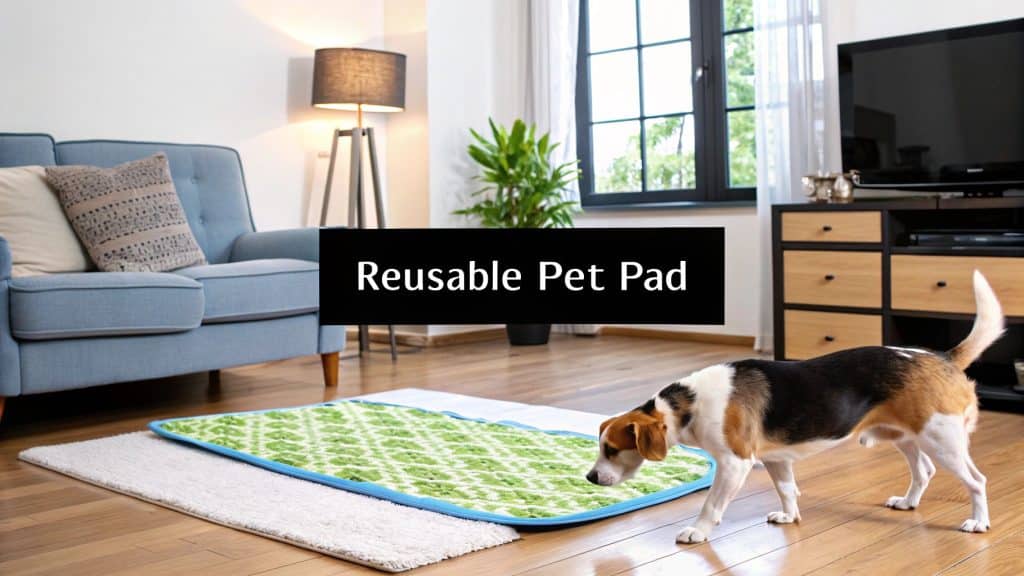
- Puppy Training: Put the pad right near the door you use for potty breaks. This little trick helps your puppy connect that door with the need to go outside, making the eventual transition to outdoor-only potty training so much smoother.
- Apartment Living: Find a quiet, low-traffic corner. Just like us, dogs often appreciate a little privacy. A spot in a laundry room or a designated corner of the living room creates a consistent, comfortable spot they know they can always use.
- Senior Dogs: Accessibility is everything for older dogs dealing with mobility issues or incontinence. Placing a pad near their favorite bed or in the room where they spend most of their time minimizes the distance they have to travel when nature calls.
Making the Switch from Disposables
If your dog is already a pro at using disposable pads, moving them to a reusable one is usually a pretty simple process. The secret is to make the new pad feel familiar.
Start by placing the new reusable pad directly under their old disposable one for a day or two. This lets your dog get used to the new pad being in their spot. After they’ve used it successfully a couple of times, you can remove the disposable pad for good. Their scent will already be on the new pad, which is a powerful signal that this is the new official place to go.
A little consistency and positive reinforcement during this short transition period will make for a seamless switch.
Common Questions About Reusable Pee Pads
Even with all the benefits laid out, it’s totally normal to have a few questions before you dive into the world of reusable pee pads. Let’s be honest, moving away from the simple “toss-and-go” routine of disposables is a bit of a mental shift.
So, let’s clear the air and tackle some of the most common worries people have. These are all valid points, but the great news is that a well-made reusable pad is designed to solve these exact problems.
Will My House Smell Bad?
This is probably the biggest question on everyone’s mind, and for a good reason. But the short answer is no, your house won’t smell—as long as you have a solid cleaning routine.
Unlike a disposable pad that just sits in the trash can, slowly stinking up the room, a reusable pad gets washed. This simple act removes the source of the smell completely. The trick is to wash them in hot water with a quality detergent. Every so often, adding a vinegar rinse can work wonders to break down the uric acid that causes that sharp ammonia smell.
Think of it like washing gym clothes instead of letting them fester in a hamper. A proper wash cycle neutralizes odors completely, something a disposable pad sitting in the garbage simply can’t do.
Are Reusable Pads Actually Sanitary?
Absolutely. Washing a pee pad in hot water—ideally over 140°F (60°C)—is more than enough to kill bacteria and sanitize the material. It’s the same principle hospitals use for their linens or that parents use for cloth diapers.
For dogs with health issues, this level of cleanliness is a game-changer. A dog with kidney problems, for instance, may need to urinate more often, and having a consistently sanitary spot is crucial for their well-being. Getting a better grasp on issues like understanding renal failure in dogs really drives home why a reliable indoor potty solution is so vital.
How Many Reusable Pads Do I Need?
My go-to recommendation is to have at least three to four pads on hand for each dog. This sets you up for a seamless rotation system where you’re never caught without a clean option.
Here’s how it works:
- One pad is in use on the floor.
- One pad is in the wash getting clean.
- One or two clean pads are ready to go in the closet.
This simple system takes all the pressure off. The moment one pad is soiled, you can grab a fresh one, lay it down, and toss the dirty one into the laundry pile without missing a beat. It’s a small setup that makes the whole process feel effortless and keeps your floors protected 24/7.
Ready to make the switch to a smarter, more sustainable solution? Explore the premium collection of durable and ultra-absorbent reusable pee pads at Ur Pet Store and discover how easy it is to keep your home clean and your dog happy. Visit https://urpetstore.com to find the perfect pad for your furry friend today