

Blog
A Guide to Reusable Pee Pads for Dogs


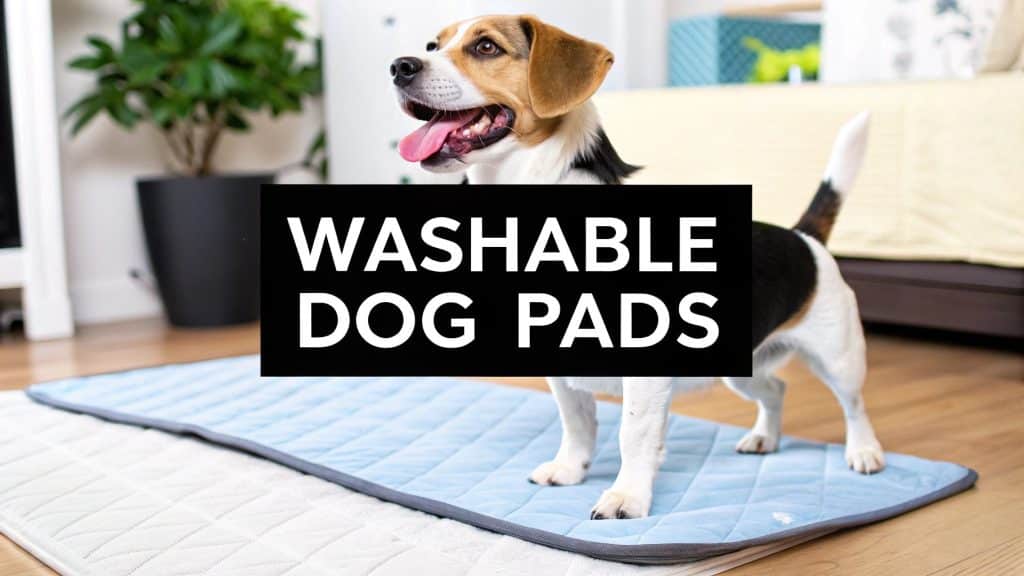
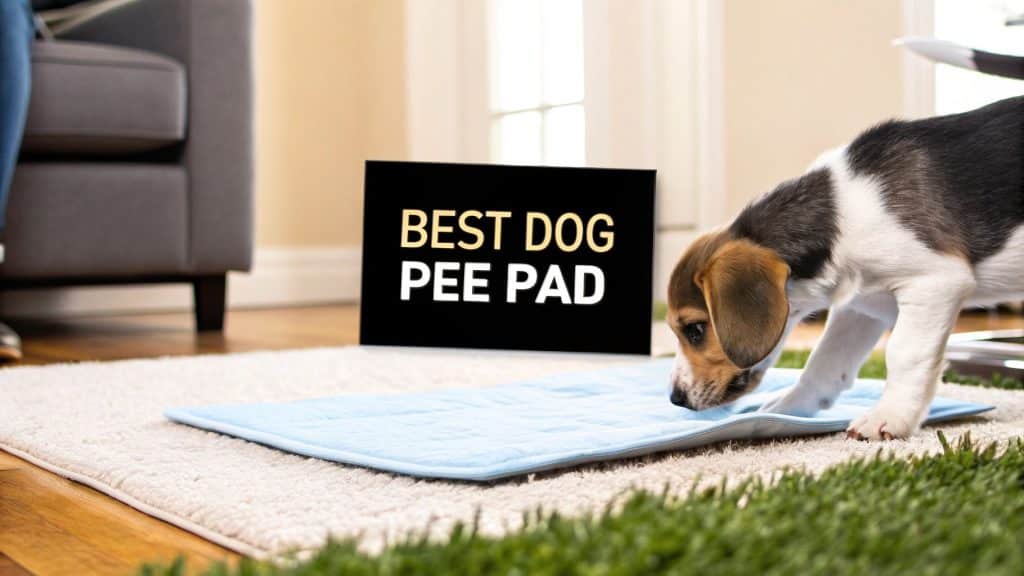
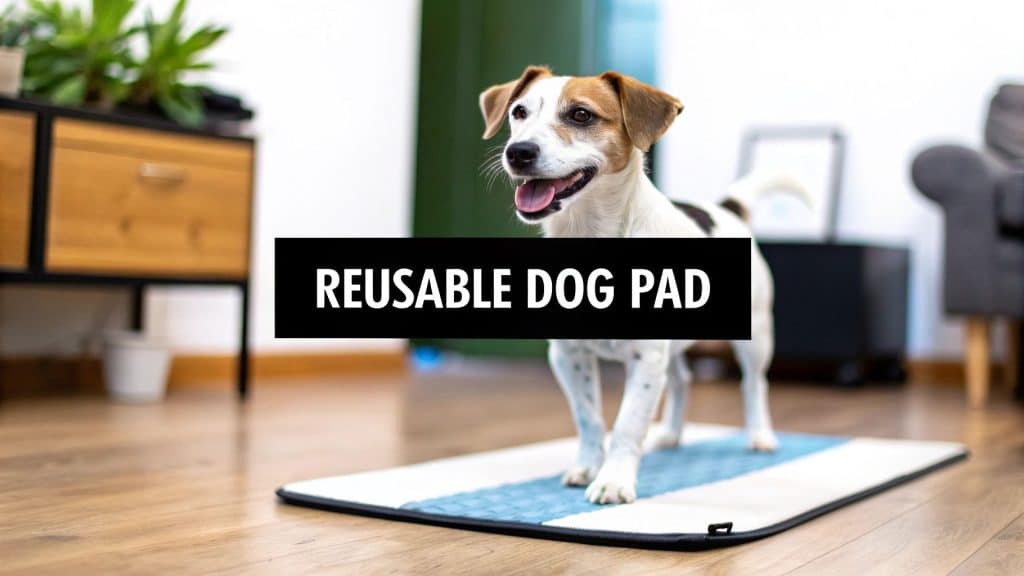
If you’re a dog owner, you’ve been there. You buy a pack of disposable pee pads, they quickly get used, and into the trash they go. It’s a cycle that adds up, both in terms of cost and the sheer amount of waste piling up in landfills. But there’s a much better way to handle things: reusable pee pads for dogs.
Think of them as a modern, practical solution that addresses the constant expense, waste, and sometimes, the poor performance of disposables.
A Better Approach to Pet Messes
Switching to reusable pee pads is one of those simple changes that makes a huge difference. It’s an upgrade for your home, your wallet, and your peace of mind. Whether you’re in the thick of puppy potty training, lining a crate for travel, or helping an older dog with incontinence, a reusable pad just makes life easier. You’re not just buying a product; you’re adopting a cleaner, more sustainable system for pet care.
This move toward smarter pet products isn’t just a niche trend—it’s a reflection of a massive, growing market. The global puppy pee pad industry, valued at around $685 million in 2025, is on a steady rise. This growth is largely fueled by pet owners in cities and apartments looking for hygienic and reliable indoor solutions.
Why Make the Switch to Reusable Pads?
The decision to go with reusable pads goes well beyond just being eco-conscious. It’s a practical choice that brings some serious perks for both you and your dog, and the benefits become obvious almost immediately.
- You’ll Save Money: Yes, the upfront cost is more than a single pack of disposables, but the long-term savings are huge. A single high-quality reusable pad can outlast hundreds of its throwaway counterparts.
- They Just Work Better: Honestly, a well-made reusable pad often outperforms disposables. Thanks to their multi-layer design, they offer superior absorbency and leak protection, saving your floors from mishaps.
- Less Landfill Waste: This one’s a big deal. You’ll dramatically cut down on your household trash, making a real, positive impact on the environment every single time you use and wash the pad.
- Built to Last: These pads are designed to be tough. They can handle hundreds of wash cycles, plus the daily wear and tear from claws, chewing, and general dog life.
The core idea is simple: instead of throwing away your money with every mess, you invest in a solution that lasts. This approach transforms a recurring expense into a one-time purchase.
Even with the best pads, accidents can sometimes happen off-target. It’s always a good idea to have some proven methods to remove dog urine smell from carpet bookmarked just in case. Ultimately, adopting a reusable system simplifies your routine, protects your floors, and helps you maintain a cleaner, fresher home.
How Reusable Dog Pads Actually Lock in Liquid
Ever looked at a reusable pee pad and wondered how on earth it holds so much liquid without a single drop hitting your floor? It’s not magic, but it is some seriously clever engineering. The whole system works a lot like high-performance athletic gear that wicks sweat away from your skin—these pads use a similar multi-layer strategy to keep your floors bone-dry.
The design is all about teamwork. Each layer has a very specific job, guiding liquid down and away from the surface and trapping it deep inside the pad’s core. Let’s pull back the curtain and see how it all works, one layer at a time.
The Quick-Wicking Top Layer
First up is the part your dog actually touches. This top layer is usually a soft, comfortable fabric like fleece or quilted polyester. Its most important job is moisture-wicking.
Instead of just soaking up urine on the surface, this material is designed to let liquid pass straight through, and fast. This pulls moisture away from your pup’s paws almost instantly, which means no more wet footprints tracked across the house. It keeps your dog comfortable and is the crucial first step in the whole process.
The Super-Absorbent Core
Once the urine zips through that top layer, it hits the heart of the operation: the absorbent core. This is where the real heavy lifting happens. It’s typically made from a dense soaker material, often a special blend of rayon and polyester fibers, built to trap and hold an impressive amount of liquid.
Think of this core as a high-tech sponge. It locks moisture away and keeps it from bubbling back up to the surface. A good quality pad can often hold several cups of liquid, making it a reliable choice for all-day use or for bigger dogs.
This infographic breaks down how all the layers work in sync to keep messes contained.
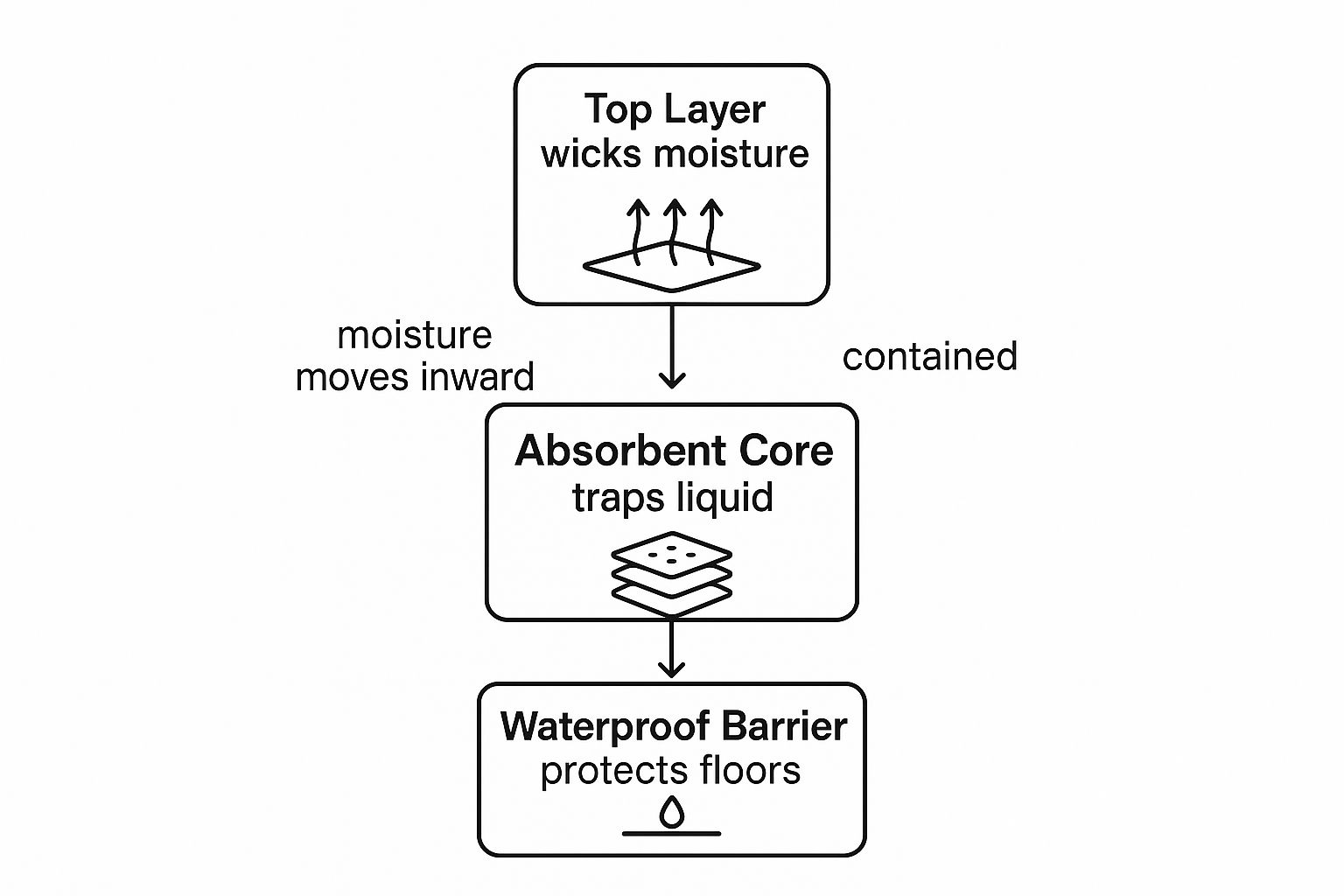
As you can see, it’s a one-way street. Liquid travels from the comfy top surface down into the absorbent middle, where the waterproof backing makes sure it stays put for good.
The Final Line of Defense
Tucked beneath that spongy core is the final, and arguably most important, layer: the waterproof barrier. This is your floor’s ultimate bodyguard.
This backing is usually made from a tough, non-porous material like polyurethane (TPU) that completely blocks any liquid from getting through. To make reusable pee pads for dogs even better, this waterproof layer often comes with a non-slip feature. You’ll frequently find little rubber dots or a grippy texture on the bottom, which keeps the pad from sliding around on tile or hardwood floors, even when a playful puppy is involved. It’s this two-for-one deal—waterproofing plus stability—that makes the whole system so dependable.
Choosing the Right Reusable Pee Pad for Your Dog
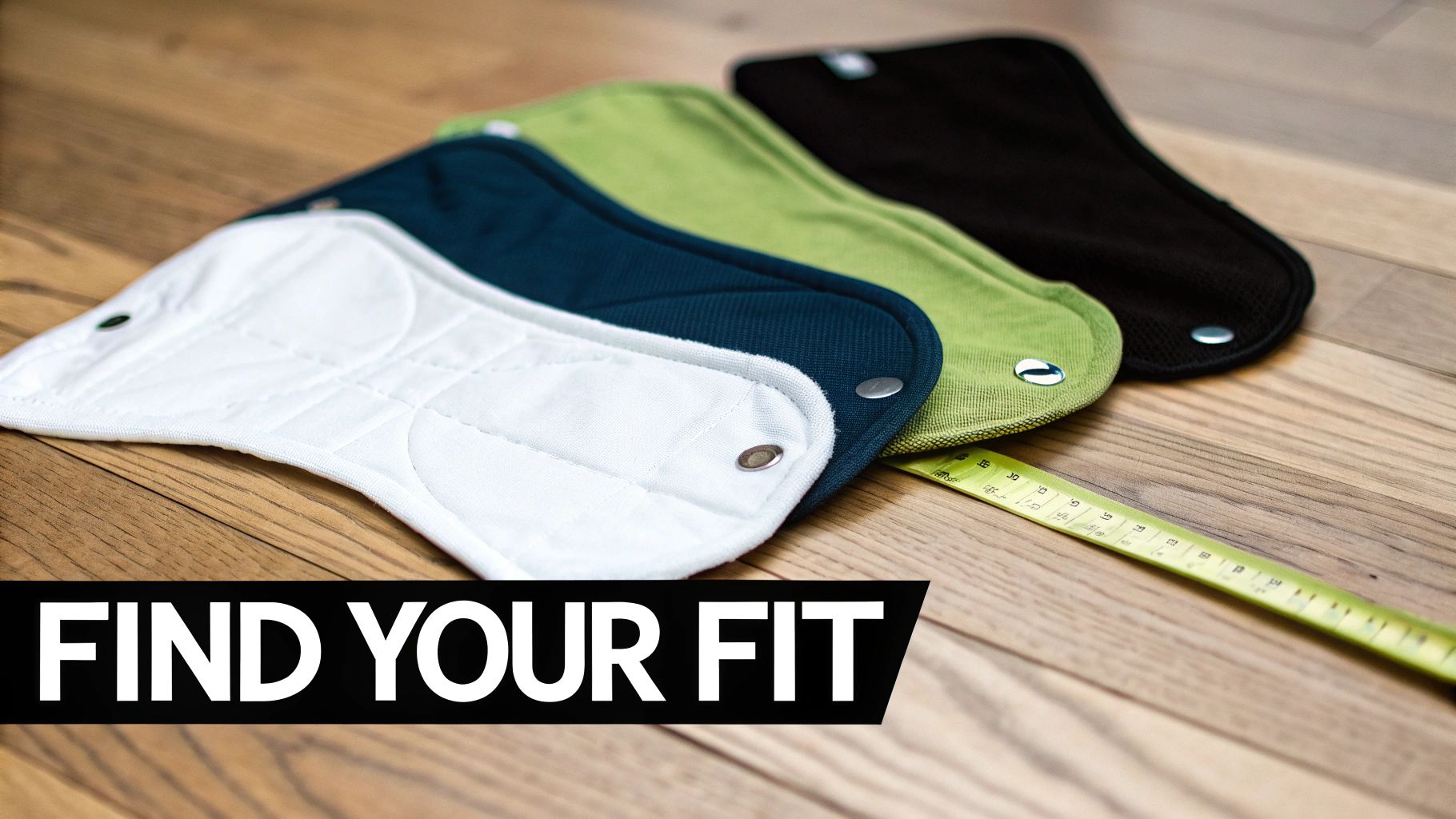
Walking into the world of reusable pee pads can feel a bit overwhelming at first. With so many options on the market, how do you sort through them all to find the one that’s actually right for your dog and your home? The truth is, not all pads are created equal, and the best choice really boils down to your dog’s size, your daily routine, and what you need the pad to do.
This isn’t just about picking a cute pattern; it’s about finding a reliable tool that makes life easier and keeps your floors safe. Let’s break down the most important features to look for so you can choose a pad that performs well and is built to last.
Absorbency and Material Quality
First and foremost, a pee pad has one critical job: to absorb liquid and prevent leaks. This is where the absorbency level and material quality make all the difference. A great pad will have a dense, absorbent core that locks moisture away almost instantly, pulling it away from the surface and making sure nothing seeps through to the floor.
Look for pads designed with multiple layers. The top layer should feel soft and dry quickly to keep your pup comfortable, while the inner layers need to be thick enough to handle whatever your dog dishes out. Low-quality pads often skimp on the core, causing them to get saturated fast and leading to the very messes you’re trying to avoid.
Getting the Size and Dimensions Right
Size is definitely not a one-size-fits-all situation. The right dimensions depend on your dog’s breed, their potty habits, and where you plan to put the pad.
- For Small Breeds: A smaller pad might be all you need for a Chihuahua or a Yorkie. It can fit neatly into a corner without taking over your living space.
- For Larger Breeds: If you have a Great Dane or a German Shepherd, you’ll need a much larger surface area to give them a proper target and prevent any over-the-edge accidents.
- For Crates and Carriers: Always measure the inside of your crate or carrier before you buy. A pad that fits snugly without bunching up is key for providing comfort and maximum protection during travel or nap time.
A common mistake is buying a pad that’s too small. If you’re ever on the fence, always size up. A bigger target is much easier for your dog to hit, significantly reducing the chances of a miss.
Durability and Safety Features
Since a reusable pad is an investment, you want to choose one that’s built to withstand the test of time. Take a close look at the stitching and overall construction. Reinforced edges are a great sign, as they prevent fraying and help the pad keep its shape after going through hundreds of wash cycles.
Another non-negotiable feature is a non-slip backing. Pads with those little rubberized dots or a grippy texture on the bottom are a lifesaver on slick floors like hardwood, tile, or laminate. This keeps the pad from sliding around when your dog steps on it—a crucial safety feature for clumsy puppies or senior dogs who might be a bit unsteady on their feet.
The demand for these practical, long-term solutions is growing fast. In fact, the total pet pad market is expected to hit USD 3.2 billion by 2034. This just shows how many pet owners are making the switch. You can explore the full pet pad market report if you’re curious about the trends. Many modern options, like this reusable dog pee pad blanket, are designed to combine all these essential features into one reliable product.
Reusable Pee Pad Feature Comparison
To help you narrow down your choices, here’s a quick comparison of the key features to consider when you’re shopping for the perfect reusable pee pad for your dog.
| Feature | What to Look For | Why It Matters |
|---|---|---|
| Absorbency | Multi-layer construction with a dense, absorbent core. Quick-drying top surface. | Prevents leaks, protects floors, and keeps your dog’s paws dry and comfortable. |
| Size | Dimensions that match your dog’s breed and the intended placement (floor, crate, etc.). | A proper fit ensures your dog has an adequate target, minimizing accidents. |
| Non-Slip Backing | Rubberized dots or a textured bottom grip. | Keeps the pad securely in place on slick surfaces, preventing slips and falls. |
| Durability | Reinforced stitching and high-quality edge binding. | Ensures the pad holds up through hundreds of machine washes without fraying or falling apart. |
| Odor Control | Materials with natural odor-neutralizing properties or special treatments. | Helps keep your home smelling fresh between washes, which is a huge plus. |
Ultimately, the best pad is one that fits seamlessly into your life. By focusing on these core features, you’ll be able to find a high-quality, dependable pad that both you and your dog will appreciate for years to come.
The Real Savings Behind Reusable Pads
When you make the switch to reusable pee pads, you’re hitting two big goals at once: one for your wallet and one for the planet. It’s about more than just having a reliable product on hand. You’re finally getting off that endless treadmill of buying and tossing, choosing a smarter, more sustainable way to care for your dog.
Let’s talk about the environmental side first. A single, well-made reusable pad is built to handle at least 300 washes. Think about that for a second. If you use just one disposable pad a day, that one reusable pad keeps over 300 disposables out of a landfill. For those of us with puppies or senior dogs who might need several pads a day, that number can easily soar into the thousands.
This isn’t just some niche trend, either. It’s part of a much bigger shift in how people think about the products they buy. The puppy pads market was valued at around $1.476 billion in 2024 and is expected to more than double by 2035, with reusable pads driving a lot of that growth. This isn’t just noise; it’s a clear signal that pet owners are actively looking for better options. You can dive deeper into these market trends in this detailed puppy pads market report.
The Financial Breakdown
While the green aspect is a huge win, the money you’ll save is just as convincing. Disposable pads are a slow, steady drain on your bank account—a subscription you never really signed up for. Reusable pads, on the other hand, are a classic “invest once, save for years” deal. Yes, the initial cost is higher, but you’ll see a return on that investment faster than you think.
Let’s put some real numbers to it and break down what a typical year looks like for one dog.
The real value of reusable pads is unlocked over time. That initial purchase quickly pays for itself, and every wash cycle afterward is pure savings, turning a perpetual expense into a one-time, smart investment.
To make this crystal clear, I’ve put together a simple table comparing the costs. These are just estimates, of course, but they paint a pretty stark picture of the difference between the two options over 12 months. It becomes obvious where the real value is.
One-Year Cost Analysis Disposable vs Reusable Pads
Here’s a breakdown of the estimated costs associated with using disposable pads versus reusable pads over a 12-month period for one dog.
| Expense Type | Disposable Pads (Estimated) | Reusable Pads (Estimated) |
|---|---|---|
| Initial Cost | $25 (for a 100-pack) | $45 (for a 3-pack) |
| Recurring Monthly Cost | $25 (one pack per month) | $0 |
| Annual Total | $300 | $45 |
| Potential Savings | $255 |
As you can see, choosing reusable pee pads for dogs can put a significant chunk of change back in your pocket in the first year alone. When you add up the long-term financial and ecological benefits, it’s an undeniably smarter choice for any pet owner paying attention.
A Simple Guide to Washing and Maintenance
Let’s be honest, the idea of throwing a pee-soaked pad in with your regular laundry can feel a little… off-putting. But trust me, keeping your reusable pee pads for dogs clean, fresh, and ready for action is a lot easier and more hygienic than you might think.
Think of it like washing gym clothes—a little bit of prep work goes a long way. Nailing down a simple routine not only keeps the pads absorbent and odor-free, but it also ensures they’ll last through hundreds of washes.
The Simple Pre-Wash Step
Before you even think about the washing machine, a quick pre-rinse is non-negotiable. If there’s any solid waste, get rid of that first. Then, just rinse the pad under cool water in a utility sink or with a garden hose outside.
This one step is a game-changer. It gets the worst of the urine out before the main wash, which stops odors from setting into the fabric. It also means your washing machine can focus on deep cleaning and sanitizing, not just dealing with surface-level messes.
A quick rinse might feel like an extra chore, but it’s the single most effective way to prevent those stubborn, lingering smells. It lets your detergent do its real job.
Machine Washing Best Practices
Once the pad is rinsed, it’s ready for the machine. The secret here is using the right settings and detergent to get a deep clean without wrecking the pad’s absorbent layers or waterproof backing.
Here’s a simple checklist for a perfect wash every time:
- Use a Pet-Safe Detergent: Stick with a high-quality, fragrance-free detergent. The harsh chemicals and perfumes in some brands can break down the pad’s fibers and, worse, irritate your dog’s skin. If you’re looking to stock up, you can find a good variety of pet grooming and cleaning products to choose from.
- Wash with Warm Water: Always go for a warm cycle, not hot. Super-hot water can warp or damage the waterproof backing over time, and that leads to leaks.
- Add an Extra Rinse Cycle: This is a great little trick. An extra rinse makes sure every last bit of detergent is washed away, which helps keep the pad as absorbent as possible.
- Skip the Fabric Softener: This is a big one. Never use fabric softener or dryer sheets. They coat the fibers in a waxy film that completely ruins their ability to absorb liquid. One of the main challenges is effectively removing urine smell from fabrics, and fabric softeners just trap those odors in.
If you’re dealing with a particularly stubborn smell, try adding a cup of white vinegar to the wash cycle. It’s a fantastic natural deodorizer that helps break down the ammonia crystals in urine.
Drying for Maximum Longevity
How you dry the pad is just as important as how you wash it. High heat is the number one enemy of the waterproof layer.
Always use a low-heat setting on your tumble dryer. Even better? Just hang the pad up to air dry. It’s the gentlest method by far and will dramatically extend the life of your reusable pads. You’d be surprised how quickly they dry, especially if you hang them somewhere with good air circulation. A little care at this stage will keep your pads fresh and working perfectly for years.
Creative Uses Beyond Potty Training
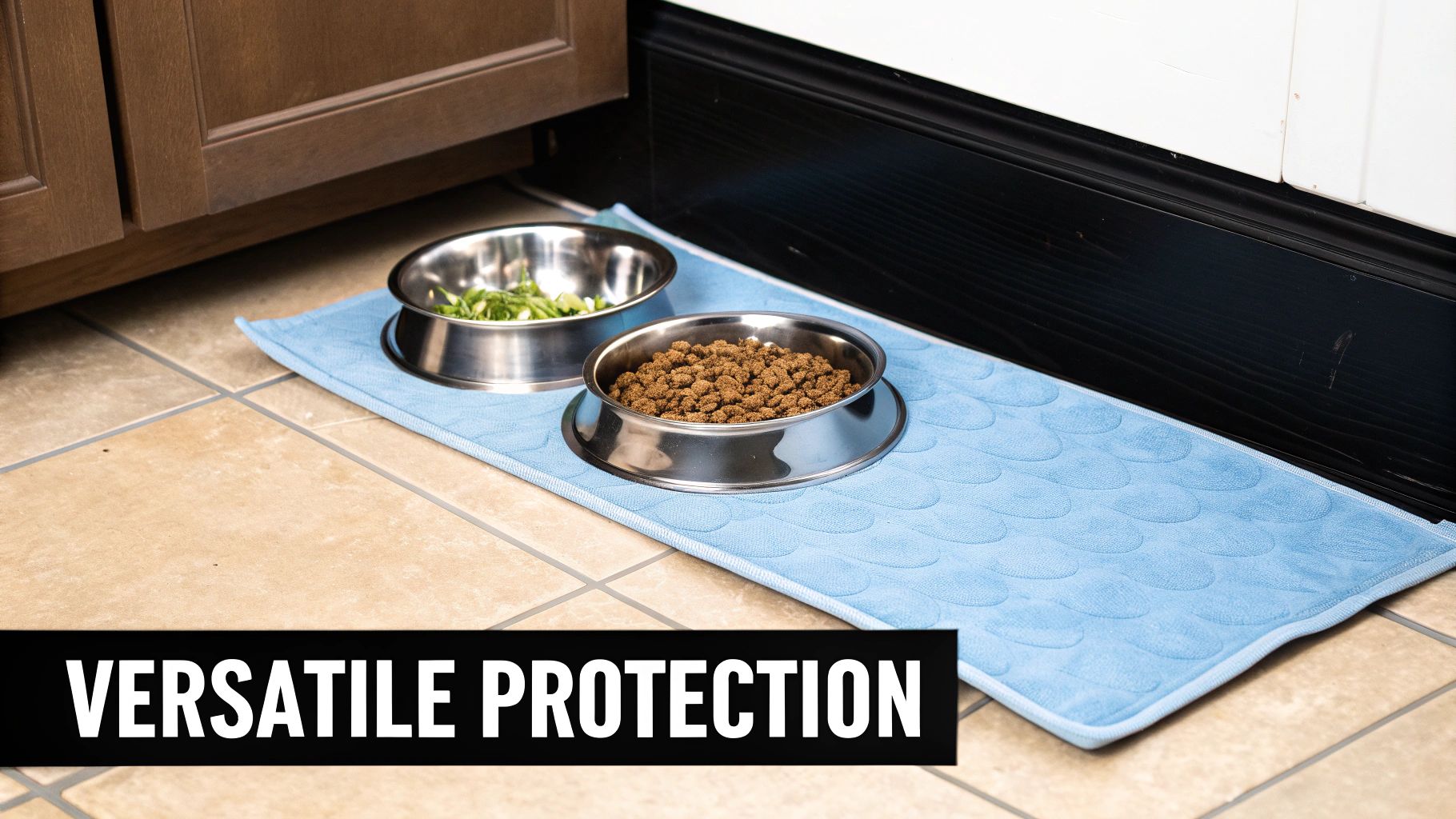
Don’t let the name fool you. Thinking a reusable pee pad is just for potty training is like saying a smartphone is only for making calls—you’d be missing out on a ton of other great features. These pads are genuinely one of the most versatile tools you can have as a pet owner.
Their durable, absorbent, and waterproof design makes them perfect for tackling dozens of everyday pet-related messes. They’re problem-solvers in disguise, ready to protect your home and car, making your investment go a whole lot further.
Protecting Your Home and Possessions
One of the best “off-label” uses for these pads is as a protective liner. That waterproof backing and absorbent core create an amazing shield against spills, messes, and general wear and tear.
Here are a few ways I’ve seen them work wonders:
- Crate and Kennel Liners: They add a soft, comfortable layer to a crate that catches everything from shed fur and spilled water to the occasional accident during travel.
- Under Food and Water Bowls: If you have a messy eater (or a sloppy drinker), placing a pad under their bowls is a game-changer. It contains the splashes and keeps your floors clean.
- Furniture and Bed Protection: Just drape one over the couch, your bed, or that favorite armchair to guard against muddy paws, fur, and drool. We have some great-looking options that blend right in with home decor in our dog beds and mats collection.
This versatility transforms the pad from a simple training tool into a multi-purpose home protector. Each one becomes a portable, washable shield you can deploy wherever messes are likely to happen.
On The Go and for Special Circumstances
The usefulness of reusable pads doesn’t stop at your front door. Because they’re so easy to pack and move, they’re fantastic for travel and other unique situations.
I always recommend keeping one in your car. It’s perfect for protecting your seats from a wet dog after a swim or a muddy one after a hike. They also work incredibly well as whelping pads for new mothers and their pups, offering a clean, hygienic surface that can be swapped out in seconds.
From road trips to new life, these pads offer reliable protection wherever you and your dog might be.
Common Questions About Reusable Pee Pads
Making the leap to reusable pee pads is a smart move, but it’s totally normal to have a few questions before you’re all in. We hear from pet owners all the time who are curious about the day-to-day realities—like what to do if their pup thinks the new pad is a chew toy, or how many they actually need to buy without creating a mountain of laundry.
Let’s tackle some of those common “what ifs.” Consider this the last bit of know-how you need to switch from disposable to durable with total confidence.
How Many Reusable Pads Do I Need?
For most dog owners, the magic number is three or four pads. Think of it as a simple rotation: one in use, one in the wash, and one ready to go. This system means you’re never caught empty-handed when an accident happens or it’s time for a fresh pad.
Now, if you’re deep in the throes of potty training a new puppy or caring for a senior dog who needs to go more often, you might want to bump that number up to five or six. It just gives you a little more breathing room between laundry days.
What If My Dog Tries to Chew the Pad?
Ah, the chewing phase. It happens, especially with curious puppies. If you catch your dog treating their new pee pad like a tug-of-war opponent, the game plan is all about redirection.
- Offer a Better Alternative: The moment they start nibbling, swap the pad out for a high-value chew toy they can’t resist.
- Use Positive Reinforcement: When they make the right choice and go for the toy instead, shower them with praise or offer a tiny treat.
This is also where quality really matters. A well-made pad with reinforced stitching is going to be far less tempting and much harder for a determined chewer to destroy.
The goal is to teach your dog that the pad is a bathroom, not a plaything. Consistent redirection is the most effective way to establish this boundary.
How Do I Transition My Dog to a Reusable Pad?
Getting your dog to switch from disposables is usually much easier than you’d think. The key is familiarity. Just place the new reusable pad in the exact same spot you always put the disposable one.
For a little extra help, you can lay a lightly used disposable pad on top of the new one for a few minutes. This transfers their scent and sends a clear signal that this new, soft spot is their official potty area. Most dogs get the hint almost immediately. A little patience and consistency are all it takes for a smooth transition.
Ready to make a confident switch to a cleaner, more cost-effective solution? At Ur Pet Store, we offer durable, highly absorbent reusable pads designed to make your life easier.