

Blog
Finding the Best Dog Car Hammock for Safe and Clean Travels

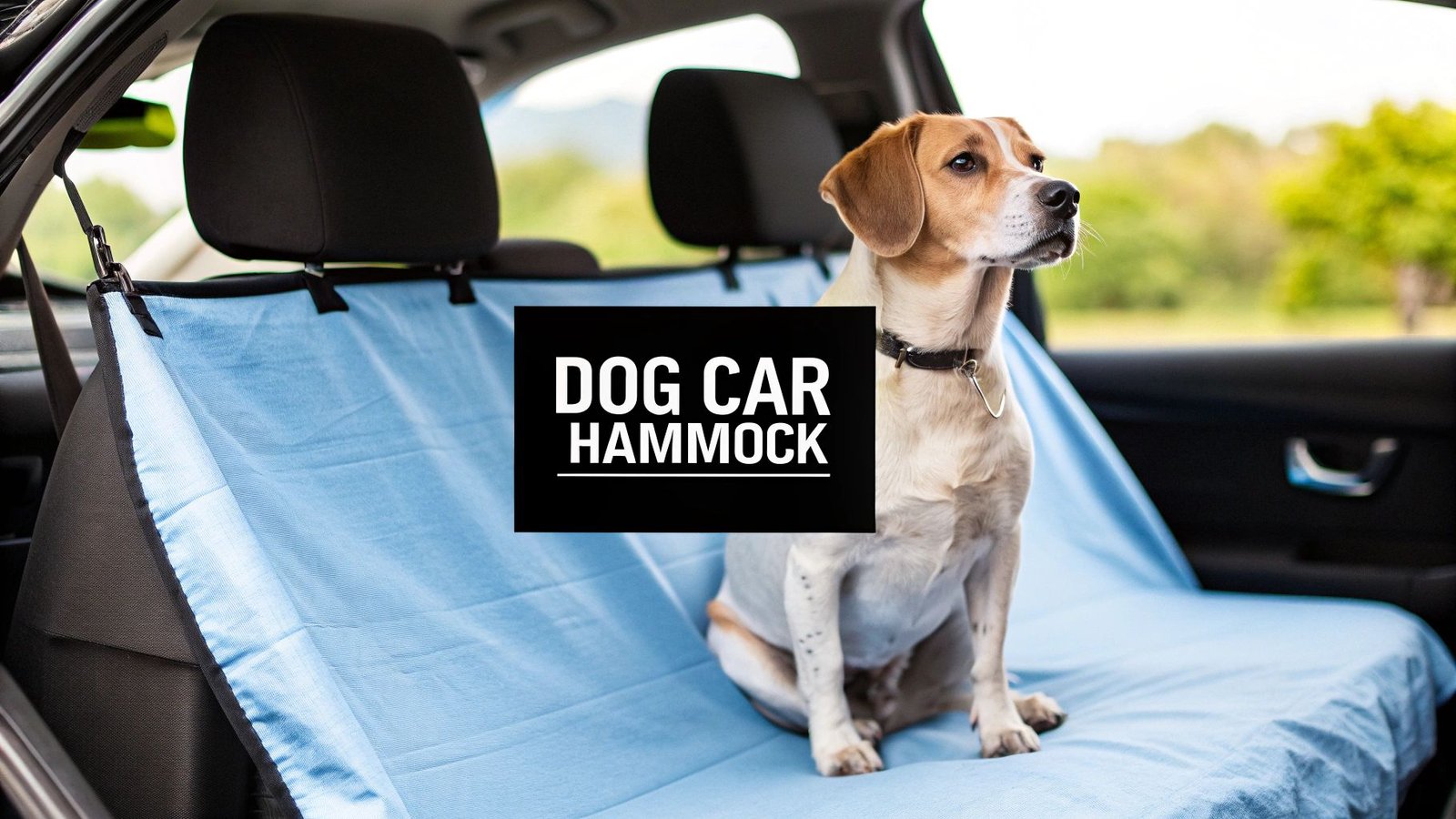
If you’ve ever driven with your dog, you know the drill: one eye on the road, one on the rearview mirror, trying to keep your furry copilot safe while protecting your car’s interior. The best dog car hammock isn’t just a fancy seat cover; it’s a game-changer for any pet parent. It creates a secure, cozy spot for your dog and, just as importantly, keeps your upholstery free from the inevitable fur, drool, and mud.
Why a Dog Car Hammock Is a Must-Have for Travel
For anyone who hits the road with their dog, a car hammock quickly goes from a “nice-to-have” to an absolute essential. It’s a smart upgrade from a simple blanket or a basic seat cover, offering a unique blend of safety, cleanliness, and comfort that other solutions just can’t match.
The real genius of the hammock design is how it bridges the gap between your front and back seats. This simple feature is a lifesaver—literally. It stops your dog from tumbling into the footwell during a sudden stop or a sharp turn, which can be incredibly scary and even dangerous for them. Giving your dog a stable, non-slip surface to rest on helps them feel grounded, making car rides a whole lot less stressful.
And let’s talk about protecting your car. A good hammock is your best defense against scratches, shedding, and muddy paw prints. It’s an investment that preserves your car’s value and saves you a ton of time on cleanup. This is especially true if you have leather seats; you can learn more about how to protect leather car seats to keep them looking brand new.
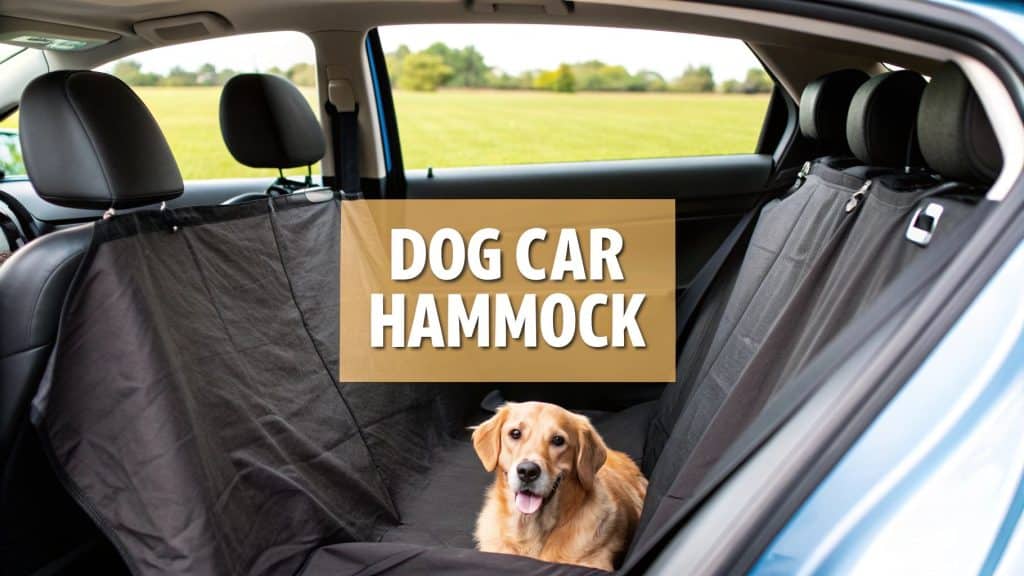
This all-in-one approach is exactly why hammock-style covers have become so popular. They wrap around the entire back seat area—covering the seat, the floor, and the backs of the front seats. This creates a contained space that prevents an antsy dog from trying to jump up front, which is a major distraction. Studies have shown that pets are five times more likely to cause driver distractions that lead to accidents. With over 70 million dog-owning households in North America, it’s no surprise that hammocks are the go-to choice for their superior protection.
Ultimately, a car hammock turns your back seat into a safe den for your dog. It keeps you focused on the road, protects your vehicle, and makes every trip a better experience for everyone. Finding the right one is the first step to safer, cleaner, and happier adventures together.
Comparing Top Dog Car Hammock Features
When you start shopping for a dog car hammock, you’ll quickly realize it’s about more than just picking a color. The options can feel endless, with each one offering a different spin on design, materials, and safety. Getting a handle on these differences is the secret to finding a hammock that actually protects your car, keeps your dog safe, and holds up to the reality of life with a four-legged co-pilot.
Not all hammocks are created equal. Some are basic slings, while others are packed with thoughtful features. The right one for you really depends on your dog’s size, your car, and how you’ll be using it. Let’s break down the core components so you can make a choice you feel good about.
This diagram gives a great overview of why a hammock is such a smart choice, covering the big three: safety, car protection, and your dog’s comfort.
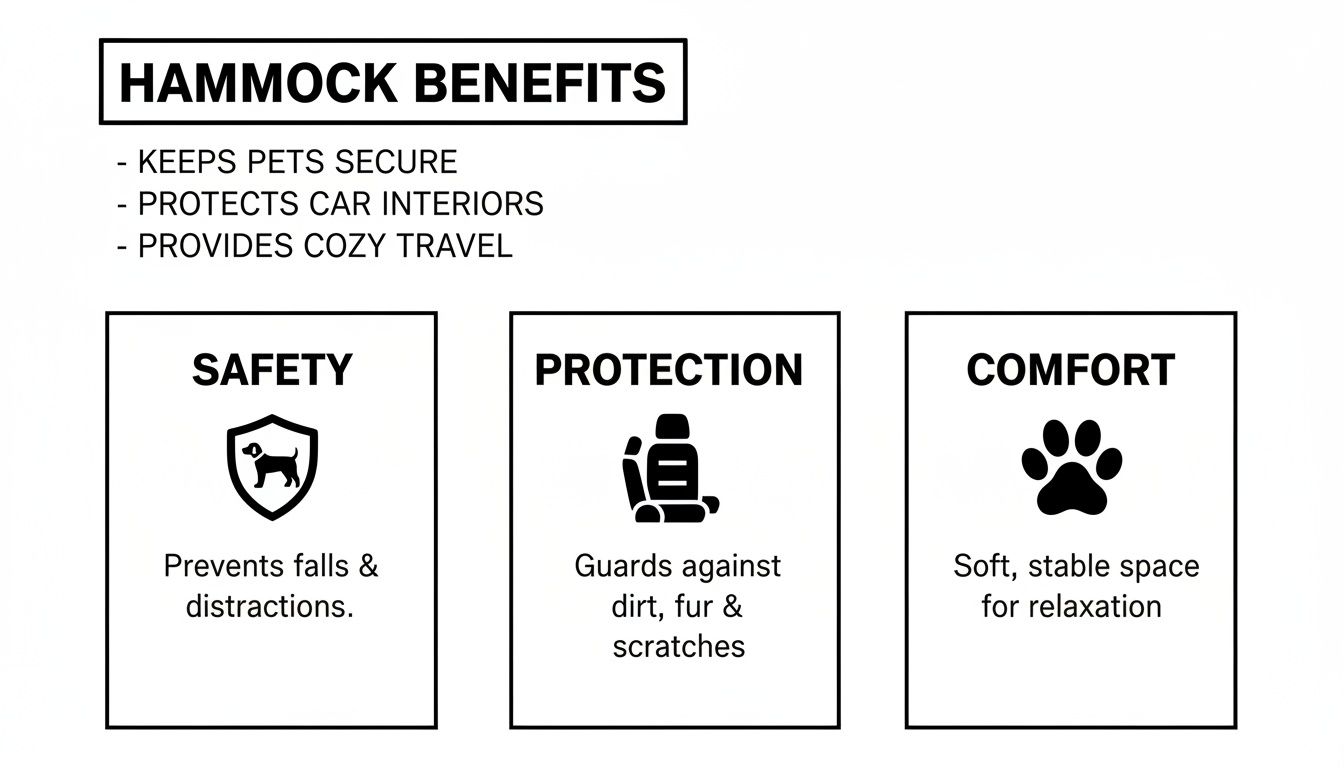
As you can see, the hammock design creates a safe little cocoon. It acts as a barrier to keep your dog from tumbling into the footwell during sudden stops and saves your seats from all the fur and mud that comes with an adventure.
Hammock Design and Functionality
The basic design of a hammock is what makes it either perfect or impractical for your lifestyle. There are three main styles out there, and your daily routine—whether it’s just you and your dog or the whole family piling in—will point you to the right one.
1. Standard Hammocks: This is the classic, no-fuss design. It hooks onto the front and rear headrests, creating a simple sling that covers your entire back seat and floor area. It’s a fantastic all-around option for solo dogs, offering solid protection and a secure space.
2. Convertible (Split-Zip) Hammocks: These models are a game-changer for flexibility. They have a zipper running right down the middle, which lets you fold one side down. Suddenly, you have a half-hammock for your pup and a regular seat for a human passenger. It’s the go-to solution for families who need to share the back seat.
3. Extended Coverage Hammocks: If you’re looking for maximum protection, this is it. These hammocks come with oversized side flaps that hang down and shield your car’s interior door panels from muddy paws, scratches, and drool. They are a lifesaver if you have a large, active dog or one who loves to lean against the door to watch the world go by.
To help you visualize the differences, here’s a quick breakdown of how these features stack up.
Dog Car Hammock Feature Comparison
This table breaks down the key features of different hammock styles to help you decide which is best for your specific needs, vehicle, and dog.
| Feature Type | Standard Hammock | Convertible (Split-Zip) Hammock | Extended Coverage Hammock | Best For |
|---|---|---|---|---|
| Back Seat Coverage | Full coverage of the seat and footwell. | Full or half coverage; adaptable. | Full coverage, plus door panels. | Standard: Solo dogs. Convertible: Dogs and human passengers. Extended: Maximum vehicle protection. |
| Passenger-Friendly | No, requires full removal for a passenger. | Yes, the zip-down feature allows for a human passenger. | No, designed for full back seat use. | Convertible: Families or carpooling. |
| Installation | Quick and simple; straps around headrests. | Slightly more complex due to the zipper, but still straightforward. | Similar to standard, with extra steps for side flaps. | Standard: Easiest setup. |
| Door Protection | None. | None. | Yes, includes built-in side flaps. | Extended: Dogs that scratch doors or drool on windows. |
Ultimately, the best design is the one that fits seamlessly into your life. For solo dog owners, the simplicity of a standard hammock is often enough. But for those juggling kids and canines, the flexibility of a convertible model is invaluable.
Material Durability and Denier Ratings
A hammock’s fabric is its first line of defense against claws, dirt, and moisture, so its quality directly affects how long it will last. You’ll typically find three main materials on the market: Oxford, polyester, and canvas.
Oxford fabric is a real workhorse, hitting that sweet spot between durability and comfort. It’s a woven polyester that stands up well to tearing and abrasion. Most quality hammocks you’ll find use 600D Oxford fabric or higher. That “D” stands for denier, which is just a measure of the fiber’s thickness.
Key Insight: A higher denier rating (like 900D or 1200D) means a thicker, tougher fabric that’s better suited for large, energetic dogs with serious claws. For smaller or more chill pups, 600D is usually plenty strong.
Polyester is another common choice, often prized for being lightweight and water-resistant. It might not be as rugged as a high-denier Oxford, but it’s a breeze to clean and generally more budget-friendly. Canvas offers that old-school, rugged feel but can be stiff and a bit tougher to wash.
Critical Safety and Stability Features
Let’s be honest: a hammock’s most important job is keeping your dog safe. A few key features make all the difference here, and they should be non-negotiable on your checklist. A hammock that slips and slides around is almost as bad as having no hammock at all.
Look for these essential safety components:
- Non-Slip Backing: A rubberized or silicone-dotted bottom is crucial. It grips your car seat and prevents the whole thing from shifting during turns or sudden braking, keeping your dog steady.
- Sturdy Seat Anchors: These are little tubes or toggles that you wedge down into the crack between your seat cushions. They anchor the hammock firmly, stopping it from sliding forward or bunching up.
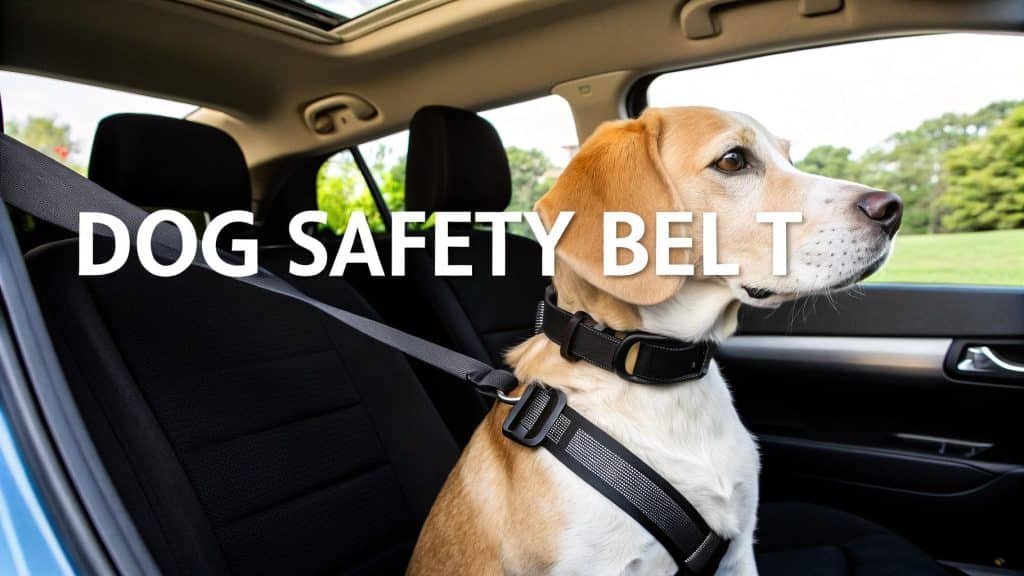
- Reinforced Seat Belt Openings: The best hammocks have Velcro or zippered slits that let you access the seat belt buckle. This is a must-have for properly securing your dog with a crash-tested travel harness—the absolute safest way for them to ride.
The demand for these products shows just how important they’ve become. The global market for dog seat covers is expected to climb to an incredible USD 830.7 million by 2035. Hammock styles are leading the charge because their barrier design is so effective at keeping dogs safely contained. In fact, many users report that these hammocks slash their car cleanup time by up to 70%. Experts predict this style will soon make up over 40% of the market as pet travel safety gets more attention. You can learn more about these market trends and what they mean for pet parents.
Waterproofing and Ease of Cleaning
Life with dogs is messy. A good car hammock should make cleaning up easier, not add another chore to your list. Solid waterproofing is non-negotiable. While many hammocks claim to be waterproof, the actual performance can vary wildly.
The best ones use a multi-layer approach. You might see a quilted, comfortable top layer, a fully waterproof PVC or TPU middle layer to block any liquid, and the non-slip backing at the bottom. This sandwich construction ensures that mud, water, or accidents never seep through to your car’s upholstery.
Finally, think about the cleanup process. Being able to wipe it down with a damp cloth for small messes is great, but for the big stuff, check if it’s machine washable. Always follow the manufacturer’s care instructions, since high heat can ruin the waterproofing and non-slip materials. A hammock that’s a snap to install and remove makes the whole cleaning process that much less of a headache.
How to Measure Your Vehicle for a Perfect Hammock Fit
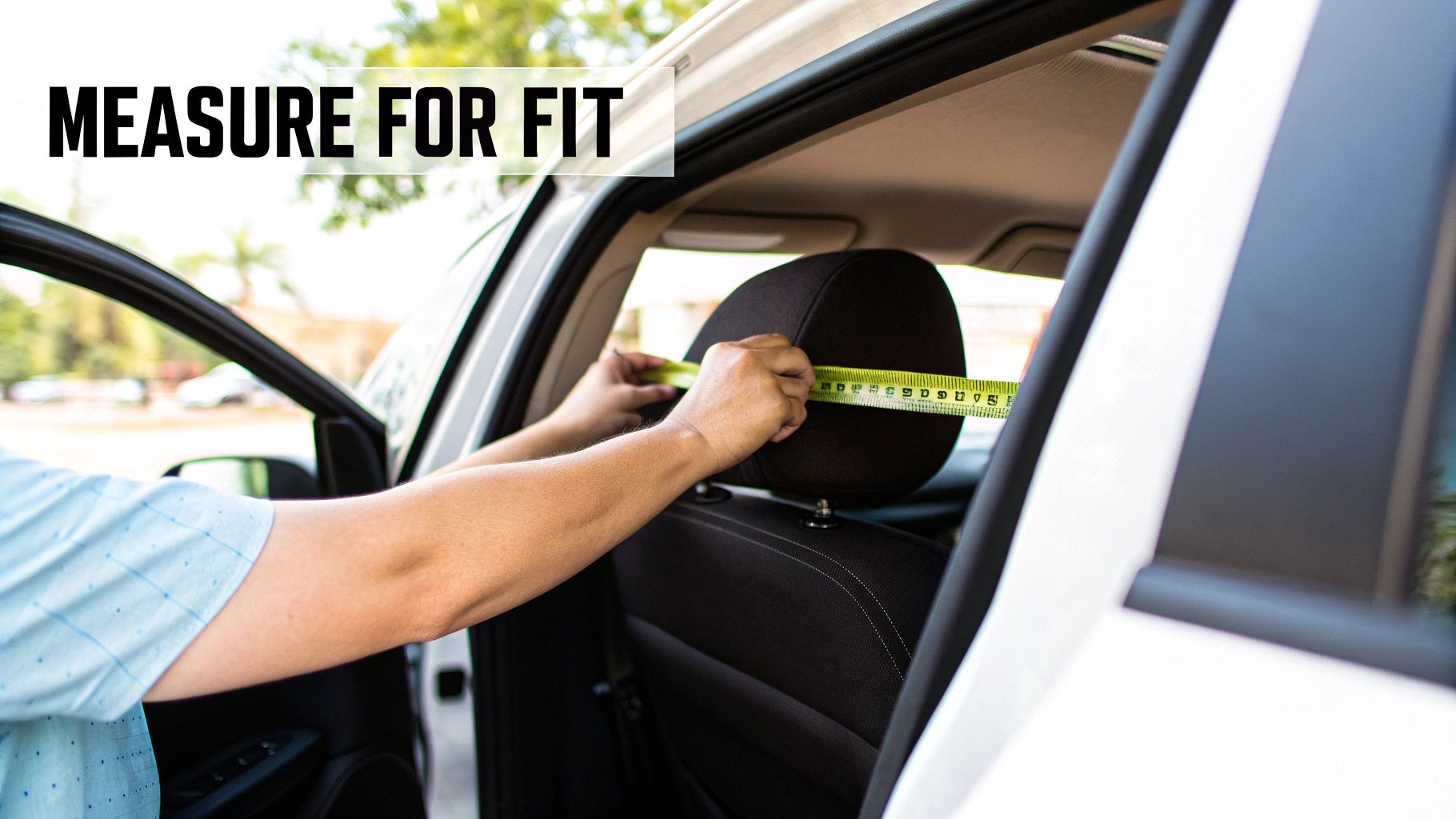
When you’re picking out a dog car hammock, it’s easy to get caught up in features and fabrics. But trust me, the single most important factor is the fit. A hammock that’s too small leaves your upholstery exposed, and one that’s too big will bunch up and create an unstable, slippery surface for your dog.
Taking just a few minutes to measure your car first will save you a world of headaches later. It’s the difference between a snug, custom-like fit and a sloppy, ineffective mess. Let’s walk through exactly what you need to measure.
The Three Critical Measurements
Before you even start browsing, grab a tape measure. You only need to jot down three key numbers to guarantee you find the right size.
- Back Seat Width (Door to Door): This one is non-negotiable. Measure the widest part of your back seat, stretching from one interior door panel to the other. This ensures the hammock actually covers the entire seating area, protecting it from muddy paws and sharp claws.
- Headrest to Headrest Distance: Next, measure the distance from the center of one rear headrest to the center of the other. This tells you if the hammock’s straps will line up properly without sagging in the middle or pulling awkwardly at the corners.
- Front Seat to Back Seat Depth: For that classic “hammock” sling, measure from the back of your front headrest down into the seat and up to the front of the corresponding rear headrest. This measurement ensures the hammock creates a safe barrier over the footwell—not so tight it rips and not so loose your dog gets tangled in it.
A proper fit is about more than just keeping your car clean; it’s a huge safety factor. A hammock that slides around can cause a dog to lose its footing on a sharp turn, which only adds to their travel anxiety.
Key Takeaway: An ill-fitting hammock is a failed investment. Gaps expose your upholstery to damage, and a loose fit can create an unsafe, slippery surface for your dog, defeating the entire purpose of having one.
Sizing Tips for Different Vehicle Types
The core measurements are always the same, but your vehicle type adds another layer to consider. What works beautifully in a small sedan is going to look ridiculous in a full-size truck.
- Compact Cars and Sedans: These cars almost always need standard-sized hammocks, which are typically around 54-56 inches wide. Pay extra attention to the depth, as a hammock that’s too long will sag and pool in the footwell.
- SUVs and Crossovers: Most SUVs have wider back seats and do best with hammocks in the 56-60 inch range. If you have a larger, third-row SUV, you’ll definitely want to look for models specifically labeled “extra-large” or “SUV-fit” to get full coverage.
- Trucks: Crew cab trucks are the toughest to fit because their back seats are massive. Standard hammocks simply won’t cut it. You’ll need a hammock specifically designed for trucks, often measuring 60 inches wide or more.
It’s no surprise these products have become so popular. In Europe and North America, 65% of dog owners travel with their pets monthly, and hammocks now dominate 50% of the back seat cover market. They’re a perfect match for SUVs—the leading vehicle type with 40% market penetration—where a good fit can slash interior repair costs by an estimated 80%. Since they work best for the medium and large dogs that make up 70% of use cases, it’s easy to see why they’re the go-to solution. You can find more insights on the dog seat cover market and its growth online.
Reading Product Dimensions
Once you have your numbers, it’s time to shop. Compare your measurements to the product dimensions listed online. Manufacturers will always give you the width and length.
You want a hammock width that’s either an exact match or slightly larger than your seat measurement. This little bit of extra fabric ensures the sides of your seats are covered, too. A perfect fit means a safer ride for your dog and a much cleaner car for you.
Finding the Right Hammock for Your Lifestyle
When it comes to dog car hammocks, there’s no single “best” option. The perfect choice really depends on your life and how you travel with your pup. A feature that’s a game-changer for one person might be totally unnecessary for another.
By thinking about your daily routine and travel habits, you can zero in on a hammock that feels like it was made just for you. We’ve sketched out a few common scenarios to help you see which one sounds most familiar.
The Weekend Adventurer
You and your dog are all about the great outdoors. Weekends mean muddy trails, swims in the lake, and exploring everything nature has to offer. Your car’s back seat is in a constant fight against dirt, water, and fur that seems to weave itself into the fabric.
For you, it’s all about toughness and waterproofing. You need a hammock that can handle a mess and clean up in a flash.
Your Go-To Hammock Features:
- Serious Waterproofing: Look for hammocks with multiple layers, especially those with a PVC or TPU waterproof core. This is what stops a soaking-wet dog from turning your clean seats into a swamp.
- High-Denier Fabric: Materials like 900D or 1200D Oxford fabric are your best friends. They stand up to sharp claws, stray branches, and general roughhousing without ripping or tearing.
- Wipe-and-Go Surface: A smooth, non-porous material you can simply hose off or wipe down is a huge win. Steer clear of plush or heavily quilted surfaces that will trap every speck of mud.
Expert Tip: If you’re a Weekend Adventurer, prioritize a hammock with large side flaps. They’re essential for protecting your door panels when a muddy dog inevitably leans against them on the ride home.
The Family with Kids and a Dog
Your car is mission control. You’re juggling school runs, soccer practice, and errands, all with the dog in tow. Your back seat has to be a flexible space that can safely fit both two-legged and four-legged passengers, sometimes at the very same time.
Versatility is the name of the game. A standard hammock that hogs the entire back seat just isn’t practical.
Your Go-To Hammock Features:
- Split-Zip Design: This is non-negotiable. A hammock with a zipper down the middle lets you have one side up for the dog while the other side is a normal seat for a person. It’s the ultimate compromise.
- Easy Seat Belt Access: Make sure the hammock has secure, well-placed openings (usually with Velcro or zippers) for the seat belt buckles. This is crucial for safely securing both your child in their seat and your dog in a travel harness. You can find the right fit in our collection of dog collars, leashes, and harnesses.
- Quick On-and-Off: You’ll be changing the setup constantly, so look for a model with simple quick-release buckles and seat anchors you can pop in and out without a fuss.
The Multi-Dog Household
You live by the motto “the more, the merrier,” and that applies to dogs, too. Your car is basically a pup-mobile, which puts a massive amount of stress on any seat cover. We’re talking combined weight, extra claws, and the occasional back-seat wrestling match.
For you, it’s all about beefy construction and reinforced parts. A standard hammock might not last a month.
Your Go-To Hammock Features:
- Reinforced Stitching: Look closely at the seams, especially where the straps connect. Double-stitching is good; bar-tacked seams are even better. This is what keeps the hammock from falling apart under pressure.
- Metal Hardware: Opt for metal buckles and clips over plastic. Plastic can get brittle over time and snap under the strain of multiple dogs shifting around.
- Full Coverage: Make sure the hammock is wide enough for your vehicle, particularly if you have an SUV or truck. A hammock that’s too narrow creates gaps, and you know one of your dogs will immediately try to wedge themselves into that space.
The Anxious Traveler
Car rides are a source of stress for your dog. They might pace, whine, or just can’t seem to settle down. Your main goal is to create a back-seat space that feels as safe, stable, and calming as possible.
Anything that shifts or sags will only make your dog’s anxiety worse, so stability and comfort are everything.
Your Go-To Hammock Features:
- A No-Slip Grip: A full rubber or silicone-dotted backing is a must-have. This feature firmly grips the seat and stops the hammock from sliding during turns or sudden stops, giving your dog a solid footing.
- A Structured Base: Some of the better hammocks have a more rigid or thickly quilted base. This creates a flatter, more bed-like surface that feels much more secure than a flimsy sling.
- A Mesh Window: That mesh panel between the front seats can be a lifesaver. It lets your nervous pup see you and also improves airflow, which helps reduce that feeling of being trapped and can even ease motion sickness.
Getting it Right: Installation and Care
You’ve picked out the perfect dog car hammock—great! But the job isn’t done yet. Getting the installation right is just as important as choosing the right model. A properly secured hammock is the difference between a safe, comfy ride for your dog and a flimsy, hazardous mess. Let’s make sure it’s the former.
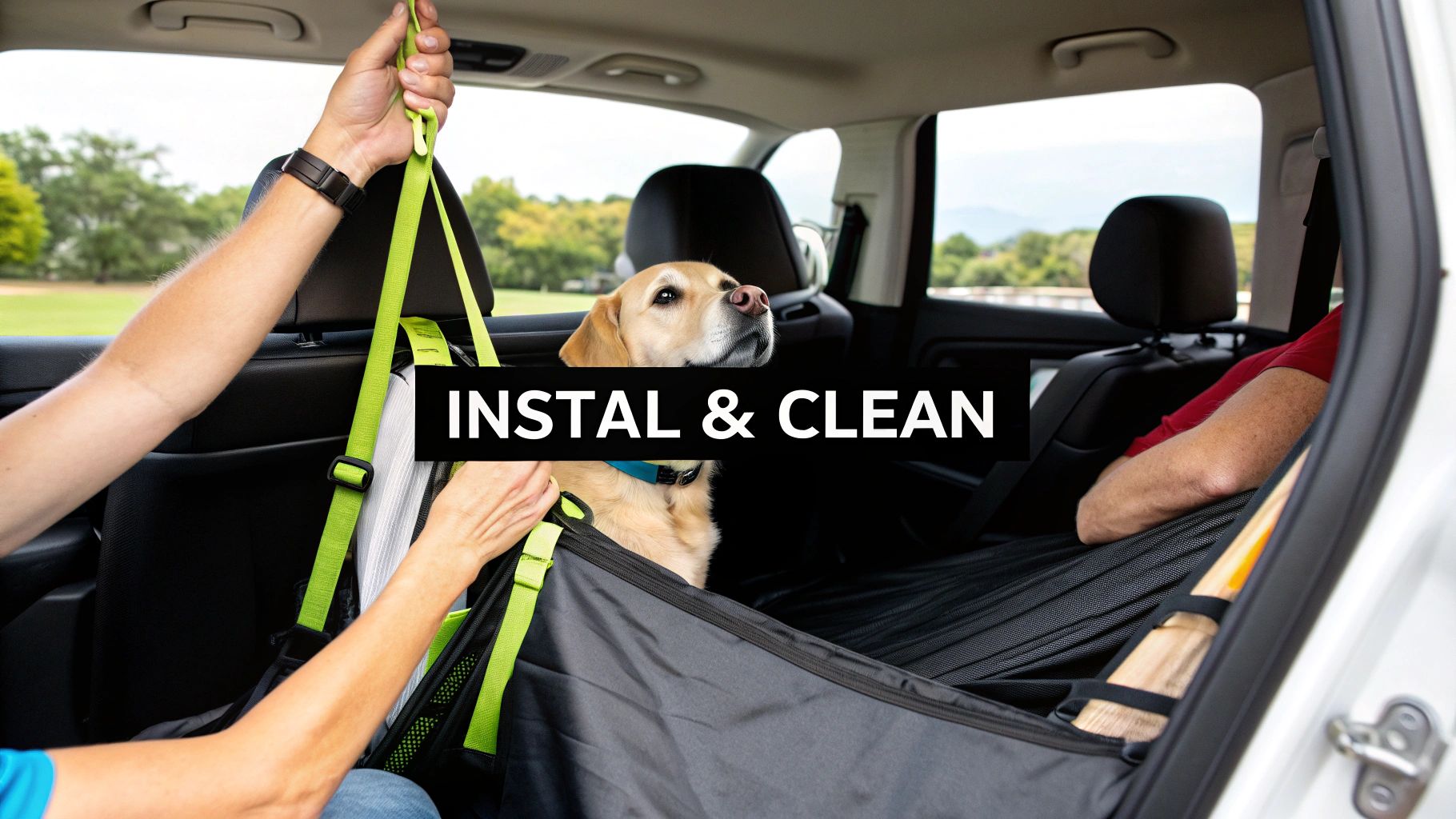
Think about it: a loose hammock can shift and bunch up, causing your dog to slip and slide on sharp turns or sudden stops. Taking just a few minutes to install it correctly provides peace of mind and keeps your best friend secure.
How to Install Your Hammock for a Rock-Solid Fit
Setting up your hammock is usually quick, but a little attention to detail goes a long way. Here’s a simple breakdown to get a snug and secure fit every single time.
- Lay It Out: Start by unfolding the hammock and draping it across your back seat. Make sure it’s centered and that the non-slip side is face-down on the seat cushions.
- Cinch the Straps: Next, loop the adjustable straps over your front and rear headrests. Pull them good and tight. You’re aiming for a taut, level surface—no sagging into the footwell. The front edge should sit right up against the back of your front seats.
- Wedge in the Anchors: Now for the most critical step. Find the little tubes or toggles sewn into the hammock. You need to shove these seat anchors deep into the crack where the seat back and bottom cushion meet. This is what keeps the whole thing from lurching forward when you hit the brakes.
- Secure the Side Flaps: If your model has side flaps for door protection (and I hope it does!), get those secured. Most will have straps that go around the “oh-crap” handles above the doors, or little hooks that slide into the window channel. This simple step saves your doors from a world of scratches.
Troubleshooting Tip: If you notice the hammock drooping in the middle, your headrest straps probably aren’t tight enough. Give them another tug. If the cover keeps sliding forward, you haven’t pushed the seat anchors in far enough. Really get them in there for a solid grip.
Keeping Your Hammock Looking and Smelling Fresh
Between muddy paws, shedding fur, and the occasional drool, your hammock will need a good cleaning now and then. How you clean it really depends on the material and just how much of the great outdoors your dog brought inside.
For Everyday Dirt and Fur
Most of the time, a quick spot-clean is all you need. A damp cloth or a pet-safe wipe will handle minor messes. For that never-ending battle with fur, a vacuum with a brush attachment is your best friend.
For a Seriously Deep Clean
After a trip to the dog park on a rainy day, you’ll need to bring out the big guns. Before you do anything, though, check the manufacturer’s care tag for specific instructions.
- Machine Washing: Good news—many modern hammocks can go right in the washing machine. Just use a gentle cycle with cold water and a mild, pet-friendly detergent. Avoid bleach and fabric softeners at all costs; they’ll wreck the waterproof coating.
- Hosing It Down: For those super-durable, waterproof covers, sometimes the easiest thing to do is just take it outside and hose it off. Drape it over a fence, spray away the grime, and let it dry.
- Air Dry Only: This one is non-negotiable. Never put your hammock in a machine dryer. The intense heat will melt the non-slip backing and ruin the waterproofing. Always hang it up to air dry. If you can, keep it out of direct sun to prevent the color from fading.
A little bit of upkeep goes a long way in making your hammock last. For more great products to keep your pet’s world tidy, check out our collection of grooming and cleaning supplies.
Your Go-To Dog Car Hammock Buying Checklist
Feeling ready to pick one out? Let’s make it easy. Run through this quick checklist before you buy to make sure you’re getting the right hammock for you and your dog. It’s a simple way to double-check that you haven’t missed anything important.
The Non-Negotiable Safety Features
- Non-Slip Backing: Look underneath. Does it have that rubbery, grippy texture? This is what stops the whole thing from sliding around every time you make a turn.
- Solid Seat Anchors: Find the little tubes or toggles designed to be pushed between the seat cushions. These are crucial for locking the hammock firmly in place so it doesn’t bunch up or shift.
- Seat Belt Access: Check for velcro or zippered openings. These are essential for feeding a seat belt through to connect to your dog’s crash-tested travel harness—the only truly safe way for them to ride.
Material and Durability: Will It Last?
- Truly Waterproof: Is it just “water-resistant” or actually waterproof? There’s a big difference. You want a material like PVC or TPU that creates a genuine barrier against mud, water, and accidents.
- Stitching Strength: Pay close attention to the seams, especially where the straps attach to the main fabric. Look for reinforced or double stitching that can handle the stress of a wiggling, happy dog.
The Perfect Fit for Your Car and Your Life
Quick Tip: The single most important thing you can do is measure your back seat. A hammock that’s too small or too big is a hazard. Always, always compare your car’s width to the product’s dimensions before you hit “buy.”
- Correct Sizing: Will it cover your entire backseat from door to door? Measure first to ensure you get full, gap-free coverage.
- Versatile Design: Think about your passengers. If you often have a human riding in the back with your dog, look for a split-zip or “convertible” design that lets you use half the hammock and half the seat.
Keeping these points in mind will help you find a safe, tough hammock that you’ll be happy with for years. And for more gear to make travels a breeze, check out our full collection of dog beds and mats.
Your Top Questions About Dog Car Hammocks, Answered
Choosing the right travel gear for your dog can feel a little overwhelming. You’ve got questions, and we’ve got answers. Here’s a straightforward look at some of the most common things people ask about dog car hammocks, based on years of helping pet owners just like you.
Will a Hammock Interfere with My Car’s Side Airbags?
This is a great question and a top concern for safety-conscious drivers. For the most part, yes, you can absolutely use a dog car hammock in a vehicle with side airbags. Most are designed to drape across the back seat and cover the footwell, leaving the doors and pillars—where side curtain airbags are typically housed—completely clear.
The key is to pick a hammock that fits well. Steer clear of models with huge, stiff side flaps that could potentially get in the way. When in doubt, a quick peek at your car owner’s manual for its guidelines on seat covers is always a smart move.
How Do I Keep My Dog Safe and Secure in the Hammock?
It’s easy to think of the hammock as a safety device, but its main jobs are to keep your car clean and prevent your dog from falling. It is not a safety restraint. This is a critical point. Never, ever clip your dog’s leash to their collar in a moving car. A sudden stop could cause a devastating neck injury.
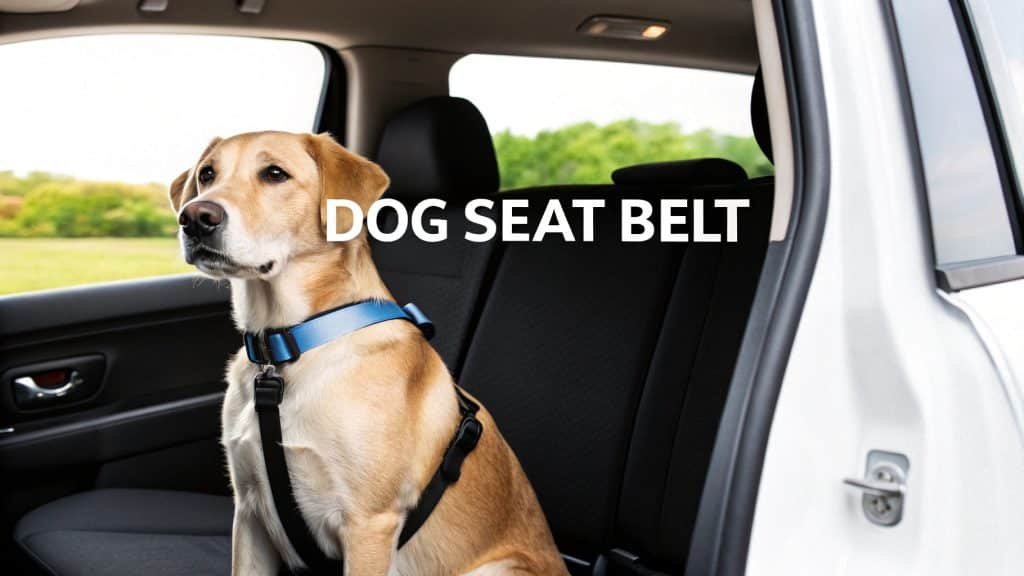
So, how do you do it right? The only truly safe way is to use a crash-tested car harness for your dog. This harness gets buckled directly into your car’s seat belt system. The best hammocks have well-designed slits or zippers that give you easy access to the seat belt buckles, making it simple to clip your dog in securely.
Remember: The hammock creates a safe, contained den. The crash-tested harness and seat belt connection provide the actual protection your dog needs in an accident.
Are Hammocks a Good Idea for Small Dogs?
They’re fantastic for small dogs! One of the biggest risks for little pups in the car is tumbling off the seat or into the footwell during a turn or a quick stop. A hammock completely eliminates that danger, creating a stable, level surface for them.
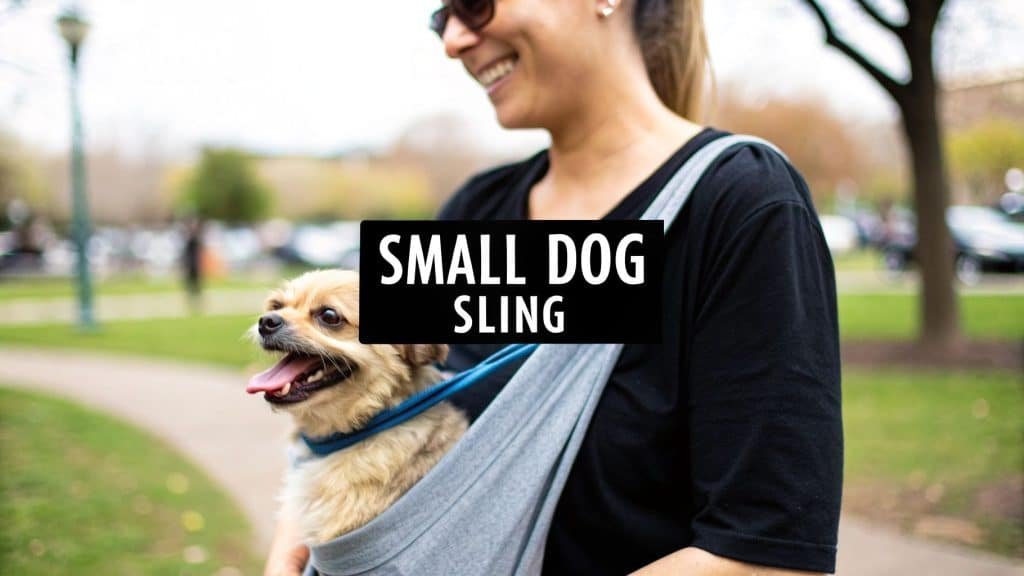
Many small dogs feel much more confident and less anxious in a hammock because it provides a cozy, enclosed space. For an even better setup, you can place their travel-safe booster seat or a comfy carrier right on top of the hammock. They get the elevated view they love, plus the added security of the hammock below. It’s the best of both worlds.
Ready to make your next road trip a breeze? Check out the durable, safe, and thoughtfully designed dog car hammocks at Ur Pet Store. We’ll help you find the perfect fit to turn every ride into a happy adventure. See the full collection here: https://urpetstore.com.