

Blog
Best Car Seat Belt for Dogs: Top Picks & Buyer Tips


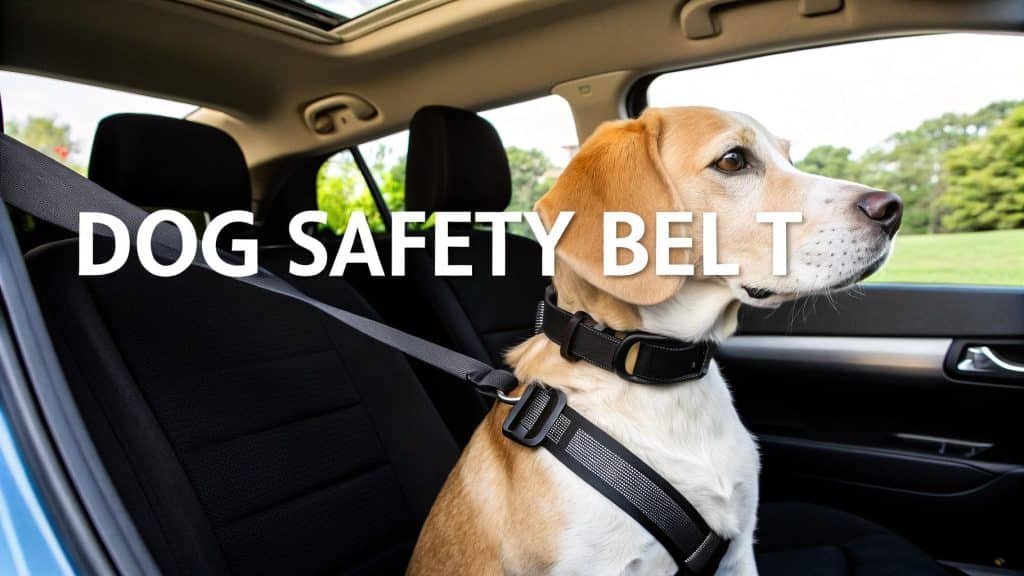
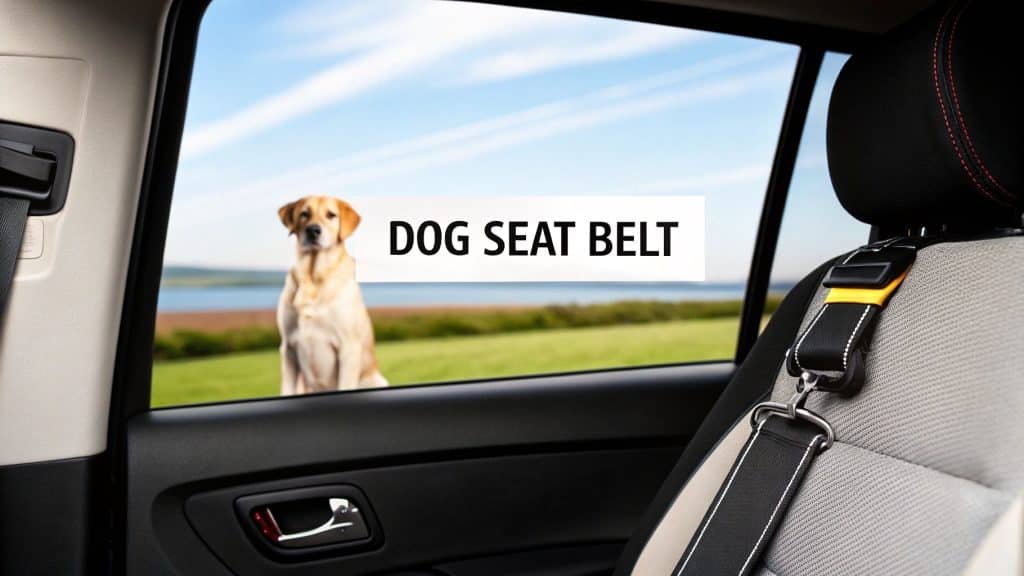
When it comes to the best car seat belt for dogs, what we’re really talking about is a crash-tested harness. Its job is simple but vital: prevent injury during a sudden stop and keep the driver from getting distracted. A dog that isn’t buckled in can become a dangerous projectile, creating a massive risk for themselves and everyone else in the car.
The Critical Need for a Canine Seat Belt
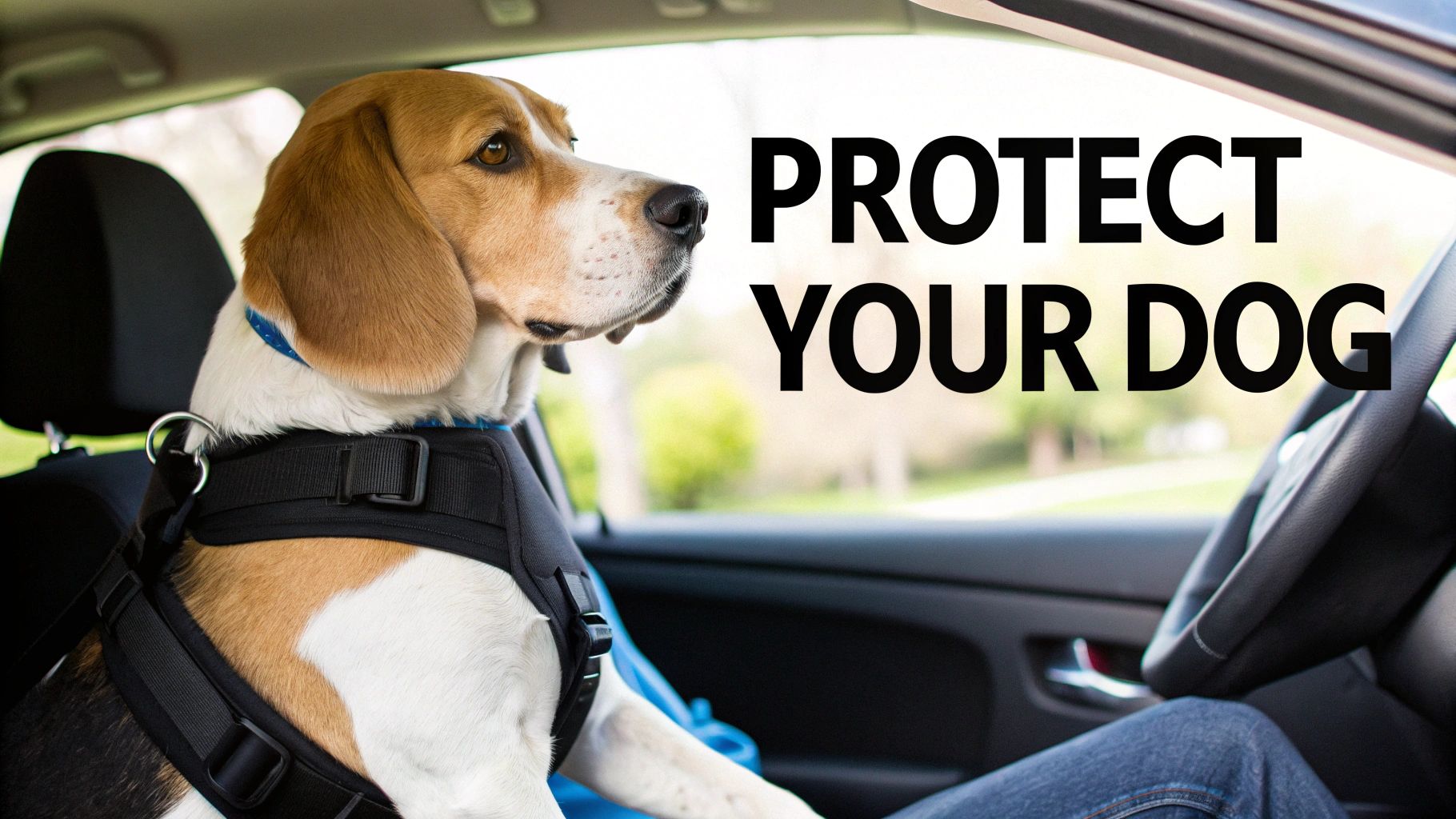
It’s easy to romanticize car rides with our dogs. We all have that picture in our heads of a happy pup with its head out the window, ears flapping in the wind. But the reality of an unrestrained dog in a car is far more dangerous than that idyllic image lets on. It all comes down to basic physics.
Even if you’re just in a minor fender-bender or have to slam on the brakes, the forces involved are staggering. A small, 10-pound dog in a car moving at only 30 mph can fly forward with about 300 pounds of force. In an instant, a beloved pet is turned into a powerful projectile, capable of seriously hurting themselves and anyone else in their path.
More Than Just Crash Protection
Securing your dog isn’t just about what happens in a collision; it’s also a key part of being a safe driver. An anxious or overly excited dog can quickly become a huge distraction, trying to climb into the front seat, blocking your mirrors, or nudging you for attention at the worst possible moment.
A proper restraint system is your best tool for managing these behaviors. It works by:
- Cutting Down on Driver Distraction: When your dog is safely secured in the back, you can keep your full attention on the road where it belongs.
- Giving Them a Sense of Security: Many dogs, especially nervous travelers, actually feel calmer and safer when they are gently restrained in their designated spot.
- Preventing Dangerous Escapes: A good harness means your dog can’t bolt out of the car and into traffic the second you open the door at a rest stop or in your driveway.
Think of it this way: a dedicated dog car seat belt isn’t just another pet accessory. It’s a non-negotiable piece of safety equipment. The goal is to protect your dog, keep you focused, and ensure everyone in the vehicle is safe.
A Growing Market Shows Owners Are Getting It
This growing understanding of pet safety is something we’re seeing reflected in the market. In 2024, the global dog seat belt market was valued at an impressive USD 625 million. That number shows just how many dog owners are actively looking for reliable travel solutions. More and more people now realize that a standard walking harness or a simple leash just doesn’t cut it for car safety.
At the end of the day, buckling up your dog is just as fundamental as making sure your car’s own safety features are working properly. While your dog’s harness is critical, so is the overall condition of your vehicle. For instance, properly maintaining your car’s brake fluid is essential for keeping everyone on board safe. This kind of holistic approach to safety is what makes every trip a safer one.
Making Sense of Dog Car Safety Certifications
When you buckle up or strap a child into their car seat, you take for granted that the equipment has passed rigorous, government-mandated safety tests. Unfortunately, the world of dog car restraints is the Wild West by comparison. There are no official government safety standards, leaving the market flooded with products and confusing claims.
This lack of regulation makes it incredibly tough for dog owners to tell the difference between a harness that provides real protection and one that just gives a false sense of security. You’ll see brands toss around terms like “safety tested” or “strength rated” without any real proof to back it up. This is why independent, third-party testing is so critical.
The Gold Standard: Center for Pet Safety
The one name you need to know in this space is the Center for Pet Safety (CPS). This non-profit research and advocacy group has taken on the crucial role of rigorously testing pet travel products. They conduct independent crash tests using weighted dog dummies that accurately simulate what happens to a pet in a real collision.
Their certification is the closest thing we have to an official standard, and it’s built on proven automotive safety principles. The CPS testing protocol is modeled after the Federal Motor Vehicle Safety Standard 213—the very same standard used for child car seats. This ensures the tests are consistent, scientifically sound, and repeatable.
A CPS certification is your best guarantee that a harness has actually been proven to protect a dog in a simulated 30 mph crash. It separates a marketing slogan from real, evidence-based performance.
Harnesses that pass these demanding tests earn a CPS Certified seal. This seal is the easiest way to spot a product with proven safety credentials. Keep in mind, only a tiny fraction of the harnesses on the market have actually earned this certification, which tells you just how many products would likely fail in a real accident.
Crash-Tested vs. Strength-Tested: A Critical Difference
To cut through the marketing fluff, you have to understand the language companies use. The two most common terms you’ll run into are “crash-tested” and “strength-tested”—and they are worlds apart.
- Strength-Tested: This typically means the manufacturer has performed a static pull test on the harness components, like the webbing or buckles, to see at what point they break. While it provides a sliver of information, it in no way simulates the dynamic, violent forces of a car crash, like sudden deceleration or complex impact angles. A harness can be “strength-tested” and still completely fall apart in a real accident.
- Crash-Tested: This term should only be used for products that have undergone dynamic sled testing at a specialized facility, like the ones the CPS uses. This process is designed to replicate the actual physics of a collision, measuring how well the harness restrains the pet, distributes the immense forces across their body, and holds together under extreme stress.
Just like with human safety equipment, knowing what goes into proper testing, certification, and use is key. To get a better sense of this, you can look into resources on general seat belt extender safety and certifications. The deep dive helps you appreciate the engineering that makes a restraint system truly safe, for people and pets alike. At the end of the day, choosing a genuinely crash-tested harness means you’re buying proven protection, not just an empty promise.
The Head-to-Head: Comparing the Top Crash-Tested Dog Car Harnesses
When you’re looking for the best car seat belt for your dog, you need to cut through the marketing noise and focus on what’s proven to work. That means looking for products with real, evidence-based safety credentials. Instead of just rattling off features, we’re going to dive deep into a side-by-side analysis of the leading crash-tested harnesses.
This comparison is all about what truly matters: official crash-test performance, how the materials hold up, adjustability for different dog breeds, and frankly, how easy it is to use every day. We’ll move past generic pros and cons to give you specific, situational advice. Each breakdown will tell you who it’s “Best Suited For,” helping you match a harness to your dog, whether you have a lanky Greyhound or a nervous traveler who needs a little extra comfort.
Sleepypod Clickit Sport: The Safety Benchmark
The Sleepypod Clickit Sport is what many in the industry consider the gold standard for canine car safety, and for good reason. It holds a coveted Five Star safety rating from the Center for Pet Safety (CPS), a certification that very few products have managed to achieve. This isn’t just a sticker on the box; it’s proof of superior performance in grueling, standardized crash simulations.
Its secret sauce is the patented Infinity Loop design. This clever system works with your car’s seat belt to create a three-point restraint, much like the one that protects you. You thread the seat belt through two loops on the harness’s back, which distributes the terrifying forces of a collision across your dog’s entire torso. This prevents them from launching forward or sideways and minimizes pressure on any single spot.
Material and Construction Details
You can feel the quality right out of the package. It’s made with automotive-grade webbing and features a wide, padded vest that covers the chest and shoulders. This vest isn’t just for show—it’s a critical piece of the puzzle for absorbing and spreading out impact energy.
- Connection Type: Direct seat belt integration through patented Infinity Loops.
- Key Material Feature: Ballistic nylon construction on the padded vest gives it exceptional durability.
- Hardware: All-metal buckles are stress-tested to handle extreme forces without breaking.
Best Suited For: Owners who put proven, top-tier crash-test performance above all else. Its robust, vest-like design also makes it a fantastic choice for dogs who are escape artists or tend to pull against less substantial harnesses.
The Clickit Sport comes in four sizes, fitting dogs from 18 to 90 pounds. It does come with a premium price tag, usually between $72 and $95, but that cost directly reflects its advanced engineering and top-tier safety rating. The initial fitting takes a few minutes to get just right, but once it’s set, you’ll have a secure, confidence-inspiring fit for every trip.
Ruffwear Load Up Harness: Where Comfort Meets Durability
For those long road trips or for pups that just can’t sit still, the Ruffwear Load Up Harness is a phenomenal, crash-tested option. While it’s built for safety, its design philosophy is all about balancing that security with all-day comfort, making it a favorite for adventurous families.
Ruffwear’s harness has been successfully tested to hold up in a vehicle collision. Its strength lies in its rock-solid construction, featuring all-metal, strength-rated hardware and reinforced webbing at all the key stress points. Unlike the Sleepypod’s more restrictive system, the Load Up uses a single, universal seat belt loop on the back. This gives your dog enough freedom to sit, stand, and lie down comfortably.
A Smart Design for Active Dogs
This design isn’t an accident. It’s a nod to the reality that on a long haul, a dog needs to shift positions without getting tangled or feeling trapped. The padded chest and belly panels add to this comfort, preventing any chafing and distributing pressure evenly, whether you’re just cruising or have to slam on the brakes.
- Connection Type: Single-loop universal seat belt attachment on the upper back.
- Key Material Feature: Strength-rated metal hardware and reinforced webbing.
- Adjustability: Highly adjustable to fit a huge range of body shapes, including slender or deep-chested dogs.
Best Suited For: Dogs on long road trips, anxious travelers who hate feeling overly confined, and anyone who wants a secure harness that still allows for natural movement. It’s a top pick for camping, hiking, and cross-country adventures.
Available in five sizes for dogs with chest measurements from 13 to 42 inches, the Load Up usually sells for around $80. It offers a perfect blend of proven safety and functional design, making it one of the most versatile choices out there.
Kurgo Tru-Fit Enhanced Strength Harness: The Accessible Safety Option
The Kurgo Tru-Fit Enhanced Strength Harness hits that sweet spot between reliable safety, everyday practicality, and affordability. It has been crash-tested for dogs up to a hefty 108 pounds, giving you a dependable safety solution without the sticker shock of some competitors. It’s a go-to for many pet owners for this very reason.
One of its best features is the five points of adjustment, which let you get a snug, customized fit on almost any dog. This is crucial for making sure the harness does its job in an accident. The design also includes a padded chest plate to reduce strain and spread out any sudden force.
Designed for Dual Duty
Kurgo built the Tru-Fit to be versatile. It works great as a vehicle restraint, but it’s also a fantastic no-pull walking harness, thanks to D-rings on both the chest and back. The box includes a 10-inch seat belt tether with a sturdy carabiner, which lets you clip the harness directly into your car’s seat belt system.
- Connection Type: Included seat belt tether with carabiner.
- Key Material Feature: Steel nesting buckles, modeled after the hardware used for rock climbing harnesses.
- Warranty: It’s backed by a lifetime warranty against manufacturer defects, which shows how much confidence Kurgo has in its build quality.
Best Suited For: Owners on a budget who refuse to compromise on crash-tested safety. Its dual-purpose design also makes it perfect for people who want one harness for both car rides and daily walks.
With prices often starting around $40, the Kurgo Tru-Fit makes proven safety accessible to more people. This combination of tested performance, adjustability, and a lifetime warranty is an incredible value. The demand for products like this is growing fast; the broader pet car seats and restraints market was valued at USD 600 million in 2023 and is only expected to climb, showing a real shift in how we think about our pets’ safety on the road. You can explore more insights on the pet restraints market at datahorizzonresearch.com.
Comparison of Leading Dog Car Seat Belts
To make your decision a little easier, here’s a side-by-side look at our top contenders. This table gives you a quick snapshot of what makes each of these top-rated dog car seat belts unique.
| Product Name | CPS Certified | Connection Type | Key Material Feature | Best For Dog Size/Type |
|---|---|---|---|---|
| Sleepypod Clickit Sport | Yes (5-Star) | Direct Seat Belt Integration | Ballistic Nylon Vest | Owners Prioritizing Maximum Safety |
| Ruffwear Load Up Harness | Crash-Tested | Universal Seat Belt Loop | Strength-Rated Metal Hardware | Long Trips & Anxious Dogs |
| Kurgo Tru-Fit Harness | Crash-Tested | Included Seat Belt Tether | Steel Nesting Buckles | Budget-Conscious & Everyday Use |
At the end of the day, the right harness for your dog comes down to their size, personality, and your travel habits. By understanding what each of these leading products does best, you can make a smart choice that keeps your best friend safe and comfortable for every mile you share together.
How to Select the Right Harness for Your Dog
Choosing the best car seat belt for your dog isn’t about just grabbing the one with the best reviews. It’s a matchmaking process. You have to find the perfect fit for your dog’s specific size, build, and even their personality. A harness that’s a perfect, snug fit on one pup could be a genuine safety risk for another, so this decision is one of the most important you’ll make as a responsible pet owner.
First things first: get accurate measurements. While weight can give you a ballpark idea, a harness’s safety truly comes down to a snug and secure fit. Grab a soft measuring tape and measure the widest part of your dog’s chest, which is almost always right behind their front legs. This chest girth is the single most important number you’ll need to guarantee a comfortable, escape-proof harness.
Matching Harness Design to Your Dog
Harnesses aren’t one-size-fits-all, and your dog’s body type will heavily influence which style offers the best protection. For example, deep-chested breeds like Greyhounds, Boxers, or Weimaraners often need harnesses with a lot more adjustability and broader chest plates. This design prevents them from slipping out and helps distribute force evenly across their frame.
For smaller dogs, a lightweight, vest-style harness is usually the way to go. It spreads any impact pressure across their smaller body without being too bulky or restrictive. On the other hand, large, powerful breeds absolutely need harnesses built with robust, all-metal hardware and reinforced webbing that can handle their strength and weight in a collision.
To make things a little easier, you can start by thinking about your dog’s general size category. This decision tree is a great visual guide to help you start narrowing down the options.
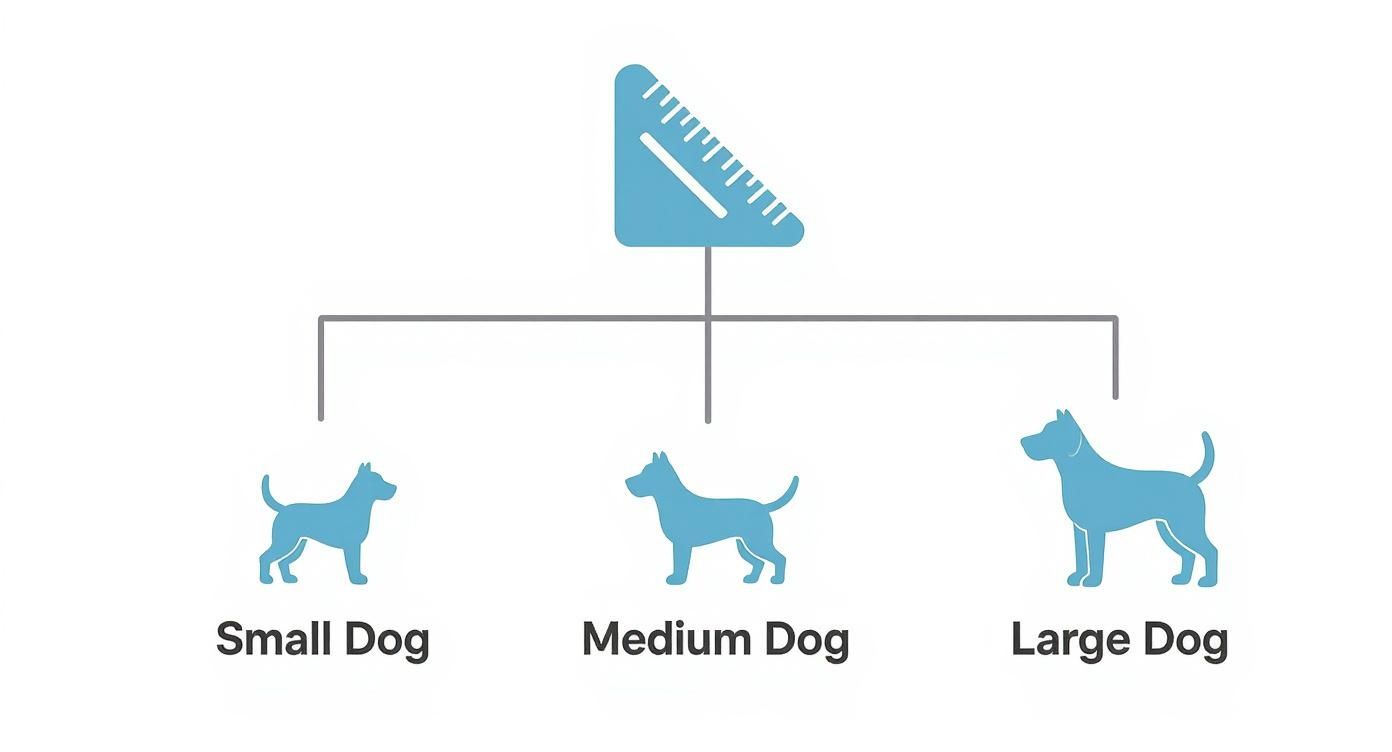
As you can see, size is the first filter, but it quickly leads to more specific features you’ll want to look for. If you’re curious about different harness types beyond just car safety, you can explore a wide selection of collars, leashes, and harnesses.
Tether Connections and Vehicle Integration
How the harness actually connects to your car is another crucial piece of the puzzle. There are two main ways this works, and each has its own set of pros and cons.
- Direct Seat Belt Attachment: With this method, you thread your car’s seat belt directly through loops built into the harness, similar to the system used by Sleepypod. This creates an incredibly secure, three-point restraint that keeps movement to a minimum. It’s the safest option, but it can feel a bit restrictive for dogs who like to reposition themselves.
- Tether and Buckle System: A more common approach is a harness that comes with a short tether. One end clips to the harness, and the other clicks right into the seat belt buckle. It’s much faster to use and gives your dog more freedom to sit, stand, or lie down. The key here is making sure the tether is short enough to prevent your dog from being launched forward in a crash.
Your car itself can also play a role in your decision. It’s no secret that SUVs have become a favorite among pet-owning families, and they are now the leading vehicle type for dog seat installations.
This is all part of a much larger trend of owners prioritizing travel safety. In fact, the pet car seat market is projected to hit an estimated USD 5,134.9 million by 2035 as this focus on safety continues to grow.
Considering Your Dog’s Personality
Last but not least, you have to be honest about your dog’s behavior in the car. Is your co-pilot a calm traveler, or do you have a known chewer or a little escape artist on your hands?
- For the Chewer: Stick to harnesses made with durable, automotive-grade webbing and all-metal hardware. Any plastic components are just a chew toy waiting to happen.
- For the Escape Artist: A vest-style harness with multiple adjustment points is your best bet. These are far more difficult to wriggle out of than simple strap-based designs.
- For the Anxious Traveler: Comfort is everything. A harness with a wide, padded chest plate can feel like a reassuring hug, which can do wonders to calm a nervous dog. You’ll want a system that allows for a little movement so they don’t feel completely trapped.
Correct Installation and Mistakes to Avoid
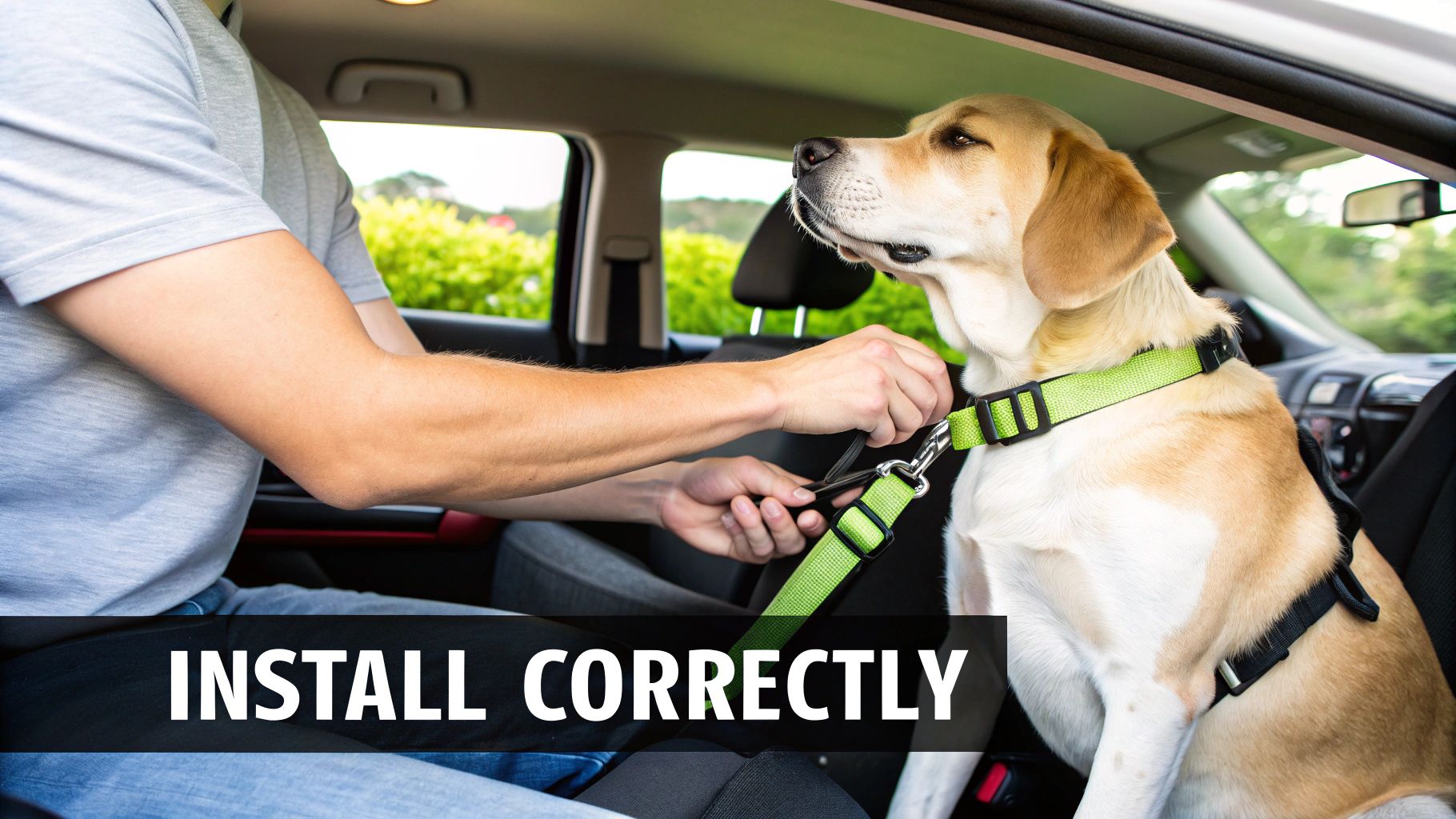
Here’s a hard truth: even the most expensive, crash-tested harness is useless if it’s not installed correctly. Proper fitting and anchoring aren’t just suggestions; they are what make the safety system work in a sudden stop or a crash. A loose strap or a wrong attachment point can completely undermine the engineering you paid for.
The key to getting it right begins before you even open the car door. It’s all about creating a positive association with the harness, especially if your dog is a bit nervous. Take your time, offer plenty of treats, and make that first fitting a calm, rewarding experience.
Getting the Fit Just Right
A secure harness should be snug, but never restrictive. You’re aiming for that sweet spot between safety and comfort. A poorly fitted harness can cause nasty chafing or, even worse, give a panicked dog just enough wiggle room to escape when you need them to be secure.
Follow these simple steps to dial in the perfect fit:
- Start Loose: Before you even try to put the harness on, loosen all the adjustable straps. This makes the whole process smoother and far less stressful for your dog.
- Position It Properly: Slip the harness over your dog. You want the back attachment point—where the tether will clip—to sit squarely on their back, well away from the neck.
- Adjust and Test: Start tightening the straps, usually beginning with the ones around the chest. Use the classic “two-finger rule”: you should be able to slide two fingers snugly between any part of the harness and your dog’s body.
- Do a Final Check: Let your dog walk around the house for a minute. Watch for any rubbing or chafing. The harness shouldn’t shift or slide from side to side as they move.
Common and Dangerous Mistakes to Avoid
I see these mistakes all the time, and they can have devastating consequences. Well-meaning owners often compromise their dog’s safety by overlooking a few simple details. Be sure to avoid these common but critical errors.
- Attaching to a Collar: Never, ever attach a car tether directly to your dog’s collar. The force from a sudden stop is focused entirely on the neck and can lead to catastrophic injuries like whiplash or worse.
- Leaving Too Much Slack: The tether should only be long enough for your dog to comfortably sit, stand, or lie down. Any extra length becomes dangerous in a collision, increasing the distance they can travel and the risk of hitting a seat or being violently thrown.
- Riding in the Front Seat: This is the most dangerous spot in the car for a dog. Airbags deploy with explosive force and can cause serious or fatal harm. Always secure your dog in the back seat.
Critical Safety Warning: A dog car harness is a purpose-built piece of safety equipment. Do not substitute it with a standard walking harness. Walking harnesses are designed for leash pressure, not crash forces, and will likely fail when it matters most.
Taking a few extra minutes to fit and install a harness correctly provides the best possible protection. If you want to dive deeper into what makes a harness truly durable—from materials to stitching—it’s worth exploring the features of a high-quality tactical dog harness, as many of the same construction principles apply.
Frequently Asked Questions About Dog Seat Belts
Even after you’ve done your research, you might still have a few nagging questions about dog seat belts. That’s perfectly normal. Getting those last details sorted out is what gives you real peace of mind on the road. Let’s tackle some of the most common questions I hear from fellow dog owners.
Can I Use a Car Harness for Regular Walks?
This one comes up all the time. It seems practical to use one harness for everything, right? But the short answer is no, and for good reason.
A car harness is a highly specialized piece of safety gear. It’s built to do one job: protect your dog from the incredible forces of a car crash. That means it’s often thicker, stiffer, and a bit more cumbersome than your everyday walking harness. On a casual walk, that extra bulk can be pretty uncomfortable and restrictive for your pup.
Your walking harness, on the other hand, is all about comfort and gentle control on a leash. It’s simply not engineered to handle the physics of a collision.
How Often Should I Replace a Dog Seat Belt?
Think of your dog’s car harness less like a toy and more like a critical piece of safety equipment. It has an expiration date, and knowing when to retire it is vital.
The most important rule is to immediately replace any car harness that’s been in an accident. It doesn’t matter if it was just a fender-bender. The immense force can cause tiny, invisible tears in the webbing or hairline fractures in the metal parts. These weak points could cause the harness to completely fail in a future crash.
For harnesses that haven’t been in a collision, just keep an eye on them:
- Quick Inspection: Before you buckle your dog in, give it a once-over. Look for any frayed straps, loose stitching, or cracked plastic buckles.
- Check the Manufacturer’s Advice: Some brands will give you a recommended lifespan for their products. It’s always a good idea to follow it.
- Obvious Wear and Tear: If it just looks old, faded, and worn out, it’s time for a new one. Don’t risk it.
I always tell people to think of a dog’s car harness like a motorcycle helmet or a child’s car seat. It’s designed for a single impact. Once it’s done its job, its structural integrity is gone. Time to get a new one.
What Is the Safest Place for My Dog in the Car?
This one is simple, and there’s no room for debate: the back seat. It is, without a doubt, the safest spot for any dog, big or small. Never let your dog ride in the front passenger seat.
The reason is the airbag. Airbags deploy with explosive force designed to cushion a full-grown human, and that force can be deadly for a dog. Keeping them securely buckled in the back seat eliminates that risk and also keeps you from getting dangerously distracted while driving.
A safe ride is also a calm ride, especially for anxious dogs. If your travel buddy gets nervous in the car, creating a comforting space is just as important as the harness itself. For some great ideas on creating that sense of security, check out our guide to the best dog beds for anxiety. Many of those same principles can make a world of difference in the car.
At Ur Pet Store, our goal is simple: to help you keep your best friend safe and happy on every single trip you take together. Take a look at our collection and find the perfect gear for your co-pilot.