

Blog
Finding the Best Seat Belt for Dogs


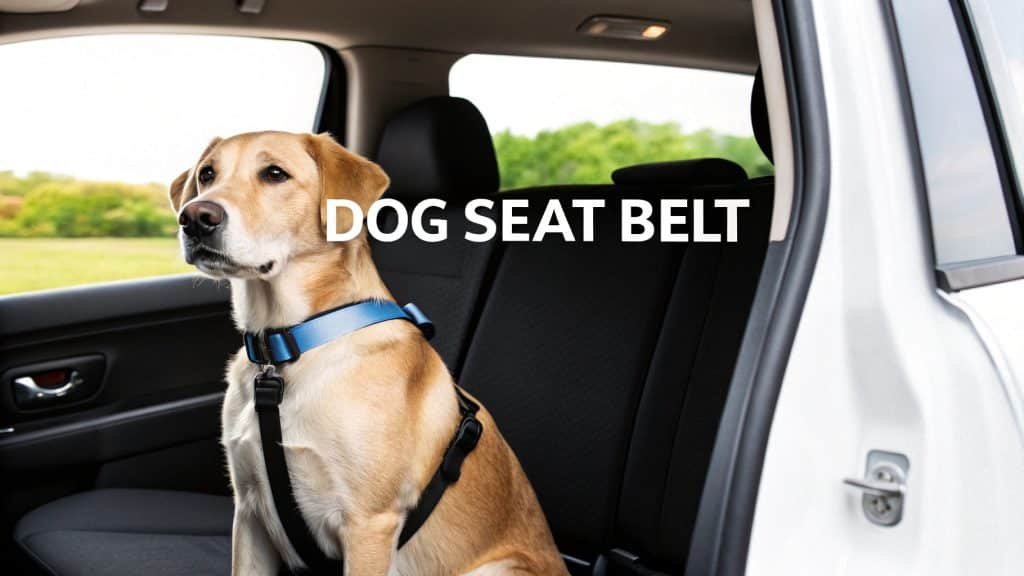
Choosing the right seat belt for your dog isn’t about buying another accessory—it’s about investing in a critical piece of safety equipment. The only truly safe way to secure a dog in a car is with a high-quality, crash-tested harness, designed to protect them if the unthinkable happens.
The Unseen Risks of Unrestrained Travel
Our dogs are part of the family, so it’s natural to want them along for errands, road trips, and adventures. But an unrestrained dog in a moving car is a significant, often overlooked, danger to everyone in the vehicle. The laws of physics are unforgiving, and they apply to our four-legged friends just as they do to us.
During a sudden stop or a collision, an unrestrained dog keeps moving at the car’s original speed. Even a small dog can become a dangerous projectile, capable of causing serious harm to themselves and human passengers. Many people think holding their dog on their lap is a safe alternative, but this is a dangerous myth. The force of an impact would make it impossible to hold on, and the dog could be crushed or even ejected from the vehicle.
Beyond the Initial Impact
The danger doesn’t stop when the car does. In the chaotic aftermath of an accident, a scared and possibly injured dog is a major flight risk. They might bolt from the open car door and run into traffic, leading to a second tragedy. A proper restraint keeps your dog safely inside the vehicle until you or first responders can help them.
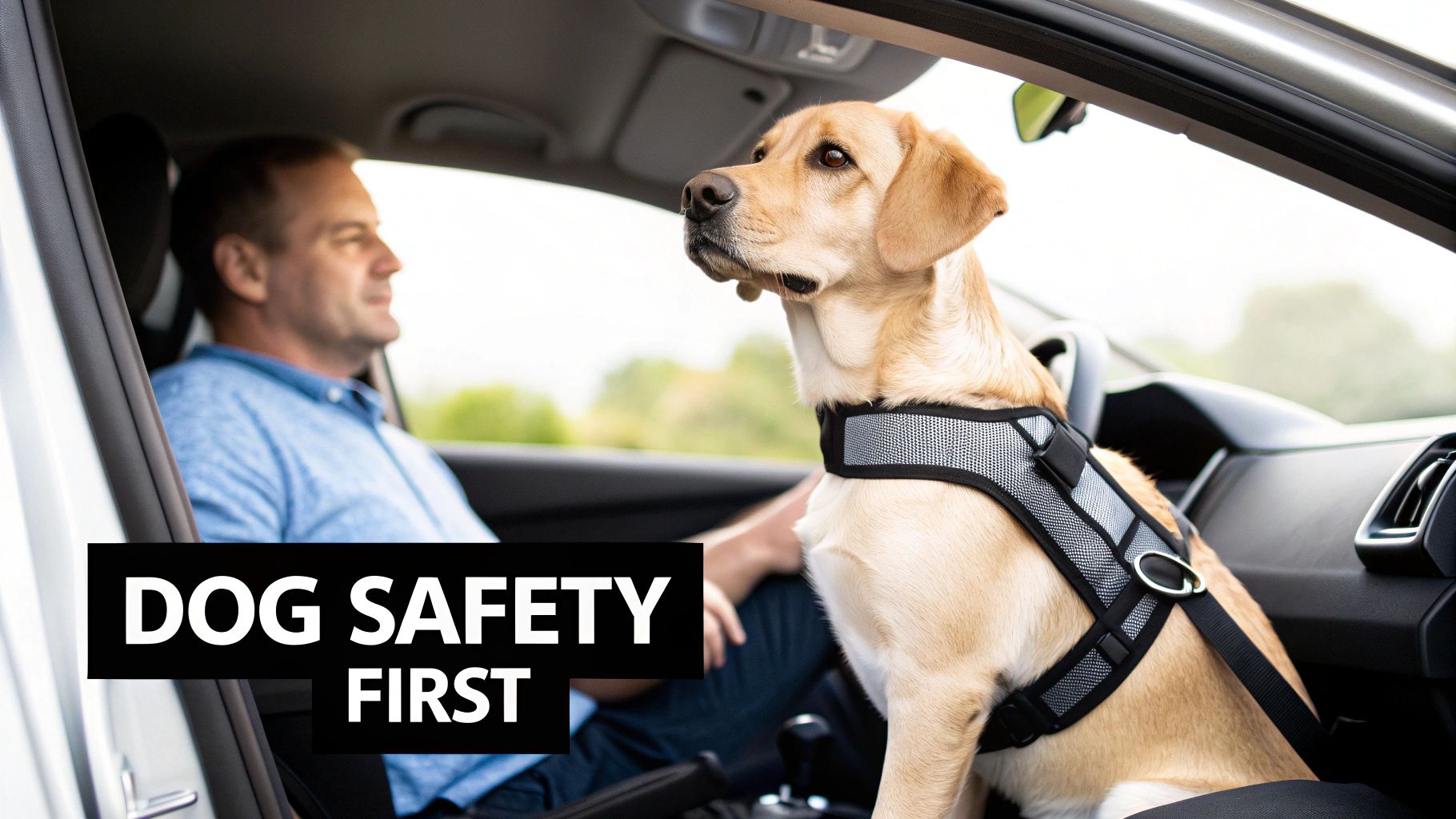
A crash-tested harness is built to handle immense forces. It’s the difference between a controlled stop and a life-threatening impact. By distributing the force across your dog’s stronger chest and torso, it protects their vulnerable neck and spine from catastrophic injury.
A Growing Commitment to Pet Safety
Thankfully, more pet owners are recognizing these risks and changing how they travel with their dogs. Safety equipment is now seen as essential, not just an optional extra. This shift in mindset is reflected in the market; the global dog seat belt industry was valued at roughly USD 625 million in 2024. This boom shows a clear trend: we’re treating our pets like the family they are, and that means giving them the same safety considerations we demand for ourselves. You can explore more about pet safety market trends on archivemarketresearch.com.
Ultimately, picking out the best seat belt for your dog is an investment in their well-being and your own peace of mind. It turns every car ride from a potential hazard into a safe and enjoyable journey with your most precious cargo.
Making Sense of Dog Seat Belt Safety Claims
Walking into the pet aisle, you’re hit with a wall of safety claims. Every dog seat belt seems to boast some level of protection, but what do those labels actually mean? To find a truly safe option for your dog, you have to learn to speak the language of safety testing. It’s the only way to cut through the marketing noise.
The first and most critical thing to understand is the massive difference between a product being “crash-tested” and one that is “crash-certified.” They sound almost the same, but they represent two entirely different worlds of safety and accountability.
A “crash-tested” claim usually comes straight from the manufacturer. It means they’ve likely run some kind of test on it, but that’s all you know. There are no industry-wide standards for these internal tests, so one company’s idea of a “pass” could be wildly different from another’s. Think of it like a student grading their own test—the results aren’t exactly trustworthy.
The Gold Standard: Third-Party Certification
On the other hand, “crash-certified” means a qualified, independent organization put the product through a standardized, rigorous testing process and it passed. This is the only way to get real, unbiased proof that a harness can hold up in a collision.
The most respected name in this space is the Center for Pet Safety (CPS). They’re a non-profit research and advocacy group that has set the bar for pet travel safety. CPS uses specially designed crash-test dog dummies and follows strict protocols that mirror those used for children’s car seats.
A dog seat belt with a CPS certification has been proven to keep the test dummy secured on the seat during a simulated crash. The harness didn’t break, tear, or otherwise fail catastrophically. This certification is the closest thing we have to a guarantee that the product will work when it matters most.
When you choose a CPS-certified product, you’re not just buying a piece of gear; you’re investing in proven performance. It’s the single best thing you can do to ensure your dog is properly protected on the road.
What Goes Into a Crash-Worthy Harness?
Certification isn’t just a sticker on a box; it reflects the materials and construction of the harness itself. The products that pass these grueling tests all share a few key design features that set them apart from a standard walking harness.
Here’s what to look for in a top-tier safety harness:
- All-Metal Hardware: This is non-negotiable. Buckles, adjusters, and leash connection points should be made from forged or welded steel. Plastic clips can shatter on impact, and flimsy stamped metal can bend or break under the incredible forces of a crash.
- Seatbelt-Grade Webbing: The straps should feel just like the seatbelts in your car. This material is designed to have incredible tensile strength, meaning it won’t stretch or tear during a sudden, high-impact event.
- Reinforced Stitching: Look closely at where the straps connect to the body of the harness. You should see bar-tack stitching—a tight, dense pattern of stitches used to reinforce stress points. It’s a clear sign of quality construction built to handle extreme loads.
A harness is only as strong as its weakest link. One plastic buckle is all it takes for an otherwise well-built harness to fail completely in an accident.
Ultimately, knowing the difference between a marketing claim and a real safety certification gives you the power to choose wisely. You can look past the fancy packaging and assess a product based on what truly counts: quality materials and proven, independent testing. It’s how you make sure your best friend is genuinely protected on every trip you take together.
A Detailed Comparison of Top Dog Seat Belts
When you start digging into the world of dog seat belts, you quickly realize it’s about more than just marketing claims. To truly keep your dog safe, you have to look past the packaging and focus on proven performance. Let’s break down the real-world differences between the top crash-certified harnesses to see how they actually stack up in terms of safety, materials, and daily usability.
This comparison isn’t just about features; it’s about understanding the critical distinction between a product that’s merely “crash-tested” and one that is independently “certified.”
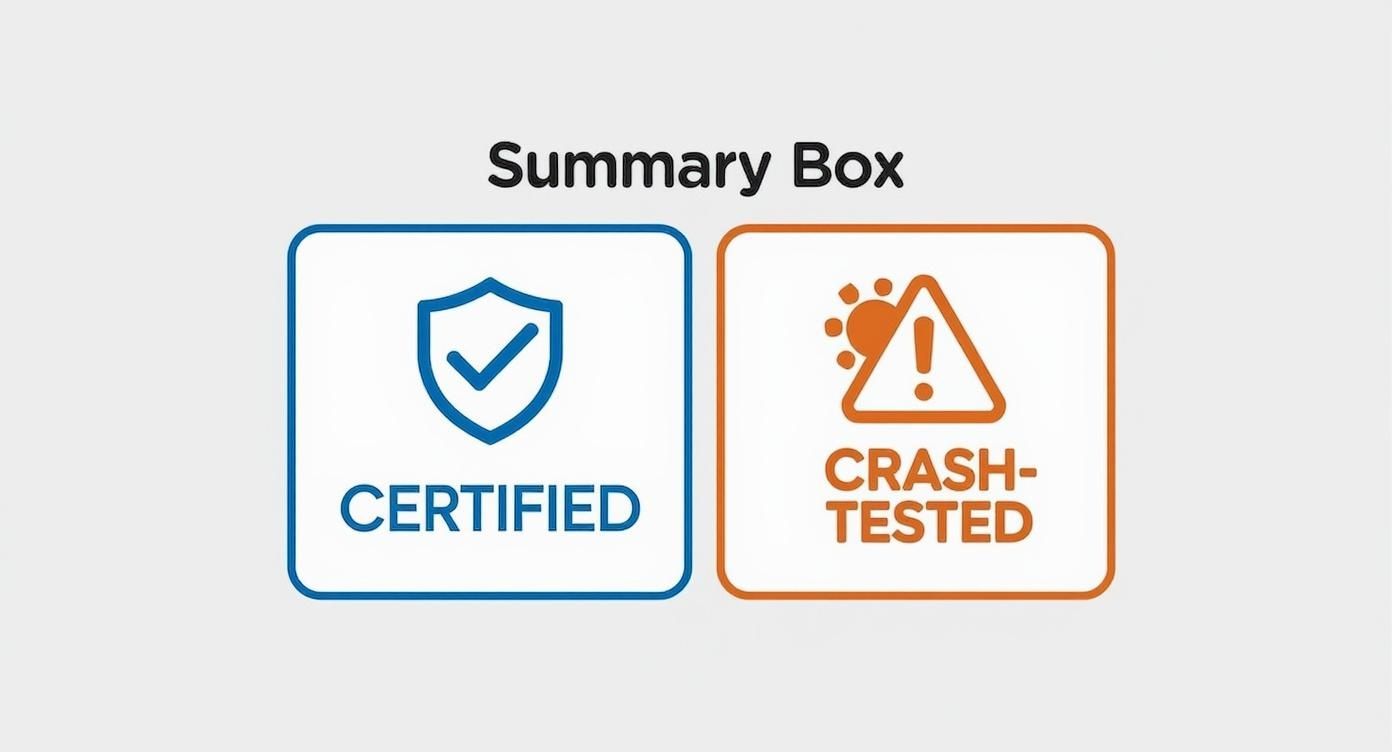
As you can see, the terms sound similar, but they aren’t the same. Only a Certified status from a group like the Center for Pet Safety (CPS) confirms a product has passed rigorous, standardized safety tests. It’s the gold standard.
The Gold Standard: Sleepypod Clickit Sport
If you ask safety experts, the Sleepypod Clickit Sport almost always comes up first, and for very good reason. It’s one of the few harnesses to earn a Five Star safety rating from the Center for Pet Safety, which means it has been vetted more thoroughly than almost any other product out there. The whole design is engineered to mimic the three-point seat belt system we humans rely on.
Its secret sauce is the patented Infinity Loop design. This isn’t just a fancy name—it’s a specific system where the car’s seat belt weaves through two loops on the harness’s back. This creates a three-point restraint that secures your dog’s entire torso, drastically cutting down on forward and side-to-side movement in a sudden stop. That control is what prevents your dog from becoming a projectile and hitting the seat in front of them.
The build quality is immediately obvious. The broad, padded chest plate is made from ballistic nylon, designed to spread collision forces across the strongest part of the dog’s body. All the hardware is stress-tested metal, so you don’t have to worry about a weak point snapping under pressure.
But this level of security comes with a trade-off: it’s restrictive. The Clickit Sport is designed to keep your dog safely in a sitting or lying position. While that’s fantastic for safety, it might not work for anxious dogs who need to shift around to stay calm. Getting the fit just right also requires careful measurement, as a loose harness won’t perform as designed.
Ruffwear Load Up: A Focus on Comfort and Security
Ruffwear is a name that anyone with an adventurous dog knows and trusts, and their Load Up Vehicle Restraint Harness lives up to that reputation. While it’s also successfully crash-tested, it strikes a slightly different balance, prioritizing a bit more freedom and comfort without sacrificing core safety.
The Load Up uses a single, universal loop on the back to attach to the car’s seat belt. This setup gives a dog enough slack to sit up, turn around, or lie down comfortably. For dogs that get antsy on long drives, this freedom can be a game-changer, making car rides a much less stressful experience for everyone.
True to the brand, this harness is built to last. It’s constructed with strength-rated metal hardware and reinforced stitching everywhere. The padded panels on the chest and belly ensure it stays comfortable, even on all-day road trips. It’s the perfect harness for dog owners who go straight from the car to the hiking trail.
The key differentiator for the Ruffwear Load Up is its balance of safety and freedom. It provides proven crash protection while allowing enough movement to keep most dogs comfortable and calm, making it a top choice for long-haul journeys and anxious travelers.
The only thing to keep in mind is that this extra mobility means the dog isn’t as rigidly secured as with the Clickit Sport. In a severe crash, there’s a bit more potential for movement, but the harness is still engineered to prevent ejection and serious injury.
Kurgo Tru-Fit: An Accessible and Versatile Option
The Kurgo Tru-Fit Enhanced Strength Harness hits that sweet spot between safety, versatility, and price. It’s been crash-tested for dogs up to 108 pounds, so it’s a solid, reliable choice for a huge range of breeds. Its biggest strength is its focus on a customizable, secure fit.
With five different adjustment points, you can really dial in the fit for your dog’s specific body shape, whether you have a deep-chested Vizsla or a stocky Bulldog. A perfect fit is non-negotiable for safety; even the best-made harness is useless if your dog can wriggle out of it.
Another major plus for the Kurgo Tru-Fit is its dual-purpose design. It functions perfectly as both a car restraint and a daily walking harness, complete with front and back leash attachments. For anyone wanting an all-in-one solution that seamlessly transitions from a walk to the car, this is a huge selling point. If you need something more heavy-duty for walks, you might compare it to a dedicated tactical dog harness to see the difference.
While the materials might not feel quite as over-engineered as the Sleepypod or Ruffwear models, it still delivers certified crash protection at a fantastic price. It’s easily one of the best values on the market.
Comparing Key Features of Leading Dog Seat Belts
To make things even clearer, let’s put these three harnesses side-by-side. This table breaks down the most important features to help you see at a glance which one might be the best fit for your dog and your lifestyle.
| Product Name | CPS Certified | Hardware Material | Attachment Point | Best For (Dog Size/Temperament) | Ease of Use Rating (1-5) |
|---|---|---|---|---|---|
| Sleepypod Clickit Sport | Yes (5-Star) | Stress-Tested Metal | Dual Loops (3-Point) | Medium to Large Dogs; Maximum Security | 3 |
| Ruffwear Load Up | Yes (Tested) | Strength-Rated Metal | Single Loop (Universal) | All Sizes; Anxious or Active Dogs | 4 |
| Kurgo Tru-Fit | Yes (Tested) | Steel Nesting Buckles | D-Ring & Tether | All Sizes; Budget-Conscious Owners | 5 |
Looking at the table, you can see the distinct trade-offs. The Sleepypod offers unmatched safety but is less user-friendly. The Kurgo is the easiest to use day-to-day, while the Ruffwear finds a happy medium.
Making the Final Decision
So, which one should you buy? It really boils down to your dog and your priorities.
- For the safety purist who demands the absolute highest level of certified protection, the Sleepypod Clickit Sport is the clear winner. Its three-point system is unmatched.
- For the adventurous owner whose dog needs to move around on long trips, the Ruffwear Load Up offers the perfect blend of proven safety and travel comfort.
- For the practical pet parent looking for a versatile, affordable, and easy-to-use harness that still provides certified crash protection, the Kurgo Tru-Fit is an amazing all-around choice.
Any of these options is a massive improvement over letting your dog ride unrestrained. By weighing the crash-test data, build quality, and your own dog’s needs, you can confidently choose a harness that will keep them safe on every adventure to come.
How to Choose the Right Seat Belt for Your Dog
Picking the right seat belt for your dog isn’t about just grabbing the one with the best reviews. It’s about finding the right fit for your dog. What works for a mellow, 80-pound Golden Retriever is going to be a terrible—and potentially unsafe—choice for a zippy 15-pound Jack Russell Terrier. Your dog’s size, build, and even their personality are all part of the equation.
The global dog seat belt market has exploded with options for small, medium, and large dogs, reflecting just how much owners care about this. As we demand safer gear, companies are responding with better materials and smarter designs. You can see more about these market trends on dataintelo.com. This variety is great, but it also means you need to know what you’re looking for.
Let’s walk through the key factors, starting with the obvious stuff like size and moving on to the finer points of your dog’s behavior.
Matching the Harness to Your Dog’s Size and Build
First things first: your dog’s weight and shape. A harness has to be tough enough to handle the immense force of a dog’s weight in a crash, but it also has to fit them correctly to do its job.
- Large and Giant Breeds (e.g., German Shepherds, Great Danes): For any dog over 75 pounds, you absolutely need a harness built with oversized, strength-rated metal hardware and thick, wide webbing. The forces at play are no joke. Look for models with broad, padded chest plates designed to spread that impact across a wider surface area.
- Small Breeds (e.g., Chihuahuas, Yorkies): With smaller dogs, the main goal is to keep them from becoming a projectile. Their harness needs to be secure without being overly bulky or heavy. A lightweight, snug fit is perfect; anything too big is a slipping hazard and won’t be effective.
- Brachycephalic (Flat-Faced) Breeds (e.g., Pugs, French Bulldogs): These guys have unique breathing challenges. A standard harness with a narrow chest strap can put dangerous pressure on their windpipe. It’s crucial to find a harness with a wide, V-shaped chest plate that sits low on the chest, far away from their throat, so they can breathe easily.
Considering Breed-Specific and Temperamental Needs
Beyond just their physical build, think about your dog’s personality and even their coat. If a harness is uncomfortable or makes them anxious, they’ll fight you on it every time, and that can make car rides a nightmare for everyone.
For the Anxious Traveler:
If your dog is a pacer, a whiner, or just can’t seem to settle down in the car, a super-restrictive system like the Sleepypod Clickit Sport might just crank their anxiety up to eleven. A better bet might be something like the Ruffwear Load Up, which gives them enough room to sit, stand, and lie down comfortably while still keeping them secure. The trick is to keep the tether short—just enough slack for comfort, but not enough for them to wander into the front seat.
For the Long-Haired Companion:
Got a Collie or a Pomeranian? You know the struggle with matting. For breeds with thick, long fur, look for a harness with a smooth lining that won’t snag or pull. Sometimes, a more minimalist design with less fabric contact can also help keep them cool and comfortable, especially on long trips.
Situational Recommendation: An older dog with arthritis might have a hard time with a harness that requires you to lift their legs through loops. In that case, a simple step-in style harness can make getting ready for a ride so much easier and less painful for them.
While seat belts are fantastic, it’s also worth exploring various pet travel carriers, as they can be a great alternative depending on your situation. A secured carrier can feel like a safe, cozy den for very small or nervous dogs.
Ultimately, making the right choice comes down to knowing your dog. When you really think about their build and their personality, you can find a seat belt that doesn’t just offer top-notch protection but also makes every car ride a calm and comfortable one. If you’re looking for more gear, our complete collection of collars, leashes, and harnesses has plenty of great options for both travel and everyday walks.
Common Mistakes to Avoid When Using a Dog Seat Belt
Getting a great dog seat belt is a fantastic first step, but it’s only half the battle. A top-tier, crash-tested harness is only as good as how you use it. I’ve seen too many well-intentioned owners make a few simple mistakes that completely undermine the safety of their setup. Let’s walk through them so you can be sure you’re doing it right.
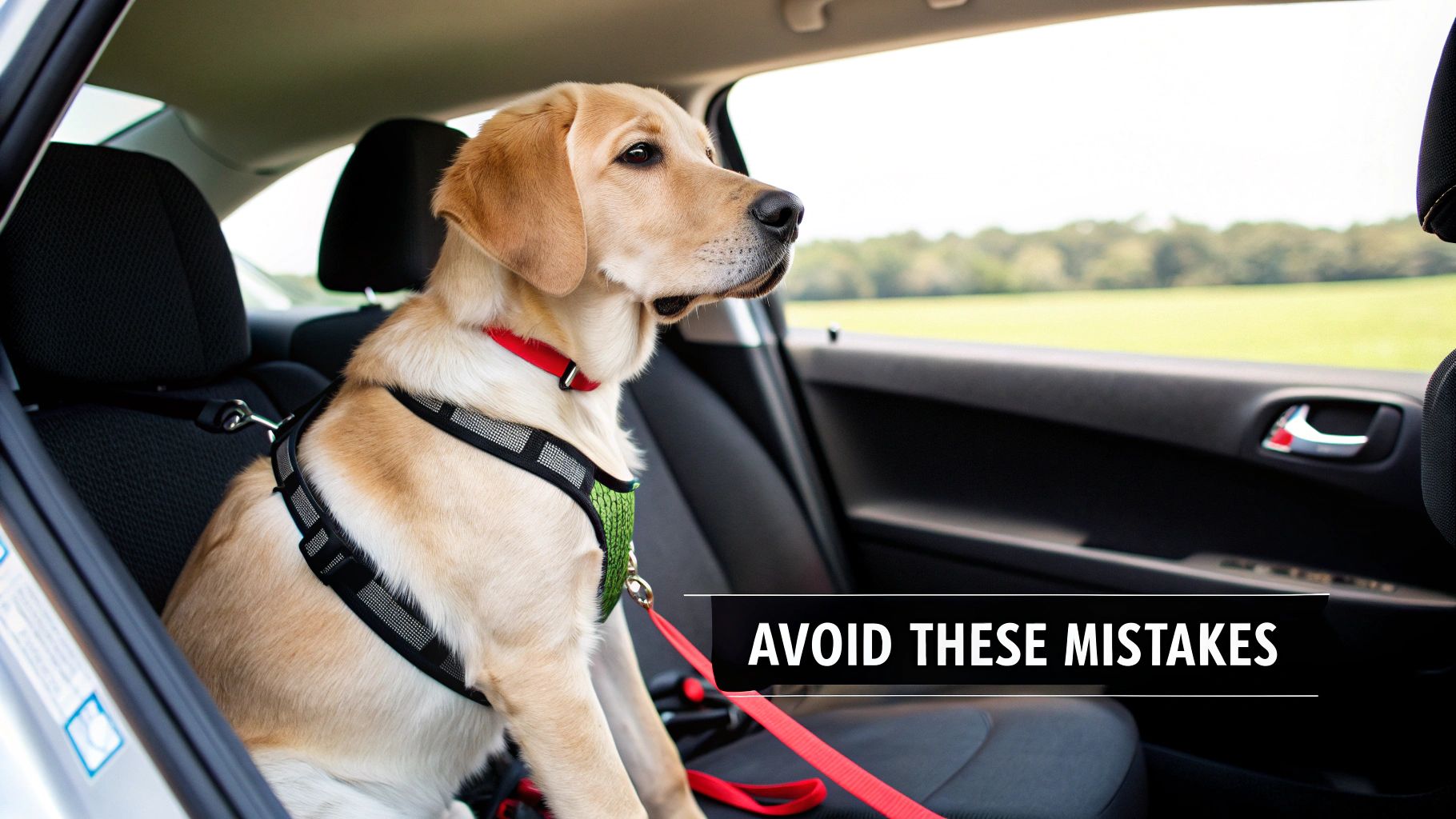
The absolute worst mistake—and it’s a tragically common one—is clipping the seat belt tether directly to your dog’s collar. I can’t stress this enough: never do this. During a sudden stop or a crash, all that force gets funneled directly to their neck. The result can be catastrophic throat damage or even strangulation. The tether must always connect to the D-ring on the back of a proper, crash-tested harness. No exceptions.
Getting the Fit and Slack Just Right
A harness that’s too loose is an escape route waiting to happen. If your dog can wriggle out of it during a sudden maneuver, or worse, get thrown from it in an accident, it’s not doing its job. The fit needs to be snug. As a rule of thumb, you should be able to slide no more than two fingers between the harness and your dog’s body.
At the same time, giving the tether too much slack is another pitfall. I know you want your dog to be comfortable, but the tether should only be long enough for them to sit or lie down. Any extra length lets them build up dangerous momentum in a crash, which dramatically increases the force—and potential for injury—when they finally hit the end of the strap.
A short tether is a safe tether. It’s what keeps your dog from being launched into the front seat or slammed against a door. The entire point is safe restraint, not free-roaming comfort in the back.
Once you arrive, a long trip can leave any dog feeling stiff. Having some high-quality beds and mats ready for them at your destination gives them a comfortable place to stretch out and recover.
Choosing the Safest Location in Your Vehicle
Where you put your dog in the car is just as important as how you secure them. The front passenger seat is a definite no-go. Airbags deploy with explosive force, and that impact can cause severe or even fatal injuries to a dog, even one secured in a harness. The back seat is, without question, the safest spot for any pet.
By sidestepping these three common errors, you can be confident that your investment in a quality dog seat belt is actually providing the life-saving protection your dog deserves. Correct usage is the final, critical piece of the safety puzzle for every road trip you take together.
Answering Your Top Dog Car Safety Questions
It’s one thing to pick out a dog seat belt, but it’s another to use it correctly and confidently. If you still have some lingering questions about the rules of the road or the finer points of car safety, you’re not alone. Let’s clear up some of the most common concerns.
Can I Just Clip the Seat Belt to My Dog’s Collar?
Let me be crystal clear on this one: absolutely not. This is the single most dangerous mistake you can make. Clipping a seat belt tether to a collar concentrates all the force of a sudden stop or, worse, a crash, directly onto your dog’s neck. This can easily lead to a crushed trachea, spinal damage, or even strangulation.
The only safe way to restrain your dog in a car is to connect the seat belt tether to a purpose-built, crash-tested harness. A quality harness is designed to spread those intense forces across the strongest parts of your dog’s body—their chest and back—which is what keeps them safe.
Is It Actually Illegal for My Dog to Be Unrestrained in the Car?
This is a bit of a gray area because the laws change from state to state, and sometimes even town to town. Very few places have a law that specifically says “you must use a dog seat belt.” However, many states have broad distracted driving laws or unsecured load regulations that can absolutely apply to a dog bouncing around the car.
My advice? Don’t get bogged down in the legal specifics. Just do what’s safest.
An unrestrained 10-pound dog in a crash at 50 mph can become a projectile with 500 pounds of force. That’s a serious danger to them, to you, and to everyone else on the road. A harness isn’t just an accessory; it’s essential safety gear.
How Do I Make Sure the Harness Fits Right?
A proper fit is everything. Too loose, and your dog could slip out of it when you least expect it. Too tight, and it’s just plain uncomfortable and could even restrict their breathing. The gold standard here is the “two-finger rule.”
You should be able to comfortably slide two fingers between the harness and your dog’s body at any point—the neck, chest, or back. It needs to be snug enough that they can’t wriggle an arm or a shoulder out, but not so tight that it chafes or pinches. It’s a good habit to double-check the fit before every single trip.
What’s the Big Deal Between “Crash-Tested” and “Crash-Certified”?
This is a really important distinction, and marketing language can be tricky here. Understanding the difference is key to buying a product that actually works.
- Crash-Tested: This usually just means the manufacturer ran some of their own tests. There’s no independent oversight, so you don’t really know what standards they used or how the product truly performed. It’s a claim, not a guarantee.
- Crash-Certified: This is the one you want to see. It means an independent organization, like the Center for Pet Safety (CPS), has put the harness through standardized, rigorous testing and it passed.
A CPS certification is your best assurance that the restraint will hold up in an actual accident. When you’re shopping, always look for that third-party seal of approval.
Here at Ur Pet Store, our priority is keeping your four-legged family members safe on every adventure. We carefully select the highest quality safety accessories so you can drive with peace of mind. Check out our complete collection of travel gear at https://urpetstore.com for products you can truly rely on.