

Blog
Dog Sling Carrier for Small Dogs: The Ultimate Guide to Comfort


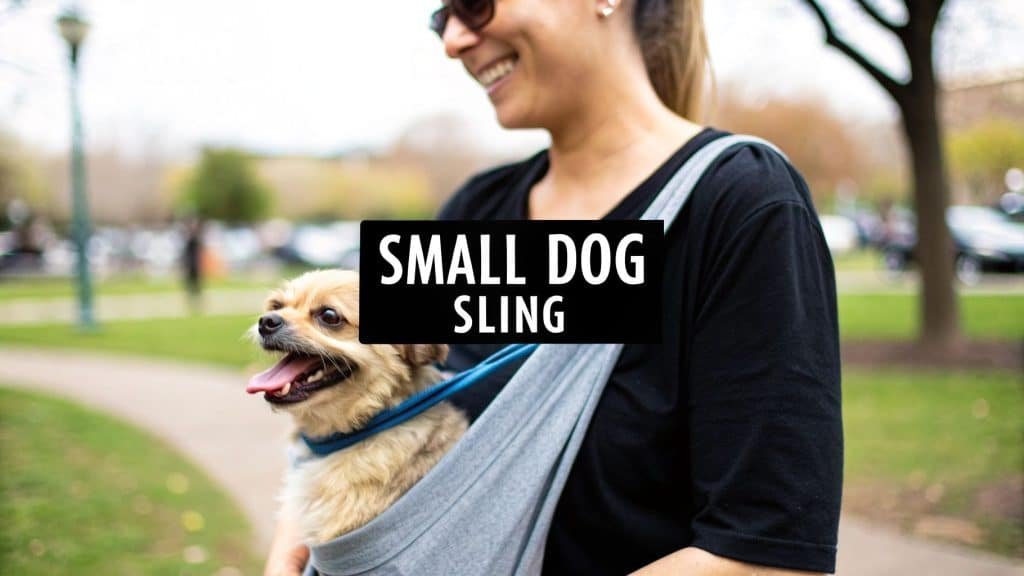
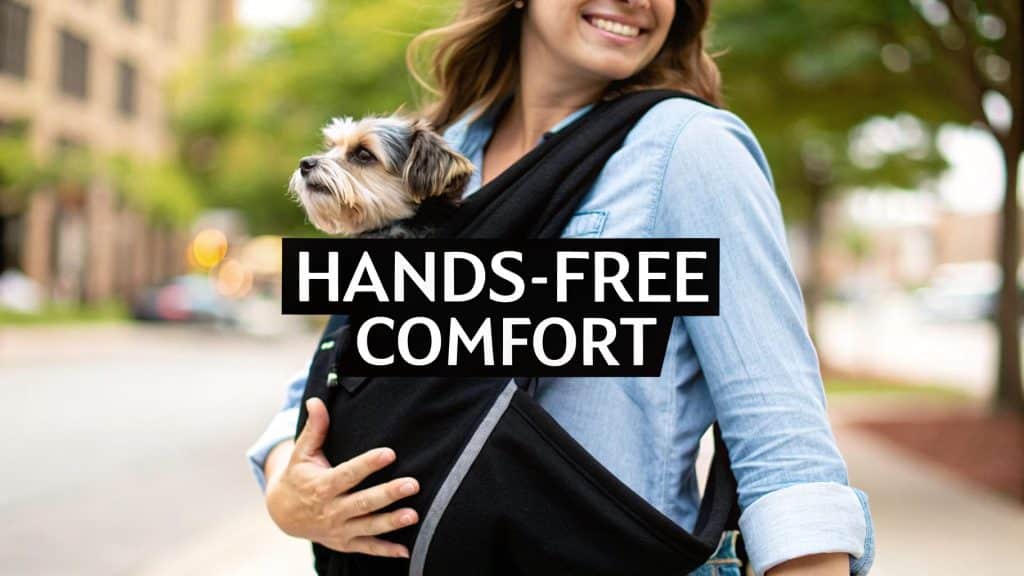
Ever seen a baby wrap carrier? A dog sling carrier is pretty much the same concept, but for your small pup. It's a soft, comfortable fabric bag that you wear over one shoulder, letting your dog snuggle up securely against your body. This frees up your hands while giving your best friend a cozy, safe spot to ride along.
Why a Dog Sling Might Be Perfect for You
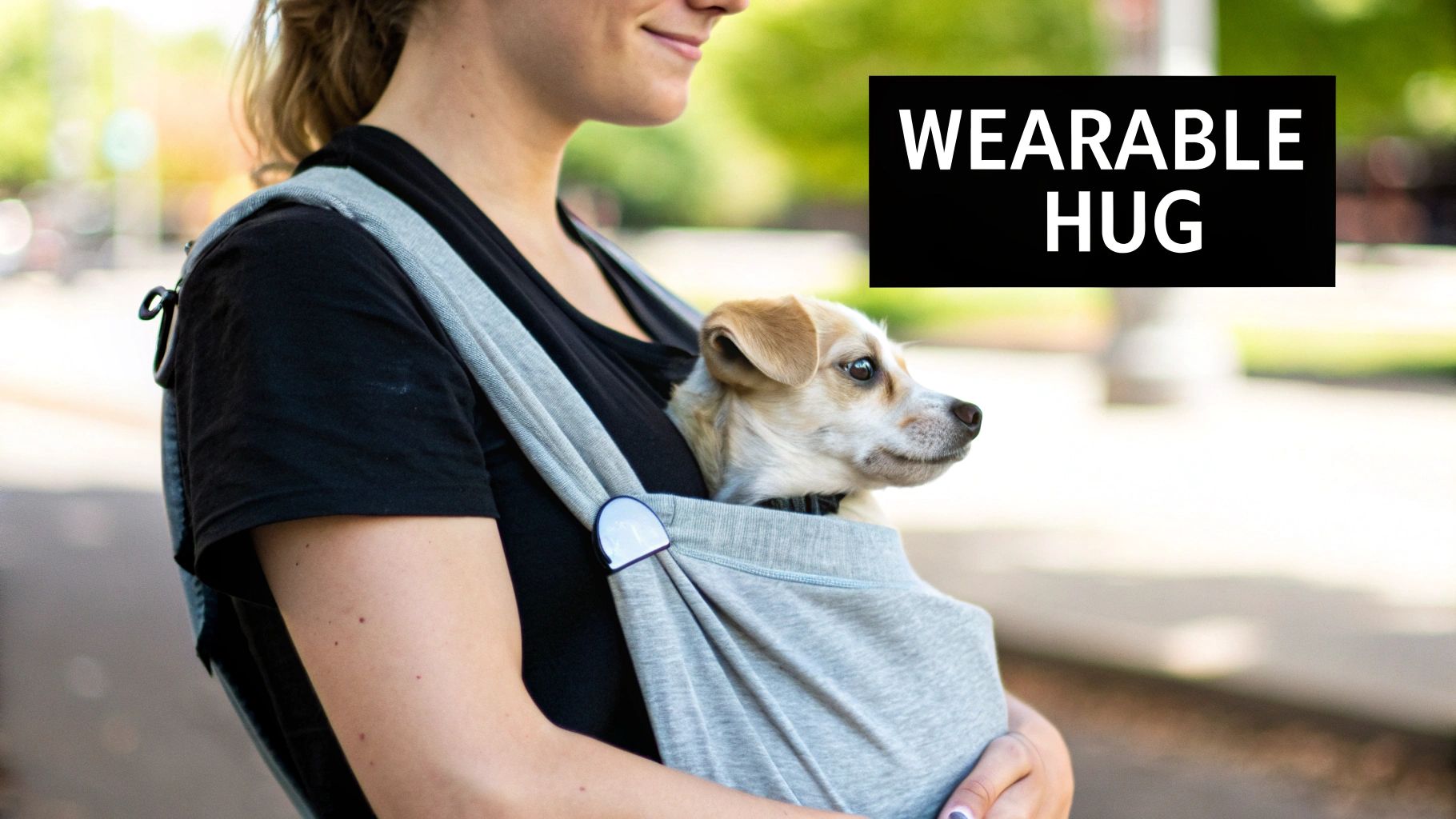
Picture this: you're trying to navigate a bustling farmer's market with a coffee in one hand and your phone in the other. Meanwhile, your tiny dog is at risk of getting lost in a forest of human feet. It’s a stressful situation for both of you. A dog sling completely changes that picture.
It's more than just a cute accessory; it's a practical tool that seamlessly weaves your small companion into your daily routine. Unlike a hard-sided crate or a bulky backpack, a sling is soft and flexible, encouraging that close bond you both love. This design isn't just about making your life easier—it taps into your dog's instinct to feel safe and secure, making it a fantastic solution for all sorts of situations.
Core Benefits for Small Dog Owners
Choosing a dog sling carrier for small dogs usually boils down to solving the unique challenges that come with having a little pup. This simple piece of fabric can be a real game-changer.
- Soothes Anxious Dogs: The gentle pressure and your body heat can work wonders for a nervous dog. It's a lot like swaddling a baby—it provides a constant, reassuring hug that helps them relax.
- Protects Unvaccinated Puppies: The world can be a risky place for a puppy that isn't fully vaccinated yet. A sling lets them take in all the new sights and sounds from a safe, elevated spot.
- Makes Crowds Manageable: Busy sidewalks, subways, and festivals can be overwhelming and dangerous for a small dog. A sling keeps them safely off the ground, far away from accidental kicks or being stepped on.
- Helps Senior or Injured Dogs: An older dog with stiff joints or a pup recovering from surgery doesn't have to be left behind. A sling gives them a comfortable way to join you on outings they would otherwise miss.
A dog sling carrier is basically a wearable hug. It gives small dogs the physical and emotional security they need when the big world feels a little too intimidating.
A Modern Solution for a Pet-Centric Lifestyle
Let's face it, our dogs are family. We take them on errands, to cafes, and on vacation. This modern, pet-centric lifestyle has fueled the need for better, more comfortable ways to bring our four-legged friends along for the ride.
Dog carrier slings have moved from being a niche product to a mainstream must-have. One market analysis estimated the industry at around USD 500 million, with a remarkable 12% annual growth rate over the last decade. That growth is blowing the broader pet carrier market out of the water.
This trend shows that people want hands-free, on-the-go solutions. As you think about whether a sling fits your life, it’s a good moment to also consider the bigger picture of pet ownership, starting with the essential questions to ask when adopting a dog.
Ultimately, a sling isn't just about carrying your dog. It's about strengthening your bond and turning every trip out the door into a shared adventure—giving you freedom and your pup total security.
How to Choose the Perfect Dog Sling Carrier
Choosing the right dog sling carrier for small dogs isn't about finding a one-size-fits-all product. It's about finding the perfect match for you and your pup. Think of it like picking out your favorite, most comfortable hoodie—it has to be the right size, feel good, and have the features you need to feel secure. When you get this right, every walk becomes a cozy, stress-free experience.
The good news is, the process is pretty simple once you know what to look for. Let's break down the three big things to consider: getting the size right, picking the best material, and knowing which safety features are non-negotiable.
Sizing Up Your Dog for a Snug Fit
This is, without a doubt, the most important step. A sling that’s too big will have your dog sliding around, feeling insecure. One that's too small is just a cramped, uncomfortable pouch. The sweet spot is a fit that’s snug and secure, almost like a gentle hug.
To get that perfect fit, you’ll need to grab a tape measure and your bathroom scale.
-
Measure Your Dog's Weight: First, weigh yourself. Then, scoop up your pup and step on the scale again. The difference between the two numbers is your dog's weight. Every sling carrier has a firm weight limit, usually between 12 and 20 pounds, and you absolutely have to stay within that for safety.
-
Measure Your Dog's Length: Get your dog to stand up straight. Using a soft measuring tape, measure them from the base of their neck right down to the base of their tail. This length measurement ensures the sling’s pouch is deep enough for them to curl up comfortably in their natural "C" shape.
Remember, the perfect fit isn't just about weight. A long, skinny dog like a Dachshund and a short, compact dog like a Pug might weigh the same but will require different sling dimensions for proper support.
Decoding Materials for Comfort and Durability
The fabric of a dog sling makes a huge difference in comfort—for both of you—and how long it will last. The right material depends on your climate, your lifestyle, and your dog's personal preferences.
A lot of slings are made from soft, breathable fabrics, while others are built for more rugged use. Thinking about when and where you'll use the sling will point you toward the best option.
Here’s a quick comparison of the most common materials you'll find:
Comparing Dog Sling Carrier Materials
| Material Type | Best For | Pros | Cons |
|---|---|---|---|
| Cotton & Jersey Knit | Everyday use, warm climates | Soft, breathable, lightweight, easy to clean | Can stretch out over time, less structured support |
| Canvas or Duck Cloth | Durability, frequent use | Extremely durable, structured, supportive | Less breathable, can be stiff at first |
| Fleece or Minky Fabric | Cold weather, anxious dogs | Very warm, plush, cozy and comforting | Too hot for summer, can attract pet hair |
| Mesh Panels | Hot weather, active dogs | Excellent ventilation, prevents overheating | Less durable than solid fabrics, offers less privacy |
Ultimately, choosing a material is a balance. A cotton sling is fantastic for quick trips to the farmers' market in the spring, but you might want a tougher canvas one for daily walks with a slightly heavier pup.
Essential Safety and Comfort Features
Beyond the fit and fabric, a few key details separate a basic sling from a truly great one. These are the features you shouldn't compromise on, as they ensure your dog is safe and you’re comfortable.
An adjustable shoulder strap is a must. A wide, padded strap is even better, as it distributes your dog’s weight evenly across your body instead of digging into your shoulder. This adjustability lets you position the sling perfectly so your dog rests at a comfortable height, whether that’s at your hip or higher on your chest.
The single most important safety feature is the internal safety tether. This is a short strap inside the pouch with a clip that connects to your dog’s harness. Crucially, you should always attach this to a harness, never a collar. Attaching it to a collar creates a serious choking hazard if your dog gets excited and tries to jump out. For more guidance on finding the right gear, you can browse our collection of safe and comfortable collars, leashes, and harnesses.
Finally, keep an eye out for the small things that make a big difference. Padded rims around the pouch opening keep the fabric from rubbing against your dog's neck. A small zipper pocket for your phone and keys is also a game-changer, making the sling a truly hands-free solution. These little details are what turn a good dog sling into your go-to accessory.
Safely Introducing and Using Your Dog Sling
A dog sling should feel like a cozy, safe den for your little one, not some strange, confining contraption. Real comfort comes from confidence, and you can build that with a bit of patience and a whole lot of praise. The idea is to make the sling a signal for good things to come—turning it into something your dog is actually excited to see you pull out.
Rushing this introduction is a recipe for fear and resistance. So, take a deep breath and let your dog set the pace. Think of it like making a new friend; you wouldn't jump straight to a bear hug.
Creating a Positive First Impression
Before you even dream of putting your dog in the sling, just let it exist in their space. Drape it over a chair or lay it on the floor in their favorite sunny spot.
Let them investigate it on their own terms. The moment they give it a sniff or a tentative nudge with their nose, shower them with praise and a high-value treat. Repeat this for a few minutes over several days.
This simple act teaches your dog a powerful lesson: good things happen when this sling is around. It stops being a weird new object and starts being a predictor of treats and happy attention. That's the foundation you want.
The real trick to a successful introduction is making your dog think the sling was their idea all along. Keeping things positive and low-pressure builds trust and gets rid of that "I'm being forced" feeling.
This visual guide is a great starting point, breaking down the essential things to look for in a carrier before you even bring it home.
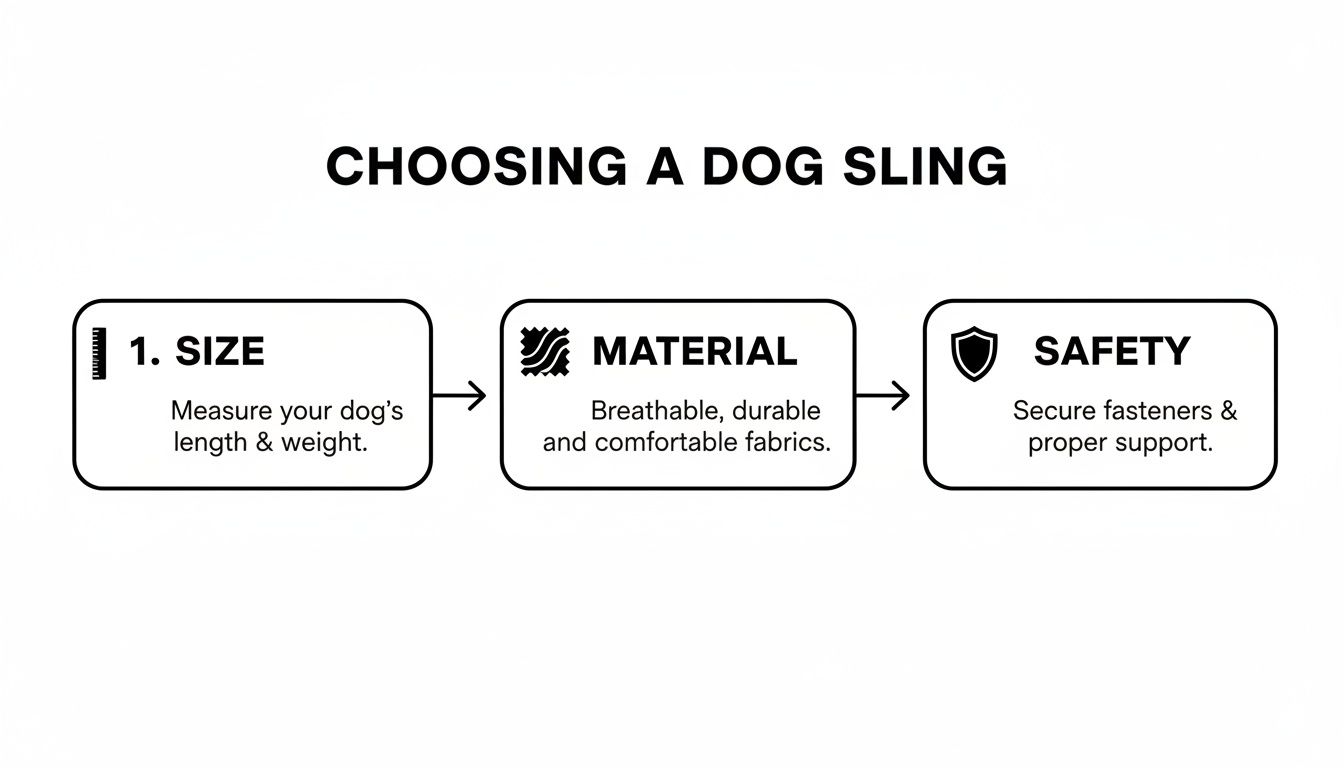
As the infographic shows, getting the size, material, and safety features right for your specific dog is step one. Get that right, and the introduction will go a lot smoother.
Your Step-by-Step Guide to Wearing and Loading
Once your dog sees the sling as a harmless (and possibly wonderful) part of the furniture, you can try wearing it. Getting the position right is key for your comfort and, more importantly, for your dog’s back.
-
Put the Sling On Correctly: Slide the sling over your head and one shoulder, like a crossbody bag. Adjust the strap until the bottom of the pouch rests at your hip or just a little higher. You want it to feel snug, not swinging around loosely.
-
Lure Your Dog In: With the sling on, take a seat on the floor. Use a tasty treat to coax your dog into putting their front paws inside the pouch. No forcing! Just reward any and all curiosity. After a few tries, you can gently lift them and settle their whole body inside.
-
Achieve the 'C-Shape' Position: Your dog’s body should naturally curl up into a gentle ‘C’ or ‘J’ shape inside the sling. This is the best ergonomic position, supporting their spine and hips. They should be nestled securely against your body.
-
Secure the Safety Tether: This is 100% non-negotiable. Clip the built-in safety tether to your dog's harness, never their collar. A sudden jump or lurch could turn a collar attachment into a serious choking hazard.
-
Practice Short Sessions: Start small. Carry them around the living room for just a minute or two, doling out treats and praise the whole time. Then, gently let them out. As they seem relaxed, you can slowly start making these practice runs a little longer.
The Pre-Walk Safety Checklist
Before you walk out that door, get in the habit of running through this quick mental checklist. It takes five seconds and can prevent a world of trouble.
- Tether Check: Is that safety clip really latched onto their harness D-ring? Give it a little tug.
- Airway Check: Is your dog’s head up and out, with their nose and mouth totally clear? Can you hear them breathing easily?
- Fit Check: Is the pouch snug enough that they can’t wiggle their way out? They should feel secure, not trapped.
- Comfort Check: Are they settled in that natural C-shape? Make sure no legs or tails are twisted in an awkward position.
- Temperature Check: Don't forget, your body acts like a personal furnace. Sharing body heat means it's easy for them to get toasty, so always be mindful of the weather. For warmer days, you’ll want some extra tips for keeping your dog cool.
By making this a routine, the sling becomes more than just a bag—it becomes a trusted, shared space for adventures with your best friend.
Why a Sling Can Be a Game-Changer for Your Small Dog
A dog sling carrier for small dogs isn't just a cute accessory—it's one of the best tools you can have for building a stronger bond with your little companion. It turns a simple walk or a trip to the store from a potentially scary event into a shared, cozy experience. Let's be honest, the world can be a pretty big, intimidating place from their perspective. A sling gives them a front-row seat, all from the safety of your arms.
At its core, the sling works by mimicking a warm, secure hug. This constant, gentle pressure has a naturally calming effect, which is a lifesaver for dogs that are a bit anxious or reactive. That trip to the vet or a stroll down a noisy city street suddenly becomes a lot less stressful when they're tucked in right beside you.
A Safe Haven in a Big World
Think of a sling as your dog's personal protective bubble. In a crowded farmers' market or on busy public transit, a tiny dog is easily lost in the shuffle and at risk of being stepped on. The sling lifts them up and out of harm's way, giving them a great view without any of the danger.
This is especially important for puppies who haven't finished their vaccinations yet. They need to experience the world—all the new sights and sounds—to grow into confident adults. A sling lets them do just that, soaking it all in from a safe, clean vantage point without touching the ground or interacting with unknown dogs.
A dog sling carrier basically turns your reassuring presence into something wearable. It's a constant signal to your dog that says, "I've got you," letting them relax and actually enjoy the adventure.
Slings are also a lifeline for senior dogs or those with mobility issues. Arthritis or low stamina doesn't have to mean they get left behind anymore. They can still come along for family walks and enjoy the fresh air, all without putting any strain on their bodies.
Keeping Up with the Modern Pet Parent
As more of us bring our pets everywhere, the demand for good carriers has exploded. The entire pet carrier market was valued at around USD 764.5 million in 2023 and is only expected to keep growing. Dogs make up a huge piece of that pie, accounting for about 57.6% of carrier use. Slings are a perfect fit for the small breeds so many of us have, especially in city settings. You can discover more insights about these pet carrier trends to see just how popular they've become.
This trend is all about combining convenience for us with real emotional benefits for our dogs. For a nervous pup, that feeling of security is everything. When you combine the comfort of a sling on the go with a dedicated safe space at home, like a calming dog bed, you create a fantastic anti-anxiety toolkit that supports them 24/7.
In the end, a sling carrier gives your small dog exactly what they need most: consistent comfort, safety, and closeness to you. It makes every outing better for both of you.
Weaving a Dog Sling into Your Everyday Life
The real magic of a dog sling carrier for small dogs happens when you stop seeing it as just another piece of gear and start treating it like your favorite, most comfortable pair of shoes. It's the go-to tool that makes life with your little companion so much easier, turning what used to be complicated outings into simple, shared adventures.
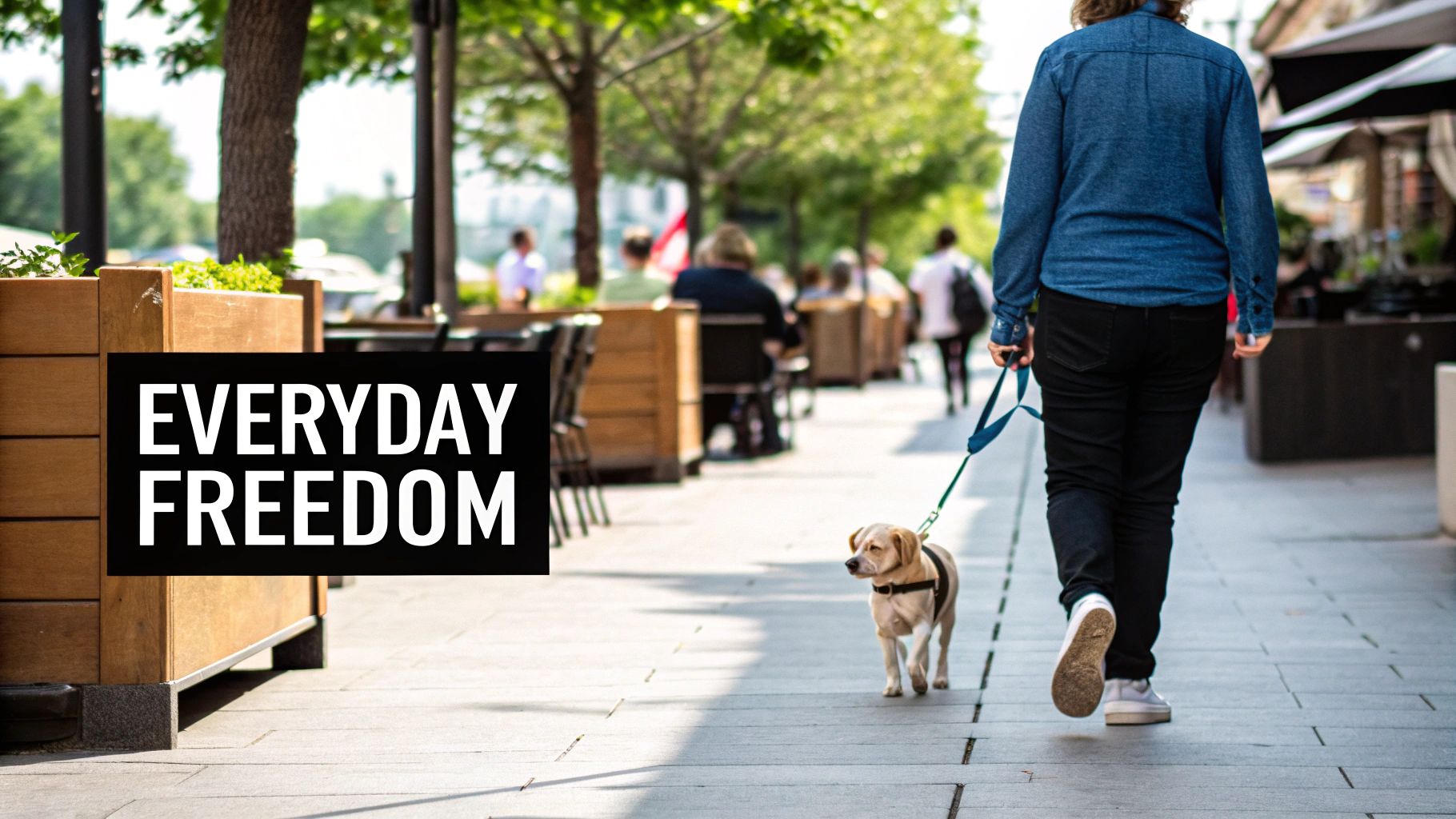
Think about it: a quick run to the coffee shop no longer feels like a logistical nightmare. Instead of trying to juggle a leash, your wallet, and a hot latte, your pup is snuggled securely against you. With your hands completely free, simple errands become quicker and way less stressful for everyone involved.
This kind of convenience is a big reason why the pet carrier market is booming. In the United States, the pet carriers market was valued at around USD 187.38 million in 2024. This isn't just a random trend; it's fueled by more people traveling locally with their pets and a real demand for hands-free solutions in busy cities. For many owners, a sling is now the default for short trips, vet visits, and stops at the local pet-friendly cafe. You can dig deeper into the rise of hands-free pet carriers on Market Research Future.
From City Errands to Outdoor Adventures
A sling's versatility really shines when you realize just how many places it can go. It’s not just for navigating busy sidewalks—it can be a game-changer for your outdoor excursions, too.
- Light Hikes and Nature Walks: Let’s be honest, small dogs often have the spirit of a wolf but the stamina of, well, a small dog. A sling is your secret weapon for those moments on the trail when their little legs get tired. Instead of turning back early, you can just scoop them up and let them enjoy the view from their cozy perch.
- Crowded Outdoor Events: Farmers' markets, street fairs, and outdoor concerts are fun, but they can be overwhelming and downright unsafe for a tiny dog on the ground. A sling lifts them out of the chaos, giving them a safe, elevated spot to take it all in without getting stepped on.
- Public Transportation: Trying to get through a busy subway station or hop on a bus with a dog on a leash can be tricky. A sling keeps your pup safely contained, making the journey much smoother while also complying with the pet rules on most public transit systems.
Making it a Natural Part of Your Routine
Ultimately, you want the sling to feel like a natural extension of your arm. It should be the thing you grab along with your keys and phone without a second thought, because you know it means more opportunities to bring your best friend along.
The best dog sling carrier is the one you forget you're even wearing. It should fit so seamlessly into your life that it just becomes the way you and your little companion get around together.
Just imagine how a sling can make these common situations better:
- The Quick Vet Visit: Keep your anxious pup feeling secure and close in a busy waiting room, away from other stressed-out pets.
- Social Gatherings: At a friend’s backyard barbecue, your dog can be part of the fun without getting underfoot or into the potato salad.
- Shopping Trips: Many local boutiques and shops are pet-friendly these days. A sling makes it easy to browse while keeping your dog from getting tangled in a clothing rack.
When you start weaving the sling into these everyday moments, it stops being just a product you bought and becomes a genuine lifestyle upgrade. It's about having more freedom, more security, and most importantly, more quality time together, turning every little outing into another chance to strengthen your bond.
Keeping Your Dog Sling Carrier Fresh and Safe
Think of your dog sling like your favorite, most-used piece of gear—it needs a little TLC to stay in top shape. After all, it handles everything from muddy paws to the occasional drool monster. Keeping it clean isn't just about smell; it’s about making sure the fabric and hardware stay strong for all your adventures.
A little maintenance goes a long way. A quick spot-clean can tackle daily messes, but you’ll want to give it a proper wash every so often to keep it hygienic and reliable.
How to Wash Your Sling
Before you do anything, always check the care label from the manufacturer. Just like with clothes, different fabrics have different needs, and following the instructions is the best way to avoid wrecking your carrier.
Most slings can be cleaned one of two ways:
- Machine Washing: If it’s machine-safe, use a gentle cycle with cold water. Pro tip: pop the sling into a mesh laundry bag. This keeps the straps and clips from getting tangled or banging against the inside of your machine.
- Hand Washing: For slings that need a gentler touch, hand washing is perfect. Just fill a sink with cool water, add a bit of pet-safe detergent, and give it a good but gentle scrub. Rinse it out completely, and you're all set.
Here's the golden rule: Always, always air-dry your sling. Tossing it in a machine dryer is a recipe for disaster. The heat can warp plastic buckles, weaken the fabric, and shrink the material, which could compromise its safety and fit.
Quick Safety Checks to Do Regularly
Beyond washing, get into the habit of giving your carrier a quick once-over every couple of weeks. It only takes a few minutes and can help you spot a small problem before it becomes a big one.
Here’s what to look for:
- Stitching and Seams: Gently tug on the seams around the pouch and where the strap connects. Are there any loose threads or signs of strain?
- Clips and Buckles: Test out the safety tether, zippers, and any adjustable buckles. Make sure they click, slide, and lock securely without sticking.
- Fabric Wear and Tear: Look over the whole sling for any thin spots, frays, or tiny holes, paying close attention to high-stress areas.
Catching these little things early ensures your dog sling carrier for small dogs stays a safe and cozy ride for your little buddy. For more great products to keep your pet gear in perfect condition, check out our full line of grooming and cleaning supplies.
Got Questions About Dog Slings? We’ve Got Answers.
Even with all the info, it's totally normal to have a few more questions rattling around in your head. Picking out the perfect dog sling carrier for small dogs is a big deal, and you want to be sure you're making the right call for your little buddy.
Let's clear up some of the most common things people wonder about. My goal here is to get rid of any last-minute doubts so you can feel great about your choice.
Are These Slings Actually Safe for My Dog’s Back?
This is probably the number one question I hear from caring owners, and the answer is a resounding yes—when used correctly. The secret is all in the positioning. A well-designed sling lets your dog settle into a natural C-shape or J-shape, which is a curve that supports their spine and hips without creating any weird pressure points.
To get this right, you absolutely have to choose the correct size. The sling should be snug, holding your pup securely against your body. This setup is incredibly similar to how a mother dog would carry her pups, making it a very natural and comforting position for most small breeds. Just be sure their legs aren't left dangling awkwardly, as that completely negates the supportive, ergonomic design.
How Long Is Too Long for My Dog to Be in a Sling?
Think of a sling as a short-term convenience tool, not an all-day ride. They're brilliant for quick trips to the store, running errands, or giving an older dog a rest during a long walk. As a general rule, try to stick to one or two hours at a time.
Your dog still needs plenty of chances to stretch, walk, go potty, and grab a drink. The best advice is to just watch your dog. If they start wiggling, whining, or just seem generally antsy, that's your cue. It’s time for a break.
The Bottom Line: A dog sling is meant for short-term carrying. Always prioritize frequent breaks to let your dog be a dog. It keeps them happy, comfortable, and healthy.
Can I Bring a Dog Sling on an Airplane?
For flying in the cabin, the answer is almost always going to be no. Most dog sling carriers simply aren't airline-approved. Airlines have very specific rules for pet carriers—they need to be fully enclosed, have plenty of ventilation, and be designed to slide all the way under the seat in front of you.
Since a sling is open at the top, it just doesn't meet those safety standards. That said, a sling can be a lifesaver for getting through the airport itself, from the car to security and then from the gate to baggage claim. It keeps your hands free for your own luggage and paperwork. Just make sure to check your airline's specific pet policy well before you head to the airport.
Ready to give your small dog the comfort and security they deserve on your next adventure? Explore the thoughtfully designed and safe travel accessories at Ur Pet Store. Find the perfect carrier to keep your best friend close. Visit us today at https://urpetstore.com.