

Blog
Your Guide to the Best Large Cat Travel Carrier with Litter Box

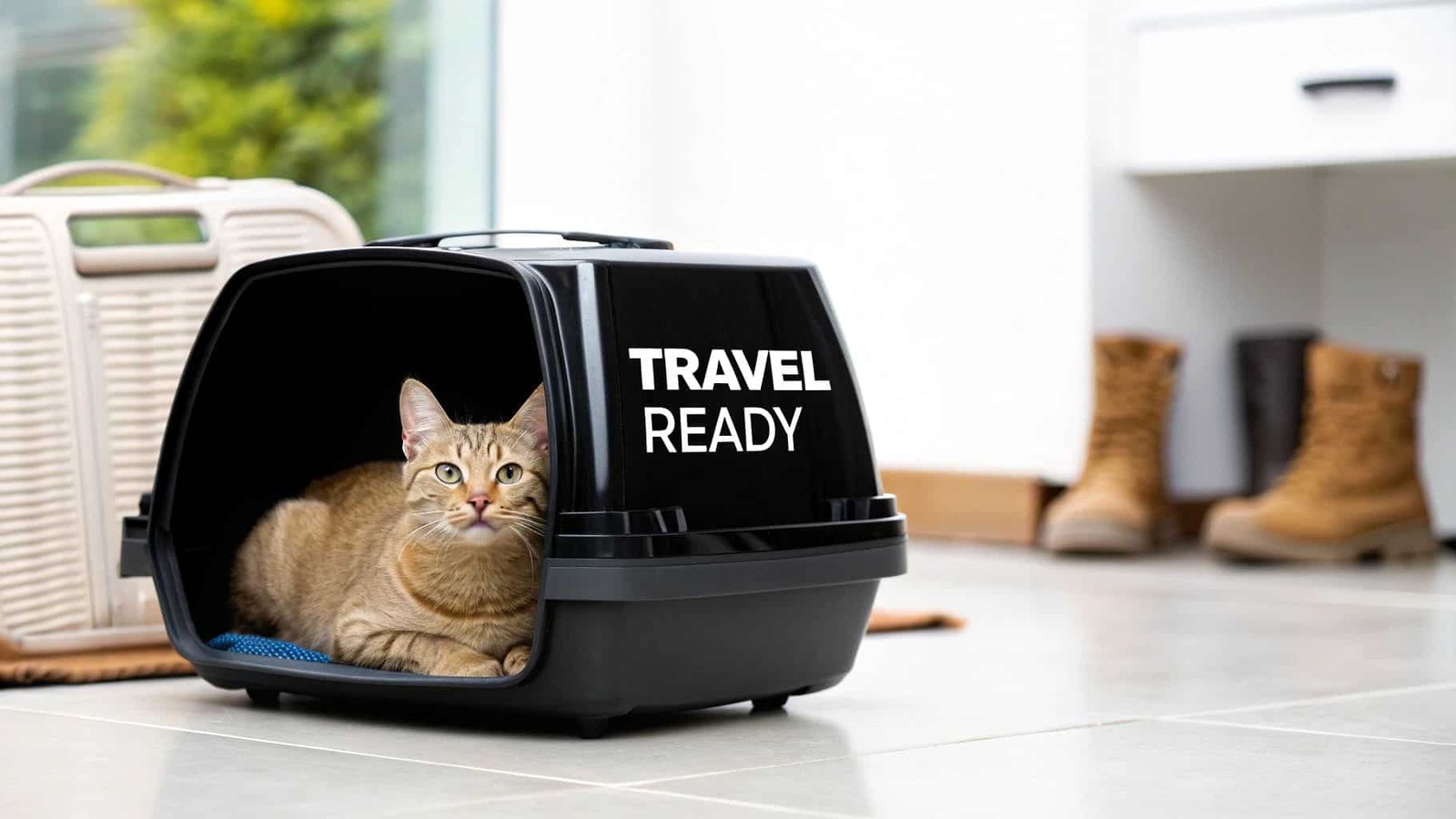
Let’s be honest: traveling with a large cat can feel like a logistical nightmare. You’re trying to keep them comfortable, safe, and deal with the inevitable “I have to go now” moment. This is where a large cat travel carrier with an integrated litter box completely changes the game. It’s an all-in-one mobile suite, combining a secure resting spot with a private bathroom, making the journey genuinely stress-free for both of you.
Why an All-In-One Carrier Is a Must-Have
If you’ve ever tried to manage a big cat on the go, you know the drill. You’re awkwardly juggling a heavy carrier in one hand and a separate, sloshing litter pan in the other. It’s clumsy, it’s stressful, and it’s just begging for a spill or a very unhappy cat. Trying to handle this in a crowded airport or during a pit stop on a long road trip is more than just inconvenient—it’s a recipe for disaster.
The modern solution flips this whole scenario on its head. Picture a carrier that’s less like a cage and more like your cat’s own personal travel condo. It’s a self-contained environment built for their comfort and dignity.
The real genius here is providing a single, secure space where your cat can rest, stretch out, and use the bathroom without ever having to leave the carrier. This simple change drastically cuts down on their anxiety and eliminates any chance of a panicked escape.
The Old Way vs. The New Way
To really get why this matters, let’s compare the two travel styles side-by-side.
- The Traditional Scramble: You have to find a secure spot—maybe a family restroom or the back of your car—to let your cat out of the carrier and into a separate litter pan. It’s risky, messy, and incredibly stressful for an animal in an unfamiliar place.
- The Integrated Carrier Advantage: Your cat has 24/7 access to their litter box right inside their carrier. No more frantic searches for a safe place to let them out. No more escape artist antics.
This isn’t just a minor upgrade; it’s a reflection of what pet owners today demand: smart, pet-first designs. The global pet carriers market was valued at an impressive USD 764.5 million in 2023 and is expected to climb to USD 1,178.7 million by 2030. If you want to dive deeper, you can explore the growth of the pet carrier market and see the detailed insights on Grand View Research.
What’s really telling is that cat-specific carriers are outpacing the general market’s growth. This shows just how essential these specialized solutions have become for owners like us. Choosing a large cat carrier with a built-in litter box isn’t just about making your life easier—it’s an investment in your cat’s well-being and your own sanity.
How to Measure Your Cat for the Perfect Carrier
Picking the right travel carrier is a bit like Goldilocks trying out chairs. Too small, and your cat will be miserable and cramped. Too big, and they could slide around and get hurt. Your mission is to find the size that’s just right—a snug, secure den that gives them enough room without being a cavern.
Getting this wrong can turn a simple trip into a nightmare for your cat. A tight squeeze leads to anxiety and stiff muscles. An overly spacious carrier, on the other hand, offers no stability during a sudden stop in the car or a bumpy flight.
This is especially true when you’re dealing with an all-in-one travel solution. The old way of juggling a carrier and a separate litter box was a clumsy mess. The modern, integrated design solves that problem entirely.
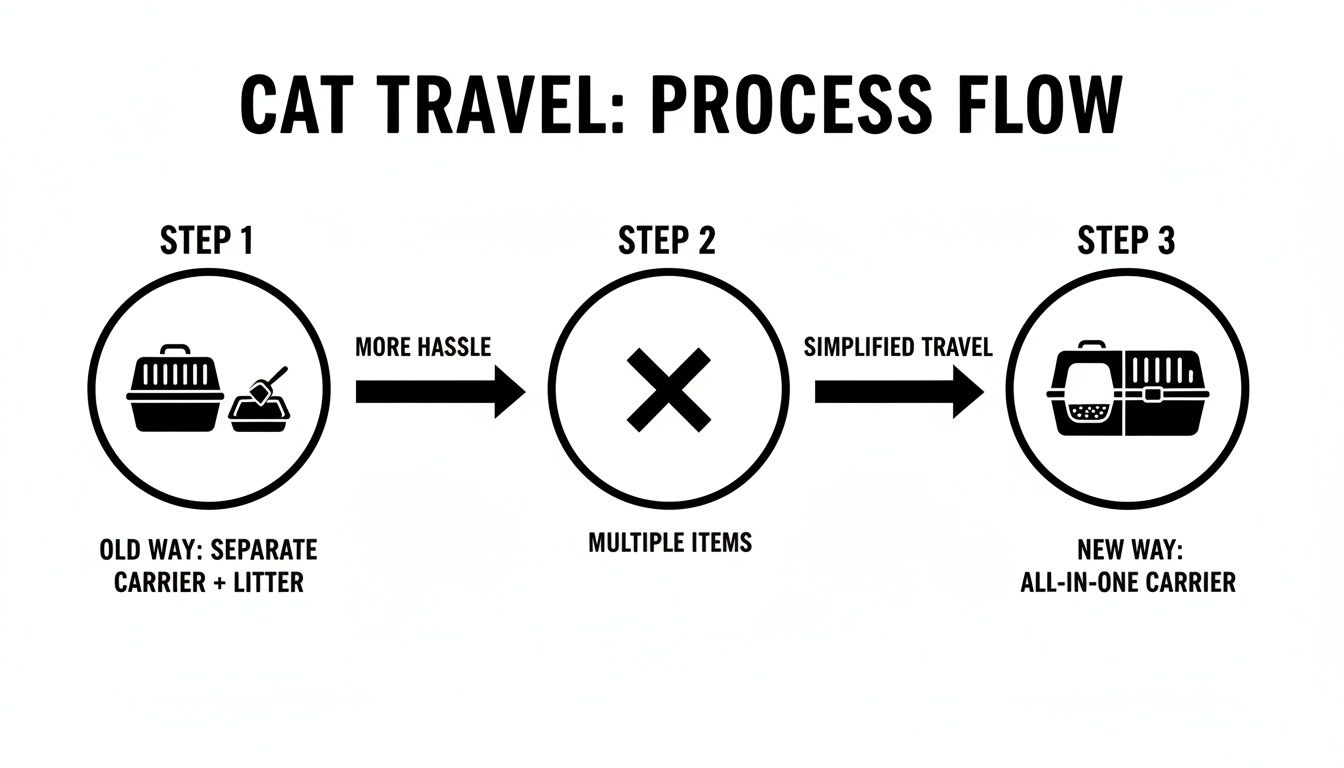
As you can see, the all-in-one carrier simplifies everything, making travel less stressful for both you and your feline friend.
Taking Accurate Measurements
Alright, time to grab a flexible tape measure. You might want to have some treats handy, too—a little bribery never hurts. The most important thing to remember is that you need to measure your actual cat. Don’t just guess based on weight. A 15-pound Maine Coon has a completely different frame than a 15-pound British Shorthair.
Here are the only two measurements you need:
- Length: Get your cat to stand up straight and measure from the tip of their nose right to the base of their tail. Don’t include the tail itself! They’ll just curl it up inside anyway.
- Height: While they’re standing or sitting tall, measure from the floor to the top of their head or the tips of their ears (whichever is higher).
With those two numbers, you have everything you need to find the perfect fit.
Turning Measurements Into Carrier Dimensions
Now, let’s turn those numbers into the ideal internal carrier size. It’s not about matching the dimensions exactly; it’s about adding a “comfort buffer.” This little bit of extra space is what allows them to shift around and get comfortable without feeling trapped.
Pro Tip: Look for a carrier that is 3-4 inches longer than your cat’s body length and 2-3 inches taller than their standing height. This isn’t just a suggestion—it’s crucial for their well-being on any trip.
This buffer zone is what gives your cat the freedom to stand up fully, turn around, and lie down in a natural sleeping position. When you’re using a carrier with a built-in litter box, this space becomes even more essential. It creates a clear separation between their resting area and their bathroom, which keeps them clean, comfortable, and much less stressed.
Think of it this way: you work hard to make their home environment comfortable, maybe even adding things like a special perch. For more ideas on that, check out our guide on choosing a cat hammock for large cats. Their carrier should be treated with the same care.
Carrier Sizing Chart for Large Cat Breeds
To give you a better starting point, we’ve put together a quick reference guide for some of the most common large cat breeds. Remember, these are just averages—always measure your own cat for the most accurate fit!
| Cat Breed Example | Average Adult Weight (lbs/kg) | Recommended Carrier Length (in/cm) | Recommended Carrier Height (in/cm) |
|---|---|---|---|
| Maine Coon | 15–25 lbs / 7–11 kg | 22–26 in / 56–66 cm | 15–17 in / 38–43 cm |
| Ragdoll | 12–20 lbs / 5–9 kg | 21–24 in / 53–61 cm | 14–16 in / 36–41 cm |
| Siberian | 10–20 lbs / 4.5–9 kg | 20–23 in / 51–58 cm | 13–15 in / 33–38 cm |
| Norwegian Forest Cat | 12–18 lbs / 5.5–8 kg | 21–24 in / 53–61 cm | 14–16 in / 36–41 cm |
| British Shorthair | 9–17 lbs / 4–7.5 kg | 19–22 in / 48–56 cm | 12–14 in / 30–36 cm |
This chart helps illustrate how a cat’s build, not just its weight, influences the size of the carrier they need for safe and comfortable travel.
Why the Right Size Matters So Much
Airlines and animal welfare experts have strict guidelines for a reason. They aren’t just making up arbitrary rules; they’re designed to ensure animals are treated humanely during what can be a stressful experience. A carrier that meets these size standards is one that allows your cat to make natural movements.
Here’s why it’s a big deal:
- Behavioral Health: A cat squished into a tiny space is a stressed cat. This can lead to panicked meowing, aggression, and a lifelong fear of travel.
- Physical Comfort: On longer trips, the ability to stretch and reposition is key to preventing muscle cramps and stiffness.
- Safety and Security: A properly fitted carrier prevents your cat from being thrown around inside during transit, significantly reducing the risk of injury.
Spending a few minutes with a tape measure is a tiny price to pay for your cat’s safety and peace of mind on the road. It truly makes all the difference.
Essential Features Your Travel Carrier Must Have
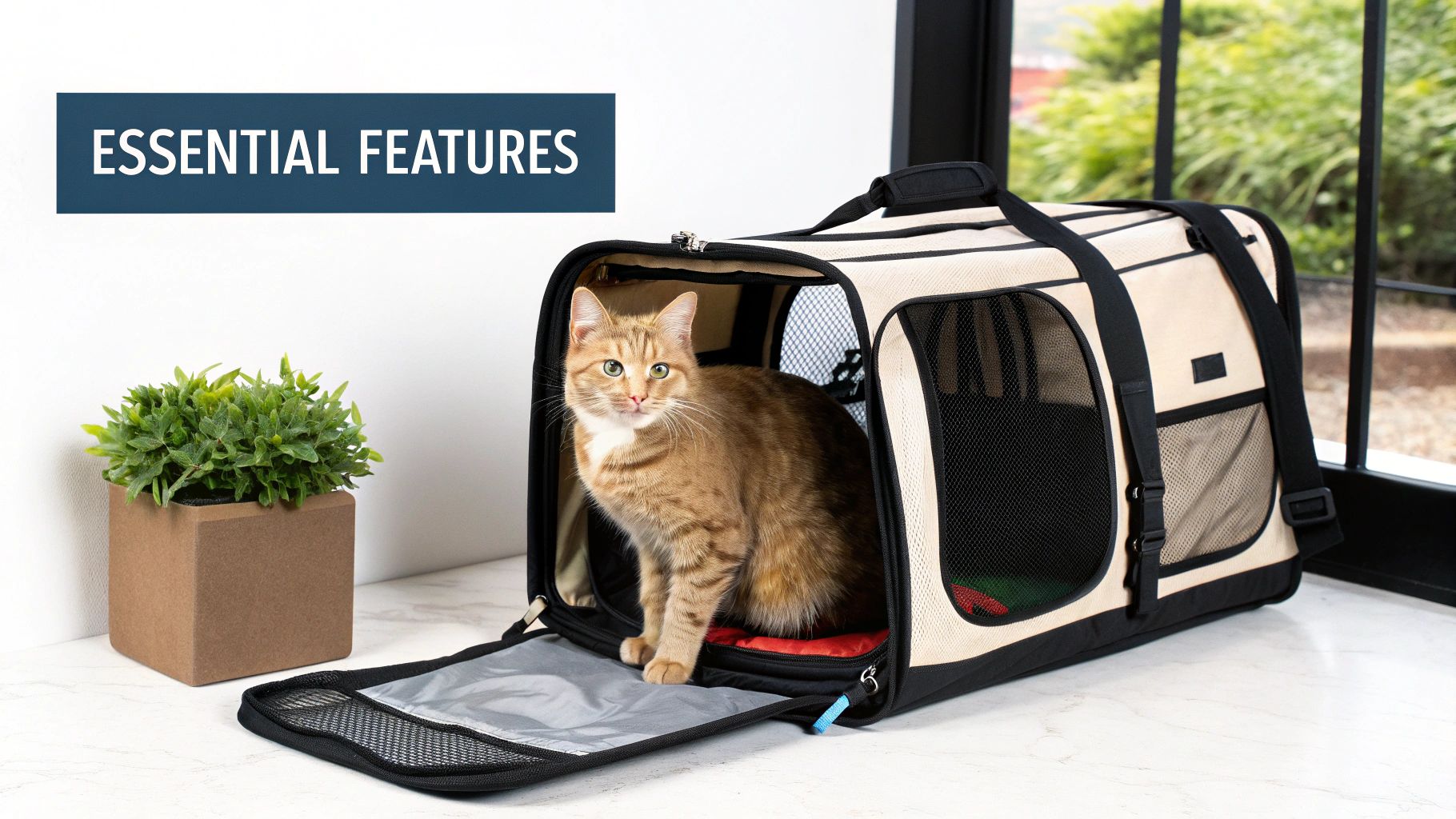
Okay, so you’ve figured out the right size. Now comes the fun part—looking at the features. It’s a lot like buying a car; once you decide you need an SUV, you start comparing things like safety ratings, cargo space, and how comfortable the seats are. The right combination of features is what turns a simple box into a safe, comfy travel suite for your big cat.
Picking a large cat travel carrier with litter box is a real investment in your cat’s happiness and your own peace of mind. If you focus on a few non-negotiable details, you’ll end up with a carrier that’s built to last and designed to make any journey less stressful. Let’s break down the four most critical areas to look at before you click “buy.”
Uncompromising Ventilation and Visibility
Good airflow isn’t just a nice-to-have; it’s a critical safety feature. A stuffy carrier can get dangerously hot in a hurry, which sends your cat’s stress levels through the roof. The best carriers I’ve seen always have mesh windows on multiple sides.
This kind of design creates fantastic cross-ventilation, keeping fresh air moving. Just as important, it lets your cat see what’s going on around them (and see you!). It makes a huge difference in helping them feel less trapped and anxious.
- Look for: At least three sides with tough, claw-proof mesh panels.
- Avoid: Carriers with just one or two little “portholes” for windows. They just don’t offer enough air or visibility.
Smart Litter Box Design and Leak-Proofing
The built-in litter box is the main event here, but they aren’t all created equal. What you’re looking for is a setup that your cat can get to easily, you can clean without a fuss, and, most importantly, keeps everything contained.
Some carriers have a separate zippered compartment for a small litter tray, while others have a waterproof section built right into the base. Both can work well, but the real secret is in the leak-proofing. The absolute last thing you want is an accident soaking through to your car seat or the airport floor.
A well-designed carrier will feature a waterproof lining in and around the litter area, often with raised edges to contain any spills. This thoughtful detail provides peace of mind, knowing that any mess is fully contained and easy to manage.
This desire for clean, convenient solutions is a big deal in the pet world right now. Think about it—the market for automatic self-cleaning litter boxes was valued at a whopping USD 496.9 million in 2022 and is still growing. Pet owners want smart, hygienic products, and these travel carriers are designed with that in mind. You can read more about the expanding cat litter box market on Skyquestt.com.
For a little extra insurance against accidents, I always recommend lining the resting area of the carrier. A high-quality, absorbent pad like a reusable dog pee pad blanket can be a lifesaver. It gives your cat a comfy spot to relax and soaks up any moisture.
Rock-Solid Security Features
Large cats are strong, and a determined one can make quick work of a flimsy carrier. Security has to be one of your top priorities. A stressed-out cat can become a little escape artist, so you need a carrier built to keep them safely inside.
First thing to check? The zippers. Look for locking zippers that have little clips or loops to keep them from being pushed open from the inside. It’s a small detail, but it’s one of the best escape-prevention features out there.
Next, give the carrier’s frame a good inspection.
- Soft-sided carriers need a sturdy but flexible internal frame so the walls don’t collapse in on your cat.
- Hard-sided carriers must have secure latches and a solid connection where the top and bottom halves meet.
A solid frame ensures the carrier holds its shape, protecting your cat from bumps and giving them a stable, reassuring little den.
Durable Materials and Comfortable Portability
Finally, think about what the carrier is made of and how you’re going to lug it around. The materials affect the carrier’s durability, weight, and how easy it is to clean. Most are made from tough polyester or nylon fabrics, which are great because they’re lightweight and you can just wipe them down.
Portability is really about your comfort. A carrier with a 15-pound cat inside gets heavy, fast. Look for these features to make your life a whole lot easier:
- Padded Shoulder Strap: A must-have. An adjustable strap with good padding helps distribute the weight and keeps your hands free.
- Reinforced Carry Handles: They should be stitched on securely and have a padded grip so they don’t dig into your hand.
- Luggage Strap: A brilliant feature on many modern carriers. It’s a strap on the side that lets you slide the carrier right over the handle of your rolling suitcase.
If you carefully check these four areas—ventilation, the litter box design, security, and materials—you can feel confident you’re choosing a carrier that delivers on safety, comfort, and convenience.
Understanding Airline and Car Travel Rules
Getting your cat from point A to point B, whether by car or plane, can feel a bit overwhelming. Every airline seems to have its own rulebook, and car safety is about more than just finding a spot for the carrier. But if you know what to look for and have the right large cat travel carrier with litter box, you can make the whole experience a lot less stressful for both of you.
This is really about thinking ahead. Your goal is to keep your cat’s world as safe and predictable as possible, even when you’re 30,000 feet in the air or just cruising down the highway. A little bit of prep work can transform a scary trip into a smooth adventure.
Decoding Airline Policies for In-Cabin Travel
For most of us, flying with our cat in the cabin is the only way to go. But to make that happen, you have to play by the airline’s rules. They’re focused on two main things: the safety and comfort of everyone on board (two-legged and four-legged), and making sure your carrier fits where it’s supposed to.
Before you even think about booking, you need to call the airline. There are only a handful of pet spots available in the cabin on any given flight, so you have to reserve one for your cat, just like you book your own seat.
When you call, here’s exactly what you need to ask:
- Carrier Size Restrictions: This is the big one. Your carrier absolutely must fit under the seat in front of you. Ask them for the exact maximum dimensions—length, width, and height.
- Health Documentation: Most airlines will ask for a recent health certificate signed by a licensed vet, usually issued within 10 days of your flight. If you’re traveling internationally, the paperwork gets a lot more complicated.
- Carrier Specifications: They’ll tell you the carrier needs to be leak-proof and have good ventilation on at least three sides. A soft-sided carrier is often your best bet because it has a little “squish” to help it fit into tight spaces.
For a great breakdown of what different airlines require, this resource on airline pet transport information is incredibly helpful. It’s a good place to start comparing the rules.
Ensuring Safety on the Road
Car travel gives you a lot more freedom than flying, but it also comes with its own safety checklist. If you have to brake suddenly, an unsecured carrier can become a dangerous projectile, putting both you and your cat at risk. The key is to make the carrier a stable, secure part of your car.
The easiest way to do this is with a seatbelt. Just thread the lap and shoulder belt through the carrier’s handle or any built-in safety straps, and click it in. You want it to be snug against the seat, with no room to slide around or tip over.
The safest spot for a pet carrier is almost always the back seat. The front passenger seat is a bad idea because a deploying airbag could seriously injure your pet in an accident.
It’s no surprise that we’re seeing more and more travel-friendly pet gear. In North America especially, where cat ownership is high, there’s a huge demand for better travel solutions. The market for cat litter boxes in the USA and Canada is expected to reach USD 917 million in 2025 and more than double by 2035. This just shows how much people are willing to invest in their pet’s safety and comfort. You can discover more insights about the global cat litter box market to see how these trends are driving better product designs.
Your Pre-Travel Checklist
A successful trip begins long before you walk out the door. Going through a quick checklist helps make sure you haven’t forgotten anything important for your cat’s comfort.
- Feeding Schedule: It’s smart to hold off on food for about 4-6 hours before you leave. This really helps prevent motion sickness and means they won’t need the litter box right away.
- Hydration: Let them have a little water before you head out, and keep a travel bowl handy for breaks. Just don’t let them drink too much at once.
- Spotting Stress: Watch for signs of anxiety. If your cat is panting heavily, drooling, meowing constantly, or trying to hide, they’re not having a good time.
- Pack the Essentials: Get a little “go-bag” ready with a small amount of litter, a scoop, waste bags, paper towels, a familiar blanket, and one of their favorite toys.
By taking the time to understand the airline rules, secure the carrier in your car, and manage your cat’s needs with a pre-travel routine, you’re setting everyone up for a much happier journey.
How to Train Your Cat to Love Their Carrier
You can buy the best carrier on the planet, but it won’t do you a bit of good if your cat thinks it’s a monster. For most cats, the carrier only means one thing: an unpleasant trip to the vet. Our job is to completely rewrite that story.
The secret is to turn their large cat travel carrier with litter box from a scary cage into a safe, personal space they actually want to be in. This isn’t about force; it’s all about patience and making the carrier a normal, rewarding part of their world.
When you succeed, travel goes from a stressful wrestling match to a surprisingly calm event. It all comes down to changing their perception of the carrier from a sign of impending doom to a signal for comfort, safety, and maybe a few tasty treats.
Phase 1: The Neutral Introduction
First things first, you need to make the carrier as boring as a piece of furniture. A week or two before you need to travel, just place the open carrier in a room where your cat hangs out, like the living room or your office. Don’t announce it, don’t point at it—just let it be.
To make it more enticing, casually toss a few of their favorite high-value treats inside. Start near the entrance, and as they get bolder, toss them further back. You can also put a favorite blanket or an old t-shirt that smells like you inside to make it feel more familiar and safe.
The key here is to let your cat explore it completely on their own terms. No pressure.
The whole point of this phase is voluntary exploration. Your cat needs to be able to sniff it, walk past it, and eventually step inside without fear, all because they’re curious and know good things might be inside.
This first, low-stakes step is the foundation for everything else. It lets the carrier shed its negative reputation and just become another object in their territory.
Phase 2: Building a Positive Vibe
Once your cat seems comfortable investigating the carrier on their own, it’s time to create a much stronger positive connection. And the fastest way to a cat’s heart is through their stomach.
Start feeding your cat their regular meals inside the carrier. At first, just place the food bowl right inside the entrance. Once they’re cool with that, gradually push the bowl a little further back with each meal. This simple trick encourages them to go all the way inside, reinforcing that the carrier is a great place where delicious food appears.
Here’s how you can step things up:
- Treat Time: Randomly toss treats into the open carrier throughout the day for your cat to find on their own. It becomes a fun discovery game.
- Dinner is Served: Begin feeding every meal inside the carrier, moving the bowl deeper inside over several days.
- The Quick Close: While they’re busy eating, gently swing the door shut for just a few seconds, then open it again before they’ve even finished their meal.
That last step is a game-changer. You’re teaching them that a closed door isn’t scary or permanent. Always praise them or offer another small treat right after a “door closed” session to seal the deal.
Phase 3: The Practice Run
Now that your cat is willingly hanging out in the carrier, you can start simulating the real deal. The trick is to keep these practice runs incredibly short and overwhelmingly positive. If your cat gets stressed, you’ve gone too far, too fast.
Start by closing the door, picking up the carrier, and just walking around the room for 15-20 seconds. Then, set it back down, open the door, and immediately give them a super special reward.
Once they can handle that without any drama, you can slowly build up from there:
- Carry them into another room and back.
- Take them out onto the porch for a minute or so.
- Place the carrier in the car, start the engine for a moment, turn it off, and head right back inside.
- Finally, go for a very short drive—literally just around the block is perfect for the first trip.
Remember, every single one of these baby steps must end with an immediate, fantastic reward. By breaking the process into tiny, manageable pieces, you desensitize your cat to the whole experience of travel, building their confidence one short trip at a time.
Easy Cleaning for a Fresh, Stress-Free Carrier
Let’s be honest: after a long trip, the last thing you want to do is scrub a cat carrier. But keeping your cat’s travel space clean isn’t just about appearances—it’s vital for their health and happiness. A smelly, soiled carrier is a surefire way to make your cat dread their next trip. Think of a deep clean as hitting the reset button on their personal travel suite, making it a place they feel safe and comfortable.
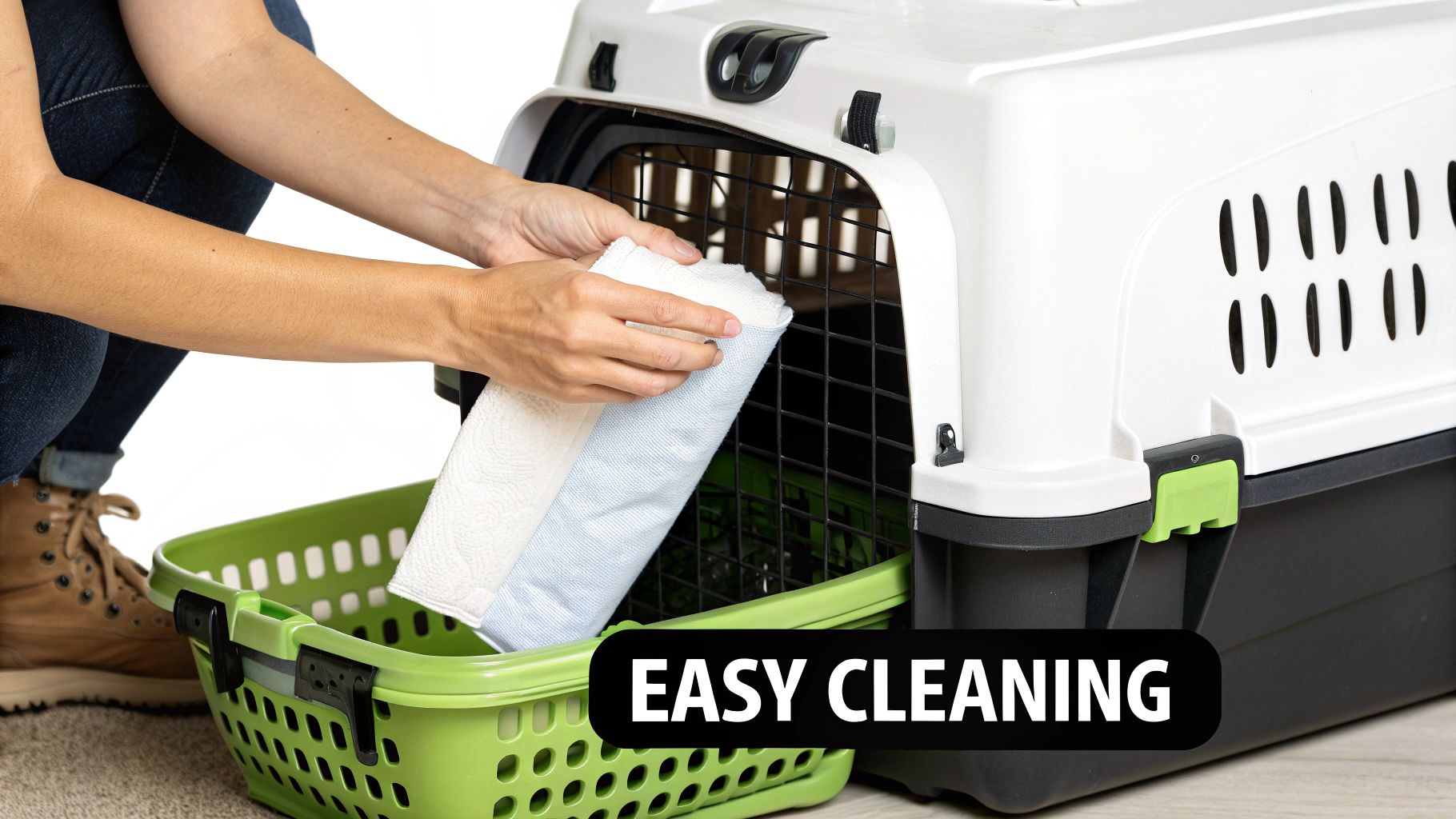
The trick is to have a simple, go-to cleaning routine. A few straightforward steps can remove all the guesswork and guarantee your cat’s large cat travel carrier with litter box is always fresh and ready for the road.
The Post-Trip Deep Clean
To truly get the carrier clean, you have to go after the source of the smell. Cat urine leaves behind uric acid crystals, and regular soap and water just won’t cut it. They might mask the odor for a bit, but it always comes back. This is where an enzymatic cleaner becomes your most important tool. These cleaners use special enzymes to actually break down and destroy the crystals.
Here’s how to do it right:
- Take It Apart: First, remove all the soft bedding, disposable pads, and the litter tray. Toss out all the used litter and any liners.
- Spray It Down: Coat the entire inside of the carrier and all the separate parts with a pet-safe enzymatic cleaner. Don’t be shy with it! Let it sit and soak for a good 10-15 minutes.
- Wipe and Rinse: Once the cleaner has had time to work, grab a clean, damp cloth and wipe everything down thoroughly. If you have a hard-sided carrier or a plastic litter tray, you can give it a good rinse with water.
- Let It Air Dry: This is a crucial step. Find a sunny spot if you can and let every single piece air dry completely. The sun’s UV rays are a fantastic natural disinfectant.
Remember, the goal here is total odor elimination, not just covering it up. If a cat can still smell old urine, they might be stressed about getting back in or even try to mark the area again.
Quick Cleanups and Smart Storage
For those little messes that happen on the road, a small “clean-up kit” is a lifesaver. Pack some disposable litter box liners, a small spray bottle of enzymatic cleaner, a roll of paper towels, and extra waste bags. This way, you can tackle accidents right when they happen. To help manage litter scatter inside the carrier, a Double-Layer EVA Cat Litter Mat works wonders by trapping loose granules.
How you store the carrier between trips matters, too. After cleaning, make absolutely sure it’s 100% dry before you pack it away—otherwise, you risk mildew. Store it in a cool, dry spot and leave a mesh window or door slightly unzipped to keep the air flowing. It’s a tiny step that makes a huge difference in keeping it fresh for your next adventure.
Your Top Questions Answered
Even after finding the perfect carrier, you probably still have a few questions about traveling with your big cat. It’s completely normal! We’ve rounded up the most common concerns we hear from fellow cat owners to help you feel fully prepared for your next trip.
How Often Should My Cat Get a Break on a Long Road Trip?
On any car ride longer than a couple of hours, you absolutely need to plan for breaks. Think of it like a pit stop for your furry passenger. A good rule of thumb is to pull over every 2 to 3 hours.
This gives your cat a chance to stretch their legs, use the litter box, and have a sip of water while the car is safely parked. Just remember the golden rule: these breaks happen inside the car. Never, ever open the carrier at a public rest stop—a spooked cat can bolt in the blink of an eye.
What’s the Best Litter to Use in a Travel Carrier?
Choosing the right litter for your large cat travel carrier with litter box can be a game-changer for mess and odor. You’re looking for something that makes life easier on the road.
Your best bet is a litter with these features:
- Lightweight: You’ll be carrying enough already. A heavy bag of litter is the last thing you need.
- Low-Dust: A cloud of dust in a tiny, enclosed space is a nightmare for your cat’s lungs. Stick with formulas labeled “low-dust” or “dust-free.”
- Serious Odor Control: A powerful clumping or crystal litter is your best friend here. It keeps the carrier and your car smelling fresh.
When you’re traveling, convenience is everything. We recommend a small amount of a high-quality, unscented, lightweight clumping litter. It does a fantastic job with odors without overwhelming your cat’s sensitive nose.
My Cat Hates Traveling and Gets Really Anxious. What Can I Do?
You’re not alone—travel anxiety is incredibly common for cats. Once you’ve got carrier training down, there are a few other tricks you can try to help soothe their nerves. Many cat parents have great luck with calming supplements that contain natural ingredients like L-theanine or tryptophan.
Pheromone sprays are another fantastic tool. Just a few spritzes inside the carrier about 20-30 minutes before you head out can create a more calming, familiar environment. For severe anxiety, however, your first call should always be to your vet. They can help you decide if a prescription anti-anxiety medication is the right move for your cat.
Can I Just Use a Large Dog Carrier Instead?
It might seem like a simple solution, but using a dog carrier for your cat is a bad idea. They’re built for completely different animals with different instincts and body shapes. Dog crates often have wider bar spacing, and a nimble cat could potentially squeeze right through.
More importantly, they don’t provide that snug, den-like feeling cats need to feel secure. A proper cat carrier is designed to be a cozy, enclosed space that helps reduce the stress of being out in the open.
Ready to make your next trip with your feline friend a breeze? The right gear makes all the difference. Explore our collection of premium, thoughtfully designed travel solutions at Ur Pet Store and find the perfect mobile suite for your cat. Shop Our Travel Carriers Now!