

Blog
A Pet Owner’s Guide to Pads for Dog Pee

Dog pee pads can be a real game-changer. Whether you’re house-training a new puppy, caring for an aging best friend, or navigating pet ownership in a city apartment, these absorbent mats are a lifesaver. They give your dog a designated indoor spot to go, protecting your floors and taking a lot of stress off both of you.
Why Pee Pads Are So Incredibly Useful
For a lot of us, especially city dwellers, pads for dog pee aren’t just a convenience—they’re a must-have. Think about it: living in a high-rise, facing a blizzard, or helping a dog with achy joints can make those constant trips outside nearly impossible. Pee pads offer a clean and simple solution, letting your dog relieve themselves comfortably whenever they need to.
This isn’t just some fringe pet product. The global market for pee pads tells the story, valued at an estimated USD 685 million in 2025 and still growing. This boom is fueled by more people owning pets in urban areas and the rising popularity of smaller dog breeds. If you’re curious, you can explore more about this market growth and check out the detailed industry insights.
Who Really Needs Dog Pee Pads?
Most people think of puppies when they see pee pads, but their usefulness extends far beyond the potty-training phase. They’re a versatile tool that can help at every stage of a dog’s life.
- New Puppy Parents: They’re an absolute essential for house-training. A pad gives your pup a consistent, approved spot to go, which cuts down on accidents and makes the whole learning process smoother.
- Apartment Dwellers: No yard? No problem. Pads mean you can skip the frantic late-night or early-morning elevator trips down to the street.
- Owners of Senior Dogs: For older dogs dealing with incontinence, arthritis, or other mobility challenges, an indoor potty spot helps them keep their dignity and comfort.
- Small Breed Owners: Let’s be honest—tiny dogs have tiny bladders. They need to go more often, and pads provide a perfect backup between walks.
This infographic really drives home how much of a lifesaver these pads can be in a modern home.
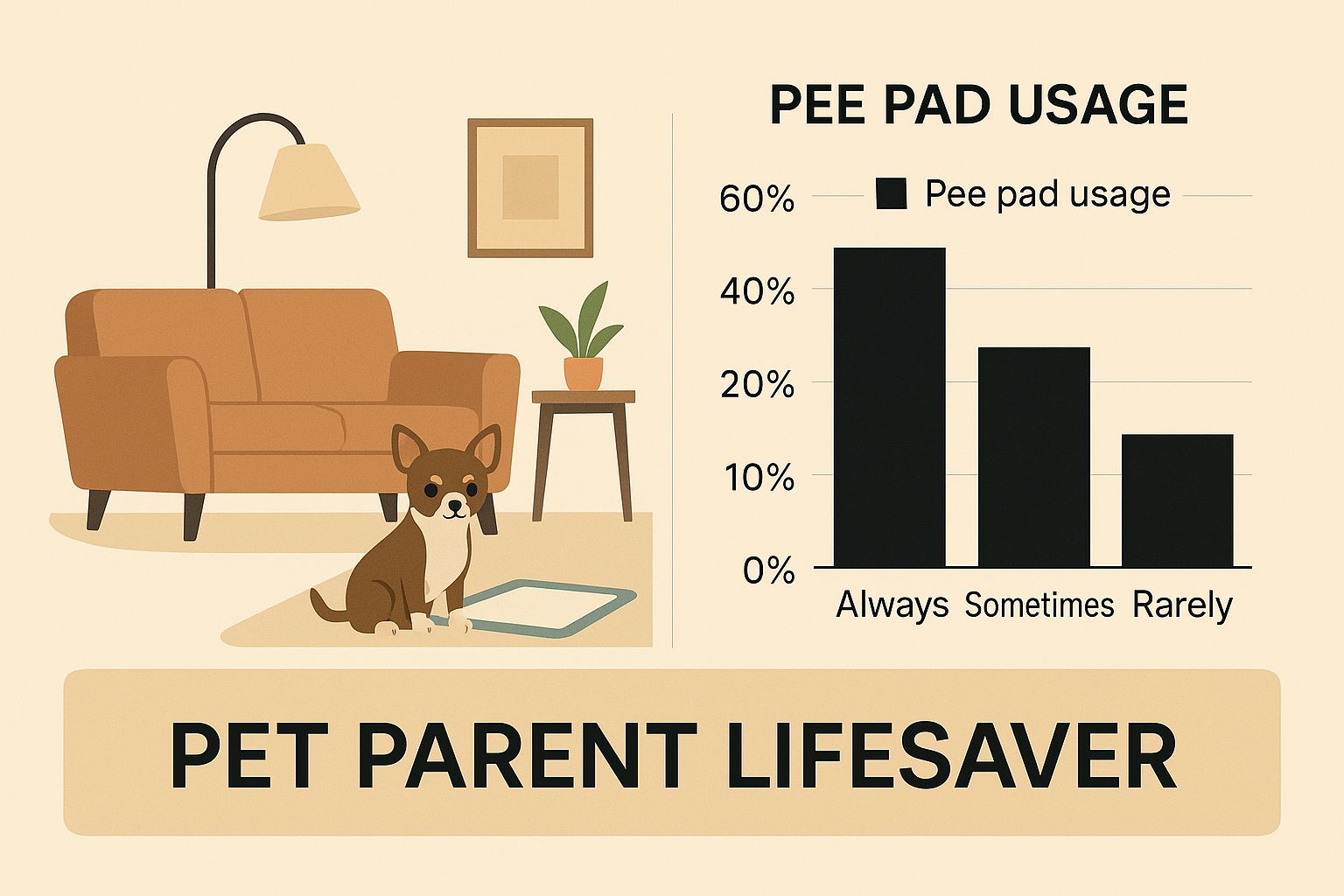
As you can see, a simple pad can make a world of difference in creating a calm, stress-free environment for everyone under your roof.
Key Takeaway: Using pee pads isn’t a sign that you’ve failed at training. It’s a smart, practical choice for modern pet ownership. They offer a compassionate solution for all kinds of dogs, from energetic puppies to beloved seniors.
Choosing the Best Pads for Your Dog’s Needs
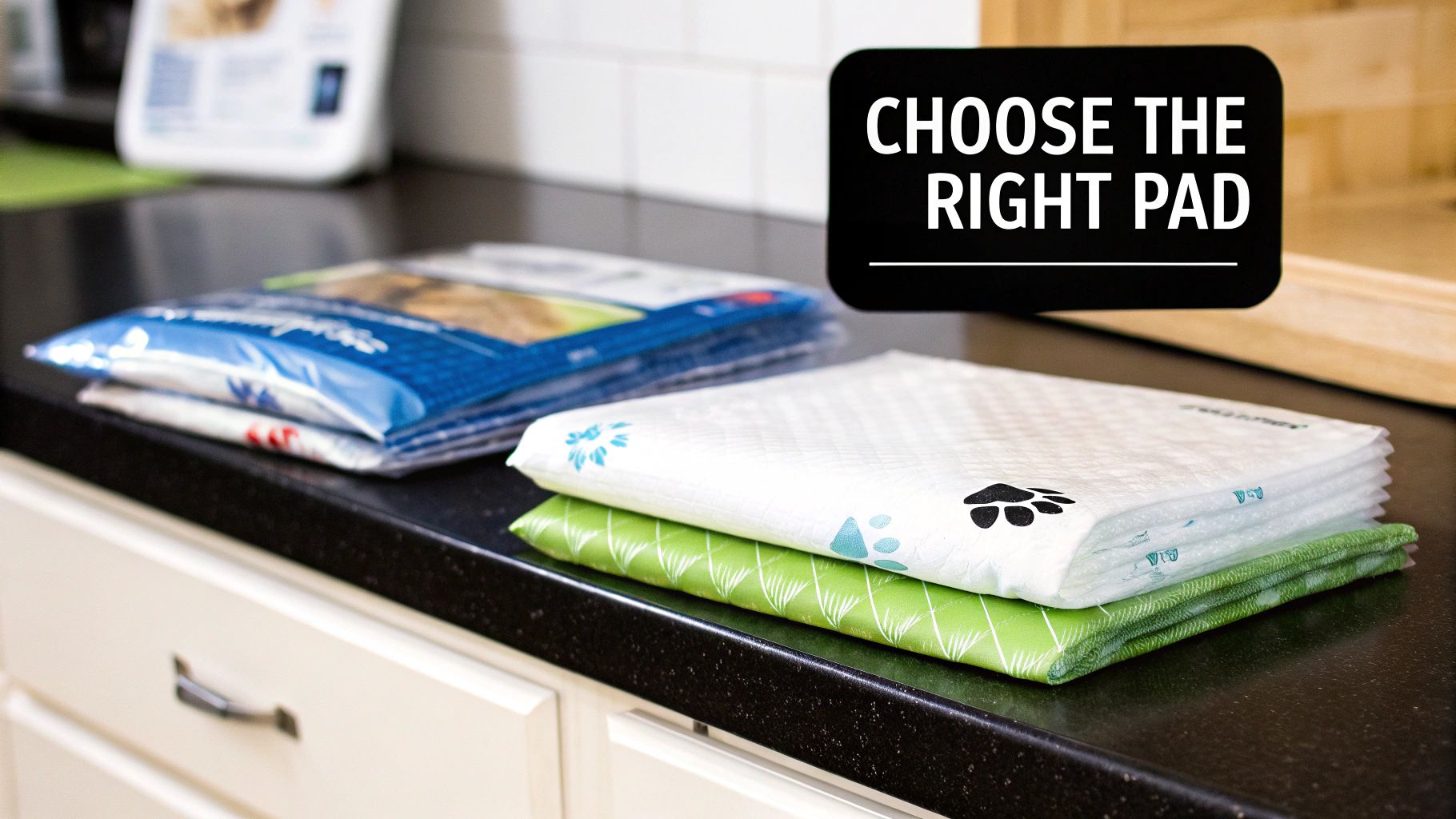
Picking the right pee pad might seem like a small task, but it genuinely makes a huge difference in your daily life. The market is flooded with options, from simple disposables to high-tech washable systems, and it’s easy to feel overwhelmed. My advice? Cut through the marketing noise and zero in on the features that actually matter for your dog and your home.
The two biggest factors are always absorbency and odor control. A good pad isn’t just a simple mat; it’s a multi-layer system. The best ones have a polymer core that instantly turns liquid into gel, which is the secret to preventing leaks and stopping those annoying wet paw prints from trailing through your house. For smells, look for pads that contain activated charcoal or baking soda. These ingredients actually neutralize odors instead of just covering them up with a perfume.
Finding the Perfect Pad Size
Getting the size right is crucial. You want to give your dog enough room to move around comfortably and pick their spot without stepping off the edge. A pad that’s too small for a Golden Retriever is just asking for a mess, while a giant one for a Chihuahua is a waste of money and space.
Here’s a practical tip I always share: choose a pad large enough for your dog to walk in a small circle on it. If you have a puppy, think ahead! It’s much smarter to buy pads that will still fit them as they grow. Sticking with a consistent size makes training so much smoother.
Pro Tip: For male dogs who lift their leg, those little splashes can be a nightmare for your walls. Look for pads with adhesive strips or pair them with a pad holder that has a splash guard. It’s a simple fix that saves your paint.
Disposable vs. Washable Pads
This is probably the biggest decision you’ll make. It really comes down to what you value most: convenience, long-term cost, or environmental impact. There’s no wrong answer here, just what’s right for you.
- Disposable Pads: These are the definition of easy. Use it, toss it, done. They’re fantastic for the puppy training stage, for travel, or for anyone who just wants a no-fuss cleanup.
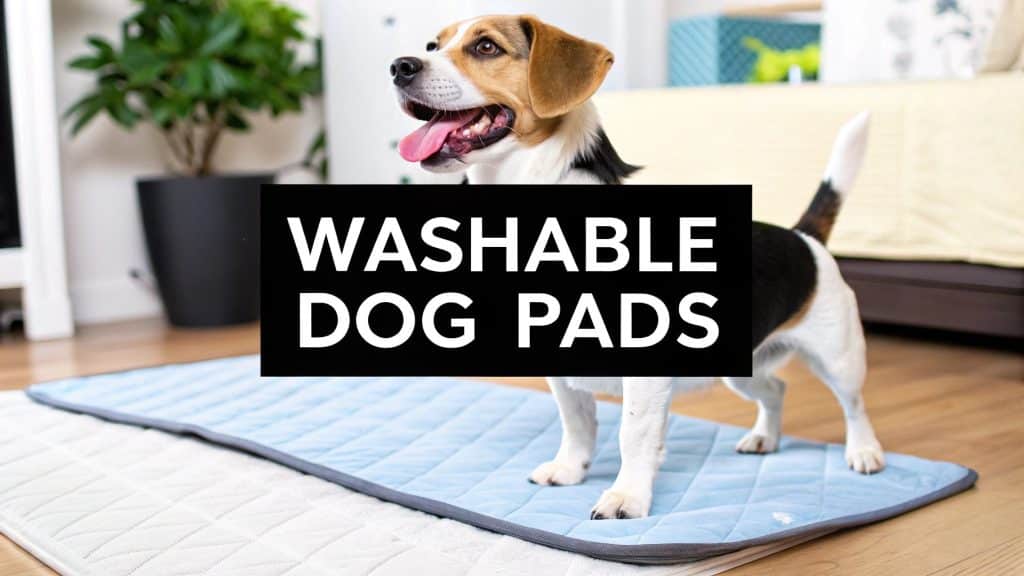
- Washable Pads: These are a fantastic investment. They cost more upfront, but they save you a ton of money over time and are much better for the planet. Yes, it means an extra load of laundry, but the reduction in waste is significant.
We actually have a full breakdown of reusable dog pee pads vs disposable if you want to get into the nitty-gritty details.
To help you see the differences at a glance, here’s a quick comparison of the most common types.
Comparing Dog Pee Pad Types
| Feature | Disposable Pads | Washable Pads | Eco-Friendly Pads |
|---|---|---|---|
| Convenience | High – use and toss | Medium – requires laundering | Medium – depends on type |
| Upfront Cost | Low | High | Medium to High |
| Long-Term Cost | High | Low | Medium |
| Eco-Impact | High waste | Low waste | Low waste |
| Odor Control | Good (often has charcoal) | Good (if washed properly) | Varies (often plant-based) |
| Best For | Puppy training, travel | Long-term use, budget-conscious | Environmentally-conscious |
Ultimately, the best choice aligns with your lifestyle. If you’re constantly on the go, disposables might be your best friend. If you’re home more often and want to save money, washables are a clear winner.
It’s no surprise that the demand for these products is booming. The global dog pads market, valued at around USD 500 million in 2025, is projected to almost double by 2033. It shows just how much pet owners are prioritizing hygiene and convenience.
While indoor pads are a lifesaver, sometimes you need a solid outdoor solution, too. For homeowners with a yard, a dedicated potty spot using Artificial Turf for Dogs: A Pet Owner’s Ultimate Guide can be a game-changer. It’s durable, easy to clean, and gives your dog a consistent place to go outside.
Your Practical Puppy Potty Training Plan
Bringing a new puppy home is one of life’s great joys, but that excitement quickly meets the reality of potty training. A solid plan built on consistency, patience, and a whole lot of praise is your best bet. Think of pads for dog pee not as a way to skip outdoor training, but as a reliable indoor system. It’s all about minimizing accidents and making the whole process less stressful for everyone involved.
Your first move is to create a dedicated potty spot inside. Pick a place that your puppy can always get to, but make sure it’s away from their food, water, and bed. A quiet corner in a mudroom or a bathroom usually does the trick. Dogs have a natural instinct to keep their eating and sleeping areas clean, so this separation plays right into their wiring.
Making the First Introduction
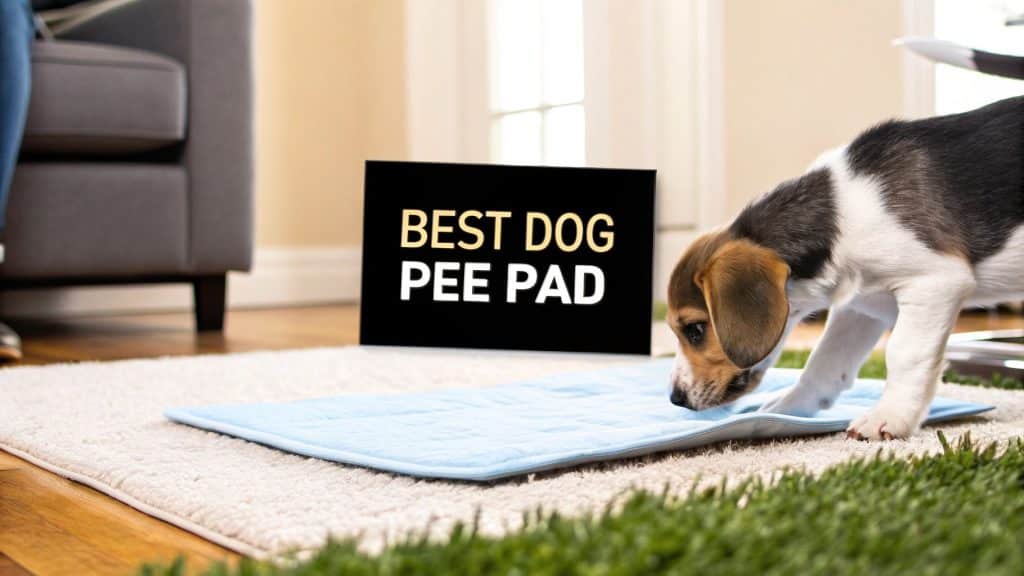
Once you’ve picked the perfect spot, it’s time to show your puppy their new potty pad. Don’t just lay it on the floor and walk away. Guide your pup over to it and let them sniff and check it out on their own terms. The key here is to keep things low-key and positive—no pressure.
Every time you place them on the pad, use a simple, consistent command like “go potty” or “potty time.” Your puppy will eventually connect that phrase with the action you’re looking for. Just remember, this takes time and endless repetition is the name of the game.
Key Insight: The secret to successful potty training is learning to anticipate your puppy’s schedule. Most pups need to go right after waking up, after a good play session, and about 15-20 minutes after a meal. If you take them to the pad at these specific times, you’re setting them up to succeed.
Recognizing the Signs and Rewarding Success
You’ll quickly become an expert in reading your puppy’s body language. Most have a “tell” when they need to relieve themselves. Keep an eye out for these classic signals:
- Circling: Pacing around in a tight circle is a dead giveaway.
- Sniffing the ground intensely: They’re on the hunt for the right spot.
- Whining or heading for a hidden corner: This often means they know they have to go but aren’t quite sure where.
The second you spot any of these behaviors, gently scoop them up and carry them straight to the pad. Stay with them and calmly repeat your potty cue.
The moment they do their business on the pad, it’s party time! Immediately offer enthusiastic praise—”Good potty!”—and a high-value treat. This should be a special snack they only get for successful potty trips.
This immediate reward is the most critical part of the entire process. It forges a powerful link in their brain: using the pad makes amazing things happen. This positive connection works far better than scolding for accidents. Never, ever punish your puppy for a mistake. It just creates fear and confusion, which will only derail your training efforts. Clean it up with a good enzymatic cleaner to completely remove the scent and just focus on the next opportunity to get it right.
Troubleshooting Common Pee Pad Problems
Even with the best training plan, you’re bound to hit a few bumps in the road. Don’t worry—it’s totally normal. Dogs aren’t robots, and a little confusion or boundary-testing is part of the process. The trick is to meet these challenges with a clear head, not frustration.
Let’s walk through some of the most common hiccups people run into with pads for dog pee.
The Near Miss: Aiming Off-Target
Is your dog consistently going right next to the pad, but not on it? This is one of the most frequent complaints I hear. It’s not defiance; it’s usually a space issue.
Your dog needs room to do their little pre-potty circle dance. If the pad is too small, they might circle right off the edge before they can get down to business. The easiest fix? Simply switch to a larger pad. Giving them a bigger landing zone often solves the problem overnight.
The Pad is a Toy, Not a Toilet
Another classic puppy move is treating the pee pad like a new toy or a comfy bed. Shredding, dragging, and napping on the pad are usually signs of boredom or teething.
Instead of getting upset, redirect their attention. The moment you see them start to chew on the pad, swap it out for an exciting chew toy. If you have a serial shredder on your hands, a pee pad holder is a game-changer. These plastic frames clamp down on the edges, making it almost impossible for your pup to get a good grip and tear it up.
Why Did My Dog Suddenly Stop Using the Pad?
It can be baffling when a perfectly trained dog suddenly starts having accidents again. This kind of regression almost always has a reason behind it, and it’s rarely because they’re being stubborn.
First, check the pad itself. Are you changing it often enough? A dog’s sense of smell is incredibly powerful. What looks clean to you might smell like a dirty restroom to them, making them avoid it.
If the pad is fresh, think about what else might have changed in their world. A new person in the house? A different daily schedule? Even rearranging the furniture can cause enough stress to throw their potty habits off-kilter.
A Quick Word of Caution: If your adult or senior dog’s potty habits change out of the blue, it could be a red flag for a medical issue. Things like a urinary tract infection (UTI) can create a sudden, uncontrollable urge to go. When in doubt, a quick check-up with your vet is always the smartest move.
A Few More Tricks Up Your Sleeve
For those extra-tricky situations, you might need to get a little more creative. Here are a few tried-and-true tactics that can help get things back on track:
- Expand the Target: If your dog keeps missing the edge, try overlapping two or three pads to create a much larger surface area. It’s a simple way to increase their chances of success.
- Use Their Scent: When an accident happens, soak a small corner of a paper towel in the urine and place it in the center of a fresh, clean pee pad. Their own scent acts as a powerful signpost, guiding them to the right spot next time.
- Clean Up the Right Way: Whatever you do, avoid cleaning accidents with ammonia-based products. Since urine already contains ammonia, using these cleaners essentially tells your dog, “This is a great place to pee!” An enzymatic cleaner is your best friend here—it doesn’t just mask the smell, it completely breaks down the odor-causing molecules. You can find excellent options among other grooming and cleaning supplies.
Staying calm and consistent is everything. By patiently troubleshooting the issue, you can steer your dog back to good habits and restore potty-time peace.
Using Pee Pads for Adult and Senior Dogs
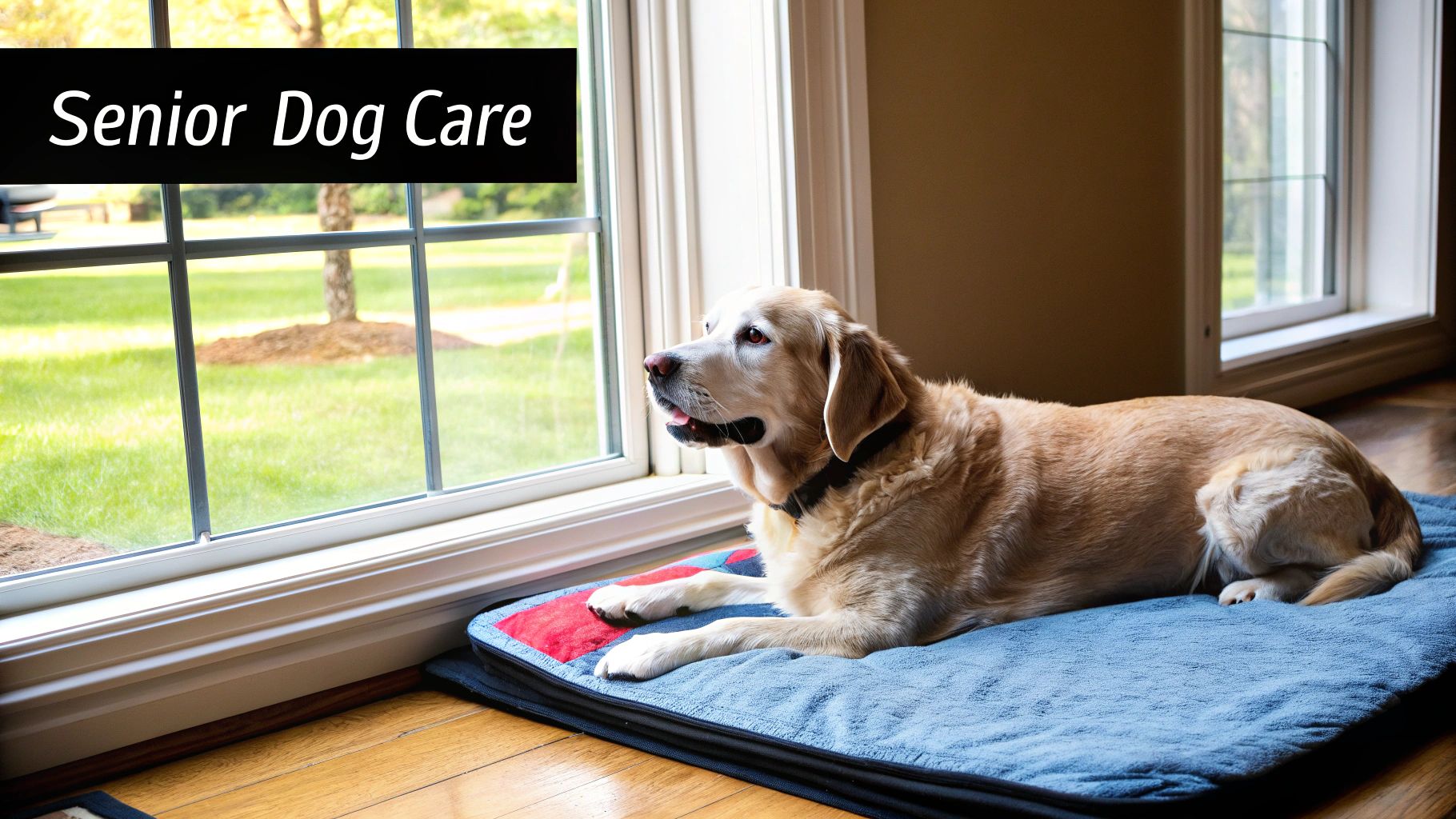
When you think of pee pads, puppies probably come to mind. But these handy tools are incredibly valuable for adult and senior dogs, too. They offer a practical and compassionate way to support our dogs through different life stages, giving them comfort and dignity when getting outside becomes tricky.
For adult dogs, a pee pad can be a lifesaver, especially if you work long hours or live in a high-rise apartment without a backyard. It gives your dog a clean, appropriate spot to relieve themselves, preventing accidents and the discomfort of “holding it.”
But for senior dogs, the need often becomes even more profound.
Addressing the Needs of Senior Dogs
Getting older brings new challenges for our dogs. Arthritis can make stairs a painful obstacle, fading vision turns the familiar yard into a confusing space, and incontinence can become a part of daily life. In these moments, insisting on an outdoor-only potty routine can cause your old friend unnecessary stress and pain.
Pee pads provide a gentle solution, offering a safe and easily accessible spot right inside the home. This simple adjustment can dramatically improve their comfort and quality of life.
A Compassionate Approach: The idea isn’t to replace outdoor potty breaks entirely. It’s about providing a stress-free backup plan. This helps maintain your dog’s hygiene, protects their aging joints from extra strain, and preserves their dignity.
The sheer popularity of these pads shows just how essential they’ve become. The market produces an estimated 4.6 billion pads every year, with over 90% of them being put to use. This isn’t just a puppy-training trend; it’s a reflection of their usefulness for dogs of all ages.
Practical Tips for Senior Dog Care
Teaching an old dog a new trick—like using a pee pad after a lifetime of going outside—requires a lot of patience and positivity. It’s crucial to never scold them for accidents. Instead, gently guide them to the pad and shower them with praise when they get it right.
Here are a few compassionate strategies that can help:
- Location is everything. Place pads where your dog can easily find them, like near their bed or along their path to the door they used to signal with.
- Keep it clean. Change pads frequently to prevent skin irritation and infections, which senior dogs are more prone to. A soft and washable reusable dog pee pad blanket is a great option for comfort and hygiene.
- Watch for health changes. A sudden shift in potty habits can be a red flag for a health problem. If you notice changes, especially incontinence, it’s worth looking into conditions like doggy dementia. You can find helpful information in a complete guide to canine cognitive dysfunction.
Still Have Questions? Let’s Talk Pee Pads
It’s one thing to have a plan, but it’s another thing entirely when you’re in the thick of it with your pup. Questions are bound to come up when you’re using pee pads, and that’s perfectly normal. Wondering if you’re on the right track or if your dog’s weird little quirk is common is all part of the process.
Let’s dive into some of the questions I hear most often from pet parents, so you can get clear answers and feel confident you’re doing what’s best for your dog.
How Often Should I Be Changing the Pee Pad?
Honestly? As often as you can. For the sake of your nose and your home’s hygiene, the absolute best practice is to swap out a disposable pad after every single use. Think of it this way: a clean, fresh spot is way more appealing to your dog, which is exactly what you want to encourage.
Little puppies have tiny bladders, so you might be changing pads several times a day. If you see the pad is soaked through or you catch a whiff of anything unpleasant, it’s past time for a new one. Even those super-absorbent pads have their limits. Leaving a soiled pad down not only discourages your dog from using it again but can also lead to skin irritation if they step in it.
A Little Pro Tip: I’ve seen it time and time again—a dog who was using their pad perfectly suddenly starts having accidents elsewhere. The number one culprit? A dirty pad. Dogs are naturally clean creatures and will avoid a messy “bathroom” just like we would.
Will Using Pee Pads Make It Harder to House-Train My Dog to Go Outside?
This is probably the biggest myth I hear, but it’s a valid concern. The short answer is no, as long as you’re strategic about it. The key is to view the pads as a temporary tool, not the final destination (unless, of course, indoor pottying is your long-term plan).
Your best friend in this process is consistency. The pad is the designated indoor spot, while the great outdoors is the ultimate potty prize.
If you’re aiming for a full transition to outdoor-only potty breaks, you can actually use the pads to your advantage. Start by slowly inching the pad closer to the door you use to go outside. Over a few days, move it from its original spot, across the room, and right up to the door. The next logical step? Place the pad just outside that door.
Throughout this process, stick to a regular outdoor potty schedule and throw a party—I mean lots of praise and treats—every time they successfully go outside. This approach creates a clear, easy-to-follow bridge from the indoor pad to the outdoor world, cutting down on any potential confusion.
Help! My Dog Won’t Stop Chewing the Pee Pads. What Can I Do?
Ah, the pad shredder. It’s an incredibly common (and yes, incredibly frustrating) puppy phase. This usually boils down to a mix of teething pain, sheer boredom, or simple curiosity. The trick is to redirect this behavior, not punish it. Getting mad can just make your dog anxious about their potty area, which will only set you back.
Here are a few things that actually work:
- The Old Switcheroo. The second you see your pup start to nibble on the pad, swap it out for a super enticing chew toy. This immediately teaches them, “This is for chewing, that is for peeing.”
- Get a Pad Holder. These plastic frames are a total game-changer for shredders. They clamp the pad down securely, hiding the edges so your dog can’t get a good grip to start tearing it up.
- Make It Taste Gross. A quick spritz of a pet-safe bitter apple or bitter cherry spray around the edges of the pad can work wonders. One taste and they’ll likely decide chewing it isn’t worth the effort.
By making the pad a boring toy and offering much better alternatives, you can usually curb this destructive habit pretty quickly.
At Ur Pet Store, we know that having the right tools makes all the difference in training and caring for your pet. Check out our collection of high-quality pet products designed to keep your home clean and your companion happy. Visit us at https://urpetstore.com for all your pet care needs.