

Blog
A Simple Guide to pee pad for dogs: Tips for Pet Owners

Let’s be honest, staring at a fresh puddle on your favorite rug is a feeling most dog owners know all too well. This is where a pee pad for dogs goes from being just another pet product to an absolute game-changer in your daily routine.
Think of it as a personal, indoor bathroom for your dog—a simple, practical tool that saves a ton of stress for both of you.
Why Pee Pads Are a Lifesaver for Pet Parents
The real magic of pee pads is how incredibly versatile they are. They aren’t just for one type of dog or a single situation.
For anyone bringing home a bouncy new puppy, these pads create a clear, designated potty spot. This consistency is key. It helps cut through the chaos of house-training, speeding up the learning process and drastically cutting down on accidents around your home.
Support Through Every Life Stage
As our dogs get older, they face new challenges. A senior dog dealing with stiff joints or incontinence might find the trip outside to be a painful ordeal. An easily accessible pee pad gives them a dignified, comfortable alternative, making their golden years much more pleasant. It’s a small change that can make a huge difference in their quality of life.
A pee pad acts as a reliable backup plan, offering peace of mind when life gets in the way. It’s the ultimate safety net for your floors and your dog’s comfort.
The same goes for dogs on the mend from surgery or an illness. When a vet says to limit activity, a clean pee pad indoors ensures they can relieve themselves without the strain of unnecessary movement, helping them heal faster.
A Practical Solution for Modern Living
Pee pads are also a lifesaver for people in apartments or high-rises where a quick trip outside isn’t always possible. Think about those late-night emergencies or when it’s pouring rain or snowing sideways. A pee pad provides a safe, reliable option when heading outdoors just isn’t practical.
At the end of the day, using a pee pad helps create a more harmonious home. It replaces the frustration of cleaning up messes with a smart, manageable solution, which can only improve your bond with your pet. While pads are an amazing indoor tool, a well-rounded approach also considers their outdoor environment. For example, learning about maintaining a healthy lawn with dogs helps you manage all your dog’s spaces effectively. Seeing all the ways they can be used, it’s clear a pee pad is more than a convenience—it’s a cornerstone of thoughtful, compassionate pet care.
Understanding the Anatomy of a Dog Pee Pad
Ever laid down a pee pad and wondered what makes one work like a charm while another becomes a soggy, leaky mess? It’s not just about the brand name on the package. The real difference is in the smart, multi-layered design hidden from view. A good pee pad for dogs is engineered to be more than just a piece of paper; it’s a high-tech sponge designed to capture, lock, and neutralize liquid on contact.
To really get why some pads are so much better than others, we need to peel back the layers. Each part has a specific job to do, all working together to protect your floors, keep your pup’s paws dry, and stop odors in their tracks. Knowing how they’re built helps you pick the right one for your furry friend.
The Quick-Wicking Top Sheet
The very first layer your dog feels is the top sheet. Its whole purpose is to be a gateway—letting urine pass through in a flash while staying soft and surprisingly dry. Think of it like the fabric in high-end workout clothes that pulls sweat away from your skin to keep you comfortable.
This layer is usually made from a non-woven fabric that’s tough enough to stand up to claws but porous enough to funnel liquid down into the core almost instantly. A well-made top sheet is your first line of defense against “tracking,” which is when your dog steps in their own puddle and leaves little wet paw prints all over the house.
Honestly, the success of a pee pad starts right here. If this top layer can’t do its job quickly, the rest of the pad’s fancy technology doesn’t stand a chance.
Here’s a quick breakdown of how the standard layers work together:
| Layer | Primary Material | Key Function |
|---|---|---|
| Top Sheet | Non-Woven Fabric | Quickly wicks moisture away from the surface to keep paws dry. |
| Absorbent Core | Fluff Pulp & SAP | Instantly absorbs liquid and converts it into a locked gel. |
| Liner | Polyethylene Film | Acts as a waterproof barrier to prevent any leaks onto floors. |
Each of these layers collaborates to create a system that’s far more sophisticated than just putting down some old newspapers.
The Super-Absorbent Core
Right below the top sheet is the powerhouse of the pad: the absorbent core. This is where the real magic happens. This middle layer is typically a blend of fluffy wood pulp and an incredible material called Super Absorbent Polymer (SAP).
When urine hits the core, the fluff pulp helps spread it out so it doesn’t just pool in one spot. Then, the tiny SAP crystals kick into high gear, absorbing hundreds of times their own weight in liquid and turning it into a solid gel in seconds. This gel-locking technology is what stops messes from leaking out, even if you have to pick the pad up or your dog steps on it again.
The absorbent core is the heart of the pee pad. Its ability to turn liquid into a stable gel is what provides true leak-proof confidence and protects your home’s surfaces.
The need for good indoor potty solutions like these has created a huge market. The global market for dog pee pads was valued at around USD 1.13 billion in 2023 and is expected to grow to USD 2.08 billion by 2031. That growth really shows how much people, especially in cities, have come to rely on them. You can check out the full research on dog pee pad market trends to learn more.
The Leak-Proof Plastic Liner
The final layer is your floor’s last line of defense. It’s a durable, waterproof plastic liner, usually made from polyethylene film, that makes sure absolutely no moisture seeps through to the surface underneath.
Many modern pads even have reinforced edges or a plastic border that extends past the absorbent core. It’s a smart design choice that helps contain any accidents that happen right near the edge, giving you an extra bit of security.
This infographic breaks down why people use pee pads, which directly shapes the technology behind them.
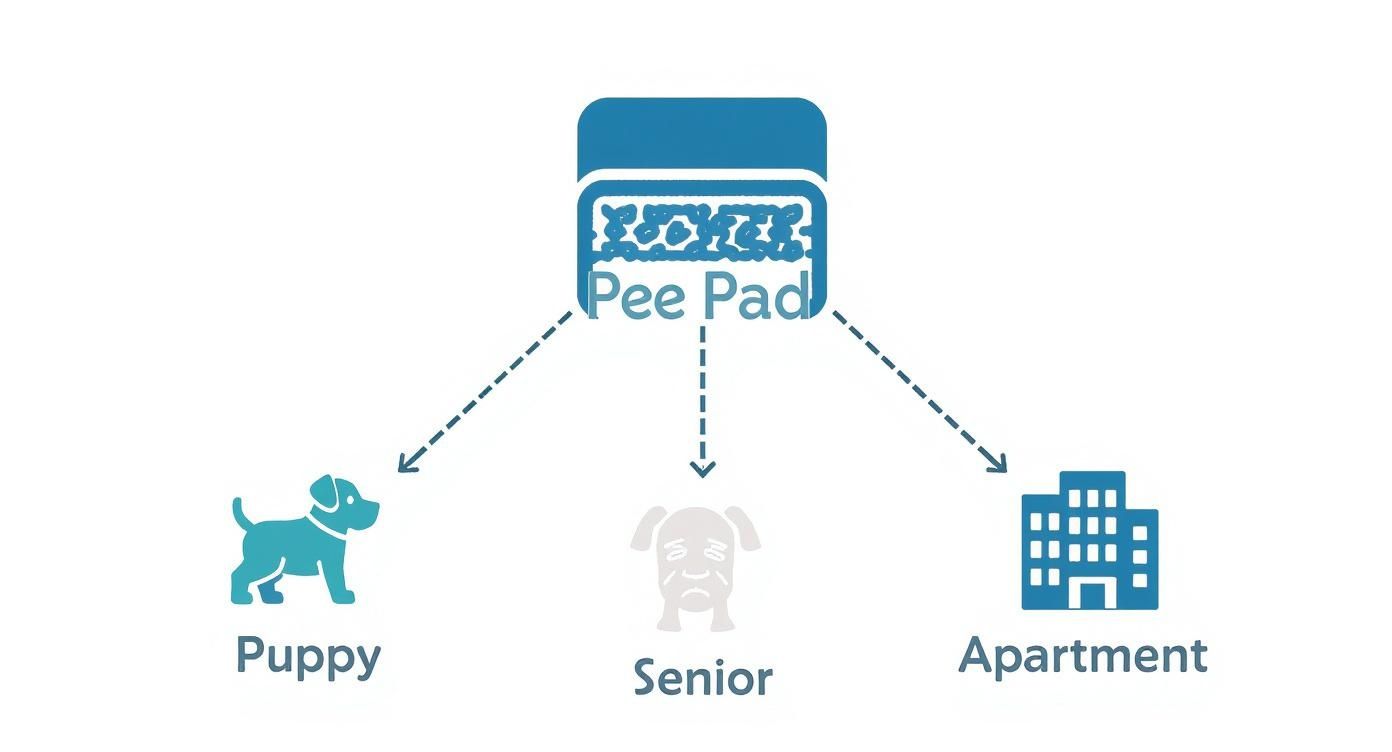
As you can see, pads are a go-to for puppies, senior dogs, and apartment-dwelling pets—all situations where you really need them to perform reliably.
Advanced Features in Modern Pee Pads
On top of the basic three-layer design, many of the best pads today come with extra features designed to solve common headaches for pet owners. These little innovations can make a world of difference.
- Pheromonal Attractants: Some pads come treated with a scent that mimics dog pheromones. You can’t smell it, but it encourages your dog or puppy to see the pad as the right place to go.
- Odor Neutralization: To fight those not-so-pleasant smells, manufacturers will often mix in ingredients like baking soda or activated carbon. Carbon is a superstar at trapping and neutralizing the ammonia in urine at a molecular level.
- Adhesive Tabs: A simple but brilliant idea. Little sticky tabs on the corners of the liner keep the pad from sliding around on tile or hardwood floors. This ensures your dog has a stable target and the pad doesn’t end up crumpled in a corner.
Once you understand what goes into a pee pad, you can see the clever technology designed to make life with your pet just a little bit cleaner and easier.
Choosing Your Pad: Disposable vs. Reusable
When you start looking at pee pads, you’ll quickly hit a major fork in the road: should you go with disposable or reusable? This isn’t just about a simple purchase. It’s a decision that impacts your daily routine, your wallet, and even your environmental footprint. It really boils down to a classic trade-off: the grab-and-go ease of single-use pads versus the long-term, eco-friendly value of washable ones.
Think about the city dweller with a jam-packed schedule. For them, the sheer simplicity of tossing a used disposable pad is a lifesaver. On the other hand, picture a family trying to cut down on waste and save money over the long haul. A durable, washable pad is a much better fit for their lifestyle. Neither option is wrong—it’s all about finding what works for you and your dog.
The Case for Convenience: Disposable Pads
Disposable pee pads are the undisputed champions of convenience. Their biggest selling point is the effortless cleanup—you just roll it up and toss it. No washing, no drying, no extra loads of laundry.
This makes them a fantastic choice for a few key situations. If you’re short on time or navigating the messy, unpredictable first few weeks of potty training a new puppy, disposables are a huge help. They’re also perfect for travel. You can pack a light stack and just discard them as you go, keeping your hotel room or friend’s house clean and tidy.
But that convenience has its downsides. The cost of constantly buying new pads adds up, and over a dog’s lifetime, it can be a significant expense. Plus, from an environmental standpoint, they create a lot of waste. Most disposable pads are made with plastics that end up sitting in landfills for a long, long time.
Embracing Sustainability: Reusable Pads
On the other side, you have reusable pee pads. These are typically made with tough, multi-layered fabrics designed to be washed and reused hundreds of times. This makes them a much more eco-friendly and budget-conscious choice in the long run.
Sure, the upfront cost is higher, but think of it as a one-time investment. Once you have a few to rotate, you’re done buying pads. This slashes your household waste and shrinks your carbon paw-print. Many modern reusable pads also boast superior absorbency and leak protection, so you’re not sacrificing performance.
The trade-off, of course, is the maintenance. You have to wash them. This means getting into a good laundry routine so you always have a clean, dry pad ready to go. For people committed to a greener lifestyle, this extra step is a small price to pay for the benefits. You can even find high-quality options like a reusable dog pee pad blanket that combines the comfort of a blanket with serious durability.
The choice between disposable and reusable pads isn’t about which is “better” overall, but which is better for you. Aligning your choice with your daily habits, budget, and environmental values is the key to finding a solution that works seamlessly for your household.
To lay it all out, let’s compare the two side-by-side.
Comparing Disposable and Reusable Pee Pads
Choosing between these two options can feel tricky, but breaking it down by key features makes it much clearer. This table gives you a quick snapshot of what to expect from each type.
| Feature | Disposable Pee Pads | Reusable Pee Pads |
|---|---|---|
| Upfront Cost | Low | High |
| Long-Term Cost | High (ongoing purchases) | Low (one-time purchase) |
| Convenience | Very High (grab and toss) | Moderate (requires washing) |
| Environmental Impact | High (contributes to landfill) | Low (reduces waste) |
| Best For | Travel, puppy training, busy owners | Eco-conscious owners, long-term use |
At the end of the day, both have strong pros and cons. Your lifestyle will be the ultimate tie-breaker.
Making the Right Choice for Your Home
Ultimately, the best pee pad for dogs is the one that fits your life.
- For the Busy Professional: If your days are packed and time is your most precious resource, the no-fuss convenience of disposables will probably win out.
- For the Eco-Conscious Family: If reducing waste is a top priority, a set of quality reusable pads is a no-brainer.
- For the Budget-Savvy Shopper: While disposables seem cheaper at first, reusable pads will save you a lot of money over time.
- For the Frequent Traveler: Disposables are lightweight, easy to pack, and require zero cleaning on the road. They’re the clear winner for travel.
Some people even find a hybrid approach is the perfect solution. They use washable pads at home for daily use but keep a pack of disposables stashed away for trips or emergencies. By thinking through these points, you can pick the pee pad that brings you peace of mind and keeps everyone—two-legged and four-legged—happy.
Finding the Perfect Size and Placement
Picking the right pee pad for dogs isn’t just about grabbing the first pack you see on the shelf. If you get the size and placement wrong, you’re setting yourself—and your dog—up for a frustrating time. Think of it like buying shoes: if they don’t fit, they just don’t work.
A pad that’s too small is an open invitation for accidents. The whole point is to give your pup a generous target, one that can handle their little pre-potty rituals. You know the one—the sniffing, the circling, the finding of the perfect spot. A tiny square just won’t cut it.
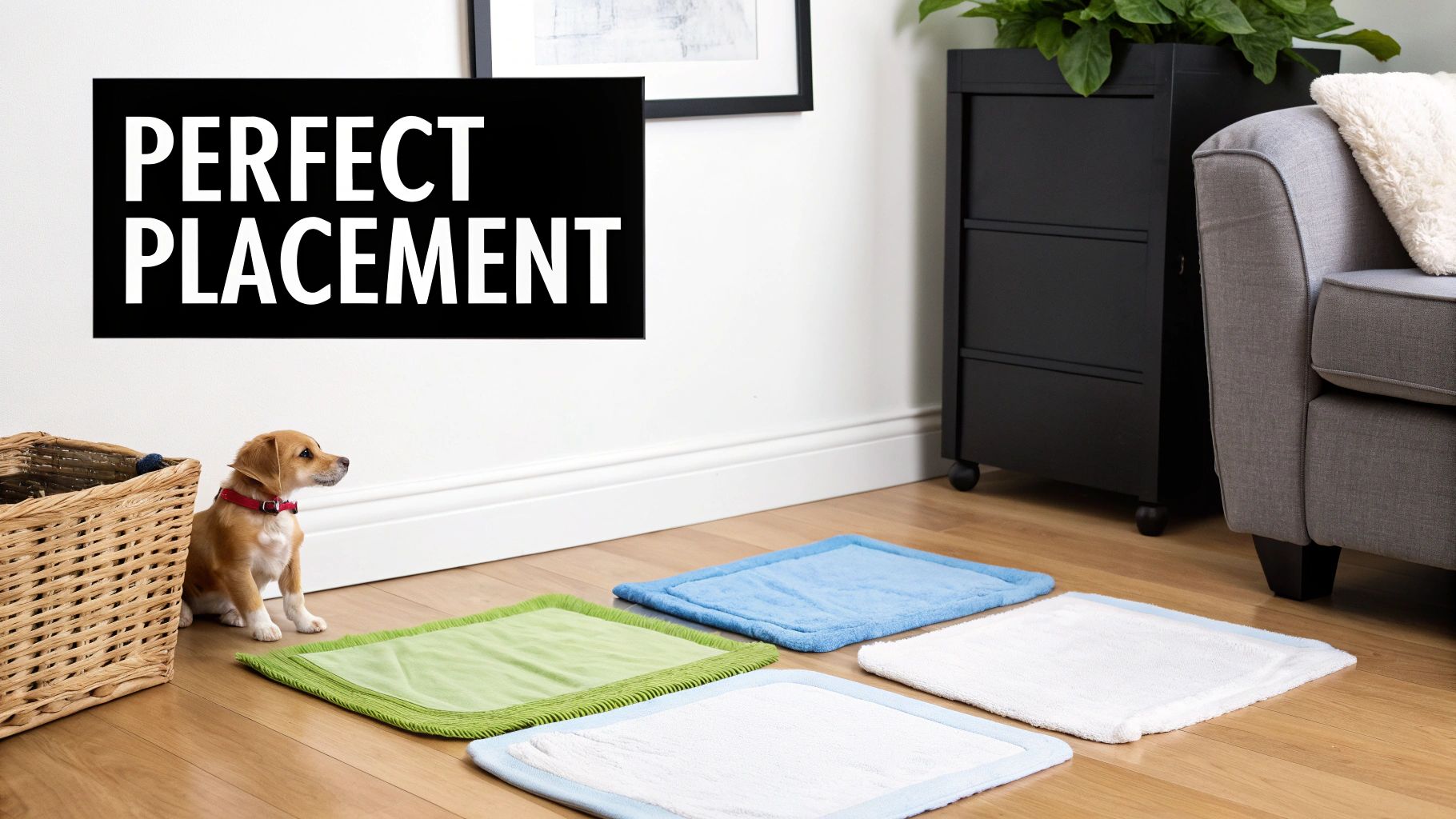
Matching Pad Size to Your Pup
So, how do you pick the right size? It’s less about their breed and more about their actual size and habits. A great rule of thumb is to find a pad where your dog can stand with all four paws comfortably on it and still have plenty of real estate left over.
Here’s a quick guide to get you started:
- Small (approx. 17″x24″): This size is perfect for the little guys—think Chihuahuas, Yorkies, and Pomeranians.
- Medium (approx. 24″x24″): A solid choice for small-to-medium pups like Beagles, French Bulldogs, or Cocker Spaniels.
- Large to Extra-Large (28″x34″ and up): You’ll need this for bigger breeds like Labradors and Golden Retrievers. It’s also a smart option if you have a few small dogs sharing one spot.
When in doubt, always size up. A slightly larger pad gives your dog a bigger margin for error, which means a higher success rate and way less cleanup for you.
Giving them a larger target builds confidence and makes it crystal clear that the pad is the right place to go.
The Art of Strategic Placement
Once you’ve got the right size, where you put it is just as crucial. The spot needs to be convenient for your dog but also practical for you. Above all, the key is consistency. Pick a spot and stick to it. Moving it around will only confuse your pup.
Try to see things from your dog’s perspective. They need a place that feels safe and easy to get to, not somewhere they’ll feel exposed or stressed. Dropping a pad in the middle of a busy hallway or right next to the blaring TV is a recipe for failure. Nobody wants an audience, right?
Instead, look for a quiet, low-traffic corner. A spot in the laundry room, a mudroom, or an unused corner of the kitchen can be ideal. This becomes their own personal, reliable bathroom spot.
One of the most important rules is to keep their potty area far away from where they live, eat, and sleep. It’s a natural instinct for dogs not to soil their den.
- Keep it away from their food and water bowls.
- Do not place it next to their crate or bed.
Respecting this instinct makes the whole training process much more intuitive for them. Creating these separate zones is a big part of their overall comfort; you can explore more ideas for setting up your pet’s space with the right beds and mats. A calm, consistent, and clean location is the foundation for potty training success.
Your Step-by-Step Pee Pad Training Plan
Ready to turn your pup into a potty pro? Let’s walk through your new training playbook. The whole strategy is built on two simple but powerful principles: patience and positive reinforcement.
Teaching your dog to use a pee pad for dogs is a lot like teaching a child any new skill. It takes consistency, celebrating the small wins, and understanding that mistakes are part of the process. This plan will guide you through everything, from that first curious sniff to reliable, accident-free success.
Our goal is to make the pee pad a positive, predictable spot for your dog. We’ll break it down into easy, actionable steps that build on each other. Just remember, every dog learns at their own pace, so stay patient and keep it fun.
Step 1: Introduce the Pee Pad
First things first, make a casual introduction. Place the pee pad in the spot you’ve already picked out—somewhere quiet, with low traffic, and away from their food and bed. Now, let your dog explore it on their own terms.
Don’t push them onto it or make a big deal out of it. Let them sniff it, walk across it, and just get used to this new thing in their space. For the next few hours, keep a close eye on your pup for those classic potty cues: circling, sniffing the ground intently, or a little whining. The moment you spot these signs, calmly lead them over to the pad. This is all about making that first connection between the feeling of needing to go and the place to do it.
Step 2: Establish a Verbal Cue
Once your dog is on the pad, it’s time to add a verbal cue. Pick a simple, consistent phrase like “go potty” or “potty time” and stick with it. Use a calm, encouraging tone of voice.
This cue becomes a trigger, helping your dog understand exactly what you expect them to do when they’re on the pad. Say the phrase a few times while they’re standing there. Over time, they’ll build a strong mental link between your words and the action of relieving themselves.
The secret to successful training is immediate positive reinforcement. The reward—whether it’s a treat, praise, or a favorite toy—must happen within seconds of your dog successfully using the pad. This timing is crucial for them to connect their action with the positive outcome.
This instant feedback is what makes the new habit stick.
Step 3: Reward Success Immediately
This is it—the most critical part of the entire process. The second your dog finishes their business on the pad, throw a party! Shower them with praise in a happy, excited tone—”Good potty! Yes! Good dog!”—and immediately give them a high-value treat.
This shouldn’t be just any old biscuit. It needs to be something they absolutely love and only get for successful potty trips. This immediate celebration cements the idea in their mind: “When I go potty on this special square, something amazing happens!” That positive feeling is what will make them want to use the pad again and again.
Step 4: Create a Consistent Routine
Dogs thrive on routine. A predictable schedule is your best friend during house training because it dramatically increases your chances of success.
Set your pup up to win by taking them to the pee pad at these key moments:
- First Thing in the Morning: As soon as they wake up.
- Last Thing at Night: Right before you both turn in.
- After Naps: Waking up often gets things moving.
- After Playtime: All that excitement can stimulate the bladder.
- After Meals: About 15-20 minutes after they finish eating or drinking.
By proactively taking them to their spot at these times, you’re creating more opportunities to praise and reward them for getting it right.
Step 5: Handle Accidents and Setbacks Calmly
Accidents are going to happen. It’s a completely normal part of the learning curve. How you react is what matters most. Never scold, punish, or rub your dog’s nose in a mess. That will only create fear and anxiety, which can derail your training efforts.
If you catch your dog having an accident, make a quick, sharp noise—like a clap or a firm “Ah-ah!”—to interrupt them. Immediately scoop them up and place them on the pee pad to finish. If they do, reward them! If you find the mess after the fact, just clean it up without any fuss.
Be sure to use an enzymatic cleaner made for pet odors. Regular cleaners won’t eliminate the scent molecules, which can signal “this is an approved bathroom spot” to your dog and encourage a repeat performance. Patience is your greatest tool here.
How to Handle Cleanup and Disposal
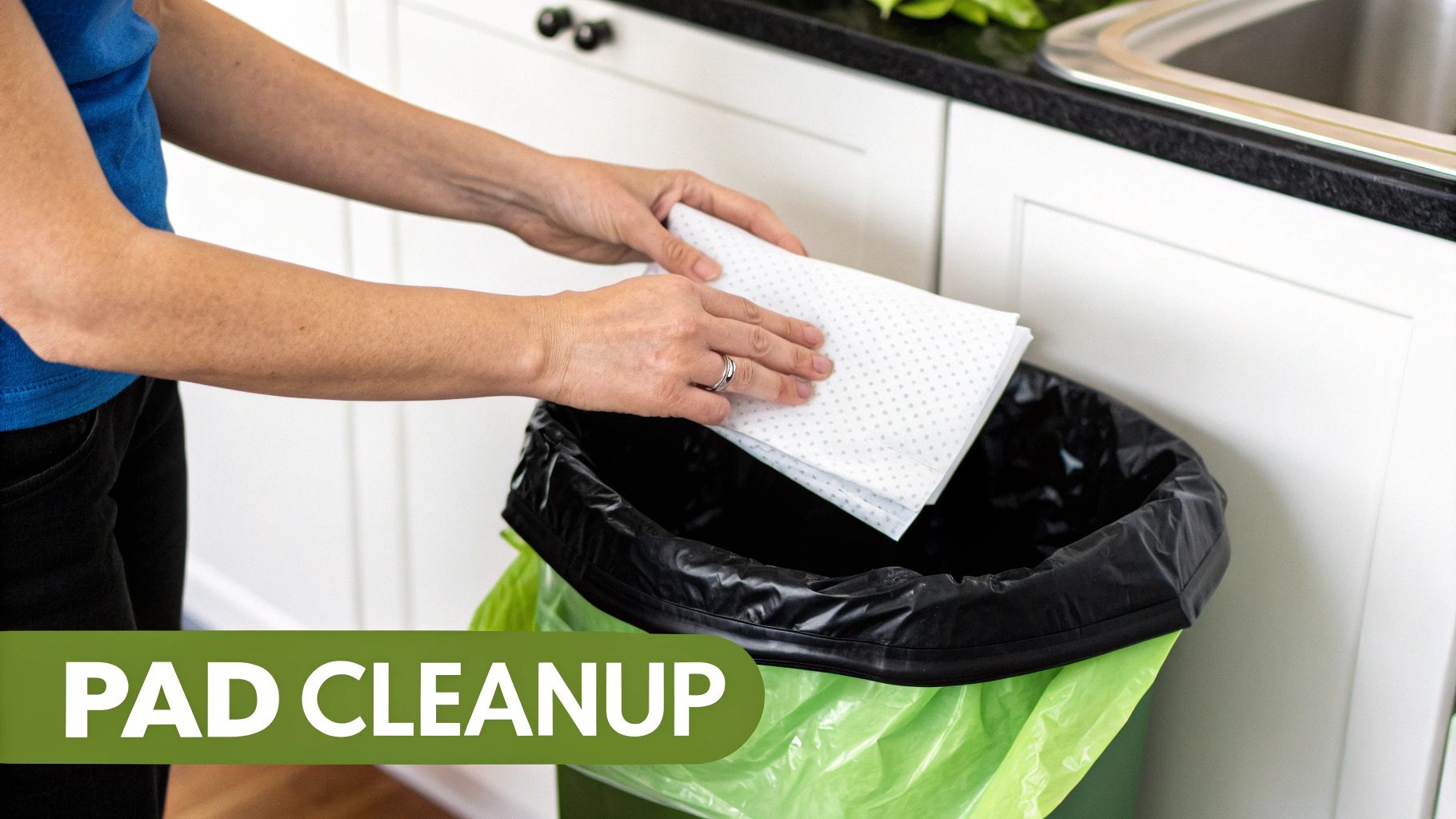
Getting your dog to use a pee pad is only half the battle. The other half is keeping your home clean and smelling fresh, which all comes down to a solid cleanup routine. A consistent process isn’t just for your own sanity—it also makes sure your dog continues to see their potty spot as a clean, reliable place to do their business.
No matter if you’re using disposable or reusable pads, having a clear plan of attack makes all the difference in preventing lingering smells and bacterial growth.
The Disposable Pad Routine
Disposable pads are all about convenience, but they still need your consistent attention to keep messes and odors from taking over. It’s a massive market for a reason; some manufacturers produce around 4.6 billion pads globally each year just to keep up with demand.
Here’s the simplest, cleanest way to handle them:
- Fold Inward Carefully: Once the pad has been used, grab the corners and fold them in toward the middle. This neat little trick traps the urine inside, so you don’t have to worry about drips on your way to the trash can.
- Seal and Discard: Pop the folded pad right into a designated trash bin. A lidded can is your best friend here for containing odors. If you’re dealing with a particularly strong smell, a diaper pail or even a small scented trash bag can be a game-changer.
- Replace Immediately: This step is crucial. Always lay a fresh pad down in the exact same spot right away. That consistency is key to reinforcing your dog’s training and making sure they know where to go next time.
Caring for Reusable Pads
Reusable pads are a fantastic, eco-friendly option, but they do require a bit of laundry duty to keep them absorbent and hygienic. The good news is, with the right care, they can last through hundreds of washes.
When laundry day comes around, just follow these simple guidelines:
- Use Pet-Safe Detergent: Stick with a mild, fragrance-free detergent. Anything with harsh chemicals or strong perfumes can irritate your dog’s sensitive nose and skin, potentially discouraging them from using the pad at all.
- Wash in Warm Water: A warm water cycle is usually perfect for getting the pad clean and sanitized without being too rough on the materials. Super-hot water can break down the waterproof backing over time, so it’s best to avoid it.
- Skip the Fabric Softener: This is a big one. Fabric softeners and dryer sheets coat the pad’s fibers with a waxy film, which completely ruins its ability to absorb liquid.
- Air Dry or Tumble Dry Low: Letting the pad air dry is the gentlest method. If you’re in a hurry, you can toss it in the dryer on a low-heat or tumble-dry setting to protect that all-important waterproof liner.
A well-maintained reusable pad is an investment that pays off. Proper washing not only saves you money in the long run but also ensures your pet always has a clean, effective spot, preserving its lifespan and making it a reliable part of your daily routine.
Even with the best pads, accidents can happen on the surrounding floor. For those times, learning how to remove pet urine smell from carpet can be a lifesaver. Taking care of your pads and the area around them is all part of keeping your home truly clean. Be sure to explore our full range of grooming and cleaning supplies to stay fully stocked.
Common Questions About Dog Pee Pads
Even with the best plan, you’re bound to have questions pop up during the pee pad training process. It’s totally normal. The good news is that most of the common hurdles have simple, straightforward fixes. Let’s walk through a few of the questions I hear most often from fellow dog owners.
How Do I Stop My Puppy from Tearing Up the Pee Pad?
Ah, the classic puppy shred-fest. If you have a puppy, you know they see just about everything as a chew toy. The key here is redirection.
The moment you see your pup start to tear at the pad, give a firm “No” and immediately hand them a much more interesting chew toy. Once they happily start chewing the toy, shower them with praise. This simple swap teaches them what’s for chewing and what’s not. For those really determined shredders, a plastic pee pad holder can be a lifesaver—it frames the pad and locks it down, keeping those tempting edges out of reach.
Should Pee Pads Be a Permanent Solution?
Honestly, this one comes down to your dog, your living situation, and your personal lifestyle. There’s no right or wrong answer.
For many people, a pee pad for dogs is a fantastic long-term solution. Think small breeds living in high-rise apartments, senior dogs struggling with incontinence, or pets in places with brutal winters or scorching summers.
On the other hand, if your ultimate goal is for your dog to do all their business outside, then it’s best to treat the pads as a temporary training tool. You can gradually move the pad closer and closer to the door, and then eventually place one right outside to help them connect the dots.
Why Does My Dog Keep Missing the Pad?
Don’t get frustrated by near misses! It happens to everyone. More often than not, the culprit is simply a pad that’s too small. Some dogs, especially those that circle a few times before they go, just need a bigger landing zone. When in doubt, size up.
Another thing to check is placement. Is the pad in the middle of a busy, noisy hallway? Your dog might feel too exposed to relax and do their business there. Try moving it to a quiet, low-traffic corner where they can have a little privacy. And remember, always clean up accidents with a good enzymatic cleaner to completely erase any scent that might lure them back to the wrong spot.
At Ur Pet Store, we provide high-quality supplies to make pet ownership easier. Find the perfect training solutions for your furry friend today!