

Blog
Your Ultimate Guide to pee pad for dogs

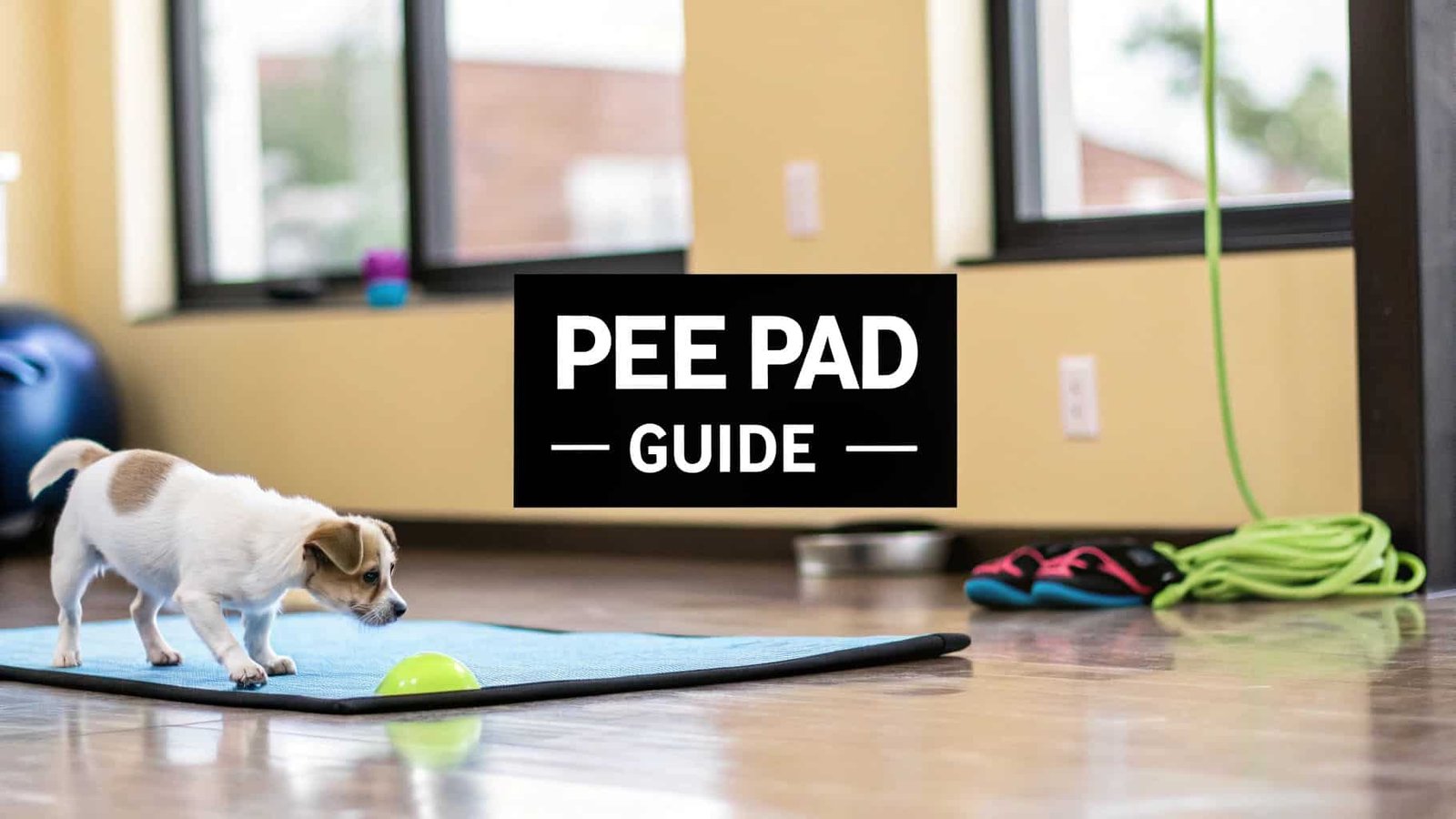
At its core, a dog pee pad is a simple concept: it's a sheet of absorbent material meant to serve as an indoor bathroom spot for your dog. But think of it less like a diaper and more like a dedicated, personal restroom for your furry companion. It's a tool designed to protect your floors, of course, but it's also about making life a little easier for both of you. This isn't just a temporary puppy fix; it's a surprisingly versatile part of modern pet care.
Why Pee Pads Are a Modern Pet Parent's Lifesaver
For a lot of us, the idea of an indoor toilet for our dog sounds like a dream. That’s pretty much what a pee pad is. It’s a straightforward but incredibly effective tool that gives you peace of mind, knowing your home is protected from unexpected accidents. The real magic of a dog pee pad is just how useful it is in so many different situations.
Take house-training a new puppy, for instance. It can be a chaotic time. Pee pads give your little one a clear, consistent spot to go, which speeds up the learning curve and drastically cuts down on messes on your favorite rug. It's all about building good habits right from the start.
Indispensable in Any Situation
The usefulness of a pee pad doesn't stop when your dog is fully house-trained. They are a genuine lifeline for countless dogs and their owners, offering support through every stage of a dog's life.
- Senior Dogs: As our dogs get older, they might struggle with incontinence or have a harder time getting around. A nearby pee pad gives them a dignified and comfortable option, preventing stressful accidents when a trip outside just isn't possible.
- Apartment Living: If you live in a high-rise, you know the struggle of that late-night or super-early morning potty run. An indoor pad is a much safer and more convenient alternative.
- Extreme Weather: Trying to convince your dog to go out in a blizzard, a scorching heatwave, or a booming thunderstorm is no fun for anyone. A pee pad means they have a safe place to relieve themselves without braving the elements.
- Post-Surgery Recovery: After a medical procedure, dogs often have to limit their movement. Having a pad right in their recovery space is essential for their hygiene and comfort while they heal.
A pee pad is more than just mess management; it's a reliable safety net. It gives you the flexibility to handle your dog's needs no matter what life throws at you, which protects your home and, frankly, your sanity.
By creating a predictable and stress-free environment, you're also doing wonders for your dog's well-being. A calm dog is a happy dog, and taking the anxiety out of potty time can genuinely improve their overall behavior. Pairing a reliable potty solution with other comforting items, like a calming dog bed, helps build a secure and serene atmosphere at home. It’s a holistic approach that shows your pet they are safe, comfortable, and cared for.
The Anatomy of a High-Quality Pee Pad
At a glance, a dog pee pad seems pretty basic. But a truly effective one is a small marvel of engineering, built to do a very demanding job. Think of it less like a simple sheet and more like a multi-layered system where each part plays a crucial role. Understanding what goes into a good pad is the first step to finding one that will actually protect your floors and keep your home smelling fresh.
It’s the combination of these layers, working in harmony, that makes all the difference. A cheap, flimsy pad is like a single paper towel—it might handle a tiny spill, but it will quickly get overwhelmed and leak. A premium pad, on the other hand, is built like a fortress against leaks, messes, and odors.
The Top Layer: The Quick-Dry Welcome Mat
The very first layer your dog will feel is the topsheet. Its job is to be soft and inviting while wicking moisture away from the surface in seconds. This is key to preventing your pup from leaving wet paw prints all over the house.
This layer is usually made from a soft, non-woven fabric that feels dry to the touch, which encourages your dog to use it again. A great topsheet funnels liquid straight down into the core, keeping the surface clean and comfortable for your dog.
The Middle Core: The Super-Sponge Engine
Right below the topsheet is the heart of the pad: the absorbent core. This is where the real magic happens. This layer is typically a mix of fluffy pulp and an incredible material called Super-Absorbent Polymer (SAP).
Think of SAP as microscopic, ultra-thirsty crystals. When liquid hits them, they don’t just absorb it; they instantly turn it into a solid gel. These tiny polymers can hold hundreds of times their own weight in liquid, locking it away for good.
- Locks in Liquid: By gelling the urine, SAP prevents moisture from being squeezed back out, even if your dog steps on the wet spot.
- Neutralizes Odor: The best pads mix odor-fighting ingredients like baking soda or activated carbon right into the core, trapping nasty smells at the source.
- Absorbs More: The amount of SAP in the core determines the pad's capacity. Pads for large dogs or multi-pet homes are packed with more of these powerful polymers to handle a heavier load.
This infographic breaks down some of the most common reasons pet owners rely on pee pads, from the puppy phase all the way to a dog's golden years.
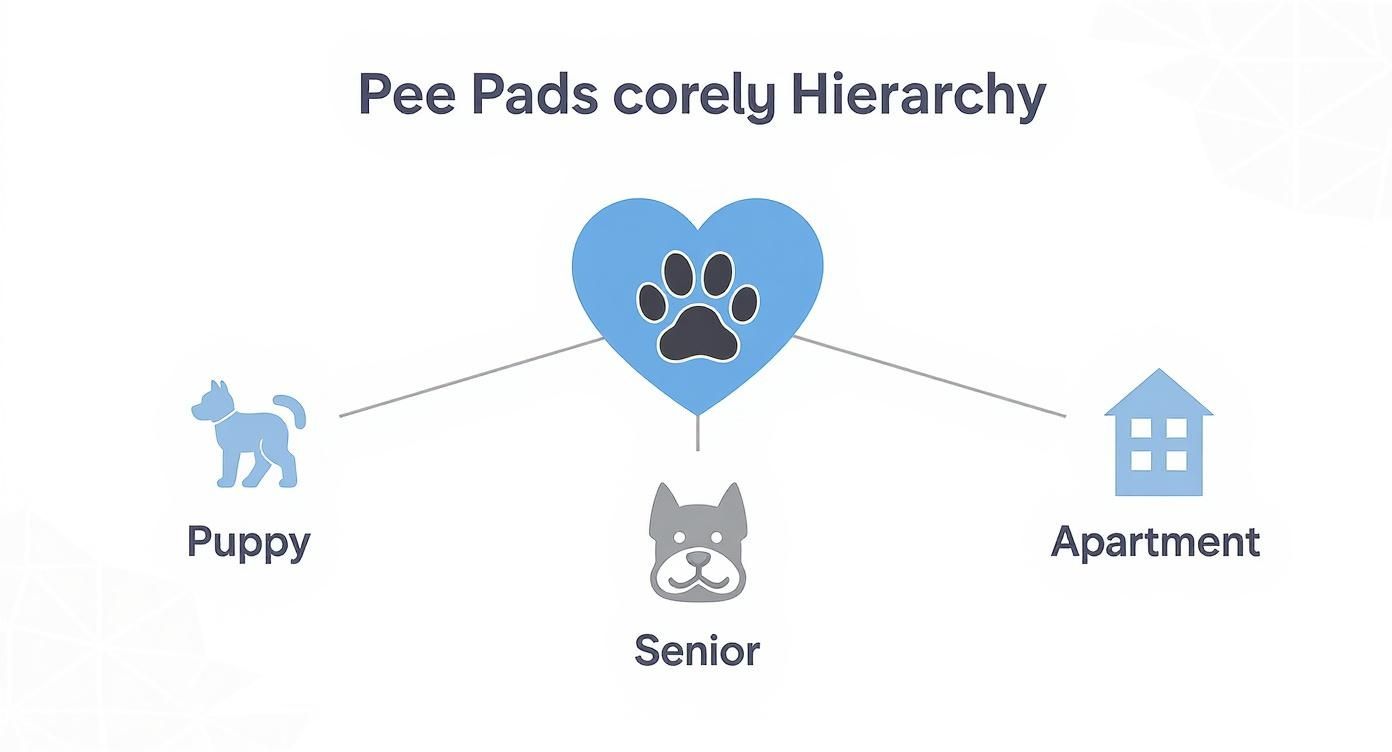
As you can see, whether you're house-training a brand-new puppy, giving an elderly dog a convenient option, or just navigating apartment life, a good pee pad is an indispensable tool.
The Bottom Layer: Your Floor's Waterproof Shield
The final layer is your floor's last line of defense. This waterproof shield is usually a tough, tear-resistant plastic film, like polyethylene. Its one and only job is to be totally leak-proof, ensuring that no matter how much the pad absorbs, not a single drop ever reaches your hardwood, tile, or carpet.
The bottom layer is the fail-safe. It's what gives you the confidence to put a pad down and trust that your home is completely protected from accidents.
Many top-tier pads also include handy adhesive strips on the corners of this bottom layer. This simple feature is a game-changer, as it keeps the pad from bunching up or sliding around on slick floors. Once you understand how these layers work together, you can see past the marketing claims and choose a pad that’s truly built for leak-proof performance.
Choosing Between Disposable and Washable Pee Pads
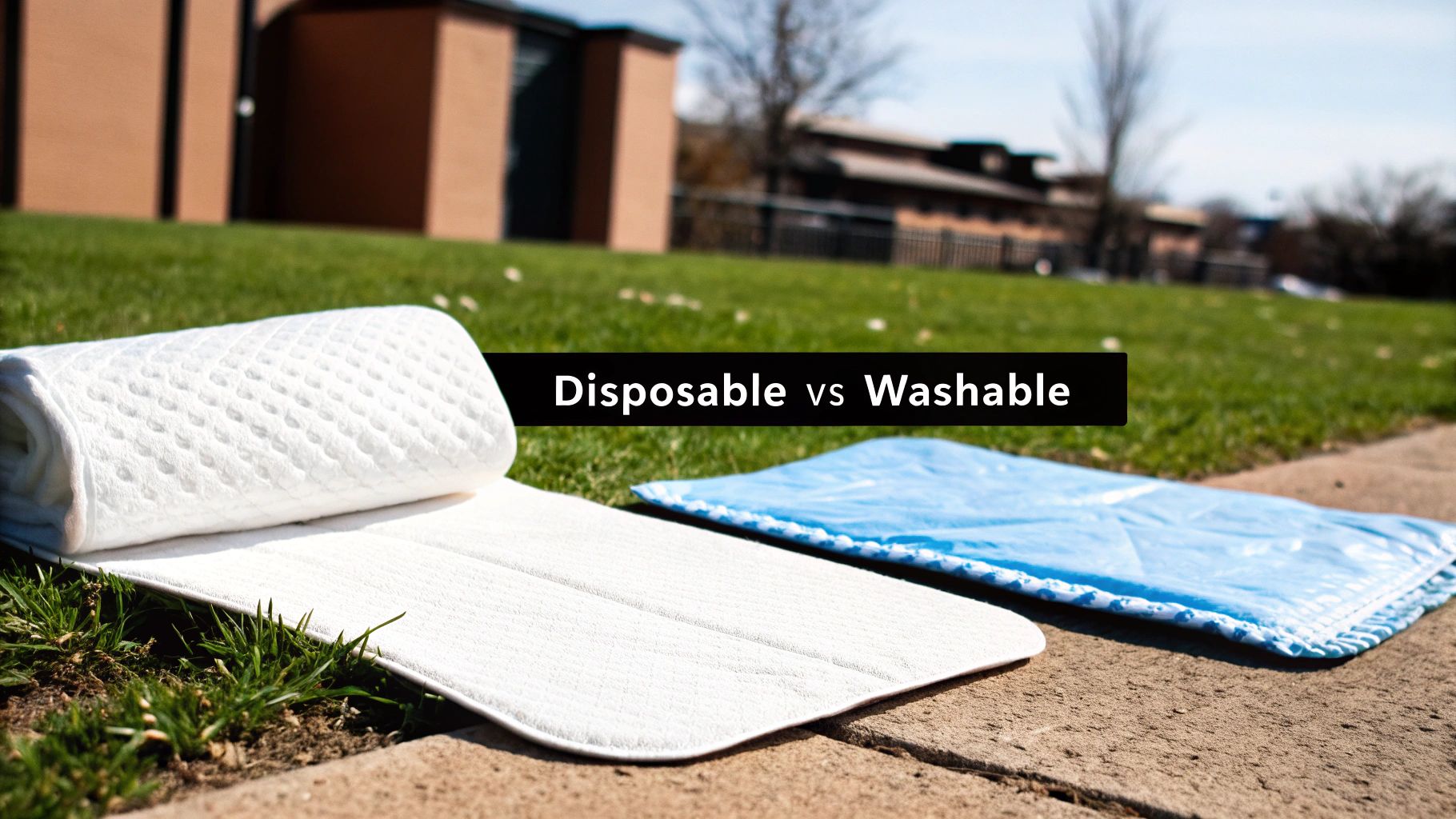
When you’re standing in the pet aisle, the choice between disposable and washable pads can feel surprisingly significant. On one side, you have grab-and-go convenience. On the other, a more sustainable, long-term solution. It's the classic showdown: quick and easy versus eco-friendly and economical.
There’s no single "right" answer. The best pee pad for dogs truly comes down to your lifestyle, your budget, and what matters most to you and your pup. Let's break down the pros and cons of each so you can make a confident choice.
The Case for Disposable Pee Pads
Disposable pee pads are the definition of convenience. For busy pet parents, they are a lifesaver. You just lay one down, and once it’s been used, you roll it up and toss it. No fuss, no extra laundry, no lingering mess.
This ease of use is a game-changer during the chaotic first few months of potty training a new puppy. When you’re dealing with accidents around the clock, the ability to quickly dispose of the evidence is a major win. They’re also perfect for travel, post-surgery recovery, or any temporary situation where you need a simple, no-strings-attached solution.
The market backs this up. Convenience is king for a lot of owners, with the disposable pet pee pad category holding a massive 32.7% market share. In fact, pads themselves make up 42.6% of the entire application segment. These numbers clearly show a strong preference for low-maintenance options, and you can explore more pet pad market trends to see how products stack up.
The Argument for Washable Pee Pads
On the flip side, washable pee pads are the champions of sustainability and long-term savings. Sure, they cost more upfront, but a few high-quality washable pads can easily replace hundreds—or even thousands—of disposables over their lifetime. From a purely financial standpoint, they're the smart play for anyone expecting to use pads for the long haul.
Beyond saving money, reusable pads are a huge win for the planet. By opting for a washable solution, you’re keeping a shocking amount of plastic and other waste out of landfills. These pads are built to last, usually made with tough, multi-layered fabrics that are both super absorbent and durable enough for countless cycles in the washing machine.
While the washable market is smaller, it's a growing niche currently valued at $0.89 billion and is expected to keep expanding. This trend points to a clear shift as more pet owners look for eco-friendly and cost-effective alternatives.
Disposable vs Washable Pee Pads Head-to-Head Comparison
To make the decision even clearer, sometimes you just need to see things side-by-side. This table breaks down how disposable and washable pads stack up against each other on the factors that matter most to pet owners.
| Feature | Disposable Pee Pads | Washable Pee Pads |
|---|---|---|
| Upfront Cost | Low | High |
| Long-Term Cost | High (requires constant repurchasing) | Low (one-time purchase lasts for years) |
| Cleaning Effort | Minimal (roll up and throw away) | High (requires regular machine washing and drying) |
| Environmental Impact | High (contributes to landfill waste) | Low (reusable and significantly reduces waste) |
| Durability | Low (designed for single use) | High (built to withstand hundreds of washes) |
| Best For | Travel, puppy training, busy owners, short-term use | Long-term use, senior dogs, eco-conscious owners |
Seeing the direct comparison helps clarify which features align with your priorities, making it easier to choose the pad that truly fits your lifestyle.
Making the Right Choice for Your Lifestyle
Ultimately, the best pee pad is the one that seamlessly fits into your life. Think about your daily routine and what would make things easier, not harder.
Here are a few scenarios to help you decide:
- You're a busy professional in an apartment: The sheer convenience of disposable pads is probably your best bet. After a long day, the last thing you want is another load of laundry.
- You're raising a puppy for the long haul: Investing in a set of washable pads is a brilliant move. You’ll save a ton of money over the years and feel good about reducing your environmental paw-print.
- You travel a lot with your small dog: Disposable pads are the undisputed winner for life on the go. They’re lightweight, easy to pack, and perfect for hotels or visiting family.
Pro Tip: Try a Hybrid Approach
You don't have to be on "Team Disposable" or "Team Washable." Many savvy pet owners use both! Keep a stash of washable pads for everyday use at home to save money and reduce waste. At the same time, have a pack of disposables ready for travel, emergencies, or those extra-messy days. It’s a practical strategy that gives you the best of both worlds.
How to Choose the Perfect Pee Pad for Your Dog
So, you know the difference between disposable and washable pads. Great! But the real trick is diving into the details. Choosing the right pee pad for dogs isn't just about picking one or the other; it’s about matching the tool to the job. Getting the size, absorbency, and extra features right is what makes the difference between a reliable indoor potty spot and a frustrating, soggy mess.
Think about it: if the pad is too small or can't handle your dog's "output," you're setting yourself up for failure. A good pad gives your dog the confidence to use it, and you the peace of mind that your floors are safe. Let's walk through the three most important things to consider.
Getting the Size Right
This is hands-down the most common mistake I see pet owners make—they buy a pad that's way too small. Dogs have a little ritual; they like to circle, sniff, and find just the right spot before they go. If there isn't enough room for this routine, they'll often miss the pad entirely, leading to those annoying "almost-made-it" puddles right at the edge.
A good rule of thumb? The pad should be at least 1.5 times the length of your dog. That gives them plenty of real estate to do their thing without stepping off the side.
- Small Breeds (like Chihuahuas or Yorkies): A standard 22×22 inch pad usually does the trick.
- Medium Breeds (like Beagles or Cocker Spaniels): You'll want to size up to something around 28×30 inches for a comfortable fit.
- Large Breeds (like Labs or Golden Retrievers): Go big or go home. Look for extra-large pads, 36×36 inches or even bigger. You can always overlap two smaller pads in a pinch, but a single large one is always better.
Trust me, it's always better to have a pad that's a little too big than one that's too small. A bigger target means a higher chance of success.
Matching Absorbency to Your Dog's Needs
Not all pads are created equal when it comes to soaking up liquid. The secret sauce is the amount of Super-Absorbent Polymer (SAP) in the core. A pad that works perfectly for a tiny toy poodle will be completely overwhelmed by a Great Dane.
You have to think about your specific situation:
- Puppies and Small Dogs: They go a lot, but in smaller amounts. A standard-absorbency pad is fine, as long as you're changing it out frequently.
- Large Dogs or Homes with Multiple Dogs: Don't even think about a standard pad. You need a heavy-duty or "extra-absorbent" option packed with enough SAP to handle serious volume.
- Dogs Left Alone for Hours: If you're at work all day, maximum absorbency is your best friend. These pads are designed to hold more liquid and lock in odors for extended periods.
Choosing the right absorbency is like picking the right size sponge. You wouldn't use a tiny craft sponge to clean up a big spill, right? The same logic applies here. Match the pad’s capacity to your dog’s needs, and you’ll avoid leaks.
Key Features That Actually Make a Difference
Beyond the basics of size and absorbency, a few extra features can seriously upgrade your pee pad experience. These are the little details that separate a basic pad from a truly great one.
- Built-In Attractant: So helpful for training! Many disposable pads are treated with a pheromone scent that humans can't smell but basically screams "potty here!" to a dog. It's a fantastic way to guide puppies to the right spot.
- Odor Control: Look for pads that have activated charcoal or baking soda mixed into their layers. These ingredients are champions at neutralizing those sharp ammonia smells, keeping your home from smelling like a kennel. A reusable dog pee pad blanket is also a fantastic choice, as high-quality washable fabrics are often great at trapping odors between washes.
- Adhesive Strips: If you have tile or hardwood floors, these are a lifesaver. Little sticky tabs on the corners anchor the pad to the floor so it doesn't bunch up, slide around, or get turned into a chew toy by a bored pup.
Your Step-by-Step Guide to Successful Pee Pad Training
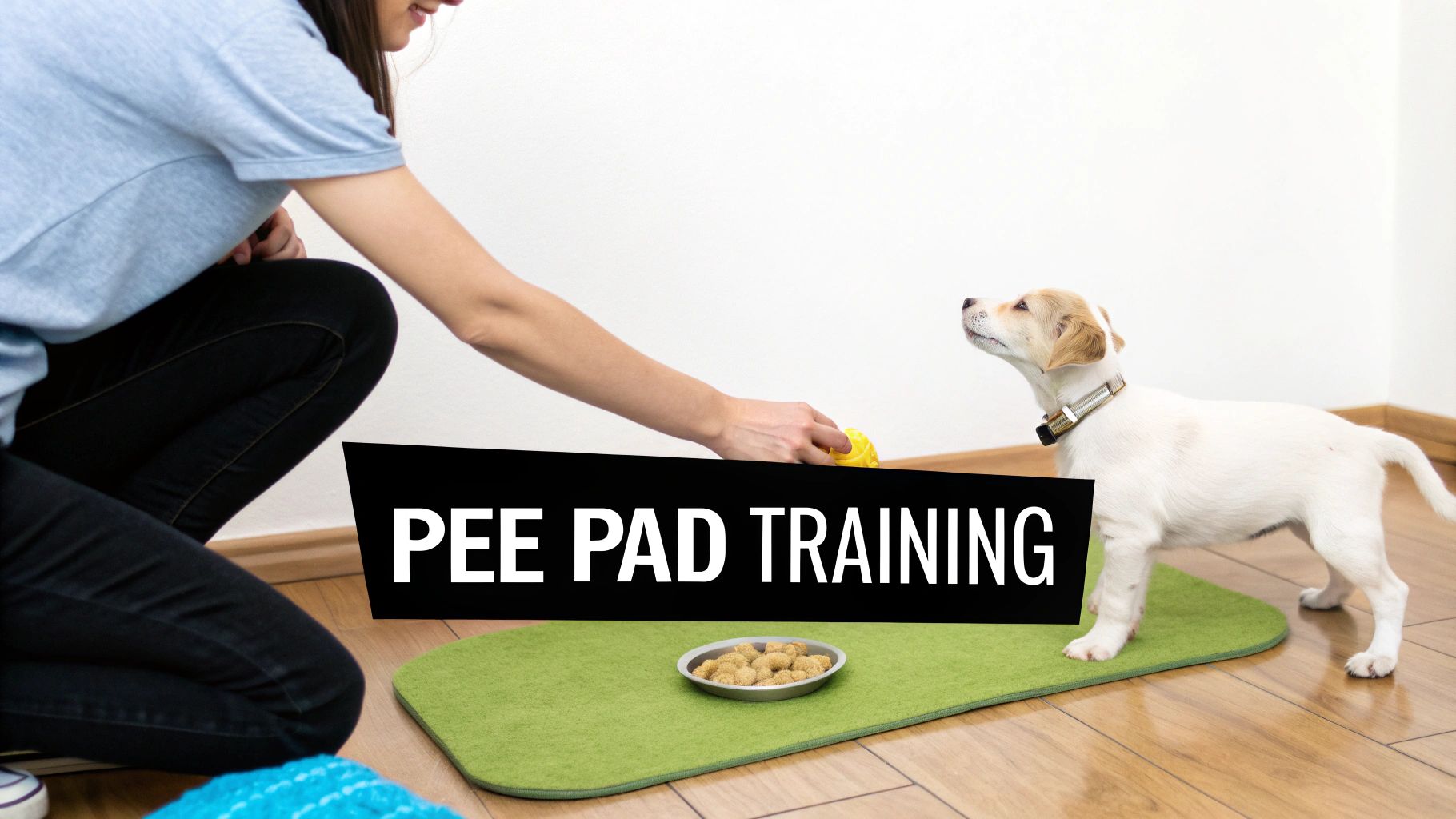
Training your dog to use a pee pad isn't some kind of magic trick. It's really just a simple process that hinges on patience, positivity, and a solid game plan. Think of yourself as a friendly guide, gently showing your pup the rules of their new indoor restroom. With the right approach, you can make this a completely stress-free experience for both of you, paving the way for a clean home and a confident dog.
The absolute key to all of this is consistency. Every single thing you do either reinforces the lesson or confuses it. This guide will walk you through a proven, step-by-step method that takes the guesswork out of the process and turns it into a simple routine.
Step 1: Choose Your Location Wisely
First things first: decide where the pee pad is going to live. This might seem like a small detail, but it’s more important than you think. Moving the pad around later can seriously confuse your dog and derail your training progress.
Pick a spot that is:
- Easily Accessible: Your dog needs to be able to get there in a hurry without navigating a household obstacle course.
- Low-Traffic: Find a quiet corner away from the hustle and bustle of family life. Most dogs prefer a little privacy when they do their business.
- Away from Food and Water: It's a natural instinct for dogs to avoid going to the bathroom where they eat or sleep. Keep the pad in a totally separate area from their bed and bowls.
Once you’ve found that perfect spot, stick with it. This location is now your dog's designated indoor potty zone.
Step 2: Introduce Your Dog to the Pad
Now it’s time for a formal introduction. A few times throughout the day, gently place your dog right on the pee pad for dogs. The best times are right after they wake up, after they eat, and after a good play session—these are the moments they're most likely to need to go.
As you place them on the pad, start using a verbal cue. A simple, consistent phrase like "go potty" or "potty time" works wonders. Say it in a calm, encouraging tone. This helps your dog start to build an association between your words, the pad itself, and the action you want them to take.
The goal here is just to create a positive connection. Never, ever force your dog to stay on the pad or scold them for walking away. This initial phase is all about gentle encouragement and getting them comfortable.
It’s no surprise the global dog pee pad market has ballooned to an impressive $1.8 billion. This growth is driven in part by a major surge in urban pet ownership, which is now at 47% in major cities where convenient indoor solutions are a lifesaver. This trend shows just how much we treat our pets like family, investing more in their comfort and hygiene. You can discover more insights about the expanding dog pee pad market to see how our needs are shaping the products available.
Step 3: Reward Every Success
Positive reinforcement is, without a doubt, the most powerful tool you have. The very moment your dog successfully uses the pee pad, praise them like they just won an award.
And I don't mean a quick "good boy." Make it a mini-celebration! Offer immediate, enthusiastic praise, a high-value treat they absolutely love, or a few minutes of their favorite game. The reward has to happen the instant they finish, so their brain connects the prize directly with using the pad correctly. This creates a powerful motivation for them to do it again.
Step 4: Establish a Consistent Routine
Dogs are creatures of habit; they truly thrive on a predictable schedule. A consistent routine is non-negotiable for successful pee pad training. Make it a point to take your dog to the pad at these key intervals:
- First Thing in the Morning: As soon as their paws hit the floor.
- After Every Meal: Digestion often stimulates the need to eliminate.
- After Naps: Waking up is a prime potty time, just like in the morning.
- Before Bedtime: One last trip to the pad helps prevent overnight accidents.
- During Playtime: It’s easy for them to get distracted, so take frequent potty breaks.
Look, accidents are going to happen. It's just part of the process, especially at the beginning. The most important thing is to never punish your dog for a mistake. Scolding them or, worse, rubbing their nose in it will only create fear and anxiety, which can make training so much harder. Instead, just clean the mess thoroughly with an enzymatic cleaner to completely eliminate scents that might attract them back to that spot. Then, calmly go right back to your consistent routine. Patience is your greatest asset here.
Best Practices for a Clean and Hygienic Home
https://www.youtube.com/embed/g3N94bWViOM
Using a pee pad for dogs can be a lifesaver, but keeping your home smelling fresh and feeling clean takes a little bit of routine. Whether you're team disposable or team washable, how you handle the pads makes all the difference in preventing messes and maintaining a healthy space for both you and your pet.
Honestly, it's just a small daily habit that has a huge payoff. This focus on hygiene isn't just you, either—it's a major trend among pet owners. The whole pet supply market is seeing a shift driven by a greater awareness of sanitation and the awesome high-quality products now available.
Managing Disposable Pee Pads
The beauty of disposable pads is the sheer convenience—just toss and go. But there's a right way to do it that contains odors and stops any dreaded drips.
When the pad is used, the trick is to fold all four corners inward toward the center. This simple move traps the liquid inside, creating a neat little package.
From there, just keep folding it into a tight, compact square. Pop it directly into a designated trash bin, ideally one with a secure lid. This keeps the mess and smell completely contained, so your main garbage can doesn't become a stinky nightmare.
Cleaning Washable Pee Pads
If you're using washable pads, a solid cleaning system is non-negotiable. It’s what keeps them sanitary, effective, and lasting for the long haul. A good wash routine gets rid of stains and bacteria, so the pad is always fresh and ready for action.
- Pre-Rinse First: As soon as you pick up the pad, give it a good rinse under cool water to wash away as much fresh urine as possible.
- Use a Pet-Safe Detergent: Toss it in the washing machine with a gentle detergent. Look for one without harsh chemicals or overwhelming fragrances that could irritate your dog's sensitive nose.
- Add a Sanitizing Boost: For extra peace of mind, add a cup of white vinegar or a pet-safe laundry sanitizer to the wash cycle. This really helps knock out lingering bacteria.
- Dry Completely: You can tumble dry on a low or medium setting, or just hang it up to air dry. The golden rule is to never put a damp pad back down on the floor.
Handling Accidents Off the Pad
Let's be real—accidents are going to happen. When your pup misses the mark, the key is to clean it up right away using an enzymatic cleaner. These cleaners are fantastic because they don't just mask the smell; they have special enzymes that literally break down the proteins in urine. This completely eliminates the odor that would otherwise attract your dog right back to the same spot.
Of course, a hygienic home goes beyond just the pee pad. It also means thinking about durable, pet-friendly surfaces, like finding the best hardwood floor finish for dogs that can stand up to claws and spills. Having a full arsenal of grooming and cleaning supplies on hand is also a great way to keep your home looking and smelling its best.
Your Pee Pad Questions, Answered
Even the best-laid plans can hit a snag, and it's totally normal to have questions pop up along the way. Let's tackle some of the most common concerns I hear from dog owners so you can feel confident using pee pads.
Will Using Pee Pads Mess Up Our Outdoor Potty Training?
This is probably the number one worry I hear, and it's a valid one! But the short answer is no, it won't derail your efforts—as long as you're smart about it. You're not confusing your dog; you're just teaching them that there are two acceptable places to do their business.
The key is to create a clear difference between the two spots. Use distinct command words, like "go potty" for the indoor pad and "go outside" when you head out the door. Think of the pee pad as a reliable backup plan for when you can't get outdoors, not a replacement. With a little consistency, this hybrid approach works beautifully for tons of dog owners.
Help! My Dog Thinks the Pads Are Chew Toys. What Do I Do?
Ah, the classic pad-shredder. This is super common, especially with teething puppies or a dog who's just plain bored. Your first move should be to redirect that chewing instinct onto something appropriate. Make sure they have a great selection of fun, engaging chew toys available.
A game-changer for this problem is a pee pad holder. These are simple plastic frames that lock the pad in place, covering up those tempting, shreddable edges. It makes it nearly impossible for your dog to get a grip and start tearing.
And don't forget the power of praise! When you see them use the pad for its intended purpose, make a huge deal out of it. Positive reinforcement shows them the pad is a toilet, not a toy.
How Often Do I Really Need to Change the Pad?
This depends a lot on your specific dog—their age, size, and how much they drink—as well as the absorbency of the pad you're using. A good baseline, though, is to change it out at least once per day to keep things fresh and hygienic.
You'll probably need to change it more often for certain dogs. Puppies, senior dogs, and smaller breeds often need to go more frequently, so you might be looking at two or three changes a day. A good rule to live by: if it looks heavily used, swap it out right away. A clean potty spot is an inviting one.
At Ur Pet Store, we know that a clean home and a happy pet are the ultimate goals. Check out our hand-picked collection of top-quality pet supplies that just make life easier. Find everything you're looking for at https://urpetstore.com.