

Blog
A Guide to Reusable Pee Pad for Dogs


So, what exactly is a reusable pee pad for dogs? Think of it as a washable, multi-layered fabric mat designed specifically to absorb urine. It’s a game-changing, sustainable alternative to those flimsy disposable pads. They’re fantastic for everything from house-training a new puppy to giving an older dog a reliable spot, all while protecting your floors and furniture.
Why Modern Dog Owners Choose Reusable Pee Pads
The move away from single-use products is happening everywhere, and the pet world is definitely part of it. For a long time, disposable pads were really the only option. But today, smart pet parents are seeing just how much better reusable pee pads can be. It’s a choice that lines up with a more modern way of thinking about pet care—one that prioritizes products that work great, save money, and are kinder to the planet.
This isn’t just a fleeting trend; it’s a real shift in what pet owners want. The global market for washable pet pee pads was valued at a whopping USD 245 million in 2023 and is expected to climb to USD 412 million by 2033. That kind of growth shows a clear demand for more sustainable options, especially since many of these pads can handle over 300 washes, keeping a massive amount of waste out of landfills. If you’re interested in the numbers, you can explore the full research on washable pet pee pads.
Cost, Performance, and the Planet
When you get down to it, the reasons for making the switch are pretty clear. Reusable pads simply outperform their disposable cousins in three major ways.
- Financial Savings: Yes, the initial cost is a bit more, but the savings over time are huge. Instead of constantly buying packs of disposables, a few good reusable pads can last for years. This one-time investment can easily save you hundreds of dollars a year.
- Superior Performance: Reusable pads are built to last. They’re designed for serious absorbency and often have a non-slip backing to keep them right where you put them. Plus, a playful puppy is far less likely to shred one to pieces, which means better protection for your home.
- Eco-Friendly Impact: This one is a big deal. A single reusable pad can replace hundreds—even thousands—of disposables over its life. That dramatically cuts down on your household waste and stops all that plastic from piling up in landfills year after year.
Choosing a reusable pad is more than just a practical decision; it’s an investment in a smarter, cleaner, and more sustainable way to care for your pet and your home.
Let’s break down the key differences side-by-side to make the choice even clearer.
Reusable vs Disposable Pee Pads at a Glance
This table offers a quick snapshot of how reusable and disposable pads stack up against each other, helping you see which option truly fits your needs and values.
| Feature | Reusable Pee Pad | Disposable Pee Pad |
|---|---|---|
| Upfront Cost | Higher initial investment | Low per-pack cost |
| Long-Term Cost | Very low, saves money over time | High, requires constant repurchasing |
| Absorbency | High, designed for multiple uses | Varies, often less effective for large volumes |
| Durability | Excellent, withstands washing and chewing | Poor, easily torn, shredded, or moved around |
| Environmental | Eco-friendly, significantly reduces landfill waste | Creates significant landfill waste, low sustainability |
| Convenience | Requires washing and drying | Quick to dispose of, but needs frequent replacing |
| Odor Control | Good, washes out completely | Can hold odors, requires frequent changes |
As you can see, when you look at the bigger picture, reusable pads deliver a powerful combination of performance and value. They give you a reliable, hygienic, and eco-conscious tool for everything from puppy training to managing incontinence in senior dogs. It’s the kind of peace of mind every pet owner deserves.
How Reusable Dog Pads Actually Work
Ever wondered how a simple-looking fabric pad can hold so much liquid and never, ever leak? It’s not magic, it’s just really smart design. A good reusable pee pad is a bit like high-performance sportswear, but engineered to protect your floors. Every single layer has a job to do, and they all work together in perfect harmony.
This layered construction is what sets it apart. A basic towel or flimsy disposable pad just can’t compete. A reusable pad is built with specific materials designed to pull moisture away, lock it deep inside the core, and create an impenetrable barrier against your floor.
The First Line of Defense: The Top Layer
The part your dog actually stands on is all about immediate action and comfort. It’s usually a soft, quilted material that feels much nicer on their paws than crinkly plastic.
But this top sheet isn’t just for comfort; it’s a moisture-wicking powerhouse. Its whole purpose is to slurp up urine the second it hits the pad. This quick-wicking action is a game-changer because it keeps your dog’s paws dry, which means no more little wet footprints trailing across your clean floors.
The Absorbent Core: The Middle Layer
Right under that fast-drying top layer is the real workhorse: the super-absorbent core. Think of this as the pad’s high-capacity sponge, capable of holding an impressive amount of liquid for its size.
This layer is often made from a dense microfiber or a special rayon blend. These materials are specifically designed to trap and lock moisture in, keeping it contained. This core also does a fantastic job with odor control by neutralizing those ammonia smells, so your home stays smelling fresh until laundry day.
A great reusable pad doesn’t just soak up liquid—it actively manages it. It wicks, absorbs, and locks everything away, giving you a complete system that keeps your pup and your floors perfectly clean and dry.
The Ultimate Guardian: The Bottom Layer
The final layer is the waterproof, non-slip backing, and this is what really provides peace of mind. It’s usually a tough, laminated material that is completely liquid-proof. No moisture is getting through this to your hardwood, tile, or carpet. Period.
On top of that, you’ll find most quality pads have a non-slip grip on the bottom. Those little rubberized dots are brilliant for keeping the pad right where you put it, even if you have a playful puppy who likes to pounce. A pad that stays put is not only safer but also more inviting for your dog—just like our cozy and stable beds and mats create a secure spot for them to relax.
The infographic below really brings home how these design choices create huge benefits for your wallet, your home, and the environment.
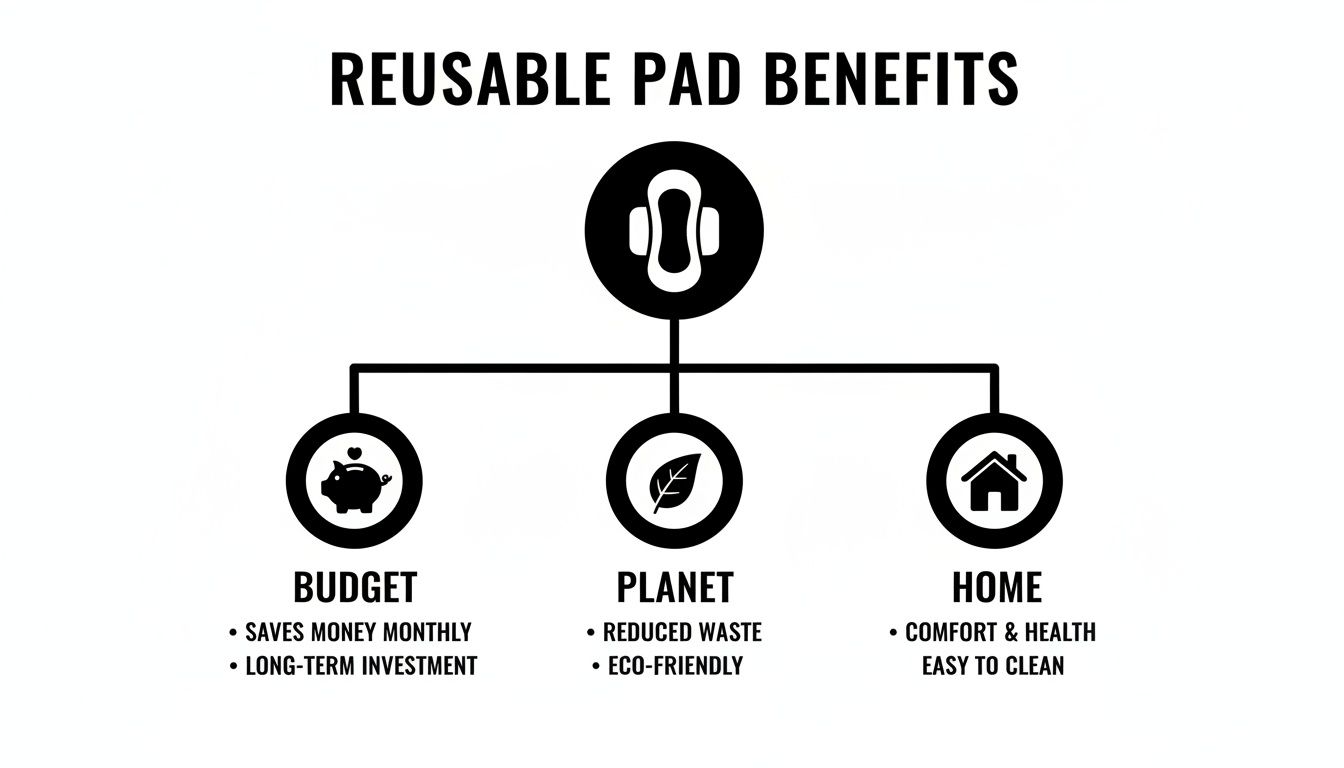
You can see how this clever design directly translates into real savings, a happier planet, and a cleaner, better-protected home.
How to Choose the Right Reusable Pee Pad
Picking out the right reusable pee pad isn’t a one-size-fits-all deal. It’s a bit like buying a bed—you have to think about who’s using it, their habits, and where you’re going to put it. Making the right choice upfront makes life easier for both you and your dog, preventing messes and smoothing out the training process.
Your goal is to find a pad that feels like a natural, designated spot for your dog to go. To nail this, we’ll focus on three make-or-break factors: size, absorbency, and materials. Getting these right means you’ll have a reliable, comfortable potty station your dog will actually want to use.
Sizing It Up Perfectly
By far, the most common mistake I see pet owners make is getting a pad that’s just too small. Dogs don’t just walk on and go; they need enough space to circle, sniff, and find their perfect spot without a paw stepping off the edge. If it’s too cramped, you’re practically inviting them to miss.
A great rule of thumb is to choose a pad that’s at least 1.5 times the length of your dog. This gives them plenty of room for their little pre-potty dance.
- For Small Breeds (Chihuahua, Yorkie): A standard 24″ x 36″ pad usually does the trick.
- For Medium Breeds (Beagle, Corgi): You’ll want to size up to something around 36″ x 48″.
- For Large Breeds (Labrador, German Shepherd): Go big or go home. Look for extra-large sizes like 48″ x 60″ or even larger.
The market has definitely caught on. Washable pee pad sales have jumped 32% annually since 2022 and now dominate 80% of Amazon’s top sellers. The demand for massive XL sizes (think 72″ x 72″) has exploded by 210% since 2023 to cater to bigger dogs. If you’re interested, you can read the full report on dog pad market trends and see how things are changing.
Matching Absorbency to Your Dog’s Needs
Next up is absorbency. Think about how much liquid this pad really needs to hold. Pads come with different capacities, and matching one to your dog’s specific situation is key to stopping leaks and keeping odors in check.
A puppy who’s still learning will have lots of small accidents. For them, a standard-absorbency pad that you can swap out frequently is a great fit. On the other hand, an adult dog home alone all day or a senior dog dealing with incontinence needs a heavy-duty pad with maximum capacity.
Pro Tip: Look for pads that boast multiple absorbent inner layers. A quality pad will often state its fluid capacity in ounces or cups, which gives you a real-world idea of its performance. Don’t be fooled by thickness alone—it’s the materials on the inside that do the heavy lifting.
Choosing the Best Materials and Placement
The materials used in a pad affect everything—from how comfy it is for your dog to how long it will last. The top layer should always be soft and quick-drying, which is crucial for preventing wet paw prints all over your house. The inner core, typically made of rayon or polyester, is the absorbent engine.
And finally, the backing is your floor’s last line of defense. A waterproof, non-slip backing is an absolute must-have. It keeps the pad from sliding around when your dog walks on it and, most importantly, guarantees that no moisture ever seeps through to your beautiful floors. Our reusable dog pee pad blanket is a perfect example, designed with a super-soft top layer and a tough, leak-proof bottom.
Once you’ve found the perfect pad, where you put it is just as important. Pick a quiet spot with low foot traffic, well away from your dog’s food and water bowls. Consistency is everything here, so once you find a good spot, stick with it to help your dog build a solid, reliable habit.
A Simple Guide to Washing and Maintaining Your Pads
Let’s bust a big myth right now: cleaning reusable pee pads is not a huge chore. Honestly, once you get a little routine going, keeping your pads fresh and clean is surprisingly easy. Proper care is the secret to making them last for hundreds of washes, which saves you a ton of money in the long run.
Think of it just like any other piece of laundry in your home. A little bit of prep work makes all the difference. I’ll walk you through the simple steps to keep your pads in fantastic shape with minimal fuss.
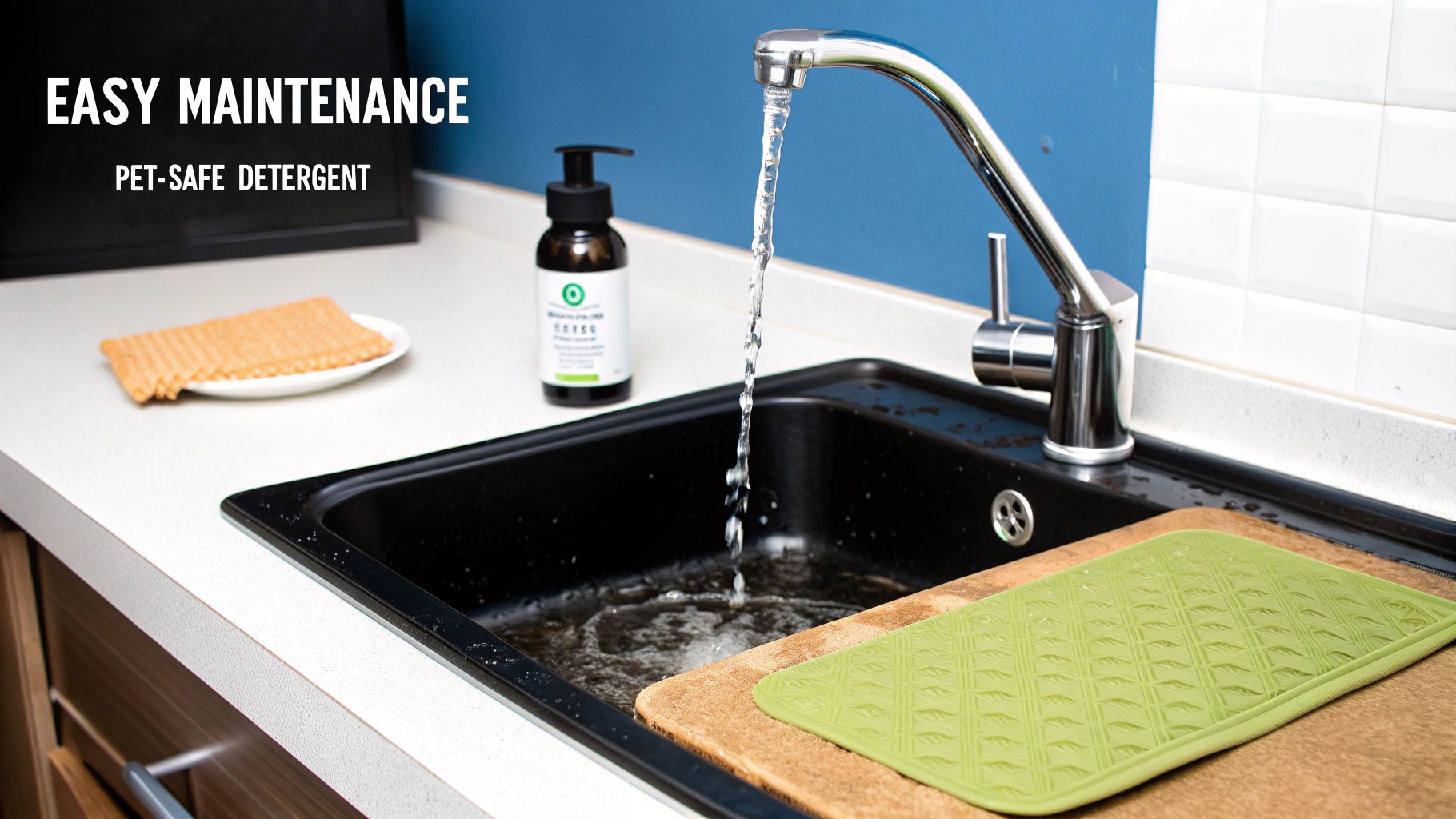
Your Step-by-Step Washing Routine
Following a consistent process is the key to knocking out stubborn odors before they start and keeping the pad’s absorbency and waterproof layer in top-notch condition.
- Remove Solids and Pre-Rinse: First things first, get rid of any solid waste. If a pad is particularly soaked, a quick rinse in a utility sink or with a hose outside does wonders. This simple step gets the worst of the urine out before it ever hits your washing machine.
- Machine Wash with Pet-Safe Detergent: Toss the soiled pad right into the washer. I always recommend a pet-safe, unscented detergent because strong chemicals and fragrances can really bother a dog’s sensitive nose. For a really thorough clean, you can use warm or hot water—just give the care label a quick glance first to be sure.
- Add a Deodorizing Boost (Optional): If you’re fighting any lingering ammonia smells, add about a cup of plain white vinegar to the rinse cycle. It’s a fantastic natural deodorizer that zaps the odor-causing bacteria without being harsh on the fabric.
Crucial Tip: Whatever you do, steer clear of fabric softener and chlorine bleach. Fabric softeners create a film that completely ruins the pad’s absorbency, and bleach is just too aggressive—it will eventually destroy the waterproof backing and cause leaks.
Drying for Maximum Longevity
How you dry your pads is just as important as how you wash them. The whole point is to protect that waterproof barrier that’s saving your floors.
High heat is the number one enemy of the waterproof layer. If you’re using a machine, always tumble dry on a low-heat or no-heat setting. Even better? Just hang the pads to air-dry on a laundry line or drying rack. This gentle method is the absolute best way to make sure the backing stays perfectly intact for years.
Pro Tips for Pad Maintenance
Here are a few extra tricks I’ve learned over the years to make the whole process even smoother.
- Have a Rotation System: The golden rule is “one in use, one in the wash, and one ready to go.” Having at least three pads in your rotation is a total lifesaver. You’ll never be stuck without a clean one when you need it most.
- Prevent Color Bleeding: New, colorful pads can sometimes bleed in the wash. To keep them looking vibrant, you might want to use some useful laundry accessories like dye catcher sheets to trap any loose dyes.
- Use an Enzymatic Cleaner: For spot-treating accidents or just cleaning the floor area around the pad, an enzymatic cleaner is your best friend. These cleaners use enzymes to literally break down the proteins in pet waste, eliminating odors at their source instead of just covering them up. We have some great options in our grooming and cleaning supplies section.
With these simple habits, caring for your reusable pads just becomes another quick and easy part of your weekly routine.
Successfully Training Your Dog to Use the Pad
Getting your dog to actually use the new pee pad is where the real magic happens. This isn’t about being the “alpha” or a strict disciplinarian; it’s about being a good teacher. Your goal is to make using the pad the most obvious, rewarding choice your dog can make.
Think of it this way: you’re building a positive connection with the pad. Every time they get it right and you celebrate, you’re strengthening that bond. This approach works wonders, whether you’re starting from scratch with a tiny puppy or introducing the concept to a senior dog.
Laying the Foundation for Success
First impressions matter. You want the reusable pad to feel like a normal, safe part of your dog’s world from the very beginning. Just place it down in your chosen spot and let your dog explore it on their own time.
If they sniff it or walk on it, offer a calm, happy “Good boy!” or “Good girl!” Don’t push them onto it. This no-pressure introduction helps them accept the pad as just another part of the furniture—a friendly one.
There’s a reason so many people use these. The pet pad market is huge, holding a 42.6% market share. It’s on track to become a USD 3.89 billion industry by 2035, and in 2023 alone, over 75% of US dog owners used them. Why? Because it works. Studies have shown that consistent training can lead to 80% faster training success. You can discover more insights about the pet pad market on Market.us.
The secret to successful pad training is making the right choice feel like the best choice. Your enthusiasm and rewards teach your dog that using the pad is the most wonderful decision they could possibly make.
A Simple Step-by-Step Training Plan
Consistency is everything. Dogs thrive on routine, and a predictable schedule will help them learn what you want much, much faster.
- Anticipate the Need: The best way to guarantee success is to be there before they even know they have to go. Take your dog to the pad at key moments: first thing in the morning, right after they wake up from a nap, after a good play session, and about 15-20 minutes after they eat or drink.
- Introduce a Verbal Cue: As you lead them to the pad, use a simple, consistent phrase like “Go potty” or “Potty time.” Say it in a cheerful, encouraging tone. Over time, that phrase will become a trigger for them to go.
- Reward Success Immediately: The second they finish their business on the pad, throw a mini-party! Lavish them with praise (“Yes! Good potty!”) and give them a high-value treat they only get for this occasion. That immediate reward is what clicks in their brain, connecting the action (peeing on the pad) with the reward (praise and yummy snack).
- Manage Accidents Gracefully: Accidents are going to happen. It’s just part of the process. Never, ever punish your dog for it. Simply clean it up with a good enzymatic cleaner to completely remove the scent, which prevents them from wanting to go in that same spot again. Then, take a breath and get back to the training plan.
Troubleshooting Common Training Hurdles
Even with a perfect plan, you might run into a few snags. Here’s how to navigate them.
- Chewing the Pad: If your pup thinks the pad is a new chew toy, redirect them instantly. Swap the pad for one of their actual toys and praise them for chewing the right thing. Some owners find that using a pad holder or frame helps keep the corners down and makes it less tempting to shred.
- Avoiding the Pad: Is your dog giving the pad the cold shoulder? This is common, especially with dogs who are used to only going outside. You can give them a little hint by dabbing a bit of their urine (from a paper towel used to clean up an accident) onto the middle of the pad. That familiar scent tells them, “This is the right place.”
- Missing the Mark: If your dog is going right next to the pad but not on it, they might just need a bigger target. Try a larger pad. Also, double-check the location—make sure it’s in a quiet, low-traffic spot where they feel safe and won’t be interrupted.
How Switching to Reusable Pads Saves You Real Money
Let’s be honest, the cost of disposable pee pads can really sneak up on you. It feels like a small purchase each time, but when you do the math, it’s a huge recurring expense. Moving to reusable pads is a smart move that pays off for your wallet and the planet, and it happens a lot faster than you might think.

Think about it: pack after pack, month after month, you’re literally throwing your money in the trash. A few high-quality reusable pads, on the other hand, can last for years. They’re built to withstand hundreds of washes, turning what was a constant drain on your budget into a one-and-done purchase.
Let’s Do the Math
Here’s a quick, realistic breakdown. If you’re using disposable pads, you’re likely spending anywhere from $25 to $40 every single month. That adds up to an eye-watering $300 to $480 a year—just for something you immediately throw away!
Now, let’s look at the reusable option. You can get a solid set of three or four top-notch pads for about $40 to $60 total. That’s a one-time cost. Even when you account for the tiny bit of extra laundry, the savings are impossible to ignore.
Most dog owners who make the switch find their reusable pads pay for themselves in just 2 to 4 months. Everything after that is pure savings, putting hundreds of dollars back in your pocket every year.
The Planet Will Thank You, Too
The financial benefit is huge, but the environmental impact is just as powerful. It’s hard to wrap your head around how much waste disposable pads create. A single dog can easily use over 1,000 disposable pads a year, every single one of which goes straight to a landfill.
Worse yet, those disposables are packed with plastic and absorbent gels that can take up to 500 years to break down. Choosing a reusable pee pad for your dog puts a stop to that cycle. By simply washing and reusing a handful of pads, you can keep thousands of disposables out of our landfills over your dog’s life.
It’s a simple change that makes a big difference, drastically lowering your household’s carbon footprint. You get a better, more reliable product while also making a choice that’s kinder to the earth. It’s proof that being a great pet parent can be both budget-friendly and eco-conscious.
Still Have Questions? We’ve Got Answers
It’s totally normal to have a few questions before you make the switch to reusable pads. After all, you want what’s best for your dog and your home. Let’s tackle some of the most common things we get asked by pet parents, so you can feel completely confident in your decision.
Think of this as a quick chat to clear up those last few details.
How Many Reusable Pads Do I Actually Need?
This is probably the most practical question we get, and the answer is simpler than you might think. For one dog, I always recommend starting with a set of three pads. This is the magic number for a stress-free rotation.
Here’s how the “three-pad system” works in real life:
- One on the floor: Ready for your pup to use.
- One in the laundry: The soiled one getting clean.
- One in the closet: Clean, dry, and ready to go at a moment’s notice.
This simple cycle means you’re never caught off guard. You’ll always have a fresh pad handy without having to do emergency laundry. Of course, if you’re potty training a brand-new puppy who has accidents more frequently, or if you like having a designated spot in a few different rooms, grabbing four or five pads is a great idea for extra convenience.
Do They Really Keep the Smell Down?
Yes, they absolutely do. A good reusable pad is a game-changer when it comes to odor control, and frankly, it’s one of their biggest selling points over disposables. It all comes down to the smart, multi-layer design.
The inner layers aren’t just soaking up liquid; they’re specifically engineered to trap and neutralize the ammonia compounds that cause that tell-tale urine smell. When you toss the pad in the wash, the odors are washed away completely, not just masked. The pad comes out smelling fresh, not like it’s just been sitting in a diaper pail.
Pro Tip: For an extra boost of freshness, I love adding about a cup of white vinegar to the rinse cycle. It’s a natural deodorizer that helps break down any lingering bacteria without using harsh chemicals that could irritate your dog or damage the pad’s absorbency.
Are They Good for Crates and Travel?
They’re not just good—they’re fantastic for travel and crate training. In these situations, their durability really shines. That leak-proof backing offers serious protection for car seats, hotel carpets, or the bottom of a carrier, which is far more reliable than a flimsy disposable.
More importantly, reusable pads are so much safer inside a crate. A bored or anxious puppy can tear a disposable pad to shreds in minutes, which is a messy and dangerous choking hazard. A well-made fabric pad can withstand that kind of chewing and digging much, much better.
And don’t forget the comfort factor. A reusable pad smells like home. For a dog in an unfamiliar environment, that familiar scent can be incredibly calming, helping to reduce travel anxiety and encouraging them to use their spot.
At Ur Pet Store, we’re all about finding smart, stylish, and durable solutions that make being a pet parent a little bit easier. Our premium reusable pads are built to perform and designed to last.
Explore our collection of high-quality pet supplies at urpetstore.com and find the perfect gear to keep your pet happy and healthy.