

Blog
The Ultimate Guide to Wall Cat Hammocks

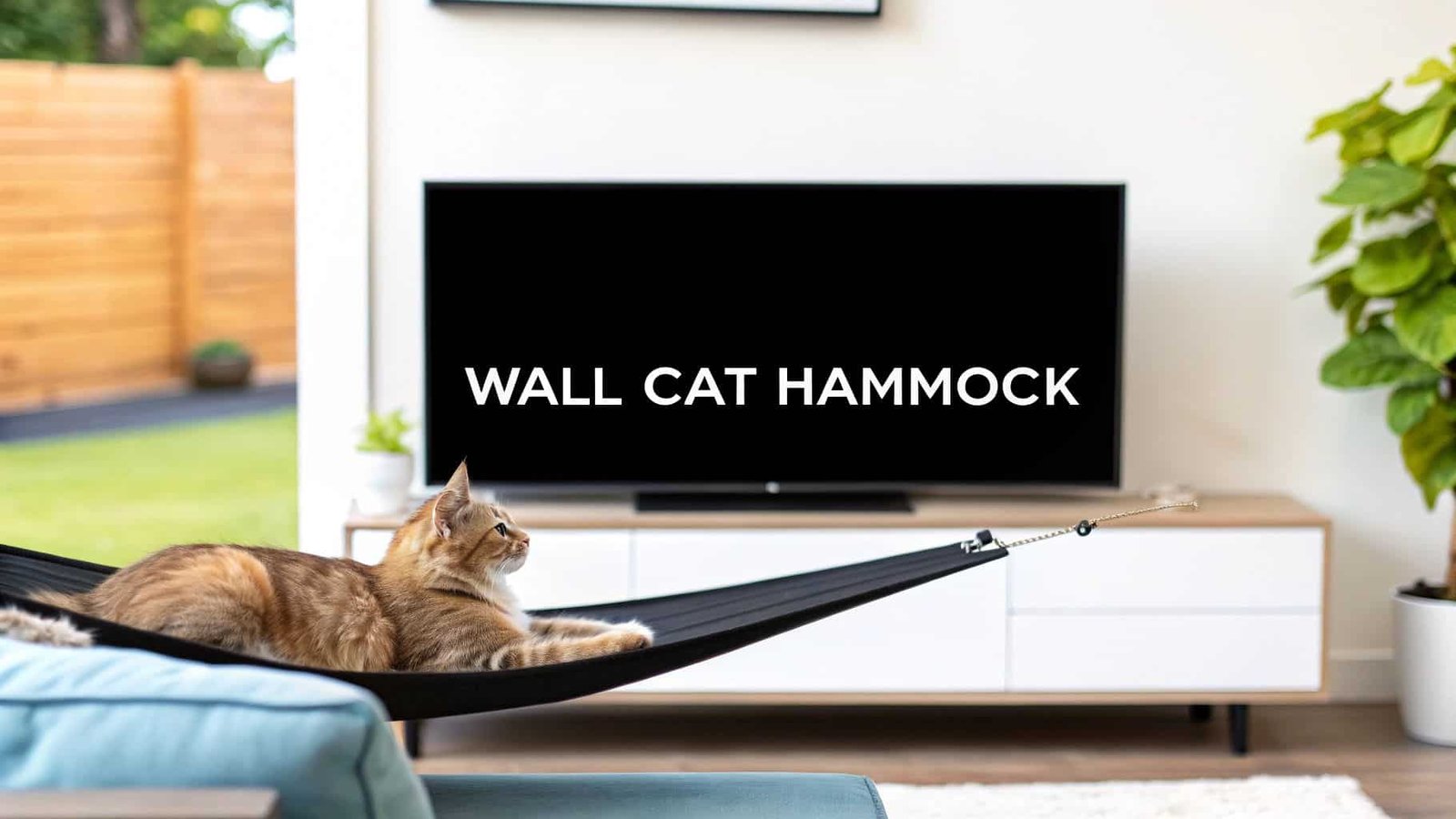
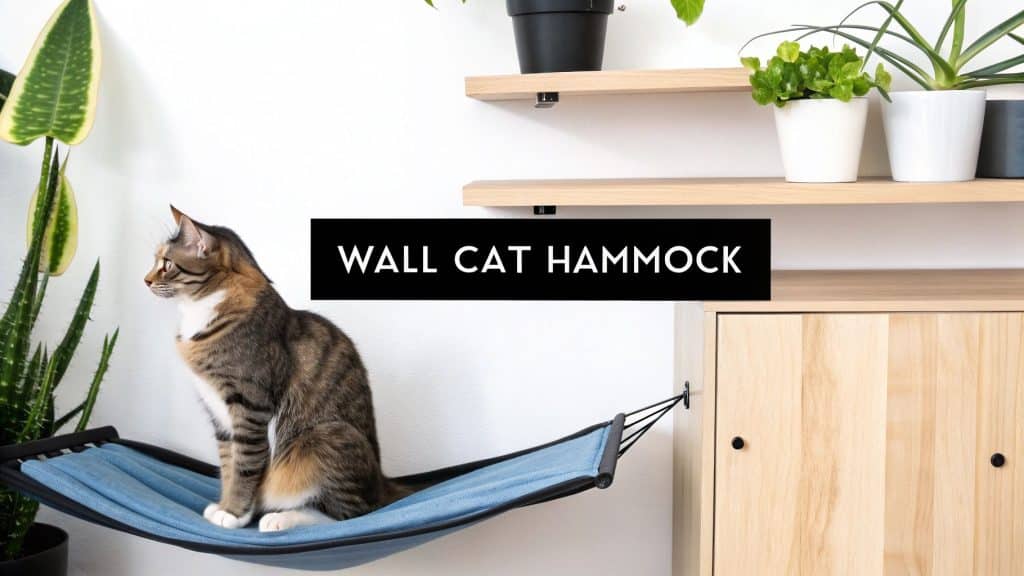
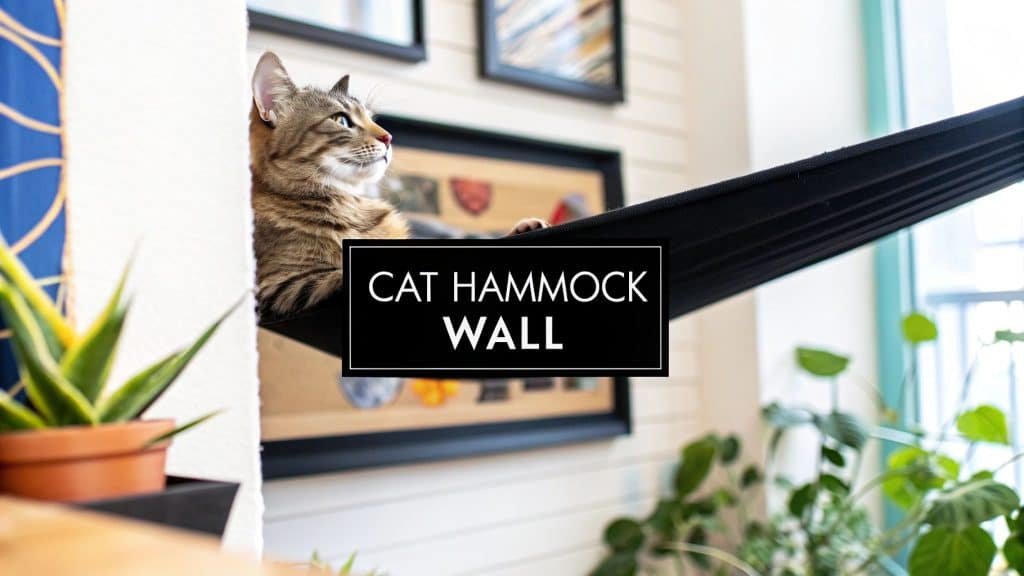
A wall cat hammock is exactly what it sounds like: a comfy, suspended bed that mounts directly to your wall. Think of it as a personal, elevated sanctuary for your cat, turning that blank wall space you never knew what to do with into their new favorite hangout. It plays right into their natural instinct to climb high and watch the world go by.
Why Your Cat Will Ditch the Couch for a Wall Hammock
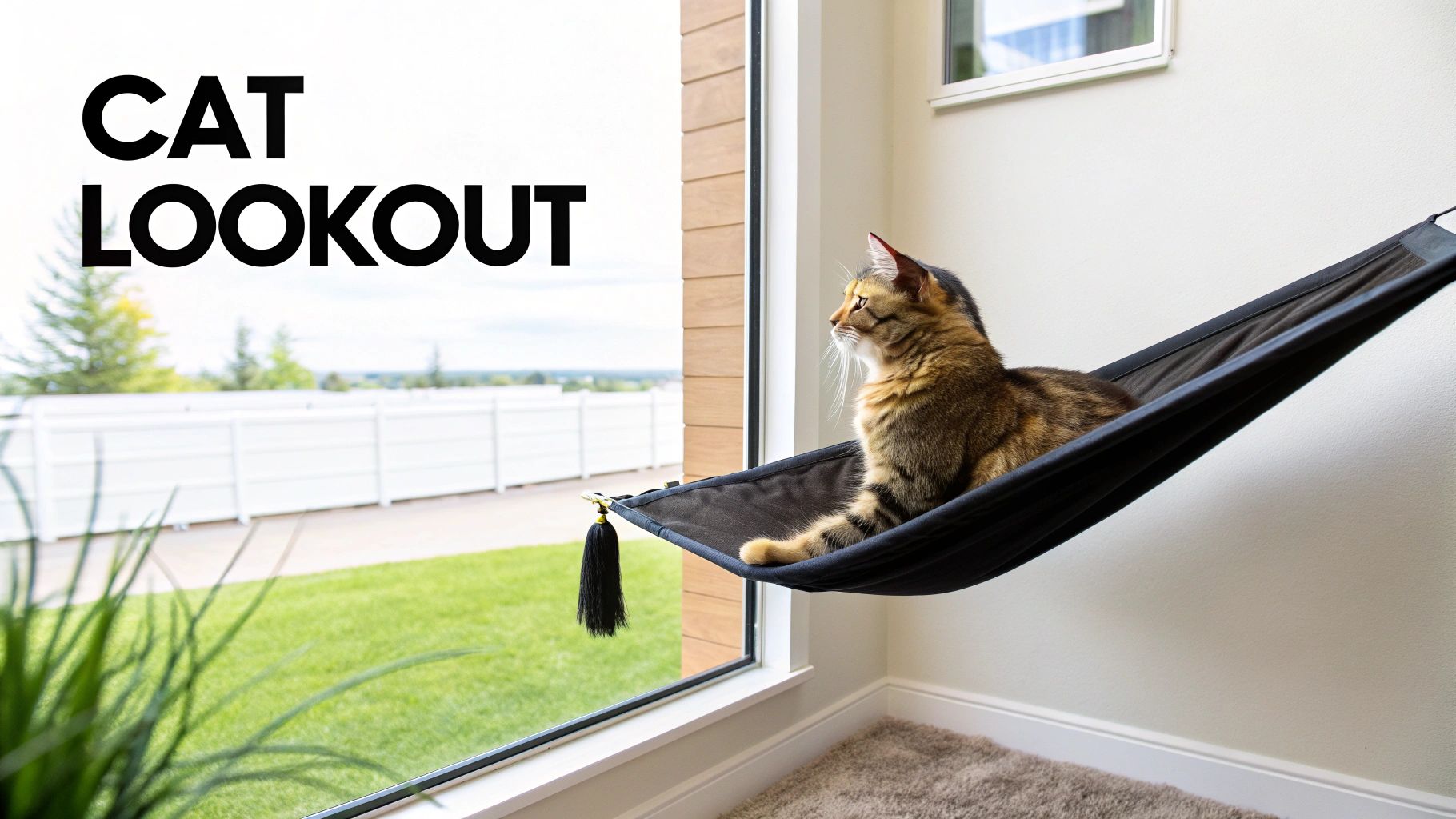
If you have a cat, you’ve seen it. That intense focus as they scale a bookshelf or claim the top of the refrigerator as their throne. This isn’t just your cat being quirky; it’s pure, hardwired instinct. Cats crave high vantage points to feel safe, keep an eye on things, and establish a little dominance over their domain.
A wall cat hammock isn’t just another piece of pet furniture. It’s a piece of kitty architecture that speaks their language. It’s their personal lookout tower, a secure treetop branch, or a cozy cave—all within the four walls of your home.
It’s All About Instinct
Giving your indoor cat vertical space is one of the best things you can do for their happiness. From an elevated perch, they feel safe from everything on the ground floor—be it the dreaded vacuum cleaner, a playful dog, or a curious toddler. That feeling of security is a cornerstone of a happy cat’s life.
A wall cat hammock gives your cat a designated “safe zone” that belongs only to them. This simple addition can seriously cut down on stress and anxiety, especially if you have multiple pets vying for the best spots in the house.
Beyond just feeling safe, these high-up havens feed their natural curiosity. Your cat can watch the family drama unfold from a safe distance, track the birds outside the window, or just find the perfect sunbeam for an uninterrupted nap. It’s mental stimulation without the stress.
A Smart Solution for Modern Homes
The perks aren’t just for your feline friend. A wall cat hammock is a fantastic space-saver, particularly if you’re in a smaller apartment or just trying to declutter. Instead of a clunky cat tree eating up a corner of your living room, you can turn empty walls into a fun, dynamic playground.
It’s no surprise that clever pet solutions like this are taking off. The global market for cat wall hammocks recently hit USD 987 million, which shows just how many owners are looking for smart, well-designed products to enrich their pets’ lives. You can learn more about this market growth and its drivers on growthmarketreports.com.
This trend also points to a bigger shift: we want pet furniture that actually looks good in our homes. Today’s wall hammocks come in all sorts of styles, from rustic wood and rope to sleek, minimalist canvas, so you can easily find one that matches your decor. It’s a true win-win: your cat gets an awesome new spot, and you get your floor back.
Of course, while wall-mounted options are brilliant, creating a few cozy spots is always a good idea. You can explore a full range of comfortable beds and mats for your cat to give them plenty of choices.
How to Choose the Perfect Wall Cat Hammock
Picking the right wall cat hammock isn’t just about what looks good—it’s about becoming your cat’s personal interior designer. The goal is to create a spot that’s safe, ridiculously comfortable, and a perfect match for your cat’s personality.
Let’s break down the three big things you need to think about: who your cat is, what the hammock is made of, and the overall style. Get these right, and you’ll have a happy cat in a stylish new perch for years to come.
Consider Your Cat’s Unique Profile
Every cat has their own quirks, and their size, weight, and habits are the most important things to consider. A flimsy hammock just won’t cut it for a hefty Maine Coon, and a simple shelf might be a total snooze-fest for a high-energy Bengal.
Start with the basics: weight and size. First thing you should do is check the manufacturer’s weight limit. For bigger breeds, you absolutely need a heavy-duty model with solid brackets. Our guide on choosing a durable cat hammock for large cats is a great place to find options that won’t buckle under pressure. This ensures the hammock is a safe space, whether they’re snoozing or launching themselves onto it.
Next, think about their personality. What kind of cat do you have?
- The Senior Snoozer: An older cat or one with achy joints isn’t going to appreciate a difficult climb. Look for hammocks you can install lower on the wall or, even better, designs that come with little steps to make getting up and down a breeze.
- The Playful Acrobat: For a young, bouncy cat, a single hammock is just a starting point. They’ll get way more out of a bigger setup that includes steps, bridges, and scratching posts. Think of it as a vertical playground.
- The Shy Observer: A nervous cat often craves a little hideaway. A hammock with a deeper, more enclosed shape can make them feel secure, giving them a safe perch to watch the world go by.
Selecting the Right Materials
The materials used in a wall cat hammock determine how long it lasts, how comfy it is, and—crucially—how easy it is to clean. You’ve got two main parts to think about: the frame and the fabric sling.
The frame is the backbone. Solid wood like pine or birch is a popular choice because it’s sturdy and looks great. Plywood is another strong contender. Some modern designs even use sleek metal for an industrial vibe. The important thing is that the frame feels solid and is put together well.
The fabric sling is where your cat will be spending all their time, so you want something they’ll love snuggling into that you won’t hate cleaning.
A removable and machine-washable fabric sling is a non-negotiable feature for most cat owners. It makes cleaning up fur, dander, and the occasional hairball incredibly simple and keeps their favorite spot fresh.
Here’s a quick look at the most common materials to help you decide.
Comparing Wall Cat Hammock Materials
When it comes to the actual hammock fabric, each material offers a different mix of coziness and practicality. Think about what your cat would prefer and what you’re willing to maintain.
| Material | Durability | Comfort Level | Ease of Cleaning | Best For |
|---|---|---|---|---|
| Canvas | High | Moderate | Very Easy | Active cats and warmer homes. |
| Plush Fleece | Moderate | High | Moderate | Cats who live for soft, cozy spots. |
| Faux Fur | Moderate | High | Harder | The cat who demands ultimate luxury. |
| Woven Cotton | High | Moderate | Easy | A great all-around, breathable option. |
Ultimately, the best material balances your cat’s comfort with a cleaning routine you can live with.
Finding the Perfect Design and Style
Once you’ve figured out the practical stuff like size and materials, you get to the fun part: picking a design. Wall cat hammocks come in all shapes and sizes, from simple, understated shelves to complex, multi-level playgrounds.
If you have one cat and live in a smaller space, a simple standalone hammock is a fantastic choice. They’re often sleek, don’t take up much visual space, and give your cat that coveted high-up spot without cluttering the room.
But if you have a multi-cat crew or a particularly adventurous feline, a modular system is the way to go. These setups often have interconnected pieces like steps, scratching surfaces, and bridges. The cat wall hammock bridge has become a huge hit, with a market that has grown to USD 468 million. Why? Because owners are creating amazing “cat superhighways” that let their pets climb, play, and explore their territory from above. You can discover more insights about this growing market on dataintelo.com.
Finally, don’t forget your own style. You have to look at it every day, after all!
- Minimalist: Go for simple designs with light wood, neutral fabrics, and clean lines.
- Rustic: Think dark wood, natural rope accents, and earthy-toned fabrics.
- Modern: Look for sleek metal frames, interesting geometric shapes, and maybe a pop of bold color in the fabric.
By taking a moment to think through your cat’s needs, the hammock’s materials, and the right design, you can find a wall perch that’s both a safe haven for your pet and a beautiful addition to your home.
Mastering the Art of Secure Installation
A wall cat hammock is only as good as its mounting. Seriously. The difference between a perch your cat loves for years and a wobbly shelf they’re afraid to use comes down to one thing: a secure installation. Getting this right isn’t just about following the instruction manual; it’s about understanding what’s holding it all together so your cat can leap and lounge with total confidence.
Think of your wall like a frozen lake. The drywall is just a thin layer of ice on top. It looks solid, but it can’t support much weight by itself. Underneath that thin ice are the wooden studs—these are the thick, solid parts you can trust. Attaching your hammock to a stud is like setting up on that thick ice. It provides a rock-solid foundation that won’t budge.
Finding Your Wall’s Strongest Points
The absolute best and safest way to mount your hammock is directly into a wall stud. These vertical wooden beams are the skeleton of your walls, giving them the strength to hold serious weight. In most homes, you’ll find studs spaced either 16 or 24 inches apart.
So, how do you find these hidden supports?
- Use a Stud Finder: This is by far the easiest and most reliable method. A simple electronic stud finder will light up or beep when it locates a stud behind the drywall.
- The Tap Test: It’s an old-school trick that works. Gently knock along the wall. You’ll hear a hollow, open sound between the studs. When you knock over a stud, the sound immediately changes to a solid, dull thud.
- Look for Clues: Outlets and light switches are almost always mounted to the side of a stud. You can bet there’s a stud on one side of any electrical box.
Once you find one stud, you can usually just measure 16 inches over to find the next one. But always double-check with a knock or your stud finder before you start drilling!
When Studs Are Not an Option
Let’s be real—sometimes the perfect spot for your cat’s new throne just doesn’t line up with a stud. Don’t worry, that’s what drywall anchors are for. But it’s absolutely critical to use the right kind. A standard screw drilled into drywall alone has almost zero holding power and is a disaster waiting to happen.
Think of it like trying to hang a heavy mirror with a thumbtack. It’s just not going to hold. A good drywall anchor acts like a sleeve that expands behind the wall, spreading the load over a much wider surface area. This is what stops the screw from ripping right out.
For something like a cat hammock, you need heavy-duty drywall anchors. Forget the small plastic ones for picture frames. Look for toggle bolts or self-drilling threaded anchors, which are designed to support 50 pounds or more per anchor.
Choosing the right mounting hardware is just one piece of the puzzle. This handy guide shows how picking the perfect hammock starts way before you pick up a drill.
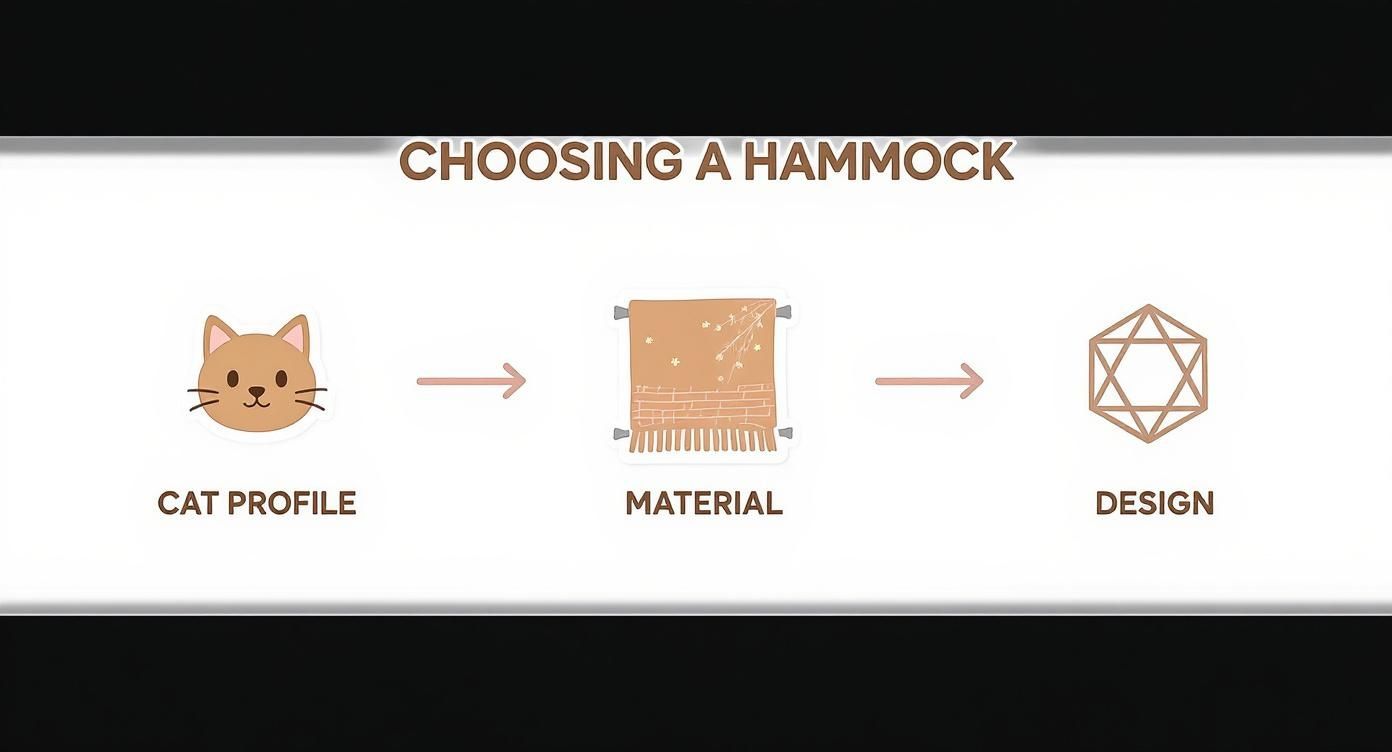
As you can see, a great setup begins with your cat’s personality and ends with a design that actually fits your space.
Step-by-Step Installation Tips
Once you’ve scouted your location and have the right hardware, the installation itself is pretty straightforward. Just remember to follow the manufacturer’s instructions to the letter, since every product is a little different.
- Mark Your Holes: Grab a level to make sure the brackets will be perfectly straight. No one wants a crooked cat shelf. Mark your drill spots with a pencil.
- Drill Pilot Holes: Drilling a small pilot hole first makes driving the screws in much easier and prevents the wood from splitting if you’re going into a stud.
- Install Anchors (If Needed): If you’re going into drywall, pop your anchors into the pilot holes now.
- Secure the Brackets: Line up the brackets with your holes and drive in the screws until they are snug. Don’t go crazy and overtighten them.
- Attach the Hammock: Now for the fun part. Fasten the hammock sling or shelf to the securely mounted brackets.
- The Wobble Test: Before you let your cat on it, give the hammock a firm tug and push. It should feel completely solid, like it’s part of the wall.
Learning how to securely anchor furniture to walls is a great skill to have, and not just for cat furniture. The same ideas—finding studs and using the right anchors—are essential for keeping bookshelves and dressers from tipping over, which is a major safety win for any home with pets or kids.
Building Your Cat’s Vertical Superhighway
A single wall cat hammock is a great start, but why stop there? For your cat, one perch is a destination. But when you connect it with other shelves, steps, and perches, you transform it into a crucial stop along their very own “vertical superhighway.” It’s an elevated network that lets them navigate their world on their own terms.
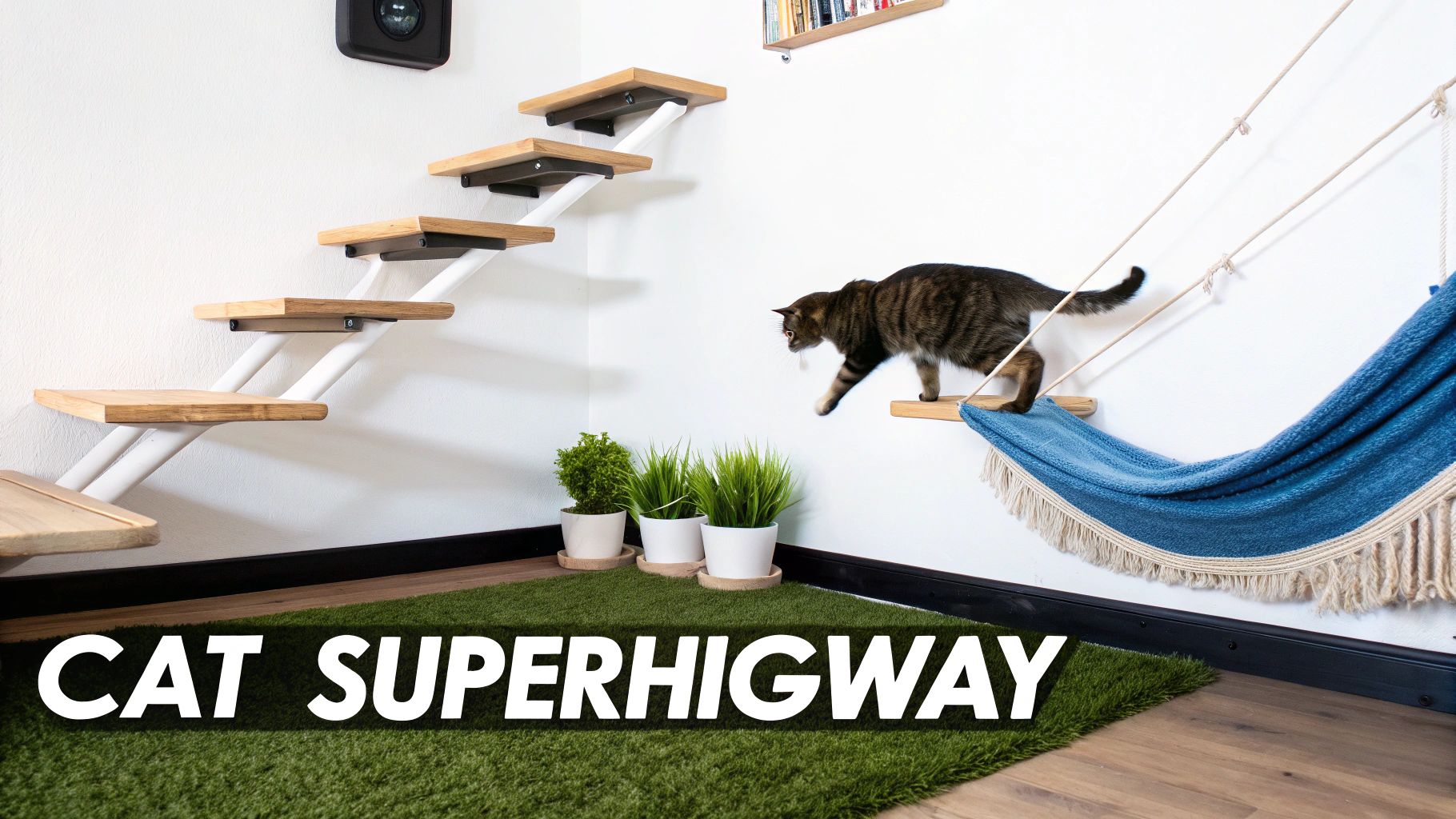
Think of it less like installing furniture and more like designing a private transit system for your cat. The idea is to create a seamless path that connects key points of interest in your home—from a sunny window to a quiet corner—all without their paws ever touching the floor. This gives them a sense of control over their environment, which is a massive confidence booster.
This isn’t just a niche idea for hardcore cat enthusiasts anymore. The global cat hammock market, valued at $350 million, is projected to grow significantly as more pet owners look for better enrichment solutions. We’re moving beyond basic beds and into creating dynamic, stimulating spaces for our pets.
Designing a Stimulating Layout
Creating an effective superhighway is all about strategic placement. You need to think like a cat and build a route that’s both fun and functional from their perspective. Start by mapping out the “prime real estate” in your home.
- Scenic Views: A wall cat hammock or shelf near a window is like a personal movie theater for your cat. They get hours of entertainment watching birds, squirrels, and people go by.
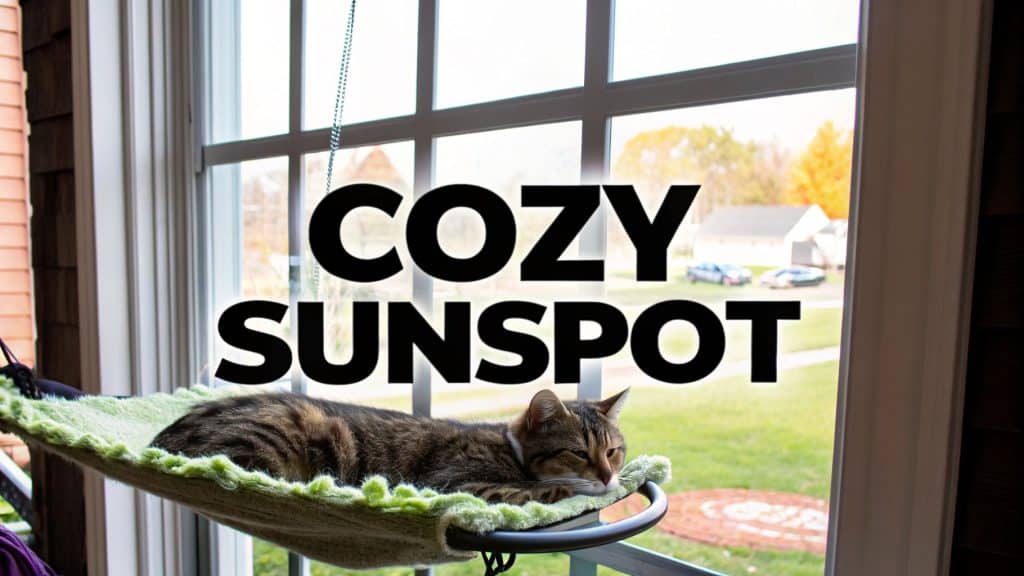
- Warm Zones: Cats are little heat-seeking missiles. A perch above a radiator or in a spot that gets drenched in afternoon sun will quickly become their favorite napping spot.
- Quiet Retreats: Be sure to build a path that leads to a quieter part of the house, like a spare room or a peaceful corner. It gives them a safe space to retreat from household chaos.
Once you have your key locations, connect them. Use a mix of small steps, long shelves, and even wall-mounted bridges to link a floor-level cat tree to a high-up hammock. The variety keeps the journey interesting and gets them moving.
Building Confidence and Encouraging Use
Some cats will take to their new vertical world in a heartbeat, but others might be a bit more hesitant. If your cat is on the cautious side, building their confidence is the key to making the superhighway a success.
Start small. Introduce them to one element at a time, maybe a low-mounted shelf. Use treats, their favorite wand toy, or a little catnip to create a positive association with the new furniture. As they get comfortable, you can start luring them along the path to the next piece, like the main wall hammock.
Remember, the journey is just as important as the destination. Make sure the distance between steps and shelves is comfortable for your cat. As a rule of thumb, try to keep vertical jumps under 2 feet and horizontal gaps under 4 feet.
By introducing them to the route gradually, you help them map it out in their head and build the physical confidence they need to navigate it like a pro.
Integrating with Your Home Decor
A cat superhighway doesn’t have to scream “crazy cat person.” Honestly, modern systems are designed to blend beautifully with your interior design. You can find wood finishes that match your existing furniture or fabric colors that complement your decor.
For bigger cats that need some extra support, a robust system like the hanging cat hammock for large cats can serve as a stylish and secure centerpiece for your setup. You can even add a whimsical touch with a cat tree wall sticker to integrate the whole thing into your wall art. By combining thoughtful design with your cat’s natural instincts, you can create a space that truly enriches their life while adding a unique, personal touch to your home.
Troubleshooting Common Hammock Hiccups
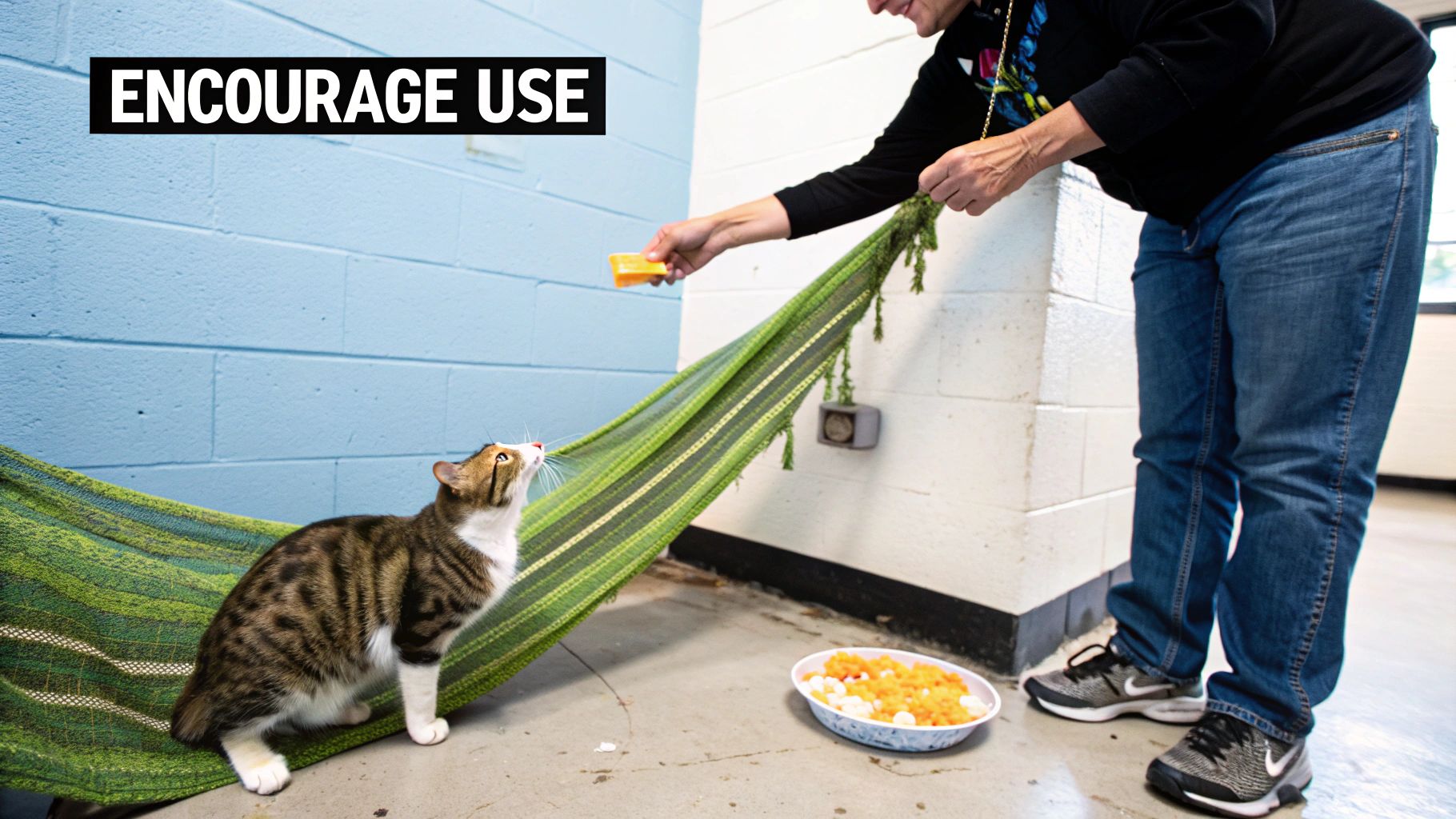
So, you’ve done everything right. You found the perfect spot, installed the hammock so it’s rock-solid, and stepped back to admire your work. And your cat… gives it a sniff and walks away. Don’t panic! This is completely normal.
Cats are naturally suspicious of new things plopped into their territory. Your job is to reframe this strange object from a potential threat into a five-star lounge spot. The secret ingredient here is patience.
Whatever you do, don’t just pick your cat up and put them on it. That’s a surefire way to create a negative association, and they’ll avoid it like the plague. You have to make them think it was their idea all along.
Encouraging a Cautious Cat
If your cat is giving the hammock the side-eye, you need to become their personal hype-man for this new piece of furniture. It’s all about building confidence and making it irresistible.
First, make it smell right. Cats navigate the world through scent, so an unfamiliar smell is a red flag. Drape a blanket they love over it, or even an old t-shirt that smells like you. This immediately makes it less alien and more like a part of the family.
Once the scent is right, bring in the big guns.
- Treat Trails: Leave a little breadcrumb trail of their absolute favorite treats leading up to and onto the hammock. Put the best one right in the middle.
- Playtime: Grab their favorite wand toy and get a good game of chase going. Lead the “prey” up the wall and onto the hammock. In the heat of the moment, they’ll often forget to be scared.
- Catnip Magic: If your cat goes bonkers for catnip, a little sprinkle on the fabric can be an open invitation they can’t refuse.
Remember, baby steps are still steps. If all they do is put two paws up to grab a treat, that’s a win! Just praise them and let them move at their own speed.
Keeping the Hammock in Top Shape
Once your cat finally claims their throne, a little bit of upkeep will ensure it stays their favorite spot. A wobbly or grimy hammock will get abandoned fast. Luckily, it only takes a few minutes a month.
Your two main goals are keeping it clean and keeping it stable. Cats are picky creatures; they won’t hang out in a place that feels dirty or unsafe. Think of it as routine housekeeping for their prized perch.
Here’s a quick checklist to follow:
- Fabric Care: Most hammocks have a fabric sling you can slide right off. Check the tag, but nearly all are machine-washable. Tossing it in the wash every few weeks keeps the fur and dander under control.
- Hardware Check: Once a month, give the hammock a good, firm wiggle. It shouldn’t budge at all. If you feel any give, grab a screwdriver and tighten those mounting screws immediately.
- Frame Inspection: Wipe down the wooden or metal parts with a damp cloth to get rid of dust. It’s also a good chance to look for any cracks or signs of wear.
Sticking to this simple routine ensures the wall cat hammock will be a safe, beloved fixture in your home for years to come.
Your Wall Cat Hammock Questions Answered
So, you’ve picked out the perfect wall cat hammock and even survived the installation. Still, a few questions might be nagging you. It’s totally normal. You want to be sure your cat’s new perch is safe, secure, and something they’ll actually love. Let’s tackle some of the most common things people wonder about after getting one.
We’ll clear up any lingering doubts so you can sit back and watch your cat enjoy their new favorite spot.
How Do I Know if My Cat Will Actually Use It?
Ah, the million-dollar question. We’ve all been there: you buy a cool new cat toy, and they’re more interested in the box. Most cats are natural climbers who crave high places, but a strange new object can feel a bit suspicious at first.
The secret is to make them think it was their idea all along. Never, ever just plop your cat onto the hammock—that’s a surefire way to make them avoid it forever. Patience is your best friend here.
- Location, Location, Location: Put the hammock somewhere your cat already wants to be. Think near a sunny window with a good view of the birds, or in a cozy corner of the living room where they can supervise the household from above.
- A Trail of Breadcrumbs (or Treats): Lure them in with their favorite high-value treats. Make a little path leading to the hammock and leave a jackpot reward right in the middle. A sprinkle of catnip or their favorite crinkle toy works wonders, too.
- Make It Smell Like Home: New things smell weird. Rub a blanket they already love all over the hammock, or even an old t-shirt that smells like you. This sends a clear signal: “This is a safe spot. It’s part of our territory.”
Setting up an easy route with other shelves or furniture also helps. It turns a scary, big jump into a series of manageable, inviting steps.
What Is the Maximum Weight a Hammock Can Hold?
This is a big one, and it’s all about safety. The weight capacity isn’t just a suggestion—it’s a hard limit. You’ll see a huge range on the market, from models that hold a modest 15 pounds to heavy-duty options rated for 50 pounds or more.
Always, always check the manufacturer’s specified weight limit before you buy. This number is based on everything from the hammock’s materials and bracket design to the hardware it ships with.
For absolute peace of mind, mount your hammock directly into wall studs. It’s the only way to get the strongest, most secure anchor point. Drywall alone just can’t compare.
If you have a gentle giant like a Maine Coon or Ragdoll, or if you suspect your cats might try to pile in together, you have to go for a heavy-duty model. Look for descriptions that mention “large cats” and check for features like thicker wood, stronger fabric, and more substantial mounting hardware.
How Should I Clean and Maintain the Hammock?
A little regular upkeep will keep the hammock safe, clean, and appealing to your cat. After all, nobody likes a dirty, wobbly bed.
The fabric sling is the part that gets the most use. The best ones are removable and machine-washable—it makes life so much easier. If yours isn’t, a quick once-over with a vacuum will handle most of the fur, and a pet-safe spot cleaner can take care of any little accidents.
The frame is even simpler. Just give the wood or metal parts a wipe-down with a damp cloth to get rid of dust.
Most importantly, give it a quick physical check every month or two.
- Give it a wiggle. Grab the brackets and gently try to move them. They should feel rock-solid, with no give at all.
- Check the screws. The vibrations from your cat jumping on and off can slowly loosen screws over time. Give them a quick tighten if needed.
- Inspect the fabric. Look for any signs of fraying or tearing, paying close attention to the seams and where it attaches to the frame.
Are They Safe for Kittens or Senior Cats?
Absolutely! A wall hammock can be a fantastic spot for cats of any age, as long as you set it up with their specific needs in mind. It’s all about creating safe and easy access.
For kittens, who have more energy than grace, you’ll want to avoid placing the hammock too high. Keep the floor below clear of hard objects or maybe add a soft rug while they’re still getting their sea legs.
For senior cats or those with arthritis, the goal is comfort, not a challenge.
- Lower the Height: Install the hammock at a low, easy-to-reach height.
- Build a Staircase: Use other wall shelves or sturdy furniture to create a gentle ramp or set of “stairs.” This eliminates the need for painful, high-impact jumping.
- Grip is Key: Look for a hammock with a fabric that offers good traction, so they feel secure and confident moving around.
With these cats, you’re providing a cozy, elevated lookout, not an acrobatic jungle gym.
Ready to create the perfect vertical sanctuary for your cat? The team at Ur Pet Store has curated a collection of high-quality, stylish, and durable wall cat hammocks designed for felines of all sizes. Find the ideal perch to enrich your cat’s life and complement your home decor by exploring our selection at https://urpetstore.com.