

Blog
A Pet Owner’s Guide to Washable Pet Pads

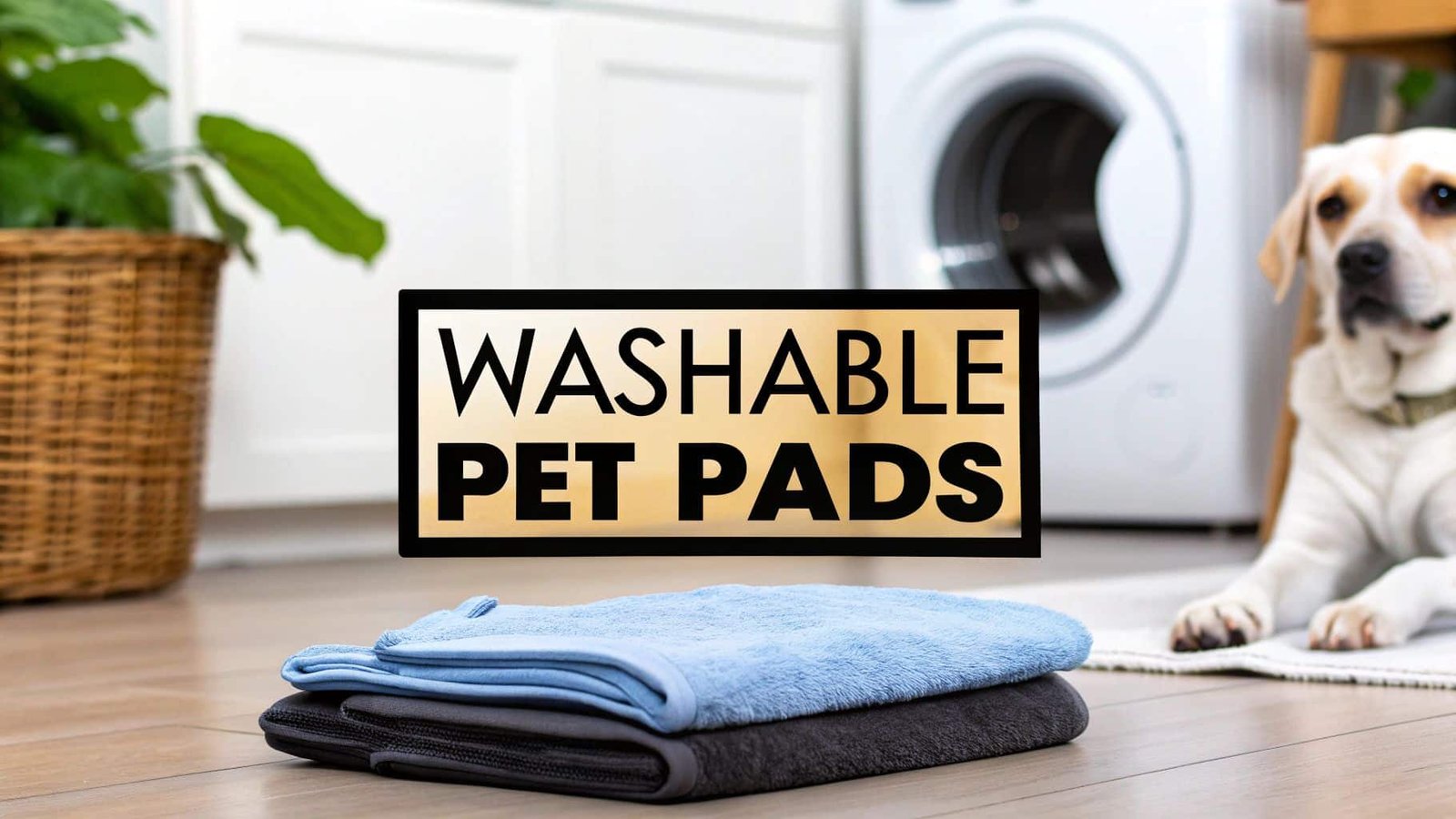
If you’ve ever felt like you’re in a never-ending cycle of buying, using, and tossing disposable pee pads, you’re not alone. It’s a constant expense that adds up, and the pile of waste can feel pretty guilt-inducing. Washable pet pads are the modern, common-sense answer—a reusable, incredibly durable solution for potty training, managing senior pet incontinence, and so much more.
Think of them as multi-layered, super-absorbent fabric mats engineered to be used, washed, and reused hundreds of times.
The Eco-Friendly Shift to Washable Pet Pads
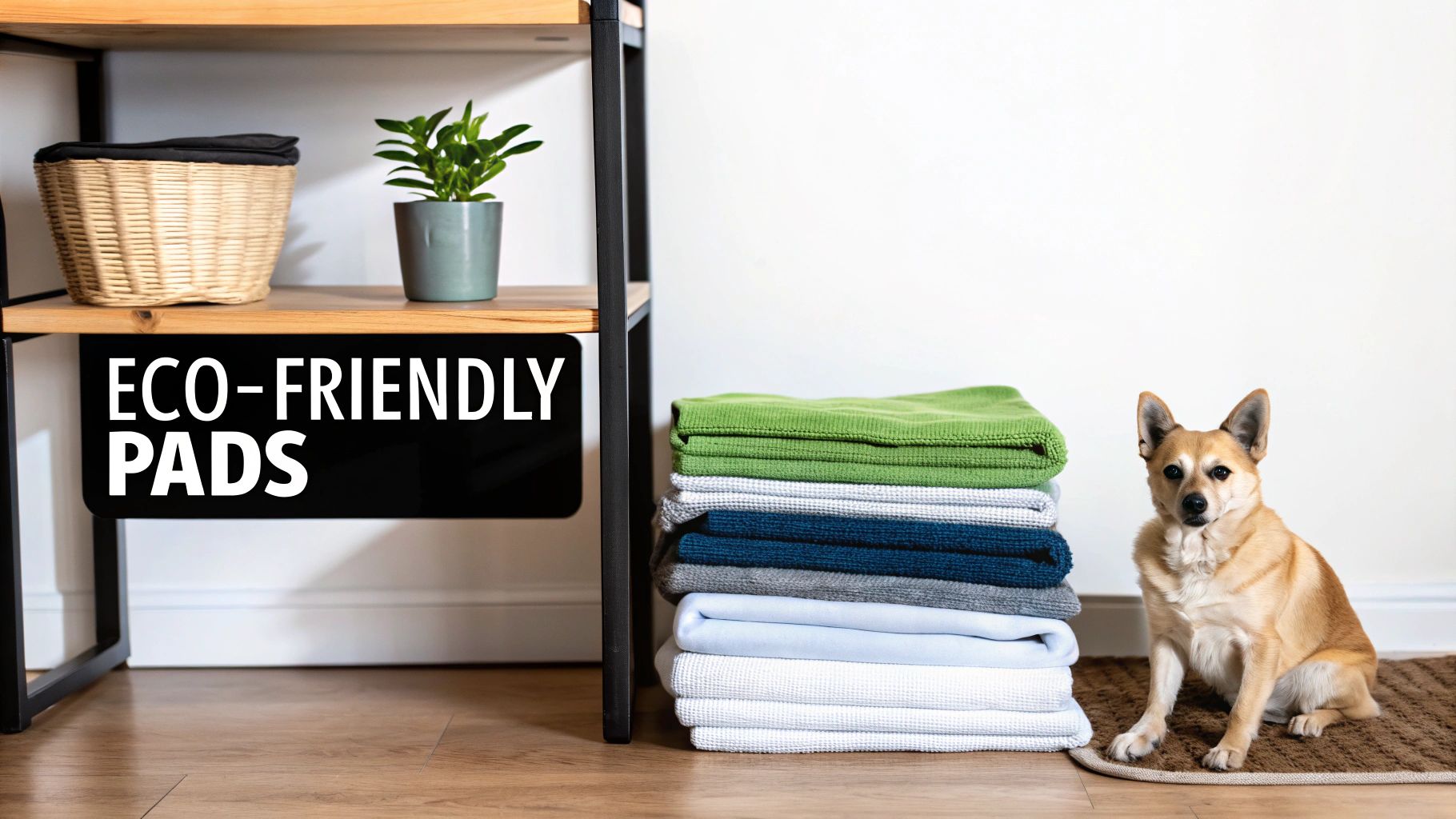
For a long time, the “use it once, throw it away” mentality was the default for pet owners. But we’re seeing a major change in thinking. More and more people are looking for smarter, more sustainable options that are better for their wallets and the planet. This is exactly where washable pet pads come in, and they are a total game-changer.
Forget the disposable diaper model. These are more like a high-tech, reusable version of your toughest laundry. Instead of heading for the trash can after one use, these sturdy mats go straight into the washing machine and come out fresh, clean, and ready to protect your floors all over again. It’s a simple switch that makes a huge impact.
A Growing Market Shows a Change in Mindset
This isn’t some fringe trend—it’s a full-blown movement. The demand for sustainable pet products is skyrocketing, and it shows in the numbers. In 2023, the global market for washable pet pads was valued at around USD 245 million. Experts project it will climb to USD 412 million by 2033, which is some seriously steady growth. You can read more about the washable pet pad market growth to see just how quickly pet parent priorities are shifting.
So, what’s driving this change? It’s a collective desire for products that are:
- Cost-Effective: Buying a small stack of washable pads is a one-time purchase that can easily replace hundreds of disposables. The long-term savings are significant.
- Environmentally Friendly: You’ll drastically cut down on landfill waste, which is a fantastic way to shrink your pet’s carbon pawprint.
- Convenient and Reliable: Honestly, a high-quality reusable pad often works better. They provide superior absorbency and leak protection that can outperform many flimsy disposables.
Choosing a washable option is an investment that pays off for your pet, your budget, and the planet. It’s a practical, modern approach to being a responsible pet owner.
More Than Just a Potty Pad
While they’re a lifesaver for house-training puppies, these pads are incredibly versatile. They work perfectly as protective liners for crates, carriers, car seats, and even your couch. Here at Ur Pet Store, we’ve had customers use them as whelping mats for new litters, as comfortable recovery surfaces after a vet visit, and even as spill-proof placemats under food and water bowls. Their multi-purpose design makes them an essential tool for any pet household.
This guide will cover everything you need to know, from how their clever multi-layer construction works to the dead-simple washing routine. By the end, you’ll see why switching to reusable pads is one of the smartest, simplest upgrades you can make for a cleaner home and a happier pet. For more great options, feel free to browse our collection of premium beds and mats designed for comfort and durability.
What Makes a Quality Pad Tick?
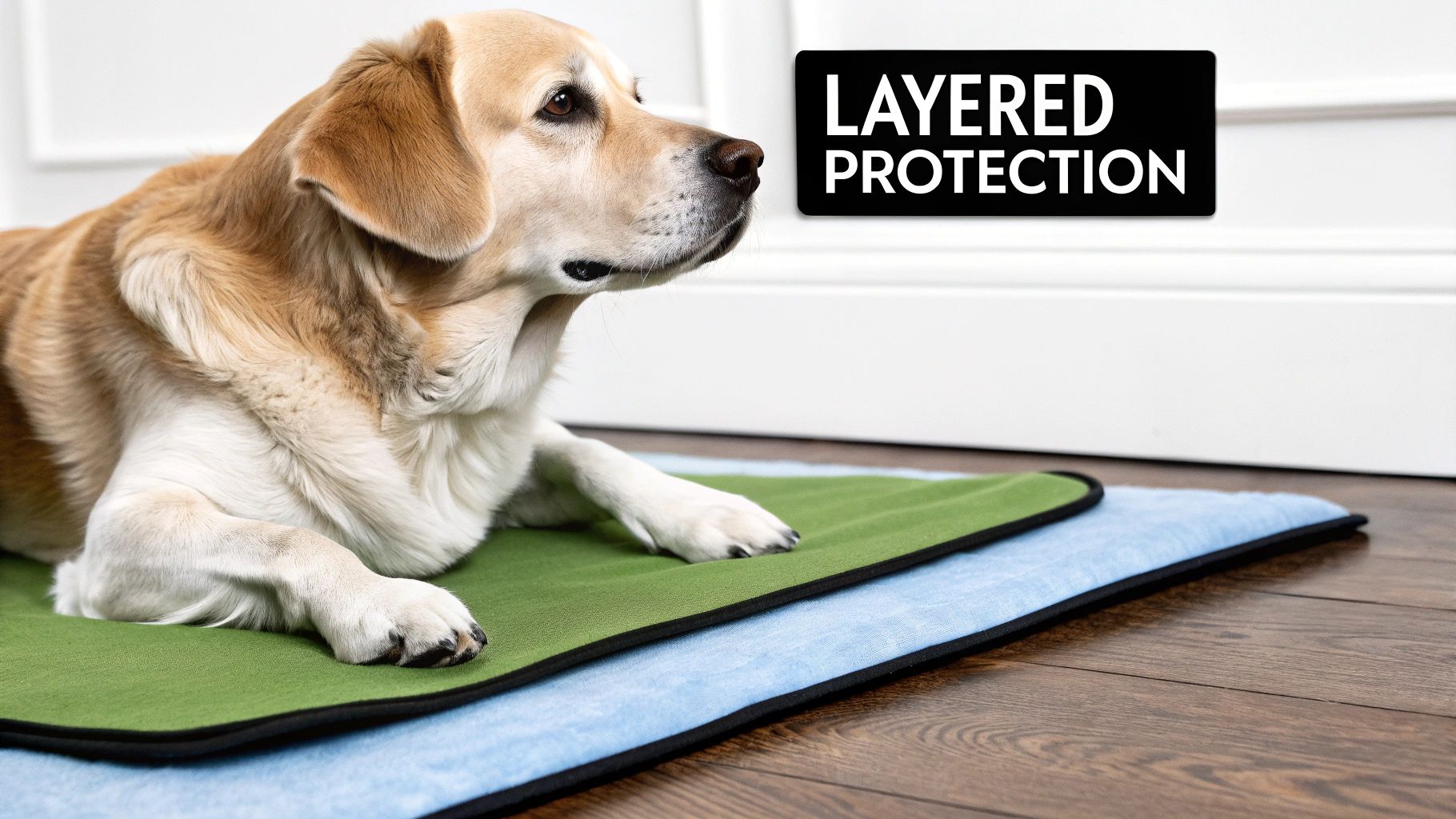
It’s easy to assume all washable pet pads are more or less the same. They look like simple fabric mats, right? But the difference between a cheap pad and a high-performance one is night and day. Think of it less like a towel and more like a piece of technical gear for your floor. Every layer has a crucial job.
Getting to know this layered construction is the secret to finding a pad that does more than just soak up messes. A great pad keeps your pet comfy, protects your floors, and—most importantly—survives hundreds of trips through the washer and dryer. Let’s peel back the layers and see what a truly effective washable pad is made of.
The Top Layer: All About Comfort
First up is the surface your pet actually touches. This layer is all about comfort and quick action. Usually made from a soft, quilted fabric like polyester, its main goal is to wick moisture away from the surface in a flash.
This “wicking” action pulls liquid down into the inner layers, so the top feels dry almost instantly. Why does this matter? It means no wet paw prints tracked through your house and, more importantly, it keeps your pet’s skin and fur from getting damp and irritated. A poorly made top layer stays soggy, which is the last thing you want.
The Absorbent Core: The Real Workhorse
Tucked beneath that comfy top layer is the powerhouse of the pad: the absorbent core. This is where the magic really happens. This middle section is usually a dense, thirsty material like a rayon/poly blend whose only job is to soak up liquid and lock it in.
The quality of this core is what determines how much the pad can hold. A flimsy core gets overwhelmed fast, leading to overflows and messes. A premium one, on the other hand, can hold several times its own weight in liquid. That’s what gives you peace of mind for overnight use or for households with big dogs.
A superior washable pad is engineered as a system. Each layer works in harmony with the others to pull moisture down, lock it in, and keep it from ever reaching your floor.
The Waterproof Barrier: Your Floor’s Best Friend
The third layer is the unsung hero of the whole operation: the waterproof barrier. This is the last line of defense between an accident and your beautiful hardwood or carpet. This critical shield is typically made from a tough but flexible material like polyurethane (TPU).
Unlike the cheap plastic you find on some pads that cracks or melts in the dryer, a quality TPU barrier stays strong and leak-proof through wash after wash. It creates a truly impenetrable wall, ensuring not a single drop gets through to the floor.
The Non-Slip Backing: Keeping It in Place
Finally, we have the bottom layer, which is all about stability. A well-designed pad will always have a non-slip backing, usually made of tiny rubber dots or a grippy fabric. This simple feature makes sure the pad stays put, even when a rambunctious puppy is playing on it.
A pad that doesn’t slide around is not only safer but also more effective. A stationary target is much easier for your dog to aim for, making this final layer a small detail that makes a huge difference.
How to Choose the Perfect Washable Pad
Finding the right washable pet pad can feel like a chore with so many options out there. But it’s not a guessing game. It’s really just about matching the pad’s features to your dog’s habits and your home. A little thought up front saves you a ton of hassle later and ensures you get something that actually works.
Think of it like buying a raincoat. You wouldn’t buy a light windbreaker for a torrential downpour. You need to match the gear to the situation. By focusing on three key things—size, absorbency, and durability—you can confidently pick a pad that’s a perfect fit for you and your pet.
Match the Pad Size to Your Pet and Purpose
First things first, let’s get the size right. This isn’t just about how big your dog is, but also where you plan on using the pad. A tiny Yorkie’s needs are a world away from a Great Dane’s, and a pad for a crate is a different beast than one you’d use to protect your backseat.
Here are a few common scenarios to think about:
- For Crate Training: You’ll want to measure the inside of the crate. Look for a pad that fits edge-to-edge without bunching up. A snug fit gives a curious puppy nothing to grab onto and chew.
- For General Floor Protection: A great rule of thumb is to pick a pad big enough for your dog to walk in a complete circle on. This gives them plenty of room to sniff around and find their spot without “missing” the edge.
- For Whelping or Senior Dogs: In these cases, bigger is almost always better. You need maximum coverage for a litter of puppies or a reliable, large surface for an older dog who isn’t as mobile as they used to be.
It’s clear people are catching on to the need for more space. On Amazon, 80% of the top 5 best-selling dog pads are now washable, and the market has seen a massive 210% growth in XL pads (think 72″ x 72″) since 2022. That surge tells us that owners of big breeds like Labradors and German Shepherds are demanding better options.
Assess the Right Absorbency Level
Next up is absorbency. How much liquid does this thing really need to hold? This all comes down to the quality and thickness of the pad’s inner core. You don’t always need the most absorbent pad on the market, so matching it to the job is how you get the best bang for your buck.
A truly high-quality pad, like our versatile reusable dog pee pad blanket, is built to soak up a serious amount of moisture without ever leaking through. That makes it a fantastic all-rounder for just about any situation.
Consider what you’ll be using it for most often:
- Puppy Training: Puppies have tiny bladders, which means frequent, small pees. A pad with standard to high absorbency is perfect for keeping up with them.
- Adult Dogs: If you’re just using pads for the occasional “just in case” moment for an adult dog, a standard absorbency level will do the trick.
- Senior Incontinence or Overnight Use: This is where you bring out the big guns. For these situations, you need the highest absorbency you can find. Look for pads specifically marketed for heavy-duty use to guarantee your floors stay dry all night.
Prioritize Durability for Long-Term Savings
A washable pad is an investment, so you want one that’s going to stick around for a while. Durability really boils down to two things: the quality of the materials and how it’s put together. Pay close attention to the stitching and the waterproof backing. A well-made pad can easily handle hundreds of wash cycles without falling apart.
A key thing to look for is a pad’s “wash rating.” A durable pad is built to take a beating in the laundry. The waterproof layer shouldn’t crack, and the fabric shouldn’t fray, ensuring it works just as well after a year as it did on day one.
Look for pads with reinforced stitching around the edges—that’s what stops the layers from separating and the edges from fraying over time. Also, a quality TPU (thermoplastic polyurethane) waterproof backing is far better than the cheap vinyl you sometimes see, which can crack and degrade in the dryer. Choosing a durable pad from the start means you’re not buying new ones every few months, which saves you a lot of money and creates far less waste.
Mastering Your Wash and Care Routine
One of the first questions we always get is, “Aren’t these things a pain to clean?” It’s a totally fair question. The great news is, the answer is a resounding no. Once you have a simple system down, keeping your pads fresh is a breeze and fits right into your regular laundry routine.
Honestly, don’t overthink it. If you can wash muddy towels or sweaty gym clothes, you can easily handle these pads. The trick is just following a few basic steps to protect the pad’s high-tech layers. Do it right, and your pad will stay absorbent and leak-proof for a long, long time.
This guide really nails down the essentials for picking the right pad—from making sure it’s big enough for your dog to finding one tough enough to handle constant washing.
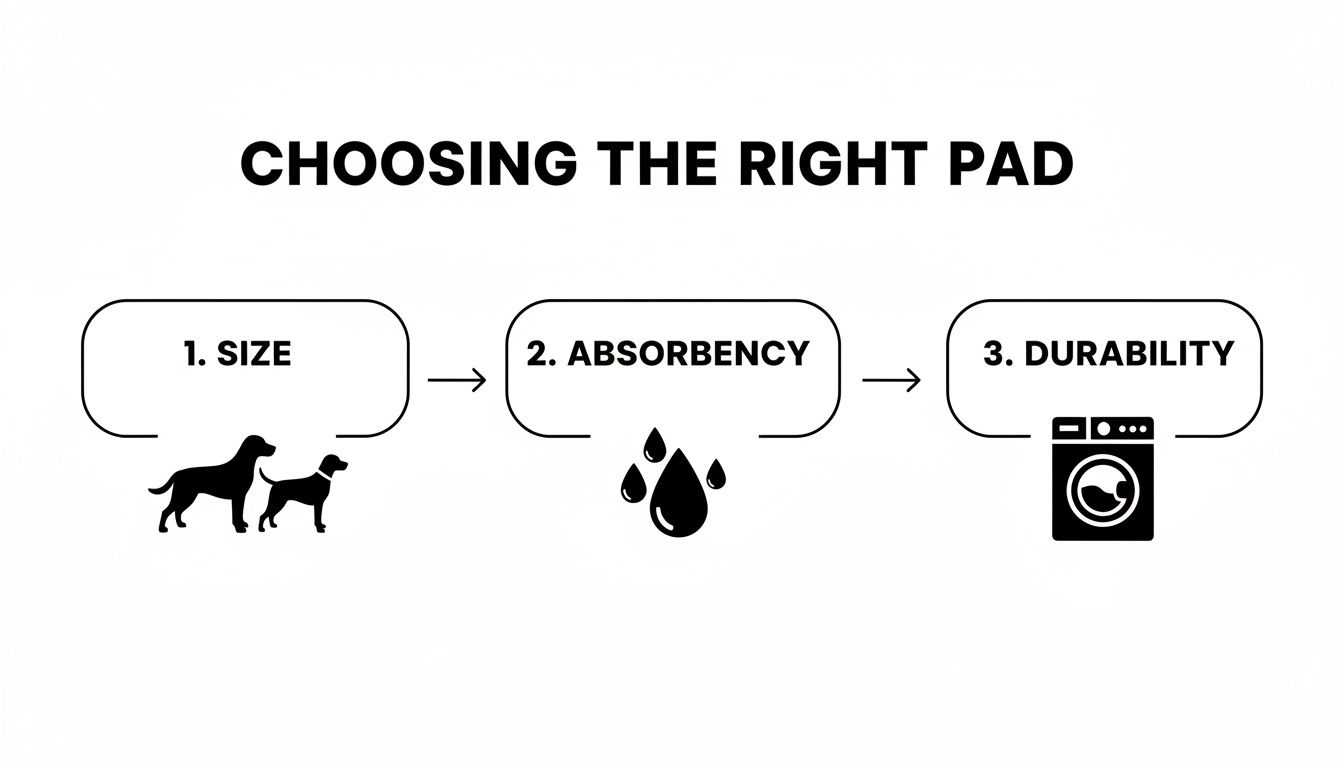
It’s a good reminder that a pad’s real value isn’t just its size; it’s how well it holds up in the wash, week after week.
Your Simple Wash Routine Checklist
Following a consistent routine is the secret to keeping your pads in top shape. The goal here is to eliminate odors and stains without damaging the pad’s special construction. Here’s a simple checklist to get it right every time.
| Step | Action | Pro Tip |
|---|---|---|
| 1. Prep the Pad | Shake off loose debris outdoors. Scrape any solid waste into the toilet or trash. | A quick pre-rinse with a hose or in a utility sink can make a big difference before it hits the washer. |
| 2. Pre-Treat (Optional) | For tough spots, spray with a 50/50 mix of white vinegar and water. | For serious odors, an enzymatic cleaner is your best friend—it actually breaks down the smelly stuff. |
| 3. Wash | Use a warm or hot water cycle. This is key for killing bacteria and neutralizing odors. | Don’t be afraid of the heat! High-quality pads like ours are built to withstand it. |
| 4. Detergent | Add a standard amount of a pet-safe, unscented detergent. | Using too much soap can leave a residue that makes the pad less absorbent over time. Stick to the recommended amount. |
| 5. Dry | Tumble dry on low or medium heat, or let it air dry. | Avoid the highest heat setting on your dryer, as it can slowly break down the waterproof backing. |
By sticking to this simple process, you’ll ensure your pads stay fresh, effective, and ready for action.
What to Avoid in Your Wash Cycle
What you don’t do is just as important. A couple of common laundry products can completely ruin your washable pads, so keep them far away from the machine.
Crucial Tip: Never use fabric softener or chlorine bleach. Fabric softeners coat the fibers with a waxy film, which completely blocks them from absorbing liquid. Bleach is far too harsh and will eat away at the waterproof barrier, causing leaks.
Drying and Storing Your Pads
Once the wash cycle finishes up, you’ve got two easy options. You can toss the pad in the dryer on a low or medium heat setting, or simply hang it up to air dry. As mentioned, just stay away from the high-heat settings to protect that all-important waterproof layer.
When it’s completely dry, fold it up and stick it in a linen closet or a dedicated storage bin. It’s that easy. With this simple care routine, your pads will always be hygienic and ready to go. A clean home is a happy home, and we have plenty of other grooming and cleaning supplies to help you keep it that way.
Creative and Practical Uses Beyond Potty Training
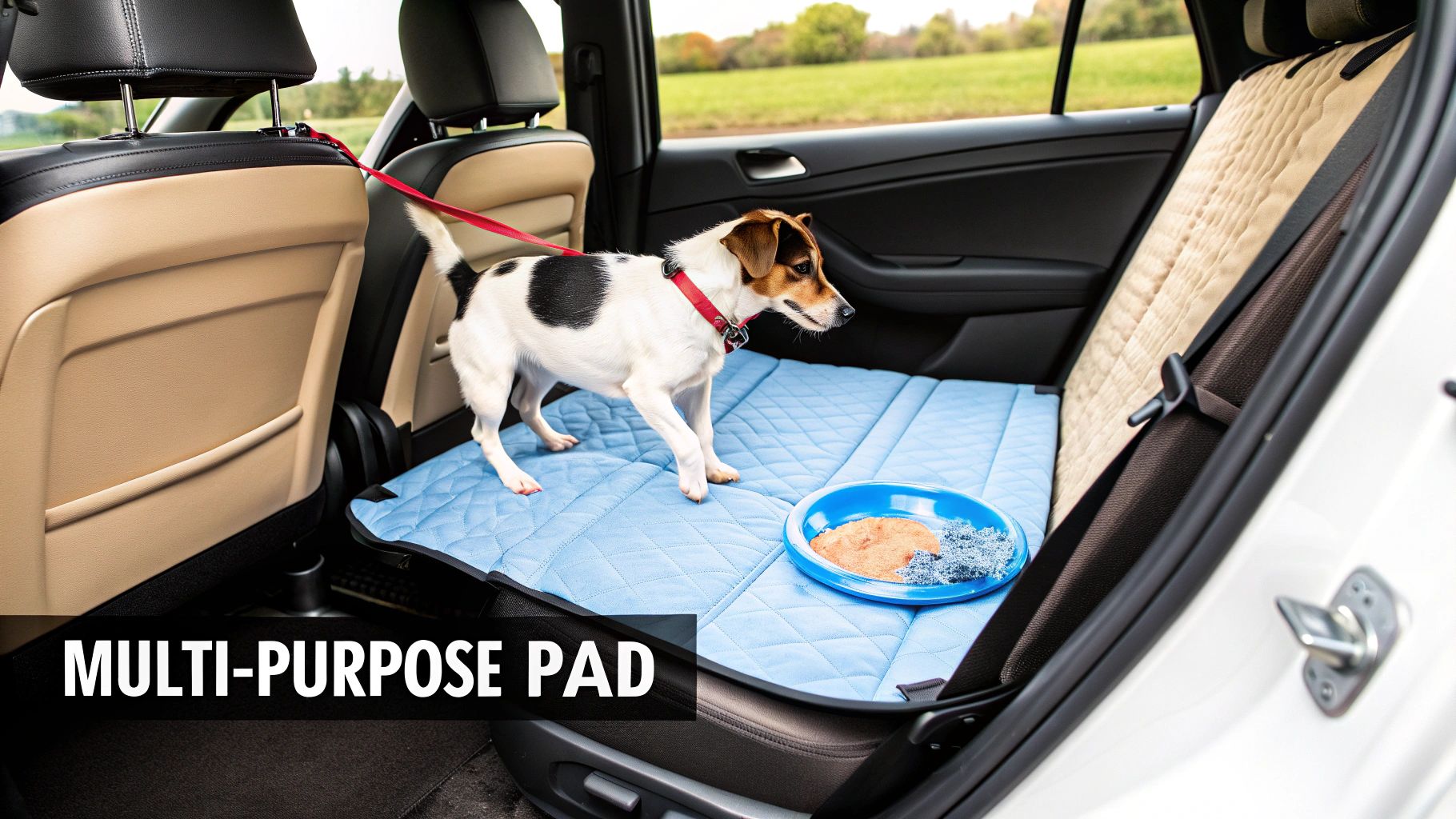
Thinking of washable pet pads as just for potty training is like using a smartphone only to make calls. You’re missing out on so much more. While they’re absolute champs for housebreaking a new puppy, their true genius lies in their versatility. These durable, absorbent mats quickly become one of the most useful tools in your pet-care arsenal, ready to handle all sorts of messes and add a layer of comfort just about anywhere.
Once your puppy is trained, the life of your pads is really just beginning. Think of them as your go-to protective layer for every stage of your pet’s life, both inside your home and out on the road.
Protecting Your Home and Vehicle
Let’s face it, our furniture and car seats take a beating from fur, drool, and muddy paws. A washable pet pad is the perfect first line of defense.
Toss a large pad over the sofa where your dog loves to snooze, or lay one across the back seat before heading to the dog park. The waterproof backing ensures nothing soaks through, while the soft, quilted top gives your pet a comfy spot to relax. When it gets grimy, just throw it in the wash. Easy.
This simple habit can honestly save you hundreds in professional cleaning bills over the years and keeps your stuff looking fresh.
Creating a Clean and Safe Space
Washable pads really shine wherever you need a clean, controlled environment. Since they can be fully sanitized, they’re perfect for more sensitive situations.
Here’s where they’re real lifesavers:
- Whelping and Post-Surgery: For a new mom and her litter, cleanliness is everything. A washable pad offers a soft, warm, and sterile area that you can swap out in seconds. It’s also a must-have for pets recovering from surgery, giving them a clean place to rest that protects their incision site from dirt and your floors from any discharge.
- Senior Pet Comfort: Older dogs and cats dealing with incontinence need a reliable, dignified solution. Placing pads in their favorite sleeping areas gives them a comfortable place to rest without the worry of an accident.
- Mess-Free Mealtime: Is your pet’s water bowl also their personal splash zone? A small pad placed under their food and water bowls will catch every stray kibble and slobbery drip, making cleanup a snap.
You’re not alone in looking for these kinds of multi-use solutions. The North American market for washable pads is projected to hit USD 98.5 million, with over 70 million pet-owning households needing practical products that do more than one job. If you’re curious, you can learn more about the expanding washable pet pad industry and see just how popular they’ve become.
This trend makes it clear: pet owners everywhere are catching on to how useful these pads are well beyond the puppy phase.
Travel and Crate Comfort
Traveling with a pet can be unpredictable, but a washable pad simplifies things immensely. Lining a crate or carrier with a pad does two key things. First, it gives your pet a soft, familiar surface that can help ease their travel anxiety. Second, it provides foolproof protection against any accidents that might happen on the road.
What this means for you is arriving at your destination with a clean carrier and a happy pet. It’s a small addition that makes a huge difference, turning stressful journeys into smoother rides for everyone.
Troubleshooting Common Pad Problems
Even the best washable pads can run into a couple of stubborn issues. When you’re dealing with pet accidents day in and day out, two things tend to pop up more than any others: smells that won’t go away and stains that seem to become permanent fixtures.
Don’t worry, though. Both of these problems are completely fixable. With the right approach and a little bit of know-how, you can keep your pads fresh, clean, and looking great for the long haul. Let’s tackle these frustrations head-on.
Conquering Lingering Odors
Ever pulled a pad out of the wash, only to catch that faint, lingering scent of ammonia? You’re not alone. This happens because regular laundry detergents often just wash away the liquid, leaving tiny uric acid crystals behind. The moment those crystals get damp again, odor-causing bacteria wake up, and that familiar smell comes right back.
To get rid of the odor for good, you have to break down those crystals. Here are a couple of methods that actually work:
- Enzymatic Cleaners: These are your secret weapon against pet odors. They’re packed with special enzymes that literally eat the organic matter in urine, completely destroying the source of the smell. You can use them for a pre-soak or just add a cup straight into the wash.
- White Vinegar: An old-school trick that still works wonders. Just pour one cup of white vinegar into the rinse cycle. The acetic acid in the vinegar neutralizes the ammonia and helps dissolve any mineral deposits from the urine.
Sometimes, tough odors need a little more effort. For some deeper cleaning strategies, you can learn how to effectively eliminate dog urine smell from specialized guides.
Tackling Stubborn Stains
Urine can also leave behind ugly yellow stains, especially on lighter-colored pads if they aren’t dealt with quickly. The real secret to preventing stains from setting is to act fast and pre-treat the spot before it goes anywhere near the washing machine.
A huge mistake people make is tossing a stained pad directly into a hot wash. The heat will literally “cook” the proteins in the urine, setting the stain permanently into the fabric.
To get ahead of stains, just follow these simple steps.
- Blot, Don’t Rub: The moment you find an accident, grab a paper towel and blot the area to soak up as much liquid as you can. If you rub, you’re just pushing the urine deeper into the pad’s fibers.
- Apply a Pre-Treatment: Mix up a simple paste of baking soda and water and spread it over the stain. Let it sit for about 15-20 minutes. Baking soda is great for both lifting the stain and neutralizing the odor.
- Wash as Usual: After pre-treating, just wash the pad like you normally would. That one-two punch of pre-treatment and a proper wash cycle should knock out any discoloration and keep your pads looking brand new.
Got Questions About Washable Pads? We’ve Got Answers.
Thinking about switching from disposable to reusable pet pads? It’s a smart move, but it’s natural to have a few questions before you change up your routine. We hear the same ones all the time, so we’ve put together some straight-to-the-point answers to help you feel confident about making the switch.
How Many Washable Pads Do I Actually Need?
For most folks, starting with a set of three or four pads is the sweet spot. This simple rotation means you’ll always have one pad down, one in the wash, and at least one clean one on standby.
This setup ensures you’re never caught off-guard, which is a lifesaver when you’re house-training a puppy and accidents are a daily event. If you have a few pets sharing a space or an older dog with incontinence issues, you might want to bump that number up to five or six pads just for extra peace of mind.
Are These Things Actually Hygienic?
Absolutely. When you wash them correctly, reusable pads are perfectly sanitary. The secret is all in the laundry routine.
A hot water cycle (if the care instructions allow) paired with a good, pet-safe detergent is your best bet for knocking out bacteria and odors. For an extra cleaning boost, I always recommend adding a cup of plain white vinegar to the rinse cycle. It helps dissolve any detergent buildup and acts as a natural sanitizer, keeping everything truly clean and fresh.
Don’t overthink it: a solid wash routine is all it takes. Honestly, a properly cleaned reusable pad is often more hygienic than letting soiled disposable pads pile up in your kitchen trash can.
Is My Dog Going to Chew This Thing to Pieces?
It’s possible—some dogs will chew anything—but washable pads are way less appealing to shred than their disposable cousins. Disposables have that crinkly, papery texture that basically screams “tear me up!” to a bored puppy.
Washable pads, on the other hand, are made of tough fabric. They feel more like a blanket or a piece of rug under their paws, so most dogs just aren’t interested. If you know you have a power chewer on your hands, look for pads with reinforced stitching. Always supervise your dog the first few times they use it and be ready to redirect any nibbling toward an actual chew toy.
How Much Money Will I Really Save?
The long-term savings are probably the biggest win here. A single, well-made washable pad can easily replace hundreds of disposables over its lifetime. Yes, the initial cost is higher, but you’ll see a return on that investment surprisingly fast.
Think about it: a 100-pack of disposables can run you about $30. A puppy in training could burn through a few packs a month, easily costing you $300-$500 a year.
A set of four high-quality washable pads might cost between $80 and $120 upfront, but they can last for years. This one-time buy can end up saving you 50-70% over the long haul, making it a no-brainer for your wallet.
Ready to make the switch to a smarter, more sustainable solution? Explore the full range of durable and stylish pet essentials at Ur Pet Store and discover why thousands of pet owners are choosing reusable pads for a cleaner home and a happier pet. Visit us today at https://urpetstore.com.