

Blog
Seat Belt for Pets: A Practical Guide to Safer Car Travel (seat belt for pets)

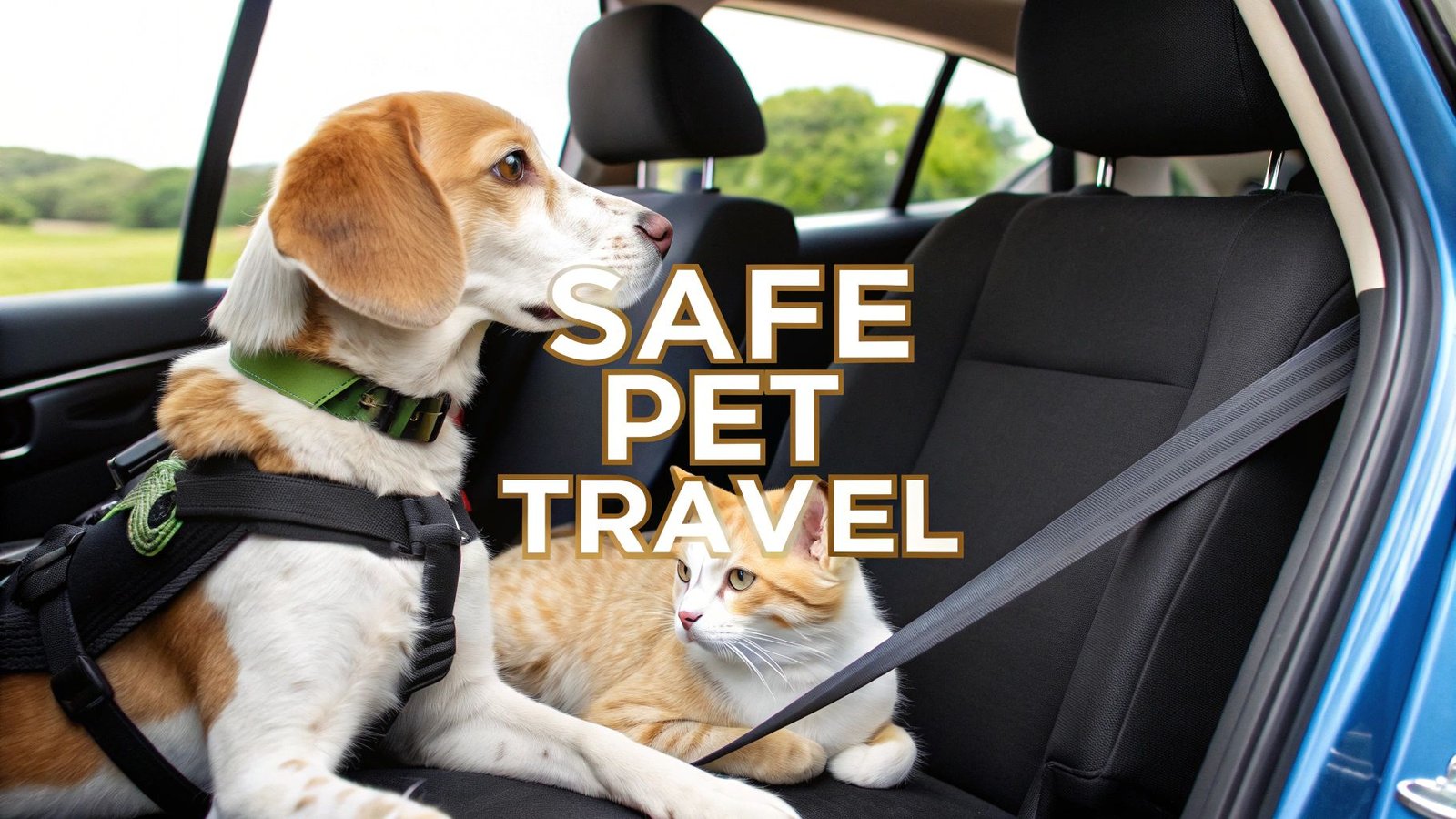
When we talk about a seat belt for pets, we're not talking about a cute accessory. This is a fundamental piece of safety gear designed specifically to keep your animal companion secure in a moving car. Think of it as a crucial tool that protects your pet from injury, keeps you from getting distracted, and even helps you follow local traffic laws. A simple restraint can turn a potentially dangerous car ride into a safe, enjoyable trip for everyone.
Why a Seat Belt for Your Pet Is Non-Negotiable
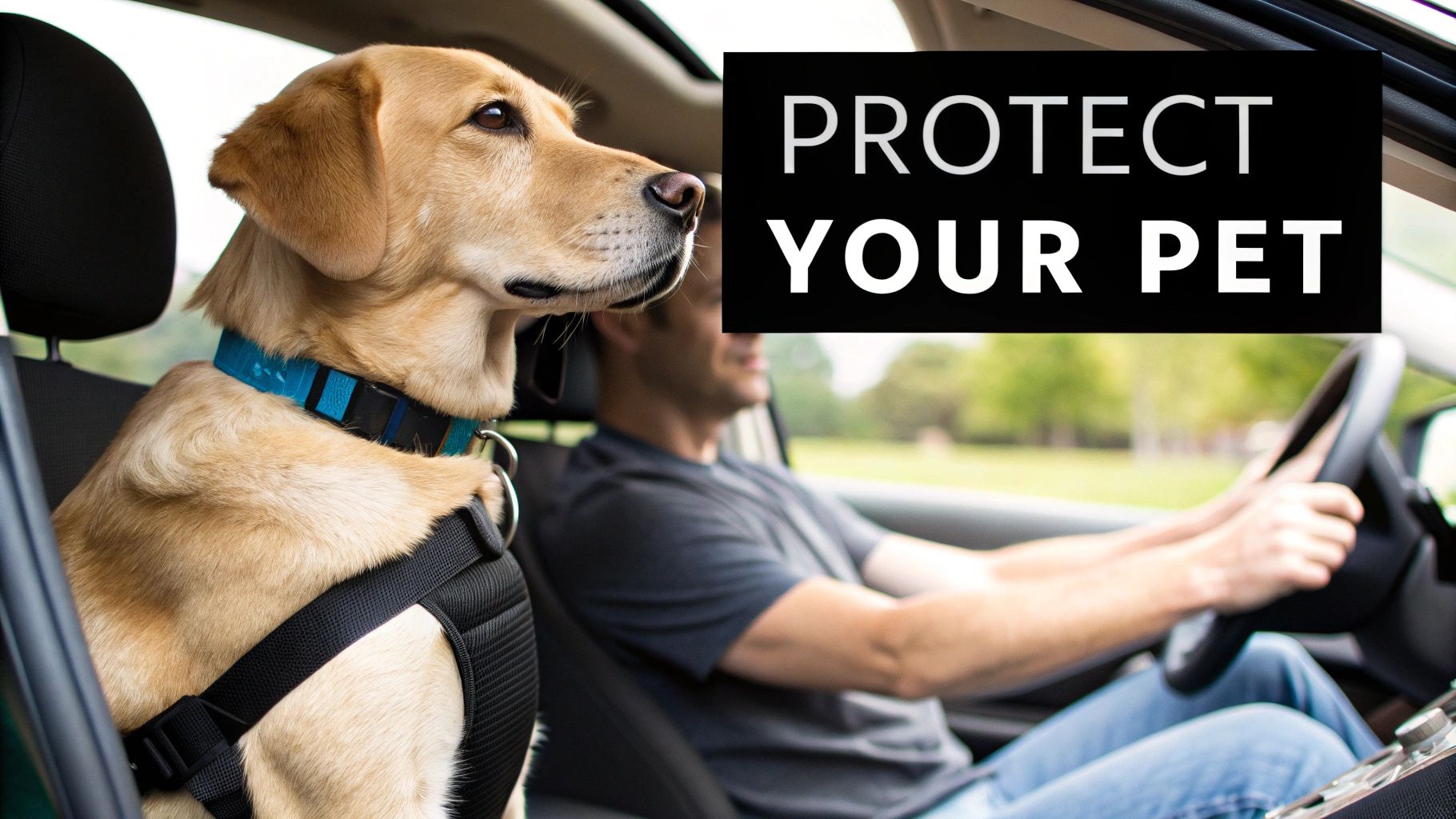
It’s so easy to glance over at your furry co-pilot and just see a happy member of the family. But when it comes to the physics of a moving vehicle, an unrestrained pet is a serious hazard. If you have to slam on the brakes or, worse, get into a collision, your pet becomes a heavy, unpredictable projectile, putting themselves and everyone else in the car at risk.
You'd never drive with a bowling ball rolling around on the back seat, right? An unsecured pet is far more dangerous because they're a living, moving distraction long before an accident ever happens.
The Dangers of an Unrestrained Pet
The reality here is pretty stark. One survey found that while 77% of pet owners know their pets should be secured in a car, only about half of them actually do it. That gap between knowing what's right and actually doing it creates a lot of unnecessary danger on our roads.
An unrestrained pet can easily:
- Jump into your lap, block your view, or get tangled in the steering wheel.
- Wedge themselves under the brake pedal, making it impossible to stop.
- Be ejected from the vehicle during a crash, which often leads to severe injury or getting lost.
- Escape through a broken window after an accident and run straight into traffic.
These aren't just scary "what-ifs." They are tragic situations that happen every day—and they are completely preventable with the right gear. Using a seat belt for pets is one of the easiest and most effective ways to avoid these risks.
Creating a Culture of Safety
Buckling up your pet is about more than just preparing for a worst-case scenario. It builds a routine and creates a safe, predictable space for your animal, which can make car travel much less stressful for them. You buckle up, you make sure your kids are buckled up, and securing your pet should be just another automatic step in that pre-drive checklist.
A dedicated pet restraint system does more than just protect your pet in a crash. It actively prevents accidents by eliminating a major source of driver distraction, making the road safer for everyone.
This guide will walk you through everything you need to know, from the physics of a crash to the different types of restraints and how to use them correctly. By the end, you'll see why this simple piece of equipment is one of the most important investments you can make for your pet's safety and your own peace of mind.
The Unseen Forces Inside Your Car
To get why a pet seat belt is a non-negotiable piece of safety gear, we have to talk a little bit about physics. It’s something we rarely think about during a normal drive. When your car is cruising down the road, everything inside—you, your groceries, your dog—is all moving at the same speed. It’s only when the car stops suddenly that the hidden forces at play become terrifyingly real.
Think of it this way: your pet is a passenger on a train. As long as the ride is smooth, everything is calm. But if that train were to hit a brick wall, anything not bolted down would fly forward at full speed. It's a sobering thought, but that's exactly what happens inside a car during a hard brake or a collision.
The Math of a Sudden Stop
Even a fender-bender at a low speed generates an incredible amount of force. This is where the true danger for a loose pet becomes crystal clear. It’s not just about them being jostled; it's about their body weight being multiplied by the speed of the car.
For a second, stop thinking of your dog as your furry best friend and just picture them as an object with mass and velocity. When the car stops, their body doesn't. Inertia takes over, and the laws of physics simply don't care how well-behaved they are on the couch at home.
The real danger isn't your pet's actual weight. It's the crushing force they generate when their weight is multiplied by speed, turning a beloved companion into a serious hazard for everyone in the car.
It’s a concept that’s hard to wrap your head around until you see the actual numbers. A simple trip to the park can involve forces you’d never imagine, and knowing about them is the first step toward keeping your pet genuinely safe.
From Companion to Projectile
The switch from a cuddly friend to a dangerous projectile happens in the blink of an eye. A small, 10-pound dog in a crash at just 30 mph can hit with 500 pounds of force. That’s enough to cause catastrophic injury to both the pet and anyone in its path.
The pet advocacy group BarkBuckleUp puts this into even starker perspective. They calculate that a 60-pound dog in a 35 mph crash becomes a projectile with 2,700 pounds of force. This reality shines a light on a huge gap in vehicle safety data. While agencies track human injuries meticulously, pets are rarely counted, leaving a massive blind spot in our understanding of road safety. You can learn more about this data gap on the American Veterinary Medical Association website.
This isn't about blaming our pets, of course. It's about acknowledging the powerful, invisible forces we're dealing with and taking simple steps to protect everyone. A proper restraint is designed to absorb and distribute that force safely.
The Distraction Danger
Beyond the brutal physics of a crash, there’s another, more common risk: driver distraction. A pet free to roam around the car is an unpredictable element in a space that requires your complete focus.
Every time you glance in the rearview mirror to see what they’re up to or reach back to calm them down, your attention is split. These moments are all it takes for a situation on the road to go from normal to critical.
Common distractions from loose pets include:
- Getting in the Way: A dog trying to climb into your lap, blocking your view, or getting tangled around the pedals is a recipe for disaster.
- Worrying About Them: Even just stressing about your pet’s safety in the back is a mental distraction that pulls your focus from the road.
- Sudden Startles: An unexpected bark or a sudden lurch from the back seat can make a driver jump, causing them to swerve or brake without reason.
Keeping your eyes and mind on the road is just as important as watching out for other drivers. Securing your pet with a dedicated seat belt completely removes this entire category of risk, letting you focus 100% on driving. It's an easy step that not only protects them in a crash but helps prevent one from ever happening.
Choosing the Right Type of Pet Restraint
Now that you understand the forces at play inside a moving car, let's get practical. Choosing the right seat belt for pets isn't about finding one magical "best" product for everyone. It’s about finding the best fit for your pet, your car, and your lifestyle.
Think of it like this: you wouldn't wear hiking boots to the beach. The gear has to match the situation. This decision is one of the most important you'll make for your furry co-pilot's safety. The flowchart below really simplifies the choice you have to make.
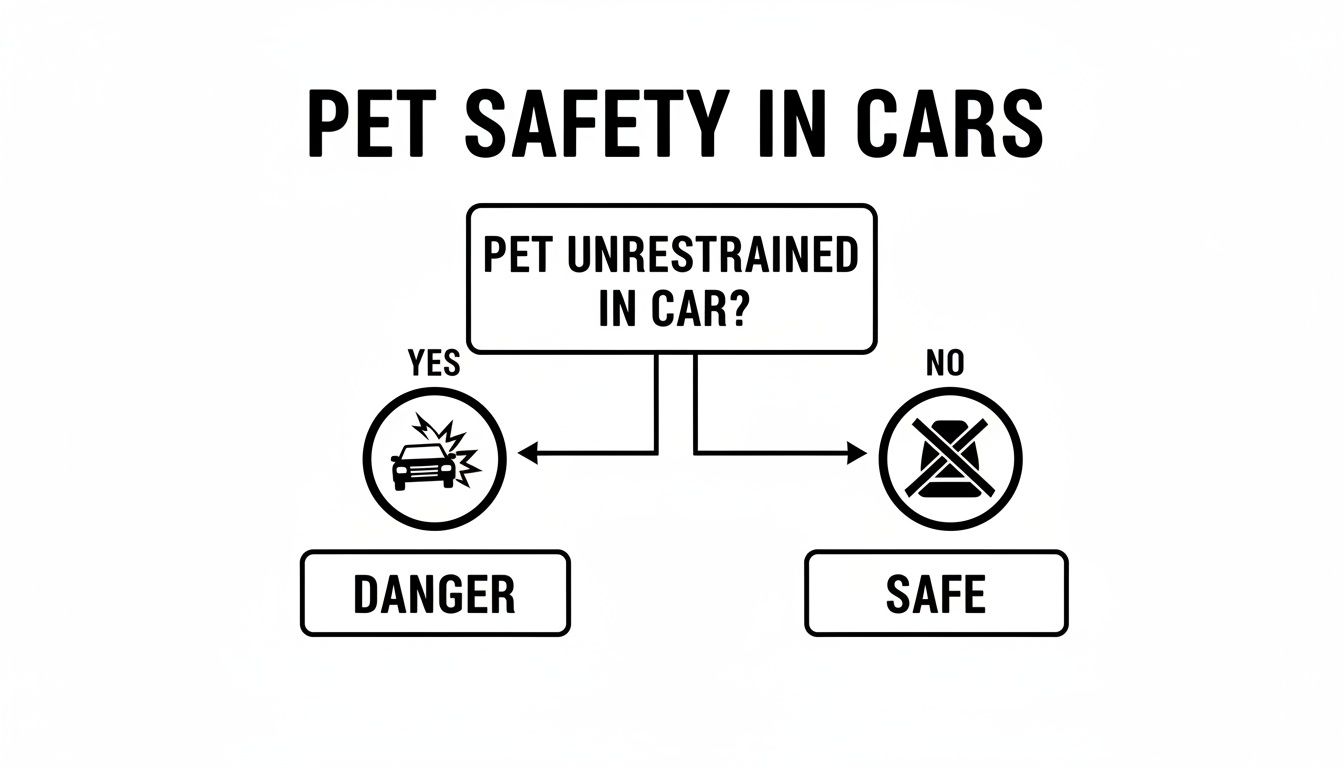
As you can see, the path to keeping your pet safe is straightforward. A restrained pet is a protected pet. Let's dig into the most common options out there so you can choose with confidence.
Harness and Tether Systems
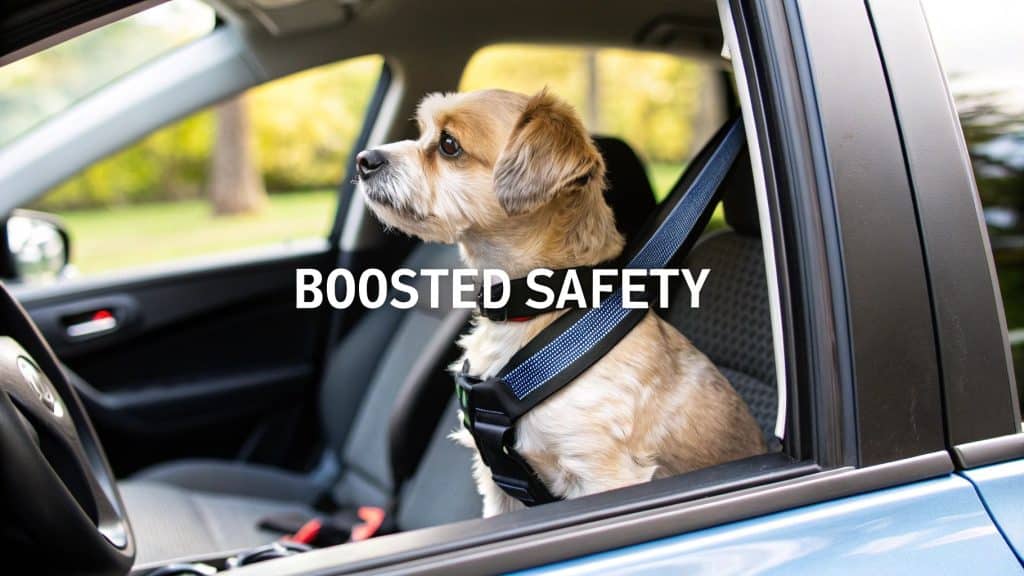
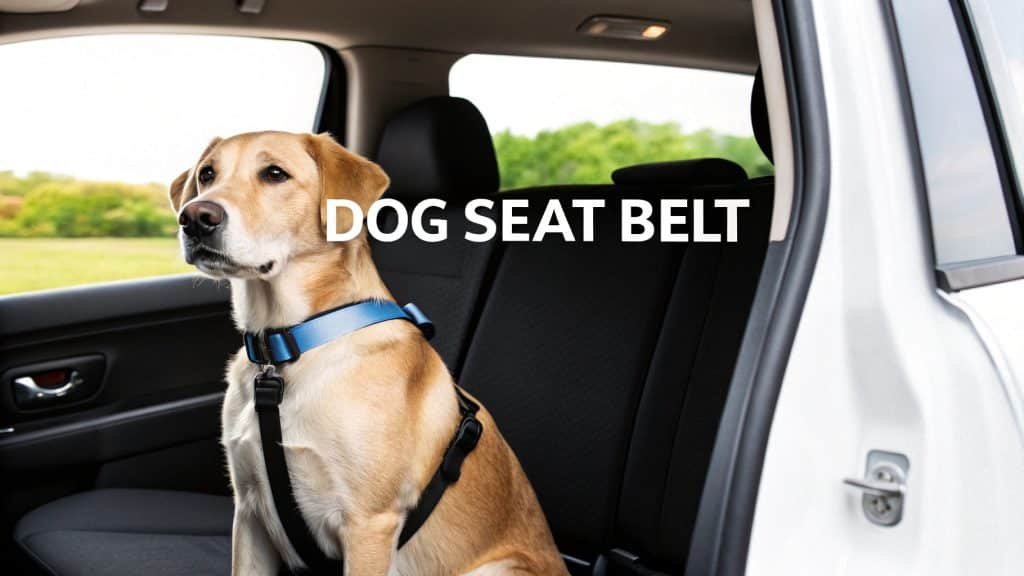
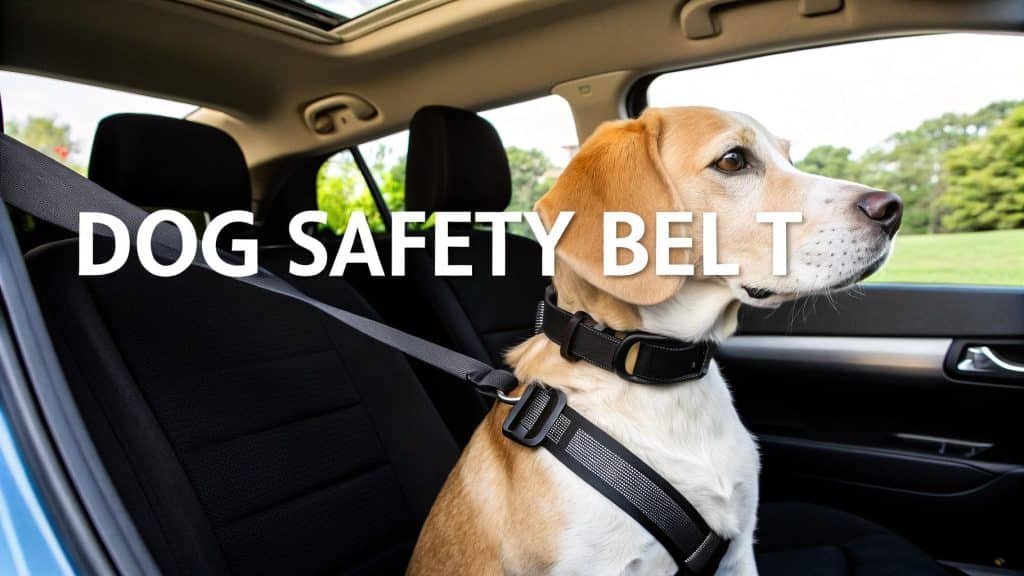
This is what most people picture when they think of a pet seat belt, and for good reason. It’s a simple, effective system: a sturdy, padded harness that your pet wears, connected to a short tether. That tether clips to the harness on one end and clicks right into your car’s seat belt buckle on the other.
It's essentially a human seat belt, but intelligently designed for a dog's body. Its biggest advantage is how it distributes the immense force of a sudden stop or crash across the strongest parts of your pet's body—their chest and shoulders. This prevents all that pressure from being focused on their fragile neck.
The key to making this system work is getting the tether length just right. It needs to be short enough to keep your dog from flying into the front seat or hitting the door, but long enough to let them sit or lie down comfortably. Always look for a crash-tested model when you browse a quality selection of collars, leashes, and harnesses to ensure you have a properly fitted, reliable product.
Secured Travel Carriers
For our smaller friends—like little dogs, cats, or even rabbits—a secured travel carrier is often the safest bet. I'm not talking about just any old plastic crate. We mean a sturdy, hard-sided carrier that you buckle firmly into the back seat using the car's actual seat belt.
By securing the carrier itself, you prevent it from becoming a projectile. This method provides a protective shell around your pet, containing them completely and protecting them from secondary impacts inside the vehicle.
This is the gold standard for cats, who tend to feel much more secure in a cozy, enclosed space and can be escape artists with harnesses. It’s also great for toy breeds that might find a harness system overwhelming. The most important part? Anchoring the carrier securely. An unbuckled carrier is just as dangerous as an unrestrained pet.
Comparing Pet Vehicle Restraint Systems
With several options available, it can be tough to decide which is best. This table breaks down the most common types of pet restraints to help you compare them at a glance and find the right solution for your pet's safety and comfort.
| Restraint Type | Best For | Primary Benefit | Potential Drawback |
|---|---|---|---|
| Harness & Tether | Most dog sizes, from small to large. | Distributes crash forces across the pet's chest and provides some freedom of movement. | Tether length must be precise; not suitable for most cats or very small pets. |
| Secured Carrier | Cats, small dogs, and other small animals. | Creates a protective, enclosed shell and prevents the pet from becoming a projectile. | Can be bulky; the carrier must be crash-rated and securely buckled in. |
| Vehicle Barrier | Large dogs in the cargo area of an SUV/wagon. | Prevents driver distraction by keeping pets in the back. | Offers minimal impact protection in a serious collision. |
| Travel Kennel | Large dogs or frequent travelers. | Provides a secure, den-like space and can be crash-tested for high safety. | Requires a large cargo area and can be heavy and expensive. |
Each system has its place. Your choice will come down to what makes the most sense for your pet's needs and your vehicle's layout.
Vehicle Pet Barriers and Kennels
If you have a large dog or multiple pets, a vehicle barrier or a travel kennel might be the right call. A barrier is basically a sturdy gate that walls off the cargo area of your SUV or station wagon. While it does a great job of preventing a curious nose from distracting you while you drive, it offers limited protection in a serious crash.
A more robust solution is a crash-tested travel kennel that you place and strap down in the cargo area. These are built from heavy-duty materials to withstand impact. While seat belts are fantastic, sometimes other options like a sturdy kennel are more practical. When thinking about alternatives, you might even look into choosing an indoor outdoor dog kennel that can double for travel. This gives your dog a familiar, den-like space and is a popular choice for families who are always on the go.
Ultimately, your decision comes down to your pet's size, personality, and your car's design. By weighing these options, you can make sure every single trip is a safe one.
What to Look for in a High-Quality Seat Belt
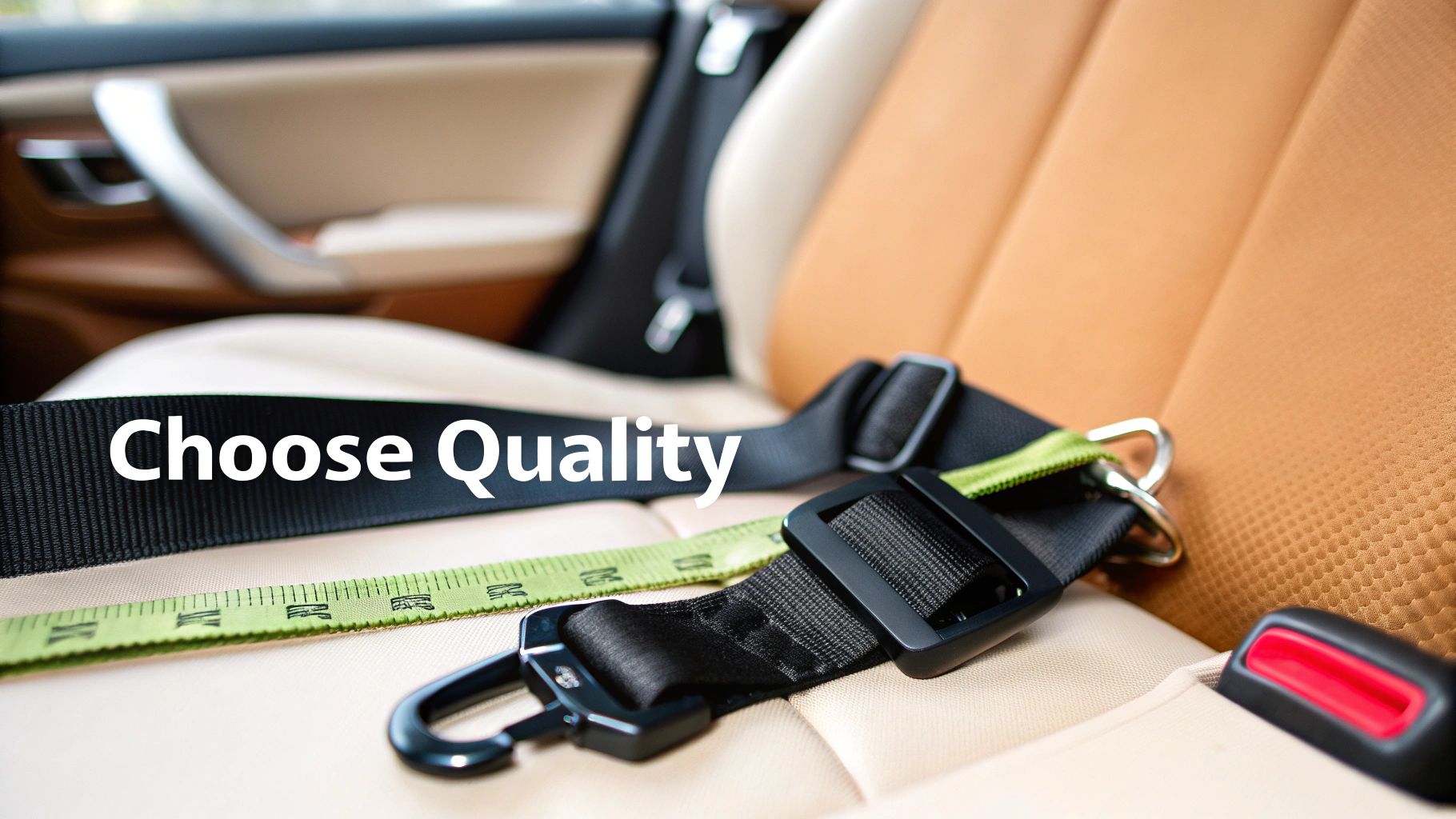
Not all pet restraints are created equal. Far from it. The difference between a well-engineered safety device and a flimsy imitation can be life or death, and it's not always obvious at a glance.
Think of choosing a seat belt for pets like you would a car seat for a child. You wouldn't just grab the cheapest one you find. You’d look for sturdy construction, proven safety ratings, and a perfect fit. The exact same diligence is needed to protect your four-legged family member. A good restraint is a complete system, designed to absorb and distribute the massive forces of a sudden stop.
Let’s dig into the critical elements you need to inspect before you buy.
Crash Testing Is a Non-Negotiable Benchmark
This is the single most important factor, hands down. You must look for proof of independent crash testing. In an unregulated market, any company can slap a “safe” label on its product, but without third-party validation, those words are just marketing fluff.
Organizations like the Center for Pet Safety (CPS) conduct rigorous tests that simulate real-world collisions.
A CPS certification or a detailed report from the manufacturer about their crash-testing standards is your best guarantee. It means the product has proven it can handle extreme forces without breaking, releasing your pet, or causing injury.
This benchmark is what separates truly protective gear from mere accessories. It’s a shocking statistic, but while 83% of U.S. dog owners know an unrestrained pet is dangerous, only 16% consistently use a restraint. You can find more data on this in the AAA/Kurgo survey. Choosing properly tested gear is how we close that gap.
Evaluating Materials and Construction
Once you've confirmed a product has passed its tests, it's time to get hands-on and inspect its construction. The quality of the materials and craftsmanship tells you everything about how it will perform in a crisis.
Here’s what to look for:
- Harness Webbing: The straps should be made from thick, seatbelt-grade nylon. If it feels thin or flimsy, put it back. You want material designed to resist tearing and stretching under extreme pressure.
- Stitching: Pay close attention to the seams. A high-quality harness uses reinforced "box stitching" (a square with an 'X' inside) at all the stress points where straps and buckles connect. This is a sign of maximum strength.
- Hardware: All metal parts—the D-rings, buckles, and tether clips—should be heavy-duty, single-piece steel. Stay far away from plastic clips or lightweight aluminum. They can easily shatter or bend on impact.
Think of the hardware as the anchor for the entire system. If that single piece of metal fails, the whole restraint is useless.
Getting the Sizing and Fit Absolutely Right
Even the most robust seat belt for pets won't do its job if it doesn't fit correctly. If it’s too loose, your dog could be ejected from it in a crash. If it's too tight, it’s uncomfortable and can even restrict their breathing. Taking a few moments to get precise measurements takes all the guesswork out of it.
Here’s how to guarantee a perfect fit:
- Measure the Chest Girth: Use a soft tailor’s tape measure and wrap it around the widest part of your dog's rib cage, right behind their front legs.
- Measure the Neck: Loosely measure around the base of their neck, right where a collar would naturally rest.
- Check the Weight: Grab your pet's current weight. Many manufacturers use weight in combination with measurements to fine-tune their sizing recommendations.
Always compare these three numbers against the manufacturer’s sizing chart. If your dog falls between two sizes, your best bet is to call the company for their expert opinion. A snug, secure fit is what ensures the harness stays put and works as designed when you need it most.
Getting the Most Out of Your Pet Seat Belt: A Guide to Proper Use
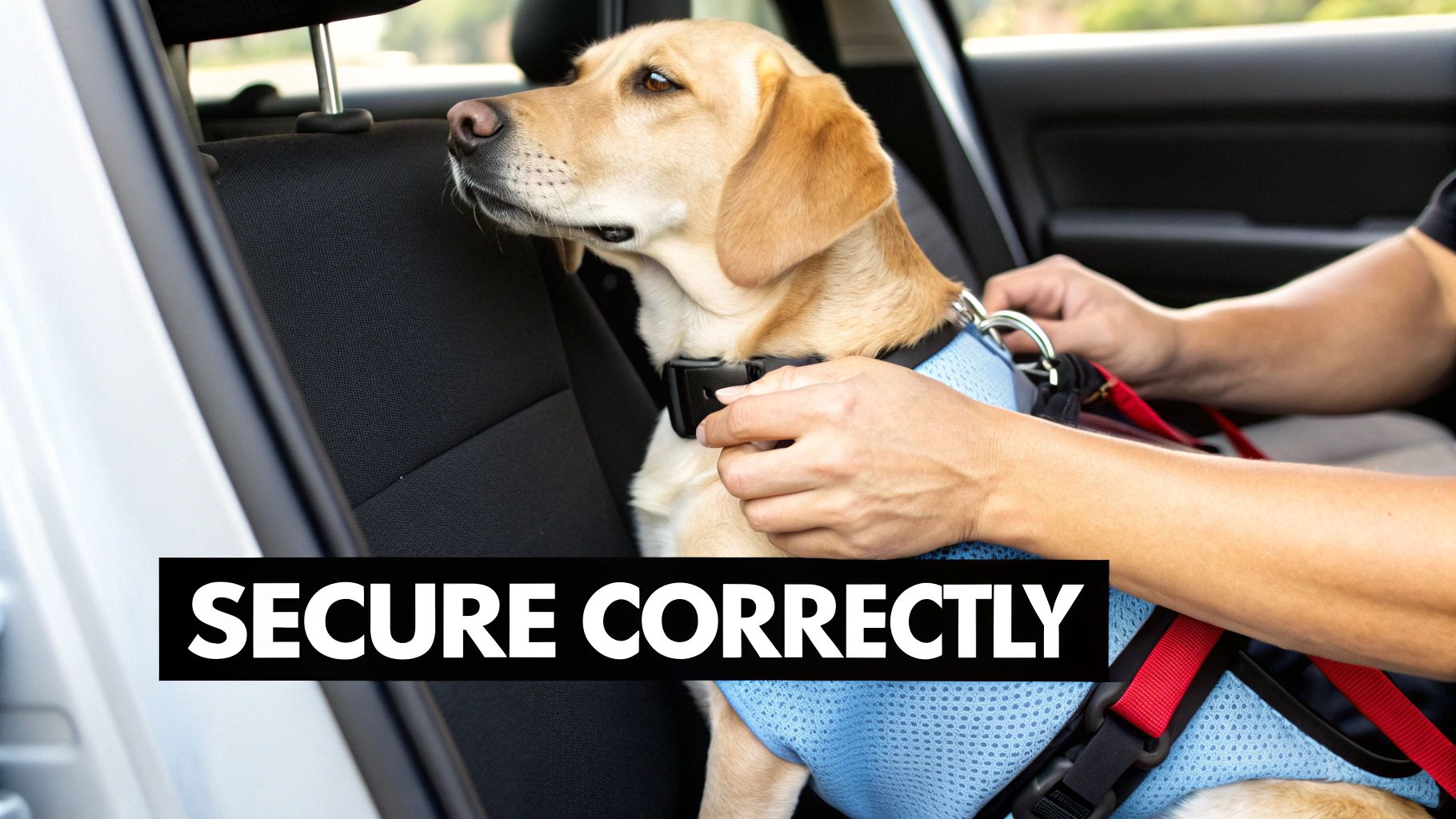
So, you’ve invested in a high-quality, crash-tested restraint for your dog. That's a fantastic first step. But even the best seat belt for pets won't do its job unless it's used correctly every single time. Proper use is what turns a good product into a genuine life-saving tool.
Think of it this way: if you're building a bookshelf and leave a few screws loose, you wouldn't trust it with your heavy books. It’s the same idea here. Taking a moment to get the fit and installation right makes all the difference in an emergency.
Step One: Nailing the Harness Fit
Everything starts with a perfectly fitted harness. Before you even touch the seat belt tether, make sure the harness itself is snug and secure on your dog.
The golden rule is the two-finger test. You should be able to slide just two fingers between any strap and your dog's body—no more, no less. If it's too loose, they could slip out during a sudden stop. Too tight, and it's not only uncomfortable but could restrict their breathing. A proper fit ensures that any force is distributed safely across their chest and shoulders, just as it's designed to do.
Step Two: Secure the Tether to the Car
Once the harness is on correctly, it's time to connect the tether. One end clips onto the metal D-ring on the back of your dog's harness. The other end clicks directly into the seat belt buckle in your back seat.
Listen for that satisfying "click" you hear when you buckle up. Give it a good, firm tug to make sure it’s completely locked in. This simple connection is what tethers your pet to the safety system of your vehicle.
Warning: Never, ever attach a seat belt tether directly to your dog's collar. The force from a sudden stop or crash can be concentrated on the neck, leading to catastrophic or fatal injuries. Always use a purpose-built, crash-tested harness.
This is the most important rule of all. It’s completely non-negotiable for your pet's safety.
Step Three: Adjust the Tether Length
The last step is getting the tether length just right. This is a crucial balancing act between freedom and safety. You want to give your dog enough slack to be comfortable, but not so much that they could get into trouble.
Here’s a quick checklist to find that sweet spot:
- Can they sit and lie down? Your dog should be able to shift positions without the tether yanking on them.
- Can they distract the driver? The tether must be short enough to keep them from climbing into the front seat.
- Can they fall off the seat? Make sure they can't step off the edge of the seat, which could lead to injury in a sudden stop.
Once your pet is buckled in safely, you might want to make their spot extra comfortable for the ride. Check out our selection of beds and mats to create a cozy travel space.
By mastering these three simple steps—fit, clip, and adjust—you're turning a simple accessory into a powerful safety system. Taking that extra minute before you drive off provides priceless peace of mind for every journey you take together.
Making Car Travel a Positive Experience for Your Pet
Let's be honest, safety is one thing, but a happy pet is another. Just because your furry friend is buckled in doesn't mean they're enjoying the ride. For a lot of animals, a new harness and being stuck in one spot can feel strange and even a little scary.
Our goal is to shift their perspective. We want to turn the seat belt for pets from a weird, confining strap into a totally normal part of hopping in the car. It’s about transforming car rides from a source of stress into a fun adventure.
The secret is a slow, patient introduction. It’s all about teaching your pet that good things happen when that harness appears. A great first step is to just leave the harness on the floor near their food bowl or favorite toy. Let them sniff it and get used to its presence without any pressure at all.
After a few days of this casual introduction, you can start using positive reinforcement. This is just a simple way of linking the harness with things your pet absolutely loves, building a powerful and positive connection in their mind.
Building a Bridge of Trust
Think of this process as building a bridge of trust, one small step at a time. The aim is to get your pet to a place where they're a willing partner in their own safety routine.
Here’s a simple, stress-free way to get started:
- Touch and Treat: Gently touch your pet with the harness, and immediately follow it up with a super tasty treat. Do this a few times over a couple of days until they don’t even flinch when the harness comes near.
- Drape and Praise: Next, drape the harness over their back for just a second or two. Take it off and shower them with praise and another treat. Keep these sessions short, sweet, and fun.
- Buckle and Reward: Once they’re totally cool with the harness on their back, try buckling it for a few seconds while you're still inside. Give them lots of praise and a reward, then take it right off.
This gentle approach teaches your pet that the harness isn't something to fear—it's actually a predictor of great things. You're replacing anxiety with happy anticipation, which is the foundation for calm car travel. And while we're on the topic of happy travel, keeping the car clean helps too. You can find some great tips on how to remove pet hair from car.
Creating a Calm Car Environment
Once your pet is comfortable wearing the harness around the house, it's time to bring the training into the car. Making the back seat feel like a familiar, safe space can make a world of difference.
Try bringing their favorite blanket or a toy that smells like home. This little piece of comfort can seriously reduce their travel anxiety. Sometimes, a special bed can make an even bigger impact; you can learn more about the benefits of a calming dog bed designed for this purpose.
It’s shocking how many pet owners skip this critical safety step. A survey covering the USA, Canada, and Australia found that an average of 25% of pets travel completely unrestrained. In the U.S. alone, almost a third of owners (31.2%) don't secure their pets, showing a huge gap between knowing what's safe and actually doing it. By taking the time to make the experience a good one, you're not just buckling them up—you're ensuring every trip is as safe and happy as it can be.
Your Top Questions About Pet Car Safety, Answered
Alright, so you understand the why, but what about the how? When it comes to actually using a seat belt for your dog, a lot of practical questions pop up. Let's tackle some of the most common ones I hear from pet owners to get you driving with confidence.
Think of this as your go-to guide for those "what if" moments.
Can I Just Clip the Seat Belt Tether to My Dog's Collar?
This is a hard no. Seriously, this is one of the most important things to get right. A collar is built for holding ID tags and for casual walks, not for handling the violent forces of a car crash.
If you were to get into a fender bender, or even just slam on the brakes, all of that forward momentum would be concentrated on your dog's neck. The result could be devastating—think strangulation, a crushed trachea, or severe spinal injuries. Always, always connect the seat belt tether to a sturdy, crash-tested harness. A good harness is designed to spread that force across the strongest parts of your dog’s body, like their chest and shoulders, which can save their life.
Is It Actually Illegal to Have My Dog Loose in the Car?
This is a bit of a grey area because it really depends on where you live. There isn't a sweeping federal law in the U.S. that says all pets must be buckled up. However, more and more states are passing laws that can be used to ticket you.
Often, these fall under distracted driving laws. If an officer sees your dog jumping into your lap or hanging out the window and believes it's affecting your driving, you could get a ticket.
But here’s the thing: legality aside, every single safety expert agrees that using a proper restraint is the only responsible choice. It’s the one thing you can do to protect your pet, yourself, and other drivers from a tragic, preventable accident.
How Long Should the Seat Belt Tether Be?
Getting the tether length just right is a balancing act. You want your dog to be comfortable, but you don't want so much slack that the restraint becomes useless in a crash.
Here’s a simple checklist to follow. Adjust the tether so your dog can:
- Comfortably sit, stand, and lie down in their spot on the seat.
- Not be able to jump into the front seat or get in your lap.
- Not have enough slack to be thrown into the front seatbacks or out a window.
My advice? Start on the shorter side. You can always give a little more length if needed, but it's much safer to start with less.
Where Is the Safest Spot in the Car for My Dog?
The back seat. No contest. This is the golden rule of pet car safety, for the exact same reasons it applies to kids.
Putting your pet in the back seat does two critical things. First, it keeps them from being a distraction, whether they’re a nervous licker or an excited window-jumper. Second, and most importantly, it keeps them away from the front airbags. Those things deploy with enough explosive force to be lethal to a pet in the passenger seat during a crash.
At Ur Pet Store, we're passionate about making sure every car ride with your best friend is a safe one. Take a look at our hand-picked collection of top-tier travel gear to find the perfect setup for your co-pilot. Shop now at Ur Pet Store and gain the peace of mind that comes with knowing they're protected.