

Blog
Your Ultimate Guide to Choosing the Perfect Dog Car Seat

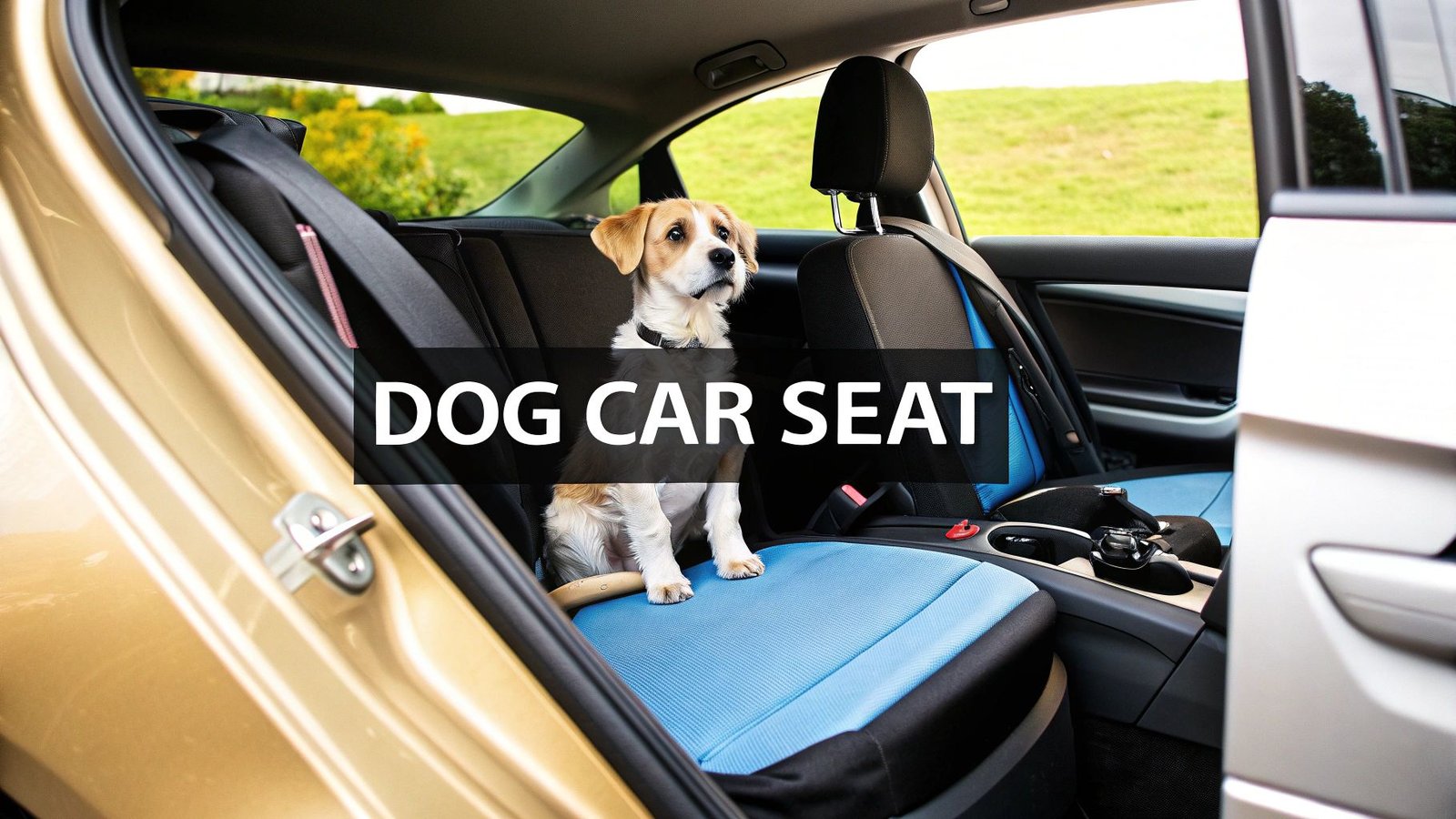
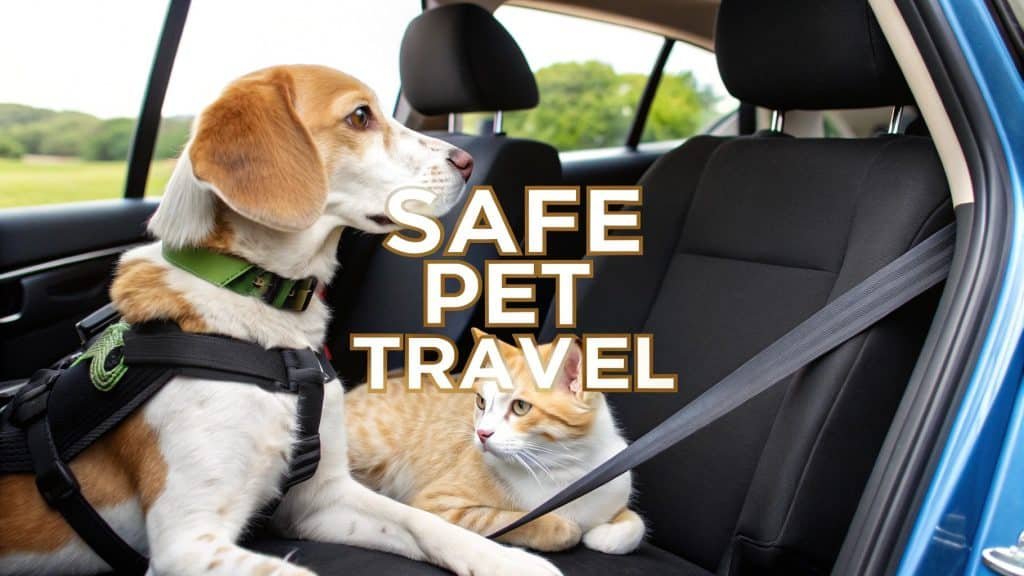
At its core, a dog car seat is a specially designed restraint system meant to keep your pet safe and secure while you're driving. Think of it just like a car seat for a child—it’s an essential piece of safety equipment, not just a comfy accessory. It’s built to protect your dog during a sudden stop or, worse, a collision, while also keeping them from becoming a distraction.
Why Your Dog Needs a Dedicated Car Seat
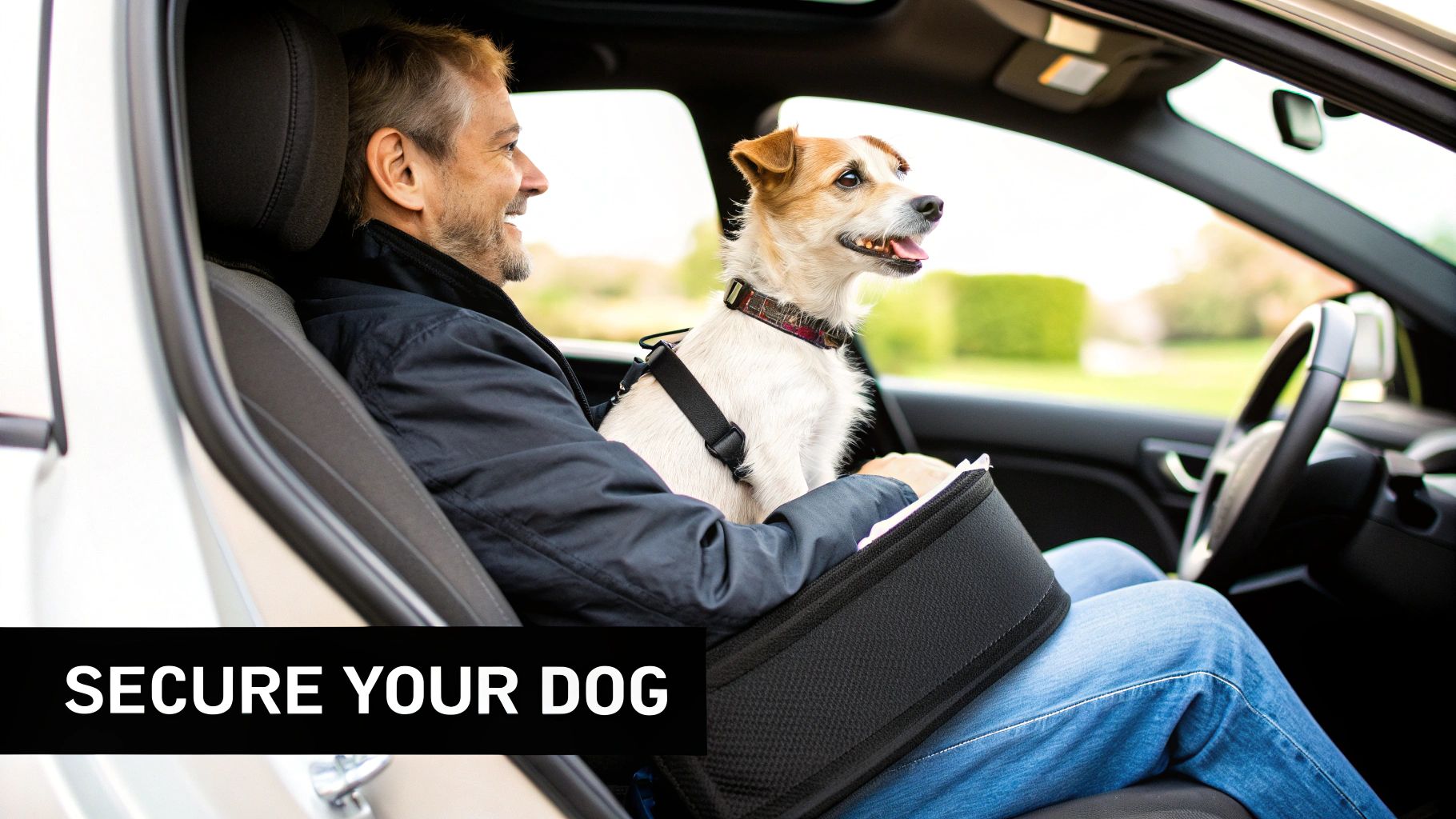
It’s easy to think of a dog car seat as optional, but it really should be standard gear for any pet parent. Letting a dog roam free in a moving vehicle is a huge risk. Even something minor, like tapping the brakes a little too hard or taking a sharp turn, can have pretty serious consequences for an unsecured pet.
Here’s a scenario every driver can picture: you're cruising down the street, and a squirrel makes a mad dash across the road. You slam on the brakes. An unsecured dog is going to fly forward—into the dashboard, the back of a seat, or even you. In an actual collision, that small pup becomes a dangerous projectile, endangering themselves and everyone else. The physics are startling: a 10-pound dog in a car traveling just 30 mph can exert a whopping 300 pounds of force in a crash.
More Than Just Crash Protection
Beyond the obvious physical protection, the right car seat can work wonders for your dog's state of mind. Car rides can be nerve-wracking for a lot of dogs, leading to whining, pacing, or panting. Giving them a secure, designated spot of their own creates a sense of stability that can turn a stressful trip into a calm one.
A dedicated car seat gives your dog a familiar and secure spot in an otherwise unpredictable environment. This consistency helps them feel grounded, reducing motion sickness and the anxiety associated with travel.
It’s like giving a nervous kid their favorite blanket in an unfamiliar place—that seat becomes their anchor. Besides just crash safety, a dedicated seat can go a long way toward calming dog anxiety on the road. The familiar scent and cozy feeling of their own space can completely change their travel experience. For particularly anxious pups, you might also find our guide on choosing a https://urpetstore.com/product/calming-dog-bed/ for the home helpful, as it’s based on the same principles of comfort and security.
Key Benefits of Using a Dog Car Seat
When it comes down to it, investing in a quality dog car seat is just part of being a responsible owner. It gives you peace of mind and makes every trip safer and more enjoyable for both of you. The advantages are crystal clear:
- Prevents Driver Distraction: It keeps your dog from trying to climb into your lap or wandering around the car, so you can keep your eyes and focus on driving.
- Reduces Pet Injury: In an accident, a proper restraint dramatically lowers the risk of your dog getting hurt or even being thrown from the car.
- Alleviates Travel Anxiety: Many booster-style seats offer an elevated view and a snug enclosure, which can really help dogs who get carsick or fearful on the road.
Exploring the Main Types of Dog Car Seats
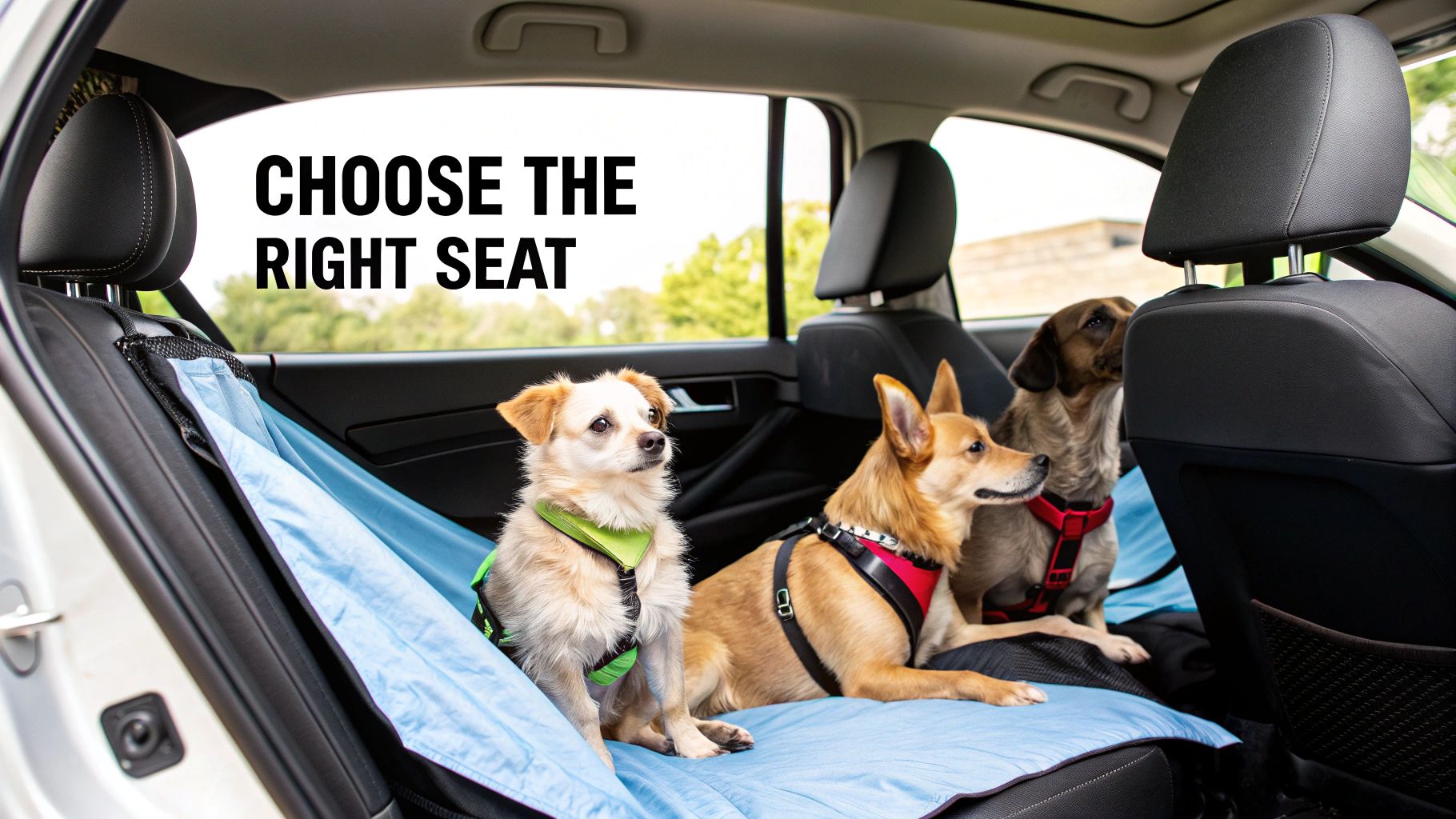
Choosing the right dog car seat can feel overwhelming, but it gets a lot easier once you know the main options. Let’s break down the three big categories to help you find the perfect fit for your pup’s size, personality, and your car’s setup. Each style approaches safety and comfort a little differently, so one is bound to be just right for you.
The simple fact is, we treat our pets like family—and they deserve the same safety we’d give any other passenger. This shift in thinking is exactly why the global dog car seats market, currently valued at USD 120 million, is expected to more than double to USD 250 million by 2033. With nearly 67% of U.S. households owning a pet, a huge number of us are looking for reliable ways to travel with our furry co-pilots. You can actually read more about these market trends and predictions to see how big this is getting.
So, let's dive into the main types and find the best one for your adventures.
To make things even simpler, here’s a quick-glance table comparing the three main styles. Use it to narrow down your options based on what matters most for you and your dog.
Dog Car Seat Types at a Glance
| Seat Type | Best For (Dog Size) | Primary Benefit | Key Considerations |
|---|---|---|---|
| Booster Seat | Small to Medium (under 30 lbs) | Elevates dog for a clear view, helps reduce car sickness | Not for large breeds; must be securely strapped in |
| Hammock-Style | All sizes, especially large or multiple dogs | Protects vehicle upholstery and keeps dogs in the back | Provides containment, not crash protection; requires a separate safety harness |
| Safety Harness | All sizes, especially calm travelers | Direct, crash-tested restraint using the car’s seatbelt | Requires the dog to be comfortable sitting/lying on the car seat |
This table is a great starting point, but the details are where you'll find the perfect match. Let's explore each one a bit more.
Booster Seats for a Better View
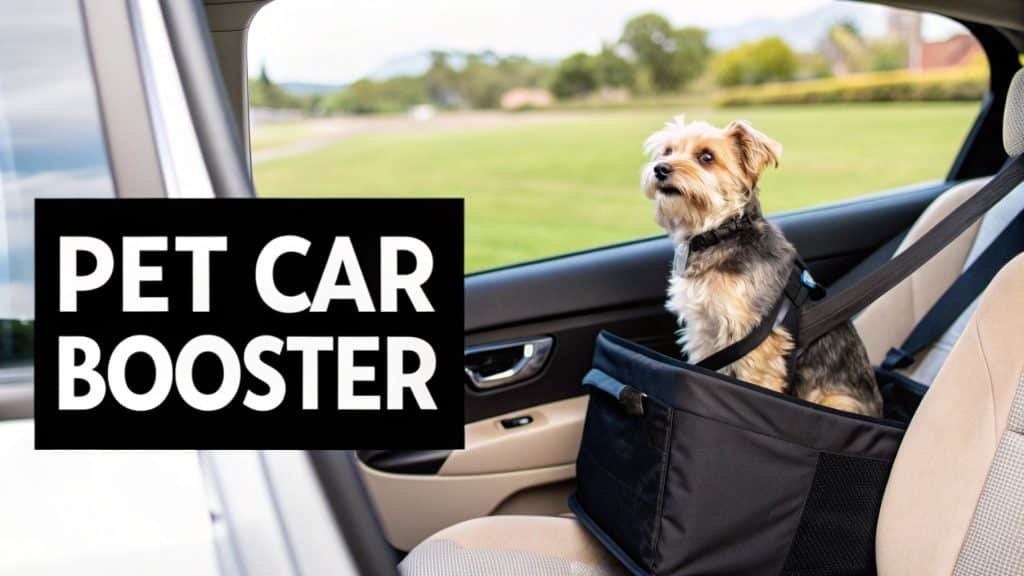
Think of a booster seat as a high chair for your dog. Its main job is to lift your little buddy up so they can see out the window. This isn't just for fun—it’s a huge help for pups who get motion sick, as being able to see the horizon can make all the difference.
A quality booster seat uses your car's own seatbelt to anchor itself securely to the seat. It also has a short, built-in tether that clips directly to your dog's harness (never their collar!). This two-part system keeps your dog safely contained in their comfy basket during the ride.
Booster seats are ideal for:
- Small to medium-sized dogs, usually those under 30 pounds, who need a little lift.
- Anxious pups or those prone to car sickness, since the view is often very calming.
- Owners who want a dedicated, cozy spot for their dog that keeps them contained.
The big thing to remember is that these aren't built for large breeds. Always double-check that the one you pick is sturdy and has solid attachment points.
Hammock-Style Covers for Maximum Protection
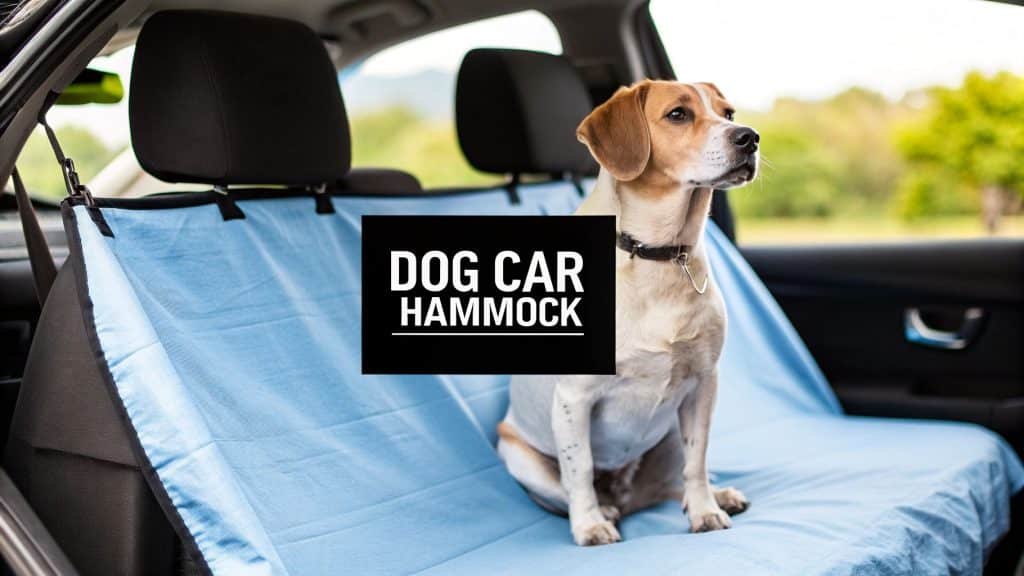
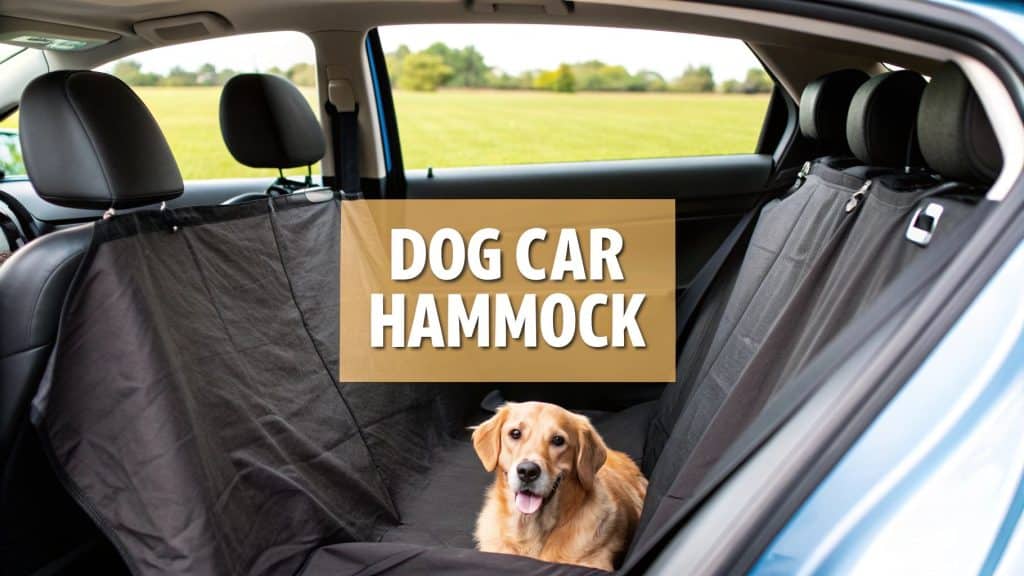
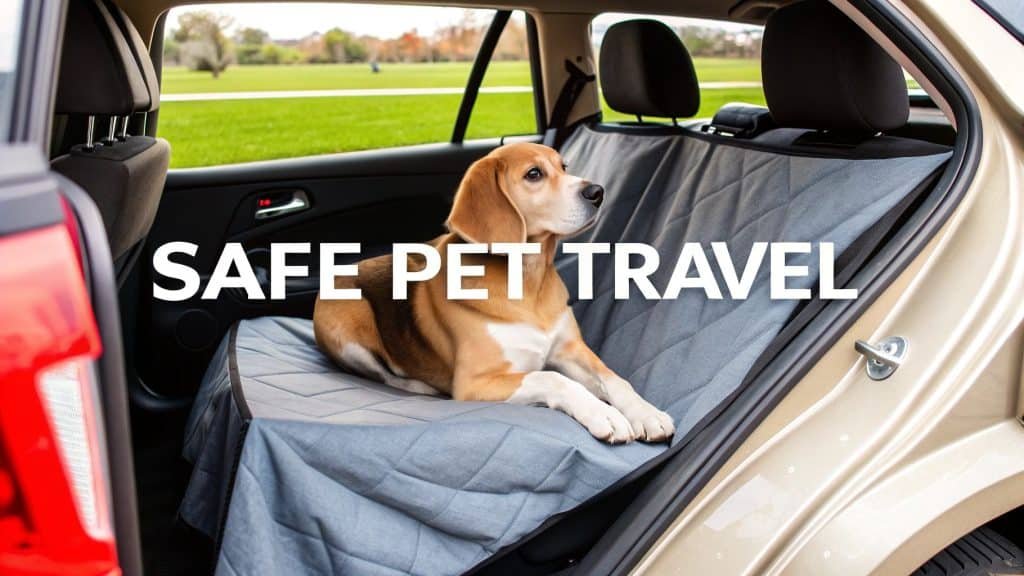
If you have a large dog (or a few of them), a hammock-style seat cover is often the most practical solution. This isn't a restraint like a booster seat, but rather a brilliant way to create a safe, contained zone in your back seat.
These covers work by clipping to the front and rear headrests, forming a durable sling across the entire back seat. The design is genius because it does two things at once: it protects your upholstery from all the fur, mud, and claws, and it blocks the gap between the seats, preventing your dog from tumbling into the footwell during a sudden stop.
A hammock cover transforms your entire back seat into a safe, enclosed den. It gives your dog ample room to lie down and relax while ensuring they remain safely in the back of the vehicle.
It's super important to know that a hammock is for containment, not impact protection. Your dog should always wear a separate, crash-tested safety harness that connects directly to one of the seatbelt anchors.
Safety Harnesses for Simple Security
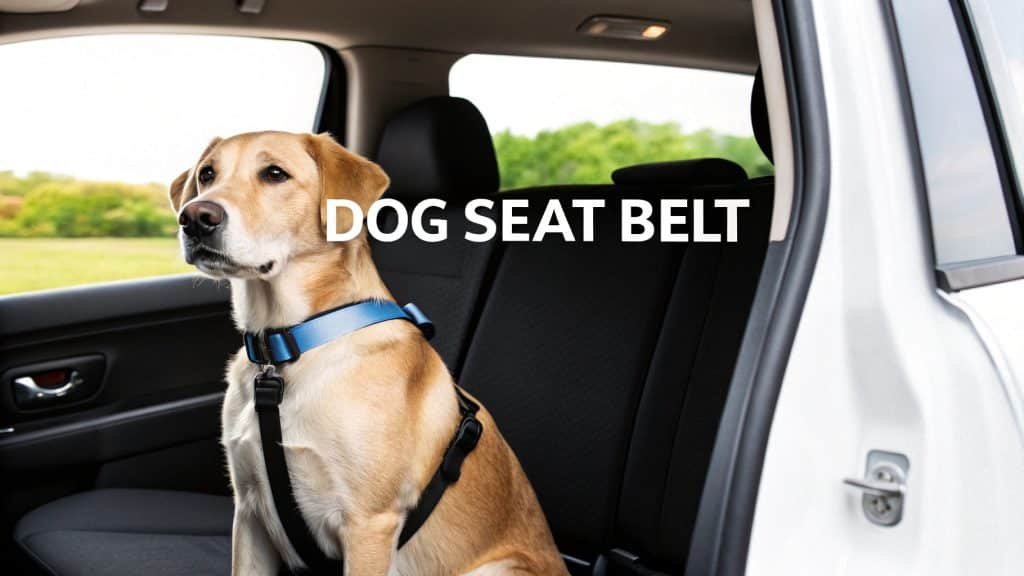
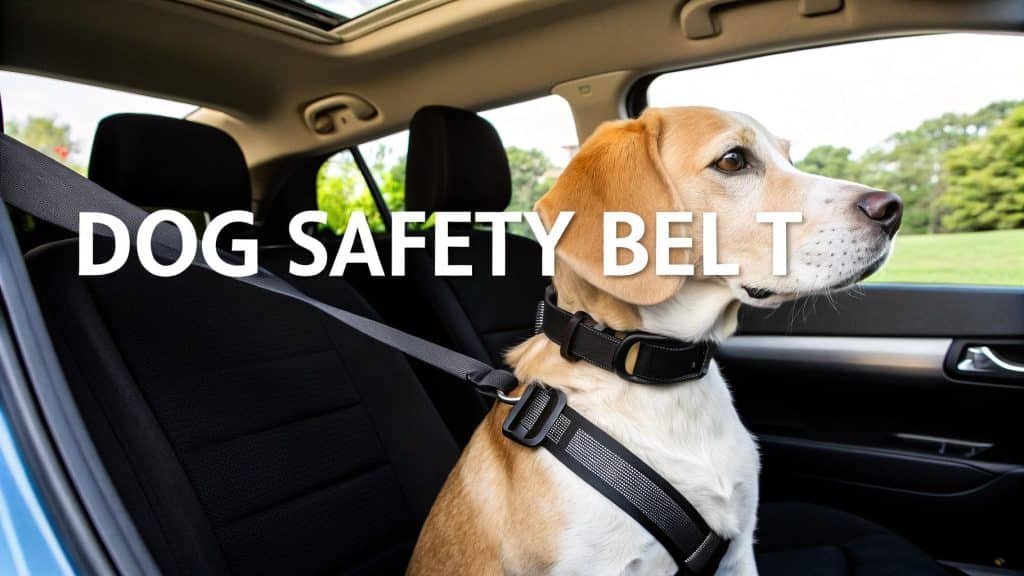
The most straightforward option is a dedicated car safety harness. This is not the same as a walking harness! These are specially engineered—and often crash-tested—to handle the incredible forces of a collision. They’re built with much stronger webbing, heavy-duty hardware, and a design that spreads impact forces safely across your dog's chest.
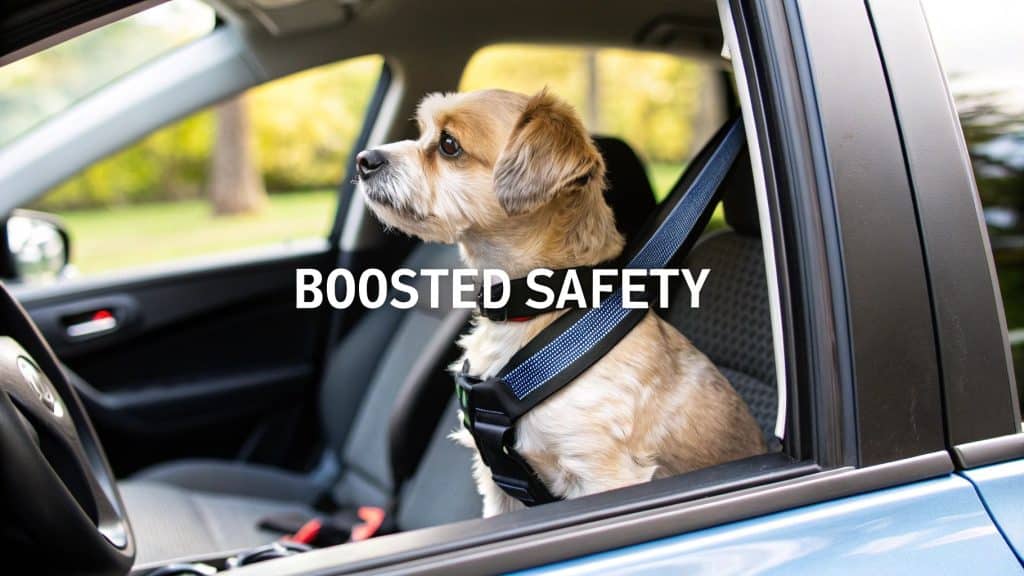
A safety harness works directly with your car's seatbelt. You either loop the seatbelt through a strap on the harness's back and click it in, or use a short tether to connect the harness to the seatbelt buckle itself. This keeps your dog securely anchored while still giving them enough freedom to sit or lie down comfortably.
This option works best for:
- Dogs of all sizes, especially if they are already calm travelers.
- Pet parents who need a flexible solution that works easily in different cars.
- Quick trips or smaller vehicles where a bulky seat just isn't practical.
Understanding Crash Testing and Safety Standards
When you're shopping for a dog car seat, you’ll see the word "safe" plastered on just about every box. But what does that really mean? Digging into that question is the single most important thing you can do, because it helps you cut through the marketing fluff and find a product genuinely built to protect your pup.
Here’s the first thing you need to know, and it’s a big one: unlike car seats for human kids, there are no mandatory government safety standards or regulations for pet restraints in the United States. That’s right. Manufacturers aren't legally required to crash-test their products. This leaves a massive gap in the market where quality and safety can be all over the map, which is exactly why independent testing is so critical.
The Gold Standard in Pet Safety Testing
Thankfully, one organization stepped into that regulatory void to create a true benchmark for safety: the Center for Pet Safety (CPS). The CPS is a non-profit group that’s all about consumer and pet safety. They conduct rigorous, independent crash tests on pet travel products and have established the only formal certification program of its kind.
A "CPS Certified" label isn't just a marketing sticker. It’s your proof that a dog car seat has been put through its paces in realistic crash simulations and met tough performance standards for holding together and keeping your dog contained.
Think of this certification as the pet world’s equivalent of the federal safety standards for child car seats. When you choose a CPS Certified product, you're buying something that has proven it can handle the immense forces of a car crash.
What Does "Crash-Tested" Really Mean?
You’ll see the term "crash-tested" thrown around a lot, but it can be misleading. Some companies do their own in-house testing, which might not be as demanding or transparent as an evaluation from a third party. A truly reliable crash-tested dog car seat has been put to the test on several key factors:
- Structural Integrity: Did the seat itself break apart during the simulated crash? The hardware, stitching, and frame have to stay in one piece.
- Containment: Did the seat actually keep the crash-test dog dummy from flying out? If it fails here, your pet could become a dangerous projectile.
- Excursion: How far did the dummy launch forward on impact? Too much movement, called excursion, means your dog could hit the front seats or other parts of the car interior.
More and more pet owners are demanding this kind of verified safety, and it's starting to shake up the industry. The global pet car safety seat market was valued at US$ 256 million and is expected to hit US$ 416 million by 2031. That’s a huge jump, and it shows that people are serious about preventing their dogs from turning a minor fender-bender into a tragedy. You can discover more insights about the pet safety market to see how this growing awareness is pushing for better products.
How to Spot a High-Quality Seat
Even if a seat isn't CPS Certified, you can still learn to spot the signs of a well-made product. Put on your detective hat when you’re in the store and really inspect the construction.
Here’s what to look for:
- Strong Stitching: Check for tight, reinforced stitching, especially where the tethers and straps connect. If you see loose threads or flimsy-looking single seams, walk away.
- Durable Hardware: The clips, buckles, and D-rings should be metal, not plastic. Plastic can get brittle over time and might shatter in a collision.
- Quality Materials: Feel the fabric. You want sturdy stuff like ballistic nylon or ripstop material that can handle some abuse. The padding should feel dense and supportive, not cheap and flimsy.
At the end of the day, putting your money into a properly tested and well-built dog car seat buys you something invaluable: peace of mind. You’ll know you've done everything you can to keep your best friend safe on every adventure you take together.
Finding the Perfect Fit for Your Dog and Vehicle
You’ve picked out the type of dog car seat you want, which is a huge first step. But the real secret to safety and comfort lies in getting the fit just right—for both your dog and your car.
Think of it like this: a seat that’s too big will let your dog slide around, while one that’s too small will be cramped and unsafe. It’s all about finding that sweet spot. To do that, we need to break it down into two simple parts: measuring your dog and then checking out your car's interior.
Sizing Up Your Best Friend
This is where a lot of people trip up. They look at the weight limit on the box and call it a day. But a dog's weight doesn't tell you anything about their shape. A stocky, 25-pound French Bulldog needs a completely different kind of space than a lanky, 25-pound Whippet.
So, grab a soft measuring tape and let's get your dog's true dimensions. It only takes a minute.
- Get Their Length: Have your dog stand up nice and tall. Measure from the base of their neck (right where their collar sits) down to where their tail begins. That’s their core body measurement.
- Measure Their "Snooze" Space: Next, ask them to lie down in their favorite sleeping position. Do they curl into a tight little ball or sprawl out? Measure the space they take up. This will tell you the minimum size the seat base needs to be for them to be comfy.
- Check Their Sitting Height: This one is mostly for booster seats. While your dog is sitting, measure from their paws up to the top of their head. You want the walls of the seat to be high enough to keep them secure but low enough so they can still see the world go by.
A great rule of thumb is to find a seat that's just a little bigger than their measurements. It should be snug enough to feel like a hug but give them enough room to shift around and get comfortable on longer drives.
Matching the Seat to Your Vehicle
Alright, you’ve got your dog's numbers. Now it's time to play matchmaker with your car. The back seat is the safest spot for any dog, but not all back seats are built the same.
Take a quick look at your car's interior and ask yourself a few questions:
- Bucket Seats vs. Bench Seats? Do you have two individually molded seats (bucket seats) or one long, flat bench? Some car seats are contoured to fit perfectly in a bucket seat, while others need a flat surface to stay stable.
- Where Are Your Seatbelt Anchors? Find the buckles. Are they rigid plastic stalks that stick straight up, or are they on flexible fabric straps? A rigid buckle can sometimes make it tricky to get a car seat cinched down tightly.
- Do You Have Adjustable Headrests? Many booster seats and hammocks use straps that loop around the headrests. If your headrests are built directly into the seat and can't be raised, you'll need to look for a model that doesn't rely on them.
Getting these details right is the key to a rock-solid installation. It’s also a good time to think about their harness. The right harness is a critical part of the safety system, so you might want to explore our guide on harnesses to find one that pairs perfectly with your car seat.
This decision tree shows how to navigate pet safety standards, highlighting the lack of government oversight and the importance of independent certification.
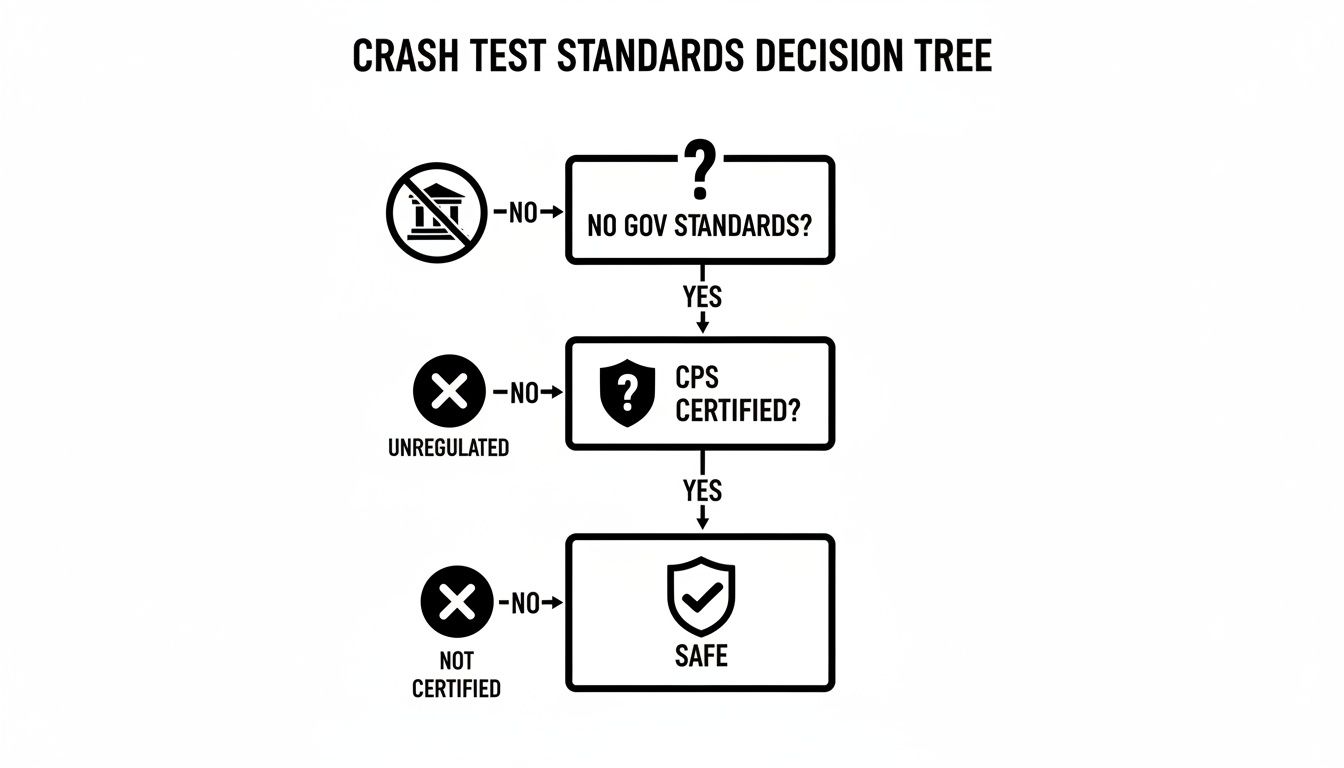
The key insight here is that looking for a "CPS Certified" label is the most reliable way for a consumer to verify a product's safety claims.
By taking a few minutes to measure both your pup and your car, you're taking the guesswork out of the equation. You’ll be able to confidently choose a dog car seat that’s a perfect match, ensuring every car ride is as safe as it is fun.
Getting Set Up: Installation and First-Trip Success Tips
Even the best-tested dog car seat is only as safe as its installation. Think of it this way: a loose or wobbly seat can't do its job in a sudden stop, which makes getting this step right absolutely critical.
While every model has its own unique instructions (and you should always read them!), the basic idea is universal. You’re aiming to create a rock-solid connection between the dog seat and your car's seat, with zero wiggle room. A properly installed seat shouldn't budge more than an inch in any direction.
It's no surprise that pet safety is on everyone's mind. The market for pet car seats is already worth around USD 3,243.9 million and is expected to climb to USD 5,134.9 million by 2035. Why the boom? Because our pets are family, and an estimated 80% of us bring them along on road trips. Dog car seats are a top seller because many give your pup a window view, which can actually help calm the car anxiety that affects nearly half of all dogs. To see how these trends are shaping pet travel, you can explore the full pet car seat market analysis.
A Universal Guide to a Secure Fit
Getting your dog's new ride set up correctly is the first—and most important—step. Don't rush it. Take your time to make sure every strap is pulled tight and every buckle is clicked securely into place. Here’s a general guide that works for most booster and carrier-style seats.
-
Find the Right Spot: Place the empty dog seat in the back of your car. The center of the back seat is usually the safest place, as it offers the most protection from side-impact collisions.
-
Thread the Seatbelt: Run your car's seatbelt through the designated path on the dog seat. Most have obvious, clearly marked slots or loops to guide you.
-
Buckle and Cinch it Down: Click the seatbelt into the buckle. Now for the most important part: put your knee into the dog seat to press it down firmly while you pull the shoulder strap of the seatbelt tight, removing every bit of slack.
-
Add the Top Tether: If your seat has an extra strap on top, loop it around the headrest and tighten it. This adds another layer of stability and stops the seat from tipping forward.
-
The "Wiggle Test": Grab the dog seat and give it a good, firm shake from side to side and front to back. If it moves more than an inch, you need to go back and tighten it more.
Making the First Trip a Win
A great first car ride starts long before you even get in the car. The key is to build a positive association with the car seat, so your dog sees it as their safe, happy place. Just forcing them into it on day one is a recipe for anxiety and a travel-hating pup.
Instead, bring the new seat inside your home first. Set it up in the living room and let your dog sniff it out on their own terms. Toss some high-value treats inside to coax them into hopping in. When they do, shower them with praise!
The secret to a happy car traveler is making the seat a familiar, treat-filled sanctuary before it ever moves. This simple step transforms the seat from a scary new object into their personal throne.
Once your dog is comfortable with the seat at home, it's time to move the operation to the car. For pups who get nervous and might have an accident, lining the seat with an absorbent, waterproof pad can be a lifesaver. You can find reusable dog pee pads that are easy to toss in the wash and give you total peace of mind.
Here are a few final tips for that very first journey:
- Keep It Short and Fun: Make the first trip a quick one to somewhere awesome, like the local park.
- Let the Air In: Crack a window to provide fresh air. It really helps with preventing motion sickness.
- Harness, Not Collar: Always attach the seat's safety tether to a proper, crash-tested harness. Never, ever clip it to your dog’s collar.
Keeping Your Dog's Car Seat in Tip-Top Shape
You've invested in a quality dog car seat to keep your best friend safe on the road. That's a great first step! But just like any other critical piece of safety gear, it needs a little TLC to do its job properly over the long haul.
Think of it this way: maintaining your dog's car seat is just as important as the routine preventive maintenance for vehicles you perform on your car. It's not just about looks; it’s about making sure every strap, buckle, and seam is ready to perform when it matters most.
The Basics: Cleaning and General Upkeep
Let's be honest, dogs can be messy. Dirt, fur, and the occasional drool spot are part of the deal. But letting that stuff build up can actually wear down the fabric and materials over time. A little routine cleaning goes a long way.
Most of the time, a quick vacuum with a brush attachment is all you need to handle loose fur and crumbs. For muddy paw prints or other minor messes, a damp cloth and a gentle, pet-safe soap usually do the trick. A real game-changer is a seat with a removable, machine-washable cover—just check the tag for washing instructions and make deep cleans a total breeze.
A clean seat isn't just about hygiene. When you wipe down the straps and fabric, you're also giving yourself a chance to spot a potential problem—like a frayed edge or a weak seam—before it becomes a real safety issue.
Your Monthly Safety Inspection
This is the part that truly keeps your dog car seat road-ready. At least once a month (and definitely before any big road trips), take five minutes to give the seat a thorough once-over. You're looking for any signs of wear and tear that could compromise its ability to protect your pup in an emergency.
Your Go-To Safety Checklist:
- Straps and Tethers: Run your fingers along every strap. Are there any frayed spots, thin patches, or small cuts? Pay extra close attention to the areas that bend and rub against buckles and attachment points.
- Buckles and Hardware: Click and unclick every buckle. They should snap firmly into place and release without a struggle. Look for any cracks, rust, or white stress marks on the plastic and metal parts.
- Stitching: Take a close look at all the seams, especially where the safety tethers are sewn into the seat's main body. These are high-stress areas. Any pulled or broken threads are a serious red flag.
- Seat Structure: Give the seat a good squeeze. Does the frame still feel solid? Has the foam lost its firmness? If it feels flimsy or overly compressed, it won't offer the same level of impact absorption.
If you spot any of this kind of damage, it's a clear sign that it’s time to replace the seat. A compromised dog car seat is a risk you just can't afford to take.
Got Questions? We’ve Got Answers.
It's totally normal to still have a few questions, even after you’ve done your homework on different types of car seats and safety features. Choosing the right gear to keep your best friend safe is a big deal, and we want you to feel 100% confident in your decision.
Let's walk through some of the most common questions we get from fellow dog lovers. We'll give you straight, practical answers to clear up any lingering doubts.
Is the Front Seat or Back Seat Safer for My Dog?
This one is a hard and fast rule: the back seat is always the safest place for your dog. No exceptions. Think of it just like the rules for young children.
The biggest reason is the passenger-side airbag. In a crash, an airbag deploys with incredible force—enough to protect a full-grown adult, but powerful enough to cause severe or even fatal injuries to a dog, no matter their size.
Treat the front seat as a "no-pup zone." By setting up your dog's car seat in the back, you're removing the single biggest danger of traveling with your pet and making the ride safer for everyone.
What if My Dog Chews the Car Seat?
Ah, the chewer. It’s a common problem, especially with puppies or anxious dogs. They might be bored, nervous, or just exploring the new object with their mouth. For their safety (and your investment), you'll want to get ahead of this.
First off, don't leave them alone in the car with the new seat, especially in the beginning. For drives, give them something else to focus on. A tough, car-safe chew toy can work wonders by redirecting that chewing instinct to an approved target.
When you're shopping, you can also look for seats made from extra-tough materials. Keep an eye out for descriptions that include:
- Ballistic Nylon: This stuff is incredibly rugged—it was originally developed for military flak jackets.
- Ripstop Fabric: You can often spot the grid-like pattern in this fabric; it's woven to stop small tears from turning into big rips.
- Heavy-Duty Canvas: A classic, durable material that’s built to withstand a lot of wear and tear.
If the chewing doesn't stop, it might be a sign of deeper travel anxiety. In that case, you’ll want to focus on positive training to help them feel more comfortable in the car overall.
How Can I Get a Nervous Dog Used to a Car Seat?
For an anxious pup, patience and positive reinforcement are everything. Your goal is to help them see the car seat as their personal cozy spot, not a scary constraint. The key is to go slow and never, ever force them.
Start the process inside your home. Place the car seat in the living room and just let it be. Let your dog sniff it, circle it, and get used to its presence on their own terms.
- Turn it into a Treat Dispenser: Toss some of their favorite high-value treats or a new toy inside. When they get brave enough to hop in and get it, praise them like they just won an award.
- Practice in a Parked Car: Once they’re cool with the seat at home, move it into the back of your car. Get in with them (don't start the engine) and just hang out for a few minutes, dishing out more treats and praise for calm behavior.
- Start with Happy Trips: Their first rides in the seat should be super short and lead somewhere amazing, like the dog park or a friend's house they love visiting. This helps them build a powerful association: Car Seat = Fun!
At Ur Pet Store, we know your pet’s safety is your number one priority. That’s why we’ve hand-picked a collection of high-quality travel gear designed to give you peace of mind on every trip. Explore our collection of top-rated travel accessories to find the perfect fit for your four-legged co-pilot.